Showing posts with label #horsekeeping. Show all posts

Tuesday, August 20, 2019

If Wishes Were Horses, Beggars Would Ride ~ Origin and Meaning


Though there's some argument about who coined the phrase "If wishes were horses, beggars would ride," the first publication of the saying was in a Scottish proverb and nursery rhyme collection printed in the 1600s. Have you ever wondered exactly what it meant?

Throughout history, horses for riding have been a luxury of wealthy. That would be because most common folk couldn't afford to feed them unless they were part of their livelihood. Stagecoach drivers, liverymen, farmers each had their own horses for work, but for personal use, they rarely had them. 

Horses eat about 1.5-3 percent of their body weight every day. That means that the average riding horse weighing 1000 pounds would eat 20 pounds of food per day if they consumed 2 percent of their body weight. (Which is the average for a horse who works a light to moderate amount.)

If the horse consumes it in grass, it would take owning about 2 acres of property per horse to allow for grazing and growth. And during lean winter months, the owner would still need to supply hay or grain rations to help sustain the horse. If the horse doesn't have the luxury of eating all day at their leisure in a grass field, the horse will need enough grain and hay to satisfy their physical needs, and these supplies were not inexpensive during any time in history.

Additionally, a horse generally drinks between 6-12 gallons of water per day. In a time when people had to hand pump water from the ground or draw from a well, just getting their horse the water necessary to survive would be a tremendous chore unless they had a stream running through their property. Horses cannot live without adequate water, and drink more than other animals due to their size, digestive habits, and the fact that they sweat in order to cool themselves.

The purpose of the saying is to put a cold dose of reality on the person who spends much of their time making wishes instead of looking at things logically and working hard to accomplish their goals. Horses are neither inexpensive for the pocket nor are they easy to take care of. So, the Scottish nursery rhyme was likely made in the hopes of getting children to understand that not everyone can have what they wish for simply by wishing. We all have to know what we're getting into and work hard to achieve what we want.


On average, P. Creeden releases 2-3 stories each month. Interested in learning more? 
Join her reader group on Facebook:

Monday, July 29, 2019

Don't Look a Gift Horse in the Mouth


Ever hear the proverb: "Never look a gift horse in the mouth" and wonder what that means exactly?

Because horses have served humans for hundreds of years, it shouldn't be too surprising that the saying can date back in print as far as the 1500's, but may have been spread orally before then.

The purpose of the saying is that checking for flaws in a gift is a rude thing to do, and makes the receiver look ungrateful to the giver. But why horses?

Just as long as people have had horses, it's been difficult to tell exactly how old a horse is just by looking at it on the outside. Also, unscrupulous people will sell a horse to someone and lie about their age. So along the way, people discovered that the horse's teeth tell the story of how old the horse is, to a degree. It's not an exact science, but you can learn to be fairly accurate within a range.

Here's a simplified version of how to tell the age of a horse by their teeth:

With a young horse, you can estimate the age based upon how many baby teeth they have vs. adult teeth. Once the horse is beyond ten years old, we use Galvayne's Groove to help us determine the age.

Galvayne's groove is a groove that appears at the last sent of incisors and starts at the top when the horse is about 10 years of age. At fifteen, it will work it's way halfway down the tooth, and all the way down the tooth by twenty. After twenty, the groove begins to disappear again, and will be gone completely after 10 years.
How can you tell the difference between a six-year-old horse and a thirty year old once the groove has disappeared? The incisors on the older horse will appear long and jut out - which is why we call an old horse "long in the tooth."
Aging horses is more of an art, since using this method will only give you a rough estimation of the horse's age. Still, it can help you determine the difference between an 8 year old horse and an 18 year old one fairly easily. However, it would be hairsplitting to try to say that a horse is 8 years old, rather than 9.

The proverb, however, is to help guide us in manners. If we get a gift, we shouldn't look for the flaws in it. At least, not in front of the giver...


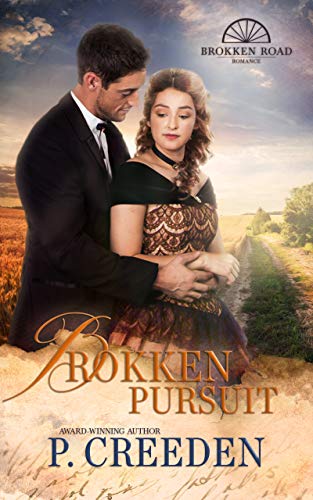
Check out her latest book:
What’s a good Catholic girl to do? When Clenna finally sees her dream of becoming a Pinkerton Detective agent becoming a reality, she’s struck with the news that to become one, she has to marry her training agent—at least temporarily...

Tuesday, June 18, 2019

How Horseshoes Became a Symbol for Good Luck

Horseshoes were not as rare as four-leaf clovers or rabbits' feet during the 19th Century, but were still considered good luck in times when horses were used for daily travel. But why was that?

Ancient Celtic folklore suggests that often the cause of infertility in both animals and human are due to curses from the fae folk. Fairy creatures were mischievous, cunning, jealous, and liked to play tricks on people who have the unfortunate fate to be chosen by them. However the fae folk have one weakness--iron. And horseshoes were made of iron. It was said that the sight of horseshoes on the front door of the family home would chase away the fae folk and retain the fertility of the household.

Additionally, according to Christian tradition, St. Dunstan was a 10th Century blacksmith. He was working in his shop when the devil appeared before him and demanded that Dunstan shoe his cloven hooves. Dunstan did as he was told, but required that the devil be shackled for the job. Once the devil was in chains, he proceeded to hot-shoe the devil and nail the shoes on in the most painful manner possible. When the devil begged to be released from the shackles and the pain, Dunstan agreed to do so only if the devil agreed to avoid any home where a horseshoe was nailed to the door. Once released, the devil ripped off the shoes and swore to never come near one again.

No doubt, anyone who worked with horses frequently during the 1800's would have considered it good luck if their horse kept all their shoes on their feet for the full shoeing cycle of six-eight weeks. And would have considered it bad luck of their horse lost a shoe--as that often meant lameness at least until they could make it down to the blacksmith shop again.

The thought of horseshoes as good luck could be practical, religious, or superstitious, depending on the person you asked!


Check out her latest book:


Tuesday, May 21, 2019

A Short History of the Western Saddle

In the United States, horses are a non-native species, meaning that even our wild mustangs were originally tame and brought over by ships, primarily by the Spaniards as early as Columbus's second voyage in 1493. Some horses became free due to ship wreck (the wild ponies of Chincoteague are believed to be among them), while others were barnyard escapees or set free by their owners. Because of the high population near the east coast of the US, horses didn't tend to stay feral for long before being redomesticated. Out west, where miles of acreage were untouched, wild horses flourished.

Just like those who have been riding horses since 3000 BC, the Native Americans tamed and rode horses without the use of saddles out west. While on the East Coast and in England, a small, hunting and traveling saddle had been born, these were not conducive to the working environment of cattle workers out west, where they needed security and stability.

A more rugged Calvary saddle was introduced in 1859 by Captain McClellen during the Crimean War, and many cattle workers adapted this saddle or one similar for use on ranches because of its secure seat. But it was a Spanish Vaquero who invented the use of a wooden horn on the saddle at about the same time. Before the invention of the saddle horn, cowboys would rope livestock and tie them to either a D-ring on the saddle (which often wore out and broke off) or to the horse's tail, which the horse had to learn to tolerate, and often injured as well.

In the mid 1860's, a Mother-Hubbard saddle was invented which had a horn for cowboys to use when roping and became hugely popular. However, many cowboys lost their thumbs in learning to tie the rope quickly to the horn after they roped livestock. Though the Vaqueros had perfected the technique, most cowboys took to tying their rope before lassoing livestock to avoid injury.

Since that time, the western saddle has remained largely unchanged. The high back and front fenders help keep a rider secure while the work with their hands independently, and the horn is often made of fiberglass, bone, or metal instead of wood. Regardless, it's still used for working cattle on the range out west as well as for the pleasure of riders today.


Get her latest historical romance set in 1866 Kansas City:
A boxer who’s tired of fighting. A persecuted woman with an unwanted suitor. A marriage neither of them want, but both desperately need.
Get your copy:


Tuesday, February 19, 2019

Cowboys and the Long Trail

In the American West, large tracts of land were ideal for raising cattle, and southern temperatures, like in Texas made winter raising easier. But with the spring, the ranchers would drive their cattle north to stockyards and railyards in Kansas, where the train cars waited to take the cattle to different portions of the country.

Cowboys had to take weather into account, to avoid rapid moving waters that happen with snow melt. Though the spring grasses helped keep the cattle at a good weight while they moved at 12-15 miles per day. A heard of around a thousand cattle would take between 4-6 drivers as well as a Trail Boss and Chuckwagon/cook. 

Overnight, they often took turns watching the cattle and the horses. To keep the horses nearby when not mounted, they often kept grazing hobbles on the horses--tying their front legs together--to restrict the horses' movements.

Raising and driving cattle was part of the yearly life for the rancher. They spent all year breeding, raising, and keeping the cattle for the once-a-year payoff that culminated in the cattle drive. During the drive, the cattle, horses, and men are most vulnerable to the elements, and timing is everything. To mitigate losses, the Trail Boss needed to be a smart strategist as well as able to command a number of men with respect. 


P. Creeden is the Sweet Romance and mystery pen name for USA Today Bestselling author, Pauline Creeden. Animals are the supporting characters of many of her stories, because they occupy her daily life on the farm, too. From dogs, cats, and goldfish to horses, chickens, and geckos -- she believes life around pets is so much better, even if they are fictional. 

Get her latest historical romance set in 1868 Texas:


Tuesday, January 15, 2019

A Short History of Horseshoes

In the 1897, a set of bronze horseshoes with nail holes was discovered in an Etruscan tomb which was dated to have been used around 400 BC. These were the oldest set of horse shoes discovered, when it was thought before that the Romans invented horseshoes around 100 BC--but those were a sandal-like boot made of leather with a metal reinforced bottom.

Although there are a few references in history of nail-on metal shoes being used by war horses in the 900's, they weren't commonly used by Europeans until around the time of the Crusades, a hundred years later. Over the next two hundred years, the horse shoe went from being made of bronze to being made of iron, undergoing the same evolution as metals used for swords, and by the 1600s, blacksmiths could buy ready-shaped horse shoes that they could heat up and finish to the exact size and shape of the horse's foot.

It wasn't until the Industrial Revolution, that a machine capable of making up to 60 steel shoes per hour was patented. Because of the use of these manufactured shoes, the North was given an advantage over the South in the Civil War.

Surprisingly to some, the shape and manufacture of horse shoes hasn't changed much since the 19th Century. The blacksmith still adjusts the shape and fit of the shoe to the horse, even when he uses a factory "keg" shoe. Shoes come in several different sizes to start with, but no two horses have the exact same shape to their hoof, so the farrier must adjust the shoe and change its factory shape to one that fits the horse most comfortably.

Because the shape of each horse's hoof is different, it truly was easy for trained scouts to track horses and know the horse's size and how much weight they carried. Many blacksmiths put a mark on the shoes they made as a signature on their work. This also could have been used by trackers to know which town the horse came from as well.

I've always had an affinity and great respect for the work of trained farriers and blacksmiths. When I was in college, it was one of the careers I considered for a while, but put the side because of the great amount of strength and stamina these metal workers need to be able to do their job. However, it turned out that I married a farrier, instead.


P. Creeden is the Sweet Romance and mystery pen name for USA Today Bestselling author, Pauline Creeden. Animals are the supporting characters of many of her stories, because they occupy her daily life on the farm, too. From dogs, cats, and goldfish to horses, chickens, and geckos -- she believes life around pets is so much better, even if they are fictional. 

Get her latest historical romance set in 1867 North Texas:


Tuesday, December 18, 2018

Caring for Horses in the 1800's Winter

Besides writing full-time, my husband and I also run a horse riding stable in the middle of a suburban/city area. We are surrounded by concrete and businesses and most people don't know about our seven acres nestled right off a major highway in Virginia. Right now, in modern times, taking care of the animals on a farm is a full time job, and they are our livelihood, not just a hobby, like they might be for others.

According to the American Horse Council, there are currently about 9 million horses in the US, but in 1869 the number was closer to 13 million. Horses were much more common, used for transportation and work. So their daily care was of great importance to farmers and ranchers.

In the winter time, the most important precaution that horse owners needed to take during the harsh winter months was to make sure that horses had fresh water available. This often meant heating buckets on their wood stoves and then carrying them out to pour into troughs that were iced over, unless they had a running stream on the property.

Most horsemen and farmers fed their horses oats and barley, as those two feeds were higher in nutrient value and safer for the horses than straight corn or bran. In the summer months, they had to collect and bale hay to store for the winter months, because in order to maintain their weight, horses need to eat 1.5-2% of their body weight daily (depending on their level of work). And horses are grazers, which means that they eat little amounts all day long. So when the grasses they normally ate were unavailable, ranchers would need to drop bales of hay out for the horses to eat

When it snows, things get a bit trickier for horse owners. Many owners, during the harshest parts of the winter, would pull their horses' shoes off, so that the horses didn't collect ice and snow balls in their shoes which would make it difficult for the horses to move about without possibly pulling a tendon or ligament.

Even when horses were not able to fulfill their duties for traveling or working the farm, their caretakers still had to provide food, water, and care for them daily. (Reference for this article: The Horse: Its Keep and Management by William Cook 1891)

P. Creeden is the Sweet Romance and mystery pen name for USA Today Bestselling author, Pauline Creeden. Animals are the supporting characters of many of her stories, because they occupy her daily life on the farm, too. From dogs, cats, and goldfish to horses, chickens, and geckos -- she believes life around pets is so much better, even if they are fictional. 

Get her latest historical romance set in 1880 Wyoming: