Showing posts with label #pioneer life. Show all posts

Tuesday, August 1, 2023

LOOK AT THAT BOY IN THE BONNET! by Marisa Masterson

 A boy in a sun bonnet? Anything was possible by the end of the trail from Missouri to points west.

To start the journey, emigrants were advised by guidebooks on what to wear. The writers advised that every pioneer have at least two sets of shoes and the same with clothing, double of everything except socks. They should take four pairs of those, according to The Prairie Traveler, 1859.

Fine, Two sets of clothing. Except many people had headed west to escape poverty and the lack of a future. They could not afford more than the clothing they wore. Amazing but true, according to Chris Enss in How the West was Worn. By the end of the trip, female pioneers wrote about seeing young men in sun bonnets because they had lost their hats. Travelers made do with what was at hand on the trail.

Notice the shortened hem.
Because clothing wore out, women altered dresses before starting the trip. One common thing was to cut two or three inches off the garment's bottom so that the skirt did not tangle in long prairie grass or brush an open fire while cooking. When the dress was rehemmed after that, women put lead shot in that hem. It kept the prairie winds from embarrassing a lady by whipping up her skirt.

Another way a woman might alter her dress before starting on the trail involved the bodice. To make what might be her only garment last longer, a pioneer would line her bodice with canvas. It sounds uncomfortable to me. Still, having no dress sounds much worse.


NEW RELEASE!

Gold! Suellen finds a hidden stash of the gleaming coins under the false bottom of her dead husband's trunk. The bank's name, stamped on the bag, tells her that it is stolen. She realizes she must return the gold, but why does the scout insist on accompanying her? She knows that Rufus hates her.
Rufus does not plan on letting the woman out of his sight. Suellen unknowingly is a part of his family's plans for revenge. And does she really think she can cart a baby halfway across the country?

Will a trip to return gold turn into love? Only if two frozen hearts thaw enough to embrace their chance at happiness.

Tuesday, February 19, 2019

Cowboys and the Long Trail

In the American West, large tracts of land were ideal for raising cattle, and southern temperatures, like in Texas made winter raising easier. But with the spring, the ranchers would drive their cattle north to stockyards and railyards in Kansas, where the train cars waited to take the cattle to different portions of the country.

Cowboys had to take weather into account, to avoid rapid moving waters that happen with snow melt. Though the spring grasses helped keep the cattle at a good weight while they moved at 12-15 miles per day. A heard of around a thousand cattle would take between 4-6 drivers as well as a Trail Boss and Chuckwagon/cook. 

Overnight, they often took turns watching the cattle and the horses. To keep the horses nearby when not mounted, they often kept grazing hobbles on the horses--tying their front legs together--to restrict the horses' movements.

Raising and driving cattle was part of the yearly life for the rancher. They spent all year breeding, raising, and keeping the cattle for the once-a-year payoff that culminated in the cattle drive. During the drive, the cattle, horses, and men are most vulnerable to the elements, and timing is everything. To mitigate losses, the Trail Boss needed to be a smart strategist as well as able to command a number of men with respect. 


P. Creeden is the Sweet Romance and mystery pen name for USA Today Bestselling author, Pauline Creeden. Animals are the supporting characters of many of her stories, because they occupy her daily life on the farm, too. From dogs, cats, and goldfish to horses, chickens, and geckos -- she believes life around pets is so much better, even if they are fictional. 

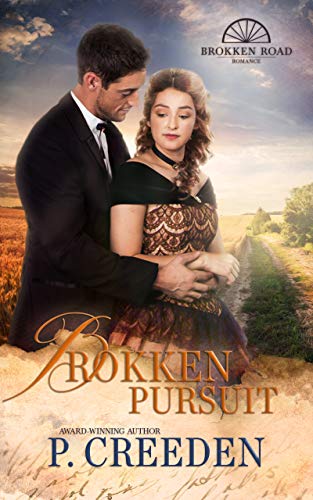
Get her latest historical romance set in 1868 Texas:


Monday, December 10, 2018

MOLASSES AND CHRISTMAS


To seek inspiration for today’s post, I turned to Museum Memories, Volume 1, one of the lesson books published by a lineage organization to which I belong, Daughters of Utah Pioneers. I found some gems in the December lesson, including the molasses cookie recipe from pioneer times the instructor passed out and which I have been using since 2009 to make my Christmas molasses gingerbread cookies. Since molasses gingerbread cookies are one of my top five favorite Christmas cookies, I decided to focus today on molasses.

A pioneer Christmas story involving molasses:

The lesson from the above-mentioned book started with the insightful pioneer story, “Christmas on the Homestead Farm” by Ellen Jacklin Tracy. I am sharing an excerpt which relates to molasses:

Winter came early that fall. All along the bench in American Fork, where the families lived on land they were homesteading, parents and children had worked hard every day, but many of their crops were still in the ground. In our home, father had been sick most of the summer and toward fall have been taken to a hospital in Salt Lake City for an operation. Trips mother had made to the city by horse and buggy to see father had delayed the harvesting of the crops. Father was now at home but unable to work. The apples had been picked, potatoes dug and stored in the cellar, but the sugar beets, our only cash crop, were still in the ground. Taxes must be paid as well as hospital and doctor bills, and there was very little money.

...Warmer days finally came, melting most of the snow and ice so our family could work to complete the sugar beet harvest. Mother and the older children worked hard to get the beets out of the cold ground. The beets were then topped and loaded on the big beet dump wagon. Only one load could be harvested each day. The beets were then taken to the Lehi Sugar Factory or to the Wing dump to be unloaded into train cars.

Life went on in that cozy little house. Thanksgiving came and went, and Christmas was hurrying towards us. Our parents were thankful for their children, the two warm rooms in the little cabin, and the food that had been raised on the farm. Since I was the oldest daughter, mother confided her worries to me. There was no money for Christmas, which would soon be coming. We couldn't even afford to go to the store and buy material to make new clothing. Finally, mother and I decided to hunt out some scraps of cloth and hem a handkerchief for each family member. Father kept a few stands of bees, so we had honey, and the sugar cane that we had could be made into molasses. We would make some candy, and there were plenty of apples stored in the cellar. These plans, meager as they seemed, brought some comfort to our parents, and the days and weeks hurried by towards Christmas....

What exactly is molasses?

Molasses is a viscous product resulting from refining sugarcane or sugar beets into sugar. Molasses varies by amount of sugar, method of extraction, and age of the plant. Sugarcane molasses is primarily used for sweetening and flavoring foods in the United States, Canada, and elsewhere. Molasses is a defining component of fine commercial brown sugar.

Due to the presence of many salts in sugar beet molasses, it is foul-smelling and unpalatable, so it is mostly used as an animal feed additive.

In other words, sugar beet molasses smells and tastes nasty. We only want to use molasses made from sugar cane.

Sugar beets closer to home.

They grow sugar beets in the San Joaquin Valley where I live. In among the almond and peach orchards we can find a variety of row crops grown, including sugar beets.

I remember decades ago as a young mother I sat in on a conversation taking place between some older men who jokingly lamented they had been born too early. By the time of their discussion, machines had been developed to harvest sugar beets and prepare them for the sugar-processing plants. However, in their youth, harvesting was done by hand. They were paid small sums for wages to work all day at the back-breaking task of pulling the beets out of the ground, shaking off the loose soil, “topping” them (cutting off the stems and leaves), and then tossing the beets  into to the bins.

Processing sugar beets stinks to high heaven. When I first moved to the San Joaquin Valley, I lived in a city about a twenty minute drive from Manteca where a sugar beet processing plant used to operate. Since the prevailing winds tend to blow from the west, the plant was built on the east side of Manteca. Unfortunately, the freeway was built immediately to the east of the plant. When driving north on Highway 99, we always knew when we were passing Manteca.

Several decades ago they built the Highway 120 bypass. My husband worked on that job. The builder needed more dirt, so he struck a deal with the sugar beet plant. His construction guys would dig out their holding ponds in exchange for some of the dirt on the plant’s property.

My husband operated a scraper. He said as bad as it smelled driving past that area, nothing compared to the stink that hit them when they first skimmed the tops of those ponds. The concentrated sugar beet waste was so sticky, the treads of the scrapers (scrapers are HUGH pieces of equipment with pretty powerful engines) stuck in it and bulldozers were needed to pull them free. The men could not eat on site during that job; they had to escape elsewhere far away because the smell made their food taste too foul to eat. He was glad when that job was over.

Yet, out of the stink and mess of processing sugar beets comes much of the sugar we enjoy.

The sugar beet plant in Manteca was dismantled years ago. It took some time, but we can now drive past the former location without having to hold our breath.

  Uses for molasses:

In dark rye breads or other whole grain breads
In some cookies and pies
In gingerbread (particularly in the Americas)
In barbeque sauces
In beer styles such as stouts and porters
To stabilize emulsification of home-made vinaigrette
The principal ingredient in the distillation of rum
As a humectant in jerky processing
A source for yeast production

And now, the good part…

The following is the cookie recipe I have been using these past several years from the above-mentioned book. Keep in mind the recipe does not call for a set amount of flour, only enough to make a stiff dough [as in, the dough no longer sticks to your mixing spoon and fingers like the worst goo you've ever tangled with]. This makes a lot of cookie dough, so you may want to refrigerate half of it to bake later, or cut the recipe in half until you decide whether or not it is one of your favorites like it is mine.

GRANDMA’S SOFT GINGER SNAPS

1 cup sugar                                         4 level teaspoons soda
1 cup molasses                                   1 teaspoon cloves (I tend to short this)
1 teaspoon ginger                              2/3 cup shortening
2 eggs                                                   pinch of salt
1 teaspoon cinnamon                       Water and flour

Use enough water to dissolve soda. [Add ingredients, flour last.] Stir until dough is stiff with flour. Pinch off pieces the size of a walnut. Roll into balls. [I sometimes like to roll my dough balls into granulated sugar.] Place one inch apart on a cookie sheet. [If you have not yet discovered the wonder of parchment paper, try it.] Bake in a moderate oven [if still using the oven on a wood-burning stove, otherwise, try about 350-375 degrees farenheit.] (Watch carefully as these cookies burn easily!)

[If you don't roll them in granulated sugar before baking, try dusting the tops with powdered sugar after baking but while they are still warm. Or, if you are really creative, frost them with a sugar glaze.] 

Chewy Ginger Cookies (not mine) ctsy Alcineo

I do not have a new Christmas story for this year, but I have three from previous years if you have not yet read them. Please CLICK HERE to reach my Amazon Author Page for book descriptions and links.


To sweeten the deal, I will send by Book Funnel one ebook copy of Too Old for Christmas to one person chosen at random who leaves a comment about their favorite Christmas cookies in the comments section ON THIS BLOG.  A winner will be chosen the evening of Tuesday, December 11th.
(As long as they were not baked too long, the cookies featured in the above recipe were probably soft enough for even Sean and Ona to eat.)


Source:
Wikipedia
International Daughters of Utah Pioneers, Museum Memories; Salt Lake City, USA:2009, pgs 153-54, 157; (originally taken from Anderson, Patricia Ellie, The Secret of a Pioneer Christmas; A Precious Children Publication, pgs 24, 39.)

Thursday, April 19, 2018

From Southern Belle to Cattle Queen and Then Some...

More than a decade ago, I read A Bride Goes West, the memoirs of Wyoming wife and rancher Nannie Alderson. The book haunts me to this day. You’d have to read it to understand, but Nannie was a fire-cracker with a rebel’s heart! Nothing ever kept her down; she accepted life with grace and grit and lived a grand adventure when the west was still wild and wooly.
 Born to an affluent southern family, Nannie grew up in post-Civil War Virginia. Her home and community were spared much of the desolation of war, leaving her to blossom in a world that clung to the most genteel Southern graces. Her petticoats were ironed daily, she never cooked a meal or did her own laundry, but she did learn the most useless graces of high society. Her mother was a vain woman who enjoyed being the belle of the ball and was pleased to groom her daughter for the same fate.
Nannie only felt strangled by the shallow, societal confinements.
In 1880, she had the opportunity to visit a cousin in wild-and-wooly Kansas. Nannie jumped at it. Right from the start, she fell in love with the freedom of the West. No one judged her there; no one treated her like a hot-house flower. What you wore or who you ate dinner with didn’t impress anyone. Folks were measured by their grit, not their silk breeches. Hard work and honest words were all that mattered.
While there, she met the man who epitomized these traits. Walt Alderson had left home at the age of 12 to make his way as a cowboy. He spent years learning to be the best cowboy he could be with the ultimate goal of running his own spread. In all that time, he never made one visit home.
He and his business partner had purchased some land in Montana and started the work of building a ranch. For whatever reason, Walt decided in the midst of all this to check in on his family. The night he came home, Nannie was sitting on his living room settee.
Nannie’s recollections of building a ranch in the wilds of Montana with Walt are fascinating, detailed, peppered with humor, and always honest. She went from gliding across hardwood floors to sweeping dirt floors covered with canvas. She went from living in an antebellum mansion to a drafty, two-room cabin. She went from swirling about at parties with young men in perfectly tailored suits to dancing with dusty cowboys in patched up dungarees.
She had to learn to cook and her tutors were those trail-hardened ranch hands who treated her like a princess and readily forgave her for the rocks she called biscuits. She survived bed bugs and blizzards; delivered children with no midwife and stared down Indians. Nannie even shot a rattlesnake who attempted to take up residence in her kitchen. She readily admits she had moments when she felt sorry for herself, but, mostly, Nannie counted her blessings. She loved her life. She loved the way of life out West.
Like Walt, quitting was never part of the plan, even when the stock market crashed and Indians burned their house. For ten years they worked and slaved to forge a home from the beautiful, desolate, wide-open country in Montana.  Even when Walt died, leaving her a widow with two young children, Nannie cowboyed up. She made ends meet; she raised good kids.
The next time your microwave goes on the fritz or you forget to pick up milk at the store, pick up a copy of A Bride Goes West. I guarantee this gritty pioneer gal will put things in perspective for you. If you enjoyed this post, I hope you'll consider signing up for my newsletter. In return, you'll get a free copy of my "sampler"--the openings to several of my books. 

So, what do you think? Have we gone soft? Do Americans face up to things the way our ancestors did?

Wednesday, March 8, 2017

The Emotional Journey of a Mail Order Bride


Have you ever gone on a first date? Of course you have! Remember the anxiety and stress? And the excitement and hopeful anticipation?

What about a blind date? Don't you think all the emotions are amplified? I remember a few blind dates I had that were almost ruined when I was almost too nervous to talk!  Then there was that blind date when I was in high school with a guy who wouldn't share popcorn in the movie. He actually pulled the bucket away from me when I reached to get a little bite. But, I digress. That's likely a story for another time.

I can only imagine what the women who moved west to start their new lives as a mail order bride must have been going through, emotionally. Oh sure, they had written some letters to each other - maybe even many letters. But meeting the man who would soon be your husband face to face for the first time must have been frightening for some women.

The stories we read often have the woman in some sort of jam to make her decide to become a mail order bride. That was probably not so far from the truth in many cases. But possibly, there were some adventure seekers out there who answered the call to be a mail order bride. Some women were bored with their lives and read about the romanticized, action packed wild west and decided to see what it was all about.

But leaving a big city was a big step. There was much to leave behind.

Even the adventure seeker must have been nervous when she met her intended for the first time. Considering this man would be with you for the rest of your life, or the rest of his, there were probably a fair list of concerns. Even traditional marriage doesn't come with guarantees and you can bet your bottom dollar arranged marriages like this had none, either.

While I’m sure fear and apprehension would have been some of the underlying emotions the mail order bride felt as she traveled westward, I believe hope and excitement were there, too. Those emotions, combined with daydreams about what her new married life was going to be like would have kept her pushing west even when the going got rough.

The journey itself was difficult, especially if she made the trip on a wagon train or a stage coach. Worry about all the potential problems and dangers that she would encounter along the way must have been near paralyzing to some. Yet, they managed to do it. Likely because of the hope for a better life.

Her emotions upon arriving at her final destination would depend on both her expectations and what she found when she arrived. Expecting a western town to be like the eastern town she left behind was a recipe for disappointment and maybe even trouble. Expecting to be delighted by the man and his home could also make for serious awkwardness, to say the least.


Consider his expectations of her. Most of the time, these women weren't expected to simply keep a tidy house, cook hearty meals, and raise a houseful of kids. They also were there to work the fields, manage the animals, and do whatever else her husband needed. The reality of what all this actually meant must have been a shock to most of these women who found themselves in that position.

If the man had been honest, then possibly trust would take root. Maybe even respect would be the basis of their relationship. Is it possible that love could bloom? Of course!
 
Wouldn't it be wonderful to find that every mail order bride felt an overwhelming sense of delight when she finally met her intended bridegroom for the first time? We all know that's not how it went - not even in sweet romance!

So, it's probably clear that a mail order bride didn't walk into a fairy tale life when she stepped into her new town. In fact, her emotions may become even more intense when the reality of what she's done hits her. Imagine the shock and horror that your life in the west is going to be so grueling that you'll be bone weary every single night. Whatever you left behind might look good compared to your new reality.

As an author, I admit to romanticizing the process. I admit to making it seem far easier than it was. My stories may seem unrealistic when you get right down to it. As a reader, I want the emotional roller coaster with a healthy dose of hope, love, and above all a happy ending. Even if a true mail order bride didn't always end up with a happy ending, I want my heroine to always have one.

If you had lived in this intriguing era, would you be up to the challenge of becoming a mail order bride? I can tell you without a doubt, I don't see myself being able to pull it off. I don't believe I'd have been savvy enough or tough enough to do it. My emotions would get the best of me, for sure.

Writing about strong, heroic women gives me the opportunity to make them savvy and tough even if their emotions make it difficult for them at times. I'm thankful for those trail blazers for their inspiration and bravery to face the scary unknown and live to tell about it.


****

 Annie Boone writes sweet western historical romance with a happy ending guaranteed in every single story. Her latest release is Book 17 in the beloved Cutter's Creek series - Perfect Timing.

To connect with Annie, find her on Facebook, Twitter, or her website.

Follow Annie on Amazon, Bookbub and get email updates.