Showing posts with label proverbs. Show all posts

Tuesday, January 16, 2024

Cowboy Sayings: Let the Cat out of the Bag


Photo generated by Canva


“Let the cat out of the bag” is a phrase that finds its origins in the living of farmers and cowboys who went to purchase piglets or other small, valuable animals at a fair or livestock sale. A dishonest seller has been known to allow the farmer to pick out a piglet, pay for it, and then replace the piglet with a cat when he hands the buyer the bag that was supposed to have a piglet in it.

Why? Because in the days before it was common to spay and neuter pets, cats were worth less than a dime a dozen, but a piglet was worth a whole lot more. So then “letting the cat out of the bag” was shedding light on a secret that was usually a dishonest or nefarious one.

Historically, this saying can be traced back further than cowboy times all the way to Medieval England, where agriculture played a central role in daily life. Perhaps it was a warning not to buy livestock from a seller you didn’t know, or just simply check the bag before you leave the merchant. Today, the age-old advice still holds true.

How about you? Have you ever heard this saying before? Used it yourself? Could you see yourself using it now? Let me know in a comment!

Subscribe to my newsletter: https://www.subscribepage.com/pcreedenbooks

Or Check out my upcoming February 2024 Release:


Tuesday, November 21, 2023

Cowboy Sayings - Make Hay While the Sun Shines

Photo generated by Canva


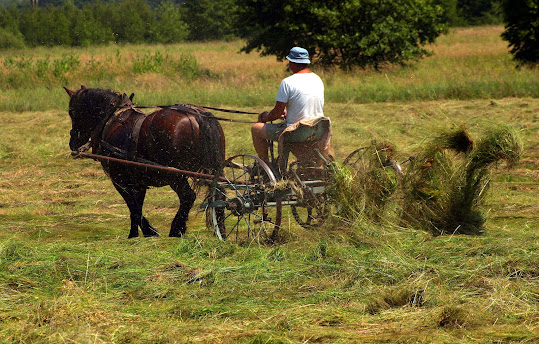
“Make hay while the sun shines” is a phrase that finds its origins in the practical wisdom of farmers and cowboys who understood the critical importance of good weather when it came to harvesting hay. Harvesting hay, a staple in animal feed and bedding, is a delicate process that requires dry conditions. The sun’s warmth helps in drying the hay efficiently, preserving its nutritional value and preventing mold. And when winter comes, they are going to need that hay to feed the animals when the grass stops growing.

Historically, this saying can be traced back further than cowboy times all the way to Medieval England, where agriculture played a central role in daily life. The phrase encapsulates the essence of recognizing and capitalizing on favorable circumstances when they arise. It’s another way of saying, “Seize the day.”

Today, the age-old advice still holds true. It serves as a gentle reminder to embrace the present, tackle challenges head-on, and cultivate success when conditions are favorable. How about you? Have you ever heard this saying before? Used it yourself? Could you see yourself using it now? Let me know in a comment!

Subscribe to my newsletter: https://www.subscribepage.com/pcreedenbooks

Or Check out my Latest Release:

Tuesday, October 17, 2023

Cowboy Sayings - It’s Raining Cats and Dogs

Photo generated by Canva

“When you hear someone say, ‘It’s raining cats and dogs,’ it immediately conjures images of animals falling from the sky But it doesn't mean you should keep an eye out for flying pets during a rainstorm – it's just an old way of saying it's raining really, really hard. Though cowboy’s used this saying often, they didn’t start it. The first written record of it goes way back to 1738 in a book by Jonathan Swift. He wrote about a guy who'd go out even if it was raining “cats and dogs.”

But even before that, the origin is at question. One idea is that it started with a link to Norse mythology. In Scandinavia, cats were thought to be connected to rain, and dogs were seen as a symbol of storms. So, imagine a big storm where cats and dogs were fighting in the sky. That would be a lot of rain and lightning.

Another possibility is that back in olden times, some English houses had thatched roofs. Stray cats and dogs would often hung out up there, especially when it rained. But when the rain got heavy, the thatch got slippery, and pets started sliding off the roof and onto whoever might be standing below. So when it rained especially hard, you might actually have a dog or cat seem to fall out of the sky.

Regardless, cowboys often had to be out in the weather even if it was a downpour to work the cattle. How about you? Have you ever heard this saying before? Used it yourself? Could you see yourself using it now? Let me know in a comment!

Subscribe to my newsletter: https://www.subscribepage.com/pcreedenbooks

Or Check out my Latest Release:


Tuesday, September 19, 2023

Cowboy Sayings - Every Dog Has His Day


Photo by Richard Brutyo

“Boy everything seems to be going right for you ever since you sang in church. You’re surely popular with the ladies.” One cowboy says to another.

The other cowboy answers with a shrug, “Well, every dog has his day.”

This saying goes back for thousands of years apparently, but wasn’t printed in English until Queen Elizabeth wrote it in a letter back in the 1500’s. Then it was printed again in a sixteenth century book of Proverbs, and even used in Shakespeare’s Hamlet. So athough it was used for a very long time, it was also popular among cowboys in the 1800’s and is occasionally used today.

It is often used to express someone getting their 15 minutes of fame or popularity. That everyone, even a dog can get a moment when it’s popular and paid attention to. It’s also sometimes used to express that even dogs are entitled to having a good day. So when you’re having an especially good day, are being complimented on your popularity, you might use this expression, too

Have you ever heard this saying before? Used it yourself? Could you see yourself using it now? Let me know in a comment!


On average, P. Creeden releases a story every other month. Interested in learning more? 
Join her reader group on Facebook:

Check out my latest release:


Tuesday, August 15, 2023

Cowboy Sayings - That Clinches It


“That clinches it. I’m going with the red one over the blue.”

A horse’s hoof is much like a person’s fingernail. There’s a portion that is just keratin, and doesn’t have an active blood supply. This is called the hoof wall. When a farrier or horseshoer nails a shoe onto a horse’s foot, he makes sure the nails are beveled and set at an angle that ensures that the nail will remain in the hoof wall long enough to keep the horse shoe on, and that the nail comes out at the appropriate level on the hoof so that the horse doesn’t feel any pain in its hoof. If the nail goes into the wrong area, it is similar to the “quick” of our own nails and gets into the blood supply, causing the horse pain.

No farrier wants that. 

But once a farrier has decided that the nails in the horse’s foot are good, he clinches them in place to keep the nails from coming out or the shoe from being easily pulled off. In the same manner, when we are faced with a problem that has more than one option, we may waver between them, and become unsure of what decision to make. But sometimes things happen, or someone says something that helps us make a firm decision one way or the other. That’s when we know that our decision has been “clinched.”

In cowboy times, they would use this saying frequently and knew the meaning with surety, since horses and horseshoeing were a regular occurrence (about every other month horseshoes need replacing.) So the meaning may have become lost as horses were replaced with cars.

Over time, this saying has just became a commonplace way of saying that a choice has been made and is solidified. It indicates that a person has found a decisive or final piece of evidence or argument that settles a matter.

Have you ever heard this saying before? Used it yourself? Could you see yourself using it now? Let me know in a comment!


On average, P. Creeden releases a story every other month. Interested in learning more? 
Join her reader group on Facebook:

Monday, February 27, 2023

Cowboy Sayings - Barking Up the Wrong Tree


“My biscuit is missing. Did you eat it?”

“No I didn’t. You’re barking up the wrong tree.”

In early 1800’s America, fox hunting with a pack of dogs was a popular past time. The dogs would chase the prey and corner it or force it up a tree where it would get stuck. Then the hunters could come along and well… finish the job. Oftentimes, though, the dogs would get tricked by a wily fox, and head in the wrong direction, or even start following the wrong prey. Distracted dogs would start barking, and signifying to the hunter that they’ve trapped the fox, only for the hunter to arrive and find the dogs barking at a raccoon in a tree instead of a fox, or even a tree that was empty all together. Disappointed, the hunter would say the dog was barking up the wrong tree.

Over time, the saying became commonplace way of saying that a person has made a wrong choice, was asking the wrong person about their problem, or going the wrong direction. 

Have you ever heard this saying before? Used it yourself? Could you see yourself using it now? Let me know in a comment!


On average, P. Creeden releases a story every other month. Interested in learning more? 
Join her reader group on Facebook:

Tuesday, December 20, 2022

Cowboy Sayings - Raring to go


“Are you ready to go to the party?”

“I’m more than ready. I’m raring to go!”

In the early 1800’s this saying increased in popularity, but its origins come from those who worked with horses. When a horse wants to move forward but is held back, they often will go up on their hind legs and stand up in a manner to resist the hand that is holding them back. The more excited the horse is to go forward, the higher they might go up, or they will hop up and down over and over again.

This action among horses is called “rearing,” but often cowboys called it “raring” instead, and the words became interchangeable. Excitement, exuberance, youth, fear—all of these can be driving factors that cause the horse to stand on its hind legs if they are stopped from going forward when they desperately want to.

Over time, this phrase became used to show that the person is very excited and prepared to move forward on whatever action when asked if they are ready.

Have you ever heard this saying before? Used it yourself? Could you see yourself using it now? Let me know in a comment!


On average, P. Creeden releases a story every other month. Interested in learning more? 
Join her reader group on Facebook:

Tuesday, March 15, 2022

Cowboy Sayings - Don’t Put the Cart Before the Horse


“You don’t put your boots on before your socks, or the cart before the horse, so why are you eating dessert before dinner?”

In cowboy times, driving a cart pulled by horses was a common occurrence. Nearly every day, the the cowboy was either doing it himself, or he saw someone who was. Carts often carried loads that would be harder to just set on the back of a horse. But what a cowboy didn’t see was a cart being pushed by a horse.

It’s much easier to get a horse to pull a cart than it is to get him to push it. Moving forward is what horses do minutes after they are born, but pushing against things that are in front of them isn’t second nature. So the point of this saying is that you put the cart behind the horse, not in front of it—meaning there is a natural order to things, and you don’t do things in the wrong order.

The first time this idiom was used in literature is in the 1500’s, but it was likely an oft used phrase well before then, since horses and carts have been around a lot longer. But now that horses and carts are a rare occurrence, we may not hear the phrase often. What about you?

Have you ever heard this saying before? Used it yourself? Could you see yourself using it now? Let me know in a comment!


On average, P. Creeden releases a story each month. Interested in learning more? 
Join her reader group on Facebook:

Tuesday, February 15, 2022

Cowboy Sayings - One Horse Town

“Don’t blink as you go through Canyon Gulch. It’s a one-horse town.”

This is a phrase that you might hear often while watching westerns. A one-horse town is a small town—so small that it would need only one horse to suit the needs of all it’s people. Of course like many idioms, it’s an exaggeration. 

The saying got its origin in farming. If a farm was small enough that it only needed one horse to pull its plow and operate it’s cart, then it was a small farm. This saying was expanded to towns in the 1800’s western expansion. And often has the negative connotation of meaning poor or boring, as well.

Have you ever heard this saying before? Used it yourself? Could you see yourself using it now? Let me know in a comment!


On average, P. Creeden releases a story each month. Interested in learning more? 
Join her reader group on Facebook:

Tuesday, January 18, 2022

Cowboy Sayings - A Horse of a Different Color

“I thought we were going to work in the back fields today, but we’re actually going to town? Now that’s a horse of a different color!”

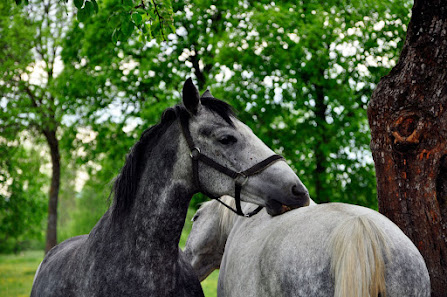
The origin of the phrase originally came from horse trading. When young horses are born, they are registered with the breed association within a year of birth. Unfortunately, if the horse is a gray horse, it will change color over time, and not necessarily be the color stated on the paperwork. For example, a horse can be born black and then at two years old, start to gray out, and by the time they are five, be a dark dapple gray, by the time they are ten, they are usually almost pure white, and by the time they are fifteen, they are often “flea-bitten” gray—with brown flecks all over their bodies. But, it’s still the same horse.

So when Shakespeare used this phrase in his play Twelfth Night (2:3), this was the way that he had used it — to mean a reference to the same thing. That is, that one is the same as the other, just a different color.

However, over time, the phrase took on a new meaning. By the 1800s, cowboys used it to mean exactly the opposite. That is, they used it to mean that they understood one thing, but found out it was something else entirely. In the quote I used above as an example, it changes perspective and motivation—making it a horse of a different color.

Have you ever heard this saying before? Used it yourself? Could you see yourself using it now? Let me know in a comment!


On average, P. Creeden releases a story each month. Interested in learning more? 
Join her reader group on Facebook:

Tuesday, July 20, 2021

Cowboy Sayings - It's a Three Dog Night


Two dogs, three dogs, four or more? And what do dogs have to do with nightfall? 

In the 1800's, while working and driving cattle, cowboys often had to sleep outside. In the spring and summer they'd usually sleep under the stars, but in the fall and winter, they'd have to pack tents or canvas "halves" to block wind and work as a shelter to stave off the chill. Additionally, they had working dogs with them for protection, helping move the herd, and for warmth at night.

Cowboys would use dogs for their body heat. The number of dogs in the tent that it took to keep warm signified how cold the night was. If they needed three dogs to stay warm, it was a "three dog night." There is such a thing as a four dog night, or a five dog night, but for some reason, the number three had more sticking power.

It's the cowboy way of talking about how cold it is. Have you ever heard this saying before? Used it yourself? Could you see yourself using it now? Let me know in a comment!


On average, P. Creeden releases a story each month. Interested in learning more? 
Join her reader group on Facebook:

Thursday, June 17, 2021

Cowboy Sayings - Do You Have a Mouse in Your Pocket?


The image is a funny one. A mouse in someone’s pocket—it brings to mind the possibility of an unsavory pet that someone carries with them, at least in the 1800’s American West it would have been an undesirable one. Since concrete was not used in the building of homes until 1875 in the Northeast, it was customary to have hardwood floors and completely wooden homes. Unfortunately, wood is not one of the building materials that keeps varmints like mice out of the home, especially in winter. There is a reason Ralph Waldo Emerson said, “If you build a better mouse trap and the world will beat a path to your door.” The rodents made life harder, and they were rarely seen as pets as some do today.

But why, then, would a cowboy ask another if he has a mouse in his pocket?

It’s a way of saying, don’t include me in what you’re saying. You don’t speak for me.

For example, if one cowboy were to say to another, “We really need to get this barn cleaned up before supper.”

But the other cowboy doesn’t see the chore as his responsibility, he might ask if the first cowboy has a mouse in his pocket, since his “we” couldn’t possibly refer to more than himself. The "we," therefore, must refer to the first cowboy and the mouse in his pocket and not the second one.

It’s a funny, yet mildly insulting way of telling someone that they are not included in the “we” and are not interested in being included. Have you ever heard this saying before? Used it yourself? Could you see yourself using it now? Let me know in a comment!


On average, P. Creeden releases a story each month. Interested in learning more? 
Join her reader group on Facebook:

Tuesday, July 21, 2020

Cowboy Sayings - You Can Lead a Horse to Water but You Can't Make Him Drink

The day is hot and dry, and you're a cowboy riding your horse for the last hour or so, and know you have several more hours ahead of you. As you reach a stream, you lead your horse to it and offer it a drink. It denies it. You take off the bridle, as some horses are offended of the thought of drinking with a bit in his mouth, but still, the horse won't take the drink offered him. You pick up a handful of water and spread it over the horse's lips, hoping it will entice him, but no, he's still not interested.

When a horse isn't thirsty, it may refuse to take a drink, no matter what you do to encourage it.

As a horse owner, it's a frustrating prospect. You know what's ahead of the horse in his day. You know that this might be the last opportunity for the horse to get a drink for a few hours, but he doesn't know that. All he knows is that he's not interested in taking a drink right now.

The frustration of trying to make things better for a horse because of foresight but still having the horse refuse your help is what prompted this saying when it originated in the early 12th century. Today, however, it's used to describe people. A person who you try your best to help, but just won't take your helping hand is like leading a non-thirsty horse to water.

For example - A doctor can tell a person all about the diet and exercise program that can help them lose weight, but if the person doesn't take the advice and put it into action, it's like leading a horse to water...

Do you ever hear anyone using these phrases? Used it yourself? Let me know in a comment!

On average, P. Creeden releases a story each month. Interested in learning more? 
Join her reader group on Facebook: