Showing posts with label Rancher. Show all posts

Friday, March 26, 2021

Matchmaking Through the Ages

 The practice of one individual being an expert in determining which couples should be together doesn’t have a known beginning date. But, human nature being what it is, I can imagine that as long as people commanded language, one person rose to the forefront in this arena of advising.

Often, criteria for determining a suitable match would be more important to the parents. Wealth, either in property owned or income potential, and/or social status would be qualifiers for a desirable partner. Matchmaker would use different methods to practice their expertise. The shadchan of the Ashkenazi Jewish community had to have relationships with those who were considered the prominent families within the community. Such a person became a trusted advisor, and after the first few successful matches, the matchmaker’s reputation was set.


Astrology was used within the Hindu culture, with the matchmaker claiming the suitability of the pairing (usually one that both parents already approved of) was written in the stars. Arguing against such a statement must have been hard for the young individuals involved who might have been unsure of the match. Tarot cards were also used.

Sereina Elwert Pinterest Board

In US frontier times, community dances might have been the stage where a woman who was good at reading body language (before the term was invented) watched young people interacting and could pinpoint young people who showed interest and relay that information to the parents. If this person used her skill only to warn against certain matches, then she might have been labeled a gossip.

The need to seek advice on who is a good match continues into modern times with dating apps.


My next release titled A Quilter for Quint contains a matchmaker who is quite a revelation. 

BLURB

Daydreamer Melisande Avenelle wishes all the social engagements her mother insists on would just disappear so she can focus on her quilt making. Where some artists see images in dabs of paints, Melisande imagines landscapes made from the fabric of the dresses worn at a tea party. After her refusal of the third man put forth by famed matchmaker Madame Treszka, she’s informed she must choose from three groom candidates arranged by her mother. Thinking Texas can’t be as bad as Newport, Rhode Island, for social engagements, Melisande pens her response and boards a westbound train.

Widower Quinton Aznar has a six-year-old son who wants a mama. Since his late wife’s passing four years ago, Quint divides his days between breaking horses for the Army and parenting his son with no time for courting. His mother manages the household and tends to her youngest grandchild, although she would love to move to Galveston to live with her sister. The telegram announcing the arrival of his mail-order bride—a woman his mother corresponded with—on the next stagecoach is a shock. Quint drives the wagon into town, intending to pay for her return ticket. The beautiful, but disheveled, woman who disembarks the stage is too dazed to trust traveling on her own. What has his mother arranged for his life?

Releasing April 2

Friday, January 22, 2021

Magic City of the Plains

The reason behind the nickname for Cheyenne, Wyoming, has to do with its origin. Before mid-1865, no permanent structures existed in the valley to the east of the Laramie Mountains. But US Major Grenville Dodge had the task of locating and surveying the best route over the mountains for the Union Pacific portion of the transcontinental railroad, and he established a tent camp for him and his workers. His misspelling and mispronunciation of the native tribe’s word “shai-en-na” into a two-syllable word gained popularity by usage.

courtesy of ResearchGate.com

Dodge suggested the town site at a Fourth of July party. Once the route was accepted, a terminal town was established from which to base the railroad’s construction. In fall 1867, construction of Fort D. A. Russell was built where a cavalry encampment had existed to protect the construction workers from the local tribes who (rightly so) resisted the invasion of their lands. As happened in all railroad boom towns, real estate speculators arrived first in hopes of snapping up land they would turn around and sell to the arriving gamblers, tradesmen, merchants, and saloon owners who followed the railroad. In August, 1867, the town charter was accepted by the Dakota Territorial Legislature (this happened before Wyoming became a territory), and the population soared to 4,000 inhabitants by the end of the year. Three hundred businesses operated. A school opened to handle more than 100 students. Churches of several denominations were built. As if the city appeared by magic from the plains.


As for the railroad construction, the workers were laying an average of 6 to 7 miles of track a day. (One day’s record was 8 miles.) The track reached Cheyenne on November 13th, and the first train arrived the following day. Then the workers moved on toward Sherman Pass—come and gone n the blink of an eye. Much of the lawless element moved with the railroad crews. But as with many railroad towns, not everyone picked up stakes and moved to the next terminus town. Many liked the organization of the town and the location well enough to put down roots, but the population dropped to 1,450 in 1870. Once the transcontinental railroad was in operation, the town was established and ready to provide services to travelers.

Cattle raising on outlying ranches provided the town with business. Then in mid-1875, the Black Hills gold fields were opened, and miners and prospectors came to Cheyenne for supplies. A stagecoach line was established to relay passengers and supplies to the gold mines. Electric lights were built in 1882 at a time when Cheyenne was the wealthiest city per capita in the world. By 1890, the population grew to over 11,000.


My upcoming story, Amata, Cupids & Cowboys book 5, is set in 1892 Cheyenne. My previous book in the connecting series, Grayson, Bachelors and Babies book 8, is set in 1871.

BLURB: Rancher Harlan Thorpe has his hands full and needs no more distractions. He’s establishing a breeding program on his ranch, keeping an eye on his stubborn son who keeps ditching school, and riding herd on his younger brother who would rather drink and gamble than put in an honest day’s work. What he doesn’t need is a nosy woman telling him how she can help his son with his learning disability--even if she’s the first woman to spark an interest in years.

Two mischievous young boys contrive situations to get Dario’s sister and Liam’s dad together. Each time, the adults don’t know what has hit them, but the growing feelings are definitely not in either one’s plans. 

Amata preorder link

Grayson buy link or FREE in Kindle Unlimited

Tuesday, February 19, 2019

Cowboys and the Long Trail

In the American West, large tracts of land were ideal for raising cattle, and southern temperatures, like in Texas made winter raising easier. But with the spring, the ranchers would drive their cattle north to stockyards and railyards in Kansas, where the train cars waited to take the cattle to different portions of the country.

Cowboys had to take weather into account, to avoid rapid moving waters that happen with snow melt. Though the spring grasses helped keep the cattle at a good weight while they moved at 12-15 miles per day. A heard of around a thousand cattle would take between 4-6 drivers as well as a Trail Boss and Chuckwagon/cook. 

Overnight, they often took turns watching the cattle and the horses. To keep the horses nearby when not mounted, they often kept grazing hobbles on the horses--tying their front legs together--to restrict the horses' movements.

Raising and driving cattle was part of the yearly life for the rancher. They spent all year breeding, raising, and keeping the cattle for the once-a-year payoff that culminated in the cattle drive. During the drive, the cattle, horses, and men are most vulnerable to the elements, and timing is everything. To mitigate losses, the Trail Boss needed to be a smart strategist as well as able to command a number of men with respect. 


P. Creeden is the Sweet Romance and mystery pen name for USA Today Bestselling author, Pauline Creeden. Animals are the supporting characters of many of her stories, because they occupy her daily life on the farm, too. From dogs, cats, and goldfish to horses, chickens, and geckos -- she believes life around pets is so much better, even if they are fictional. 

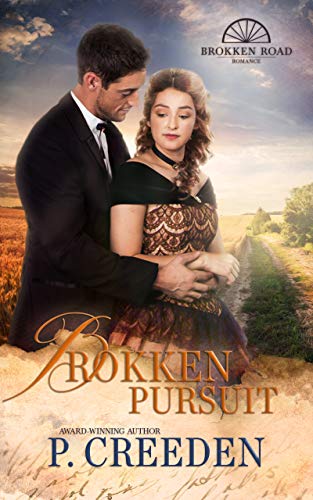
Get her latest historical romance set in 1868 Texas:


Tuesday, January 15, 2019

A Short History of Horseshoes

In the 1897, a set of bronze horseshoes with nail holes was discovered in an Etruscan tomb which was dated to have been used around 400 BC. These were the oldest set of horse shoes discovered, when it was thought before that the Romans invented horseshoes around 100 BC--but those were a sandal-like boot made of leather with a metal reinforced bottom.

Although there are a few references in history of nail-on metal shoes being used by war horses in the 900's, they weren't commonly used by Europeans until around the time of the Crusades, a hundred years later. Over the next two hundred years, the horse shoe went from being made of bronze to being made of iron, undergoing the same evolution as metals used for swords, and by the 1600s, blacksmiths could buy ready-shaped horse shoes that they could heat up and finish to the exact size and shape of the horse's foot.

It wasn't until the Industrial Revolution, that a machine capable of making up to 60 steel shoes per hour was patented. Because of the use of these manufactured shoes, the North was given an advantage over the South in the Civil War.

Surprisingly to some, the shape and manufacture of horse shoes hasn't changed much since the 19th Century. The blacksmith still adjusts the shape and fit of the shoe to the horse, even when he uses a factory "keg" shoe. Shoes come in several different sizes to start with, but no two horses have the exact same shape to their hoof, so the farrier must adjust the shoe and change its factory shape to one that fits the horse most comfortably.

Because the shape of each horse's hoof is different, it truly was easy for trained scouts to track horses and know the horse's size and how much weight they carried. Many blacksmiths put a mark on the shoes they made as a signature on their work. This also could have been used by trackers to know which town the horse came from as well.

I've always had an affinity and great respect for the work of trained farriers and blacksmiths. When I was in college, it was one of the careers I considered for a while, but put the side because of the great amount of strength and stamina these metal workers need to be able to do their job. However, it turned out that I married a farrier, instead.


P. Creeden is the Sweet Romance and mystery pen name for USA Today Bestselling author, Pauline Creeden. Animals are the supporting characters of many of her stories, because they occupy her daily life on the farm, too. From dogs, cats, and goldfish to horses, chickens, and geckos -- she believes life around pets is so much better, even if they are fictional. 

Get her latest historical romance set in 1867 North Texas:


Tuesday, December 18, 2018

Caring for Horses in the 1800's Winter

Besides writing full-time, my husband and I also run a horse riding stable in the middle of a suburban/city area. We are surrounded by concrete and businesses and most people don't know about our seven acres nestled right off a major highway in Virginia. Right now, in modern times, taking care of the animals on a farm is a full time job, and they are our livelihood, not just a hobby, like they might be for others.

According to the American Horse Council, there are currently about 9 million horses in the US, but in 1869 the number was closer to 13 million. Horses were much more common, used for transportation and work. So their daily care was of great importance to farmers and ranchers.

In the winter time, the most important precaution that horse owners needed to take during the harsh winter months was to make sure that horses had fresh water available. This often meant heating buckets on their wood stoves and then carrying them out to pour into troughs that were iced over, unless they had a running stream on the property.

Most horsemen and farmers fed their horses oats and barley, as those two feeds were higher in nutrient value and safer for the horses than straight corn or bran. In the summer months, they had to collect and bale hay to store for the winter months, because in order to maintain their weight, horses need to eat 1.5-2% of their body weight daily (depending on their level of work). And horses are grazers, which means that they eat little amounts all day long. So when the grasses they normally ate were unavailable, ranchers would need to drop bales of hay out for the horses to eat

When it snows, things get a bit trickier for horse owners. Many owners, during the harshest parts of the winter, would pull their horses' shoes off, so that the horses didn't collect ice and snow balls in their shoes which would make it difficult for the horses to move about without possibly pulling a tendon or ligament.

Even when horses were not able to fulfill their duties for traveling or working the farm, their caretakers still had to provide food, water, and care for them daily. (Reference for this article: The Horse: Its Keep and Management by William Cook 1891)

P. Creeden is the Sweet Romance and mystery pen name for USA Today Bestselling author, Pauline Creeden. Animals are the supporting characters of many of her stories, because they occupy her daily life on the farm, too. From dogs, cats, and goldfish to horses, chickens, and geckos -- she believes life around pets is so much better, even if they are fictional. 

Get her latest historical romance set in 1880 Wyoming:


Tuesday, March 13, 2018

New Release--Love's Target by Linda Carroll-Bradd


The next story in my Entertainers of the West series, Love’s Target, has released. This novella is part of Debra Holland’s Montana Sky Kindle World.

BLURB:

Vanora Deverell is tired of accompanying her father in his vagabond life as a farrier and wants a house to call her own. Even more, she’s tired of keeping him away from the Faro tables. When a casino owner demands her hand in marriage to cancel her father’s outstanding debt, Vanora and her father go on the run. No matter what Vanora does, she’ll never do it as well as her late brother, even though she’s stepped in as her father’s apprentice. But she yearns to be recognized for the young woman she has become. Having to dress as a boy to enter shooting contests grates on her nerves, but her shooting skill is their best chance to get out of debt.

Rancher Trent Melbyrne wants to step out from his father’s shadow and be recognized as a horse breeder in his own right. He’s in Bozeman buying a stud stallion when he enters a shooting contest and is chagrined when his accomplishments are bested by a boy…until he learns a secret about his opponent. At a second contest a few days later, he can’t believe the unfairness of the acclaim being heaped on the boy’s head. When he reveals the shooter’s secret, he sets off a string of events that lead to a showdown on his ranch in Morgan’s Crossing, Montana Territory. Can he atone for the danger he’s caused?

Available only on Amazon for $1.99 and free in Kindle Unlimited


EXCERPT:

The call came to set up for the rifle contest. The targets had been moved to the far end of the field. This time, the contestants stood about three hundred feet distant.

He hesitated over adding himself to a line, hoping to be positioned opposite the boy if he entered this contest. Finally, he stepped up to the mark for the farthermost target, settled his Winchester 1873’s stock against the cup of his shoulder, pulled up the graduated rear sight, and lined up the fixed sight. Trees at the edge of the forested area showed only slight movement. Good. Not much compensation needed for wind drift. He lowered the rifle barrel until it pointed at the ground and waited for the signal to shoot.

At the last moment, the boy shuffled to the mark to Trent’s left, cradling a Spencer carbine rifle, head cast downward.

Under the ruse of looking down the line toward Stanley, he gave sideways glances at the figure to his left. The repeating rifle was at least twenty years old but looked well cared for. Possibly, the father’s weapon from his military service. The boy’s clothes were baggy enough to almost look like a disguise. But why would that be? Dirt marked the side of the boy’s face, swiped along a cheek that appeared rounded and soft. How old was this boy? The streaks weren’t unusual for a hot summer’s day when kids were playing. But Trent hadn’t seen him anywhere on the ranch except in the area of the contest.

“All right, commence firing.”

The boy glanced just once at Trent and frowned. Then he angled his body and raised the rifle to shooting position.

The crack of the first shot snapped Trent alert, and he shook his head to clear the unusual thoughts. He set himself up with his left shoulder aimed toward the target, raised his weapon, and put the boy out of his mind. Instead, he focused on his aim, inhaled a deep breath, and held it. With precision, he did his best to group his six shots into the red circle.

When the firing stopped and the breeze wafted the smoke from the line of guns, he heard a soft-spoken exclamation, “Yes” that tightened his gut. Struck speechless, Trent could only gape at the vacant space to his left. Not only had his opponent disappeared from sight, but his opponent was not a boy.


Linda blogs here on the fourth Friday of the month and her other social media contacts are:
website  www.lindacarroll-bradd.com
blog   http://blog.lindacarroll-bradd.com
Twitter https://twitter.com/lcarrollbradd
Amazon author page  
https://www.amazon.com/author/lindacarroll-bradd
To subscribe to her occasional newsletter, click here


Friday, January 5, 2018

Old West Employment: Well Beyond Sheriff, Livery Owner, Saloon Keeper, Cowboy and Rancher, by Kristin Holt

by Kristin Holt, USA Today Bestselling Author


Have you noticed the list of "favorites" in Western Historical  Romances? The Top Fifteen Jobs held by men (and women) in the Old West? Based upon wholly unscientific research, it seems to me the majority of Heroes (and Heroines) bring home the bacon as one of the following:

  1. Lawman: Sheriff, Deputy Sheriff, City Marshal
  2. Pinkerton, Lady Pinkerton
  3. Livery Owner
  4. Saloon Keeper
  5. Saloon Girl
  6. Cowboy, Rancher
  7. Banker
  8. Bounty Hunter
  9. Outlaw
  10. Miner
  11. Teacher
  12. Boardinghouse / Hotel Owner
  13. Pastor
  14. Shopkeeper
  15. Fancy Lady / Soiled Dove / Fallen Woman
This list of "usual options" barely scratches the surface of true-to-history sources of income. Just like today, when men and women work at unique, different, interesting careers and vocations, people in the nineteenth century did so, too.


After all, somebody had to paint those signs merchants hung up on Main Street.
Signs might not be a surprise... but have you thought about upholsterers? Furniture Repair?

And builders of various kinds:


Women were often sought for "women's work" such as nursing the ill, seamstresses, cooks, housekeepers (private families and hotels).
 As evidenced by this coach shop interior finishing job reference, women were employed in the 19th century west in far more ways than one might expect:
Did you know many growing Old West cities had "Paper Binderies"? With plenty of business, they must have taken on jobs from a local printer, or from a businessman who wanted specialty ledgers. What else do you suppose they bound? Court records? (I've seen the bound volumes covering historical court cases.)

We're far from through! This "Business Cards" Section is precisely what it sounds like... business cards. The kind your dentist or doctor might have on their receptionist's counter. They served to advertise their business and location, along with specialties, in a section of the local newspaper. The following five images come from the Cortland Register of Cortland, Kansas on July 8, 1892.


Photographer! Plasterer! Post Master! Lumber Co.! Confectionery And Eating House! Bank Manager, General Merchandise, Pharmacist, and Hardware:
Two more General Merchandise establishments, a livery, a Meat Market (important!), a "Tonsorial Artist" (hairdresser), Physician & Surgeon, Grain sales, Shoemaker, Exchange Bank, Well Borer (can you imagine living without one of those?), and Paper Hanger.


Island Rock Elevator (Grain Company), Butler House (hotel or lodging), Millinery & Dress Making, Blacksmith (Horse-shoeing a Specialty), Racket Store, Stock Buyer (that beef must come from somewhere), and Well Boring and Rock Drilling:


Nursery (trees, plants), another Blacksmith, Stock & Grain, Lumber Yard (referenced location), Restaurant & Bakery (with a fine line of confectionery), Blacksmith, Notary Public (naturally!), Insurance Agent (surprised?), Grist Mill (no surprise there), Stock and Grain (again), and City Millinery (and Dress Making).


"Job Office" (neatness & dispatch; Printer), and a little more about Mrs. Wm. Campbell's City Millinery (at the bottom of the previous snipped image).

I'll add a few more I've seen in such "Business Cards" and advertisements in 19th century newspapers in the Western States and Territories:


1. Soda Fountains (usually in a pharmacy, or in rare situations, in a bakery or sweet shop), soda jerk
2. Land Office
 
3.  Assayer Office
4.  Professional painters
5.  Midwives
6.  Confectioners
7. Engravers (to make the pictures reproduced in newspapers)

8.  Jewelers & Watchmakers (and repair)

9. Bicycle Shops, repair
10. Beekeepers
11. Cement Companies (concrete)

12. Moving and Storage Companies (such as personal household moves)

13. Freight Companies (to move products for sale)

14. Dentist

15. Firemen, firefighters (if only volunteer)
16. Tailors (for men)
17. Musicians (whether for band or orchestra concerts, traveling musical shows, or paid performers at weddings, dances, etc.). These musicians often tuned pianos, sold musical instruments, and/or gave music lessons for hire.


18. Female Authors (for eastern magazines and presses)

19. Green Grocer (vegetables from local farmers or refrigerated rail cars)
20. Roller Skating Rink Proprietors

21. Theaters (proprietors, management, ushers, ticket sales)
22. Bath House
23. Wood Delivery


24. Coal delivery

25. Barber (Men's, including shaving services)
26. Hat Shop (men's--haberdashery, women's--millinery)
27. Brickyard


28. City Impound Lot (for wandering animals)
29. Dance Instructors
30. Undertaker (and furniture builder, who often built caskets)


 31. Judge, Lawyer / Attorney

32. Cooper (barrel maker)
33. Wagon shop (repair, new construction), Wheelwright
34. Handyman
35. Shingle Manufacturer

36. Laundry
37. Sawmill


38. Planing Mill

39. Farrier (craftsman who trims and shoes horses' hooves)
40. Newspaperman and Newspaper Printer
41. Museum and Menagerie


42. Water Delivery
43. Iceman (delivery)
44. Tobacco Shop
45. Surveyor / Civil Engineer


46. Stone Masons and Quarriers

47. Bone Collectors (buffalo bones on prairie)
48. Railroad workers of many varieties (station master, engineer, track layers, switchmen, firemen (kept the steam engine fires going), etc.)
49. Bridge Builders


50. Telegraph Operator
51. Hello Girls
52. Typewriter Girls
53. Brewers


54. Whisky Distillery

55. Harness Shop, Saddle Maker

56. Stage Driver
57. Wet Nurse


58. Stationery Shop
59. Gunsmith

60. Plumber

61. Phrenologist
62. Lecturer


63. Patent Medicine Salesman
64. Drummer (traveling salesman)
65. Public Library
66. Bookkeeper
67.
Construction Laborer
 

68. Exterminator
69. Architect and Builder
70. Marble works (gravestones)
71. Veterinarian
72. Waitress in first class hotel restaurant
73. Grain Mill (someone must make flour)
Whew! That's quite a list! Maybe only authors of Western Historical Romance care about such things... but I imagine fans of the genre do, too.


What additions would you make to my "Usual Culprits" list?


What additions would you make to my True-to-History, Different Employment list?


Have you read a recommendable title with a hero or heroine working in an atypical Old West job?


Please share this article with others who might find it informative or helpful.


Interested in more about the Old West? Visit my cache of articles about everything Old West-- especially as it relates to Sweet Western Historical Romance:
 http://www.kristinholt.com/archives/category/articles.

Hi! I'm Kristin Holt, USA Today Bestselling Author.
I write frequent articles (or view recent posts easily on my Home Page) about the nineteenth century American West–every subject of possible interest to readers, amateur historians, authors…as all of these tidbits surfaced while researching for my books. I blog monthly at Sweet Romance Reads and Sweet Americana Sweethearts. I love to hear from readers! Please drop me a note. Or find me on Facebook.


Copyright © 2018 Kristin Holt LC