Tuesday, January 15, 2019

A Short History of Horseshoes

In the 1897, a set of bronze horseshoes with nail holes was discovered in an Etruscan tomb which was dated to have been used around 400 BC. These were the oldest set of horse shoes discovered, when it was thought before that the Romans invented horseshoes around 100 BC--but those were a sandal-like boot made of leather with a metal reinforced bottom.

Although there are a few references in history of nail-on metal shoes being used by war horses in the 900's, they weren't commonly used by Europeans until around the time of the Crusades, a hundred years later. Over the next two hundred years, the horse shoe went from being made of bronze to being made of iron, undergoing the same evolution as metals used for swords, and by the 1600s, blacksmiths could buy ready-shaped horse shoes that they could heat up and finish to the exact size and shape of the horse's foot.

It wasn't until the Industrial Revolution, that a machine capable of making up to 60 steel shoes per hour was patented. Because of the use of these manufactured shoes, the North was given an advantage over the South in the Civil War.

Surprisingly to some, the shape and manufacture of horse shoes hasn't changed much since the 19th Century. The blacksmith still adjusts the shape and fit of the shoe to the horse, even when he uses a factory "keg" shoe. Shoes come in several different sizes to start with, but no two horses have the exact same shape to their hoof, so the farrier must adjust the shoe and change its factory shape to one that fits the horse most comfortably.

Because the shape of each horse's hoof is different, it truly was easy for trained scouts to track horses and know the horse's size and how much weight they carried. Many blacksmiths put a mark on the shoes they made as a signature on their work. This also could have been used by trackers to know which town the horse came from as well.

I've always had an affinity and great respect for the work of trained farriers and blacksmiths. When I was in college, it was one of the careers I considered for a while, but put the side because of the great amount of strength and stamina these metal workers need to be able to do their job. However, it turned out that I married a farrier, instead.


P. Creeden is the Sweet Romance and mystery pen name for USA Today Bestselling author, Pauline Creeden. Animals are the supporting characters of many of her stories, because they occupy her daily life on the farm, too. From dogs, cats, and goldfish to horses, chickens, and geckos -- she believes life around pets is so much better, even if they are fictional. 

Get her latest historical romance set in 1867 North Texas:


Monday, January 14, 2019

The Meaning Behind “Fool Chief”


Sometimes it is interesting – pathetic, even – how language can change the connotation of things, especially when the Americans get involved with translating from Native American languages to English. We who speak English may consider a “Fool Chief” to be something entirely different than the original intent behind the title given to one of the chiefs of the three primary camps or villages of the Kansa Indians, also known as the Kaw. Thankfully, we have an explanation of the true meaning, thanks to a letter written by a long-time resident of Morris County, Kansas.

Here is his short biography:


George P. Morehouse was born July 28, 1859, in Decatur, Illinois. In 1871 the elder Morehouse drove overland in covered lumber wagons to Diamond Springs, Morris County, Kansas, and opened a stock ranch, where his family settled. The stock farm gained a reputation for quality.
George Morehouse became an expert hunter and horseman, driving herds to other ranches. At a young age he was active in politics and early railroad matters, and was a frequent speaker and debater. He attended Albion (New York) Academy, and graduated in 1884. He also graduated from the University of New York, where he was elected president and orator of his class. He studied law, but returned to Council Grove to manage the cattle ranch. He finished his legal education in Kansas and was admitted to the bar in 1889. He was appointed city attorney of Council Grove, serving about six years. Morehouse was also elected county attorney of Morris County, the county which included the Kaw Reservation at Council Grove between 1848 and 1872.

Here is the letter addressed to George W. Martin (emphasis in bold added):
Council Grove, Kansas, April 16th 1904

The Honorable George W. Moreland,

Topeka, Kansas.

My dear sir and friend:-

Your letter will with inquiry relative to the matter of the “Fool Chiefs” of the Kaw Indians received and I should have answered it sooner, but the duties in our spring term of Court have prevented. There will be no discrepancies in the Indian stories of Capt. McClure and the writer.

There were two Fool Chiefs, who at different times were well-known head chiefs of the Kaw Indians,- father and son.

The Fool Chief the First, "Ca-ega-tan-nin-ga," was prominent as a great chief away back as early as 1819, when Major Long's exploring expedition held a council with the Kaws on the Missouri River and when a part of the Expedition visited their large village near the mouth of the Blue [River].

The Kaws had three villages on the Kansas River, the largest one governed by the Fool Chief and the other two presided over by Hard Chief and American Chief. It may here be mentioned that the Kaws governed and usually operated in all things by threes.

Fool Chief's Village - Courtesy Kansapedia
They were always divided into three villages or tribal divisions and when they lived on their reservation near this place, kept up the three village scheme. Fool Chief the first, came here with the Kaws in 1847 and during the year of 1848 while on a visit and to Missouri was killed in a difficulty in Johnson County, in the manner you relate in your address.

"Kah-he-ga-wa-ti-an-gah" or Fool Chief the second, was a son of the former and seemed to inherit the rank from his father. He was “Fool Chief” during the residence of the tribe here and went with the Kaws in 1873 to their present home in the Indian Territory, where he died a very old man a few years ago.

During most of his life he was a great and wise councilor and in his younger days a brave warrior, but once, a few years before the tribe went to the Territory, he became crazed by liquor and in a quarrel killed a Kaw brave with little or no excuse.

It caused a grand council of the tribe to be convened and after full investigation, he was only allowed to save his life by paying a great fine, which took a large number of ponies, robes and many valuable relics. He was also required to surrender his chiefship for a time and was considered in disgrace.

"Kah-he-ga-wa-ti-an-gah" was a peculiar hereditary title and had historical and important significance. Some claim that there was always a “Fool Chief” or a Kah-he-ga-wa-ti-an-gah in the tribe. At different times and by different writers it was spelled Ca-ega-wa-tan-nin-ga, Ka-he-ga-wa-ta-ning-ga, and Kah-he-ga-wa-ti-an-gah the latter being the authorized way by those who lived with the Kaws here and according to our mutual friend Judge Huffaker is the most expressive. Kah-he-ga means chief and wa-ti-an-gah means brave and courageous even to rashness. The term “Fool Chief” was a high and honorable distinction and became hereditary, but could only be maintained by brave and warlike qualities along with good conduct and wisdom in counsel. Originally it was obtained by some remarkable act of personal bravery, daring, Indian prowess which brought advantage and renowned not only to the individual but to the tribe.

The spelling of Indian names varies and is not very important, but that which gives best representation of the pronunciation should be used. Having no written language, this is manifestly so.

The later day fool chiefs in Kansas are in no wise followers of the methods of those dusky worthies of long ago, but now as then all dynasties in Kansas, whether of the fool character or otherwise come to an end and so must this letter.

Have you sent those last pamphlets relative to the State Seal, etc.? I return the leavee of the address you sent.

I think this will harmonize and the discrepancies you mentioned, for there were at least two "Fool Chiefs" among the leading historical characters of the Kaws.

Very truly, Geo. P. Morehouse

Unfortunately, I was not able to locate an image of either "Fool Chief." I find it interesting that “fool” is part of the name or a title for other tribes besides the Kaw. What we today think of as a fool had an entirely different meaning, at least among some Native American tribes.

In my latest book, Charlie's Choice, I placed Charlie's Kansa uncle in the Fool Chief's camp as it existed in 1856. 

PLEASE CLICK HERE to reach the full book description and purchase link for Charlie's Choice. Charlie's Choice is also available on Kindle Unlimited.


Sources:
https://www.kansasmemory.org/item/219522

Friday, January 11, 2019

Fact and Fiction Behind the Oak Grove Series ~

By Kathryn Albright


With the release of Christmas with the Outlaw over the holidays, the Oak Grove Series that I wrote with Lauri Robinson came to its conclusion. I loved writing this sweet series set in Kansas, diving into the history of the land and  the people there so that the stories would come alive with authenticity. I thought I'd share some of the behind the scenes facts that helped drive and layer the plots of each book.

For example ~

Book #1 


FACT:  
A year after the 1878 setting of the first book in the series, I learned that a prominent issue in the state legislature was prohibition. Carrie A. Nation, was living at Medicine Lodge, KS at this time before she began her famous crusade against alcohol. By 1880, an amendment to the state constitution was in place that prohibited the manufacture, sale, or gift of liquor. And by 1881, Kansas had become the first state to prohibit all alcoholic beverages.

FICTION:
So, in Mail-Order Brides of Oak Grove (set in 1878) when twin sisters, Mary and Maggie, were “railroaded” into the fledgling town as obstinate mail-order brides-to-be, it was only natural for them to try to escape their predicament. As daughters of a snake-oil salesman, and in the midst of the brewing controversy (pun intended,) they resurrected their past livelihoods and began making their meade-based family health elixir.

Book #2


FACT:  
Flooding of the Smoky Hill River often occurred in the spring and eventually dams were built along the river to try to control the worst of it. While bridges were slowly being built along the more populated areas of the river (Salina), Oak Grove still had a ferry crossing. In the spring of 1879, the heavy rains brought intense flooding that destroyed the crops and land to the south of the river. In soddies, it wasn’t unusual for the roof to cave in. (For more on this, see Homesteading on the Prairie, a previous post of mine.)

FICTION:
In The Prairie Doctor’s Bride, it was this torrential rain and flooding that necessitated that independent, isolationist Sylvia Marks leave her soggy soddie and brave the river so that she and her son could survive. It also forced her to leave her comfort zone and look to others for help. Eastern-educated Doctor Nelson had a lot to learn about women and life on the prairie, and Sylvia was just the one to teach him, if he’d only put aside his prejudices.

Book #3


FACT: 
In 1873, George Grant transported four Angus bulls from Scotland to Kansas and showed them at the Kansas City Livestock Exposition. Breeding these bulls with Texas longhorns produced a much heartier breed. (For more see my post From Longhorns to No-Horns.)  In 1874 four Kansas Railroads shipped 122,914 head of Texas cattle to the east. Mennonites from Russia introduced Turkey Red wheat to the state. And the Native Americans were forced to move to the reservation in Oklahoma Territory. In 1878, the last Native American uprising in Kansas occurred in Decatur County.

FICTION:
In Wedding at Rocking S Ranch, Raymond Wolf is looking out for the ranch of his best friend. The ranch had once been an encampment of his mother’s people – the Wichita. He is studying the breeding of the Texas longhorns with Angus cattle. When his best friend’s widow arrives in the autumn with news that she intends to sell the ranch, Wolf’s life is suddenly upended. Amid the arduous work of branding and driving the cattle to market, they discover that the truths they have believed were an illusion, and that what matters most is far more important.

BOOK #4 


FACT:
Newspaper work is dangerous! Missing fingers and long hours. (See The 19th Century Newspaper Office)  It was fun gathering facts about small-town newspaper offices and touring Midway Village ~ a nearby living history museum. I was able to speak with the docent there who just happened to be a small-town newspaper man!

FICTION:  
In Christmas With the Outlaw, my novella in A Western Christmas Homecoming, Abigail White is a straight-laced, just-the-facts, unemotional journalist. It’s safer for her heart that way. When a man from her past stumbles into her newspaper office to hide from the law, suddenly she is confronted with an emotional crisis. Should she be true to her journalistic sensibilities and report him to the sheriff? Or will her heart win out? She must learn that not all is what it appears on the surface of a person’s life.

** ** ** ** ** ** ** **
Researching my stories always gives my plots more layers ~ even though often I disappear for hours down the "research rabbit hole" chasing trails that are down right fun, but don't lead anywhere productive. But then...sometimes they do!

HAPPY 2019!

I enjoy hearing from my readers! Please find me at


And find my books at


Thursday, January 10, 2019

History of Skiing

by Shanna Hatfield

In my recently released sweet romance, The Christmas Melody, the heroine, Claire, learns how to ski from her sister-in-law. 

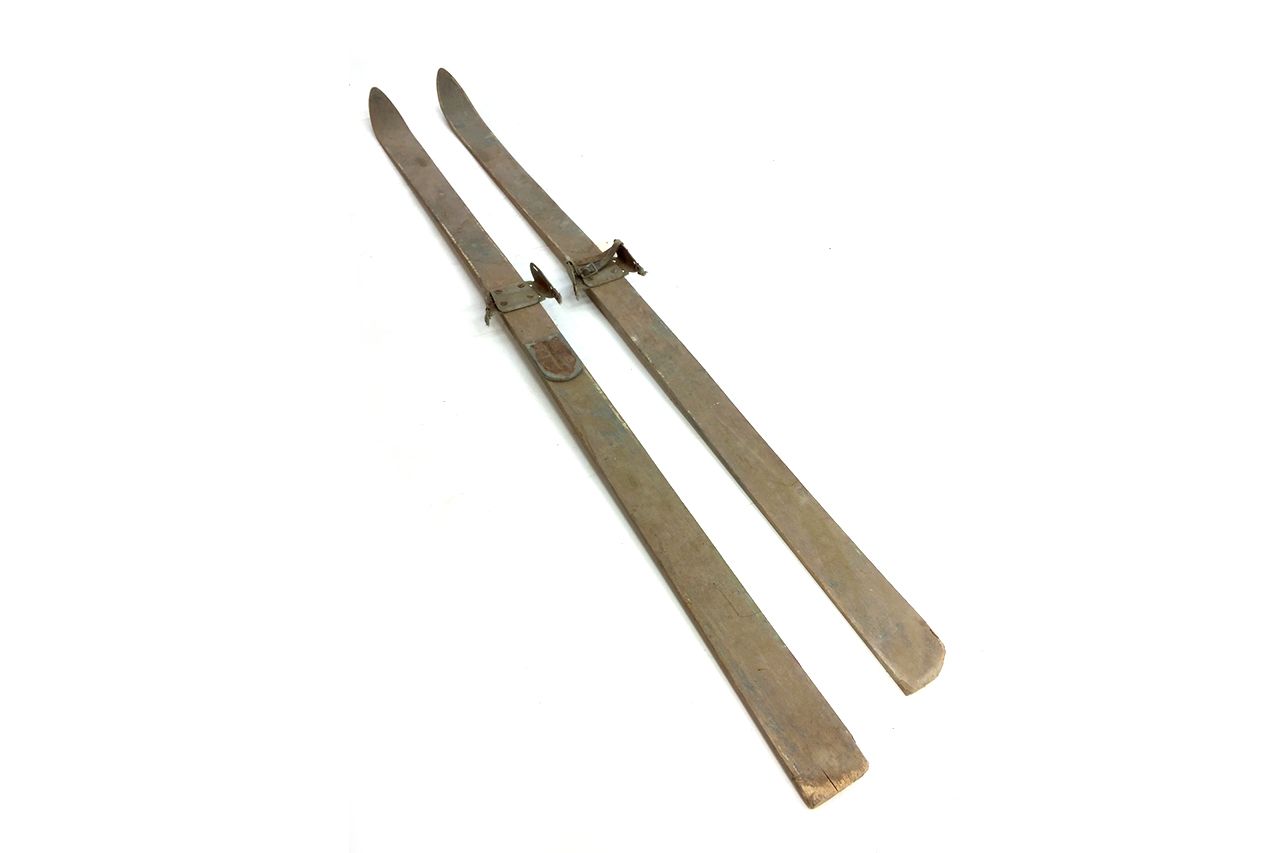
My own experience with skis is brief. When I was young and too stupid to know better, I begged my brother to let me try using his skis. The skis in question were an old wooden pair he'd unearthed from who knows where. There were no ski poles, just those long, heavy skis with worn leather straps to fasten around my boots.


Of course, my brother, who had great balance and was good at both ice skating and skateboarding, made it look so easy. 

He got me fastened into the skis and balanced on the edge of the big hill behind our house where we liked to go sledding. Then he gave me push and down the hill I went. My very short life flashed before my eyes and I vowed if I survived the experience, I'd never again set foot on skis. 

Which I haven't.

But Claire in my story is much more adventurous than I could ever hope to be. 

She uses the skis to get her through the woods to visit a charming little girl and the child's handsome father. 

I wanted to know more about the history of skiing, so I went on the search for more details.

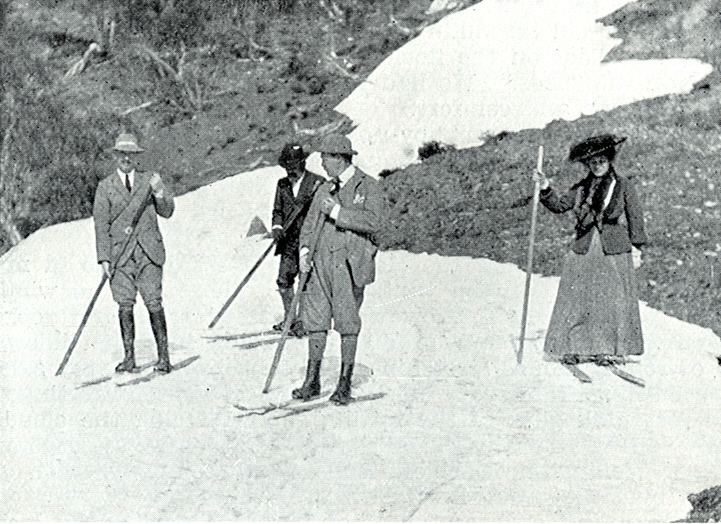
The history of skiing goes back to ancient times. The oldest set of skis found to date were in Russia in a peat bog. Items recovered included the remains of wooden skis and sled runners that date to 6500 B.C.


Rock paintings in both Russia and Scandinavia confirm a history of skiing going back to 3000 B.C. By 1300 BC, Norse mythology writings include mentions of skiing.

In 1206, Norwegian military skiers known as the Birkebeiners, (named for the protective birch bark leggins they wore) carried their king's heir, a 2-year-old, to safety over the Dovre Mountains from Lillehammer to Osterdalen during a civil war uprising. This created one of the most famous legends in  backcountry skiing. Since 1932, the famed Birkebeiner race has continued along the same route from Rene to Lillehammer. The boy they saved went on to become King Haakon Haakonsson IV played an important role in Northern Europe's history.

In the early 1700s, the Great Northern War between Russians, Swedish, and Norwegians was fought primarily on skis.

By the 1800s, the design of the ski took a leap forward with the invention of the cambered ski. The cambered ski bends toward the center in a concave pattern, allowing the ski to distribute the weight of the skier more evenly across the length of the ski. Before this concept, skis were thick and heavy to keep the ski from bending and sinking in the middle. The new design made it easy to glide over snow, improved shock absorption, and ease of turning.

The first documented recreational use of skis in the US is made in 1841.  By 1861, Alpine ski racing is an organized sport in American and Norway.

American miners used skis to get around in the winter, but with the bravery inspired by a challenge (and alcohol) they began racing in the rugged remote regions of the northern Sierra Nevada mountains.

The first hickory skis were produced in Norway in the 1880s. Modern tools made it possible to shape the tough and hard wood, enabling the creation of lighter, thinner skis with better flex. The toughness of the wood resisted dings and scars from gliding over rocks. Hickory was imported at great expense from the United States. Immigrants in the upper Midwest states of America took note and soon began making skis.

Skis are used not only for fun, but for essential purposes, too, like delivering the mail as Kit Morgan mentioned in her blog post last week.


The U.S. Ski Association, the governing body of Olympic snowsports, is founded in 1905.


A man from Salburg, Austria, Rudolph Lettner, invented a steel edged ski that gave the skis a much better grip on hard snow while still allowing the wood to flex. Durability left something to be desired in the early years, but improvements came in the 1930s with the invention of three-layer laminate skis. 

The first chair-lift was installed in 1936 in Sun Valley, Idaho. The following year, an invention made by R.E.D. Clark of Cambridge, England, revolutionized the world of skis through the invention of an adhesive created to hold airplanes together. That glue changed ski construction and set the stage for metal and plastic skis. 


If you'd like to read about a charming girl who skis her way into a man's heart, check out The Christmas Melody. 

Excerpt:

“Where in the world did you find these?” Claire asked as Fred handed her a pair of wooden skis.

“Oh, I was helping the Nilsson family pack up the last of their things today and they had two pairs of these skis out in the barn rafters. They didn’t want to haul them to Portland, so they said I could have them. I thought you might enjoy them,” Fred said, setting two sets of skis down on the snow near the porch steps. “Have you ever used them before?”

“No, but it can’t be that hard to learn, can it?” Claire asked, studying the buckles a moment before she stepped onto the skis and bent to fasten them around her boots.

Fred stepped onto the other pair and buckled them on. “Shall we give this a whirl?”

“We shall,” Claire said with a giggle. She slid one foot forward, then the other, then suddenly everything seemed to be sliding at once and she fell over in the snow.

A shout from Fred drew her gaze to him as he tumbled into a pile of snow near the front walk.
“Are you hurt?” Fred asked as he tried to disentangle himself and get to his feet.

“I’m wonderful,” Claire said, laughing as she looked up at the blue sky above them. In a playful mood, she lobbed a snowball at Fred.

He shot one back at her and they both were laughing, still stuck in the snow with the skis twisted together when Elsa stepped outside and glanced from one of them to the other.

“What are you two doing?”

“Learning to ski?” Claire’s statement sounded more like a question and caused Fred to snicker.

“Oh, for Pete’s sake,” Elsa said, stepping back inside the house and soon returning wearing her coat, hat, scarf, and gloves. “Let me see if I remember how to do this.”


USA Today bestselling author Shanna Hatfield is a farm girl who loves to write. Her sweet historical and contemporary romances are filled with sarcasm, humor, hope, and hunky heroes. When Shanna isn’t dreaming up dreamy characters, twisting plots, or covertly hiding decadent chocolate from the other occupants of her home, she hangs out with her beloved husband, Captain Cavedweller.
Shanna loves to hear from readers. Follow her online at:
Find Shanna’s books at:


Tuesday, January 8, 2019

19th Century Family Medicine by Kimberly Grist


As I was researching everyday life in the 19th century, I ran across some interesting articles that were actually advertisement for "Dr. Pierce's Golden Medical Discovery Pills," Dr. Pierce's Favorite Prescription Tablets," and Dr. Pierce's Pleasant Pellets" which were peddled for all sorts of "female ailments" like hysteria, fatigue and menstruation pains.  


Today over the counter medication is a huge business and set to exceed $178 billion by 2024. It is also readily available and highly regulated.

In the 19th century, unregulated secret formulas such as the above-mentioned patent medication were also substantial money makers.


In the late 1800s and early 1900s, Dr. Ray Pierce became famous for his patent mail-order medicines. They were advertised widely and sold directly to the public.


A graduate of The Eclectic Medical College of Cincinnati in 1862, Dr. Pierce had the ability to market and sell his medicines by describing illnesses and their symptoms with medical terminology. Many of his elixirs contained opium until the mid-1890s. 


Pierce promoted his concoctions through his book, "The People's Common Sense Medical Advisor," which was primarily an advertisement for his products and included testimonials from patients whose claims of cures convinced millions of people to try his remedies.


Dr. Pierce's Book sold more than two million copies by 1907.


The "Dream Book" was one such advertisement that intermingled articles among the cure-all claims which included dream interpretations and bridal superstitions like this:

How To Tell Whether You Will Marry Soon

At the table, if two spoons are accidentally put down together, there will soon be a wedding in the family. If by chance, an unmarried woman or a bachelor be placed between a married couple at supper, that person will soon become engaged. A strange white pigeon flying near a house is a sign that someone there will be married within a year. To see a caged bird in one's dream indicates a forthcoming wedding.


Watch Your Step


Between the calling of the banns and the wedding, the spirits of evil and envy are said to have great power. Therefore at this time the engaged couple should guard against a lovers' quarrel, exercise caution when going downstairs, not to stumble, and they should not be photographed together.


It's the Big Day


On no account should a bride or a bridegroom be handed a telegram on the way to church. The bride must be careful when leaving the church to put her right foot first. It is deemed most unfortunate for a bride to make the first step into the new world with the left foot. To have an unequal number of guests at the wedding breakfast or supper is unlucky.


When to tie the knot


Even before you start following the preceding instructions to a tee, you should ensure that you pick a particularly auspicious date. Here's a helpful guide.


January—If married in January, the wife will live longer than her husband.

February—In February, domestic happiness will prevail.
March—In March, the couple will eventually make their home abroad.
April—The April bride very decidedly rules the roost.
May—May is considered unlucky for weddings.
June—June is an exceptionally lucky month and promises lasting love to its bridal couples.
July—July marriages are apt to be crisscrossed with sunshine and shadow.
August—August is noted for its ideally mated couples.
September—September marriages run a smooth, congenial course.
October—October, either love or money will be lacking in the future for those who join hands this month.
November—November promises prosperity.
December—December a life full of love.


In my first novel Rebecca's Hope, I introduced colorful characters and innovative young women in a western town during the same time period as the famous patent-medicine wizard, Dr. Pierce.

Lois's Risk is a continuation of the story of a young woman, who has been schooled to be proper, lady-like, honest, to clean, sew and cook so at the appropriate age she would marry. 


As an adult, she surpassed her father's expectations with her skills and beauty only to shatter them when she opens a dress shop. She's worked hard making a success of her business. Now the handsome bank owner has come calling. So why isn't she happy? Moreover, why can't she forget about a certain farmer with big brown eyes? 

Can she summon the courage to take another risk and tell the man she loves how she feels?

Lois's Risk is available to read for free on Kindle Unlimited.
https://www.amazon.com/dp/B07LDDHVQV/


Connect with Kimberly: 
Facebook: https://www.facebook.com/FaithFunandFriends/ 
Twitter: www.twitter.com/GristKimberly    
Amazon Author Page: www.amazon.com/Kimberly-Grist/e/B07H2NTJ71