by Shanna Hatfield
In my recently released sweet romance,
The Christmas Melody, the heroine, Claire, learns how to ski from her sister-in-law.
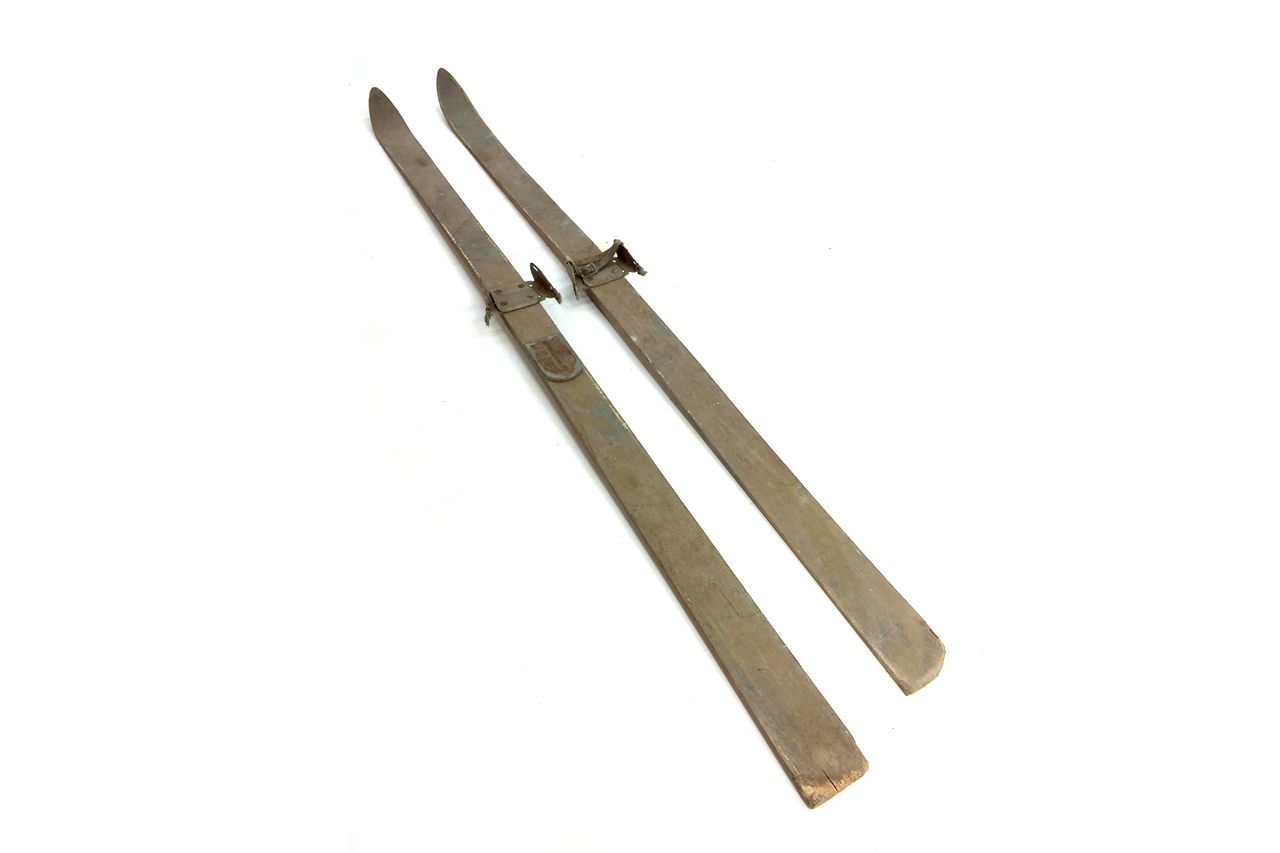
My own experience with skis is brief. When I was young and too stupid to know better, I begged my brother to let me try using his skis. The skis in question were an old wooden pair he'd unearthed from who knows where. There were no ski poles, just those long, heavy skis with worn leather straps to fasten around my boots.
Of course, my brother, who had great balance and was good at both ice skating and skateboarding, made it look so easy.
He got me fastened into the skis and balanced on the edge of the big hill behind our house where we liked to go sledding. Then he gave me push and down the hill I went. My very short life flashed before my eyes and I vowed if I survived the experience, I'd never again set foot on skis.
Which I haven't.
But Claire in my story is much more adventurous than I could ever hope to be.
She uses the skis to get her through the woods to visit a charming little girl and the child's handsome father.
I wanted to know more about the history of skiing, so I went on the search for more details.
The history of skiing goes back to ancient times. The oldest set of skis found to date were in Russia in a peat bog. Items recovered included the remains of wooden skis and sled runners that date to 6500 B.C.
Rock paintings in both Russia and Scandinavia confirm a history of skiing going back to 3000 B.C. By 1300 BC, Norse mythology writings include mentions of skiing.
In 1206, Norwegian military skiers known as the Birkebeiners, (named for the protective birch bark leggins they wore) carried their king's heir, a 2-year-old, to safety over the Dovre Mountains from Lillehammer to Osterdalen during a civil war uprising. This created one of the most famous legends in backcountry skiing. Since 1932, the famed Birkebeiner race has continued along the same route from Rene to Lillehammer. The boy they saved went on to become King Haakon Haakonsson IV played an important role in Northern Europe's history.
In the early 1700s, the Great Northern War between Russians, Swedish, and Norwegians was fought primarily on skis.
By the 1800s, the design of the ski took a leap forward with the invention of the cambered ski. The cambered ski bends toward the center in a concave pattern, allowing the ski to distribute the weight of the skier more evenly across the length of the ski. Before this concept, skis were thick and heavy to keep the ski from bending and sinking in the middle. The new design made it easy to glide over snow, improved shock absorption, and ease of turning.
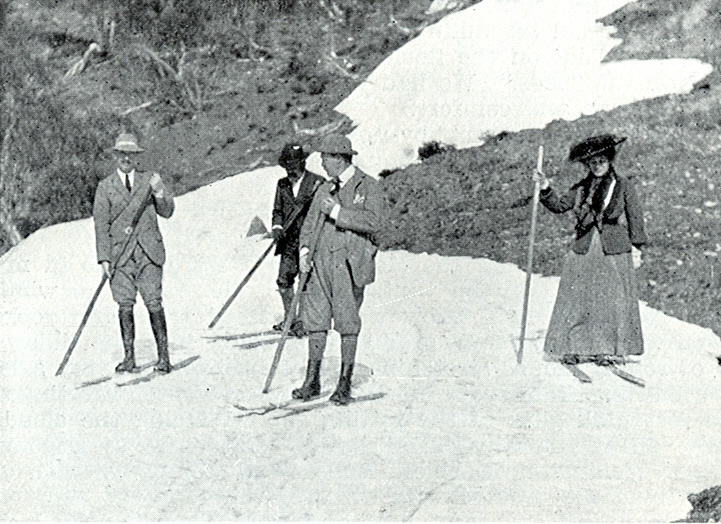
The first documented recreational use of skis in the US is made in 1841. By 1861, Alpine ski racing is an organized sport in American and Norway.
American miners used skis to get around in the winter, but with the bravery inspired by a challenge (and alcohol) they began racing in the rugged remote regions of the northern Sierra Nevada mountains.
The first hickory skis were produced in Norway in the 1880s. Modern tools made it possible to shape the tough and hard wood, enabling the creation of lighter, thinner skis with better flex. The toughness of the wood resisted dings and scars from gliding over rocks. Hickory was imported at great expense from the United States. Immigrants in the upper Midwest states of America took note and soon began making skis.
Skis are used not only for fun, but for essential purposes, too, like delivering the mail as Kit Morgan mentioned in her blog post last week.
The U.S. Ski Association, the governing body of Olympic snowsports, is founded in 1905.
A man from Salburg, Austria, Rudolph Lettner, invented a steel edged ski that gave the skis a much better grip on hard snow while still allowing the wood to flex. Durability left something to be desired in the early years, but improvements came in the 1930s with the invention of three-layer laminate skis.
The first chair-lift was installed in 1936 in Sun Valley, Idaho. The following year, an invention made by R.E.D. Clark of Cambridge, England, revolutionized the world of skis through the invention of an adhesive created to hold airplanes together. That glue changed ski construction and set the stage for metal and plastic skis.
If you'd like to read about a charming girl who skis her way into a man's heart, check out
The Christmas Melody.
Excerpt:
“Where in the world did you find these?” Claire asked as
Fred handed her a pair of wooden skis.
“Oh, I was helping the Nilsson family pack up the last of
their things today and they had two pairs of these skis out in the barn
rafters. They didn’t want to haul them to Portland, so they said I could have
them. I thought you might enjoy them,” Fred said, setting two sets of skis down
on the snow near the porch steps. “Have you ever used them before?”
“No, but it can’t be that hard to learn, can it?” Claire asked,
studying the buckles a moment before she stepped onto the skis and bent to
fasten them around her boots.
Fred stepped onto the other pair and buckled them on. “Shall
we give this a whirl?”
“We shall,” Claire said with a giggle. She slid one foot
forward, then the other, then suddenly everything seemed to be sliding at once
and she fell over in the snow.
A shout from Fred drew her gaze to him as he tumbled into a
pile of snow near the front walk.
“Are you hurt?” Fred asked as he tried to disentangle
himself and get to his feet.
“I’m wonderful,” Claire said, laughing as she looked up at
the blue sky above them. In a playful mood, she lobbed a snowball at Fred.
He shot one back at her and they both were laughing, still
stuck in the snow with the skis twisted together when Elsa stepped outside and
glanced from one of them to the other.
“What are you two doing?”
“Learning to ski?” Claire’s statement sounded more like a
question and caused Fred to snicker.
“Oh, for Pete’s sake,” Elsa said, stepping back inside the
house and soon returning wearing her coat, hat, scarf, and gloves. “Let me see
if I remember how to do this.”
USA Today bestselling author Shanna Hatfield is a farm girl who loves to
write. Her sweet historical and contemporary romances are filled with sarcasm,
humor, hope, and hunky heroes. When Shanna isn’t dreaming up dreamy characters,
twisting plots, or covertly hiding decadent chocolate from the other
occupants of her home, she hangs out with her beloved husband, Captain
Cavedweller.
Shanna loves to hear from readers. Follow her online at:
Find Shanna’s books at: