Friday, July 5, 2019

Marry for True Love or Riches? by Kristin Holt


Kristin Holt | Marry for True Love or Riches (1886), Sweet Americana Sweethearts
 
of Sweet Romance set in the Victorian American West


To Wed for Love or Money ~


Ha! Our Victorian-American forebears asked themselves the same question people still do today: Is it best to wed the one my heart loves, or shall I choose the millionaire? (insert snickers here) Okay, maybe more like this, “shall I wed my best man, Jim, even though we’ll live with Ma and Pa (far more standard in the Old West than modern romantic fiction portrays)”, or shall I choose the dashing railroad man with the two-carat diamond stickpin?”

Seriously, this precise question was dealt with in true-to-Victorian-American times, in great and flowery length. The following is a careful transcription, word for word, preserving punctuation and variations in spelling. Published in The Sunday Leader of Wilkes-Barre, Pennsylvania on May 30, 1886, this article addresses the question, and much more.


Marry for True Love or Riches ~

 
AT THE COURT OF CUPID.
---------------------------------
REMARKS ON MARRYING AND GIVING IN MARRIAGE.
---------------------------------
TRUE LOVE VERSUS RICHES.
---------------------------------
Talk that is Calculated to Frighten Young Men of To-day—Wealth Only Comparative, After all. Sensible Suggestions.
--------------------------------
A recent issue of a daily journal, says Christine Terhune Herrick in the Pittsburg Dispatch, contained a letter from a young man asking the advice of the editor on the question of marriage. The inquirer stated that he was the possessor of a yearly income of $2,000, and desired to know if a man were justified in beginning housekeeping on this sum. Would a woman be able to manage such an amount so that they might live comfortably without stinting or running into debt?
The editor took three-quarters of a column for his reply. Leading off with Punch’s hackneyed counsel on the same subject, “Don’t,” he informed the seeker after knowledge, that it would do him no harm to remain single, while he might fall into a much worse condition by entering the state of matrimony. Finally, with the originality that distinguishes most writers on the topic, he wound up by a dissertation upon the reckless and spendthrift habits of the young women of the present day and the trite observation that no man could afford to marry until he had amassed a fortune.
Articles of this sort might cause only a slight passing amusement and be suffered to relapse into forgetfulness without comment were it not for the significant facts in connection with them. Statistics go to show that the number of marriages is steadily decreasing, and that men wait until much later in life before marrying than was once customary. The American practice of fast living has a notable exception in this regard, but in the matter of desire for a more ambitious style of housekeeping it has undoubtedly left its mark. It is frequently said that young people are not willing to begin in the manner in which their parents started life. It has taken for granted that a girl must start her new  home with as rich carpets and furniture, as elaborate silver and glass, and a mansion in as fashionable a quarter of the town as are enjoyed by her mother after her long years of married life. For the care of all this large staff of servants is necessary, and a moderate income disappears rapidly when subjected to such drains.
All this sort of talk is well calculated to frighten the timid young man from the paths of matrimony. Large inherited fortunes are rare in this country, and it is an exceptional case when a young man does not have to work his own way into wealth. It is not strange that he shrinks from saddling himself with
AN INCUMBRANCE [sic]
that may doom him to life-long drudgery. While marriage should always have its rightful share of romance, there should also be a broad basis of common sense. While it may not invariably be true that
“love in a hut with water and a crust,
Is—love, forgive us, cinders, ashes, dust,”
Nor that when poverty comes in by the door love flies out at the window, it is not to be denied that no young man has a right to ask a girl to share with him what is for himself alone an insufficient support. Not that the girl is always the prudent one. Many young men look out for wealthy marriages because they dread privation quite as much as do the so-called mercenary young woman upon whom most of the blame for the diminishing number of marriages is laid.
“I was engaged for a year before my marriage,” said one woman, “and in all that time there were but three women who, in wishing me joy, coupled their kindly expressions with sincere congratulations upon the fact that I was to be married. Most of them shook their heads and sighed significantly as they hoped I might be happy. I shall never forget the gratitude which filled my heart toward one little lady who assured me that I could not do a better thing than marry, provided I had chosen the right man.” “You have twice as many joys,” she said, brightly, “and you gain someone who will help make your troubles and sorrows half what they would otherwise be.”
Many mothers train up their daughters with a keen eye to the main chance. Affection is all very well, but a good bank account is better. “I always tell young girls,” said a matron, “that it is easier to begin married life with respect and kindly feelings than with this tremendous devotion there is so much talk about. ‘Hot love soon cools,’ and a calm friendly sort of affection makes a firmer foundation for marriage than anything else.”
This theory may be excellent for people who are run into one mould [sic], but for those who have strong individualities [sic], quick tempers and sensitive dispositions, something more than friendly feeling is required to assist them in bearing the countless rubs and annoyances that arise even in the best regulated household. Money cannot do everything and one may venture to say that there are few, if any, women who make loveless marriages without afterwards suffering seasons of bitter regret. When a girl deliberately turns her back upon wealth and chooses the man she loves in spite of his limited income she may be selecting a life that will have its trials and privations, but at all events she is not stultifying a higher nature.
There is no intention of underrating the comfort that lies in possessing an easy competence. But wealth, like most things in the world, is only comparative, after all. What is luxury to one man would be poverty to another. And it would really appear a more equitable division of the favors of fortune if the girl who has been reared in affluence should have to practice economy when she is married, rather than this course should devolve upon the one who has had to pinch and save all her life.
In this day, too, there is small reason for grumbling over the limitations of a moderate salary. Two people can live well and prettily in most places upon $1,500 a year, providing the wife is a good manager and the husband not given to extravagance. Elaborate toilets, fine cigars, and unlimited theater tickets eat up money with astonishing rapidity, but the couple who love one another well enough to live without these and similar gratifications can find plenty of inexpensive pleasures that prove fully as satisfactory.
The cant talk to the contrary notwithstanding, there is a goodly number of girls who are willing to choose such a lot in life. It is not to be expected, however, that they will go about proclaiming the fact. False pride, too, is one of the drawbacks to more marriages of this kind. Often a young man is ashamed to ask a girl to live in a quiet way, and dreads the sufferings he imagines she would undergo in contrasting a hum-drum home life with the gay, care-free existence she led in her father’s house. The love and happiness that makes the change easy do not receive due consideration, and it is hard to say exactly how the needed reform in habits of thought is to be brought about. The stuff of which men and women are made has to be proved before it can be said confidently how they will wear in daily life. The only ground from which conclusions can be drawn are to be found in the examples of happy marriage between people in moderate circumstances. Even women who have led gay and fashionable lives during their single-hood sometimes make the best wives and mothers. The very buoyancy of spirit and power of having a “good time” in their unincumbered [sic] days are aids in rendering the home bright and cheery when they have settled down as married women.


~~~

Kristin Holt | Marry for True Love or Riches (1886), Invitation to leave a comment

Your Comments are Welcome!


Did you notice the structure of this anonymous (standard for the era) writer’s article? He seems to lay out the arguments against marriage, and then follows it up with debunking the arguments one by one. At least the message ends on a positive note.

What did you think of this vintage article? Thoughts? Please scroll down and reply. We all love the conversation and discussions.

~~~

Connection to my WiP ~


Some stories, I'm discovering, require a longer incubation period than others. I'm plugging away on my current WiP (work in progress): The Silver-Strike Bride, Book 2 in Prosperity's Mail-Order Brides Series. Other titles have come together much more quickly. This one is trying my patience and teaching me all kinds of new lessons. Why, on book ~20? Perhaps I'll have a better answer once it's done. In the meanwhile, I'm pleased to have come across this article from 1886, as the phrases are PERFECT for my poor, deeply worried newlywed Caroline... who's greatest fears are coming true. (e.g., Hot love soon cools. I do believe I'd like to see that phrase show up in the finished novel.) Poor Caroline gives a bit too much credence to the "priceless advice" given in newspaper columns such as this.
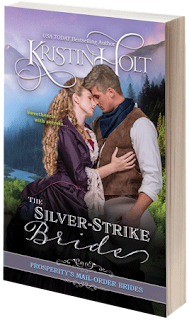
Kristin Holt | Book Cover Image: The Silver-Strike Bride, Book 2 of Prosperity's Mail-Order Brides Series by Kristin Holt. (Paperback representation)


 ~~~

About Kristin Holt:


I’m fascinated by all things Victorian-American, especially in the Old West. I’d love to share similar vintage articles or blog posts I’ve written compiling many original sources to bring a bit of nineteenth century life into focus in the minds and imaginations of readers. The more we know, the more our imaginations fill in the backdrops of our favorite Old West romances.

Kristin Holt | Sweet American Historical Romance (Victorian American West)

See my list of articles here on Sweet Americana Sweethearts with this link. Or, visit my ever-growing cache of articles on KristinHolt.com. Note the eyeglass (search) icon on both websites.  This feature makes it easy to search for an article or a category such as “courtship” or “baking” or “clothing”. You’re invited to continue on, exploring either or both sites, reading topics that interest you.

Copyright © 2019 Kristin Holt LC

Thursday, July 4, 2019

National Day of the Cowboy!

Hi, Kit Morgan here, and today I want to tell you about a day in July that a lot of you may not be aware of. National Day of the Cowboy!

In July America celebrates its independence on the Fourth of July. Well, the fourth Saturday of July is National Day of the Cowboy. I stumbled across this wonderful news and have been posting it here and there, and thought I'd share it with you!

The cowboy has an interesting history. In fact, they didn't come about until after the civil war. Sure, herds of cattle were rounded up and there were cattle drives before the civil war, but they were small in comparison to what came next. The aftermath of the war changed things and in this case, it changed the demand for beef.

As more and more settlers moved west and the country recovered, the demand for beef grew. A lot of which was in Texas! Ranchers let their cattle roam free and over time the animals became wild and unruly. They
sent their men out to round them up and take them to market. This took time and the job wasn't for wimps. Up to five million head of cattle were driven to what the ranchers deemed the most profitable markets. During this time stories emerged of the men's adventures on the trail, the riches they made (some, anyway) and a few heroic deeds. Thus the "Cowboy" was born.

But the name "cowboy" is just one of many. The men who rounded up cattle or horses were also known as buckaroo, cowman, cowgirl, cowhand, cowpoke, cowpuncher among other names like waddy (or waddie if you're in the west) and wrangler. Other terms are caballero (mostly in the Southwest) gaucho, vaquero, cowherd, drover, herder among others.

It took guts to be a cowboy. They spent weeks driving thousands of head of cattle across rangeland and prairies. There was any number of dangers on the trail. Cattle rustlers, predators, storms, and at times, just plain bad luck. No wonder they had so many stories to tell!

So come July 27th of this month, celebrate National Day of the Cowboy by thinking about how these brave men and women (yes, there were quite a few of those) helped shape this great nation in the aftermath of disaster and war. It wasn't easy, and cowboys and cowgirls today work just as hard.

Thank you to the cowboy!

Until next time,
Kit


Wednesday, July 3, 2019

Carylin' on the Oregon Trail - Day Five


After such a grand Day Four and Independence Rock, we awoke in Rock Springs on Thursday, December 20th, had an awesome breakfast and hit the road . . . or the Oregon Trail. The landscape turned from rocks everywhere to a few trees here and there. In the 1850s when wagon trains traveled our direction, fires for cooking were important.

More trees meant more wood to gather for cook fires.

Fort Bridger was our first stop that morning in Unita County, the southern-western-most corner in Wyoming.

I introduced Jim Bridger in the last installment as the guide for the U.S. Army when they were searching for the best way through the territory for the wagon trains.

He is honored there with a full statue.

Mister Bridger established a trading post on the Black Fork of the Green River in 1842, and the Army, a military post in 1858 during the Utah War, also known as the Utah Expedition, Buchanan's Blunder, the Utah Campaign, ot the Mormon War or Rebellion.

It basically was a non-bloody confrontation of the soldiers President Buchanan sent to Utah to negotiate and the Mormons who suspected they were to be slaughtered, having been persecuted before in other areas.

It became a vital re-supply point for the settlers heading west. Fort Bridger served the area until 1890 when it closed.

At that time William Clayton was named sutler, a civilian merchant who sold provisions. 

About twenty minutes (for us----more like two days for the settlers) out of Ft. Bridger, the landscape changed again to abundant scrubby evergreens that would have been used for fuel to save the gathered wood.

From there, we traveled north toward Ft. Hall.
It was a boring stretch for sightseeing. On the way though, we stopped in Montiplier, Idaho where there's a wonderful Oregon/California Trail museum.

Bear Lake there served as a resting place for the wagon train sojourners with lush meadows and water aplenty.

No doubt they had their fill of fish for supper, for which I'm sure they were profoundly grateful.

It is estimated that conservatively, twenty thousand souls died on the Oregon/California Trail; illness was the most common cause, accidents next. Smallpox, influenza, measles, mumps, tuberculosis claimed many lives, but cholera was the worst.

Being run over by a wagon was the number one cause of accidental deaths with accidental gunshot wounds coming in second. The deceased were often buried directly under the trail so the dirt would be hard packed, protecting the body from scavengers.

Imagine a wife losing her husband or worse, losing a child on the trail.

In UNIQUELY COMMON and REMI, the two books released in April and May, they had to quarantine the wagons once for measles, and two minor characters died from them. Another man was killed in an accident. It proved a hard, merciless journey.


The two titles have different heroes and heroines, but the same group of folks, you'll enjoy spending more time with! Each is a stand-alone, but UNIQUELY COMMON, a Lockets and Lace Collection story, could be read first to keep the stories in order. I hope you can tell how much the trip we made on the Oregon / California Trail enriches Remi's story.

BLESSINGS!


Tuesday, July 2, 2019

Ain't I a Woman? by Abagail Eldan

This day in history, on July 2, 1776, the Continental Congress made a decision to declare independence. On July 4th, as we all know, they approved the final wording of the Declaration of Independence. We can recite the words from memory:

WE hold these Truths to be self-evident, that all Men are created equal, that they are endowed by their Creator with certain unalienable Rights, that among these are Life, Liberty, and the Pursuit of Happiness.

This freedom, however, was for all men. Women and black people, of course, were not included in this declaration.

Isabella, a black woman, was one of the few slaves who had been offered her freedom and on the very date of July fourth in  the year 1826.

She had been born a slave in 1797. At the tender age of nine, she was taken from her family and sold to John Neely, a cruel, violent man who gave her frequent beatings. By the time she was eighteen, she'd been sold twice more.

Although Isabella fell in love with a neighboring slave in New York, she was forced to marry Thomas to whom she bore five children. Her owner, John Dumont, promised her freedom if she worked hard and was faithful. But when the time came, on the fourth of July in 1826, he refused to let her go. The six-foot Isabella, believing she had fulfilled her end of the bargain, gathered her youngest child and walked away, in broad daylight, to the home of Isaac and Maria Van Wagener in New Paltz, New York. 
https://commons.wikimedia.org/wiki/File:Sojourner_truth_c1870.jpg

John Dumont soon came after her. The Wageners gave him $20 for her freedom. The state of New York emancipated their slaves the following year. However, this did not stop John Dumont from committing an illegal act. He sold Isabella's five-year-old son, Peter. 

Isabella filed a lawsuit against him, won her case, and regained custody of her son. She was the first black woman to sue and win a case against a white man in the United States.

If the story ended there, it would be of historical import, but her story continues. Life with the Wageners, and perhaps her victory against John Dumont, spurred her on. Despite her hardships, her spirituality was awakened. In 1843, Isabella Baumfree changed her name to Sojourner Truth.

Although illiterate, she began her travels, teaching and preaching the Gospel, with an emphasis on emancipation of slaves and the rights of women. Perhaps her most famous speech was given to the Women's Rights Convention in 1851 at the Old Stone Church in Akron, Ohio. The press titled it "Ain't I a Woman?" Different versions have been printed, and it's difficult to know the exact words of Truth. However, the following is attributed to her:
If the first woman God ever made was strong enough to turn the world upside down all alone, these women together ought to be able to turn it back, and get it right side up again! And now they is asking to do it, the men better let them.
Obliged to you for hearing me, and now old Sojourner ain't got nothing more to say. 
Her speeches highlighted discrimination practiced against women, especially black women, although she advocated for all blacks. She dictated her biography to Olive Gilbert, and it was published as The Narrative of Sojourner Truth, available on Amazon.

Appropriately, she appears on the Smithsonian list of the top one hundred significant Americans.
https://commons.wikimedia.org/wiki/File:Sojourner_Truth_Dinner_Party.jpg

Born a slave, enduring physical abuse, forced to marry against her will, and losing her child would have made many throw up their hands in defeat. And yet her struggles only made Sojourner Truth stronger and allowed her voice to be heard throughout the country and still inspires countless people today. 

Let's remember the lesson of Sojourner Truth--


Abagail Eldan on Amazon


Monday, July 1, 2019

1800's Kitchen - Hominy, Carolina Grits, & Samp


Under the VEGETABLES section of the RECEIPTS section in an 1800s Ladies Magazine... 

Yep, I said RECEIPTS ... in modern day we think/say Recipe but that's not what the book says. A really, think about how words and word usage change over the years and centuries!

Today, I'm tackling breakfast... because it's never a bad time to have something yummy in your tummy that reminds you of the best meal of the day.

ALSO - please keep in mind that I have NOT recreated these receipts... so if you try to do it on your own... I make NO guarantees. (Sorry... but these ingredients just aren't common in Hawaii)

VEGETABLES. 

Hominy is Indian corn free from its yellow skin, and perfectly white, but unground. It should be washed in two or three waters, after which it is to have boiling water poured over it, to be covered up, and left standing all night. It is then to be taken out and put into a saucepan (one quart of hominy to two of water), and boiled four or five hours, or till quite soft.  Drain it, put it into a deep dish, add some butter to it, and sent it to table hot, but uncovered. It is eaten with any sort of meat, but particularly with corned beef or pork. What is left cold may be made next day into thick cakes, and fried with butter. 

Small hominy or Caroline grits must be similarly treated, but is cooked with only a pint and a half of water to two pints of corn. It must be served uncovered, as otherwise it is thin and watery. 

Samp is |Indian corn skinned, and then pounded or ground till it resembles very coarse meal. It is cooked and eaten, like small hominy, with butter and sugar, or molasses, or with sugar and cream.


....

Now, I'm seriously hungry!

I may have to order some of these ingredients and try them out... hmmm


Friday, June 28, 2019

Tracking A Relative in the 1870s


For the past couple of decades, people have become interested in searching for their ancestral roots. Lucky for them, the search is easier with companies like Ancestry, 23 and me, Family Tree DNA, CRI Genetics (to name a few). But what did someone do in the late 1800s when tracking down a relative? My heroine Ciara Morrissey in Dreams of Gold, while still grieving the loss of her mother, discovers a stack of letters in her mother’s possession. She thought he’d disappeared years earlier and is surprised to learn her parents had been in constant contact. Using the address of the most recent letter, she sets out for Wyoming Territory to find her father.


Newspaper articles were also helpful in locating someone. In my research for this story, I discovered that back then just about any snippet of news hit the papers. Relatives visiting from out of town, someone being taken to hospital, a speech given at a garden club meeting, a new hire at a company, someone with an item to be sold, and, of course, engagements, births, and weddings could all be found in a newspaper. One had to be a bit of a detective because many newspapers in the 1870-1880s weren’t organized in the same format as today’s are. I found a personal ad for the sale of a lamp placed at the bottom of a column touting the opening of a bank complete with a list of its officers and their expertise. Obviously, the ad was the right size to complete the column. Pull up an image on Google images of newspapers from a certain year or target a topic like Billy the Kid or Jesse James. You’ll be amazed at what you find surrounding the lead article. Like this one for P.T. Barnum’s circus has an ad for fabric to the left and an announcement of a talk at a literary society to the right. Reading must have been so entertaining.


Dreams of Gold is included in Beneath a Prairie Sky: A Western Historical Romance Sampler, which includes the first chapter of novels by ten authors. A sampler is a great way to discover new authors and try out a story before buying.


99 cents (should price match soon)

Amazon  https://www.amazon.com/Beneath-Prairie-Sky-Western-Historical-ebook/dp/B07T81V1PQ

Free elsewhere

Barnes & Noble  https://www.barnesandnoble.com/w/beneath-a-prairie-sky-wild-rose-press/1132125986?ean=2940163118953

KOBO Books  https://www.kobo.com/us/en/search?query=Beneath+a+Prairie+Sky

Google Play  https://play.google.com/store/books/details/Wild_Rose_Press_Beneath_a_Prairie_Sky?id=jKKdDwAAQBAJ&hl=en


 BLURB for Dreams of Gold

In 1871, Easterner Ciara Morrissey travels west to honor a sacred promise to her mother and locate her fortune-seeking father. Caretaker to her grandparents and mother until their deaths has created a thirst in Ciara to see the wider world.

Sheriff Quinn Riley hunts the Irish charlatan who swindled half of Bull City, Wyoming’s residents. He’ll stick close to the newly arrived opinionated woman. Within only hours, easterner Ciara Morrissey upsets the townspeople by making inquires about his prime suspect. He’s duty-bound to keep her safe but being near the green-eyed beauty sets off a stampede in his heart.

Thursday, June 27, 2019

What did they feed the animals back in the day?

Pets, where would we be without our pets? But for most of history, only the well-to-do could afford to keep pets especially in the cities. 

On farms, dogs and cats had a place as long as they didn't become problems. Dogs could guard the yard and children, but if they got a taste for chicken, that was the end of that.
Cats were expected to eat mice.

So what did they feed their pets back in the day? Table scraps. Maybe a soup bone. Milk. Because it wasn't until after the mid-1800s that a dog food was made. An American electrician in London, James Spratt, saw dogs eating scraps of biscuits the ships were throwing out. So he made a biscuit for dogs made up of wheat vegetables and meat. Spratt also had the first cat food. Spratt's Patented Dog Biscuit later became part of General Mills. 

To get rid of deceased horses, Ken L Ration came up with canned horse meat to feed dogs.

Now, well, grocery stores devote aisles to dog food, and Americans spend more than 72 billion on their pets yearly. 

Dogs and cats are pampered today. I'm sure their cousins from the 1800s would roll their eyes at our pets today. While animals of the 19th century were expected to do their 'chores' - the pets of today work hard to train their people to spoil them.

~~~
In my book Sarah ~ Mr. Beasley is a dog who helps her as she teaches school. 
Sarah ~ The next Sweet Historical Romance in the Montana Brides of Solomon's Valley Series.
Sarah has put away her doubts and knows Matt is the one for her. She's also received her letter regarding her intent to teach schools in Shirleyville. She's planning on a wedding but is Matt?
Bridgette continues her genius idea to help outlaws by splitting their rewards with them and then offering to represent them as their lawyer to get them shorter jail sentences. Oh, yeah. Her husband, Sterling, doesn't know about her scheme, but he does wonder why she picked property that backs into the badlands.
The judge and Rachel are settling in to married life, but those kids are keeping them busy.
And then there are Cassidy and Ronan. They are up to something, but no one knows quite what.
Come on back to Solomon's Valley and see what everyone is doing.
A Sweet historical romance with a few twists and turns, fun and faith, and a good time had by all.
Available on preorder on Amazon
 and on Kindle Unlimited