Showing posts with label early women doctors. Show all posts

Wednesday, September 18, 2024

There's More To the Story

Post (C) Doris McCraw

aka Angela Raines


Image (C) Doris McCraw

This post will not surprise those who know me and my passion for history, especially the Women Doctors. Many know of Elizabeth Blackwell and her admittance and graduation from Geneva Medical College. But there is more to her story and the story of women doctors. 

Dr. Elizabeth Blackwell
Image from Wikipedia

At one time, Blackwell had found the idea of studying medicine abhorrent as related in her book "Pioneer Work in Opening the Medical Profession to Women" published in 1895. A dear friend, who suffered greatly during her treatments, told Elizabeth, “You are fond of study, have health and leisure; why not study medicine? If I could’ve been treated by a lady doctor, my worst sufferings would have been spared me.” 

Dr. Hariot K. Hunt
photo from the National Park Service site.

Did you know, that before Blackwell even thought of medical school, a woman in Boston was a practicing physician? Harriot Kezia Hunt, in her book "Glances and Glimpses" published in 1856 tells her story of what led her to the practice of medicine and the social climate at that time. She began practicing medicine in Boston in 1835 and was well-known in her lifetime for her work to help empower women.

Dr, Sarah Hackett Stevenson
image from Northwestern Univeristy site.

In 1876 Dr Sarah Hackett Stevenson was the first woman to join the American Medical Association. She was a delegate from the Illinois Medical Society. She graduated from the Woman's Medical College in the class of 1874 and later was on staff at Cook County Hospital a first for a woman. She also wrote several books, which focused on educating the public on health.

There are so many more early women doctors whose stories are being found and told. Many of these early physicians were also involved in the suffrage movement. 

You can find Blackwell and Hnnt's autobiographies on Google Books. I personally found Hunt's the most fascinating read, but both contain rich history and personal thoughts.

Dr. Stevenson has many references to her in many of the publications of the late 1800s and early 1900s also on Google Books.

Make sure to watch for the upcoming "Christmas Quilt Brides" stories and my book in that series "Mack"

Until Next Time: Stay safe, Stay happy, and Stay healthy. 

Doris


Wednesday, August 16, 2023

An Inspiration for Those Who Followed

Post by Dois McCraw

aka Angela Raines

Photo (C) Doris McCraw

"As the upheaving island carries up the waters of the ocean around it, even so will woman in her moral and intellectual elevation, carry up the tone of public morals, and of professional and political life in our country and the world. And as the natural philosopher, by unfolding to us the laws of light and vision, has enabled the optician to prepare the finest and truest mediums of sight; so the spiritual philosopher, by exploring the great principles of humanity, will yet enable the philanthropist to understand the necessities of the present age, and provide for its wants intellectually, morally, and spiritually." Harriot  Kesia Hunt, "Glances and Glimpses" published in 1856.

So who was Harriott Kesia Hunt?  

Dr. Harriot Kesia Hunt
Photo from the MA. Historical Society


Harriot was born November 9, 1805, in Boston, MA., and died January 2, 1875. It's the time between those two dates that help define not only her but the future for women's suffrage, and the medical profession.

In 1827 she started a classroom, but in 1833 when her sister became seriously ill she turned her attention to medicine. When her sister recovered due to the treatment of Dr. Richard Dixon Mott and his wife Elizabeth Mott, who hailed from England, she changed her focus to the study of medicine. She and her sister Sarah studied under Mott. When he returned to England, Harriot continued to study medicine.

In 1835, She and her sister started a practice in Boston. Although her sister married and moved on, Harriot continued to practice and study. It was this desire to continue to learn that led her to apply to Harvard Medical School in 1847. Although turned down she reapplied in 1850 and was initially accepted.

Dr. Hunt also was a strong proponent of women doctors treating women patients. She was involved with the women's suffrage movement attending and speaking at the first National Women's Rights Convention in Worchester, MA. in 1850.

Throughout her lifetime she was a strong advocate for women's representation, women's rights, and mental health services. 

In 1853, the Female Medical College of Philadelphia gave her an honorary degree for her years of service as a physician. Many of her contemporaries, despite no 'formal' education, although she did study under a physician as many men did then, identified her as the first woman physician in the country. The following quote from Lucy Stone says it all, "It was said women could not be doctors. Well, Harriet [sic] Hunt has proved by practice that a woman can be, and is, a successful physician."

Thanks to women like Dr. Harriot K. Hunt, and Dr. Elizabeth Blackwell, the women who traveled West had role models to help them find their own place in the world.

Amazon

Until Next Time: Stay safe, Stay happy, and Stay healthy.

Doris


Wednesday, July 19, 2023

Digging Deeper

 Post (c) by Angela Raines 

aka Doris McCraw

Photo (c) Doris McCraw
all rights reserved.

On Wednesday, July 19, 2023, the day this post is published, I will present a program at the Evergreen Cemetery Chapel in Colorado Springs on the women doctors buried at that cemetery who practiced before 1900.

As I researched these fantastic women and wrote the book, I realized one thing: to tell the story it was necessary to dig deeper.

One of the first things I did, I started with the idea that women didn't have the 'horrid' issue about being a doctor that was the commonly held concept. By doing this I could look at the facts without a preconceived bias. Guess what? It allowed for deeper and more incredible research. For example:

I dug until I found the autobiography of Elizabeth Blackwell. In there, I found the following pieces of information: "Is it not perfectly true everywhere that a woman who respects herself will be respected by others..." and."...found that I had so shocked Geneva propriety that the theory was fully established either that I was a bad woman, whose designs would gradually become evident, or that, being insane, an outbreak of insanity would soon be apparent. Feeling the unfriendliness of the people, though quite unaware of all this gossip, I never walked abroad, but hastening daily to my college as to a sure refuge, I knew when I shut the great doors behind me that I had shut out all unkindly criticism, and I soon felt perfectly at home amongst my fellow students."

This sounds totally different from the commonly held idea that she was laughed at by the students of Geneva College.

I also found the autobiography of Harriott Kezia Hunt, the woman who, after studying under another doctor had a medical practice in Boston, MA. in the 1830s. Here is a link to a brief overview of this amazing woman's story Harriot Kezia Hunt - MD

By taking the opposite approach I wasn't hindered by limiting beliefs and kept digging to try to verify or disprove my thesis. That has served me well over the last ten-plus years as I continue to research and write about these pioneering women.

For those who might like to read about those doctors and medicine in Colorado Springs, CO. here is a link to my aforementioned book: Under the Stone


Until next time - Stay safe, Stay Healthy, and Happy Reading.

Doris


Wednesday, May 17, 2023

Struggle - These Women Doctors Didn't Let That Stop Them

 Post (c) Doris McCraw

aka Angela Raines


Photo property of the Author 


There is a history of women struggling to be accepted in the early part of the 1800s. It began with Elizabeth Blackwell and her efforts for acceptance into Geneva medical college.

Dr. Blackwell, who graduated in 1849 from Geneva was not the only woman who made the effort to attend medical school or practice medicine openly. Dr. Harriot Kezia Hunt practiced in Massachusetts in the 1830s and had applied to Harvard Medical School, at the same time Blackwell applied to Geneva, but was denied acceptance. (It should be noted, the faculty agreed to let Dr. Hunt and men of color audit classes, but the student body objected.) Dr. Hunt was later given an honorary degree from the Female Medical College of Philadelphia in 1853.

In 1864 Dr. Rebecca Lee Crumpler was the first woman of color in the United States to earn a medical degree. Dr. Sarah Hackett Stevenson, a physician in Illinois was admitted to the American Medical Association in 1876.

On January 8, 1873, the Denver Rocky Mountain News, carried the following advertisement. “Mrs. E. A. Gillett,M.D. Office and residence: Curtis Street between I and K. Special attention given to Obstetrics and diseases of women and children. References: John Major, M.D., Dr. C. Wakefield, Bloomington, Illinois: R.A. Gunn M.D., H.D. Garrison M.D., L.S. Major M.D., Prof. Bennet, Medical College, Chicago.” Dr. Gillett remained in Denver for approximately two years before continuing further west.

The idea of a female doctor in Colorado does not seem to be one of fighting prejudice. At least not overtly. Dr. Gillett had supporters, most of whom are male. There were women doctors in the 1870s in Colorado who did not fit any of the parameters we've seen in the television shows.

Dr. Alida Avery came to Denver in 1874 as the director of hygiene. Dr. Avery's credentials were impressive. She graduated from the New England Female Medical College in 1862 and then Boston University of Medicine in 1863. Prior to Colorado, Dr. Avery was a professor at Vassar from 1865 to 1874. Matthew Vassar in 1864 wanted to use all female professors, but in the 1860s there were few who would qualify. He did locate two, astronomer Maria Mitchell and Dr. Alida C. Avery, physician, and physiology professor. Dr. Avery, along with Miss Lyman and Dr. Raymond, were called by some of the students ' The Trinity' for their power in the institution. A case for fighting prejudice might be made for Dr. Avery if you include her work on behalf of women and the suffrage movement. By the time Dr. Avery arrived in Colorado, two years prior to statehood, she was involved in and was the president of “The Organization for Women's rights”. The Rocky Mountain News announced her arrival in style. The June 11, 1874 edition of the paper included the following: “the well-known professor of physiology and hygiene, at Vassar College, Alida C. Avery, M. D., has arrived in Denver and taken up residence on 20th St., corner of Champa. She has been the resident physician of that institution from its opening in 1865, having usually under her care the health and habits of some 400 young women from every part of our country. The Poughkeepsie news, in announcing her resignation, makes mention of the remarkable fact, that not a single death occurred among the pupils under her charge, during her eight years of administration....”

While Dr. Avery may have been the first female physician to remain in Colorado for more than two years, she was not the only one. Dr. Rilla G Hay, one of the first to be licensed in California when they began in 1876, regardless of where the physician had a practice, spent time in active practice and furthered her education, taking additional medical courses over the years she was active.

Dr. Edith Root was the first woman to receive a license in the state of Colorado when the state began the process in 1881.

While women had to work to achieve their dreams, so did many others. What we can take from their journey is the determination to follow through and just do it.

If you would like to know more about the women doctors who practiced in the Colorado Springs area the book: "Under the Stone: Early Women Doctors in Evergreen Cemetery" is available as an ebook. Amazon Purchase Link

My novel “Josie’s Dream” was inspired by these women that I not only admire but use as role models for following one's dreams Josie's Dream - Amazon Link.


Until Next Time: Stay safe, Stay happy, and Stay healthy.

Doris


Wednesday, July 20, 2022

Superstitions in the Victorian Era


Post by Doris McCraw aka Angela Raines


Photo property of the Author

As I am working to finish the book on women doctors buried in Evergreen Cemetery, Colorado Springs, I've come across some interesting superstitions surrounding death and burial. Although these women probably didn't believe in them, some of their patients might have. 

It struck me, that there might be some that other writers and readers might not know of, so I thought I would share, just in case someone might need the information.

So for your use or just because:

1. A dog howling three times- A death has occurred.

2. If a person buried lived a good life, flowers will grow on the grave. If the person was evil, weeds will grow.

3. If three people are photographed together, the one in the middle will die first.

4. Thunder following a funeral means that the dead person's soul has reached heaven.

5. All windows should be opened at the moment of death so that the soul can leave.

6. If you leave something that belongs to you to the deceased, that means the person will come back for you.

7. When you experience a chill up your spine, someone, somewhere has just walked across your future grave site.

8. Never speak ill of the dead because they will come back to haunt you or you will suffer misfortune.

9. When a loved one dies, pour bourbon around the room in little drops to prevent evil spirits from coming into the house.

10. Taking ashes out of a stove after sundown will bring a death in the family.

I found some quite interesting and can see how people might accept them as fact. 

In the meantime, I will continue with the stories of these pioneering women who were medical school graduates who followed their passion to help ease the pain of others. All in the book were practicing prior to 1900. Watch for "Under the Stone", coming soon.

Mock-up of the possible cover


Doris McCraw

Wednesday, November 21, 2018

EARLY WOMEN WRITERS & Finding the Time to Write


Many of us who post on this blog are writers. We are constantly researching, working to promote our work, keep up with our readers, work outside the home and try to find time to tell the stories that are in our hearts and minds. We work in a world of constant distraction. But what of the women who wrote books in the early years.?

Helen Hunt Jackson wrote not only poetry, but essays and romance novels. Sara Jane Lippencott aka Grace Greenwood not only wrote essays,poetry, worked as a correspondent and also booked speaking engagements. And who can forget Isabella Bird, who traveled the world and then combined letters to her sister to create the books "A Lady's Life in the Rocky Mountains" and "The Yangtze Valley and Beyond: An Account of Journeys in China" to name a few.
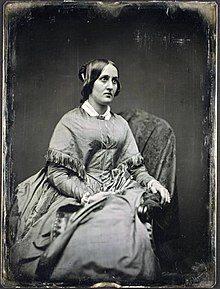
Image result for grace greenwood
Sara Jane Lipencott
from Wikepedia
But what of the 'professional' women? One doctor, Geneveive Tucker, wrote a book titled "Mother, Baby, and Nursery: A Manual for Mothers" which was published in 1896. I found the subject and information fascinating. Here from the preface is the gold of the author for the book.

 The object of the author in presenting this work is to furnish a practical summary of the infant's hygiene and physical development. The aim of the book is to be a guide to mothers, particularly young and inexperienced ones. It purposes to teach and help a mother to understand her babe, to feed it properly, to place it in healthful surroundings, and to watch its growth and development with intelligence, and thus relieve in a measure the undue anxiety and nervous uncertainty of a new mother. The book is not intended in any measure to take the place of a physician, but rather to aid the physician in teaching the mother to care properly for her babe when well, that she may better nurse it when sick.

Then of course there were the autobiographies.

Dr. Elizabeth Blackwell wrote: "Pioneer Work in Opening the Medical Profession to Women; Autobiographical Sketches"

Harriot Kesia Hunt wrote: "Glances and Glimpses: or, Fifty Years Social, including Twenty Years Professional Life"

Helena Modjeska wrote: Memories and Impressions of Helena Modjeska: An Autobiography"

Image result for helena modjeska
Helena Modjeska
from Wikepedia
So who were these 'profesional' women? Most have heard of Dr. Elizabeth Blackwell, the first woman in the United States to graduate from a medical school. But, Harriot Kesia Hunt was a doctor in Boston in the 1830s who  acquired her skills by studying with a male doctor. She had applied to Harvard medical school in 1847, the first female to apply, and was turned down. She was later granted an honorary degree from the Female Medical College in Philadelphia in 1853.

Helena Modjeska was an actress of some fame in the late 1800s who had been a star in Poland, but moved to the United States and began performing here. When she first arrived her performances were done somewhat phonetically, but she persevered and became one of the top Shakespearean actresses of her time.

Dr. Genevieve Tucker, who was appalled at infant mortality rate, stated “Decrease in infant mortality will be brought about more by strict hygiene and prevention of sickness then by any treatment of disease already begun, no matter how skillfully applied.” Dr. Tucker had a  practiced in Pueblo, Colorado, and in 1898 she was elected president of the Colorado Homeopathic Medical Society. 

Were the writings of these women best sellers? Who knows? But most of these works are still available either in print or in the public domain and give an insight into the world of the late 1800s and early 1900s. 

We can only hope our works, be they fiction or non-fiction, bring knowledge and joy to our readers. We truly love telling our stories for you. As we approach the Thanksgiving holiday, know we are thankful for all of you.

Speaking of babies and women doctors, here is an excerpt from my book "Josie's Dream", a story about a women who wanted to be a doctor more than almost anything.


Josie was exhausted and it showed in her walk and stance. The day had been one full of one emergency after another. The day started with Homer and his lessons, but quickly dissolved into a couple of broken bones, the Fresch boy, who had gotten his cast wet, and cuts and scrapes. Just when things looked like they would slow down, she’d had to go out to the Kruger homestead to assist Mrs. Kruger, who had gone into labor early and was having difficulty.
Josie was pleased that mother and baby were doing fine. Still, she’d had a bit of trouble convincing Mrs. Kruger and her husband that ‘laying in’ was not the best for mother and child. When she’d had Mr. Kruger, who was nervous about his first child, start to boil water, he’d no idea it was to wash the sheets. But wash them she had, after enlisting the poor father’s help. In the end, when she explained about cleanliness and the way it would help with Mrs. Kruger getting better more quickly, he fell right in. The love and pride the two had for each other and their son gave Josie hope for the future. She knew she would probably not get married for she knew most men wouldn’t want such an independent woman who had her own job. She also knew she’d never get a quilt that her grandmother made for the grand children who married. That thought made her sad. But she’d made her choice.
It was on days such as this, when she was tired but pleased with her day, that Josie wondered what the world would be like in another fifty years. Would doctors still be visiting patients, or would there be hospitals where those same patients could stay if there were complications. What would her life be like? The world continued on and, Josie knew, advances were being made in so many areas.

Thinking of Mrs. Packham, and her problems with the twins and their struggle to thrive after getting the poisoned food, Josie dreamed of a time when medicine would be able to help speed recovery or eradicate disease altogether. When the science had advanced enough, doctors would be able to tell if people like Mrs. Kruger were going to have complications. 

Click Here to Purchase on Amazon


Doris Gardner-McCraw -
Author, Speaker, Historian-specializing in
Colorado and Women's History
Member of National League of American Pen Women,
Women Writing the West,
Pikes Peak Posse of the Westerners
Western Fictioneers

Angela Raines - author: Where Love & History Meet
For a list of Angela Raines Books: Here 
Photo and Poem: Click Here 
Angela Raines FaceBook: Click Here

Wednesday, March 21, 2018

A FASCINATION WITH WOMEN DOCTORS

In both "Josie's Dream" and "Chasing A Chance" I mention women doctors. It is not necessarily the medical aspect I am interested in, although that is fascinating, but the stories of the women and their time in history. So in honor of National Women's History month, I'm sharing my fascination and some research on women doctors.

The medical school, The Keokuk School of Physicians and Surgeons, was a real college. It has also been called the College of Physicians and Surgeons of Keokuk. It began in La Porte, Indiana in 1846 before moving to Madison, Wisconsin in 1847 then to Rock Island, Illinois in 1848. The school had a year long session in Davenport, Iowa before its permanent home in Keokuk in 1850. As part of the University of Iowa it was technically co-ed from the beginning.  

Josephine, the Josie of "Josie's Dream", was a graduate of the Keokuk school as was the real life doctor Harriet Leonard of Manitou Springs, Colorado. Dr. Leonard was the proprietor of the Bath house, an unusual position for a woman. Her ad in the July 1878 local paper read: Mrs. H. A. Leonard M.D. ELECTRICIAN. Special attention given to nervous and chronic diseases. Office in the Mineral Bath House, Manitou.  Although many women physicians were homeopaths, the medical treatment of choice during that time, Harriet was an allopath. Dr. Harriet Leonard

The other woman physician mentions is Dr. Alida Avery. Dr. Avery arrived in Colorado in 1874 after leaving Vassar College where she had been on staff for six years. In fact she was one of the early members of that faculty. Much has been written about this early Colorado physician, her work on women's suffrage, and her years at Vassar. Dr. Alida Avery


One of my enduring passions is researching the early Colorado Women Physicians and documenting their lives. When possible, I try to include these women or their stories in my fiction and well as non-fiction writing. So as you read "Josie's Dream" or the mention of Josie in "Chasing A Chance", know that it comes from a place of love and fascination with these early pioneering doctors of Colorado.


Doris Gardner-McCraw -
Author, Speaker, Historian-specializing in
Colorado and Women's History
Member of National League of American Pen Women,
Women Writing the West,
Pikes Peak Posse of the Westerners

Angela Raines - author: Where Love & History Meet
For a list of Angela Raines Books: Here 
Photo and Poem: Click Here 
Angela Raines FaceBook: Click Here

Wednesday, July 19, 2017

Critical Thinking and History

Post (c) Doris McCraw-writing as Angela Raines


The on-line dictionary defines Critical Thinking as: the objective analysis and evaluation of an issue in order to form a judgment.

As many may know, the other Doris part of me researches and writes about historic events and people, specifically Colorado and Colorado Springs history, along with the women doctors who lived and worked in Colorado prior to 1900.


As I've stated before, it is difficult to divorce myself from preconceived ideas and my own personal experiences. When I find pieces of information, I try to collect as much and from as many different sources as I can, without making any opinion or judgment about what I find, until I've exhausted all options available. Believe me, much easier said than done.


One example: The murder trial that took place in Colorado Springs in 1879. If all I did was accept what I read in the paper, a man shot and killed another and later got what he deserved by being killed in a remote area of the state. There are both fact and opinion stated in the newspaper. But by digging deeper, the story is not so cut and dried. There are still many sources to be found and read beyond those I've located already. Once I have just the facts, then comes the distillation of those facts to find a conclusion. So far I've two other men who were outlaws, living and 'working' during the same time period. In fact two were in the territorial prison at the same time. So, the story is not so cut and dried. The information gathered definitely will require major critical thinking to find the truth based on any and all information found.


When it comes to the women doctors, the standard 'belief and opinion' based on what others have done, is that women had a difficult time entering and practicing in this profession. This had been the case for some, but as more information and resources have become available, the facts are not necessarily supporting the accepted belief. It will take more research, finding more of the stories of these women, before a definite answer is available. However, the answer will not be found if one doesn't question. That is a joy and frustration of research and critical thinking. It is also what drives one to learn and grow.

Have I reach a conclusion regarding the above pieces I'm researching. NO. That will take more research. What I do know is, to accept blindly what everyone says, without being objective and evaluating the information, is doing myself and others a disservice. To me, it has become important that I use critical thinking and do all I can to find the truth to the best of my ability, and form my judgment from there.  I am and never have been comfortable accepting 'opinions' without doing my 'due diligence' as we said when I worked in the Criminal Justice field. 


I had a music teacher once who told be I could sing the song anyway I liked, but in order to do it well, I had to learn it the correct way first.  I took those words to heart, and use them in my historic fiction and non-fiction. I can tell the stories I would like, but first I have to know the facts before I can manipulate them. 


So happy writing and keep the stories coming from your fingertips.


Doris Gardner-McCraw -

also writing as Angela Raines
Author, Speaker, Historian-specializing in
Colorado and Women's History


For a list of Angela Raines Books: Here 

Photo and Poem: Click Here 
Angela Raines FaceBook: Click Here


Wednesday, June 21, 2017

A First and A First

Post (c) Angel Raines/Doris McCraw

Headstone of Julia E Lomis,
Evergreen Cemetery, Colorado Springs, CO
On February 24, 1870, six women graduated from the Cleveland Woman’s Homeopathic College in Cleveland, Ohio. One of the early if not the first class to graduate from this institution. These six went through the program to earn their M.D., to follow their dream to help alleviate the suffering of their fellow man. Below are the names of the graduating class and where they were living at the time of admission.

Ursla L Higgins- Elyria
Elizabeth Avery, Connecticut
Louisa M Butts, Michigan
Ada L Adams, Springfield, Ohio
Julia E Loomis, Tennessee
S. Elizabeth Morrell, Kent, Ohio

The same notice also stated the there were one hundred thirty-five cases that were successfully treated during the session. The Valedictorian of this group of women was Mrs. Dr. Higgins.

Julia E Loomis is of particular interest to me. She is the first documented female M.D. in Colorado Springs, having arrived between 1876? and 1878.  Below is her address to her fellow students.

My friends: I asked your kind indulgence while I occupy a few moments of your time. I should regret to leave this place without saying a few words to this class of ladies with whom I have been so long and so pleasantly associated.

My dear friends, we came to this college strangers to each other. We left our widely scattered homes, surmounting all opposing obstacles, with a single purpose in view, our minds all centered on this one great object, that object to prepare ourselves by study for the alleviation of suffering and the elevation of woman. And as we have mingled together with in these walls day after day and month after month, studiously following the same pursuit. Time has endeared you to my heart, and as the period is drawing nigh for separation, and we shall perhaps, no more see each other’s faces until we meet in the better world, my heart is filled with mingled emotions, while I am filled with joy and the greatest delight at the prospect of so soon meeting the dear loved ones at home. A sadness comes over me – a parting sadness.

And to these were the professors I wish to say, that why you have so nobly and faithfully discharge your duty in giving instruction to this class, I think I express the feelings of each individual when I say we highly appreciate your kind instructions, and the very able manner in which they were given. And now, speaking only for myself, I can say that while I sat on the seats before you from day to day a silent listener, I can assure you, your instructions have not been in vain even to this unworthy student. No, your words have been treasured up in the storehouse of memory for future use. Long having had a desire to acquire a knowledge of the practice of medicine, and the door being opened, I entered this college nearly ignorant of all leading branches connected with the science, in one sense like a child, yet with more than a child’s desire to learn. But now as I go out from among you, may I not hope to go prepared to some extent, at least to relieve the suffering of my own sex, and also to bear the responsibility pertaining to our position. Reference having been made to the trifling value of a diploma allow me to think otherwise. As I go out into this new field of action, I can take this roll in my hand, as I come in contact with opposition can use it as a shield of defense. It may therefore be considered as a token of great value to everyone who shall fill this useful and honorable profession.

Although the President of this college has been called by a wise Providence to rest from her toils, allow me to say to the trustees and coworkers that your labors have been productive of great good. You are doing a noble work, and we hope and trust you will not cease your efforts until you see this college resting upon a firm foundation, against which the storms of adversity may beat in vain. As it is now in its infancy and laboring under pecuniary embarrassments, may the future witness its great prosperity. God grant its success in raising up friends and means in abundance to elevated to the high standard that a woman’s college is worthy to attain.
To my sister students, to the trustees who have labored so unselfishly, into this faculty who have so efficiently performed their duty, permit me to bid each and all of you a grateful and affectionate farewell.

Julia's story is even more impressive when you realize she was born in 1816. When she graduated from medical school she was fifty-four years of age. An amazing woman, whose story I am in the process of telling. 


Doris Gardner-McCraw writing as Angela Raines
Author, Speaker, Historian-specializing in Colorado and Women's History

For a list of Angela Raines Books: Here 

Photo and Poem: Click Here 
Angela Raines FaceBook: Click Here