Showing posts with label #ladies. Show all posts

Monday, August 20, 2018

Victorian Underpinnings.

By Sophie Dawson

I’m in the midst of making historical garments. Authentic reproductions of late Victorian and Edwardian dresses, which actually are a bodice and skirt. They called one piece garments gowns. In doing so I’m doing a lot of research and looking at many photos.

We don’t think too much about the undergarments a lady wore beneath the beautiful bustle dress or Gibson Girl clothing. There were quite a few layers which we no longer think necessary. Each had a specific purpose that makes sense when you know the reasons.

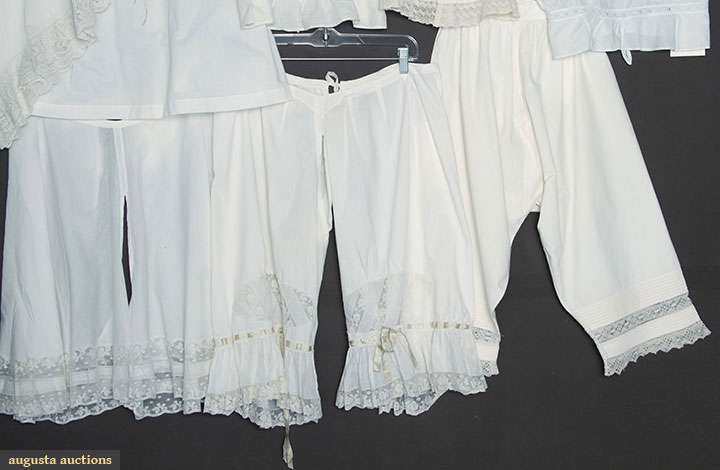
The first layers, those against the skin were the drawers and chemise. I know it sounds sort of gross to us, the drawers had open crotches. There was a method to their madness, however. I’ll lit you know why in a minute.

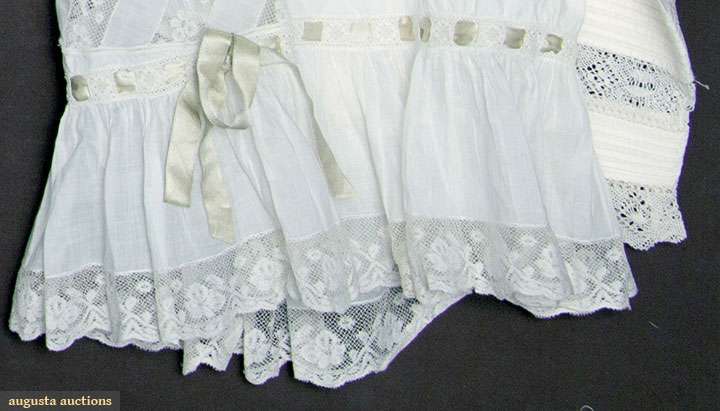
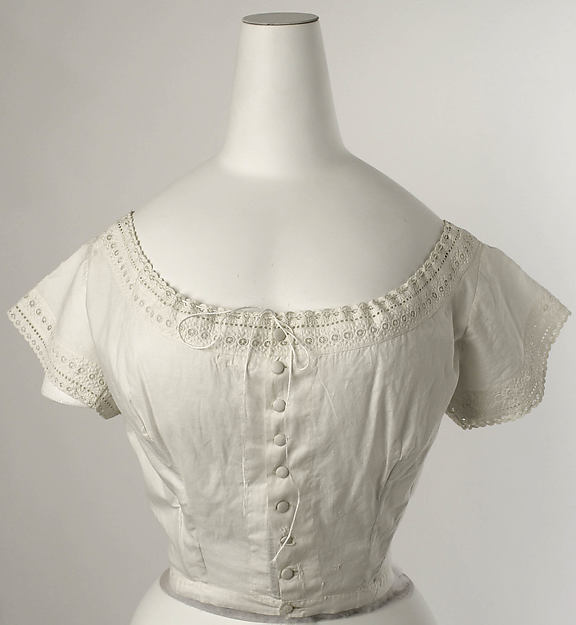
The drawers were basically two legs attacked to a drawstring waistband. You can see the slit in the photos below of the drawers on the bottom row. They were the first item of clothing put on. Over that was worn the chemise. Note the lace and ribbon trim on these.
Next came the stockings (not socks) which came up to or over the knees. Early they tied ribbons or garters to hold them up. Later garter clips appeared attached either the the corset or a garter belt. Then the shoes were put on. It was much easier to do these before the corset since bending down was limited after.

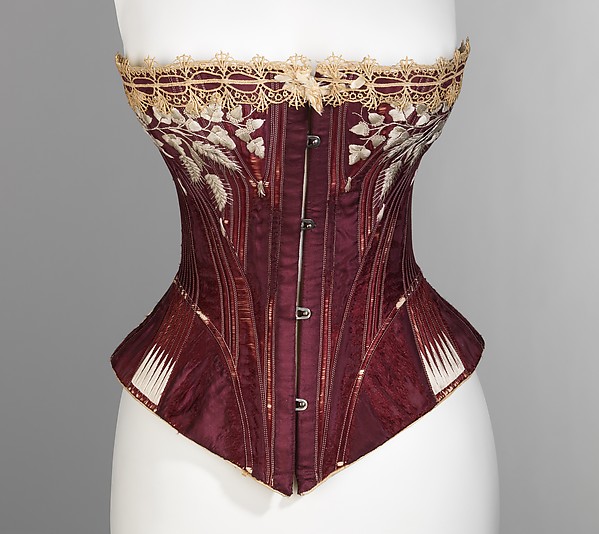
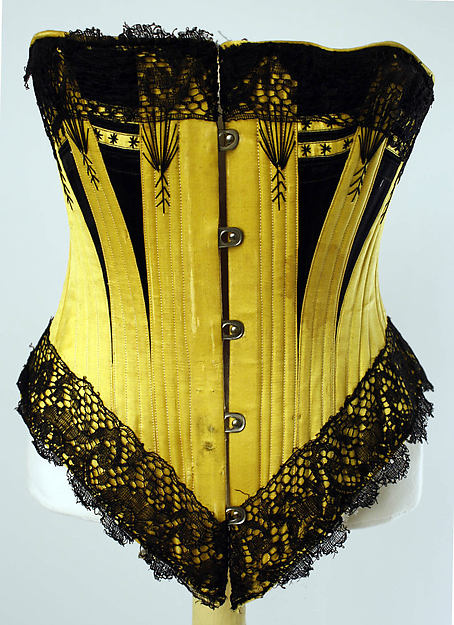
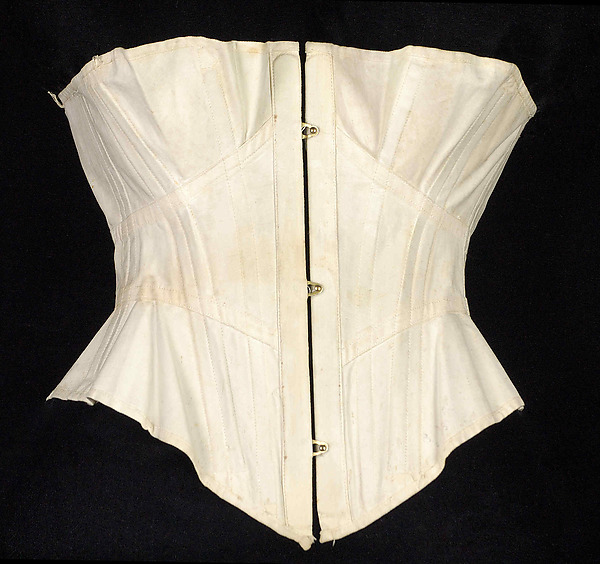
Everyone girl and woman wore a corset. Yes, even children, boys and girls. When looking at corsets and their waist size remember one thing; the back had space of 2-6 inches between the lacings. So add that to whatever the waist measurement says. Suddenly those tiny waists aren’t so tiny. Also, smaller corsets were most likely worn by teenagers. Much smaller all over than grown women. Many of the corsets that survived to this day are probably those of teenagers and only worn for a short time. Those worn as women with more mature figures were used for many years and wore out.
Anyway, the corset was placed over the chemise which often reached do to the knees.
As you can see from the images, many corsets were made from satin or brocade and decorated with embroidery and lace. We ladies love our fancy underpinnings.

Next came the corset cover. Excessive, you say? In a day when laundry was hard physical labor and most women had to do their own, wearing the chemise and corset cover protected the corset, which couldn’t be washed or only sparingly, those two cotton garments surrounding it kept the corset from body oils and sweat, and stains.
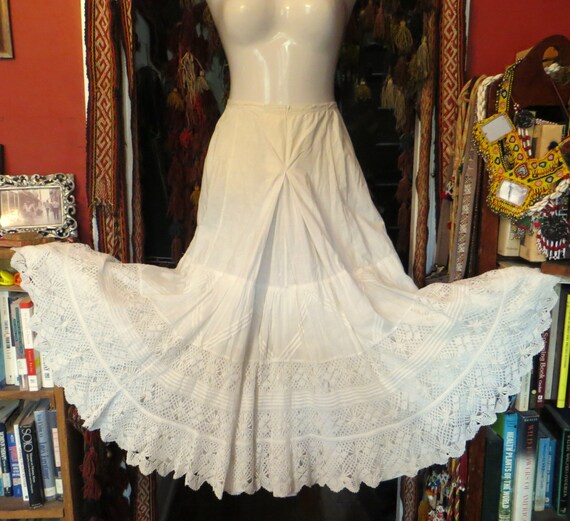
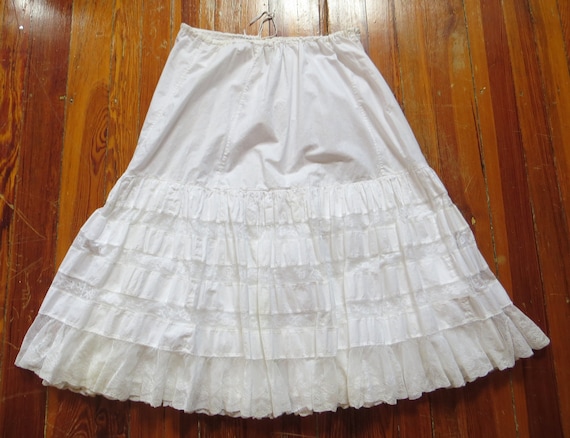
One function for the corset not thought about much concerns the bustle and petticoats. The boning in the corset allowed that to support those layers that gave structure to the skirt itself. Each layer of petticoat had a waist tie. Women often wore up to five layers, plus the bustle. Imagine all those ribbons tied around your waist with the petticoats hanging below.
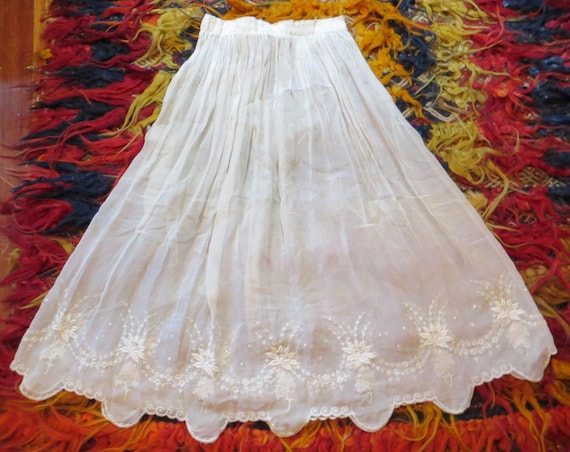
Lace, ruffles, tucks and ribbon often decorated the petticoats. Ruffles added support for the skirts again. Plus they are pretty.
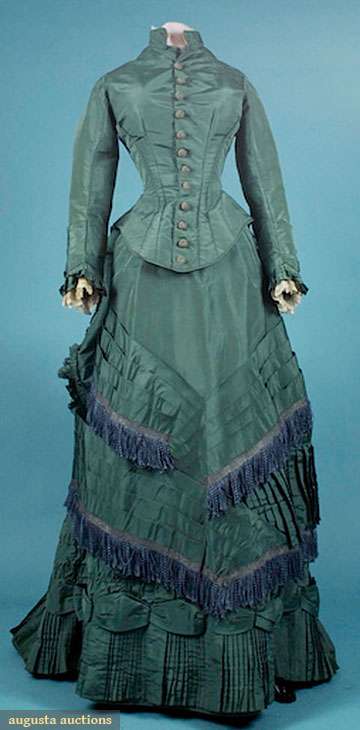
After all this, the lady finally dawned her skirt, bodice, and overskirt. And don’t forget the hat and gloves.

 As I said, I’ve been researching Victorian garments and, though I knew it before, those ladies, whether rich or more like the rest of us, liked pretty undergarments. Chemises, drawers, corsets, petticoats, whether they were handmade or made for some socialite, were adorned with lace and ribbons. Ruffles and tucks also were used as decoration. Even though no one, or very few, saw them other than the wearer, those unmentionables were beautiful garments in their own right.

Oh, those open crotches... They were so you could easily do your business in the ladies retiring room. Imagine trying to find a waist tie under all those layers, laced into a corset, take them down, pull them back up, and rearrange those layers to be presentable before your joined the public again. Now you know why they wore split crotch drawers.


~~~~~~~~~~~~~~~~~~~~~~~~~~~~~~~~~~~~~~~~~~~~~~~~~~~~~~~~~~~~~~~~~~~~~~~~~~

Sophie Dawson is an award-winning author of romance, both historical and contemporary. An eclectic conglomeration of interests and accomplishments, she has made up stories in her head all her life. Now she types them out. Her critically acclaimed series include Cottonwood, Stones Creek, and Love’s Infestation. She’s also been part of several Multi-Author projects.
Her latest release is Wanted: Shopkeeper available in Kindle, print, and KU 
https://www.amazon.com/dp/B07BWZ4ZF3

Wednesday, February 22, 2017

Postage and Mailing Instruments - later 1800's


Aloha all! This is my first post on Sweet Americana Sweethearts! Thanks for having me!! I think I'm going to 'name' my Wednesday column... but I'm not sure 'what' to name it. Western Women - Women of the West - Wild West Women? Hmmm I'll have to think about it.  If you have an idea, or a favorite option from my list, please comment here on this post or message me at reinatorresauthor{at}gmail.com


Now for today's column - 

I'm a bit of a Civil War buff... and strangely enough I have some friends with similar or complimentary interests. So I'm going to share with you some information about American postage and mail in the Civil War era of American History (1860s and forward)

When setting a story in a period of history other than our own, there are so many things to consider. Everything has a history of its own. Not all of it will end up in the story, but research of any kind can helpd to make the setting feel real to the writer and hopefully the reader.

Something as simple as the stamp on an envelope had a detailed history of its own.
My friend, Gannon, is a philatelist of the highest order and someone I've known since kindergarten. And this information comes from his research. I am truly grateful to have such an amazing friend.
“So this cover is an “adversity” cover. Commercially made envelopes were available in the South prior to 1861, but they became less available as the war progressed for a variety of reasons. People would make envelopes out of whatever they had on hand. Letters sent in envelopes hand made from sheet music, wallpaper, or (as in this case) old ledger paper. Sometimes, people would also “turn” the envelope by steaming open all the sealed edges and resealing them so that the original stamp and address were now on the inside of the envelope. That particular practice is not limited to wartime. Poorer people did this throughout the 19th century and sometimes even today.
“The stamps on this letter are referred to by collectors in the United States as “CSA Scott #7” (The Confederacy printed 14 stamps, of which 13 were actually issued.) This printing plate for this stamp was created in England by Thomas de la Rue & Co., which is still in operation as a security printer. They filled the order for however many stamps they were contracted to print, and then sent the stamps and the copper printing plates to the Confederacy. The stamps printed in England are referred to as “CSA Scott #6” (England) as are a different shade from #7 (CSA).
“About half of the English printed stamps and half of the printing plates were seized by Union forces as they tried to run the blockage. The other half got through. The Confederacy then used the plates to print new stamps until the plates wore out.
“This letter was sent from Richmond, VA, to Cheraw SC on January 11, 1863. Cheraw is a pretty small town, which had less than 1000 people in the 19th century. I am researching the addressee. It may be the sender was someone in her family who was at the Battle of Fredericksburg, but I am not sure.”

The second cover –
“This one has CSA #11 on it, the stamp most commonly seen on CSA mail. It was issued in 1863. Not sure what information I can get from it with an unclear postmark. I think it was sent from Fayetteville, GA to Augusta GA. It could also have been sent from Milledgeville. Either way, the letter is postmarked June 11. It is likely to have been mailed in 1864, because of the way the postmark is worn down. June 11 1863 is a possibility, but June 11 1865 would have been after the war.”
Another Interesting Fact –“When you get an unused stamp from the CSA–other than the English printed ones–the gum on the back is really uneven. They were manually applying it with a paintbrush. Neat detail!”
Thanks for taking the time to read this post -

Reina Torres - Big Hearted Small Town Romance
www.reinatorres.net
www.twitter.com/rtorresauthor
www.facebook.com/ReinaTorresRomance/