Showing posts with label fur trading. Show all posts

Wednesday, November 15, 2017

FORT LUPTON

Post by Angela Raines

Fort Lupton, is the fourth post that was located within fifteen miles of each other east of Longs Peak in the Rocky Mountains in the Platte River Valley.  The other three were Fort Vasquez, Fort Jackson, Fort St. Vrain.

What is interesting about this location, there is actually a town, Fort Lupton, near the site of the original fort. The fort and also the town named after him was founded by Lnacaser P. Lupton. He had been a lieutenant with Col. Henry Dodge when Dodge headed an expedition into the Rocky Mountains. Lupton saw that the fur trade was a going concern in the area. He took a leave of absence from the service and came back to the area around 1836-37 and established a trading post. The original name was Fort Lancaster but was changed to Fort Lupton. The fort itself was abandoned in the early 1840s. The fort building was later used as a stage station on the mail route from Missouri to Colorado, specifically Denver. It was also used as a refuge during the Indian uprisings of 1864. The town of Fort Lupton was incorporated in 1890 and still exists today, although the original fort no longer exists, like Fort Vasquez, a replica has been build.

Dedication of 'New Fort Lupton'

An excerpt from the journey of  E. Williard Smith, who traveled from Missouri in August of 1839, he speaks of meeting Lupton on the journey westward. Here from the 30th of August, "We still travel as usual. We have been expecting to overtake Lupton every day. He is a mountain-trader, on his way to the trading-post, on the river Platte. We overtook him to-day about noon. His party had stopped to eat dinner, and allow their annuals to feed. He had six wagons drawn by oxen. They had started about twelve days before us. He mistook us for Indians as we were approaching and was somewhat alarmed." (Colorado Magazine, July 1950)  What is even more interesting, Smith was in the company of Vasquez and Sublette, from Fort Vazquez, the competition for the fur trade in the area.

As history points out, these post, including Fort Lupton, contracted for trade goods to be brought from the East by wagon or pack-horse trains,for the Indians/ In turn the Indians brought their buffalo robes and pelts to trade for said goods. Fort Lupton became a rendezvous for the independent trappers of the mountain region west of there. They also bartered their furs for equipment and supplies. 

As you can see, during a brief, but intense time, these four forts vied for the trade, both with Indians and Trappers in this small region along the Platte River. Time and space have limited the amount of information shared. Still this brief time is full of so many stories and people. It was a time of expansion for the United States and these adventurous men were in the forefront of that expansion.


Doris Gardner-McCraw -
Author, Speaker, Historian-specializing in
Colorado and Women's History

Angela Raines - author: Where Love & History Meet
For a list of Angela Raines Books: Here 
Photo and Poem: Click Here 
Angela Raines FaceBook: Click Here


Wednesday, October 18, 2017

Fort Jackson Colorado

Post (c) Angela Raines

Fort Jackson is the third of the four forts located within fifteen miles of each other in the Platte River area east of Longs Peak and the Rocky Mountains. It came into existence in 1837, two years after Fort Vasquez. The other two to begin in 1837 were Fort St. Vrain and Fort Lupton.

Fort Jackson was started by two partners: Peter A. Sarpy and Henry Fraeb. Sarpy was a Frenchman originally from St. Louis. Sarpy was active in the fur trade and in 1824 was appointed as the Indian trader at Bellevue in Nebraska. (Note - Bellevue, Nebraska in Sarpy county.)

Author Photo from Inside Ft. Vaxquez Museum
Henry Fraeb was of German descent although there is not much known about his early life. By 1829 he was actively involved in the fur trade and during his lifetime worked and was partners with the likes of Milton Sublette and James Bridger. He traversed most of the Rocky Mountain Region between present day Wyoming and Arizona. He died in 1841 near Battle Creek in Routt County Colorado near the Wyoming border in a fight with the Cheyenne, Arapahoes and Sioux.

Records seem to indicate the business started out well. The merchandise bill was around $10,000. The men on the payroll, some of who were paid around $200 for twelve to fifteen months of work. They following were listed as employees of the company that ran Fort Jackson: Michel Sioto, Ls LaJeunesse, Wm. Primeau, Ls B. Myres, John H. Albert, Chas. Kiney, Bartlett, Daugherty, Benito Garcia, Jacog Hawkins, Gilbert Jackson, Trudelle, Woods, and Antoine Latereuse. These men built and worked for/in Fort Jackson.

Author Photo: Native Plants near South Platte River, CO. 
However, the business was short lived and the partners sold out to Bent & Company sometime in 1838 according to some reports. Since Fort St. Vrain was less than ten miles north, after the goods were transferred to St. Vrain, the building itself was probably abandoned and fell into disrepair and disappeared. As of 2011 there has been on definite location found for Fort Jackson, but that it existed is undisputed.

For more on this and other 'Forts' in Colorado during the heyday of trapping and trading the following may be of use: "The Fur Trade in Colorado" by William B. Butler and "Colorado Forts" Historic Outpost on the Wild Frontier" by Jolie Anderson Gallagher.

Join me next month for the fourth and final post of the Forts along the Platte.


Doris Gardner-McCraw - Author, Speaker, Historian-specializing in
Colorado and Women's History

Angela Raines - author: Where Love & History Meet
For a list of Angela Raines Books: Here 
Photo and Poem: Click Here 
Angela Raines FaceBook: Click Here


Wednesday, September 20, 2017

FORT ST VRAIN

Post (c) Angela Raines

This post on Fort St. Vrain, is part of the series on Colorado's early Forts.

Image result for images of st vrain creek near platteville colorado
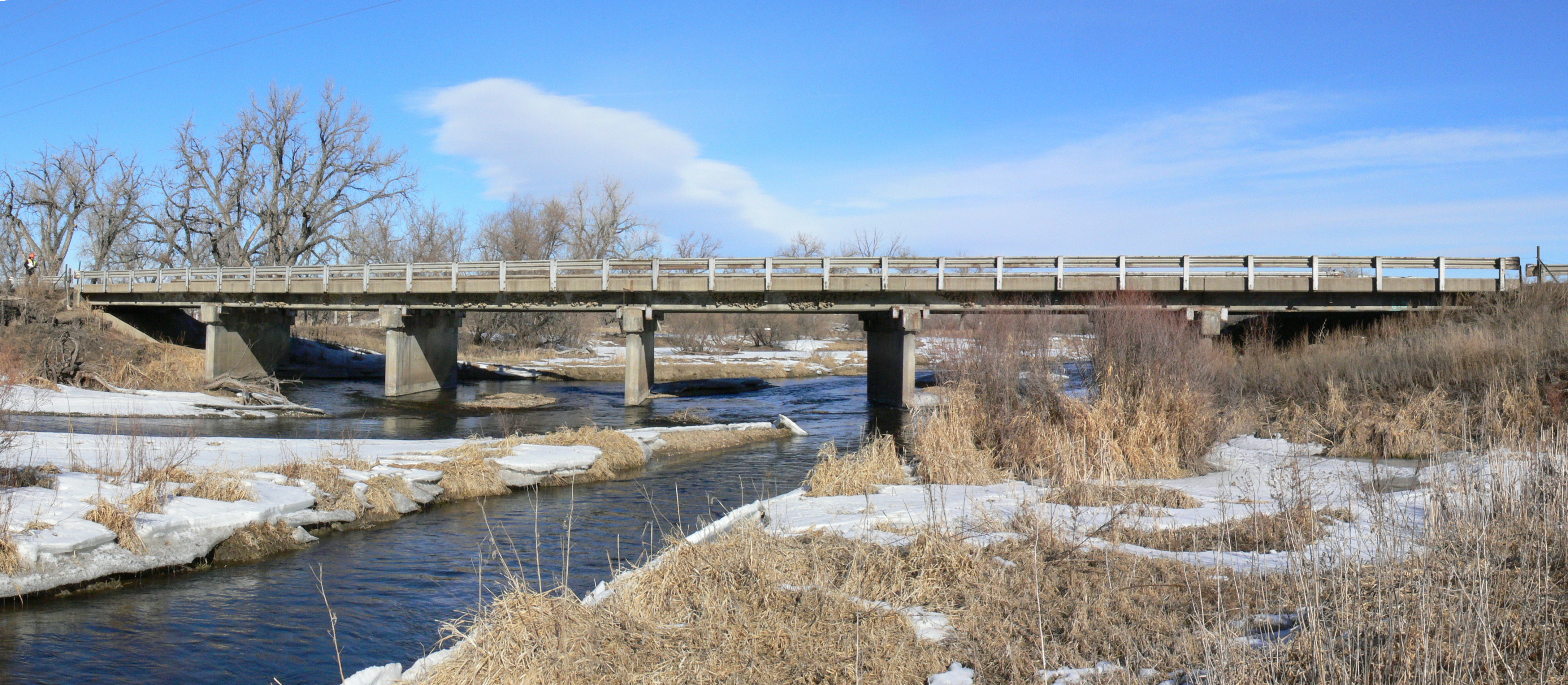
Colorado Dept. of Transportation Photo of SH 66 near Platteville
close to where Ft. St. Vrain would have have been located
Like Fort Vasquez in the earlier post, Fort St. Vrain was a business fort in use during the late 1830's to the 1840's. It was located about seven miles north of Fort Vasquez, on the right bank of the Platte River about one and a half miles north of the mouth of St. Vrain creek, for the business of trading with the Indians and Mountain Men who hunted the Rocky Mountains about twenty or so miles to the west. The closest date found for its construction may have been some time in 1837-38. The license to operate this and Bents fort came from William Clark, of the Lewis & Clark expedition in July of 1838, then govenor of the territory. 

Also known as Fort Lookout, and Fort George, Fort St. Vrain had the luck of being part of the Bent Fort family owned by Bent & St. Vrain Company. The company was started in 1830 by Wiliam Bent and Ceran St. Vrain. There original Fort, known as Bent's fort was located in Southeast Colorado on the Arkansas River.

The valley where the fort was established was special to the Arapahoes, and was frequently visited by the Cheyenne, Sioux with occasional visits by the Crow, Pawnee, Shoshone and Blackfeet.  This made the area prime real estate and Ft. St. Vrain did well until the decline in price for beaver skins in the 1830's.

During its heyday, Ft. St. Vrain saw a few, now famous people walk through the gates. J.C. Fremont, William Gilpin -first governor of Colorado, on July 4, 1843 along with Senator Benton celebrated Independence Day by firing off Fremont's howitzer and eating ice cream and cake while visiting the fort. The cake was one made by the senator's niece in St. Louis and the ice cream's milk was from goats and the freezing agent was snow from what is now known as Longs Peak.

By the summer of 1845 the fort was empty when Col. Stephen W. Kearney traveled through. 

The adobe fort continued its decline and there are no known photos of what the structure looked like. However from descriptions written by those who traveled through the area, it probably was similar to what we now see in the reconstruction of Bent's Old Fort.

BentsFort.jpg
Bents Old Fort - www.en-wikipedia.org
For more, see: Fort St. Vrain

For additional information on the Bent & St. Vrain Company: Bent & St. Vrain


Doris Gardner-McCraw -author Angela Raines
Author, Speaker, Historian-specializing in
Colorado and Women's History

Angela Raines - author: Where Love & History Meet


For a list of Angela Raines Books: Here 

Photo and Poem: Click Here 
Angela Raines FaceBook: Click Here

Wednesday, August 16, 2017

EARLY FORTS: FORT VASQUEZ

Post (c) Angela Raines

Fort Vasquez:


I have a passion for history, and the early history of my adopted state is a strong passion. I hope you will join me as I take a journey through the early forts in Colorado over the next few posts. One such place I visited was the site of Fort Vasquez. This one is located between Greeley and Ft. Lupton in Platteville on Highway 85. This site is not only a reconstruction of the original fort, but is also a welcome center and museum. The museum may be small, but fascinating. The staff is extremely knowledgeable about the fort and the era when this type of business/trading post was important in what was to become the state of Colorado.

With the growth and change in the fur trade industry came the business forts.  Originally the trappers, mountain men, would take their furs to St. Louis and other Eastern cities.  Then there came the rendezvous where the furs were brought to areas closer to the mountains.  Finally the forts, such as Bent's fort began to play a bigger role in the fur trade. Soon there were forts populating the eastern plains of Colorado. Ft. Vasquez was one to these.


Built by Louis Vasquez and Andrew Sublette in 1835 it remained in use, with different 'managers' and owners until 1842 when the structure was abandoned. Over the years it was probably shelter for travelers and other uses we may never know about. The license to operate the fort was obtained in St. Louis, MO. from William Clark, of the Lewis and Clark expedition.

These business forts traded not only with the fur trappers, but the local tribes in the area. In this case Ft. Vasquez it was the Arapaho and Cheyenne. Unfortunately for the owners of this fort, it never was able to gain prominence due to the competition with other such forts along the eastern side of the Rocky Mountains.


During the 1960's college students spent time at the fort on an archaeological dig, It was during this time that more information about the fort came to life.
If you are ever up that way, stop by. You may see a mountain man in the fort along with some of the other people who stopped by while in the area during those early days.

Here is a link to the current site and its offerings: http://www.historycolorado.org/museums/fort-vasquez


Until next time. 

 
Doris Gardner-McCraw -
also writing as Angela Raines
Author, Speaker, Historian-specializing in
Colorado and Women's History

For a list of Angela Raines Books: Here 

Photo and Poem: Click Here 
Angela Raines FaceBook: Click Here
Every step you take should be a prayer.
And if every step you take is a prayer then you will always be walking in a sacred manner. 
Oglala Lakota Holyman.