Showing posts with label Mountain Men. Show all posts

Tuesday, July 1, 2025

FOOD CHEATS AND THE 1800S: Be very afraid! by Marisa Masterson

https://www.docsteach.org/activities/printactivity/progressive-era-food-regulation


Lately, food dyes and chemicals in food are often in the news. I even heard someone talk about returning to the purity of the foods from bygone eras. Well, some of what folks ate was not all that pure! 
https://www.pinterest.com/pin/389842911467779358/

  Take milk, for instance. Healthy milk. In the 1800s, sellers played an awful trick on consumers. Many watered down the milk. They added chalk to restore the white appearance. Formaldehyde, what was used in embalming, went into it to prevent spoiling. Fresh did not describe what they presented to the public. Sadly, this led to infant deaths. One more reason infant mortality was so high at that time. 
https://beavertrust.org/beaver-basics/beaver-history/

  How about sweet vanilla? What could be done to vanilla, right? Well, in the eighteenth and nineteenth centuries, a handy cheat was used to replace this. Castoreum, which tastes similar to the flavoring, was highly sought after. Its source? The anal secretions of a beaver! People knew where it came from and wanted it anyhow because of the cheaper cost compared to vanilla. 

https://www.britannica.com/topic/Pure-Food-and-Drug-Act

  Did the flour go sour? Add ammonium carbonate so the buyer believes it is freshly milled. 
Speaking of flour, white flour was more costly than the brown multi-grain variety. To make white bread, some bakers added chalk. To increase the weight of a loaf, they added pipe clay. 
  So, if those foods could be tainted, how about simply eating candy? No, that was a risk. Lead was used to color it. If the candy was green, it probably contained arsenic. 
  Little wonder the federal government finally stepped in to create the Pure Food and Drug Act of 1906. Before that, states were supposed to supervise what was consumed.


Wow! I am beginning to see how blessed my poor but healthy ancestors were to live on a farm and raise their own milk, meat, and vegetables. Perhaps we have slipped backward with our junk foods and fast food today.


NOW AVAILABLE. FREE IN KINDLE UNLIMITED!


Will love force Ike to leave paradise?

Meet Ike Walton, the elusive banker's stepson who disappears into the mountains without a trace. No one in town knows why he left his stepfather's business. One woman will find an answer.

Ike has no intention of revealing his secret. He hides away in the mountains rather than face his only parent’s schemes. Only, Emmaline will force his return to the town where his parent controls too much and too many people.

Emmaline Bradley stares at the mountain every day, hoping to catch a glimpse of Ike returning. He broke her heart when he disappeared the day before their wedding. She is determined to find him and demand an explanation. Gathering her resolve and abducting a preacher, she sets off to where she believes he is hiding.

Arriving at Ike's mountain hideaway, she finds a conflicted man. Will their reunion reignite their plans for a life together, or will it finally give them closure and allow them to move on?

For fans of rugged mountain men and clean romances, this book will keep you hooked until the very end.

  • Ø  Spunky heroine.
  • Ø  Western adventure and wholesome romance.
  • Ø  Guaranteed happy ending.
  • Ø  Faith-filled fiction with the theme of redemption.

Get it today! 

Monday, June 9, 2025

THE LURE OF SILVER AND SETTLEMENT by Marisa Masterson


https://www.sweetwaternow.com/
annual-rendezvous-started-in-sweetwater-county/

 
https://welovetoexplore.com/
abandoned-mining-town-ashcroft-colorado/


Untouched mountains. Fields of wildflowers left unplowed where horses grazed. Silver left in its veins.

Oops! That last one is a problem. The discovery of vast mineral and silver deposits was enough to cause the government to break a treaty.

Because of pressure by 'the elite' to mine the area, the army forced the Ute tribes off their land. Some went onto reservations, leaving homes behind. This left the area open for settlement and for mining. Towns rose in a day, like Leadville and Meeker. The Railroad rushed to lay tracks and expand into the area.

My new release--coming June 10th--starts at that point in Colorado's history. Even some army forts were abandoned and claimed by settlers. I used that historical tidbit and built my fictional town around one such fort. 

Like other towns during the era, one man creates and controls it. For Ike Walton, that man is his stepfather. Little wonder Ike has to run away when the man decides to have him killed.


He turned, mindless of the pistol pressed to his neck. “Melvin, thank the Lord. I thought it was my stepfather.”

Melvin did not lower the pistol. Instead, he kept it pressed against the other man’s throat. His hand trembled as he held it there.

“It might as well be Mr. Oliver. He sent me here to kill you.”

The trembling from Melvin’s hand had traveled to Ike’s legs. They wanted to give out on him. He stiffened his knees to keep from tumbling to the ground.

“Kill me? My stepfather?”

“Yep, it’s a strange night. Ida’s in a rare taking once I told her that.”


The time period, late 1870s, is a strange one to set a mountain man novel. The fur trade was all but finished by 1850. This was a time for mining and settlement. 

But I imagined three old men who hung onto their lifestyle as mountain men. They are there to help our hero, whose grandfather had once been a fur trapper. These men will turn the hero into a true mountain man, one who can survive and thrive amongst the rugged peaks.

Frederick Remington, 
https://www.sweetwaternow.com/annual-rendezvous-started-in-sweetwater-county/


For the first time since he rode through the dark night, Ike viewed his circumstances in a different light. He was not hiding on the mountain. No, he was claiming a life that might have been his. If not for his pa’s death by an outlaw’s bullet, Ike would have heard stories of his mountain man grandfather.

His gaze met Robby’s. “Will you teach me how to fire the Brown Bess?”

The man clapped him on the shoulder. “That’s the spirit, boy! Finally, the bear’s ready to roar.”

The younger man did not try to understand that analogy. He only smiled as he listened to the man describe the steps in loading a musket. Siting it was trickier than firing the Sharps rifle. Little wonder most folks no longer used the old-style weapon.

That afternoon, Ike learned to pan fry venison chops. While he picked his teeth with a bristle pulled from the broom, he listened to the trio play a song. Somehow, their music lost its earlier discordant sound.

He forgot that today he was meant to be at his own wedding. Snow drifts cut him off from her. Instead, he enjoyed staring out the window at holly bushes with bulging with red berries. Equally red cardinals sat on their branches and pecked at the fruit.

Tranquility filled him. For a time, he was far above the problems in Walton’s Valley. Figuratively and literally.

I invite you to travel back in time to the settlement of Colorado. Ike's Isolation releases Tuesday, June 10th. 


US https://www.amazon.com/dp/B0DT7TFKV6

UK https://www.amazon.co.uk/dp/B0DT7TFKV6

CA https://www.amazon.ca/dp/B0DT7TFKV6

AU https://www.amazon.com.au/dp/B0DT7TFKV6


Wednesday, December 20, 2017

CHRISTMAS IN EARLY COLORADO

post (c) Angela Raines-author

Christmas and the mad Holiday season is upon us. Many of us are hurrying to get last minute presents, planning the meal and preparing for family. In the 1800s many people were away from loved ones, or had lost them to disease or disaster. How was the Christmas celebrated back then. We've had post on the subject. So I thought I'd add a bit of Colorado's story to the mix.

Imagine it is 1858 and you've followed the siren's call to Colorado in search of the 'golden fleese' of gold and silver. The one thing about life on the high plains, it doesn't often snow and the temperatures stay fairly warm for December. If you don't have a calendar, how do you know when December 25th is? Or perhaps you've been on the trail or traveling by train and you find yourself in the middle of nowhere. What would you do to celebrate? Over the years of research a few stories have stood out. I share them with you.

According to some of the the records, what is now the Denver 'metro' area had around 200 men and 5 women (four of whom were married) and assorted children. The two 'towns' that made up the area were only about sixty days old.  Each camp made plans for a festive meal. One camp planned candles for a tree that they'd cut in the foothills. A German couple where trees were a part of the home country festivities were instrumental in this plan. The other camp planned a meal of buffalo, rabbit, wild turkey, rice pudding and peach and apple pie,  which is just a part of the food on that menu.

USGS Topographic Mapping Field Camp

On that Christmas morning of 1858 the weather was 'soft and genial as a May day...'. Into this lovely mix "Uncle Dick" Wootton (sp) brought his gifts to the camps. That gift, "Taos Lightening". With such a gift the day was one to be remembered, that is if you hadn't taken in too much of the free gift Uncle Dick brought to the party. (For some fun and interesting research, you can't go wrong with Uncle Dick!)

In 1863, one family on the Arkansas river, up close to the cut off to what is now Monarch pass, had been cut off from others and the towns due to heavy fall snow storms that year. They'd been working their claim, even in the heart of winter. Again remember, Colorado weather has always been tricky. When Christmas arrived, they had plenty of food, but not much variety. One daughter, with the help of her siblings, decided to bring out the good china, brought from their home in Nebraska and served up a feast. That feast, mock turkey, from beef and beans, and substitute coffee, made from browned bran. The parents were the guest of honor. 

. Harding sandstone on gneiss and schists 1.5 miles northwest of Canyon [City]/USGS. “

Of course no story of early Colorado Christmas would not be complete without a story from the early trapper days. Around 1842, in the Northeast corner on the border of Colorado and Utah a holiday took shape with the help of the Indians who were in the area. The trappers and their Indian friends had a Holiday meal that consisted of appalost, which is a type of shish kabob with lean meat and fat roasted over a low fire.  There was also buffalo cider, a liquid found in the stomach of buffalo, which was supplemented with washena, marrow fat and pomme blanc.

By the time 1888 rolled around, the state had grown. Leadville was booming thanks to the silver strike. In Dick Berryman's Saloon the following was offered for the Christmas day: Possum, Turkey, Roast Pig, Sweet Potatoes and Corn Dodgers.

Leadville, Colorado, mining district, subject of an early mining-geology study, 1879.

It seems, no matter what the time, people did what they could to celebrate the day and season. The following passage is from Isabella Bird's book, "A Lady's Life in the Rocky Mountains", a compilations of letters Isabella wrote to her sister back in England.. As Isabella traveled the Rocky Mountains, alone, she wrote letters back to her sister in England. "...I think I never saw such a brilliant atmosphere.That curious phenomena called frost-fall was occurring in which, whatever moisture may exist in the air, somehow aggregates into feather and fern leaves, the loveliest of creations, only seen in rarefied air and intense cold. One breath and they vanish. The air was filled with diamond sparks quite intangible. They seemed just glitter and no more. It was still and cloudless, and the shapes of violet mountains were softened by a veil of the tenderest blue." The above passage is from 1873 as she traveled alone with her horse Birdie through the fir covered mountains near the the Estes Park area of Colorado. 


I wish each and everyone of you a joyous Christmas and Holiday season and that the New Year brings you all that your heart desires.

snowfall - by the author
Doris Gardner-McCraw -
Author, Speaker, Historian-specializing in
Colorado and Women's History

Angela Raines - author: Where Love & History Meet
For a list of Angela Raines Books: Here 
Photo and Poem: Click Here 
Angela Raines FaceBook: Click Here

Every step you take should be a prayer.
And if every step you take is a prayer then you will always be walking in a sacred manner. 
Oglala Lakota Holyman.


Wednesday, September 20, 2017

FORT ST VRAIN

Post (c) Angela Raines

This post on Fort St. Vrain, is part of the series on Colorado's early Forts.

Image result for images of st vrain creek near platteville colorado
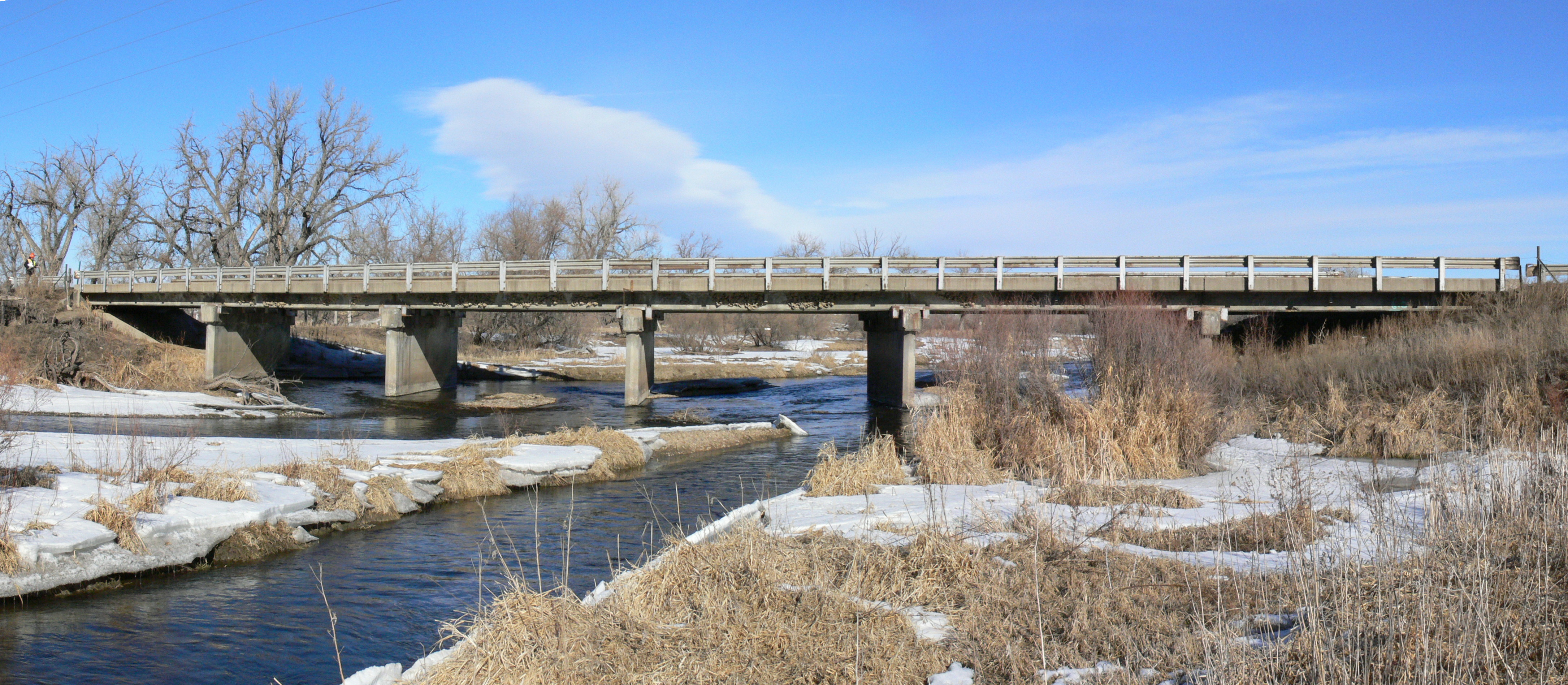
Colorado Dept. of Transportation Photo of SH 66 near Platteville
close to where Ft. St. Vrain would have have been located
Like Fort Vasquez in the earlier post, Fort St. Vrain was a business fort in use during the late 1830's to the 1840's. It was located about seven miles north of Fort Vasquez, on the right bank of the Platte River about one and a half miles north of the mouth of St. Vrain creek, for the business of trading with the Indians and Mountain Men who hunted the Rocky Mountains about twenty or so miles to the west. The closest date found for its construction may have been some time in 1837-38. The license to operate this and Bents fort came from William Clark, of the Lewis & Clark expedition in July of 1838, then govenor of the territory. 

Also known as Fort Lookout, and Fort George, Fort St. Vrain had the luck of being part of the Bent Fort family owned by Bent & St. Vrain Company. The company was started in 1830 by Wiliam Bent and Ceran St. Vrain. There original Fort, known as Bent's fort was located in Southeast Colorado on the Arkansas River.

The valley where the fort was established was special to the Arapahoes, and was frequently visited by the Cheyenne, Sioux with occasional visits by the Crow, Pawnee, Shoshone and Blackfeet.  This made the area prime real estate and Ft. St. Vrain did well until the decline in price for beaver skins in the 1830's.

During its heyday, Ft. St. Vrain saw a few, now famous people walk through the gates. J.C. Fremont, William Gilpin -first governor of Colorado, on July 4, 1843 along with Senator Benton celebrated Independence Day by firing off Fremont's howitzer and eating ice cream and cake while visiting the fort. The cake was one made by the senator's niece in St. Louis and the ice cream's milk was from goats and the freezing agent was snow from what is now known as Longs Peak.

By the summer of 1845 the fort was empty when Col. Stephen W. Kearney traveled through. 

The adobe fort continued its decline and there are no known photos of what the structure looked like. However from descriptions written by those who traveled through the area, it probably was similar to what we now see in the reconstruction of Bent's Old Fort.

BentsFort.jpg
Bents Old Fort - www.en-wikipedia.org
For more, see: Fort St. Vrain

For additional information on the Bent & St. Vrain Company: Bent & St. Vrain


Doris Gardner-McCraw -author Angela Raines
Author, Speaker, Historian-specializing in
Colorado and Women's History

Angela Raines - author: Where Love & History Meet


For a list of Angela Raines Books: Here 

Photo and Poem: Click Here 
Angela Raines FaceBook: Click Here