Showing posts with label American West. Show all posts

Friday, April 23, 2021

Insights about The Oregon Trail


For the current story I’m writing titled Cadi, I’ve been researching travel on the Oregon Trail. Not only have I read The Prairie Traveler, a manual that helped travelers prepare for the trek (and became a bestselling book), I’ve also read firsthand accounts of people who made the journey. The thing I found most interesting was the differences in the type of personal observations.

Madonna of the Prairie by
William H.D. Koerner--an idealized portrait

Men related details about the terrain, weather, geographic locations, and miles covered each day. They discussed if any special precautions were undertaken at river or creek crossings. Women counted gravestones, worried about the health of their children, and often fretted about ever reaching the destination. They weren’t wrong to do so because few families ended the journey without suffering a loss of some type. From the women’s journals emerged a common complaint: none of them initiated the trek. All would have been happy to remain in their east-of-the-Mississippi-River homes and work a bit harder to get ahead.

Oregon trail reality courtesy of Center of the West museum
Notice the mismatched mule & ox team in right wagon

But because of the times they lived in, they had to accede to the wishes of their husbands who were the recognized heads of the households. They had to leave behind their friends and families (and often the majority of their cherished household furnishings) and embark on a promised four-month trip that often expanded to six months due to unforeseen circumstances. For these women, they drove ox or mule teams or trudged across prairie grass for most of the sunlit hours, always looking forward to the time after the evening meal when they might have a few minutes to talk with other women. The trip was only make bearable by reestablishing what they knew--gathering with other women to share the stories of where they’d lived, what their lives had been like, and to speculate on what life would be like in their new homes. They clung to the familiar in a world they didn’t understand.

The McCully Train-Iowa to Oregon 1852 by Sanford R. Wilbur & Sally H. Wilbur

The Prairie Traveler by Captain Randolph A. Marcy

Westering Women and the Frontier Experience 1800-1915 by Sandra L. Myres

Women’s Diaries of the Westward Journey by Lillian Schlissel


After her father betrayed her trust by gambling away their Kentucky horse breeding business, Cadi Gruffyn salvaged the pregnant prize mare gifted for her 21st birthday. The loss of the horse farm displaces her aunt and uncle, so Cadi joins them on a wagon train to northern California where her brother established a ranch in the Diablo Valley. When her uncle dies, several men approach Cadi, insisting she needs a husband to help her finish out the trip. She refuses, afraid they only want to claim her valuable mare.

Carpenter Trynt Pembroke just wants a fresh start. A week before his wedding, he was betrayed by his fiancĂ©e who ran off with his brother. He’s looking to get as far away as he can and start a new business. As much as he doesn’t want the complication of a woman in his life, he keeps coming to the rescue of strong and determined Cadi, a woman who shares his cultural heritage. Can he convince her they are stronger together than on their own?

Preorder link

Visit the April Facebook Launch Celebration on April 27th to learn more about the story and read about other titles. Prizes are offered by multiple authors. Click to join event

Thursday, October 18, 2018

Authenticity of Old West Towns


by Cyndi Raye

Working on a new series, I wanted to be as authentic as possible to bring the feel of the Old Western towns alive. Most times it winds up to be the characters that make a town authentic. While researching, I ran into some interesting facts and fodder that I'd like to share with you. 

In my upcoming book, A Bride for Abel, the town's setting lies a few miles south of Alder Gulch, which most people know as Virginia City, Montana. I didn't want to use the actual town of Virginia City in my own story since building my own town is much more fun. So, I took bits and pieces from history to build a fictional place called Pistol Ridge.

One interesting story I read about is concerning a notorious dirty sheriff. Starting in 1863, and throughout the following years, there were many shady characters typical of a boom town. One particular lawman, Henry Plummer, was supposedly as crooked as the day is long. He was alleged to be the brains behind the road agents (a group of criminals who robbed stages, freight wagons and anyone using the road from Virginia City to Nevada City). Mostly, the road agents were men who were too lazy to mine for gold or find legitimate work. Instead, they found other ways to make their fortune. 

In my own story, I had planned to use a sheriff who was not as honorable as the townsfolk thought. When I started doing my research, I was surprised and delighted to find the sheriff of Virginia City also had quite a reputation. 
What do you think? Does he look innocent or guilty?

 Henry Plummer

Since one of my first scenes start out in a saloon, I wanted it to be authentic. The interesting thing I found out and didn't know, was a dance hall girl and a soiled dove are two different people. While proper ladies look down their nose at a dance hall girl, she would never associate with a prostitute. So, what is the difference? 

A dance hall girl doesn't have to become a prostitute. She is hired by the owner to offer dances to the patrons, charging .75 to $1.00 per dance. Afterwards, she steers the patron to the bar, where she talks him into buying them a drink, earning commission on the drinks, also. The irony is her drink is usually tea or colored sugar water since she isn't allowed to imbibe while working. The patron is paying the price for alcohol on both drinks. Does it sound like he is being duped? 

Dance Hall Girl

What about the rules of common courtesy and decency? 

Interestingly, this can get quite complicated. If a man walks into a saloon and begs for a drink claiming he has no money, someone almost always will buy him a drink. On the other hand, if he orders a drink and then tells the barkeep he has no money, he may get himself beat up. 

A man walks into a bar....truly, if he walks into a saloon in the 1800's, if there is a customer standing next to him, he had better buy that man a drink. Did you ever watch an old western and notice how they always seem to buy the man beside him a shot? It is actually considered common courtesy to do so. Now, if the man walks in and ignores the patron beside him, it is also considered bad manners. Men in the old west don't stand for disrespect. 

On the other hand, if a customer is standing at the bar (no bar stools back then), and the patron next to him wants to buy a drink, he had better accept. Refusing can cause harm. It's been told a man or two have been marched through the streets to several different drinking establishments to teach a man some manners. Not sure what this entailed but I'm certain is wasn't pretty.


If you are interested in learning about Virginia City, MT, Laura Joanne Arata, a student at Washington State University wrote a thesis for her Masters of Art. It has tons of information (284 pages) if you like reading history. It can be found here: Thesis of Virginia City, MT


I hope you enjoyed my first post. If you'd love to be introduced to a new series, my book, A Bride for Abel, is set in a town much like Virginia City in 1875. It includes quite the adventure and a rotten sheriff as well. A Bride for Abel is due out November 1st, but you can always check out the other books in The Proxy Bride series awhile.  As of this writing, three of the books are already live. 

Take a look at our exciting new series:


Thursday, November 16, 2017

Bloomers--Her Contribution to American Fashion

Suffrage and Temperance? No, no, no. Let’s talk Bloomers!
This was supposed to be better than a dress?
In American history, you have women who spied for this country, loaded cannons during heated battles, fought wild Indians, ventured alone to rowdy frontier towns.
And then there is Amelia Bloomer.
A native of New York, Amelia was the first woman to own, edit, and operate a newspaper in the United States. The Lily was started in 1849 for the reading pleasure of the Seneca Falls Ladies Temperance Society. By 1850, the circulation of 4000 had started to decline and Amelia took over the editorial helm. She had found her groove. She loved espousing her views on suffrage, temperance, morality, and fashion.
Married to an attorney who was apparently patient and supportive, Amelia freely championed the cause of suffrage all over the country. She spoke, attended rallies, organized committees, and hung with the likes of Susan B. Anthony and Elizabeth Cady. If not for her, her newspaper and her enthusiasm, who knows how long it would have been before we women would have attained the right to vote?
But is that why you know the name Bloomer?
Probably not.
In 1851, a few notable women started wearing loose, baggy pants that gathered at the ankles. The style was based on pants women wore in the Middle East. Amelia fell in love with the roomy, flowing pants. She adored that they allowed her to move so freely, climb steps without tripping, and kept her hands free. Never mind that the things are about as attractive as a clown suit.
But Amelia adored the goofy breeches and pushed them every chance she got. They were frequently mentioned in The Lily, to the point the I-Dream-of-Jeannie breeches finally earned the nickname Bloomers.
Ah, the lasting contribution of a Lady in Defiance.
Copyright 2017 Heather Blanton
Follow me on https://www.facebook.com/heatherfreyblanton and check out my own blog at https://ladiesindefiance.com


Thursday, May 12, 2016

Civilizing the West - One Cup of Tea at a Time

by Shanna Hatfield

My thoughts have been swirling around tea parties and tea and what a grand ritual it is to sit down and enjoy a cup of tea.

Afternoon tea was introduced in England by Anna, the seventh Duchess of Bedford, in the year 1840. The Duchess would become hungry around four o'clock in the afternoon. The evening meal in her household was served fashionably late at eight o'clock, thus leaving a long period of time between lunch and dinner. The Duchess asked that a tray of tea, bread and butter, and cake be brought to her room during the late afternoon. This became a habit of hers and she began inviting friends to join her.

Tea time soon became a social event , usually held sometime between three and five in the afternoon. During the 1880's upper-class and society women would change into long gowns, gloves and hats for their afternoon tea. It might be taken in the dining room, parlor, or even outdoors if the weather cooperated.


In my Baker City Brides series, the women use tea as a way to connect, to share confidences, to bring something special, something refined, to the world around them.


The first book in the series is about an English Lady who marries a man she detests to be able to stay with her sister's children. She leaves behind the beautiful, lush "cottage" where she's lived most of her life to travel to her husband's ranch in Eastern Oregon.


She arrives to find dust, sagebrush, rattlesnakes, and a primitive cabin. Despite the circumstances, it isn't long until she's setting out a proper tea most afternoons. It's a way for her to keep connected to her roots and maintain her sanity in this strange new world. And there is nothing rushed about sitting down for a "properly prepared" cup of tea. It gives her a few moments of rest in her busy, hectic days.


Through her efforts, she brings a bit of civility to ranch and her rough-around-the-edges husband. By sharing the ritual of tea time, she shares pieces of her heart with those around her. In the second and third books, the gathering for a shared cup of tea is something the women greatly look forward to.


Just contemplating the idea of civilizing the West - one cup of tea at a time - made me wonder how many times women indulged in that cup of tea just to hold on to something genteel or calming or a sweet reminder of home as they braved the wilds of the frontier.


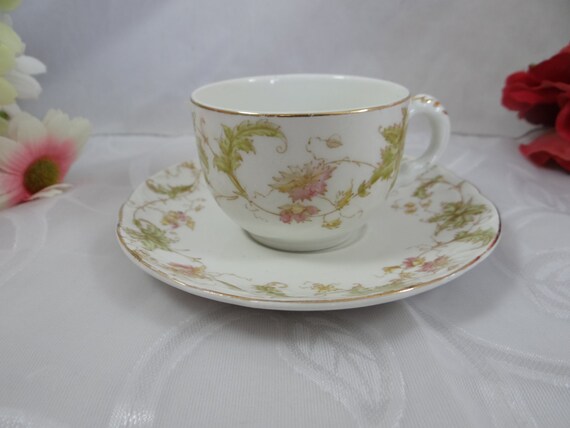
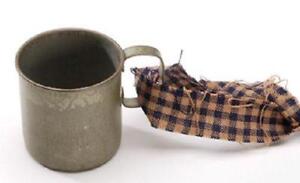
Not all women would have had fine china cups or even tea. The best they had may have been a tin cup or a ceramic mug. Perhaps their tea was brewed from a plant native to the area. But my guess is that many women found some solace holding a warm cup in their hands.

~*~
 
https://www.facebook.com/events/474175426112138/479392632257084/
 
All of you are warmly invited to join me for an online Tea Party I'm hosting this Friday, May 13, on Facebook with the Baker City Brides from 10-11 a.m. (PT).

We'll be celebrating the release of the third book in the series, as well as sharing recipes, participating in games, and there are some great prizes to be won. Make yourself a cup of tea and come join in the fun!

https://www.facebook.com/events/474175426112138/479392632257084/

~*~
http://amzn.to/1UHjk3l

Sheriff Tully Barrett never knew 
                  trouble had such a pretty face.
Brianna Dumont never knew the law 
             could be so handsome and hardheaded.
Pampered and privileged, Brianna Dumont escapes the life she’s always known in an effort to clear her father’s good name. She arrives in Baker City, Oregon, intent on selling her father’s shares in a mine. Only the mine is a bust, her father’s partner is a crusty ol’ coot who hates women, and the sheriff in town is determined to keep her behind bars.
With good friends around him, a small ranch of his own, and a fulfilling job as sheriff, Tully Barrett loves his life. Then an exasperating woman shows up, making demands and driving him crazy. No matter how hard he tries to ignore her brains and beauty, she works her way under his skin.
Corsets and Cuffs captures the fun-loving banter of two strong-willed characters determined not to fall in love in this sweet historical romance.
 
~*~


USA Today Bestselling Author Shanna Hatfield writes character-driven romances with relatable heroes and heroines. Her historical westerns have been described as “reminiscent of the era captured by Bonanza and The Virginian” while her contemporary works have been called “laugh-out-loud funny, and a little heart-pumping sexy without being explicit in any way.”
Convinced everyone deserves a happy ending, this hopeless romantic  is out to make it happen, one story at a time. When she isn’t writing or indulging in chocolate (dark and decadent, please), Shanna hangs out with her husband, lovingly known as Captain Cavedweller.

 Find Shanna’s books at:
 Shanna loves to hear from readers. Follow her online at:

Friday, March 4, 2016

Creating TWIN Book Covers: Costumes, Models, Photography...and GIFT COPIES!


Note: This blog post includes a drawing for two FREE kindle-edition book give-aways! (Read on!)
I had the privilege of contributing two novels (category-length, both roughly 40K words) to the American Mail-Order Brides Series. As one of 45 authors of 50 books, I used the series' cover template, created by a talented artist regularly patronized by our group's leaders. But when it came down to the model or stock photos, that part was up to me.


This series is new. Book #1 (out of 50) released on November 19th, 2015, one each and every day through January 7th, 2016. Reviewers have been kind, expressing appreciation and admiration of the series and the wide variety of contributing authors and types of stories. While all books are about a different state (or territory) within the United States in the year 1890, all are about a mail-order bride. Readers have expressed delight with how very different all 50 books are, and yet they all begin with the same prequel that ties them all together. You'll find this brief prequel FREE on Amazon and on the series' website.


I knew my two books, Lessie: Bride of Utah (book #45) and Josie: Bride of New Mexico (book #47) would be identical twin sisters, hence the need to either use the same model for a custom photo shoot or use stock images of the same model for both covers--or find a set of identical twins to suit my purposes.

A few readers asked if I'd used twin models or whether I'd used one model for both images. One woman who raised the question has a son-in-law who is an identical twin and she can't tell him apart from his brother. Answer: I used one model to represent both twins.

I elected to do a custom photo shoot as to avoid duplication of models used within this fifty-book series (completely unprecedented within publishing--until we did it!). Authors of western historical romance often bemoan the lack of images available within the stock image market.

Costume used for images to be perhaps used with another project
Model in front of "green screen" in costume made especially for Lessie: Bride of Utah.

I had the pleasure of sewing the costumes for both covers. I'm pleased the photographer and her skilled use of lighting was able to make the different fabric textures (while all black) show up with exquisite detail on the finished cover. Look at the difference between my snapshot with my phone (above) and the official cover, below--and the visibility of the silk blouse against the velvet cape and the grosgrain ribbon of the bonnet strings.


I enjoy sewing and doing so allows me a creative outlet to compliment my writing and come up with a suit of clothes that are truly era-appropriate. I've sewn many of the costumes used on my various books. I've purchased others, rented some from theater companies, and am continually collecting costume pieces to use for upcoming projects.

This pattern was used for Lessie: Bride of Utah's costume. See it made up in dark red and black, in the photo shoot image and on the book's cover image.
This draft of the copy for Josie: Bride of New Mexico shows a side view of her twin sister, Lessie:Bride of Utah, and a fun view of the bonnet. Part of the FUN of the 19th Century was the clothing...especially the hats! This image was discarded in favor of the published image with only one sister on each cover.

The background images needed to ideally represent the part of Utah and section of New Mexico in my stories...and reflect the late autumn and early wintertime setting. I purchased the background images from a stock photo company, based upon my intimate knowledge of northern Utah and my many travel experiences through New Mexico.
 

These companion novels stand alone and one may be read and enjoyed without the other. While designed to be read in either order, many readers have commented in reviews they recommend reading Lessie first, followed by Josie. Both are available as Kindle editions on Amazon (exclusively) and both are a FREE Read with kindleunlimited. Paperback versions of both are coming soon.


Find the whole series on Amazon

Note: While all 50 books began as exclusive to Amazon and thus offered as a free read to subscribers of the kindleunlimited program, some authors have begun to diversify. It's possible some titles are available now for Nook, on Kobo, etc.


DRAWING is for one gift copy of  Lessie: Bride of Utah (book #45) and one gift copy of Josie: Bride of New Mexico (book #47). Drawing is open for ONE 24-hour period, beginning the moment this post is live (12 AM on Friday, March 4th, 2016) and closes at midnight the same day (11:59 PM on Friday night, March 4th, 2016).

To Enter: Reply to this blog post in the comment section provided. In your response, answer the question: What is your personal opinion about familiar stock images appearing on more than one book cover? Please explain your answer. 

Note: As this is an opinion poll, there is no right and no wrong answer. Your answer (either way) will in no way effect your probability of winning. Two winners will be announced by 10 AM (PST) on Saturday morning, March 5th, 2016, in the comment section of this post. One winner will receive the kindle edition of Lessie: Bride of Utah and one winner will receive the kindle edition of Josie: Bride of New Mexico, via email directly from Amazon. Because of this delivery method, the winners must be willing to provide their email address, privately, to Kristin Holt. Upon announcement of winners, the two who've won will be asked to email me directly [Kristin (at) KristinHolt (dot) com] or through my website's contact page. I respect your privacy--your email address will be used only for the award of your prize.


Hi! I'm Kristin Holt.
I write frequent articles (or view recent posts easily on my Home Page, scroll down to mid to lower) about the nineteenth century American west–every subject of possible interest to readers, amateur historians, authors…as all of these tidbits surfaced while researching for my books. I also blog monthly at Sweet Americana Sweethearts (first Friday of each month) and Romancing the Genres (third Tuesday of each Month).

I love to hear from readers! Please drop me a note. Or find me on Facebook.


Website | Email | Newsletter | Twitter | Pinterest | g+| Facebook Profile | Facebook Page | Amazon

P.S. I'm more than a little obsessed with mail order brides. I've written a 12-part series of articles (blog posts) about genuine history's mail-order bride scams in the 19th century Victorian-era United States. Fact is often a great basis to begin a book on...and fact is often so much stranger and (perhaps) more entertaining than fiction. You'll find the first blog post in the 12-part series here--with easy links to follow through and read as many of them as might strike your fancy.
 
 
Copyright © 2016 Kristin Holt, LC
.