Showing posts with label #Texas. Show all posts

Tuesday, January 7, 2020

Settling in Texas by Abagail Eldan

The first true German immigrants in Texas were Johann Friedrich Ernst, the "Father of German Immigration to Texas," and Charles Fordtran. A few years later, in 1842, the Adelsverein was formed for the purpose of promoting German immigration into Texas. Some came to escape religious persecutions, others because of political problems in Germany, and still others came looking for better opportunities. (see Lonestar Genealogy)

My Brokken books are populated with German immigrants. The series is set in Brokken, Texas, the small Texas town founded by Franklin Brokken, a descendant of Wilhelm Brecheisen whose surname means “breaker of iron” in German. Not long after Wilhelm arrived in America, he became involved in a fistfight with a fellow German, a man named Frederick Eisen, whose name means "iron." When Eisen landed a blow and Wilhelm fell, breaking his hip in the process, one of the onlookers said, “The iron has broken the iron breaker.” And just like that, Brokken became Wilhelm’s last name. He cheerfully accepted the Americanization of his name but added the K, right in the middle. The K, he told his family, stood for kein, which means“not” in German. He declared to all who would listen that he was not broken. And he set out to prove it, soon becoming one of the richest men in Pennsylvania.

His grandson Franklin Brokken traveled to Texas to found the town that bears his name. With his first wife, Franklin had three sons, Fritz, Curt, and Karl. After the death of his first wife, Franklin remarried, and his wife bore him a daughter, Deborah. 

Beginning in This Brokken Road, we learn a little about the three sons. Many of the businesses in the town are owned by the Brokkens, and one of their businesses, the Brokken bank, is robbed by the owners themselves. In Brokken Brother we discover why. 

In Brokken Redeemed, the tale of the Brokkens continues with Deborah's story. When the town is attacked by a group of outlaws, Fritz bears the brunt of the blame for the destruction that ensues. 

Disillusioned, outcast by his own family, and his engagement broken, Fritz is given a mission--find the mother of Sally Jane whose grandmother was killed in the fiasco. 

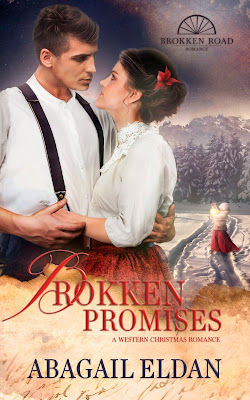
In Brokken Promises, Fritz sets out on his journey, unaware of the repercussions from his lies and the broken promises he has left in his wake. 

His search leads him to Camellia Jenkins who harbors deep secrets. She is barely able to keep body and soul together and returns to Brokken, Texas with Fritz who promises to help her. 

When her secrets are revealed, will Fritz stand by his word? Will keeping promises break him further... or make him stronger? 

Brokken Promises is the latest in the Brokken Road Romances

Wishing you a Happy New Year!


Wednesday, September 4, 2019

From the Republic of Texas to the Lone Star State


Texas is grand, and she is unique!

Unlike the other forty-nine states, Texas came into the union by treaty. President John Tyler negotiated the first Treaty of Annexation in 1844, but it took two more tries and the support of President-elect James Polk, before it was ratified on March 1, 1845---subject to acceptance by the Republic of Texas. It still had to be voted on by the Texicans.

Back then Texas claimed parts of what is now New Mexico and Colorado. The long little sliver went all the way north taking parts of Oklahoma, Kansas, and all the way up to Wyoming.

They fought for the Rio Grande to be the southern boundary in the Mexican-American war. In the treaty, the one-time Republic retained lands lying with her limits and a seven-mile boundary of her waterways.
The right to split into five states (four, plus Texas) if desired by Texicans was also written into the agreement that brought Texas into the Union as the twenty-eighth state.

This is Independence Hall in Washington on the Brazos. It wasn't big and fancy where the Texicans voted to give up being an independent nation.

Ron and I visited on a research trip. There's a wonderful museum there, too. A great place for a Texas family outing!

History is carved in stone, but what if Texas had voted to remain a Republic? Only God has the answer to that question, but it has intrigued a lot of folks for many years.

My husband is a native-born Texan and says one of the worse days of his life was, as a seventh-grader taking Texas History in 1962, when he learned of Texas giving up her sovereignty to become a state. He's been a successionist ever since I think. I have to admit, sometimes I think I'd be the best thing to do, too.

No wonder we called my newest release TEXAS TEARS and set its opening scene just before the Texas Congress voted in favor of annexation. In our story, a fictitious Republic of Texas Senator takes the floor in the one room Independence Hall and holds his hand to his ear.

“Can you hear it, men? All over our Republic, Texas tears are falling like raindrops in a thunderstorm of sorrow.”

Another fictitious senator and hero of my story Thomas Baldwin was called upon and asked what he had to say.

“This I know: I love Texas. I have ever since having the good sense to come here. As most of you know, I fought with Houston, then Monroe and I rode together as Rangers, proud to serve with the greats like Baylor and Rusk.
“I’ve been all over the Republic and sure would like to know how those who gave their lives at Goliad, the Alamo, or San Jacinto would vote. But they can’t speak from the grave. So, it’s up to us now.”

A compelling thought. While annexation is the backdrop for TEXAS TEARS, the story revolves around two young ladies, best friends who’ve grown up together, who fall in love with the same man—paralleling, a bit, Texas being pursued by two Nations, the U.S. and Mexico.

While it’s obvious how the people of Texas voted back then, who marries the new handsome young man remains to be seen. The one his domineering mother wants or the other his heart desires?

This is Arlene VanZandt on the cover, and I've fallen in love with her. She reminds me of my mother who was as good as gold with a servants heart that caused everyone around her to love her. She loved Jesus and wasn't afraid to follow Him through good times and bad. 

Plus, Arlene loves to write, too!


So, besides being book three in the Cross Timbers Romance Family Saga, TEXAS TEARS doubles as Book One in my treasured Thanksgiving Books & Blessings Collection.

The first one launched last fall in 2018 with Collection One, and continues this year with Collection Two releasing this week!

And it has all new authors! Davalynn Spencer, Mary Connealy, Samantha Bayarr, Liz Tolsma and Allison Pittman! with Collection Two with all new authors!

2019 marks the sixth anniversary of the “Thanksgiving Book & Blessings” November party, this year on the Thursday the 14th, two weeks before we all gather with loved ones to officially give thanks to God the provider of all good things in our lives.

Thanksgiving is by far my favorite recognized holiday of the year! 

The great migration from east to west, fueled by the lust for free land, gold, and adventure didn’t end in Texas as we know. It even caught up a few folks in the new Lone Star State. That’s the backdrop for LEAVIN’ TEXAS, the fourth installment of the Cross Timbers Romances Family Saga scheduled to debut in January 2020, God willing.

BLESSINGS, Y'all!


Bio: Award-winning Author Caryl McAdoo prays her story brings God glory! And her best-selling novels are blessed with a lion’s share of 5-Star ratings! With forty-four-and-counting titles, she loves writing as well as singing the new songs the Lord gives her—listen to a few at YouTube. She and husband Ron share four children and eighteen grandsugars. The McAdoos live in the woods south of Clarksville, the seat of Red River County, in far Northeast Texas, waiting expectantly for God to open the next door. 

Contact Links: Author Pages:
 Amazon  -  BookBubSimon & Schuster  -  BookGorilla  -
Southern Writers Magazine - Sweet Americana Sweethearts
Website  -  Newsletter  -  Influencers’ Group  -  YouTube  (Caryl sings!)  -  Facebook   -  GoodReads  -  Google+  -  LinkedIn  -  Twitter  -   Pinterest  - 
Blogs: 
    Sweet Americana Sweethearts (Historical)  -  The Word & the Music  -  HeartWings (Devotional) 
             
WANT SOME FUN? Here's a PUZZLE for you!  

Tuesday, March 5, 2019

The Spread of the Appalachian Dialect

In an attempt to add authenticity to stories, authors often sprinkle colloquialisms throughout their writing. As a South Alabama native, I grew up exposed to a unique accent. For example, my grandmother called the sink, a "zink." My mother's name was Esta, and yet her family called her "Estee." Her sister was "Velmer," instead of Velma. My Uncle Andrew became Uncle "Ander." 

Recently, I discovered my ancestors migrated from Tennessee, from the Appalachian region. Like the people of Appalachia, my family pronounced wire, tire, and fire as "war," "tar," and "far." Pillows were "pillers," tomatoes, "tomaders," and windows, "winders." Even the pronunciation of the state of Alabama ended with an -er sound--"We're from Alabamer." 

Scholars disagree on the origins of the Appalachian dialect. Some have suggested it's a holdover from Elizabethan English. Others point to the relative isolation of the mountain people.
Perhaps it "led to" is too strong a word although it did ensure the survival of it until recent generations. With the advent of television and the internet, accents are being lost.

Fortunately, we still hear it here in South Alabama. We, too, are relatively isolated and not easily influenced by others, but it is less noticeable in our young people. Still today, it is not unusual to hear phrases like "young'un," "he got a whupping laid on him," "I reckon you're right," "we're fixin' to eat supper," "she's right pretty."


And we often read these phrases in western books. Many historical western novels are set in Texas where this dialect was used. Why? Stephen Austin, Sam Houston, Davy Crockett, and David Bowie were originally mountain men who helped form the state of Texas. And we see this in western books. You will find, for example, the heroes of Louis L'amour were originally from Tennesse, the same as my own ancestors. 

My Brokken romances are set in the east of Texas, in the small town of Brokken. The novel I am writing now is set in Lonely Grove, Texas. Sprinkled throughout will be these colloquialisms I picked up as a young'un. 

Slowly, the dialect is slipping away. Fortunately, our books keep it alive and well.

My Brokken books are on Amazon. Click here.
And my latest Lockets & Lace book is up for pre-order, here.


Wednesday, October 3, 2018

Texas Towns and Cities Part One - Irving, Texas

Writers are encouraged to write about what they know.

Consequently, in my first historical Christian romance series, the Texas Romance Family Saga, I elected to use my new hometown of Clarksville, seat of Red River County and its surrounding locales in the far Northeast corner of the state.


I even located my hero & heroine’s home on the nine hundred acre ranch my husband and I presently live on seven miles south and east of the square.


With my new Cross Timbers Family Saga series, I decided to go back to my roots and set in it Irving, Texas where my husband and I grew up and lived over fifty years as my backdrop. My first twelve grandsugars all went to Otis Brown Elementary, across the street from our home.

Of yet, I’ve not named the settlement my four families in book one GONE TO TEXAS—the O’Neals, Worleys, VanZandts, and Harrells—homesteaded. In the series’ coming novels, the real life settlements of Sowers, Kit, Shady Grove, Union Bower, Finley, Estelle, and Bear Creek will be part and parcel of the stories.

As with our fictitious settlement in GONE TO TEXAS, these real life places sprung up because of pilgrims from all over the Eastern states hunting a new life on the wide open lands of Texas. And they brought like-minded friends and family along with them.

In 1903, all of that changed. Two young men, Otis Brown, twenty-four years old, and his boss, head of the Rock Island Railroad surveying crew, twenty-eight-year-old J.O. Schulze, surveyed a ten-mile stretch of land between the existing cities of Dallas and Fort Worth for the future rail line between the two cities.

Knowing what a boon the railroad would be to the area, Schulze suggested to Brown that it would be the perfect place for a town. The men left the employment of the railroad in the fall of 1902 and purchased eighty acres from Henry Britain who owned a ranch about nine miles west of Dallas.

Most of 1903, the worked diligently cutting timber and blowing out stumps then that December, they auctioned off forty town lots.

The only buildings in what was to be named Irving—Brown’s wife’s favorite author, Washington Irving—was the partially constructed railroad depot and the newly built home of Otis Brown and his wife Netta.

So unlike the afore-mentioned settlements, the Irving Community was planned because of the railroad. Two young men saw an opportunity and seized it. Schulze also built a home for his wife in 1904, but returned to Iowa the next year due to her poor health.

Brown stayed and became Irving’s first mayor in April 1914 when the city was incorporated, taking in all of the smaller surrounding settlements that Irvingite's today still know and love.