Friday, October 6, 2017

How Emigrants Live on their way across the Continent: 1877 -- by Kristin Holt


by USA Today Bestselling Author Kristin Holt

I'm fascinated by everyday life in America's Victorian Era. Little elements that everyone in 1877, for example, knew as commonly as we know what it means to "click on an icon". Useless, as far as foreign phrases go, to traveler across the American plains in the latter half of the nineteenth century--and most two-year-olds today know how to play games on an iPad.

Times change. That precise element--everything old is new again--contributes to the fascination readers find in books set in the American Old West. How did people find out a train's schedule? How much did passage cost? When did trains with vestibule (walking pathways) connections become commonplace? How were cars heated in the winter? What did travelers eat?

You might be familiar with Harvey Houses or Station Houses (eateries along the rail at stops). I've always read that outside of Harvey's Houses, created to fill that very need in the market, station restaurants served atrocious food. Poor quality, often spoiled, inedible food. To my delight and surprise, I came across this newspaper article from The True Northerner of Paw Paw, Michigan on May 4, 1877, wherein the unnamed newspaper columnist tells the curious reader how emigrants live on the trains, what necessities cost, and that  mothers traveling with children launder clothing and cook (can you imagine?) on the moving train.


Note: all price comparisons (from 1877 to 2016 [latest year offered by this source]) were prepared using The Inflation Calculator: WestEgg.com/Inflation


The writer was "astonished at the supply and cheapness (frequently used in a positive light, a.k.a. "affordable", "excellent price", in the 19th century) of the food along the road."


The prices attached to train fare and foods purchased may not seem irrational to you or me. We dine out and easily spend within the range charged at the finer Pullman eating houses. I feel compassion, though, for emigrants who sold everything they own in order to afford passage from Europe aboard a ship, then rail fare (expensive compared to airfare today!). Simply feeding each member of the family, meeting daily needs, and having anything leftover with which to start new in America must have been difficult.

No wonder emigrants cooked what they could aboard the train (atop the cast-iron stove used in winter to heat the car, I assume), purchased ready-to-eat foods along the way (bread, butter, milk), and thereby decreased expenses.

Many emigrants suffered hunger, deprivation, and fear, exacerbated by language barriers. This article showed a lighter side to my overall impression of the emigrant's plight. I guess if newcomers to America had enough resources to travel by train, life may have been as simple and affordable and easy as this newspaper article makes it seem.

 
Have you read a novel or novella that contains emigrants traveling by train toward their  new home in western United States (or Territories) in the nineteenth century?


How does this article shed light on your understanding of nineteenth century train travel?


Please scroll down and reply. I'd love to hear from you!


I wrote an article about luxury train travel--the opposite end of the spectrum from emigrant train travel. This post shares many vintage photographs of luxury train cars.
 
http://www.kristinholt.com/archives/3038

 Want to know more about Fred Harvey (of the famous "Harvey House")?

http://www.kristinholt.com/archives/1600

http://www.KristinHolt.com/about-kristin-2

Copyright © 2017 Kristin Holt LC


Thursday, October 5, 2017

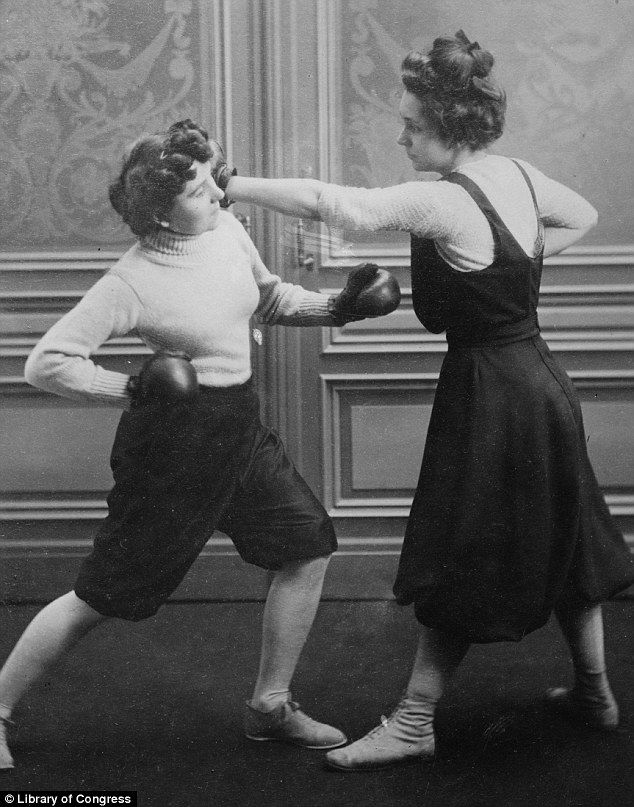
Victorian Women in the Ring!

Hi! Kit Morgan here!
Pugilism, or female boxing, has a very interesting history. It started back in the 1700s as a fierce and bloody bare-knuckle sport. With no rules to govern it, the sport of women's boxing in the 1800's had a reputation for being fiercer than it is today!
In the 1800s and 1900s, women's boxing was purely commercial. Often times they'd fight as side entertainment alongside dwarfs, Siamese twins, and giants. Basically, anyone considered a freak of the day. But in some parts of the country, New York, for example, it was a much more serious business.
In the 1800s and 1900s, they could engage in bloody fistfights, wrestling matches, and bare-knuckled brawls -- all while wearing full Victorian dress.
Women's boxing is thought to have started in Victorian England in the 1720s in the form of prizefighting when the first well-known female boxer, Elizabeth Wilkinson, from Clerkenwell, fought in London.


Wilkinson was a hit fixture on the London boxing scene -- which allowed kicking, gouging and other methods of attack during matches. She also thrilled fans by fighting both women and men. In the 1800s and early 1900s in America, the tradition carried on. Including the trash talk that went on before a fight. To call another fighter out, challenging them to a fight, was done in the newspapers by one opponent, and in turn, the challenge accepted or rejected (but not much rejecting was done) also in the newspapers.

Despite being an active sport, women still had to wear long Victorian dresses or skirts, and high collared blouses as they sparred in boxing gloves. Gloves by the way, weren't introduced until the mid-1800s! 

Women's boxing continued under the radar for decades after the first known boxer, Elizabeth Wilkinson fought in the 1700s. It wasn't until 1888 in the United States that the first women's championship match occured. It was between Hattie Leslie and Alice Leary. Hattie beat Alice in a brutal fight. For decades, despite boxing not being considered an official sport, women continued to box each other at regular intervals across the world. So, not all women in days gone by were damsels in distress!

Everyone loves a strong female lead, but she doesn't necessarily have to put up her fists and go at it!

If you'd like to check out my books, you can find them at www.authorkitmorgan.com.


Wednesday, October 4, 2017

Educating the Masses


Educating the masses has changed time and again since time began.

The passing of information from one person to another, parent to children or teacher to student is as old as man himself. Back to when people lived in caves, pictures were painted on the walls. Hebrews recorded their genealogies by carving on their staffs which were handed down from generation to generation.

The Romans wrote on clay tablets and chiseled into stone those documents they deemed more important to preserve. Then Egyptians invented papyrus that later evolved into paper and ink. Guttenberg’s printing press made books accessible. But therein was a big problem. Most of the populace could neither read nor write.

Only the privileged elite were educated. And this was by design. Those in power didn’t want the masses, their labor force, to be educated or able to communicate past the spoken word. The concept of universal education was slow to come, especially for those lower classes being exploited. For instance, prior to the Civil War, it was against the law to teach a slave how to read and write.


In pioneer days, city fathers banned together and hired a school marm to teach reading, writing, and arithmetic to the youngsters. In some incidences, education was offered free, paid for by the community, but most times the students themselves or their parents who paid—often in labor—which primarily is still the ways and means today of higher education: student loans, scholarships, or parents footing the bills.


In SILENT HARMONY, my new historical novella, my hero travels from the east out to the western frontier in northeast Texas to start a school for the deaf in his mother’s old family home. Set in the 1860s, his deaf students and their parents paid for the opportunity to learn hand language.

By the early 1870s, it was determined that the state should get involved in regulating and licensing doctors. At that time, there were no less than six different disciplines claiming to be the right way to practice medicine. After much debate and legislation, only two emerged as acceptable to be taught to those desiring a physician’s career. And licensing veterinarians only became popular at the turn of the last century.

While some might say, “We’ve come a long way, baby!” Have we?

When our curriculum today is compared with that of a fifteen-year-old a century ago—then  versus now—today’s curriculums would be found wanting as requirements have been dumbed down. Instead of being required to study longer and harder, students receive a passing grade and gold stars for their foreheads, many graduated without basic reading skills. Cursive writing has been eliminated.

Will future generations even be able to read the Constitution of the United States?

THE WORD


THE MUSIC

✞♪♫•✫*♪ They that wait upon the Lord♪•.♪ ♫•*♪ Shall renew their strength♫•*♪•.♪ They shall mount up with wings ♪♫•*♪*•♫♪ like eagles ♫•*♪ They shall run and not be weary ♫✞♪ ♫•✫*♪•♫ They shall walk and not faint✞♪♫•✫♫♪ Teach me, Lord, to wait. ✞♪♫•✫*♪•.♪ ♫•*♪*•♫♪                                                                                                     Music & lyrics by Bill & Gloria Gaither

Tuesday, October 3, 2017

New Release: GAMBLED PRIDE by Sandra E Sinclair


Today is release day for 
Gambled Pride 
by Sandra E Sinclair
Book 12 and her third book in the series
SWEETHEARTS OF JUBILEE SPRINGS

About Gambled Pride:

He's running from his past, she's chasing her future.


Lied to by her father, abandoned by her mother, and determined to keep her promise to a dying sister.

Rachel Stanley, feels lost and afraid after saying a final farewell to her beloved sister.  She is truly alone in the world, and must travel west disguised as her sister, to marry one of two men, she's never met.

Rachel knows who's to blame for her miserable and empty life. She wants revenge. Not only for herself, but for the loss of her beautiful sister. What she needs to make it happen, she can't do alone. She needs help and hopes to find it in the man she’ll be marrying in Jubilee Springs.

Tired of living in the company’s bunkhouse with the other miners. Beg Wilson decides to take his bosses up on their generous offer of finding wives for their workers, and take advantage of the provided lodgings that came with it, by puts his name down to receive a mail order bride.

He's never really had a home and is determined to shake the ghost of his past, hoping to find a future with the woman whose letters move him, and make him think a good life is possible. He'll finally be able to plant roots and have a normal family life.

The only trouble is, his bride is not who she says she is.

Rachel and Beg are on a collision course, where his past and her future will merge into one. What Rachel's running away from, is what Beg is trying to forget. Destiny demands has fated they do it together, bringing with it bittersweet memories, hurt feelings, peace of mind and new beginnings.

Can two lost soul heal each other and find happiness?

Find out now by grabbing your copy of Gambled Pride on Amazon today. PLEASE CLICK HERE.

Gambled Pride will be offered at the New Release sale price of $.99 for one day before it will be available at its usual price.

Now, for an excerpt:

Chapter 1

The air was still, the night had a nip in its tail as it pinched at Rachel Stanley’s skin, leaving kiss bumps in its trail. Rachel shivered and wrapped the thin shawl tightly around her. Steam from her breath wafted through the air as she raced along the lonely streets, keeping close to the shadows cast by the moonlight. She had to get to her sister Marybeth. She’d know what to do. Their father had gone too far this time.
Her tears rolled unabated as she cried, cold and wet on her cheeks. What should she do? Panic gripped her soul as she relived what her father had told her, so matter-of-fact, as if her feelings counted for nothing.
She picked up speed with every nerve-shattering sound that reached her ears, breaking through the noise of her pumping heart, which echoed, thumping against her eardrums. Her eyes shifted this way, then that, making sure she wasn’t seen, in case Red Adams decided to claim his prize earlier than the date stated.
Their father’s gambling had already sealed Marybeth’s fate. She wasn’t going to let him ruin her life and reputation in the same way. Maybe things wouldn’t have gotten so bad if Marybeth hadn’t become sick. Without her money coming in too, what she made from cleaning other people’s houses, taking in their mending and laundry wasn’t enough to sustain their father’s addiction. So now he wanted her to work for Red too.
She wouldn’t do it.
Marybeth had only been a dancing girl but her chances of finding a good man to marry were over. No decent man was going to marry her sister, knowing she’d let strange men paw her and swirl her around the saloon night after night.
Rachel quickened her stride. Marybeth had told her, if ever the day came when their pa decided to make her work for Red, Rachel should run—run and never look back.
That day had come.
But how could she leave with Marybeth being sick up at the hospital? Her big sister was all she had in the world, and she’d never leave her; never. Marybeth was more than a sister, she was her friend, her mother, and her protector from a drunken, brutish father who showed them no love after their mother ran out on him; leaving the girls behind.
Rachel had only been little when their mother left, but Marybeth had told her stories to remind her of how loving their mother was and how much she loved them. But she couldn’t take them with her, or their father would never stop looking for her. And when he found her, he’d kill her. The law would do nothing about it, because he’d make sure they never found her body.
She told Rachel how their mother had cried the day she left, wishing she could take them with her. She was heading farther west, to marry a man she’d never met, who had two boys, leaving her sister with instructions to do the same when she became of age and to take Rachel with her.
“Ma left us so she could live. So, you have to be good, Rachel, you have to do all he says so he doesn’t hurt us the way he used to hurt Ma,” Marybeth had said.
“When is she coming back for us?” she’d asked with the innocence of her childhood.
“She won’t be coming back. She’s gone to have a new life, a better life, and when we get old enough we’re going to do the same. So, you’ve got to stay out of Pa’s way until then. We do as he says, and we’ll be all right.”
But it hadn’t been all right. Although Rachel guessed if Marybeth had been an only child, maybe her life with Pa would have been different.
Then again, Marybeth had been seven years older, and at the age of twelve she knew how to be the way their father wanted her to be. A naive five-year-old hadn’t known.
She’d gotten herself into all manner of mishaps, and Marybeth took her punishment. She’d tried so hard to be good and didn’t get it until she was a lot older. By then Marybeth bore the scars that were meant for her.
Rachel loved her sister and curbed her tomboy, troublesome ways to save Marybeth from any more of her father’s abuse. It had taken time, but she couldn’t watch her sister suffer any longer.
Her cooking and cleaning skills improved with age. She stopped burning their meals and ruining the clothes they took in for laundry. Her needlework was good enough for Marybeth to leave her alone to get on with the jobs they took into their home. It meant she could work outside to bring in extra income for their father to gamble away.
Before she became sick, Marybeth had told her they would both be free soon. She’d promised Rachel they were going to live far away from their father, someplace he’d never find them. She had plans. Those plans were quashed by her illness, though. 
The entrance to the clinic was in sight. She’d see Marybeth and tell her what their father had planned for her and ask her sister’s advice. She didn’t know where to go without money, or a place safe from their father’s reach.
Perhaps with things being what they were, Marybeth would share her plans with her and they’d leave together tonight—after all, her father said Marybeth’s health had improved.
She was desperate. Marybeth had told her working for Red was hell on earth, and every Sunday at church, her sister prayed for a different and better life. Her prayers were answered from something someone had left behind on the pew. Marybeth had picked it up and chuckled.
“Oh, Ma, it’s been so long, I’d forgotten. I know what to do now. Thank you, Lord.”
Rachel had been confused as to whom Marybeth had been speaking to, she understood her thanking the Lord, but aside from the preacher, they had been the only other people left in church.
Reaching the clinic, she slipped in through the door out of the encroaching cold.
“Ah, Miss Stanley, you got my message. I believe your sister is hanging on for you.”
“Hanging on?” Fear gripped her heart. “What do you mean, hanging on?”
“Didn’t your father tell you? After you left here yesterday, your sister took a turn for the worse. We told him to send you back, as she was asking for you. We thought she’d go in the night but she’s struggling to stay alive. I can only think her stubborn grasp on life is so she can see you before she goes.”
Rage flew throughout her being. Her father had come home and lied to her. He’d told her, her sister’s condition had much improved and she should be coming home soon. He’d even tried to keep her from visiting Marybeth today, saying there was no need if her sister was coming home. He’d given her a million and one chores to do in preparation for Marybeth’s return.
The only reason she’d disobeyed him was because he’d said with Marybeth unable to work at the saloon anymore, she’d have to take her place until her sister recovered. When he’d added, Marybeth had arranged it with Red, Rachel knew he’d lied. Marybeth had always told her to run if he even suggested she work there.
She’d challenged him, saying Marybeth would never do such a thing, and he’d laughed.
“Okay, you got me. I lost you in a game of cards. Red’s given me two days to prepare you, and then you have to go take your sister’s place.”
The man was despicable, she hadn’t thought him capable of lying about Marybeth’s condition. Now the doctors said her sister was dying.
If Marybeth died, she might as well die too.
 
~oOo~

To read and enjoy all of the books in the Sweethearts of Jubilee Springs series, please sign up and follow us on Amazon by CLICKING HERE.