Monday, October 12, 2015

Columbia Mercantile


In my latest Christmas story, Too Old for Christmas set in 1854 Columbia, 
California, between getting off work early due to heavy rain and his visit to the dentist, Doc Massey, my hero Sean Flood makes a stop at the Columbia Mercantile. While he is there looking and feeling far from his best, Sean first speaks to the widow Ona McNair.

Columbia was first known as "Hildreath's Diggings" after Dr. Thaddeus Hildreath and a few other prospectors are given credit for discovering the gold site on March 28, 1850. Hildreath and his friends came across a gulch that yielded them $4,680 in gold during the next two days. When word spread about the find, the population went from nothing to 5,000 during the next month resulting in a frenzy of construction as hundreds of frame buildings were erected. AS happened on a regular basis in the towns of the era in gold country, almost all of then were destroyed by the great fire of 1854.


 The building that most people now refer to as the Columbia Mercantile is also known as the Magendie/Brunet Building. In 1852 V.E. Magendie bought a wooden structure on this lot from Alexis Maitre in what was then known as the French quarter due to the number of natives of France who had started businesses.

This building along with a large portion of Columbia except for a few brick buildings was burned to the ground in 1854. Magendie first rebuilt his store of wood before he replaced the structure with a more durable brick building in 1855. Based on that timeline of actual events, at the time Too Old for Christmas begins in November of 1854, Sean would have entered a wood structure when he visited the mercantile. Since that year Sean augmented his freight hauling jobs with construction jobs as part of the effort to rebuild the city of Columbia, it is possible he may have helped construct the wooden building where he later shopped.  

Fortunately for Mr. Magendie and the rest of Colombia’s businessmen, cement for the concrete mortar was mined locally. The brick was made not far away in Shaw’s Flat.

Along with the brick buildings which proved to be more fire-resistant (not
entirely fire-proof), Magendie had installed heavy iron shutters which could be closed over his doors and windows to  help keep fire from spreading either into the store, or from the store outward. Examples of this type of construction may be found throughout the Mother Lode region of the Western Sierra-Nevada foothills.

In 1856 V.E. Magendie sold the building to J.B. Magendie. The 1857 fire partially destroyed the building. Magendie sold to Pedro Beronio and Pierre Bocquerraz in 1861. Beronio and Bocquerraz sold groceries and alchoholic beverages. In 1868 L. Brunet owned the building and C. Smith ran a clothing and grocery store in it. Brunet owned the building for many years.
Today the structure still stands as an example of the 1855 buildings constructed in this gold mining community.

For the full timeline and some great pictures of the Columbia Mercantile through time click HERE to access the Columbia Gazette page. 
The following is the book description for Too Old for Christmas scheduled to be published in early November, 2015:

         Irishman Sean Flood survived the potato famine, crossing the Atlantic, the Mexican-American War, and wandering the Western wilderness with his mules and freight wagon. But, due to poor diet and deprivation, his teeth did not fare well. It’s November of 1854 in Columbia, California, Queen of the Southern Mines, a city Sean is helping to rebuild after the disastrous fire the previous summer. Intense stabbing tooth pain drives him to see Doc Massey, the local dentist. He first stops by the mercantile to pick up a bottle of whiskey—for medicinal purposes—and food­­­­ he’ll be able to eat when it’s all over. If only the beautiful but aggravating woman ahead of him who keeps her face half hidden and insists she won’t accept charity would finish up with her purchase so he can get his supplies, his tooth pulled and return home to his mules and half-built cabin….

       That night, Sean meets the woman’s two sons, Jesse and Benjy McNair, and learns her secret. He decides with only three teeth left in his head, he needs widow Ona McNair’s charity—and he’s willing to pay for it. Sean won’t accept nine year-old Jesse’s declaration his family’s poverty means the boy is too old for Christmas that year. Sean is a full-grown man and he’s not too old for Christmas. He not only plans to come bearing gifts to Christmas Eve dinner with the McNairs, but he knows exactly what gift he wants for himself.  *Sweet Romance


 Zina Abbott is the pen name used by Robyn Echols for her historical novels. Her novel, Family Secrets, was published by Fire Star Press in October 2014 and her novelette, A Christmas Promise, was published by Prairie Rose Publications in November 2014. The first two novellas in the Eastern Sierra Brides 1884 series, Big Meadows Valentine and A Resurrected Heart, are now available. 

 Please visit and follow the Zina Abbott’s Amazon Author Page by clicking HERE.

Zina Abbott Author Links:

Website  |  Blog  |  Facebook  |  Pinterest  |  Goodreads  |  Twitter


Thursday, October 8, 2015

Sears Roebuck & Co Catalogue 1897


 by Shanna Hatfield

Many of the historical stories I write take place in the 1890s and early 1900s.
There are any number of sources that give some detail about the day to day way of life back then, but one of my favorite resources is a replica of an old mail-order catalog.
sears cat
When I came across the 1897 Sears Roebuck & Co. Catalogue, I ordered it on the spot and could hardly wait for it to arrive. From Skyhorse Publishing, this replica of an original Sears catalog is full of all the nitty-gritty info that I so often search for online and can't find elsewhere.
  You can find everything in this catalog from Bibles, bath soap and buggies to china, rocking chairs and telephones.

There were some things in here that make me laugh, (a lot), like Bust Cream. I wonder how many women purchased it back in the day, or the bust developer?

Jewelry, watches, and all sorts of apparel are included. I find the descriptions very helpful, not just for details about the fabric, but also for the way people described the fashions back then.  For instance, what we would refer to as a dress shoe with a heel for women were referred to as sandals. Waist denim overalls we call jeans.


Captain Cavedweller happened to catch me looking at the gun section of the catalog and promptly snatched it away from me.


Ever wondered what baby teethers looked like in the 1890s? They've got some in there. You can discover types of candy, popular book titles, selections of garden seeds, musical instruments, china patterns, and so much more.

If you are writing a story set in the late 1800s or early 1900s, this book is a great resource to have on hand to find out what every day products were available, what they were called.

And if you aren't writing a story - it's certainly a fun way to spend an hour or two, perusing all those old, fascinating items.


 ~*~
Convinced everyone deserves a happy ending, hopeless romantic Shanna Hatfield is out to make it happen one story at a time. Her bestselling sweet historical and contemporary romances combine humor and heart-pumping moments with realistic characters.
When she isn’t writing or consuming copious amounts of chocolate, Shanna hangs out with her husband, lovingly known as Captain Cavedweller, and fondly recalls the days of her youth spent on an Eastern Oregon farm.

She is a member of Western Writers of America, Women Writing the West, and Romance Writers of America.

Find Shanna’s books at:
Amazon | Amazon UK | Barnes & Noble | Smashwords | Apple

Shanna loves to hear from readers! Follow her online:
ShannaHatfield | Facebook | Pinterest | Goodreads | You Tube | Twitter


Tuesday, October 6, 2015

Blog Tour Tuesday: Cover Reveal for Too Old for Christmas


Cover reveal for Too Old for Christmas, a novella, by Zina Abbott. This is the first book in the Too Old in Columbia Series.

Book Description:
Irishman Sean Flood survived the potato famine, crossing the Atlantic, the Mexican-American War, and wandering the Western wilderness with his mules and freight wagon. But, due to poor diet and deprivation, his teeth did not fare well. It’s November of 1854 in Columbia, California, Queen of the Southern Mines, a city Sean is helping to rebuild after the disastrous fire the previous summer. Intense stabbing tooth pain drives him to see Doc Massey, the local dentist. He first stops by the mercantile to pick up a bottle of whiskey—for medicinal purposes—and food­­­­ he’ll be able to eat when it’s all over. If only the beautiful but aggravating woman ahead of him who keeps her face half hidden and insists she won’t accept charity would finish up with her purchase so he can get his supplies, his tooth pulled and return home to his mules and half-built cabin….

That night, Sean meets the woman’s two sons, Jesse and Benjy McNair, and learns her secret. He decides with only three teeth left in his head, he needs widow Ona McNair’s charity—and he’s willing to pay for it. Sean won’t accept nine year-old Jesse’s declaration his family’s poverty means the boy is too old for Christmas that year. Sean is a full-grown man and he’s not too old for Christmas. He not only plans to come bearing gifts to Christmas Eve dinner with the McNairs, but he knows exactly what gift he wants for himself.  
*Sweet Romance

To stay updated on the blog tour and Facebook event, stop by and visit Zina Abbott's blog and sign up to follow by email or RSS reader by clicking HERE. Blog tour participants are listed in the right sidebar.


AUTHOR LINKS:

WEBSITE  |  BLOG  |  FACEBOOK  |  PINTEREST  |  TWITTER


Monday, October 5, 2015

The Soiled Doves of old Abilene!


The “Soiled Doves” of old Abilene


When Joseph McCoy started the booming cattle trafficking in Abilene, the town started growing way beyond everybody’s expectations.  When gaming houses and brothels started popping up, the good women of Abilene spoke up – Loudly!  It was decided those establishment would be moved across the railroad tracks.  Thus, the “Red Light” District came to be.  Some nicknames such as:  Devil’s Addition, The Valley, Devil’s Island, Texas Village” and other less dignified titles could be heard on many men’s lips.

Each house paid the city a $200 license fee, as did the saloons.  A few of the women were well educated, refined in appearance, but most were addicted to heavy drinking.

The brothel colony was fenced off like and six or eight barracks-type building were erected to house the women.  Eventually a few house “madams’ began to surface, but nowhere is there any mention of vice bosses trying to take over and control the prostitute racket in Abilene.  Each girl paid rent for her own crib in a house, more or less a business all her own.

Each staked her being as freely as a poker chip.  Most were truly “Pistol packin’ mamma’s,” carrying small pearl handled revolvers or knives in their boots under layer of petticoats.

 * * * *


Thanks so much for stopping by.  Several of my historical western romances take place in Kansas in the mid 1800s.

By the way, as a thank you for visiting, I am going to choose one commenter to receive an eBook of their choice between Jesse’s Find, Jesse’s Nightmare, or Justice Comes to Salina.  Be sure to leave an email address!


Jesse’s Find, Book One of the Jesse’s Series

“Jesse,” Ginny asked when they were on the road, “when you asked her about her son she said he was spending his time in the Devil’s Addition as a box herder. She seemed disgusted with him. What does that mean?”

The Devil’s Addition is an area of town in Abilene where some saloons and whore…or brothels are located. A box herder is a man who keeps the – ladies in line.”

She looked at him, plainly confused and then her eyes opened wide. “You mean there are soiled doves in this town?”
A smile tugged at the corner of his mouth. “Soiled doves? Yep, Abilene has its share of them.”


On November 2, I’m talking about the law in old Abilene.  Hope to see you then!!!!!

Friday, October 2, 2015

Yeast, Bread, & Bakeries, Old West Style


Baxter, Perry, Burns Bakery in Dresden, Ontario in 1890s

I can only imagine the difficulty in trying to bake bread on the frontier.
Whether in a Dutch oven in campfire coals, or in the belly of a cast-iron cookstove, bread-making must've been a risky business. Who could afford to waste loaves charred on the outside and doughy on the inside?

No wonder bakeries sprang up almost as quickly as liveries and blacksmiths, mercantiles and grocers, jailhouses and hotels. 

Enterprising settlers saw a need, met it, and earned their living baking bread, rolls, pies, cakes, pastries, doughnuts, and more.

Joseph Henry Walk worked as a baker in Brighton, Utah. Pictured here with his sons and Globe Bakery delivery wagon in late 1890s.


This photo of Fort Larned National Historic Site is courtesy of TripAdvisor 
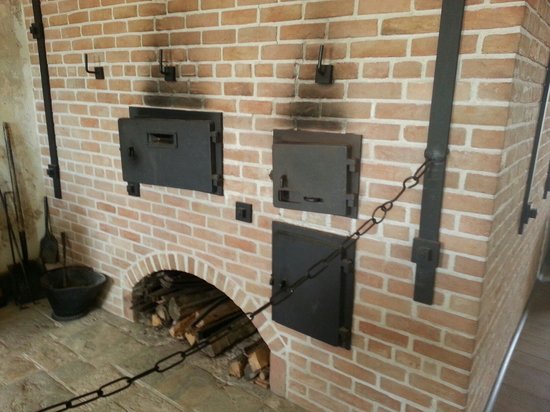
Fort Larned operated from 1859 to 1878
This image shows the Brick Oven in the Bakery

Before yeast was commercially available, bakers skimmed the foam from beer, a sourdough starter, or made "quick" breads with saleratus (a precursor of baking soda).

Commercial yeast was first marketed at the Centennial Exposition in 1876, where Charles L. Fleischmann exhibited the product and a process to use it. In the decade preceding the Centennial Exposition, a method was developed to remove liquid so yeast (grown in cream) could be sold in block form, and a different manufacturing process created granulated yeast.
Antique Bakery Display Case
For a look into history and baking, I recommend the 1913 edition of Things Mother Used to Make: A Collection of Old Time Recipes, Some Nearly One Hundred Years Old and Never Published Before. The Kindle version is FREE ($0.00) and sheds much light on old-time baking of bread, pies, cakes and so much more. This title has been published with a dozen or more different covers, but if any similar (shortened?) title is by Lydia Maria Gurney, you have the right book.


My love for baking makes an appearance in my soon-to-be-released title The Drifter's Proposal, set in my fictitious town of Mountain Home, Colorado in mid-December, 1900.

The baker’s man is home for Christmas…

Spinster Adaline Whipple runs the family’s business, Whipple Bakery, since her father’s demise almost four months ago. She’s stunned by a surprise mortgage her father made with a bank in Denver City six months before he died. Now that the loan is sixty days overdue, the big-town banker wants his money. If the Whipples can’t pay, he’ll evict them. Little does he care Christmas is one week away and the widow and daughters have nowhere to go. Adaline’s sure the handsome drifter Malloy’s proposal of… marriage?... won’t do her any good. But his mere offer to help feeds the attraction she’s felt for him, and before she knows it, she trusts the one man who can break her heart.


The Drifter's Proposal is available NOW in the Western Christmas Romance Anthology, Silver Belles and Stetsons. Preorder now for the introductory price of 99-cents. Release date November 2, 2015.

10 Authors. 10 Novellas.
Silver Belles and Stetsons
Cowboys of the Past and the Women Who Loved them.

Kristin Holt | Photograph of Kristin Holt, USA Today Bestselling Sweet Romance


Kristin Holt | Book Review- Things Mother Used to Make: A Collection of Old Time Recipes, Some Nearly One Hundred Years Old and Never Published Before


Kristin Holt | DIY Yeast in Victorian America


Copyright © 2015 Kristin Holt, LC