Showing posts with label Victorian America. Show all posts

Thursday, October 27, 2022

Sunshine & Shadows - A Brief History of Log Cabin Quilts by Jo-Ann Roberts


"The best kind of sleep beneath heaven above
is under a quilt made with love."

Some of you may not know that next to writing sweet historical romance, quilting is my passion. So, when I was invited to be part of a MAPs with a quilting theme, I enthusiastically said, "Yes!"  The Christmas Quilt Brides series will run beginning November 11th through December 16th.

The Log Cabin quilt, one of my all-time favorite patterns, plays a small role at the start and at the end of the romance between a widowed mother and a new-to-town deputy. 


                                                   Here's my Christmas Log Cabin quilt

The history of quilting, the stitching together of layers of batting and fabric, may date back as far as 3400 B.C. For much of its history, quilting was primarily a practical way to provide warmth. However, decorative stitches were often added, and many quilts are now art pieces.


The Log Cabin quilt pattern is one of the most beloved and recognized of quilt designs. Some fabric art historians believe it may be both older and newer than you might think. While it's natural to assume that this traditional block originated in the United States during the pioneer days, the origins of the block seem to go back much further in time and location. Similar designs have been found on ancient Egyptian mummies and in an English quilt predating 1830.

It was during the Civil War that the Log Cabin pattern first made a wide-spread appearance in the United States. The block name may very well have had a connection to the presidency of Abraham Lincoln. Soon, it became widely popular and was identified with the pioneer spirit and values of America.

Early Log Cabin blocks were hand-pieced using strips of fabrics around a central square. In traditional Log Cabin blocks, one half is made of dark fabrics and the other half light. A red center symbolized the hearth of home, and a yellow (or light) center represented a welcoming light in the window. Evidence, based on oral folklore, suggests that during the Civil War, a Log Cabin quilt with a dark center hanging on a clothesline was meant to signal a safe stop in the Underground Railroad.


In the latter part of the 19th century, many Log Cabin quilts were made by the foundation method with a muslin base. Wools, velvets, satins, and other nontraditional fabrics were used. Log Cabins of this period often had strips that were folded and laid down creating a three-dim emotional effect. For this reason, many late 19th century Log Cabin quilts do not have batting but are back and tied like Crazy Quilts.

Soon, variations of settings appeared with names reflecting the themes of the times. The White House Steps, Court House Steps, eight-sided Pineapple, Barn Raising and Sunshine and Shadows are some of the hundreds of name and pattern variations.

 
                                      Court House Steps                            Eight-Sided Pineapple

As Victorian quilts of wool and silk fell out of style in the 20th century, Log Cabins were often made of cotton prints and pieced with a running-stitch seam either by hand or machine.

Today, the Log Cabin pattern is still a favorite choice for scrap quilts and there is even a resurgence of Crazy Quilts made using Log Cabin blocks.

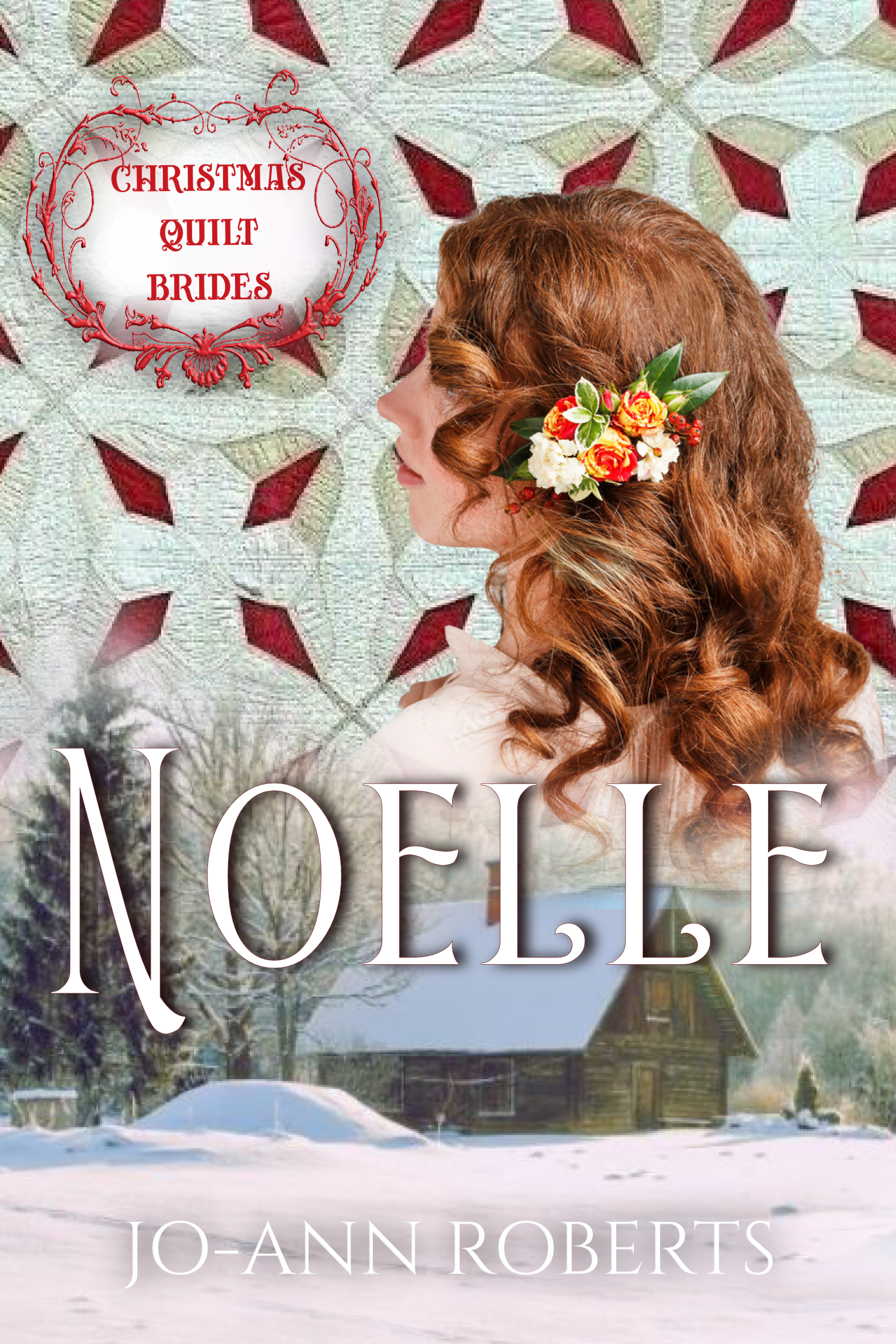
In my book, the heroine, Noelle Prentiss, belongs to the Circle of Friends. Each Christmas, the members make quilts for the new families who moved to Harmony, Kansas. The quilters are given the name of a family, and at the Christmas Eve Cotillion present the quilts to the new members of their community. I don't want to give away the ending but below is the quilt pattern I envision Deputy Cole West receives.


The Christmas Quilt Brides series is now up for pre-order. Here's the series link: CLICK HERE


A widow reluctant to love again…

A deputy determined to win her heart…

Two years ago, Noelle Prentiss lost her husband to an outlaw’s bullet. With two children to raise, a small farm to tend, and a job making quilts to sell at the mercantile, she’s doing her best to keep her property and life intact…until a man claiming to be the new deputy rides into her life captivating her children with his dog, his smile, and his easy-going charm.

When Coleman West agrees to stop by the Widow Prentiss’ home on his first day as a deputy in a small Kansas town, he has no way of knowing obeying the sheriff’s order will change his life. Spurned by love years before, he became a lawman, dedicated to protect and serve. Yet, he had no idea the widow and her children would call to his heart like no one before.

With Christmas looming, will the growing attraction between Noelle and the deputy reveal the gift of a second chance?

Or could a stranger from the deputy’s past threaten the man who captured her heart?


 ...And here's my current work in progress. Winning the Widow's Heart is Book Two in my Mended Hearts series. It releases in March 2023.


Thursday, July 28, 2022

Let's Go Picnicking - A Look at Picnics in Victorian America by Jo-Ann Roberts


"I don't know why, but the meals we have on picnics taste so much 
better than the ones we have indoors."  -- Enid Blyton

The season of picnics is upon us in full force! From spring to late autumn, Americans take to the outdoors, enjoying a variety of foods, fruits, and vegetables while flocking to the shore, a mountain lake, or a neighbor's pool. We celebrate the unofficial start of summer by picnicking on Memorial Day, Father's Day, graduations, Fourth of July, vacations, and Labor Day. Autumn finds us tailgating at football games, soccer matches, harvest festivals, and impromptu evening gatherings around a firepit. 

There's something about eating outdoors that brings out the child in all of us!

In the 19th-- and early 20th century the word picnic was define as "an assembly of young people of both genders, at a tavern where everyone pays his club."


In Victorian America, and especially on the prairie and Western territories, these community picnics were major social events, involving informal sport, games, and people dressed in their Sunday finery. Schools, churches societies temperance groups, and businesses all held annual picnics. The food for the picnic was usually prepared at home and taken to the community grove down by the river, to a neighbor's farm, or a town park.  


There were many families, in both city and country, who could not leave their homes, farms, or ranches for an extended period of time, but could afford to lose a day's work now and then for an excursion.

Picnic Proprieties

As you might expect, picnic etiquette was expected at these gatherings. The following came from the San Francisco Chronicle of San Francisco, California in 1869...

"...We do not allow children just learning to walk to wander unguarded at the edge of precipices, and we ought not to allow young people just acquiring a knowledge of the world to be exposed to perils of the nature which they are ignorant.

...Picnics where the party is largely made up of young girls, should be properly "matronized" and governed by a code of proprieties calculated to prevent even the appearance of evil. There should be no straying in couples from the main body of the party especially when champagne or other vinous beverages have been consumed.

...There is a certain class of fast, young men who make a practice of attending all picnics that are not of a strictly private character for sinister purposes."

The Picnic Basket

The success or failure of a picnic depended mainly upon an ample supply of the right kinds of food and drink. When several families participated in picnic, each family offered to bring a dish, practicing the old adage "many hands make light work".


A sturdy square or rectangular basket, or a wood crate was preferable. A length of toweling or a fancy napkin was nestled on the bottom and up the sides of the basket or crate. Food was then wrapped in paraffin paper and placed inside.

In addition to good manners, each family brought their own plates (paper plates were not invented until 1903!), and flatware along with a sharp knife and a 

drinking cup for each person. A colorful tablecloth often brought a bit of elegance to the meal and showcased the family's wealth. 


Picnic Foods

Cold fried or roasted chicken, ham biscuits, boiled eggs, and pickled vegetables were all welcomed foods at a prairie picnic. Some picnics had "made dishes" which were as good when cold as when warm. Croquettes, fish balls, Saratoga Potatoes (potato chips!), baked beans, and meat pies were favorites. Seasonal vegetables like cucumbers, tomatoes, and fruits like strawberries, blueberries, huckleberries (a Montana favorite) containing a large proportion of water were very much appreciated on a hot, dry afternoon.


Homemade desserts were the highlight of every picnic. Doughnuts dusted with cinnamon and sugar, hand pies, turnovers, cookies and cakes were all well-adapted
to outdoor eating.


As important as food was for a successful picnic, the availability and preparation of something to drink in the hot weather months on the dry prairie was paramount. Where water was abundant, folks brought lemons and sugar to make lemonade. No matter the temperature, coffee was a necessity.  Someone always thought to bring a pot and coffee and built a campfire to serve the brew.


Today, picnics in America are a celebration of human spirit, culinary diversity, and adventures. They are personal. We choose the foods we serve, the guests we invite, and the venue. Planned or impromptu, they are not so very different from picnics of picnics on the prairie. We still enjoy eating outside on a summer's night or sampling regional foods at a community feast (New England clambakes, Texas barbecues, or New Orleans shrimp boils), or at trendy al-fresco bistros, central city cafes, and food fairs.

Let's Go on a Picnic!


Last September, author Pam Crooks extended sent me an invitation to be part of a MAPs project. Enthusiastically, I said "YES!" On July 15th, "Ainsley" Book 8 in the Love Train series released. Thanks to all who read and reviewed Ainsley and Lucas's romance.