While researching Wyoming Territory history for my recent book, Lauren,
I came across an account of two women who made an impact on early Wyoming
history. I saved their story for Women’s History Month.
Mary Jane Bloomer was born
in Mina, Chautauqua, New York in 1842. She was the daughter of Alice
Willing-Bloomer. She was married three times.

She and her first husband, James
Morey, moved to Galina, Illinois, prior to the American Civil War. One
of her aunts lived there. She became a friend of the Grant family. When the
Civil War came, James Morey served as
an officer under U.S. Grant. For a short time, Mary Jane served as Grant’s
personal secretary. During the war, her husband was shot in the head, but
survived. His discharge papers stated he suffered a "brain hernia,"
which meant that his brains were hanging out of the hole in his head. He was
admitted to an insane asylum in Washington D.C. where he later died. He was buried
at Arlington Cemetery.
In 1867, with her husband totally disabled and unable to support her, Mary Jane
abandoned him. She and her mother, who was also widowed during the Civil War,
walked from New York to Fort Laramie,
Wyoming Territory, with an oxcart and Mary Jane's three-year-old son,
Frank Morey, who was born in Ohio during the Civil War.
Both mother and daughter knew General Grant, General Rawlins, General Sheridan
and other officers from the Civil War era. Since many also ended up being in
charge of the Transcontinental Railroad construction, it is assumed they were
offered work before leaving New York for Wyoming Territory. Still, it was a heroic undertaking for two women to
travel alone with a child that far into a frontier. Many white men there were
rough and uncouth, and many hostile Native Americans, very unhappy that
the stagecoach routes followed by the railroad crews disrupted their hunting
grounds, would kill any white person they came across they considered an enemy.

The three arrived at Fort Laramie. The
following spring, the two women worked on the railroad construction sites as
cooks. They started from the newly formed town of Cheyenne west to Carbon, not
far from present day Elk Mountain. (It is now gone, but, at the time, was a
lively city due to its role of providing coal for the railroad.)

In late 1868, Mary Jane married her second husband, William Stimpson, a
merchant from England, in Cheyenne. They appeared on the 1870 census operating
the Union Pacific Railroad Percy Station, Carbon County, Wyoming near Fort Halleck (north side of Elk Mountain) and Carbon. Her mother, Alice,
was operating the nearby Dana Station.
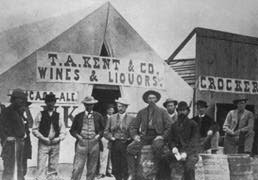 |
| Benton |
In 1868 the next Station to the west near Fort Steel was called Benton. Benton was recorded in history as perhaps
the worst of the worst "Hell on Wheels" towns along the
Railroad Construction. There was no law enforcement of any kind in this short-lived
town. It was essentially three large brothels and several bars. It
attracted every evil character known in the west with every kind of indecency
you can imagine going on. Every weekend the town was filled with drunken
railroad workers, miners, professional gamblers, swindlers, and cowboys
engaging in hard drinking, gambling, open prostitution, fights, gun battles,
murder etc. In only four months of existence, the graveyard at Benton interred
over hundred dead, most of them due to shootings.
The residents of Percy Station,
which included both Mary Jane Bloomer Stimpson and her mother, Alice Willing-Bloomer, got fed up with the murders and cleaning up
after Benton Station. They literally gathered up a lynch mob of people mostly—from
Percy and some friends from Carbon and Fort Halleck. Heavily armed, they
traveled to Benton.
The operators of Benton found out that the mob was on the way so they
quickly packed up and fled to the west down the tracks. Only one brothel
operator stayed to protect his establishment. When the mob arrived the operator
managed to shoot one of the lynch mob before he was killed. The mob then burned
the entire town to the ground.
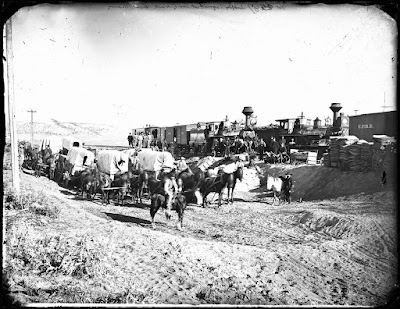 |
Freighters picking up supplies for railroad
|
In October of 1868, Alice Willing Bloomer traveled
from Percy Station to Fort Halleck to pick up supplies. While on the trail, she
witnessed a band of Indians attack a freight train of five men hauling ties to
Percy Station. The men killed three of the men and two others managed to shoot
their way into a ravine and escape toward Fort Halleck. The three dead
freighters were the first three burials in the town of Carbon to the west.
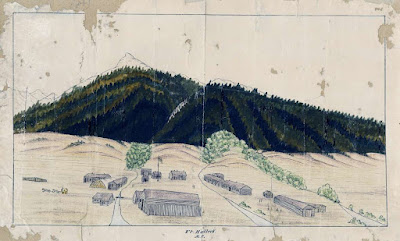 |
Drawing of Fort Halleck north of Elk Mountain
|
The Indians drove the oxen into the lake and hamstrung them.
They left the livestock in the water to bleed to death. They then took the
mules and fled before soldiers arrived from Fort Halleck. This became known as
the Bloody Lake Massacre. Bloody Lake, two-and-a-half acres, is now dried up
most of the year. It is north of both Elk Mountain and the former Fort Halleck.
This incident became known as the Bloody Lake Massacre.
The
lake was given its name by John
Sublette, a government scout turned construction worker turned rancher, was in
the Percy area and would soon be responsible for the naming the lake. According
to his obituary printed in December 1928, he was a participant in an “Indian
uprising,” with a non-specified number of U.S. soldiers in October 1868. The
soldiers didn’t fare too well, but Sublette survived. He named the lake because
of the gore that discolored it that day.
 |
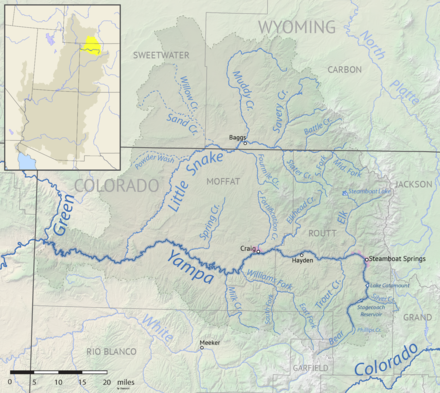
Map courtesy of Google Maps
|
Alice Bloomer saved arrows from the
site, which were passed down through the family. She became a primary source of
information regarding what took place. The discrepancy between her description
of freighters versus Mr. Sublette’s description of soldiers is probably due to
the fact she viewed the scene from a distance. Frontier soldiers, unless they
were part of a formal review, often did not wear regulation uniforms while
performing other duties.
Alice died four years later on August 1, 1872. She
was buried in a shallow grave surrounded by sandstone slabs. Her burial place
is identified by descendants as “Turtle Rock” ridge, the location where she
witnessed the battle between the Indians and the freighters. Based on her
assumed line of travel and the locations of the former Fort Halleck and former
Percy Station, I was unable to identify on the map a location the family
identified as Turtle Rock. However, the family is working with the Bureau of
Land Management to erect a historical marker at her gravesite.
There is more to Mary Jane Bloomer Morey Stimpson’s
story—she was quite the entrepreneur—but I will save that for next month’s blog
post.
Lauren,
Book 2 in the Rescue Me (Mail-order Brides) series, takes place several years
after these incidences. However, Mary Jane was still alive and active in that
general region of Wyoming Territory during the timeframe of this book, which is
available. To read the book description and find the purchase options, please CLICK HERE.
Sources:
https://cowboystatedaily.com/2022/10/06/on-the-road-wyomings-bloody-lake-has-a-grim-history-and-likely-grim-fishing-too/
https://sites.rootsweb.com/~wylaratp/html/_ox_cart_trip.html
http://genealogytrails.com/wyo/carbon/bio3.html
https://www.familysearch.org/service/records/storage/das-mem/patron/v2/TH-904-69401-62-33/dist.txt?ctx=ArtCtxPublic
https://www.wyohistory.org/encyclopedia/territorial-empire-trabings-and-their-freight


.jpg)
_source.jpg)