Showing posts with label National Poetry Month. Show all posts

Wednesday, April 17, 2024

National Poetry Month - 19th Century Style

Post (C) Doris McCraw

aka Angela Raines

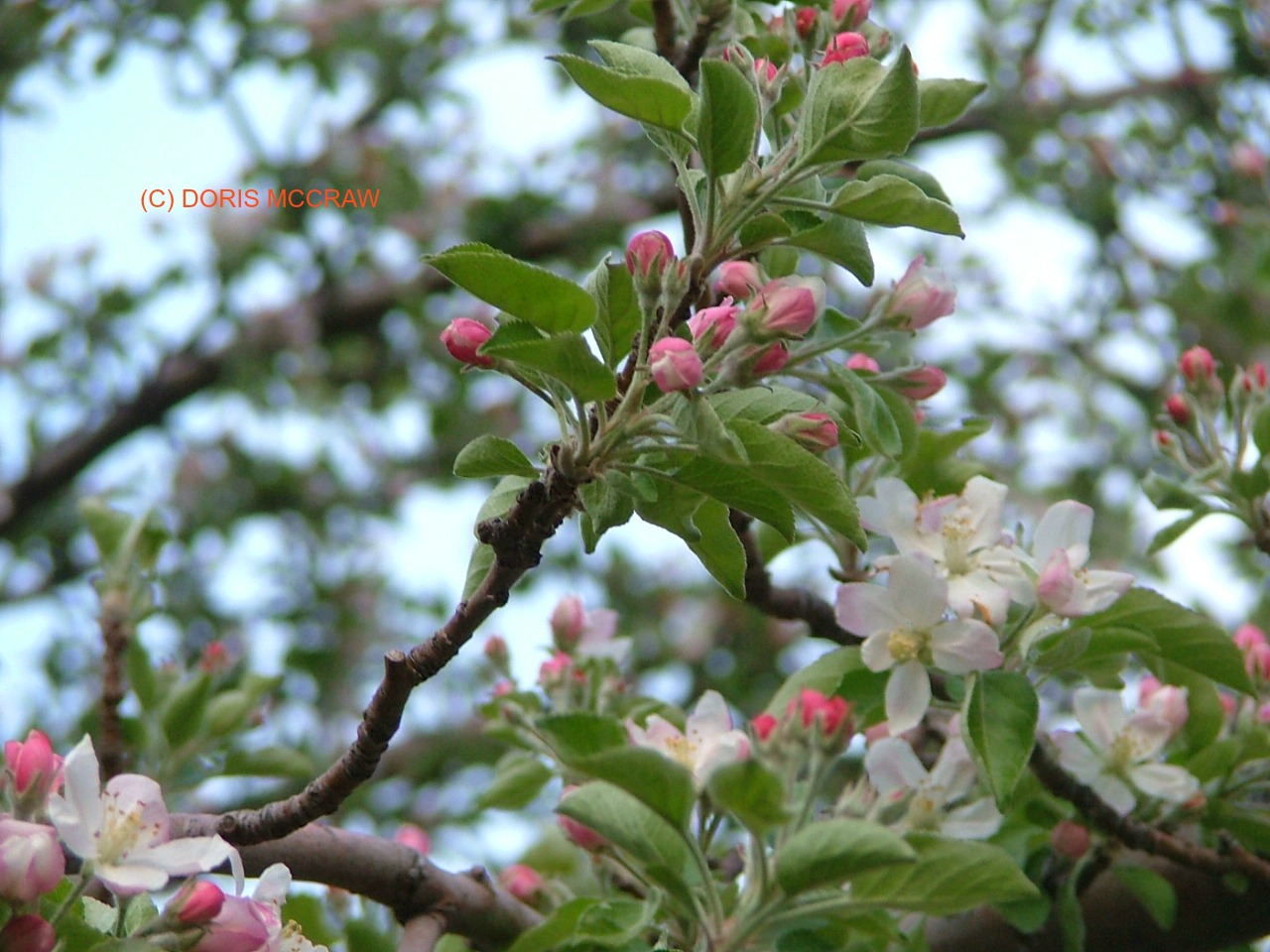
Photo (C) Doris McCraw

April is National Poetry Month, a favorite of mine. I thought it would be a good time to look back at the poets who were active during the times we tend to write about. Make no mistake, poetry was immensely popular in the 1800s.

According to the website Poem Analysis, these are considered the top ten poets of the 19th century:

Walt Whitman

Henry David Thoreau

Emily Dickinson

Henry Wadsworth Longfellow

Helen Hunt Jackson

Edgar Allan Poe

William Cullen Bryant

Ralph Waldo Emerson

Paul Lawrence Dunbar

Louisa May Alcott

Walt Whitman from
Wikipedia

Some of the most popular poems were:

"Song of Myself", "O Captain! My Captain!"  -  Walt Whitman

"The Song of Hiawatha", "Paul Revere's Ride"  - Henry Wadsworth Longfellow

"The Raven", "Annabel Lee" - Edgar Allan Poe


Have you ever tried Cento Poetry? I'll post a link to the form at the end of this post.

An early try for me was to take Helen Hunt Jackson's poem "Two Truths" and Dorothy Parker's "One Perfect Rose" and create the following:


THE SINGLE FLOWER by Doris McCraw

A single flow'r he sent me

Temnderlu his messenger he chose.

"Darling", he said,

"I never meant to hurt you."

Deep-hearted, pure

One perfect rose.

But all the same

 I knew the language of the flowered

"When love is at its best, One loves

One perfect rose,

So much that he cannot forget".


My preferred poetry form is Haiku. I've even published a book of them.

So whether you like poetry or not, remember, maybe your characters do. (Smile)

Cento Poetry

Amazon e-book

Until Next Time: Stay safe, Stay happy, and Stay healthy. 

Doris


Wednesday, April 15, 2020

WAS POETRY POPULAR IN THE 1800s?

Post by Doris McCraw
writing as Angela Raines


Photo property of the author
April is National Poetry Month. I thought my April post should reflect the importance of poetry. For many in the 1800s, poetry was something they enjoyed. For many, the cadence helped them to remember the words. There was a reason many lessons were taught via the rhyme and rhythm. 

Below are four poets of that era and a poem for your reading enjoyment. There would have been times when characters would reference some of these poems or some of the lines when courting.  Perhaps a schoolteacher would assign one of these to a student to recite in class. Whatever the reason, poetry was popular and widely used by many during this time. So imagine yourself sitting by the hearth and listening to the wind, and someone reading or reciting one of the following works.

Henry Wadsworth Longfellow (1807-1882)

The Tide Rises, The Tide Falls

The tide rises, the tide falls, The twilight darkens, the curlew calls; Along the sea-sands damp and brown The traveller hastens toward the town, And the tide rises, the tide falls. Darkness settles on roofs and walls, But the sea, the sea in darkness calls; The little waves, with their soft, white hands, Efface the footprints in the sands, And the tide rises, the tide falls. The morning breaks; the steeds in their stalls Stamp and neigh, as the hostler calls; The day returns, but nevermore Returns the traveller to the shore, And the tide rises, the tide falls.


Christine Rosetti (1830-1894)

Remember


Remember me when I am gone away,
         Gone far away into the silent land;
         When you can no more hold me by the hand,
Nor I half turn to go yet turning stay.
Remember me when no more day by day
         You tell me of our future that you plann'd:
         Only remember me; you understand
It will be late to counsel then or pray.
Yet if you should forget me for a while
         And afterwards remember, do not grieve:
         For if the darkness and corruption leave
         A vestige of the thoughts that once I had,
Better by far you should forget and smile
         Than that you should remember and be sad.

Photo property of the author
Elizabeth Barrett Browning (1806-1861)

Sonnet 43

How do I love thee? Let me count the ways.
I love thee to the depth and breadth and height
My soul can reach, when feeling out of sight
For the ends of being and ideal grace.
I love thee to the level of every day's
Most quiet need, by sun and candle-light.
I love thee freely, as men strive for right.
I love thee purely, as they turn from praise.
I love thee with the passion put to use
In my old griefs, and with my childhood's faith.
I love thee with a love I seemed to lose
With my lost saints. I love thee with the breath,
Smiles, tears, of all my life; and, if God choose,
I shall but love thee better after death.

Helen Hunt Jackson (1830-1885

Dreams


Mysterious shapes, with wands of joy and pain,
Which seize us unaware in helpless sleep,
And lead us to the houses where we keep
Our secrets hid, well barred by every chain
That we can forge and bind: the crime whose stain
Is slowly fading ’neath the tears we weep;
Dead bliss which, dead, can make our pulses leap—
Oh, cruelty! To make these live again!
They say that death is sleep, and heaven’s rest
Ends earth’s short day, as, on the last faint gleam
Of sun, our nights shut down, and we are blest.
Let this, then, be of heaven’s joy the test,
The proof if heaven be, or only seem,
That we forever choose what we will dream!

     In my last novel "The Outlaw's Letter", my heroine, Harriet (Hetty) Osgood loved Homer and his story The Odyssey. She was a school teacher who went off on an adventure that started with her agreeing to deliver a letter to an outlaw. But was he really? 

     Here is a brief excerpt from the story:

  “Well, we made it Odysseus,” Harriet, ‘Hetty’ Osgood, remarked as she rode up to the Bucket of Blood on South Union Street in Pueblo, Colorado. The sun was slipping away behind the mountains to the west, painting the sky with blues, grays, and oranges.
Tying off Odysseus, the horse she’d raised from a young cold, Hetty stepped into the shadow, adjusting the bindings on her chest and torso. As she worked to make sure they were secure, she felt her locket press against the area around her collar bone. She’s fallen in love with it the moment her grandmother gave it to her.
Grandmams had bought it in St. Joe, at The Bavarian Jewelry and Watch Repair shop, for her twelfth birthday. “Harriett,” Grandmams told her after she opened the gift, “there are going to be people who say you are homely. Others who will tease you, make you try to fit in. You hold true to who you are and don’t settle. It’s better to be spinster than settle just to be married.,” Grandmams had given her a huge hug, adding, “you follow those words written in there, they will guide you through life.” Engraved inside the locket ‘I Corinthians 13:13’
Hetty had taken Grandmams words to heart. As a spinster, she knew she’d never have the love others claimed, so she’d made a place for herself in the world where she could do the most good. Now, she hoped she was doing the right thing. She admitted it felt right, but she also was thrilled to have taken this short adventure. 

Amazon


Doris Gardner-McCraw -
Author, Speaker, Historian-specializing in
Colorado and Women's History
Angela Raines - author: Where Love & History Meet
Photo and Poem: Click Here 
Angela Raines FaceBook: Click Here


Wednesday, April 18, 2018

Popular Poetry of the 1800s


Today is our EARLY BIRDS & NIGHT OWLS-Evemt. Come Join Us!
Open invitation to all readers who love sweet historical romance.
Learn more about our Facebook party, giveaways & our fabulous authors
The blog for readers & writers who love sweet/clean North American historical romance from 1820 through 1929.
SWEETAMERICANASWEETHEARTS.BLOGSPOT.COM

However, on my scheduled blog day, I want to share the other side of history and writers. 
April is National Poetry month. In honor it seemed appropriate to share some of the more popular poems from the 1800s. 

Christina Rosetti is a favorite of mine. Here is her poem 'Echo'

Echo


Come to me in the silence of the night;
   Come in the speaking silence of a dream;
Come with soft rounded cheeks and eyes as bright
   As sunlight on a stream;
      Come back in tears,
O memory, hope, love of finished years.

Oh dream how sweet, too sweet, too bitter sweet,
   Whose wakening should have been in Paradise,
Where souls brimfull of love abide and meet;
   Where thirsting longing eyes
      Watch the slow door
That opening, letting in, lets out no more.

Yet come to me in dreams, that I may live
   My very life again tho’ cold in death:
Come back to me in dreams, that I may give
   Pulse for pulse, breath for breath:
      Speak low, lean low,
As long ago, my love, how long ago.

Of course you can't talk about 1800s poetry without mentioning Emily Dickenson. Here is her poem ' Sometimes with the Heart'

Sometimes with the Heart
Seldom with the Soul
Scarcer once with the Might
Few - love at all. 


Anytime you speak about poets of the 1800s you usually include Tennyson. Here is a poem some of you may recognize:

Lullaby - Poem by Alfred Lord Tennyson

Sweet and low, sweet and low, 
Wind of the western sea,
Low, low, breathe and blow,
Wind of the western sea!
Over the rolling waters go,
Come from the dying moon, and blow,
Blow him again to me;
While my little one, while my pretty one, sleeps.

Sleep and rest, sleep and rest,
Father will come to thee soon;
Rest, rest, on mother's breast,
Father will come to thee soon;
Father will come to his babe in the nest,
Silver sails all out of the west
Under the silver moon:
Sleep, my little one, sleep, my pretty one, sleep. 

I will leave you with a favorite of mine from Helen (Hunt) Jackson:

Last Words

Dear hearts, whose love has been so sweet to know,

That I am looking backward as I go,

Am lingering while I haste, and in this rain

Of tears of joy am mingling tears of pain;

Do not adorn with costly shrub, or tree,

Or flower, the little grave which shelters me.

Let the wild wind-sown seeds grow up unharmed,

And back and forth all summer, unalarmed,

Let all the tiny, busy creatures creep;

Let the sweet grass its last year's tangles keep;

And when, remembering me, you come some day

And stand there, speak no praise, but only say,

" How she loved us'! 'Twas that which made her dear! "

Those are the words that I shall joy to hear.
Here's to the beauty of poetry. When you get a moment, stop by and read some of the other poets who were creatiing pictures and emotions with words. Poetry was enjoyed by many and you might be surprised by who was writing and what they wrote about. 

Until next time.

Doris Gardner-McCraw -
Author, Speaker, Historian-specializing in
Colorado and Women's History
Member of National League of American Pen Women,
Women Writing the West,
Pikes Peak Posse of the Westerners

Angela Raines - author: Where Love & History Meet
For a list of Angela Raines Books: Here 
Photo and Poem: Click Here 
Angela Raines FaceBook: Click Here