Showing posts with label #sweetamericanasweethearts. Show all posts

Thursday, June 11, 2026

For Liberty and Love


My patriotic heart is full to overflowing because our new Petticoats & Patriot series kicks off next week!


This historical romance series follows interconnected love stories during the American Revolution, the Civil War, and ends with a contemporary romance of a couple celebration America's 250th birthday! The eight stories are linked by a locket that travels between heroines across the years. 

The first four books in the series cover the Revolutionary War, beginning in July 1776 in Philadelphia, just days after the Declaration of Independence is read in public for the first time. The locket travels to New York forests, British-occupied households to Revolutionary Virginia, each heroine discovers the locket serves as a secret vessel for coded messages and carries the promise of love. In a world of divided loyalties and dangerous espionage, women step beyond societal constraints to contribute to the patriot cause, navigating spy rings and risking everything for independence.

From there, the locket jumps to the Civil War, then America's Centennial celebration, followed by the post war years in the 1950s, to a 2026 couple. 

The series explores themes of courage, duty, and sacrifice during wartime, featuring spirited heroines who refuse to simply wait while war rages around them. Each sweet romance focuses on patriotic women facing choices between duty and desire. With emphasis on hope and unwavering love of country, these stories appeal to readers seeking historical romance with espionage elements and heroines who prove that even in uncertain times, love and freedom are worth the risk.


Courage built a nation. Love made it worth fighting for.

Throughout 250 years of American history, a well-loved locket finds its way into the hands of eight spirited heroines—each standing at the crossroads of love and destiny, and each inspired by a true patriot. As it journeys from one heart to the next, these stories unfold with sweet romance, unwavering hope, and a deep love of country, proving that even in uncertain times, love is always worth the risk. Start reading the Petticoats & Patriots series today!


Be sure to download your free digital copy of our Petticoats and Patriots Magazine, Volume One | Issue 1, that features excerpts from the first four stories, recipes, author highlights, and more! A second magazine will come out in July!

My book, For Liberty and Love, kicks off the series on Tuesday, June 16!


She never intended to become a spy … or fall for one.

Philadelphia, 1776

As whispers of revolution turn swell into a roar for freedom, Lucy Carlson is no longer content to simply watch from behind the counter of her father’s jewelry shop. When a mysterious woman—none other than Martha Washington—leaves behind a locket, Lucy discovers the piece is more than a pretty keepsake. The necklace is a secret vessel for the revolution that carries the promise of love.

Drawn into a dangerous spy ring, Lucy begins crafting coded messages concealed within the locket’s clever design, living a secret double life and risking everything she holds dear in a time of sacrifice and war.

Continental soldier Branch Barton is a man defined by duty. Tasked with rooting out traitors, he moves through the shadowed world of deception and divided loyalties. He’s trained to trust no one, yet he finds himself drawn into a slow-burning connection with the jeweler’s spirited daughter.

But when Lucy begins to suspect Branch may be a Redcoat in disguise, their fragile bond is tested by mistaken identity, growing mistrust, and the threat of betrayal.

In a war where even allies can become enemies, Lucy and Branch must navigate a world of hidden truths and guarded hearts. With the fate of the colonies—and their hearts—hanging in the balance as Lucy delivers a message in enemy territory, will they find the courage to trust each other and choose love?


USA Today Bestselling Author Shanna Hatfield grew up on a farm where her childhood brimmed with sunshine, hay fever, and an ongoing supply of learning experiences.

Shanna creates character-driven romances with realistic heroes and heroines. Her historical westerns have been described as “reminiscent of the era captured by Bonanza and The Virginian” while her contemporary works have been called “laugh-out-loud funny, and a little heart-pumping sexy without being explicit in any way.”

When this award-winning author isn’t writing or testing out new recipes (she loves to bake!), Shanna hangs out at home in the Pacific Northwest with her beloved husband, better known as Captain Cavedweller.

Connect with her at her website: ShannaHatfield.com

Thursday, April 9, 2026

Tulip Time


My tulips are blooming and filling my flower beds with a colorful display that makes me smile every time I set foot outside. 


These tulip bulbs came from bulbs my husband's grandmother transplanted from her mother's yard back in the 1950s. I felt very fortunate to get a few of them because they are so pretty and different from today's modern bulbs. 


I'm thrilled with the modern stripe and colors, though.


It's so fun to see them blooming. 


And it makes me wonder about the women who lived in rough, rugged places on the frontier. Did they plant tulips for a bit of color?


Or reminders of home? 

Tulips have such an interesting history. They’ve traveled continents, inspired art, and even caused one of the first economic bubbles in history.

Although many people assume they originated in the Netherlands, they were first discovered growing in the Near East and Mediterranean on mountain slopes and steppes. Those tulips looked different than today's garden varieties, with smaller petals and thinner leaves. 

Tulips were cultivated and cherished by the Ottoman Empire (modern-day Turkey) as early as the 10th century. The flowers became symbols of paradise, beauty, and abundance. Even the word tulip reportedly comes from a Persian/Turkish word meaning “turban,” because the flower resembled the shape.


Tulips made their way to Europe in the 1500s. The first recorded use of the word "tulip" was in a 1554 manuscript.  A few years later, the flowers were being cultivated although they remained aa bit of a rarity.
In 1590s Holland, Charles L’Ecluse planted the flower at the University of Leiden’s gardens – a leader in botanical innovation – and discovered it could tolerate Northern Europe’s harsh climate. 
For the wealthy, tulips became a symbol of luxury. The unusual colors and patterns made them highly desirable. 
Tulip bulbs were used for trade and lead to a period widely called “Tulip Mania,” which occurred in Amsterdam from 1634 to 1637. During this period, a single bulb could allegedly go for as much as 12,000 guilders – about the price of a fashionable Amsterdam townhouse.
Then the market fell out just as suddenly as it surged, but tulips were still planted. Still adored. 


Tulips traveled to America back in the 1600s. Although The Netherlands is still the leading grower of tulips in the world, there are many places across America that grow them commercially.  I wonder that those pioneer women would think to see acres of land covered in gorgeous tulips.


I bet they'd take a moment just to enjoy the splendor of fields bursting with color. 

What is your favorite spring flower?


USA Today
Bestselling Author Shanna Hatfield grew up on a farm where her childhood brimmed with sunshine, hay fever, and an ongoing supply of learning experiences.

Shanna creates character-driven romances with realistic heroes and heroines. Her historical westerns have been described as “reminiscent of the era captured by Bonanza and The Virginian” while her contemporary works have been called “laugh-out-loud funny, and a little heart-pumping sexy without being explicit in any way.”

When this award-winning author isn’t writing or testing out new recipes (she loves to bake!), Shanna hangs out at home in the Pacific Northwest with her beloved husband, better known as Captain Cavedweller.

Find out more about Shanna and the sweet romances she writes on her website


Thursday, February 12, 2026

A Love Letter from George


I've been watching Ken Burns' excellent The American Revolution series and it has ignited my interest in the Revolutionary War period. 

One thing I've noticed, is there isn't a lot of information about Martha Washington out there.

But this time of year, with romance on the brain, and President's Day right around the corner, I was delighted to happen across a love letter George wrote to her. 

Because she spent so many years in the public, Martha destroyed must of her correspondence with George when he passed away in 1799. Only a few letters escaped the purge, two beneath her desk drawer.


One of those letters turned out to be a letter written from her beloved during the Revolutionary War. It is part of the public domain, so I am happily sharing it here.

Phila. June 23d 1775.

My dearest,

As I am within a few Minutes of leaving this City, I could not think of departing from it without dropping you a line; especially as I do not know whether it may be in my power to write again till I get to the Camp at Boston—I go fully trusting in that Providence, which has been more bountiful to me than I deserve, & in full confidence of a happy meeting with you sometime in the Fall—I have not time to add more, as I am surrounded with Company to take leave of me—I retain an unalterable affection for you, which neither time or distance can change, my best love to Jack & Nelly, & regard for the rest of the Family concludes me with the utmost truth & sincerity.

Your entire,

Go: Washington

Sigh.

Why don't we write love letters like this anymore? No wonder women swooned when their love wrote them a note if they used phrases like:

     unalterable affection for you, 
which neither time or distance can change

When I think of George Washington, I don't think of a man given to flowery words of affection. I think of a battle-weary general who takes on the role as serving as our first president. 

It's wonderful to see this very human and sweet side of him, where his wife and family where concerned. 

Have you ever written or received a love letter?


Wishing you a Valentine's Day full of love, joy, and maybe a love letter or two. 


USA Today Bestselling Author Shanna Hatfield is a farm girl who loves to write character-driven romances with relatable heroes and heroines. Her sweet historical and contemporary romances are filled with sarcasm, humor, hope, and hunky heroes.

When Shanna isn’t dreaming up unforgettable characters, twisting plots, or covertly seeking dark, decadent chocolate, she hangs out with her beloved husband, Captain Cavedweller.

Shanna is a member of Western Writers of America and Women Writing the West.

Connect with her online at Shanna Hatfield.

Thursday, August 14, 2025

Summer Sunflowers


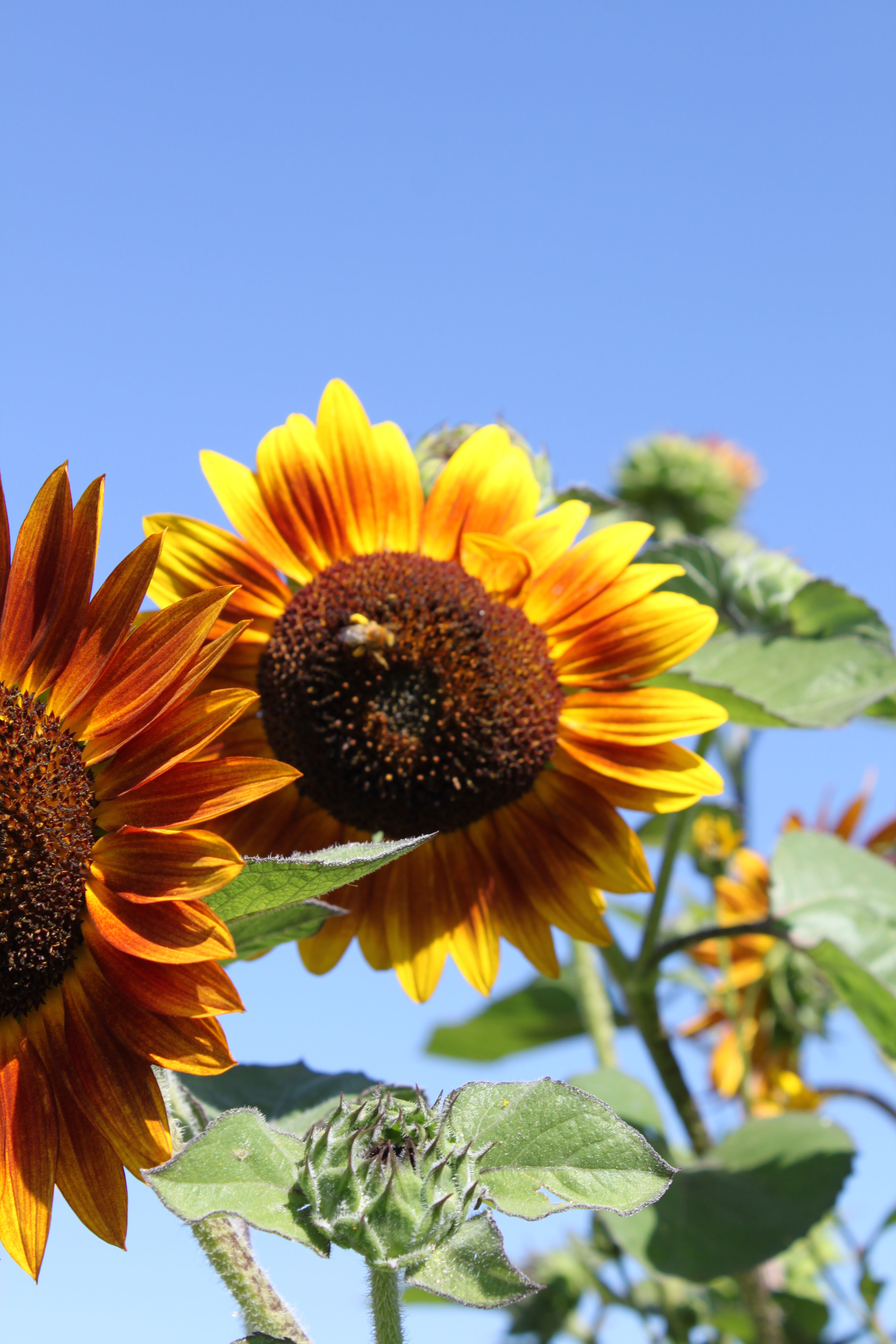
There is just something about August that brings sunflowers to mind. 

It could be that they are blooming in the neighbor's yard and grow with abandon along roadside ditches. 

Or it could be their cheerful, bright faces turned upward to the sun, reminding me to do the same.


pale yellow sunflowers

 According to the National Sunflower Association website, sunflowers are native to North America, found commercial success in Russia, and only in more recent years returned to North America as a crop. 


sunflower_red

Native Americans first domesticated the plant into a single headed plant with a variety of seed colors including black, white, red, and black/white striped.

Some archaeologists suggest sunflowers were domesticated before corn, cultivated by Native Americans as far back as 3000 BC in present-day Arizona and New Mexico. 

Tribes used the seed to grind or pound into flour. Some mixed the meal with vegetables such as beans, squash, and corn. The seed was also cracked and eaten as a snack. References note squeezing the oil from the seed and using it in making bread. 

Non-food uses include dye for textiles and decorations. Parts of the plant were used medicinally for a variety of purposes, ranging from ointments to treatment for snakebite. The plants and seeds were used in ceremonies, and dried stalks could be used in building material.. 


sunflower_yellow

Spanish explorers reportedly took sunflowers with them to Europe around 1500. It became widespread throughout present-day Western Europe, mainly as ornamental, but with some medicinal uses. An English patent in 1716 was grated for squeezing oil from sunflower sees. 

By 1830, sunflower oil was manufactured on a commercial scale. The Russian Orthodox Church inadvertently increased the popularity of sunflower oil when it forbade moist oil foods from being consumed during Lent. Sunflowers were not on the list, and the oil could be used. 

Russian farmers were growing more than two million acres of sunflowers by the early 1800s. Two specific uses emerged for sunflowers: oil production, and direct human consumption.


sunflowers 3


Russian sunflower seed found its way to the United States in the late 1800s. By 1880, seed companies advertising the "Mammoth Russian" sunflower seed in their catalogs. The seed name was still being used in the 1970s!

The first official government sunflower breeding program began in Canada in the 1930s. The plant breeding material came from Russian immigrant gardens. Acreage spread because of demand, and soon spread into Minnesota and North Dakota. 

Acreage in the late 1970s escalated in the U.S. Due to strong European demand for sunflower oil, more than five million American acres were dedicated to growing sunflowers. Today, the demand has drastically decreased for the US to export to Europe. 


sunflowers against blue sky

And here I was just admiring how pretty the flowers looked. 

Are you a fan of sunflowers? 


USA Today Bestselling
Author Shanna Hatfield grew up on a farm where her childhood brimmed with sunshine, hay fever, and an ongoing supply of learning experiences.

Shanna creates character-driven romances with realistic heroes and heroines. Her historical westerns have been described as “reminiscent of the era captured by Bonanza and The Virginian” while her contemporary works have been called “laugh-out-loud funny, and a little heart-pumping sexy without being explicit in any way.”

When this award-winning author isn’t writing or testing out new recipes (she loves to bake!), Shanna hangs out at home in the Pacific Northwest with her beloved husband, better known as Captain Cavedweller.


Thursday, May 8, 2025

WWI and the 78th Singing Division


While I was researching historical details for my book releasing May 22, one of the things I was digging around for was an American Expeditionary Forces military division that set for France in May or June 1918 during World War I.

In my story, Sarah, the hero, Brett Rawlings, and his twin brother, Ben, have run off at the tender age of 16 to join the war.

When I was looking for a division to attach the twins to when they traveled to France, I was searching for troop ships that left toward the end of May and arrived in June. The 78th Division matched the dates well, and the fact that they were based from Camp Dix in New Jersey also fit with the story because the boys are trying to set sail from New York City.


The 78th Division was known as the Lightning Division, and also the Singing Division. I found some reports that said the name came from the French for their lightning-fast action in battle, and other reports hinted about the famous brew created in the woods near the camp. If you know why and when they were named the lightning division, I’d love to learn more.

As for them being known as the singing division, from some of the reports I read, many of the members of the division had been in theater or performance-based careers before they were drafted. Some of the songs they sang included “The Shell Hole Rag,” and “Land of Romance.”


The Newark Evening News in New Jersey printed a special supplement about the division on May 29, 1919. I found a digital copy of the newspaper online, which was so helpful in my research.

I also found a book that had been written by the division’s secretary-treasurer and published in 1921. Not only was the book filled with incredible photos of the war, but it also offered a timeline of where the division was at from the time they were organized at Camp Dix in August 1917 to the day they were demobilized in June 1919.

Some of the historical details I included with the division really happened, like a visit from King George V of England in August 1918. They were also visited by General John J. Pershing twice. The first time was in September 1918, and the second was when he came to review them in 1919.

When the war ended and the 78th Division was transferred to a series of small villages, there really was an Amusement Division that did all they could to bolster the spirits of the troops and keep them busy. There were almost nightly performances by theater troupes and musicians.

Margaret Wilson, President Wilson’s daughter, did visit the camp with a group of entertainers in March 1919.

The YMCA, Red Cross, and Knights of Columbus did provide needed and appreciated services during the months as the troops waited for their turn to sail back home.

One report I happened upon, written in 1968, was a son’s journey to follow his father’s footsteps through the war by visiting France. His father had been a sergeant with the 78th Division, and he recalled listening to stories told around the kitchen table by his father and his Army buddies from World War I. There was so much detail and so many stories included in this report, it really helped me visualize Brett’s life and the things he was seeing and experiencing in France.


She desires his heart.

He longs for her love.

Can they find common ground when he returns forever altered by the war.

 In a world turned upside down by World War I, all Sarah Richards desires is to love Brett Rawlings and build a future together. After graduating high school a year early, she’s ready to dive into her dreams of college and a home filled with laughter and love. But one impulsive decision threatens all her aspirations—as well as her relationship with Brett.

 As the war rages on and men head off to fight, sixteen-year-old Brett reluctantly follows his twin brother, Ben, sneaking off to France to join the American Expeditionary Forces. As the months pass, Ben thrives amidst the chaos of battle, while Brett finds himself haunted by the girl he left behind and the uncertainty of his own heart. When Ben reveals a life-altering secret, the bond between the brothers is shattered, forcing Brett to grapple with betrayal as he faces the brutal realities of war.

 Brett returns home a changed man, burdened with memories too heavy to bear, yet yearning to mend the fractures of the past. Will Sarah still be waiting for him, or have time and truth forged an unbridgeable chasm between them?

 Find out in this heartfelt historical romance that weaves a tale of hope, grace, forgiveness, and sweet, enduring love.

Releasing May 22, you can pre-order your copy today on Amazon.


USA Today Bestselling Author Shanna Hatfield is a farm girl who loves to write character-driven romances with relatable heroes and heroines. Her sweet historical and contemporary romances are filled with sarcasm, humor, hope, and hunky heroes.


When Shanna isn’t dreaming up unforgettable characters, twisting plots, or covertly seeking dark, decadent chocolate, she hangs out with her beloved husband, Captain Cavedweller.

Shanna is a member of Western Writers of America and Women Writing the West.


Thursday, April 10, 2025

The Household Searchlight Recipe Book


A handful of months ago, one of my dad's cousins (an octogenarian emailing a nonagenarian) had sent him a question via email Dad didn't know how to answer, so I replied to him. 

I think I met the cousin once at a family reunion, when I was seven, but I have no recollection of it. 

Anyway, Dad's cousin and I have been emailing back and forth for a handful of months. I learned about his life in Texas while he laughed at our chilly winter temperatures and snow. 

One day, we were talking about recipes and things his mother and my grandmother used to make. The next thing I know, I'm opening an envelope from him and inside was his mother's old Household Searchlight Recipe Book!


He told me no one in his family wants it and he knew I'd give it a good home.

To say I was elated to receive it would be an understatement. I collect cookbooks, and I'd never seen one of the Searchlight cookbooks. 

From the information I discovered, the Household Searchlight Recipe Book was one of the most-published cook books in the United States. During the years it was produced, it sold more than 1 million copies. It was published by Capper Publications of Topeka, Kansas, and reprinted five times between 1977 and 1991 by Stauffer Publications.


Some of the pages in the cookbook are stained and marked, which makes me think they had the favorite recipes on them. On this page, you see the pencil mark by Upside Down Cake, which makes me smile because pineapple upside down cake is one of Captain Cavedweller's favorites. 

I'm excited to try some of these vintage recipes. If any of them turn out well, I'll report back on them. 

Do you have any cookbooks or recipes you treasure? 


USA Today Bestselling Author Shanna Hatfield is a farm girl who loves to write character-driven romances with relatable heroes and heroines. Her sweet historical and contemporary romances are filled with sarcasm, humor, hope, and hunky heroes.

When Shanna isn’t dreaming up unforgettable characters, twisting plots, or covertly seeking dark, decadent chocolate, she hangs out with her beloved husband, Captain Cavedweller.

Shanna is a member of Western Writers of America and Women Writing the West.

Connect with her on her website, or through social media.


Thursday, June 13, 2024

Buffalo Bill and the Sells Floto Circus in 1914


When I was doing research for my new book coming July 2, I was looking into historical events in 1914 in the town of Pendleton, where the story takes place.


One of the happenings that fit in with the time frame of my story was the arrival of the Sells Floto Circus and Buffalo Bill's Wild West in June, 1914.

From the article that ran in the Pendleton newspaper, it seems the residents were a bit disappointed with Buffalo Bill, since all he did was ride around the ring, but otherwise loved the circus. 

I have my hero and heroine attending the circus together. Thanks to several photographs and articles I found, it was fun to incorporate many details into the scene. 


The Sells Floto Circus was the result of the Floto Dog and Pony show and the Sells Brother Circus that merged  together.


 The first two owners were Frederick Gilmer Bonfils and Harry Heye Tammen, owners of the Denver Post as well as the Kansas City Post. The circus was created in 1902 and originally titled "Floto Dog and Pony Show." It was four years later that Sells was added to the title, when Willie Sells joined the show. The newspapers gave publicity to the circus and it thrived when others struggled financially.


Los Angeles Record, April 14, 1914


During 1914 and 1915, the show was called Sells-Floto Circus and Buffalo Bill Wild West,  with Buffalo Bill performing in the show. 

The circus traveled all over the United States and received glowing accolades in many newspaper articles, such as the one above from their performance in Los Angeles. 

In 1921, the circus was incorporated into the American Circus Corporation. In September 1929, the corporation's circuses were acquired by John Ringling, and by 1933 Sells-Floto ceased to exist. There was a  brief revival in 1937-38 as part of the Al G. Barnes and Sells-Floto Combined Circus. 

You can read about the circus from a fictional viewpoint my my book Luna, releasing July 2. I incorporated details from old photographs and newspaper articles to make the experience feel as realistic as possible.


She’s searching for peace and grace


He’s ready to step into his next big adventure

Haunted by memories of the fateful day that changed her life, Luna Campanelli seeks a fresh start in Pendleton, Oregon. Life in the wild western town is nothing like she imagined, although the rugged beauty of the area soothes her troubled spirit. An unlikely friendship with one of the area ranch hands lifts her hopes, until she discovers the cowboy isn’t who he’s led her to believe.

Hunter Douglas didn’t intend to hide his identity from the woman he met on the train, but when she assumed he was his sister’s hired hand, he didn’t correct her. He never anticipated forming such a deep connection to her, especially when thoughts of her continue to infiltrate his carefully made plans. As a recent college graduate with an inheritance he intends to use to start his own ranch in Pendleton, Hunter must decide if he is willing to open his heart and include Luna in his future.

Will they embrace the unexpected love that has blossomed between them, or let fear tear them apart?

This sweet and wholesome romance is a story of love, healing, and the power of hope in a delightful western setting. Join Luna and Hunter on their journey as they discover what it truly means to love unconditionally.


USA Today bestselling author Shanna Hatfield is a farm girl who loves to write. Her sweet historical and contemporary romances are filled with heart, humor, hope, and hunky heroes. When Shanna isn’t dreaming up unforgettable characters, twisting plots, or covertly seeking dark, decadent chocolate, she hangs out with her beloved husband, Captain Cavedweller.
Shanna loves to hear from readers. 
Follow her online at: ShannaHatfield | Facebook | Newsletter

Thursday, September 14, 2023

Vintage Books for Research


A few weeks ago, my friend and I were window shopping in a quaint little town and decided to go into a store that had displays that caught our eye.
Inside, I found a selection of vintage reproduction books for $5 each!
There were so many I wanted to bring home, but settled on five.


The Boy's Own Book by William Clarke is titled as "A Complete Encyclopedia of All the Diversions, Athletic, Scientific, and Recreative, of Boyhood and Youth."
The book includes instruction on everything from archery, cricket, gymnastics, and swimming to "chemical amusements" that covers things like "combustion and explosion" as well as tricks with cards, puzzles, and details about rabbits and guinea pigs. 
Originally published in 1829, it is a fascinating glimpse into what life might have been like for young boys, and the expectations of their learning back then. 


The Girl's Own Book by Mrs. L. Maria Child was originally published in 1834. It includes games, anagrams, active exercises like swinging and jumping rope, craft ideas, needlework, poems, and information about things like silkworms and bees. 

Comparing the two books, it is glaringly clear the boys got to have way more fun than the girls!


When Mother Lets Us Cook by Constance Johnson is a "book of simple receipts for little folks" originally published in 1908.  The book includes a variety of recipes that covers everything from how to boil eggs and rice, to making custard, baking potatoes, meat loaf, gingerbread, cottage cheese, and has to how to make good tea, a recipe for  rainy-day fudge, and several helpful "rules" like how to tell if an egg is good or bad, things to have in the kitchen, how to simmer, and a rule for milk. 


Little Gardens for Boys and Girls by Myrta Margaret Higgins, released originally in 1910, was written with the purpose of helping children find joy in gardening. The book includes some illustrations as well as photographs, and offers details that cover tools and plans to work in the garden by season, harvest time, cuttings versus seeds, as well as helps and hindrances in a garden.


The American Frugal Housewife by Mrs. Child published in 1833, was dedicated to "those who are not ashamed of economy." The book is all about avoiding waste, making do, and using what you have on hand. Some of the sage words of wisdom include things like, "Lamps will have a less disagreeable smell if you dip your wick-yarn in strong hot vinegar, and dry it." There is an assortment of recipes. One that caught my eye was a Whortleberry Pie. I've never heard of a whortleberry, but the author writes they "make a very good common pie, where there is a large family of children." There is a section entitled "hints to persons of moderate fortune" and another entitled "how to endure poverty." It is certainly an interesting look into the thoughts and homelife of the time. 

I think I'll go see what I can find about whortleberries ...


USA Today Bestselling Author Shanna Hatfield is a farm girl who loves to write character-driven romances with relatable heroes and heroines. Her sweet historical and contemporary romances are filled with sarcasm, humor, hope, and hunky heroes.

When Shanna isn’t dreaming up unforgettable characters, twisting plots, or covertly seeking dark, decadent chocolate, she hangs out with her beloved husband, Captain Cavedweller.

Discover her books on her website or on Amazon.