Showing posts with label #historicalbuildings. Show all posts

Thursday, June 11, 2020

Vale Hotel History

by Shanna Hatfield


Vale, Oregon, isn't a town most people have heard about and few have explored in recent years. At one time, though, it was a place travelers along the Oregon Trail knew well because of the natural hot springs that bubbled there. Journals from pioneers along the Oregon Trail mention the Malheur River crossing and hot springs where they could rest, take baths, and wash their clothes.


The area was popular as far back as 1828 with trappers of the Hudson Bay Company based out of Vancouver, Washington.  The wives of Marcus Whitman and Henry Spaulding were among the first white women to arrive in the area in 1836 when the missionaries were traveling through. 

A temporary trading post, run by a man named Turner, opened up sometime around 1850. Later, Jonathan Keeney (of Keeney Pass fame) later built a house and barn near the hot springs. Lewis B. Rinehart bought the Keeny property in 1870 and built the historic Stone House there in 1872.  His brother-in-law leased the house in 1883, and it became the first post office. Vale became the official name of what was formerly known as Malheur Crossing.


In 1907, construction began on a hotel. It opened in 1908 as the Drexel Hotel. It was adjacent to the Grand Central Saloon, believed to have been constructed around 1896. The saloon was altered around the same time the hotel was built and became the Vale Grand Opera House. Together, the hotel and opera house added a bit of elegance to the dusty trail town.

When it opened, the Drexel Hotel was billed as the best hostelry in the intermountain country. It offered guests 58 first class rooms with conveniences such as baths with hot and cold water. The dining room tables were covered in white linen, with the laundry handled by a Chinese laundry in town. The northeast corner of the hotel housed a bank and a variety of businesses occupied space there over the years such as a drug store, café, bar, telephone office, doctor's office, and barber shop.


However, despite the early years of success, the hotel was left vacant in 1969 and has remained that way. In 1984, the buildings were listed on the National Register of Historic Places. In 2016, the Drexel Hotel, or the Vale Hotel as it is commonly referred, was named as one of Oregon's most endangered places.

The Drexel H. Foundation and Rural Development Initiative were established to attempt to preserve the hotel. After saving the hotel from the wrecking ball in the 1990s, the foundation has made roof repairs and stabilized the structure of both the hotel and opera house. The bricks have undergone mortar repairs and progress is being made, a little at a time.

The old hotel and opera house are the inspiration behind an old hotel in need of restoration in my latest release. In the story, a city girl arrives in Summer Creek, a quirky small town in Oregon. She falls in love with the derelict old buildings in town (and a hunky cowboy) and sets about forming a committee to rescue the buildings before the history and hope they carry are lost.


You can read more about Emery and her Walk Through 1910 project in Catching The Cowboy.
And be sure to enter the $50 Amazon Gift Card giveaway here.


USA Today bestselling author Shanna Hatfield is a farm girl who loves to write. Her sweet historical and contemporary romances are filled with sarcasm, humor, hope, and hunky heroes. When Shanna isn’t dreaming up unforgettable characters, twisting plots, or covertly seeking dark, decadent chocolate, she hangs out with her beloved husband, Captain Cavedweller.
Shanna loves to hear from readers. Follow her online at:
#summercreek

Thursday, March 14, 2019

Building Toward the Sky

by Shanna Hatfield

I've been digging into research for a new sweet romance novel and one historical fact that caught my interest was the opening of the world's tallest building in 1913.

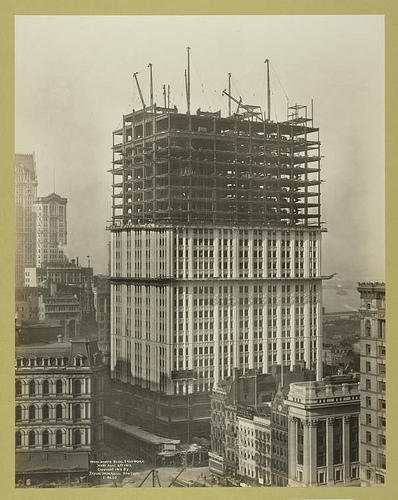
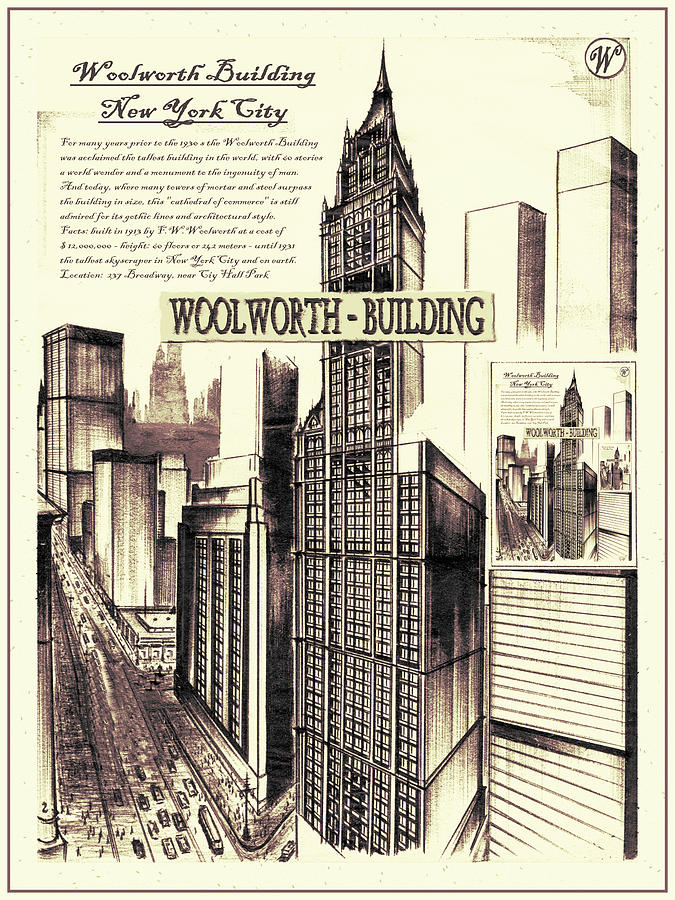
The Woolworth Building opened in April of that year in New York as not only the tallest building in the world but the second tallest structure (the Eiffel Tower was the tallest). At 60 stories high, the building soared 792 feet above Broadway between Park Place and Barclay Street in downtown Manhattan.


Although the building was no match in height for later skyscrapers, it was regarded as a model of construction for many years and even today remains a favorite sight on the New York City skyline.

Frank W. Woolworth, the chief executive of the F.W. Woolworth Company, owned 318 five- and ten-cent stores across the United States, Canada, and England. In April 1910, he set plans in motion to add to his empire through a new building that would make it's mark not just in New York, but the world.

He commissioned architect Cass Gilbert to design a masterpiece. The Singer Sewing Machine Company headquarters, completed in 1908, was the tallest building in the world until the Metropolitan Life Insurance Company completed the Metropolitan Life Tower in 1910, taking over the title.


Woolworth wanted his building to steal the thunder from Met Life and become the tallest building in the world. He worked closely with Gilbert to make sure his goal was achieved. The total cost of the building expanded from $5 million to around $13.5 million. Woolworth financed the project in cash, giving him an unheard of degree of freedom in the design and construction.

Trained at the Massachusetts Institute of Technology, Gilbert attracted national attention for his work designing the Minnesota state capitol in St. Paul.  When Woolworth engaged his talents for the new building, he created a Beaux-Arts design with ornate Gothic detail. It was said this style reflected Woolworth's vision of himself as a descendant of the great medieval merchants of the past.


Construction set a record for speed as the massive base of the building stretched over a full block and quickly took shape. A slender tower soon emerged over a steel frame, and garnered world-wide acclaim. The entire design soon became a model for skyscrapers that many copied for years.

The building won widespread acclaim for its steel-frame structure as well as interior and exterior appearances. The white terracotta facade featured subtle colored accents while the interior appeared luxurious.

A cathedral-like lobby with mosaics, sculptures, and a gold-decked ceiling added to the sumptuous atmosphere. It featured a water supply system, high-speed electric elevators, offices, a shopping arcade, health club, barber shop, restaurant, and social club.


On April 24, 1913, President Woodrow Wilson pressed a button in the White House that lit up the interior floors and exterior floodlights of the Woolworth Building, leaving the entire facade illuminated.  The Reverend C. Parkes Cadman dubbed the building the "Cathedral of Commerce."

The Woolworth headquarters occupied a mere floor and a half of the new building, leaving ample space for others to rent.

The building remained the tallest in the world for 17 years, until the Chrysler Building was completed in 1930. The Empire State Building opened in 1931, drawing both.  Made a National Historic Landmark in 1966, the Woolworth Building remains one of the tallest buildings in New York City.


After spending her formative years on a farm in eastern Oregon, hopeless romantic Shanna Hatfield turns her rural experiences into sweet historical and contemporary romances filled with sarcasm, humor, and hunky heroes.
When this USA Today bestselling author isn’t writing or covertly hiding decadent chocolate from the other occupants of her home, Shanna hangs out with her beloved husband, Captain Cavedweller.
Shanna loves to hear from readers. Follow her online at:
Find Shanna’s books at: