Showing posts with label @renawomyn1. Show all posts

Wednesday, May 20, 2020

FATIGUE AND FRUSTRATION

Post by Doris McCraw
writing as Angela Raines

Photo property of the author
As we make our way through this interesting time of staying at home, I'm sure we deal with the fatigue of all the news and frustration of things going so slowly. I know I am, and I still get to work from home. However, being at home has not translated into more writing. On the plus side, I've been able to indulge my love of hiking while still being safe. (For those who follow my personal Facebook posts, you can see some of the places I have traversed)

I thought a look back at some of the challenges faced by our ancestors might be something to ponder. Of course, there were the outbreaks of cholera, malaria, smallpox, and measles. We've all heard of the 1918 Spanish flu pandemic and the dustbowl from the early 20th century.

But what about smaller areas that had many challenges that we may have forgotten about? I did some research on Vernon County Missouri during and after the Civil War. This was an area that faced many devastating events in a short time.

Photo property of the author
History tells us Vernon County was ravaged by many incidents prior to and during the Civil War. 
In December 1858 according to the book "Osages, Bushwhacker's, Etc.”, John Brown and his men came down from Kansas entering Vernon County, Missouri, and attacking three farms. The three farms were that of David Cruise, James Lawrence, and Isaac LaRue. The reason for the raid according to Brown was a slave of the late James Lawrence had sought him out in Kansas, telling Brown that slaves were about to be sold in Texas. Using this reason Brown entered Vernon County and attacked the Lawrence farm. Brown or his men also attacked the other farms during this raid. Although Brown and his associates were indicted for grand larceny and murder by the Vernon County Circuit Court, nothing ever came of that indictment.

From the book, " History of Vernon County Missouri": written and compiled from the most authentic official and private sources", by the end of the Civil War, Vernon County, was “fire-blackened, bloodstained and desolate”. The book also said the people of the county would welcome peace on almost any terms. At the time of the signing of the treaty at Appomattox, the whole county had no more than one hundred families living there. “There was neither town or village. At Nevada City, a dozen small, scattered houses, out of repair; at Balltown, or little Osage, a dozen; at Montevallo, none. Riding from Nevada to Balltown, one did not pass a house.”

What did remain in Vernon County was the rich fertile soil. Many of the returning soldiers took solace in that fact. The country also had timber, water, coal, and stone which could be used to rebuild homes, water their crops, and heat their homes.

Photo property of the author
Into this area families came from other parts of the country, the ex-federal soldiers, searching for a place to call home. A place to find work. This same book on the history of the county said, “Between them [the ex-Union soldier] and the ex-Confederates there was neither clash nor collusion. There was instead a mutual alliance for the rebuilding of the country, and a hearty rivalry as to which of the contracting parties should best discharge their duty.”

According to the county's history, 1875 was the year the county was infested with grasshoppers. To quote, 1875 was the "grasshopper year. In May vast swarms of grasshoppers known as Rocky Mountain Locust, made their appearance in western Missouri and eastern Kansas, devastating vast regions of the country, stripping the earth the vegetation and of almost every green thing. In this county, they were indeed such numbers that in many places the ground was covered with them. Entire fields of wheat and young corn and meadows “a burden," and it seemed as if the mentioned Ecclesiastes was at hand.” The locust swooped in and in just a few hours devoured everything in their path. Although the crops were replanted, and it was a good crop year, to someone who was trying to make a new start, it would be a devastating event. 

I confess I'm sure I would have felt like the world was against me. This small area to me is a microcosm of what life might have been like back in the time I write about. It gives me something to ponder as I research and write the stories my mind creates from these true events. I'm thankful I live at a time when even when I can't hug someone, I can 'converse' with them instantaneously via phone, internet, or facetime. 


In my very first novella, my hero served in the Civil War as a child soldier. Here is a brief excerpt:

Sam awoke from a nightmare shaking and covered with sweat. It was the same nightmare he had been having since the war had ended. He had gotten used to them, but this time it was different. Instead of the usual comrades and other drum and fife boys in his group being blown apart by bullets, cannon fire or bayonets, it was his friends, Clara, Paul, Sally. This one terrified him.

Sam buried the young man and started out, following the tracks of the horses that had been in camp. If Sam was correct the murderer had taken the horses and mules. From the looks of it, the man had made quite a haul.

Pushing ahead as quickly as he could, Sam hoped to find the killer before he had the chance to do anything else. At that thought, Sam went cold. He could see Clara's eyes, those gray/green eyes, telling him to hurry. 

Home For His Heart by [Angela Raines]
$.99 on Amazon
Doris Gardner-McCraw -
Author, Speaker, Historian-specializing in
Colorado and Women's History
Western Writers of America,
Colorado Author League,
Women Writing the West
Angela Raines - author: Where Love & History Meet
Angela Raines FaceBook: Click Here

Wednesday, January 16, 2019

WOMEN WHO STOOD - The Colorado Labor Wars #History #ColoradoHistory #Women'sHistory


Emma F. Langdon, Mother Jones and the Colorado Labor Wars

THE state of Colorado ceased under the administration of James H. Peabody, to be republican in its form of government, and became a military oligarchy. The expressed will of the people was ignored by their chosen representatives; thus bringing upon the state a series of calamities, the magnitude of which may now readily be seen.”

The above is taken from the introduction to Emma's book “The Cripple Creek Strike, A History of Industrial Wars in Colorado 1903-04”. Regardless of your belief in who was right or wrong during this tumultuous time, this book is considered the definitive work on the region and events of the time and area. That it was written by Emma F. Langdon makes it even more amazing.

Photo from her book "The Industrial Wars in Colorado"
from Wikipedia
Emma was born September 29, 1875 in Tennessee. Charles Langdon, whom she married in 1896 was born June 9, 1870. In 1903 Emma and Charles moved to Victor, Colorado where they both worked at the Victor Daily Record.

In 1903 the tensions between miners and mine owners were on the increase in the Cripple Creek Mining District. Although the miners had one a victory of $3.25 for an eight hour day, the miners union supported the smelter workers who were working longer hours for less pay.

The situation became so volatile that the mine owners censored and arrested anyone who opposed their story. As a result the workers at the pro-union Victor Daily Record were rounded up to stop the release of the next issue. When Emma was told of the 'arrest' she went to the paper and that night barricaded herself in, set type and put out the paper on schedule. When she delivered the issue to the men who had been taken to the 'bullpen' (and outdoor holding area) the laughter of the captors (jailers) changed while those incarcerated rejoiced.

When the strike ended in 1904 those who had supported the union were requested to leave. Emma moved to Denver Colorado, continuing her work on behalf of the union, until her death on November 30, 1937.

Of Mary Harris (Mother) Jones, born around 1930 or 37 in County Cork Ireland, was according to Reese Blizzard, a West Virginia DA, “The most dangerous woman in America” Clarence Darrow reportedly said she was “one of the most forceful and picturesque figures in the American Labor movement.”

Mother Jones 1902-11-04.jpg
Mary Harris (Mother) Jones taken in 1902
from Wikipedia
Her family moved to Canada when she was a child, and she studied to be a teacher at the Toronto Normal School. She in fact worked briefly as a teacher and dressmaker. She married George Jones an iron worker and union organizer in 1861. They had four children, but she lost them and her husband to a yellow fever outbreak. After their deaths she moved to Chicago where she worked as a dressmaker, but lost everything in the Chicago fire of 1871. From that point on she became involved in the labor movement. Her history in Colorado involves the Ludlow Massacre that occurred on April 20, 1914.

A sample of her writing on the labor movement comes from an article in the “International Socialist Review” published in 1901. In part it reads, “I visited the factory in Tuscaloosa, Ala., at 10 o’clock at night. The superintendent, not knowing my mission, gave me the entire freedom of the factory, and I made good use of it. Standing by a siding that contained 155 spindles were two little girls. I asked a man standing near if they were his, and he replied they were. How old are they?” I asked. “This one is 9, the other 10,” he replied. “How many hours do they work?” “Twelve,” was the answer. “How much do they get a night?” “We all three together get 60 cents. They get 10 cents each and I 40.”
I watched them as they left their slave-pen in the morning and saw them gaher their rags around their frail forms to hid them from the wintry blast. Half-fed, half-clothed, half-housed, they toil on, while the poodle dogs of their masters are petted and coddled and sleep on pillows of down, and the capitalistic judges jail the agitators that would dare to help these helpless ones to better their conditions.”


The story of the Labor Wars in Colorado are full of people from both sides that made their mark on the history of the region. From 1893-1914, Colorado was a hotbed of conflict between the haves and have-nots with errors in judgment on both sides. Not an easy read, but a fascinating one, and these two women were in the center of and writing about it.

I love writing about strong, independent women who have much to give the world and those they love. The following is an excerpt from the story 'The Homestead' from the anthology "The Untamed West".  
The Untamed West by [Washburn, L. J., Mariotte,  Jeffrey J., Reasoner, James, Mayo, Matthew P., Rizzo, Tom , Hays, J.E.S. , Bell, Dorothy A. , Goheen, Ben , Raines, Angela , Doty, Dennis]
purchase from Amazon
"It's amazing how love will lead you to the loneliest places," she told the blowing wind. Wind that told of the coming storm.


Sighing, Ruth turned back to the pile of wood she'd dragged in. Again, she picked up the newly sharpened axe, intending to finish before the storm arrived.

"Mother, Mother," Ruth heard excitement and fear in her five-year-old son Samuel's voice.

Heart pounding, Ruth moved away from the wood she was chopping. She turned to see Samuel standing some twenty feet away. He was standing statue still, not moving.

Chances were her son had seen a snake, and she hoped it wasn't a rattler. She'd taught him to stay in place and call for her. She'd emphasized how important he remain still, realizing a rambunctious five-year-old would likely run. To move could be fatal. In that respect, he was like his father Joseph who was always out for adventure.

Thinking of Joseph, the man who'd left her and their child alone out here, brought up the rage she tried hard to suppress. Now a snake might take away all that was precious to her.

Doris Gardner-McCraw -
Author, Speaker, Historian-specializing in
Colorado and Women's History
Angela Raines - author: Where Love & History Meet
For a list of Angela Raines Books: Here 
Angela Raines FaceBook: Click Here


Wednesday, November 21, 2018

EARLY WOMEN WRITERS & Finding the Time to Write


Many of us who post on this blog are writers. We are constantly researching, working to promote our work, keep up with our readers, work outside the home and try to find time to tell the stories that are in our hearts and minds. We work in a world of constant distraction. But what of the women who wrote books in the early years.?

Helen Hunt Jackson wrote not only poetry, but essays and romance novels. Sara Jane Lippencott aka Grace Greenwood not only wrote essays,poetry, worked as a correspondent and also booked speaking engagements. And who can forget Isabella Bird, who traveled the world and then combined letters to her sister to create the books "A Lady's Life in the Rocky Mountains" and "The Yangtze Valley and Beyond: An Account of Journeys in China" to name a few.

Image result for grace greenwood
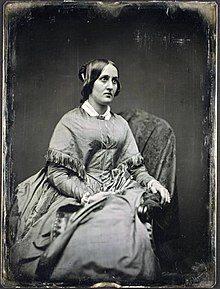
Sara Jane Lipencott
from Wikepedia
But what of the 'professional' women? One doctor, Geneveive Tucker, wrote a book titled "Mother, Baby, and Nursery: A Manual for Mothers" which was published in 1896. I found the subject and information fascinating. Here from the preface is the gold of the author for the book.

 The object of the author in presenting this work is to furnish a practical summary of the infant's hygiene and physical development. The aim of the book is to be a guide to mothers, particularly young and inexperienced ones. It purposes to teach and help a mother to understand her babe, to feed it properly, to place it in healthful surroundings, and to watch its growth and development with intelligence, and thus relieve in a measure the undue anxiety and nervous uncertainty of a new mother. The book is not intended in any measure to take the place of a physician, but rather to aid the physician in teaching the mother to care properly for her babe when well, that she may better nurse it when sick.

Then of course there were the autobiographies.

Dr. Elizabeth Blackwell wrote: "Pioneer Work in Opening the Medical Profession to Women; Autobiographical Sketches"

Harriot Kesia Hunt wrote: "Glances and Glimpses: or, Fifty Years Social, including Twenty Years Professional Life"

Helena Modjeska wrote: Memories and Impressions of Helena Modjeska: An Autobiography"

Image result for helena modjeska
Helena Modjeska
from Wikepedia
So who were these 'profesional' women? Most have heard of Dr. Elizabeth Blackwell, the first woman in the United States to graduate from a medical school. But, Harriot Kesia Hunt was a doctor in Boston in the 1830s who  acquired her skills by studying with a male doctor. She had applied to Harvard medical school in 1847, the first female to apply, and was turned down. She was later granted an honorary degree from the Female Medical College in Philadelphia in 1853.

Helena Modjeska was an actress of some fame in the late 1800s who had been a star in Poland, but moved to the United States and began performing here. When she first arrived her performances were done somewhat phonetically, but she persevered and became one of the top Shakespearean actresses of her time.

Dr. Genevieve Tucker, who was appalled at infant mortality rate, stated “Decrease in infant mortality will be brought about more by strict hygiene and prevention of sickness then by any treatment of disease already begun, no matter how skillfully applied.” Dr. Tucker had a  practiced in Pueblo, Colorado, and in 1898 she was elected president of the Colorado Homeopathic Medical Society. 

Were the writings of these women best sellers? Who knows? But most of these works are still available either in print or in the public domain and give an insight into the world of the late 1800s and early 1900s. 

We can only hope our works, be they fiction or non-fiction, bring knowledge and joy to our readers. We truly love telling our stories for you. As we approach the Thanksgiving holiday, know we are thankful for all of you.

Speaking of babies and women doctors, here is an excerpt from my book "Josie's Dream", a story about a women who wanted to be a doctor more than almost anything.


Josie was exhausted and it showed in her walk and stance. The day had been one full of one emergency after another. The day started with Homer and his lessons, but quickly dissolved into a couple of broken bones, the Fresch boy, who had gotten his cast wet, and cuts and scrapes. Just when things looked like they would slow down, she’d had to go out to the Kruger homestead to assist Mrs. Kruger, who had gone into labor early and was having difficulty.
Josie was pleased that mother and baby were doing fine. Still, she’d had a bit of trouble convincing Mrs. Kruger and her husband that ‘laying in’ was not the best for mother and child. When she’d had Mr. Kruger, who was nervous about his first child, start to boil water, he’d no idea it was to wash the sheets. But wash them she had, after enlisting the poor father’s help. In the end, when she explained about cleanliness and the way it would help with Mrs. Kruger getting better more quickly, he fell right in. The love and pride the two had for each other and their son gave Josie hope for the future. She knew she would probably not get married for she knew most men wouldn’t want such an independent woman who had her own job. She also knew she’d never get a quilt that her grandmother made for the grand children who married. That thought made her sad. But she’d made her choice.
It was on days such as this, when she was tired but pleased with her day, that Josie wondered what the world would be like in another fifty years. Would doctors still be visiting patients, or would there be hospitals where those same patients could stay if there were complications. What would her life be like? The world continued on and, Josie knew, advances were being made in so many areas.

Thinking of Mrs. Packham, and her problems with the twins and their struggle to thrive after getting the poisoned food, Josie dreamed of a time when medicine would be able to help speed recovery or eradicate disease altogether. When the science had advanced enough, doctors would be able to tell if people like Mrs. Kruger were going to have complications. 

Click Here to Purchase on Amazon


Doris Gardner-McCraw -
Author, Speaker, Historian-specializing in
Colorado and Women's History
Member of National League of American Pen Women,
Women Writing the West,
Pikes Peak Posse of the Westerners
Western Fictioneers

Angela Raines - author: Where Love & History Meet
For a list of Angela Raines Books: Here 
Photo and Poem: Click Here 
Angela Raines FaceBook: Click Here

Wednesday, September 19, 2018

ROAD TRIP #history #SweetAmericanaSweethearts


Have you ever experienced that road trip where you have to get there and get back, and have no time to stop and visit the history that is flying by? Recently I did just that on my way to the Western Fictioneers Convention in Oklahoma City, OK. So, I've decided to write a post about what I wished I'd had time to see. At least with some research, I can share what might have been. 

Heading south on Interstate 25 through Colorado I passed Pueblo, Trinidad and went over Raton Pass. All three are part of the Latin American Heritage of Colorado. I know Bat Masterson was city marshal of Trinidad, and Pueblo had its beginnings as a commercial fort. Raton Pass was an early crossing on the Santa Fe Trail. (for more on Raton Pass Raton Pass History)


Capulin Volcano
I headed east along the northern part of New Mexico and Texas.  As anyone who knows Texas, they have so many wonderful historic markers along their roads. Some day I'll read most. Of course the route also took me by Capulin Volcano National Monument. (more on this volcano can be found here: Capulin )


Historic Marker - Texas
Hitting Oklahoma City, I had the chance to visit the National Cowboy & Western Heritage Museum and so what they had on display. The rest of the time was spent with other Western authors and listening to their shared expertise. 

Leaving I headed north toward Dodge City. I drove through the lands that the Indians made their own after being driven to the area. I traveled part of the Chisholm Trail. 

In Kansas, I saw the sign for St. Jacob's Well. I had no idea what it was until I did a search. Pretty interesting. St. Jacob's Well

Of course, who hasn't heard of Dodge City, Kansas. The end of the trail drive. The wild and woolly west with Wyatt Earp, Bat Masterson and all the others who passed through the town. 

Once I made it to Highway 50 heading west, I was traversing The Santa Fe Trail and Scenic and History Byway Auto Tour Route. It is a lonely stretch of road, but what a time to take in all I'd missed along the way. (Santa Fe Trail- Mountain Route)


Marker in Coolidge, KS
I drove through Syracuse and Coolidge, Kansas. There was something about that area that drew me to it. In fact it was the only place I stopped to take a photo. Since it was Sunday, there was nothing open. When I did some research, I found out why. (Hamilton County Kansas) For those who would enjoy deeper research (Bibliography of Hamilton County) For some history on Coolidge, which from what I understand was a wild place in the 1880s. (Coolidge History) The one thing I really loved, from the site "Coolidge has a city ordinance that prohibits women from riding naked on horseback. Yes this is left over from the late 1880's indicating the wild west issues that occurred with Trail City (headlined in the 1880's as the wickedest town in the west) only two miles away." 

I wondered what the travel would have been like for those who traveled the Santa Fe trail to trade with those businesses in New Mexico. What was it like for Zebulon Pike as he explored the region at the behest of the government? Looking at the land and its features, I wondered at the cattle drives as the made their way north, looking for water, going up and down the rolling land of Northern Oklahoma and Southern Kansas. The twelve hundred plus miles I drove in two day, how long would it have taken a man or woman on horseback? What of the towns that began as someones dreams, some of which grew and others that faded or are just barely holding one?

So the next time a Road Trip comes up, I may have to take a few extra days and stop along the way.  What would your dream trip be?


Building in Coolidge, KS

In the novel "Josie's Dream", Josie travels from her home in Iowa to the plains of Colorado in search of the place she will call 'home'.  Here is a short excerpt:


Breathing deeply of the independence she felt, Josie reached down to pick up her cases. Looking around, Josie took in the small town. It was just as she had dreamed, the main street with its business buildings standing like sentinels to keep the town safe, help it grow. Houses, some with fences, some without, ringed the outer reaches of the area.
Since corresponding with Dr. Harriett Leonard, a past student of her medical school and dear friend, despite the difference in age, Josie had been dreaming of coming to Colorado. Dr. Leonard had offered to let her work at the Spa in Manitou Springs where Harriett was the proprietor, but Josie wanted to create a practice in a smaller town, where people really needed her.
Now here she was in Kiowa Wells, on the eastern plains of Colorado just a few miles from the railhead at Kit Carson. Her biggest obstacle now was finding a place to set up her medical practice.
Despite his reservations, her father gave her a medical bag, equipped with the basics. “Something to remind you of this commitment, your Hippocratic oath,” were his parting words.

Her parents, though still in Iowa, were in her heart. Still, she knew it had been time to leave. While others of her friends were getting married, she had gone to medical school, her path clear to her.
Josie's Dream (Grandma's Wedding Quilts Book 9) by [Raines, Angela, Quilts, Grandma's Wedding, Americana, Sweet]
Amazon e-book purchase here


Doris Gardner-McCraw -
Author, Speaker, Historian-specializing in
Colorado and Women's History
Member of National League of American Pen Women,
Women Writing the West,
Pikes Peak Posse of the Westerners

Angela Raines - author: Where Love & History Meet
For a list of Angela Raines Books: Here 
Photo and Poem: Click Here 
Angela Raines FaceBook: Click Here

Wednesday, August 15, 2018

CITY DIRECTORIES


How many of you, other than the old time salesperson, spend time in city directories?  I love reading them, especially the older ones.

Image result for colorado springs 1879 images
Colorado Springs, 1870 (/) photographer unknown
Our library starts with the 1879 issue. Not only does it contain the names of people living in the area, it also has information on the various organizations, businesses and a list of government officials. So invaluable when doing research.

Another wonderful aspect of the city directory: Businesses. What people did in the 1800s and how they labeled their work is such fun to see. I thought I would share some of the interesting ones, along with the people who were listed as the owners, etc.

In the 1879 directory:

Bill Poster:
Sullivan John W., Mountaineer office.

Carriage Trimmers:
Baumgarten, J., s side Huerfano, e of Cascade.
Marsh, H. A., s side Pike's Peak, e end.

Fish and Oysters:
Blake, John W.

Ice Cream: 
Robbins W. B., n side Huerfano, w of Nevada.
Rogers Bros., s side Huerfano, w of Tejon.

Ice Cream Dealer:
Johnson T. E., e end Huerfano, w of Tejon.

In 1882 the directory:

Artists:  Craig, Charles, 118 s Tejon st.

Carriage Painters:
Cant, G., & Co., 112 e Pike's Peak ave.
Gardner, J. H., 1'28 e Pike's Peak ave.
Lynch, James, 16 e Huerfano st.
Storer, A, H., I 16 s Cascade ave.

Fish and Oysters:
Brighain & Callaway, 32 s Tejon st.
Ericson 8z Neff, 25 s Tejon st, a!
Hopkins & Conger, xro e Pike's Peak ave,
Mook, Anson E., 32 n Tejon st.

Intellegence Office:
Buckingham, Mrs. R. H., 117 s Nevada ave.

The 1882 Directory also included information regarding what is now known as The Deaf and Blind School:

INSTITUTE
FOR THE
Education of the Mutes and Blind in Colorado
[ LOCATED AT COLORADO SPRINGS.]
-
Quarterly meetings of the Board held on the Second
Tuesday of August, November, February and May. Visitors
admitted daily from 8 o'clock A. M. to I o'clock P. M., except
Saturday and Sunday. Pupils Publish " Deaf Mute Index,''
weekly, Hugh M. Harbert, editor,
TRUSTEES.
President, R. G. Buckingham, Denver.
Treasurer, G. H. Stewart, Colorado Springs.
Secretary, Matt France, Colorado Springs
Superintendent, J. R. Kennedy.
Matron, Mrs. Mary E. Kennedy.
Principal, ----- ------.
Assistant, Hugh M. Harbert.

(For future reference: the school was started in 1874, the same year as Colorado College. For a brief overview: School Founder, and the current information: https://www.csdb.org/

So much information and a gold mine for me when I'm creating characters and their lives and business. In my novella, "Home for His Heart", Clara owns a restaurant. The city directory for Colorado Springs in 1879 showed a number of women restaurant owners, so I felt confident the fit would work. Here is a brief excerpt from that story:

Purchase on Amazon

 Clara hummed as she put the finishing touches on the venison roast. In the two years since
arriving in Agate Gulch she prepared an annual special meal for friends. The past year had been
especially wonderful. Even the gingham curtains on the restaurant windows smiled with her tune. She
felt she could finally put Henrietta ‘Ettie’ Heath to rest. Clara Cross was her life now.

Oliver was in the past, and would stay there.

Sensing someone behind her, she turned to see her friend, Sally, standing in the door.

“You know, you should sing in the church choir,” said Sally.

“Oh, I couldn’t sing in public. The idea of all those people looking at me and judging, I couldn’t
stand it,” replied Clara with a shudder.


Doris Gardner-McCraw -
Author, Speaker, Historian-specializing in
Colorado and Women's History
Member of National League of American Pen Women,
Women Writing the West,
Pikes Peak Posse of the Westerners

Angela Raines - author: Where Love & History Meet
For a list of Angela Raines Books: Here 
Photo and Poem: Click Here 
Angela Raines FaceBook: Click Here


Wednesday, June 20, 2018

MARKETING THE OLD FASHIONED WAY? #SweetAmericanaSweethearts @renawomyn1


I want to let the readers of this blog know: I'm celebrating my birth month with a gift to one person who comments on this blog, or any of the others I've written between June 15, and July 1, 2018.
There will also be one major winner chosen from the comments on all the blogs post for this time frame.
Standing Out from All the Rest
photo copyright by the author
Today advertising is pretty ubiquitous. We see in everywhere. How do you stand out in the crowd?  Was it any different back before 1900? A look at some of the old Colorado newspapers may give a hint of the way people got the word out about what they had to offer.

Take these advertisements from the Aspen Tribune in 1898

The description of the fishing outfit fascinates me. A split bamboo pole, aluminum reel and silk line. Now that's a fishing pole.


Do any of these sound familiar? Can you imagine it being too hot in Aspen at 8,000 feet? Makes you wonder what the rest of Colorado's weather was like that year.

I love this advertisement from Colorado Springs in the late 1800s on the sale of Shirt Waist. What was interesting, the business, Hibbards, was a staple in Colorado Springs from 1892-1996 and was one of the last independent department stores in the area.


Then there is Mrs. R. Eslick who opened a photo gallery in Julesburg, Colorado in 1898. Photography was not just a man's job. There were more than a few women who took up the business of photography. Julesburg was once known as the wickedest city in the West, according to the towns website. For more information on Julesburg Click Here


Of course we mustn't forget the physicians. These three appeared in the Central City, Colorado newspaper in 1873. Colorado had a plethora of physicians when it was just a territory, then even more as the population grew and it became a state. Early on Colorado was not only known for the wealth that was in the ground, but the clear, dry air that aided many in recovering from various illnesses.


And these in the Rico, CO. newspaper in 1882. Located in the southwestern part of Colorado in Delores County, you can read more of the towns history Here


Now we don't want to forget having fun. Here are two pieces from the Opera House in Julesburg, Colorado in 1898. So many towns had their opera houses. They were the place to not only see shows, but also traveling variety acts.


So as you can see, marketing is still marketing no matter what the year. Sometimes I think the best way to get a feel for a town I am writing about, or using as a template is to read and study the advertisements in their papers. Now that so many are available online, it is so much fun to read.

I will leave you with an ad from the Sierra Journal in 1883, the newspaper for Rosita, Colorado that Helen Hunt Jackson used as the setting for her children's story "Nellie's Silver Mine". Helen visited Rosita many times and loved the beauty of the area, which shows in her use of the town and surrounding area in the book.


Until next time, have a wonderful beginning of summer. Enjoy the stories the Sweet Americana Sweethearts have to offer, and have fun. And of course I must advertise my latest story in the Lockets and Lace series that was released early this year. If you haven't read this series, it's great way to spend summer afternoons in the hammock, sipping tea...ahhh!

Purchase Here


Doris Gardner-McCraw -
Author, Speaker, Historian-specializing in
Colorado and Women's History
Member of National League of American Pen Women,
Women Writing the West,
Pikes Peak Posse of the Westerners

Angela Raines - author: Where Love & History Meet
For a list of Angela Raines Books: Here 
Photo and Poem: Click Here 
Angela Raines FaceBook: Click Here