Showing posts with label Colorado History. Show all posts

Wednesday, January 21, 2026

Colorado 150 (And some historic sites) - America 250

Post by Doris McCraw

aka Angela Raines

Comanche National Grasslands
Image (C) Doris McCraw

In 2026, not only will the nation celebrate 250 years since the signing of the Declaration of Independence, but on August 1, Colorado will mark 150 years as a state. For those who might not know, Colorado is known as the Centennial State, having joined the Union as the 38th state, one hundred years after the Declaration.

Colorado has four National Parks: Black Canyon of the Gunnison, Great Sand Dunes, Mesa Verde, and Rocky Mountain National Park.

Colorado has five National Monuments: Colorado National Monument, Dinosaur National Monument, Florissant Fossil Beds National Monument, Hovenweep National Monument, Yucca House National Monument.

Tracks from the Santa Fe Trail (?)
Image (C) Doris McCraw

There are three National Historic Sites: Amache National Historic Site, Bent's Old Fort National Historic Site, and Sand Creek National Historic Site.

Colorado also includes portions of the following National Trails: California National Historic Trail, Pony Express National Historic Trail, Old Spanish National Historic Trail, and Santa Fe Historic Trail.

There were also the following two well-known cattle trails: the Great Western and Goodnight-Loving Trails, which came through Colorado, in addition to the Smoky Hill Trail, which brought gold seekers to Colorado and intersected with some of the Cattle Trails.

Entrance to Bent's Old Fort
Image (C) Doris McCraw

Colorado, also, in its early history, was part of the fur trading routes.

It has been my goal to visit as many of the above as possible. I've managed almost three-quarters of the list. Their history and landscape have and continue to be a part of my writing. So much beauty and history; so little time.

Until next time,

Stay safe - Doris

Angela Raines - Amazon

Doris A. McCraw - Amazon


Tuesday, July 1, 2025

FOOD CHEATS AND THE 1800S: Be very afraid! by Marisa Masterson

https://www.docsteach.org/activities/printactivity/progressive-era-food-regulation


Lately, food dyes and chemicals in food are often in the news. I even heard someone talk about returning to the purity of the foods from bygone eras. Well, some of what folks ate was not all that pure! 
https://www.pinterest.com/pin/389842911467779358/

  Take milk, for instance. Healthy milk. In the 1800s, sellers played an awful trick on consumers. Many watered down the milk. They added chalk to restore the white appearance. Formaldehyde, what was used in embalming, went into it to prevent spoiling. Fresh did not describe what they presented to the public. Sadly, this led to infant deaths. One more reason infant mortality was so high at that time. 
https://beavertrust.org/beaver-basics/beaver-history/

  How about sweet vanilla? What could be done to vanilla, right? Well, in the eighteenth and nineteenth centuries, a handy cheat was used to replace this. Castoreum, which tastes similar to the flavoring, was highly sought after. Its source? The anal secretions of a beaver! People knew where it came from and wanted it anyhow because of the cheaper cost compared to vanilla. 

https://www.britannica.com/topic/Pure-Food-and-Drug-Act

  Did the flour go sour? Add ammonium carbonate so the buyer believes it is freshly milled. 
Speaking of flour, white flour was more costly than the brown multi-grain variety. To make white bread, some bakers added chalk. To increase the weight of a loaf, they added pipe clay. 
  So, if those foods could be tainted, how about simply eating candy? No, that was a risk. Lead was used to color it. If the candy was green, it probably contained arsenic. 
  Little wonder the federal government finally stepped in to create the Pure Food and Drug Act of 1906. Before that, states were supposed to supervise what was consumed.


Wow! I am beginning to see how blessed my poor but healthy ancestors were to live on a farm and raise their own milk, meat, and vegetables. Perhaps we have slipped backward with our junk foods and fast food today.


NOW AVAILABLE. FREE IN KINDLE UNLIMITED!


Will love force Ike to leave paradise?

Meet Ike Walton, the elusive banker's stepson who disappears into the mountains without a trace. No one in town knows why he left his stepfather's business. One woman will find an answer.

Ike has no intention of revealing his secret. He hides away in the mountains rather than face his only parent’s schemes. Only, Emmaline will force his return to the town where his parent controls too much and too many people.

Emmaline Bradley stares at the mountain every day, hoping to catch a glimpse of Ike returning. He broke her heart when he disappeared the day before their wedding. She is determined to find him and demand an explanation. Gathering her resolve and abducting a preacher, she sets off to where she believes he is hiding.

Arriving at Ike's mountain hideaway, she finds a conflicted man. Will their reunion reignite their plans for a life together, or will it finally give them closure and allow them to move on?

For fans of rugged mountain men and clean romances, this book will keep you hooked until the very end.

  • Ø  Spunky heroine.
  • Ø  Western adventure and wholesome romance.
  • Ø  Guaranteed happy ending.
  • Ø  Faith-filled fiction with the theme of redemption.

Get it today! 

Monday, June 9, 2025

THE LURE OF SILVER AND SETTLEMENT by Marisa Masterson


https://www.sweetwaternow.com/
annual-rendezvous-started-in-sweetwater-county/

 
https://welovetoexplore.com/
abandoned-mining-town-ashcroft-colorado/


Untouched mountains. Fields of wildflowers left unplowed where horses grazed. Silver left in its veins.

Oops! That last one is a problem. The discovery of vast mineral and silver deposits was enough to cause the government to break a treaty.

Because of pressure by 'the elite' to mine the area, the army forced the Ute tribes off their land. Some went onto reservations, leaving homes behind. This left the area open for settlement and for mining. Towns rose in a day, like Leadville and Meeker. The Railroad rushed to lay tracks and expand into the area.

My new release--coming June 10th--starts at that point in Colorado's history. Even some army forts were abandoned and claimed by settlers. I used that historical tidbit and built my fictional town around one such fort. 

Like other towns during the era, one man creates and controls it. For Ike Walton, that man is his stepfather. Little wonder Ike has to run away when the man decides to have him killed.


He turned, mindless of the pistol pressed to his neck. “Melvin, thank the Lord. I thought it was my stepfather.”

Melvin did not lower the pistol. Instead, he kept it pressed against the other man’s throat. His hand trembled as he held it there.

“It might as well be Mr. Oliver. He sent me here to kill you.”

The trembling from Melvin’s hand had traveled to Ike’s legs. They wanted to give out on him. He stiffened his knees to keep from tumbling to the ground.

“Kill me? My stepfather?”

“Yep, it’s a strange night. Ida’s in a rare taking once I told her that.”


The time period, late 1870s, is a strange one to set a mountain man novel. The fur trade was all but finished by 1850. This was a time for mining and settlement. 

But I imagined three old men who hung onto their lifestyle as mountain men. They are there to help our hero, whose grandfather had once been a fur trapper. These men will turn the hero into a true mountain man, one who can survive and thrive amongst the rugged peaks.

Frederick Remington, 
https://www.sweetwaternow.com/annual-rendezvous-started-in-sweetwater-county/


For the first time since he rode through the dark night, Ike viewed his circumstances in a different light. He was not hiding on the mountain. No, he was claiming a life that might have been his. If not for his pa’s death by an outlaw’s bullet, Ike would have heard stories of his mountain man grandfather.

His gaze met Robby’s. “Will you teach me how to fire the Brown Bess?”

The man clapped him on the shoulder. “That’s the spirit, boy! Finally, the bear’s ready to roar.”

The younger man did not try to understand that analogy. He only smiled as he listened to the man describe the steps in loading a musket. Siting it was trickier than firing the Sharps rifle. Little wonder most folks no longer used the old-style weapon.

That afternoon, Ike learned to pan fry venison chops. While he picked his teeth with a bristle pulled from the broom, he listened to the trio play a song. Somehow, their music lost its earlier discordant sound.

He forgot that today he was meant to be at his own wedding. Snow drifts cut him off from her. Instead, he enjoyed staring out the window at holly bushes with bulging with red berries. Equally red cardinals sat on their branches and pecked at the fruit.

Tranquility filled him. For a time, he was far above the problems in Walton’s Valley. Figuratively and literally.

I invite you to travel back in time to the settlement of Colorado. Ike's Isolation releases Tuesday, June 10th. 


US https://www.amazon.com/dp/B0DT7TFKV6

UK https://www.amazon.co.uk/dp/B0DT7TFKV6

CA https://www.amazon.ca/dp/B0DT7TFKV6

AU https://www.amazon.com.au/dp/B0DT7TFKV6


Wednesday, March 15, 2023

Those Random Books I Use For Research


Post by Doris McCraw aka Angela Raines

Photo (c) and property of the author

This month I thought I'd list ten of those random books that contain unique information. I hope you all enjoy some fun reading.

1. "I Never Knew That About Colorado" by Abbott Fay

2. "The American Family Keepsake" by The Good Samaritan and all other books in the American Antiquarian Cookbook Collection.

3. "Midas of the Rockies: The story of Stratton and Cripple Creek" by Frank Waters

4.  "Cripple Creek Days" by Mabel Barbee Lee

5.  "The Bad Old Days of Colorado: Untold Stories of the Wild West" by Randi Samuelson-Brown

6.  " A Quick History of Victor: Colorado's "City of Mines" by Leland Feitz

7.  "Alias Soapy Smith: The Life and Death of a Scoundrel" by Jeff Smith

8.  "The Prospector: Story of the Lidew of Nicholas C. Creede" by Cy Warman

9.  "Around Monarch Pass" by Duane Vandenbusch

10. "The Cripple Creek Strike" by Emma F. Langdon

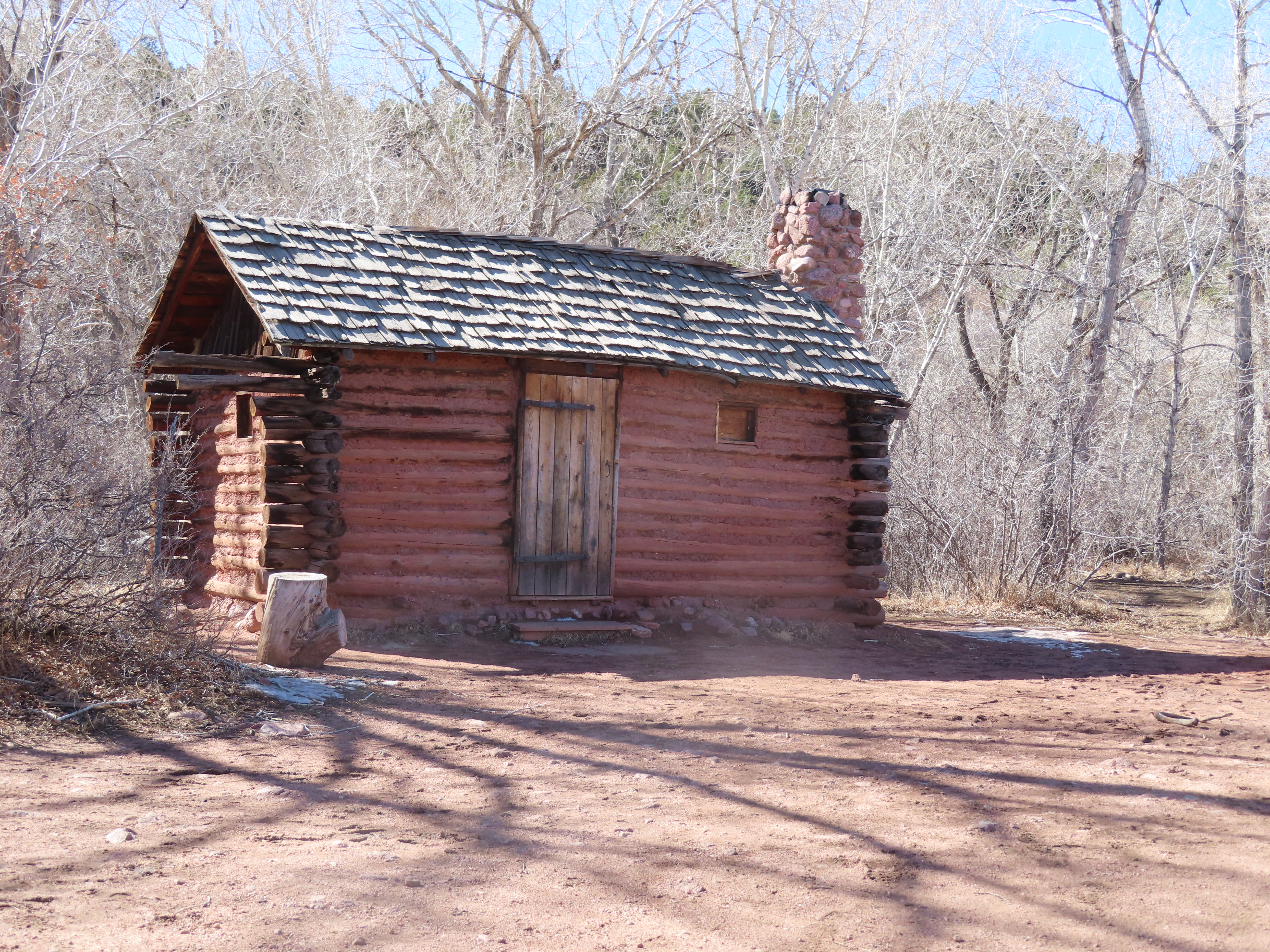
Garvin cabin - Rock Ledge Ranch Historic Site
Photo (c) and property of the Author

I have used and/or own a number of these books. Yes, I realize most have to do with Colorado, but all are about life and times in the early West. 

In addition to my non-fiction, such as "Under the Stone: Early Women Doctors in Evergreen Cemetery", most of my fiction, which takes place in Colorado is grounded in the history of the state and region I wrote about. To me, having those pieces of history adds realism to the story.

Until Next Time: Stay safe, Stay happy, and Stay healthy.

Doris


Wednesday, January 18, 2023

BACK IN THE DAY, 1859 - COLORADO CITY'S FIRST DOCTOR


Doris McCraw aka Angela Raines

Photo property of the Author

Colorado City, otherwise now known as Old Colorado City had a doctor almost from the very beginning of its existence in 1859.

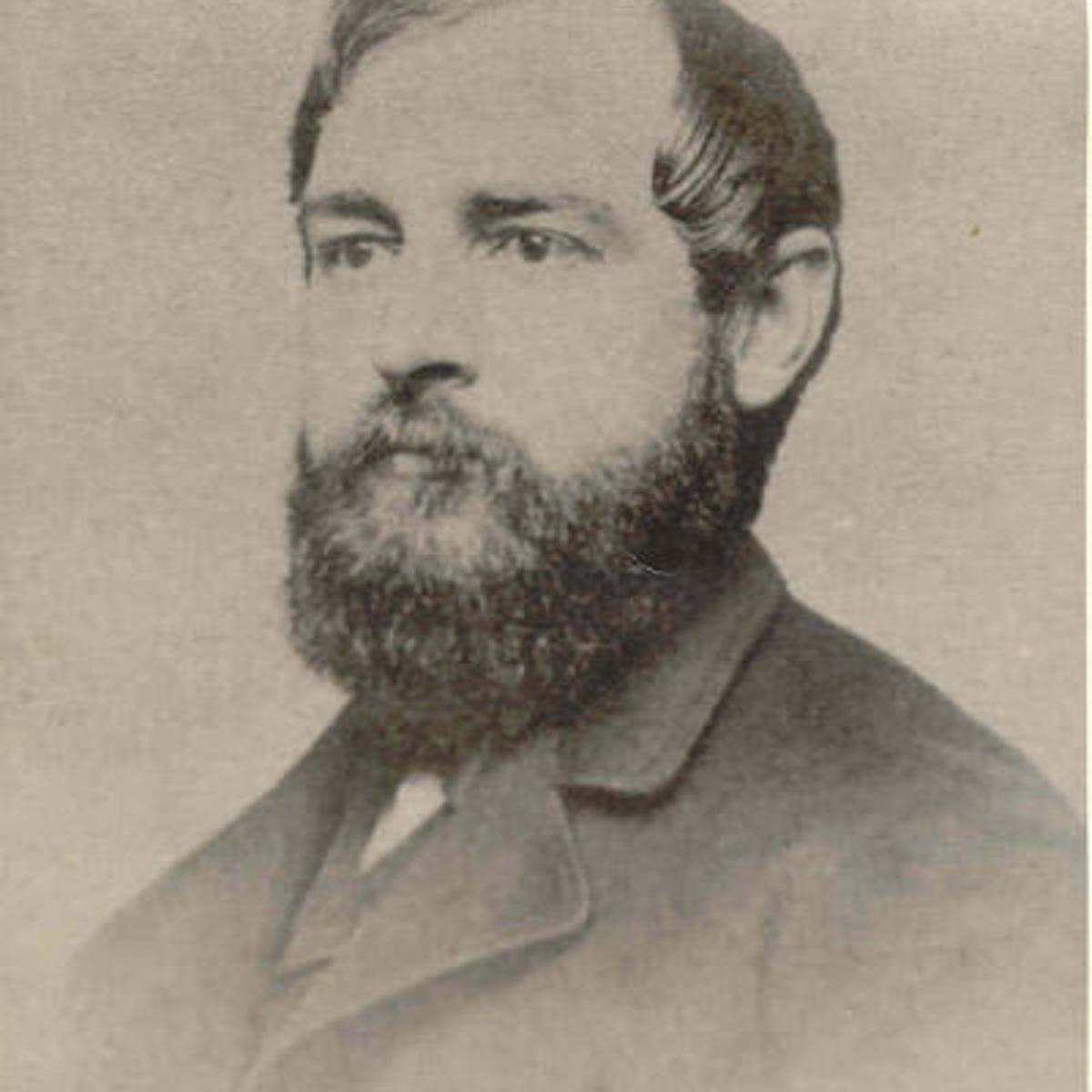
James Paul Garvin was born in September 1832 in the state of Pennsylvania. While no record has been found of his early medical education, we know that he came to Colorado at around the age of twenty-seven.

Image of Dr. James Paul Garvin from 
the Oct 12, 1952 edition of the
Colorado Springs Gazette

Once he arrived in Colorado city he and M. S. Beach set about building a cabin where Dr. Garvin not only lived and practiced medicine but also worked as a pharmacist, making his home a doctor's office and a drugstore.

Dr. Garvin remained in Colorado, not taking part in the fighting that we know as the Civil War. There is also the possibility that he was a sheriff in Denver for a brief time, but so far that has yet to be verified.

During Dr. Garvin's stay in Colorado, there is a very good chance that he would have traveled to other parts of the state, specifically gold mining camps, to tend to those who were ill. That he also might have spent time searching for gold is a real possibility.

There is much still to be found about Dr. Garvin's stay in Colorado, however brief that might have been.

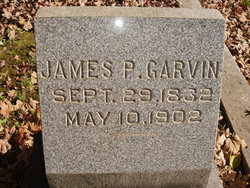
From the Find A Grave website.


Sometime in the late 1860s Dr. Garvin left Colorado for good and returned to the East. He may have continued studying medicine, but we do know that he married Cedelia A. Butz, in January 1875 in Terre Haute, Indiana. It was her second marriage and his first. They had three children, two boys, and one girl. The couple later moved to St. Louis Missouri and then to Alton, Madison County Illinois. He remained there until his death in 1902.

Dr. James Paul Garvin and his time in Colorado city have been overshadowed by the cabin that he and Beach built. If one is to visit old Colorado city you will find the cabin standing in Bancroft Park. The building is considered the second oldest building in Colorado City and played a part in the storied beginning of Colorado as a territory and the "First Territorial Capital of Colorado". That is a story for another time.

Until next time, Doris 


Wednesday, December 15, 2021

How They Saw Christmas in Early Colorado

 Post by Doris McCraw

writing as Angela Raines

Photo Property of the Author

As the Christmas Holiday draws nearer, I decided to take a look back at how the people of Colorado saw the day. Sometimes the most interesting and diverse information comes from advertisements. 

I've chosen three short pieces from historic newspapers to share with you. 

This first one is an ad for a company called Ashard & Co. in Golden, Colorado. I find it fascinating that Santa Claus is an old German friend who has had some hard times. Even more fascinating is his clerk is Kris Kringle who has sent a message to the business that 'Christmas was kept in the same good old style as in Days of yore.'


Colorado Miner December 23, 1869


In 1869, the Rocky Mountain News let people know the Methodist Sabbath School would be remembering the Chrismas Tree. Note also, the time is listed as 71/2 o'clock. Note also, those who were giving gifts were to place them 'upon' the tree. How the customs have changed. 


Rocky Mountain News December 24, 1869


For the final piece, I love that the Rocky Mountain News was giving their staff Christmas Day off. They also, as 'writers' would do, encourage their readers to "read Dickens' elegant Christmas story "No Thoroughfare".  For those who'd like to read that Dickens' story, here's a link to a free version from Project Gutenberg: "No Thoroughfare - Novel and Play


Rocky Mountain News December 24, 1867


My novella, "Gift of Forgiveness" is set at Christmas time. Enjoy the excerpt:

Albert stuck out his tongue, only to have Ila return the gesture. This was followed with the two trying to out-bother each other. Nettie was preparing to stop the nonsense when a knock on the back door sent both of them running to answer it. The knock was followed by a deep, "Hello, anyone home?" as the door swung open.

The children squealed as Nettie took in the sight of John, hat pulled down, coat collar up, his warm gray eyes searching for welcome.

"Come on in, John. Breakfast will be ready shortly. Care to join us?" Nettie asked. "There's more than enough," she added, hoping he'd say yes. Perhaps the way to a man's heart really was through his stomach, and she was a good cook.

"If you're sure it wouldn't be a bother. Came into town for supplies for the ranch. Thought Albert might like to help me out, him being such a strong man and all." John smiled at Albert, his eyes holding pride in the young man. "If you don't mind, that is?"

"How about we have breakfast and see," Nettie answered.

"Please, Mom," Albert interrupted.

"So it's Mom now," Nettie said with a smile. "You do have some schoolwork that needs to be done."

"Didn't mean to cause a problem," John quickly inserted.

"You didn't. I think we can probably work something out."

"Thank you!" Albert shouted, running over to give Nettie a big hug.

Smiling, Nettie looked over at John, mouthing 'thank you' as she bustled the children toward the dining room and its other two occupants, Leonard Shiesley, a well-dressed drummer, and Lida Ehbert, the new hire at the mercantile.


Wishing you all the best of the Holiday Season and 2022. I will see you back here next year.


Doris Gardner-McCraw -
Author, Speaker, Historian-specializing in
Colorado and Women's History
Angela Raines FaceBook: Click Here


Tuesday, May 25, 2021

CONSIDER THE BREAD by Marisa Masterson

 The stuff of life--bread. While Christ said, "Man cannot live by bread alone," His statement reinforces to me how important and basic that food is to many diets.

Pushing west, many people did not buy stoves, or if they did, those were flat topped potbelly stoves meant to heat the house and usually having one or two burners on top.

Many people who came to the West to mine for silver or gold had nothing so elaborate as even one of those small stoves. Their small, hastily constructed cabins relied on a fireplace for heat and cooking. While a person could make biscuits and such, the tall loaves these people remembered from the East were beyond their ability to make in the fireplace.


Bakeries, even bakeries in a person's kitchen, supplied the bread, cookies, and pies that brought the flavors of home to persons far from what they knew. No wonder someone running a bakery in these small towns that popped up around mines in Colorado was so welcomed by those living there.


The hero in my upcoming release is a baker in just such a town. Adam relies on two things to make his bread and cookies: a large, cast iron range and brick ovens. 

The brick oven from colonial times continued to be used in bakeries through the 1800s. Often these usually rounded ovens had no door on the front. It might be difficult to see in the image, but the man is using a paddle to remove the bread. The flat paddle was an essential baker's tool to put the loaf in and remove it.


Wherever men mined, hand pies were also in demand. (In Wisconsin and Michigan, we call them pasties.) 


From A Bride for Adam--

Long hours spent alone in his bakery meant he made the money needed to prove the business to be a success. Once, he even advertised for an assistant, hoping that would allow him to spend more of his morning baking. No one wanted to work for a baker when they could dig up a fortune in silver on the mountain. 

That left him alone, struggling to keep up with his customer’s demands. Adam knew he could make even more money if he sold hand pies. Miners asked for the meat pies and sweet, fried pies. Perhaps, when Elspeth came, he would have time in his day to also make those. If she took over baking the cookies rather than pies, he could—  

The pies could easily be made in the brick ovens. These savory treats filled with vegetables and meat could be easily wrapped in a handkerchief and stuffed into a pocket. Body heat would keep the meal somewhat warm until the miner stopped for his meal.


So, when you think of a town in the Old West with its livery, mercantile, jail, and saloon, consider one more business. For many such places, a bakery was essential. After all, bread is the stuff of life.


Adam Collins knew his bride. No matter that the women were identical twins, he would know Elspeth at a glance. So why was he sure that he held Elizabeth's hand as they stood before the preacher? Could he still say, "I do," not knowing who he married?


Available for pre-order today!

Wednesday, April 21, 2021

LOVE HISTORY?

 Post by Doris McCraw

writing as Angela Raines

Photo property of the author

This year is the sesquicentennial for the city of Colorado Springs. There are numerous events and goings-on, but if you don't live here being a part of or learning that history would normally be out of the question. To the rescue, Zoom, Internet, and Mobile Apps.

During this past year, I have taken part in numerous history zoom lectures and looked at links provided by various museums and other organizations. In this post, I will be sharing some of them with you.

On the subject of women's suffrage: https://youtu.be/v-ZYylkvrJY

Bloomer Girl Costume: https://youtu.be/7VH76T3VtKg

The one I found fascinating- When the Civil War Came West: https://youtu.be/8T-z9PuBgHc

COS@150: https://www.cspm.org/exhibits/cos150/

History on the go: https://www.cspm.org/articles/a-new-way-to-explore-history-on-the-go/

Photo property of the author

If you are like me, adding the historic details helps me bring my story and characters to life. In the novel "The Outlaw's Letter" I used events and knowledge of the land to help me tell the story of Hetty and Grant. Below is a short excerpt:

Pulling up about a hundred yards away from the prison wall, Hetty climbed down from the wagon, walking slowly forward. She took in the wall, built by the inmates she had been told, the three-story stone building where the prisoners were housed. There were men in the yard, their striped clothing marking them as criminals, along with armed guards watching them.

How did Grant survive? Hetty thought. To be confined, having to live by someone else’s schedule. All these thoughts tumbled through Hetty's mind. She wasn't sure she’d ever understand. At the same time, she was thankful Grant had kept that concern for others. Where would she be now if he’d become hardened, jaded with the world, from having spent time behind these walls? What of Maude's husband? How would his time here change him?

Turning away, Hetty returned to the wagon where Maude and Clover waited.

"Thank you," Hetty began, "I know —"

"Don't ya let it bother ya," Maude interrupted. "My husband only a few more months. Moved here ta be close jest in case —" Maude pause, then smiled. "In the meantime I’ ve my memories."

Hetty watched Maude as her eyes became unfocused, a smile on her face. Would she ever have that kind of joy with Grant? For that matter would she ever see him again?

"Maude," Hetty whispered, "I hope you can make even better memories soon."

"If’n you an’ Grant ‘ave half as much feelin’ fer each other as we did, ya'll be mighty lucky."

Hetty couldn't let herself believe that, but given a chance, she would love to try. Instead of words, Hetty grinned. Then realizing how much time had passed she said, “I think we'd better head to the station. As much as I'd love to remain here, I've got things to get done."

Amazon

Doris Gardner-McCraw -
Author, Speaker, Historian-specializing in
Colorado and Women's History
Angela Raines - author: Telling Stories Where Love & History Meet

Post (c) Doris McCraw 2021


Wednesday, March 17, 2021

The Woman Behind the Man

Post by Doris McCraw

writing as Angela Raines

Photo property of the author

We all grew up hearing the stories of the great men, and this post is not denying their contributions. Instead, this is looking at the women in their lives and what impact that relationship may have had. 

For this post, I will be focusing on Verner Z. Reed and his wife Mary Dean Johnson Reed. The two made quite a difference during their lives.

Reed, born in Ohio and raised in Iowa, worked on the family farm to help the family, which consisted of thirteen children. Originally, Reed began as a journalist in Chicago at the Times. He later moved to Colorado when his half-brother came seeking a cure for his TB. 

It was in Colorado that Reed flourished. He saw a need for housing in the new town of Colorado Springs and created a business, along with his father and brother to build houses. He also wrote promotional brochures for the city.

In the 1890s as Cripple Creek was booming he took on promotional duties there. He also worked with Winfield Scott Stratton and it was he who helped broker the sale of Stratton's 'Independence' mine to an English syndicate. As a result of his efforts, Reed garnered one million dollars for his work. 

Mary Reed 
from Find a Grave

Reed married in 1893 and after his death in 1919 he left an estate worth around twenty million. Mary used the wealth on various philanthropic endeavors. Even with all she'd done, it was said she added another six million to the estate by the time of her death in 1945.

Much like Julie Penrose and other 'widows' of the wealthy, Mary did much to use the wealth for the benefit of many. In honor of National Women's History Month, Mary and other women like her are worth the effort to learn their story. There is more to be found and written about Verner and Mary Reed, but that is for the future. 

In my novella, "Angel of Salvation Valley" the love of a good woman makes all the difference.

At the top of the ridge, Drew was even more impressed with what he saw. Nestled against the southwest corner was a small cabin, the door facing the entrance to the valley, with glass windows on either side. A small ladder on the outside led to a small hatch entrance above the door. Wooden shingles covered the roof, but Drew saw there were a couple that needed replacing. Still, it was a well–made and cared for home.

"Home I haven't had a home since...," Drew paused, "no point in going down that path," he said, averting the pain he knew would come. As his words died, he heard a sound from the northern part of the valley. The echo of his own words, even though spoken softly to himself, were coming back to him.

Fearing being overheard, Drew started to move from the top of the ridge when he noticed movement in the western area of the valley. Intrigued, he stopped. Coming toward him was a lithe, dark–haired woman. Her movements were easy, as were those of the huge brown and black dog cavorting beside her. Sweet laughter filled the air as she bent to speak to the dog.

"Looks quite the storm over toward the north, Rafe," her voice carrying clearly across the valley to where he was hiding. "Good thing we have a snug place to stay. Still, it would be easier if I didn't have to do everything myself."

The dog looked at her, shook his head, and sneezed.

"What's that you say, you help me?" The words drifted up, followed by another peal of golden laughter.

Drew found his heart responding, it'd been so long since anyone around him had expressed such joy. It was bittersweet, for it reminded him of his mother. Shaking his head to clear those thoughts away, he returned his gaze to the woman and dog. He had no business finding anything nice about this woman, if in fact she was the one. Logic told him she was; he instinctively wanted it otherwise. He was here to kill her and gain his freedom, nothing was more important to him than that. Still, a piece of his heart was softening.

Amazon

Doris Gardner-McCraw -

Author, Speaker, Historian-specializing in
Colorado and Women's History
Angela Raines - author: Telling Stories Where Love & History Meet


Wednesday, December 16, 2020

Legacy - Giving - Part 2

 Post by Doris McCraw writing as Angela Raines

Photo property of the author

As this year 2020 winds to an end my mind reflects on endings. The long-running show 'Supernatural' came to an end in November. Now you may ask what a television show has to do with endings, with legacies. There was a line in one of the early shows in which the writer, Chuck, says "No doubt endings are hard, but then again, nothing ever really ends." after which the character disappears from the screen.

The end of that line "...nothing ever really ends." is what brought the thought of legacies to the forefront.

For the earlier post in this series: 

Legacy - the beginning

Legacy - Giving

Perhaps you wonder how the legacy of giving never ends if the person who does the giving passes on? It is a valid thought, but I would suggest that the act itself, the observation of those around the giver allow the story to live on. In part 2 I look at another 'giver's' legacy.

William Jackson Palmer
en.wikipedia.org

Most have heard of William Jackson Palmer, the founder of the Denver & Rio Grande Railroad. If you would like to know more the following books and links can add to your knowledge. "Legends, Labors & Loves", "General William Palmer- Railroad Pioneer" Brief Overview Article

The Palmer giving is a much smaller act than helping to create a city, give land to parks and churches, etc. The act I want to speak about bringing students from early school age to those in college to his large home. He provided transportation and entertainment. He also bought gifts for the children of the town of Christmas and held a celebration in his home. 

Glen Eyrie- Home of Wm. Jackson Palmer
en.wikipedia.org

Palmer was a man who'd spent his life building for the future. By sharing his good fortune with those around him he left a legacy of giving that is a role model for any who believe their gifts should be shared.

In my novella, "Home for his Heart" Fred is the Palmer for the small town of Agate Gulch. Below is a short excerpt: Clara has been humming to herself as she cooks the meal she serves the people of Agate Gulch each year for their continued support. Her friend Sally walks in ...

     Sensing someone behind her, as she turned her friend Sally was standing in the door.

     “You know you should sing in the church choir,” said Sally.

     “Oh I couldn't sing in public. The idea of all those people looking at me and judging, I

couldn't stand it,” replied Clara with a shudder.

     Sally's millinery shop was next to the restaurant. They both lived in homes behind their

businesses. During the past winter, she and Sally developed a strong friendship. Still, how

could Sally, who was petite and pretty, understand Clara's fear of being laughed at. Music was

her special place and any criticism would destroy that. Something most people didn't understand.

     “Clara, they would love you. Just as they love your cooking and your kind heart.”

     “I feel pretty lucky. To have so many customers who are friends, and of course you.”

     “Thank you for including me in that list,” replied Sally with a smirk.

     “You know what I mean. This meal is just my way of saying thank you for all the

kindnesses everyone has shown since I arrived, especially Fred.”

     Fred Mills, after eating her cooking in Pueblo, had talked Clara into starting a

restaurant in Agate Gulch. He loaned her the money to get started, and she finished paying him

back last month. It was something she was pleased and proud of.


Amazon


Doris Gardner-McCraw -
Author, Speaker, Historian-specializing in
Colorado and Women's History
Angela Raines - author: Telling Stories Where Love & History Meet