Showing posts with label civil war. Show all posts

Wednesday, May 27, 2026

"Day Is Done" - History of Taps (Bugle Call)


This past Memorial Day, we watched the PBS special "The National Memorial Day Concert." as we always do, and once again tears trembled on my lashes at this haunting melody. And again, I needed to find out how this tune came to be.

Have you ever attended summer camp as a Girl/Boy Scout, attended a military funeral, or a patriotic memorial ceremony, and been moved by the rendition of "Taps" performed by a bugler?


Sometimes known as "Butterfield's Lullaby" or "Day Is Done," "Taps" was developed during the Civil War in 1862 by Brigadier General Daniel Butterfield. Dissatisfied with the formal bugle call signaling "lights out," he revised an existing call known as the "Scott Tattoo" to create a more melodious tune. He arranged with his bugler to play the new 24-note version, which quickly gained popularity among Union troops and later spread to Confederate forces as well.

The first documented use of "Taps" in a military funeral occurred when a Union artillery officer ordered the tune played for a deceased soldier instead of the traditional three rifle volleys, which were unsafe due to the proximity of the enemy. This established "Taps" as a respectful and discreet tribute for fallen soldiers.

The name "Taps" likely derived from the earlier practice of striking three slow


drum beats after the "Tattoo" or "Extinguish Lights" call, which the soldiers referred to as "Drum Taps" or simply "Taps." Butterfield's bugle call replaced the drum beats, but the nickname persisted.


"Taps" concludes military funerals at Arlington National Cemetery, and in every city and small town in the United States. It is sounded every evening at 23:00 (11:00 pm) at the Tomb of the Unknown Soldier, as well as during the thousands of military wreath ceremonies conducted there every year.


The final bugle call of the day on military installations, "Taps" is played as a signal to service members that it is quiet time or "lights out, and often by Boy Scouts, Girl Scouts, and Girl Guides to mark the end of a scouting event or a campfire.
"Taps" is a bugle call and is not considered a song as such. However, Union soldier, Horace Trim is often credited for a set of words intended to accompany the music.

Day is done, gone the sun,
 From the lake, from the hills, from the sky;
 All is well, safely rest, God is nigh.


Fading light, dims the sight,
 And a star gems the sky, gleaming bright.
 From afar, drawing nigh, falls the night.

Thanks and praise, for our days,
 'Neath the sun, 'neath the stars, neath the sky;
 As we go, this we know, God is nigh.

Sun has set, shadows come,
 Time has fled, Scouts must go to their beds
 Always true to the promise that they made.

While the light fades from sight,
 And the stars gleaming rays softly send,
 To thy hands we our souls, Lord, commend.

The haunting and solemn melody of "Taps" has become deeply ingrained in American military culture. Its 24 notes bring to mind reflection, respect, and mourning, making it one of the most recognizable and emotionally powerful bugle call in U.S. history.


Thursday, May 25, 2023

Honor the Brave - A Short History of Memorial Day by Jo-Ann Roberts


Memorial Day makes the unofficial start of summer, bringing to mind images of picnics, barbecues, a long weekend at the beach or just a lazy day off. 

But originally, the holiday was charged with deeper meaning--and with controversy. No one knows the true origin of the holiday, but here are a few worth mentioning.

The exact origins of Memorial Day are disputed with at least five towns claiming to have given birth to the holiday sometime near the end of the Civil War. According to one source, the first Memorial Day was in April 1865 when a group of former slaves gathered at a Confederate prison where more than 250 Unions soldiers had died. After digging up the soldiers' mass graves, they interred the bodies in individual graves, built a fence around them and erected a memorial arch.

In 1865, just after the close of the Civil War a local druggist in Waterloo, New York suggested placing flowers on the graves of fallen soldiers in his community.

The following year, another area resident, General John B. Murray led the small village in putting flags at half-mast and decorating the gravestones of soldiers buried in the town's three cemeteries.

 "...Let us raise above them the dear old flag they saved from dishonor...in this solemn presence renew our pledge to aid and assist those whom they have left among us...the soldier's and sailor's widow and orphan."

HEADQUARTERS GRAND ARMY OF THE REPUBLIC
General Orders No.11, Washington, D.C.

May 1868
by order of John A. Logan, Commander-in-Chief

At the onset, Memorial Day--originally called Decoration Day "designated for the purpose of strewing with flowers or otherwise decorating the graves of comrades who died in defense of their country during the late rebellion" was so closely linked with the Union cause that many Southern states refused to celebrate it. They acquiesced only after World War I, when the holiday was expanded beyond honoring fallen Civil War soldiers to recognizing Americans who died fighting in all wars. Still, many Southern states still recognize Confederate Memorial Day as an official holiday, and many celebrate it on the June birthday of Jefferson Davis, President of the Confederacy, But Texas observes the holiday on Robert E. Lee's birthday, January 19th.

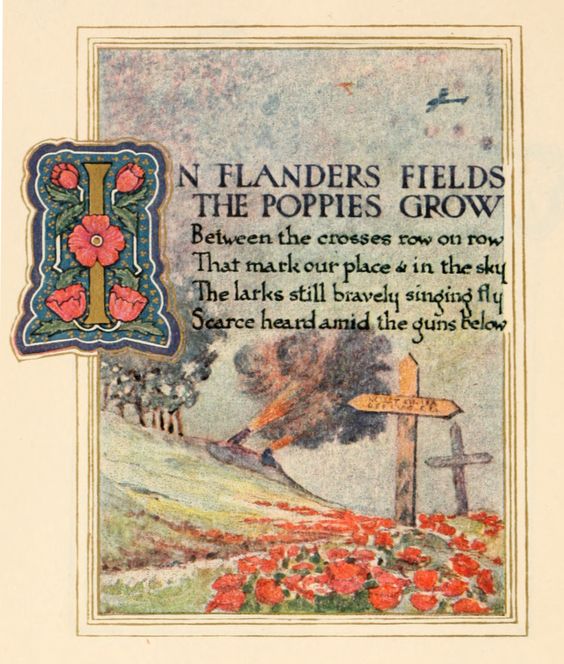
The long-cherished Memorial Day tradition of wearing red poppies got its start in 1915. While reading Ladies' Home Journal, an overseas war secretary named Moina Michael came across the famous World War I poem, "In Flanders Fields" by John McCrae. Moved by the poem, she vowed always to wear a silk poppy in honor of the American soldiers who have given up their lives for their country. She started selling them to friends and campaigned for the red flowers to become an official memorial emblem. The American Legion embraced the symbol in 1921 and the tradition spread to more 50 countries, including England, France and Australia.
 

With the National Holiday Act of 1971, Congress moved Memorial Day from May 30 to the last Monday in May. Critics complained guaranteeing the holiday is part of three-day weekend promotes relaxation instead of stressing the holiday's true meaning.

Since the 1950s, on the Thursday before Memorial Day, soldiers of the 3rd Infantry Division have placed American flags at each of the more than 260,ooo graves there. On the holiday itself, the President gives a speech and lays a wreath at the Tomb of the Unknown Soldier.

Whether you attend a parade or ceremony, visit a cemetery or memorial, wear a poppy or flag pin, or donate time at a veterans' facility, take a moment to say thanks to those men and women who paid the ultimate price for the freedoms we enjoy today.

Happy Memorial Day

My new release....

Thursday, January 26, 2023

The Civil War Trail of Tears - Plight of the Roswell Women by Jo-Ann Roberts


"Only think of it! Four hundred weeping and terrified Ellens, Susans, and Maggies, transported in springless and seatless army wagons, away from their loves and brothers of the sunny South, and all for the offenses of weaving tent cloth."

Disclaimer: Although there are no personal accounts written by the women themselves, their voices are still silent. However, the evidence that is available confirms their plight, and although the disappearance of the Roswell women is somewhat shrouded in mystery, it is easy to fit the pieces of the puzzle together. I am not condemning nor condoning the actions of the U.S. Army during the Civil War.

Several years ago, I watched a story on PBS about a little-known event of the Civil War, telling myself that if I ever had the time, I'd love to create a historical romance based on the life of one of those women who was branded a traitor and sent North.

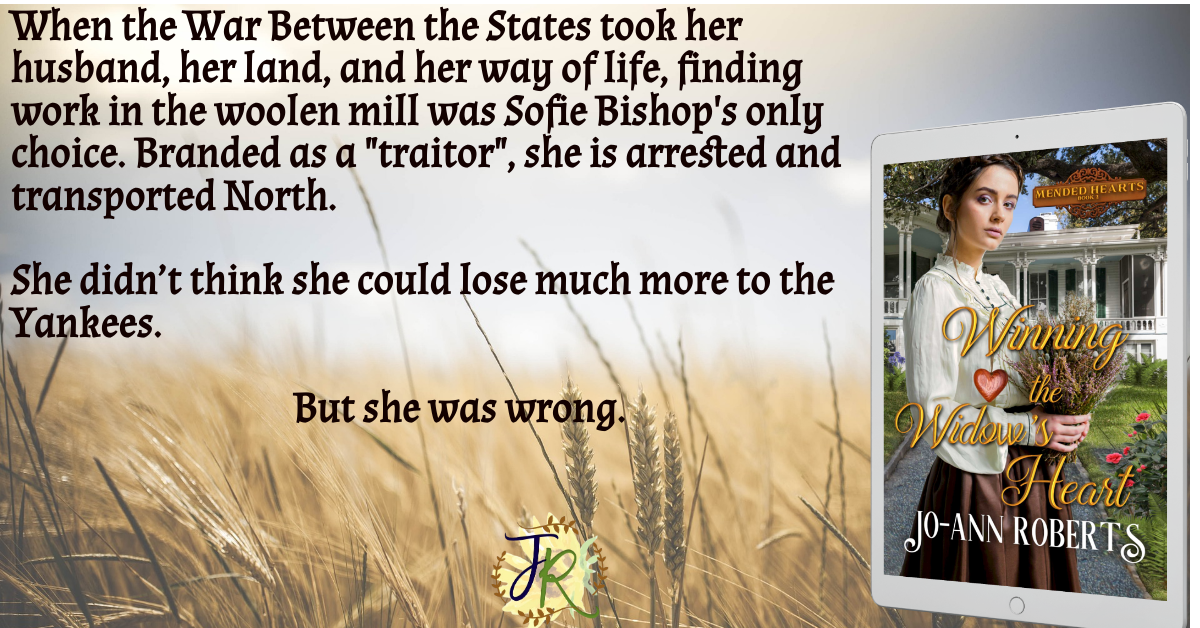
Fast forward to 2021 when I created the Mended Hearts series. Each book is based on true facts during the latter half of the Civil War. Marrying the Major released in November 2021, and Winning the Widow's Heart will release April 26th, finally telling the romance that had been in my heart and head for so long. The plight of the Roswell women has long been lost to the forgotten passageways of history, and this story is to give one woman a voice to her tragic tale.

At the time of the Civil War, 400 women were employed by the Roswell Mills in Roswell, Georgia. As production increased, so did the number of people living in the area. As the war dragged on the leading families of Roswell fled in advance of Sherman's army, leaving the fate of the mills and their employees to fend for themselves. These women had no choice but to work in the mills. In addition, they were forced to take their children with them. No doubt, they would have preferred to be elsewhere...tending home and hearth. Instead, these women wove cloth to outfit their husbands, sweethearts, fathers, brothers, and sons.

Roswell women in front of Ivy Woolen Mill 1863
Ivy Woolen Mill 1830s

Ivy Woolen Mill 2002

Sherman, looking for a way to get the army across the Chattahoochee, and thus into Atlanta, sent General Garrard to capture Roswell. Initially, the general promised no harm would come to the mill unless he found evidence they were supplying the Confederate army with goods (rope, canvas, tent cloth). Unfortunately, he did discover the letters "C.S.A." printed into the cloth and burned the mill. 

Upon learning this, Sherman sent the message:

"..."I repeat my orders, that you arrest all people, male and female, connected with those factories, no matter the clamour, and let them foot it under guard to Marietta, the I will send them by cars to the North."

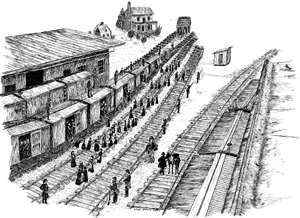
The women and children were given a short time to gather their belongings and then marched out to the Roswell town square where they waited long hours for supply wagons to transport them to Marietta. On their arrival, the millworkers were imprisoned in the abandoned Georgia Military Institute where they remained for the next week.
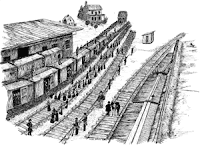
Marietta train station

From there, they were loaded into boxcars and given several days' rations. Not knowing where they were going or if they would return, they were not even the opportunity to leave messages for their loved ones.

"The train which arrived at Louisville from Nashville ...brought up from the South two hundred forty-nine women and children, who are sent by order of General Sherman..."

Once they arrived in the North, their hardships continued. Despite Sherman's assurances they would "live in peace and security", a very different future lay in store. There was no aid, no work and no shelter. Some of the refugees died of disease which reached epidemic proportions in late 1864.

Once the news of the atrocities suffered by these women reached the newspapers, both Northerners and Southerners were outraged.

"It is hardly conceivable that an officer bearing a United States commission of Major General should have so far forgotten the commonest dictates of decency and humanity...as to drive four hundred penniless girls hundreds of miles from their homes and friends to seek livelihood amid strange and hostile people."

So moved by the article, General Dodge, one of Sherman's commanders, took $100 from his pocket and instructed his chief surgeon to hire some of the Roswell girls to help care for his sick and wounded.

Whew, what an ordeal these women endured! Their fate of these workers has long been considered a mystery. Though a few returned to Roswell, many of them married men in Kentucky, Indiana, or Ohio and settled there. Returning to Roswell would have been very difficult especially for a young woman or single mother. Even if she obtained the means for the journey, she had no idea what awaited her in a land laid waste by Sherman's army.

Adeline Bagley Buice Grave Marker & Inscription
Roswell Mill Worker Caught & Exiled to Chicago by Yankee Army in 1964- Returned on Foot 1869

Below is a memorial dedicated to the 400 women and children who were lost to their families and to history.


For the past year--between writing for two MAPS series--I have read and researched this unfortunate, haunting, yet little-known episode in American history. I hope Winning the Widow's Heart will do the women's story justice.

Sources:
"The Roswell Mills: A Civil War Tragedy" by C.M. Dillman
"Days Gone by in Alpharetta & Roswell"
"The Long Walk Home: The Story of Adeline Bagley Buice
"Historic Roswell" by Joe McTyre, Rebecca Nash Paden

Here is a link to read more about Roswell, Georgia   CLICK HERE


Thursday, October 27, 2022

Sunshine & Shadows - A Brief History of Log Cabin Quilts by Jo-Ann Roberts


"The best kind of sleep beneath heaven above
is under a quilt made with love."

Some of you may not know that next to writing sweet historical romance, quilting is my passion. So, when I was invited to be part of a MAPs with a quilting theme, I enthusiastically said, "Yes!"  The Christmas Quilt Brides series will run beginning November 11th through December 16th.

The Log Cabin quilt, one of my all-time favorite patterns, plays a small role at the start and at the end of the romance between a widowed mother and a new-to-town deputy. 


                                                   Here's my Christmas Log Cabin quilt

The history of quilting, the stitching together of layers of batting and fabric, may date back as far as 3400 B.C. For much of its history, quilting was primarily a practical way to provide warmth. However, decorative stitches were often added, and many quilts are now art pieces.


The Log Cabin quilt pattern is one of the most beloved and recognized of quilt designs. Some fabric art historians believe it may be both older and newer than you might think. While it's natural to assume that this traditional block originated in the United States during the pioneer days, the origins of the block seem to go back much further in time and location. Similar designs have been found on ancient Egyptian mummies and in an English quilt predating 1830.

It was during the Civil War that the Log Cabin pattern first made a wide-spread appearance in the United States. The block name may very well have had a connection to the presidency of Abraham Lincoln. Soon, it became widely popular and was identified with the pioneer spirit and values of America.

Early Log Cabin blocks were hand-pieced using strips of fabrics around a central square. In traditional Log Cabin blocks, one half is made of dark fabrics and the other half light. A red center symbolized the hearth of home, and a yellow (or light) center represented a welcoming light in the window. Evidence, based on oral folklore, suggests that during the Civil War, a Log Cabin quilt with a dark center hanging on a clothesline was meant to signal a safe stop in the Underground Railroad.


In the latter part of the 19th century, many Log Cabin quilts were made by the foundation method with a muslin base. Wools, velvets, satins, and other nontraditional fabrics were used. Log Cabins of this period often had strips that were folded and laid down creating a three-dim emotional effect. For this reason, many late 19th century Log Cabin quilts do not have batting but are back and tied like Crazy Quilts.

Soon, variations of settings appeared with names reflecting the themes of the times. The White House Steps, Court House Steps, eight-sided Pineapple, Barn Raising and Sunshine and Shadows are some of the hundreds of name and pattern variations.

 
                                      Court House Steps                            Eight-Sided Pineapple

As Victorian quilts of wool and silk fell out of style in the 20th century, Log Cabins were often made of cotton prints and pieced with a running-stitch seam either by hand or machine.

Today, the Log Cabin pattern is still a favorite choice for scrap quilts and there is even a resurgence of Crazy Quilts made using Log Cabin blocks.

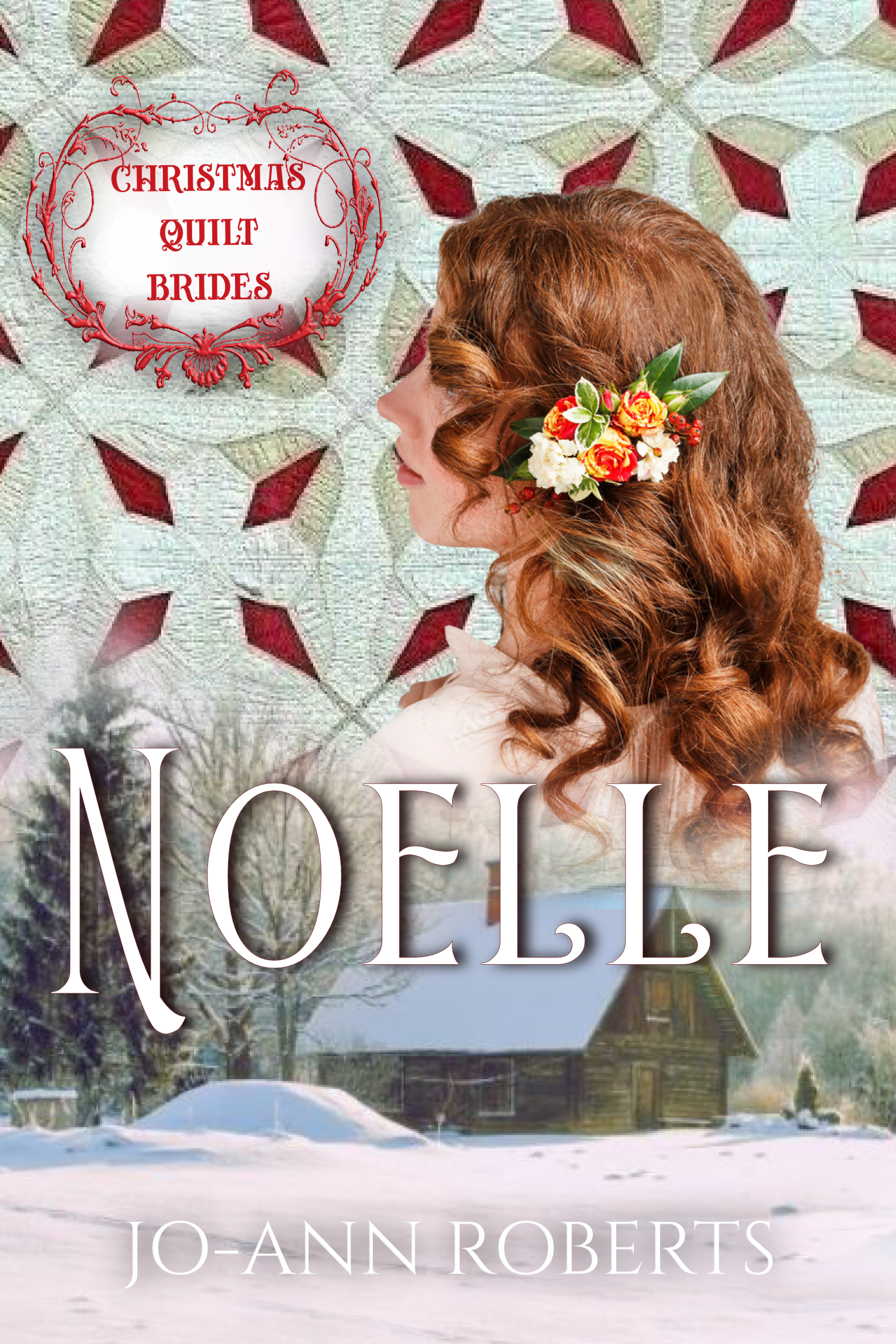
In my book, the heroine, Noelle Prentiss, belongs to the Circle of Friends. Each Christmas, the members make quilts for the new families who moved to Harmony, Kansas. The quilters are given the name of a family, and at the Christmas Eve Cotillion present the quilts to the new members of their community. I don't want to give away the ending but below is the quilt pattern I envision Deputy Cole West receives.


The Christmas Quilt Brides series is now up for pre-order. Here's the series link: CLICK HERE


A widow reluctant to love again…

A deputy determined to win her heart…

Two years ago, Noelle Prentiss lost her husband to an outlaw’s bullet. With two children to raise, a small farm to tend, and a job making quilts to sell at the mercantile, she’s doing her best to keep her property and life intact…until a man claiming to be the new deputy rides into her life captivating her children with his dog, his smile, and his easy-going charm.

When Coleman West agrees to stop by the Widow Prentiss’ home on his first day as a deputy in a small Kansas town, he has no way of knowing obeying the sheriff’s order will change his life. Spurned by love years before, he became a lawman, dedicated to protect and serve. Yet, he had no idea the widow and her children would call to his heart like no one before.

With Christmas looming, will the growing attraction between Noelle and the deputy reveal the gift of a second chance?

Or could a stranger from the deputy’s past threaten the man who captured her heart?


 ...And here's my current work in progress. Winning the Widow's Heart is Book Two in my Mended Hearts series. It releases in March 2023.


Thursday, June 24, 2021

Behind The Fight: Quilts of the Civil War by Jo-Ann Roberts

 Both Union and Confederate women rallied to the war effort when the Civil War broke out in 1861. Patriotic fervor abounded, with both sides certain the war would be short and decisive. Unfortunately, the war that was supposed to "only spill a thimble-full of blood" dragged on for four long and bloody years. Shortly after the siege of Fort Sumter, it became clear there was a desperate need for blankets, clothing, linens, and bandages.

Northern and southern women, forbidden by the cultural norms and decrees of the day were "forbidden" to enlist in their respective armies. Ever resourceful, these women "fought" the war and healed its wounds in their own way...from the home.


U.S. Sanitary Commission
Northern women, accustomed to gathering and sewing for a cause, changed their focus from abolitionist causes to helping soldiers. Established in 1861, the U.S. Sanitary Commission supported the sick and wounded soldiers of the Union Army. Soon the need for bedding became apparent and the commission added the collection of donated quilts to their activities.

At first, family quilts were donated but very quickly women began to sew quilts--seven feet by four feet--specifically for a military cot. Most quilts were made from available fabric, but sometimes were made by cutting up existing quilts then sewing them into three cot quilts.

Each quilt distributed by the Sanitary Commission had a patch, similar to the one below, sewn on the back of each quilt.


Soldiers' Relief Societies
In the South, where the population was smaller and more dispersed, and loyalties were more attached to individual states rather than the Confederacy, women's aid societies were scarce, and somewhat hindered in producing bedding for soldiers because they did not have a tradition of sewing for causes. In addition, wealthy women were accustomed to having slaves do the everyday sewing. Soon, these women, too, learned to sew. With the war being fought literally in their yards and fields, and their Confederate economy devastated by the Union blockade, the arrival of all goods was severely curtailed.

Although the South grew cotton, so entwined with the causes of the war, the North manufactured the cloth. Once pre-war textiles were depleted, fabric became scarce, with calico costing as much as $25 a yard by 1865. Many rural women and slaves turned to the art of spinning and weaving, as a popular song of the times proclaimed,
"Three cheers for the homespun dress the Southern ladies wear."

Homespun, once worn only by slaves and the very poor, was now worn proudly by Southern women.


Bazaars for the Northern Cause
Bazaars were held in the North where quilts were made with expensive fabric and donated to raise funds. These bazaars had already been established to raise money for churches and various causes. Now those funds went to the war effort. Although some publicly disapproved of women "working" in any commercial venture, patriotism won the day as a great deal of money was raised for Union supplies.


Southern Gunboat Quilts
   "The cause is a noble one, the effort is sublime, and the moral effect will reach far beyond the deadly projectiles which the contemplated gunboat can send. If the women take it up with a will, there is no word as fail."                        
The Mobile Register & Advertiser, 1862 

When the war shifted to the rivers, Southern women did what they could to buy desperately needed gunboats. Enthusiasm was high as communities vied to raise funds. Some of these more elaborate quilts used cuts from printed fabric in a medallion-style floral pattern. These motifs were appliqued to fabric in a method called broderie perse (Persian embroidery), requiring very fine sewing skills. Through the women's efforts, raffles, donations, and fairs, enough money was raised to pay for three gunboats.


By the spring of 1862, when Confederate defeats appeared likely that their seaports would fall to the Union, enthusiasm for this project waned. Instead, the women's efforts went to aiding their soldiers.


Everything and Anything Went into Making the Quilts
Quilts were generally made with basic fabrics and very simple block patterns. As the war progressed, time was an issue. The quicker the quilts could be made, the better.

Men's clothing, feed and fertilizer sacks, wool, twill flannel, old uniforms, sleeves, pocket-flaps, and pant legs were all used to make quilts. They were roughly put together with large "hen tracks" stitching. Practical and functional rather than beautiful, these quilts were made for warmth and comfort.

Old mattresses were torn apart for fiber to spin. Carpets, curtains. lengths of toweling were cut up and made into blankets.

Symbols of Allegiance
During the war, quilting became a necessary source of warmth for soldiers, as well as a significant source of revenue on both sides of the war effort. "Voting with her needle" was a common practice as some women would leave clues inside their quilt designs that might reveal their political opinions.

Confederate Silver, a basic patchwork design recalls the deprivations that started to appear in Louisiana. After a year and a half of war, even the basics were hard to come by.


Quilts of Gee's Bend
Boykin, an isolated, rural community in Alabama, is home to one of the most enduring examples of post-Civil War quilting. In 1816, Joseph Gee established a cotton plantation in the area. Gee left in 1845, and the property was sold but the name and slavery remained.

In recent times, Gee's Bend quilts have gained a worldwide following for their simplistic and improvisational style. Whether it was their isolated location or being forced to use whatever materials were on hand, their creations were a stark departure from classical quilts.


Unfortunately, very few original Civil War quilts made for soldiers have survived. As most of the quilts were hastily made and poorly constructed, many were used to the point of disintegration. These quilts got a great deal of wear, and more than likely not worth saving. Added to the fact that many soldiers were buried in their quilts, it is understandable why these quilts are quite rare.

By the war's end in 1865, more than 250,000 quilts and comforters were made for the Union soldiers. While the number of Confederate quilts made was far less due to the scarcity of material, Southern women rallied, continuing to raise funds for the sick and wounded any way they could.

Coming Early Fall 2021


"Come Home To Love...Where romance blossoms one story at a time."

Sign up for my newsletter 

Join my Facebook Group "Come Home to Love"


Thursday, April 22, 2021

Rosettes, Ribbons, and Rebellion

“…The Blue Cockade has made its appearance on our streets. We were pleased to see them worn during the present week, by men, boys, and even ladies. The spirit of secession is spreading and promises to soon become universal.”                                           

                                                                                                            The Southerner Newspaper

The English dictionary defines cockade as a rosette, feather, or knot of ribbon usually worn as part of a uniform, as a badge of office, or the like. The word’s origin is dated around 1709 and is derived from the French word ‘cocarde’ which is feminine of cocard meaning foolishly proud or cocky.

They are also sometimes called rosettes. They are comprise of a button, sometimes a strap, and some ribbon. At first they were used to add color to headgear. Eventually, people began to wear colors and designs that marked familial, national, or political affiliation.

Civil War cockades were usually handmade by the ladies, though occasionally they were offered by manufacturers and merchants. They were often created out of silk ribbon, but there is documentation for cockades made of cotton and wool as well.

Most pro-Unionists cockades were red, white and blue. And the most popular colors for pro-Secessionists were solid blue, solid red, or red and white. Today, some pundits have suggested that the colors of the cockades reflect our current political parties.


Since my current work in progress in the Mended Hearts series, Marrying the Major, is set in North Carolina following the surrender at Appomattox, I focused my research on Confederate cockades, specifically, North Carolina Secession Cockades.

As previously mentioned, the most popular color for secession cockades was blue, but solid red, or red and white ranked a close second. Like Union cockades, Confederate cockade designs included rosettes, rosettes with tails or ribbon design such as bows or knots. Some Confederate cockades were generic, others were designed specifically for a certain state or region.

Center emblems included military buttons, spangled stars, pictures of famous people, or natural products such as palmetto fronds, cotton boils, pine cones, and corn.


Confederate cockades were worn by men, women and children, African-Americans and Caucasians. They were often pinned to the breast or lapel, but could also be worn on hats, belts, and bonnets. 


The political opinions on secession in North Carolina were as varied as her cockades. Secessionists, unionists, and every viewpoint in between weren’t shy about debating Mr. Lincoln’s call for troops to fight against the Confederacy. In May 1861, North Carolinians reluctantly declared secession from the Union.  But once committed, North Carolina gave more troops and supplies, and lost more men than any other state in the Confederacy.

The Wilmington Journal made note of the state’s declaration of secession in their May 23, 1861 editorial:

“This morning the Wilmington Horse Artillery fired a salute in honor of the independence of the state. This is about the first salute fired here since the war excitement commenced.”

 The Artillery wore a red cockade on their hats when they fired the salute guns at this event.  

North Carolina, even in 1860, was known as  the Tar Heel state. Pine trees have long played a part in the state’s history. So it was only natural North Carolinians would want to put pine cones on their cockades.


"The Minute Men were organized as far back as November of 1860, and were conspicuous on the streets with their badges of ribbon with a pine-bur rosette."      Thomas Fanning Wood

“We noticed that several of the members wore the blue cockade; and some others wore a cockade made of red, blue and white leather. These are the colors of our national flag but whether or not worn to signify devotion to the Union, we did not inquire.”           The Newbern Weekly Progress

From blue cockades to red cockades to pine cones, flowers, ribbons and leather, North Carolina may have had the most variety in their secession cockades of any state in the Confederacy.

People have used ribbon rosettes for centuries to tell their stories. These little pleated ribbons were a outward sign of a deeply held sentiment. Many times it took courage to wear the cockades knowing the bearer could be attacked, arrested or shot, but in the end it was a visible expression of someone’s spirit and heart.

Sources:

 https://creativecockades.blogspot.com/p/american-cockades.html  

https://creativecockades.blogspot.com/p/north-carolina-secession-cockades.html  

https://www.reenactressresource.com/p/cockades.html

https://creativecockades.blogspot.com/2015/03/the-complete-guide-to-confederate.html