Showing posts with label #history. Show all posts

Thursday, March 11, 2021

Thermos History

 by Shanna Hatfield


My current work in progress is set in late 1914. The other day, I was doing some research as I wrote a scene with the hero packing his lunch in the wee hours of the dawn. 

Because I get so attached to my characters, I was thinking, "poor guy. Can't even take a thermos of hot coffee with him." 

Or could he? 

So I looked into the history of the insulated thermos. 


Scottish scientist Sir James Dewar invented the first vacuum flask in 1892. Though his cryogenics work, he saw a need to keep a chemical placed in a flask at a stable temperature. Dewar placed a glass bottle inside a larger glass bottle, then sucked the air out from between the two bottle walls. As he did this, he created a partial vacuum to keep the temperature of the contents stable. 

He hired a professional glass blower to make a sturdier flask which led to the manufacture of the Dewar Flask in 1898.

Dewar's glass blower, Reinhold Burger, and his business partner, Albert Aschenbrenner created scientific glass devices. While producing Dewar's flasks, they created a vacuum flask with a protective metal casing and secured a patent for it (something Dewar failed to do). 

The two business partners hosted a competition to name the bottle in 1904. A local resident submitted the word Thermos, derived from the Greek word thérme which means to heat.

In 1906, American businessman William B. Walker met Burger while traveling to Berlin. When he learned about the Thermos bottle, he realized the potential marketing in the United States. He made plans to import it, obtained the necessary patent rights, and began raising funds to open a manufacturing plant. 

Walker founded The American Thermos Bottle Company in Portland Maine on January 31, 1907. A factory was leased in Brooklyn, NY. Walker imported machinery and German glass blowers to train workers on the proper manufacturing techniques with Burger supervising the process. 

Soon, Thermos was being praised around the world for its design. It won the grand prize award at the Alaska-Yukon-Pacific Exposition in 1909 and continued to be honored at seven additional world expositions. 

Thermos Limited, located in England, produced the first machine-made glass filler, which became a huge breakthrough for speeding production. In automating the process, Thermos became a world leader in glass vacuum technology and manufacturing. 

Long before public relations became such a big business, Thermos worked hard to keep their brand in front of the eyes of the world. 

They produced a series of clever postcards in 1910. 


In 1912, the craze for Thermos bottles surpassed anything Walker had anticipated. Plans for a new site began and citizens of Norwich, CT, eager for the business it would bring to their city, helped raise funds to buy the land and build a factory.


The company even had a Thermos bottle car they drove around to generate publicity. The car appeared in a World War I victory parade. 

In 1925, the company merged with the Icy-Hot Bottle Co of Cincinnati, also established in the early 1900s. The combined company became known as The American Thermos Bottle Company. 

During World War II, the Thermos pint bottle and the workmen's lunch kit were granted the highest civilian priority rates, requiring facilities to keep up with the demand. More than 98 percent of what the factories produced during the war years were pint bottles, special bottles designed for military use, or bottles used in atomic energy laboratories. 

Their lunch kits received improvements in the 1950s. In 1953, they issued the first full lithographed steel lunch box with the image of Roy Rogers, selling more than 2 million units in the first year.

They introduced a partnership with Mattel™ in 1962, offering the first Barbie™ lunch box and Thermos bottle.


I remember my sister had a Snoopy™ lunch box and thermos quite similar to this one.

To celebrate 100 years of Thermos® products, a gala was hosted at the Smithsonian Museum of American History  in 2004 with a retrospective display titled "Taking America to Lunch," a historical glance at vacuum bottle and lunch kits from the 1880s-1980s.


So the very long answer to my research question was that yes, my hero could have taken along a thermos full of hot coffee to warm him on a cold December day. 

USA Today bestselling author Shanna Hatfield is a farm girl who loves to write. Her sweet historical and contemporary romances are filled with sarcasm, humor, hope, and hunky heroes. When Shanna isn’t dreaming up unforgettable characters, twisting plots, or covertly seeking dark, decadent chocolate, she hangs out with her beloved husband, Captain Cavedweller.

Shanna loves to hear from readers. Follow her online at:

ShannaHatfield | Facebook | Newsletter | BookBub | Pinterest | Goodreads | You Tube | Twitter

Find Shanna’s books at:

Amazon | Amazon UK | Barnes & Noble | Smashwords | Apple | Audible


Wednesday, November 18, 2020

TALKING WITH THE DEAD - CEMETERIES

 Post by Doris McCraw writing as Angela Raines

Photo property of the author

I recently came across the phrase 'talking with the dead'. Initially, I thought it sounded rather morbid until I thought about what it was really about. To me, it's connecting with the past in ways we might not think about. This also follows an earlier post about what inspires your stories. For those who would like to take a look at that post, here is the link: What Inspires Your Stories 

The second post on inspiring stories: Talking with the Dead- Photographs

This post will focus on Cemeteries.  I know you may be thinking I'm talking about seances and such, but it's more about reading the headstones, taking in the style, and sometimes researching to find out more. 

One headstone I saw drew me in. It is almost faded and I felt I needed to find out more before the name completely disappears. The name is Jahn Jankovitz. The dates listed are 1848-1915. You can see the stone had been broken at one time. So who was Jahn (John) Jankovitz? According to Ancestry, he was born in Austria. He owned property east of Colorado Springs near the town of Calhan. He was Catholic and died of blood poisoning. He had a wife, but she doesn't have a headstone in the cemetery that I can tell. That may be a story worth following up to find out what happened to her. 


Photo property of the author

Gerald de Coursey was born in 1833 in Pennsylvania. His father, Samuel, was a sea captain. He worked at an importing house in PA before moving to Colorado Springs in 1872 to work as the secretary/treasurer of the Colorado Springs Company and secretary of the National Land Improvement Company. He died at the age of forty-one. His obituary in the local paper sang his praises as a man who was good at details, modest, and generally liked my most. His life, when you start to put the puzzle pieces together, is fascinating. 

Another person who I've written about before, Helen (Hunt) Jackson, had this to say about de Coursey and his final resting place

"Below on the soft, pink planes is a grave. It lies in the shade of great pines on a low hill to the west of town. Surely, never did a little colony find ready to its hand, a lovelier burial place than this. Long ago there must have been watercourses among these low hills, else these pines could never have grown as high and strong. The watercourses are dried now and only Barron Sands lie around the roots of the great trees, but still they live and flourish as green in December as in June, and the wind in their branches chance endless chance above the graves. This grave that we love lies with four pines guarding it closely, on a westward slope which holds the very last rays of the setting sun. We look up into the glorious snow-topped peaks which pierce the sky, and the way seems very short over which our friend has gone."

Photo property of the author

Maybe the next time you look for inspiration or just information, you might spend some time among the stones of a cemetery. From there you can use Ancestry, Digital Newspapers to find even more about who is resting there. So much history and so many stories waiting to be told if we spend some time 'talking with the dead'. 

One of the stories I'm working on is about a runaway boy who is taken in by a spinster. Here is a short excerpt from the rough draft:

The snow kept falling and Harold was worried. Miss Geraldine was feeling poorly, and the wind had drifted the snow up past the windows. Now, while the wind had died down, the temperature was steadily dropping.

Moving away from the window, Harold walked back to the kitchen where he’d moved the daybed. It was the warmest room in the house, but the woodpile was getting low. He’d need to venture outside for more fairly soon.

Harold tried to be quiet, but Geraldine, her cheeks flushed, spoke, “Harold, it will be okay. We all have our time on the earth, but it isn’t forever.”

Kneeling, Harold took her hand in his large one, “Don’t talk like that. You will be fine before you know it.”

Geraldine patted his larger one with her free hand. “We never know when our time will come, we only can do the best we can while here.”

Harold started to say something but her eyes closed, her hand dropping away.

Damn snow!”


Doris Gardner-McCraw -


Author, Speaker, Historian-specializing in
Colorado and Women's History
Western Writers of America,
Colorado Author League,
Women Writing the West


Angela Raines - author: Telling Stories Where Love & History Meet

Thursday, October 8, 2020

Filing Cabinets

 by Shanna Hatfield

I have a large filing cabinet in my office that I use on a daily basis. I never gave much thought to it, other than the convenience it provides, until I was writing about a woman who runs a business in the 1880s and wondered what sort of filing system she might use. 

The need for a place to store documents has been around as long as documents have existed. 

It wasn't until the early part of the 1800s that something similar to today's filing cabinets came into existence. They were crafted from wood, quite often oak, and cabinet makers sometimes added a layer of insulation, often sawdust, inside the cabinets to make them "fireproof."

In 1868, Cameron Amberg & Co., was established. They produced their first cabinet letter files in 1875. They used metal in some of the drawers of their productions and have a patent date that goes back to 1878. By 1893, the name of the  company changed to Amberg Letter & File Co. Specifically, the company produced cabinets to hold letter files. 


This double letter cabinet is what I envision the heroine in my story using for her matchmaking business that involved an abundance of correspondence. 


During the 19th century, documents were often folded twice before being stored on edge with the flat part of the paper parallel to the fronts of the drawers. Document filing cabinets with narrow vertical drawers were quite popular with railroads, attorneys, and other business professionals.


There is some disagreement as to the true inventor of today's modern filing cabinet is, Edwin Grenville Seibels, or a Dr. Rosenenau. 


Edwin Seibels'  family owned an insurance firm in Columbia, South Carolina. He worked there as a teen. His family also owned a cotton plantation where he learned the cotton crop business as a child. He went on to hold a seat  in the South Carolina house of Representatives in 1909.

With his hands in cotton exports, insurance, and politics, he wanted to be an inventor. 

According to some sources, his interest in inventions drew him to design a revolutionary concept for organizing vertical files that became the filing cabinet we know today. 

The Globe Wernicke Company, known for stackable office bookcases, made the vertical cabinets and began selling them in the 1890s. One of the original filing boxes has been on display in the Smithsonian institute since the 1940s. 

To find out more about my heroine had her business, check out Grass Valley Brides.


Order your copy today!

What’s a matchmaker to do when the husband-to-be rejects the bride? 

Again . . .

Widowed as a young wife, Cara Cargill turned her head for business and love of romance into a successful mail-order bride enterprise. She’s never had a problem matching couples until one mule-headed man continues to refuse to wed the women she sends to meet him in Grass Valley, Oregon. In an effort to make a match he’ll keep and uphold her sterling reputation, Cara is desperate to find the perfect bride.


USA Today bestselling author Shanna Hatfield is a farm girl who loves to write. Her sweet historical and contemporary romances are filled with sarcasm, humor, hope, and hunky heroes. When Shanna isn’t dreaming up unforgettable characters, twisting plots, or covertly seeking dark, decadent chocolate, she hangs out with her beloved husband, Captain Cavedweller.

FREEBIE: 


Just for today, you can download Tad's Treasure free on Amazon! 


Wednesday, May 13, 2020

The Button Jar

by Shanna Hatfield


Buttons are such a simple thing. One we hardly give a thought to these days (until one pops off unexpectedly!). 

The history of buttons goes back centuries. At first, buttons were ornamental, used almost like jewelry is worn today - purely for decoration.

Dated at 5,000 years old, an ornamental button made from shell and found in Pakistan, is considered to be the oldest button in existence. Early buttons where made from shells, bone, horns, clay, bronze and wood.  Some of the buttons had holes, others shanks, but all were decorative.

Later, buttons were used for more practical duties. In ancient Rome, buttons were used to secure clothes, but they were a far cry from the functional buttons we're accustomed to seeing. 

 It wasn't until the 13th century that proper buttonholes were sewn into clothes. A nod is given to German's for developing the first button and button-hole closure system. Reportedly, returning soldiers brought the idea of buttons back to Europe when they returned from the Crusades.

 New possibilities in fashion arose, allowing for a more form-fitting shape. Buttons were still largely used by the wealthy during this period. In medieval times, buttons equated wealth, both for the maker and the wearer. It was even conceivable one who had gotten into debt could sell a precious button or two to generate funds.

Larger buttons were even used to hide keepsakes or stolen loot in secret chambers. 

Wikimedia Commons, Italy 1700s, buttons and buttonholes.
Those who didn't mingle with the wealthy had buttons, too. These tended to be crudely made, fashioned of materials found at home.

The Industrial Revolution ushered in mass production of buttons. The four-hole button we are all familiar with emerged. This period also saw popularity of brass buttons rise. Following the death of Prince Albert, Queen Victoria tended to wear black buttons so during the later years of the 19th century, black glass buttons were the most popular of all. 

Designers and fashionistas turned buttons into workhorse rather than a decorative accessory. Mass production and the invention of plastic, made them prevalent in clothing, despite the invention of the zipper. 

When I was a little girl, I used to love digging through the jar of buttons my mom kept near the sewing machine. She made many of my clothes, clothes for my dolls, and clothes for my nieces. 

The jar was filled with buttons she'd saved from clothes that had worn out, as well as odds and ends from various sewing projects. She'd learned to save buttons from my grandmother, who did the same thing - keeping every button because it might one day be useful again. 

I remember stringing buttons on a long piece of crochet thread and thinking I'd made a beautiful necklace. I also remember stringing matching buttons together on a piece of thin copper wire so they'd be easy to find when needed. There were buttons bursting with color. Buttons made of metal. And a few tiny delicate buttons that had once graced baby gowns. Mom would point out a few buttons that were special to her. 

Years went by. I moved out, got married, and started my own button jar. But the buttons in it never held the magical appeal of Mom's buttons. 


We recently lost my mother, but when I was visiting Dad over the weekend I happened upon a large tin filled with buttons. The tin used to belong to my grandmother and it was where she kept her buttons. It appeared Mom had added her buttons to the collection.


I can't tell you how much it means to me to have that tin of buttons. It's a sweet connection to my grandma and Mom, along with some wonderful memories of happy times spent playing with the buttons while listening to the whir of the sewing machine as Mom sewed something and hemmed it with love. 


In my sweet romance, Ilsa, she is a seamstress who defies the conventions of the day and runs her own business.  

One of the most talented seamstresses of her time, Ilsa Thorsen could sell her creations anywhere in the world, but she ends up on her sister’s ranch in the western town of Pendleton, Oregon. Disgusted with the dust, smells, and nearly every aspect of rural life, Ilsa wonders how she’ll survive, particularly with the arrogant Tony Campanelli constantly underfoot.
Enterprising and hardworking, Tony Campanelli embraces life in the small community of Pendleton with his sister and their friends, especially since Ilsa Thorsen moves to town. The uptight seamstress just needs to learn to have some fun and Tony’s convinced he’s the man for the job.
Get your FREE digital copy today!


USA Today bestselling author Shanna Hatfield is a farm girl who loves to write. Her sweet historical and contemporary romances are filled with sarcasm, humor, hope, and hunky heroes. When Shanna isn’t dreaming up unforgettable characters, twisting plots, or covertly seeking dark, decadent chocolate, she hangs out with her beloved husband, Captain Cavedweller.
Shanna loves to hear from readers. Follow her online at:


Friday, November 1, 2019

Victorian Witches by Kristin Holt

Kristin Holt | Victorian Witches
by Kristin Holt, USA Today Bestselling Author
of American Historical Romance 


Halloween may have passed, but America's fascination with witches has not. Nor has our delight with "Fright." How many witches came to your door last night, trick-or-treating? A few, I hope, that were not also zombies. You know: zombie witches, zombie brides, zombie doctors...

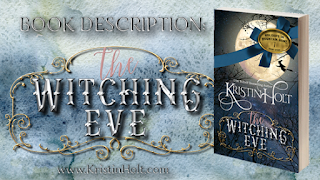
My grander reason for sharing a few tidbits about witches in American history is that we hear far more about the Salem Witch Trials than we hear about witch trouble in the Old West. Wow! Before finding these gems midst bazillion pages of newspaper archives, I'd gathered much about Halloween in the nineteenth century United States. Fascinating! That enjoyment of holiday parties, Halloween, and the late 1800s became The Witching Eve, a short story. (Just 99-cents. Better yet, it's included with your Kindle Unlimited subscription.)


Victorian Witches

Yes, Victorian America, melting-pot that it was, did indeed believe in witches. True, not many were caught up in the fervor surrounding earlier decades and centuries, but some did bring their superstitions from homelands.


Witchcraft: Irish Carpenter's Peculiar Affliction (1881)


Kristin Holt | Victorian Witchcraft. Newspaper heading from Lancaster Intelligencer, Saturday Evening, January 15, 1881. "Witchcraft!"
Lancaster Intelligencer of Lancaster, Pennsylvania. Saturday, Jan. 15, 1881. "Witchcraft!"
This delightful vintage newspaper article was published in Lancaster Intelligencer on Saturday Evening, January 15, 1881. As to not miss a single element of historical value, I've elected to transcribe the article word for word, with precise spelling (even when it's an error) and punctuation. Enjoy!

A Carpenter Bewitched.
New York Times.
The witches may or may not have all been burned in New England a century or two ago, but there are persons on Staten Island who are positive that one witch is still alive and that she has made them the victims of her dark powers. However this may be,  the idea of advertising in a New York daily newspaper for a person who can cure witchcraft is certainly a unique one ; and when the following advertisement appeared in a morning newspaper yesterday a reporter was immediately dispatched to Staten Island to learn something about the witch :
PORT RICHMOND. S. I.--IF THERE IS ANY person in New York that can cure witchcraft, man or woman, black or white, let them come and cure if they can, and no cure no pay. RICHARD MAY, Port Richmond, S.I.
It was hard work to find Mr. May in Port Richmond, but at length it was learned that he lived in one of the side streets (the Port Richmond streets are nearly all side streets), that he was an old man, that he had been a carpenter, and that he and his wive lived alone together. The house pointed out was a neat little story-and-a-half cottage, painted white, with an old fashioned well-curb in the front yard and a piazza across the front. A brisk knock at the door brought out a little old woman, wrinkled and gray, but withal plump, and bearing on her face the kindly look of a rural Irish woman. She wore the same cloth hood, in the shape of a sun-bonnet, and the same short skirts that such women always wear. She said that Mr. May lived there, that he was at home, and that he could be seen. And so saying she ushered her visitor into a room opening off the little hall, evidently the living room of the family. It was a very small room, but large enough for so small a family. Its furniture, though scant, was comfortable, and there was the air of comfort about the place that is always to be found in the home of an old Irish family. There was a table between the two windows, and a rocking chair, and a small stool, and a little cooking stove with red-hot lids and a tea kettle on it humming the same old tune that tea kettles hum to bairns and grannies year in and year out and never grow tired. An old-fashioned tin candlestick on the table held an inch or two of tallow candle, and two thick green paper shades shut out the world. In an arm chair by the stove, so close to the fire that it was a miracle he did not scorch, sat a broken old man, learning far over the stove, rubbing his hands together as if they were cold. This was Mr. Richard May, the advertiser, who was in search of some one to cure him of witchcraft.
"Yes," said he, in answer to the question. "I had the advertisement put in ; at least my wife did. She has to attend to everything, now. Can you drive out witches?"
The reporter was inclined to think that he might drive on out, if it was a small witch and he had a big club ; but he replied, with some caution, that he proposed to publish an account of this witchcraft in the Times, and that such publicity would certainly have a good effect upon the witch, and perhaps drive it out altogether.
"Yes," said the old man, "yes. I don't know but it might. I'm sure I wish it would. It's very hard to be bewitched this way, and kept away from work and left to starve. But I can't talk much--the witch won't let me talk much. My wife can talk."
On the subject of his wife's ability to talk, the old man's intellect was still sound. She straightened up some little things about the room, and went into an adjoining closet and brought out a fresh candle, drew a small and low four legged stool of home manufacture up by the side of the stove and sat down. It would have been evident to the least experienced observer that she had a story to tell, and that she was about to tell it.
"He hasn't done a stroke of work," said she, "for four years. There he sits all day, just as you see him now. And me, too.. I'm all wrong. I am bewitched, too, but not as bad as him. I'll tell you all about it, and you can write it down so as not to forget it. Think you can remember it? Well, some people have great heads. If we were only wise enough we could get over this, and there are plenty of people could cure us--people with great learning--if we could only find them. It was all along of that woman. She did it all."
"What woman?"
"The woman that lived in this house with us. There was only us two, and there are nine rooms in the house, so we had plenty room and to spare, and we rented her two rooms. That was eight years ago. She had a big room up stairs, and a little room for a kitchen, and then she had the back cellar, for we didn't use it, and nobody else went into it. She had a husband then, and he made plenty of money. He was a wheelwright and got $3 a day. She was all right then, and just like any other woman. But by and by her husband got took just like my old man was. She bewitched him. They were Scotch folks, and she sent him back to England and got rid of him. Then she began. The first I noticed wrong about her she began to have the black eye. Did you ever see a witch?"
The reporter's experience had been confined principally to witches of the ham sand kind, but he replied that he had frequently seen persons who looked as if they might be possessed, and this was strictly true.
"Well," the old woman continued, "you know they always have a black eye. No matter what color their eye is before, when they get to be witches one eye gets black. Well, my old man's began to turn black--the same eye. Then his hands began to draw up, and he couldn't do any work. I knew it in a minute what was the matter with him, so I began to watch this woman. Her room was right over ours, and we hard great rackets up there every night as if somebody was chasing her about the room. So one morning early I went up there and looked through a hole in the door. We never could get into her room, for she kept the door locked. What did I see? There was a great big white towel stretched over the rocking chair ; you'd thought there was a corpse there. And on the towel was laid an oval bit of wood. That was her circle ; witches always work with circles, you know. And by the side of that was a long slim stick of wood. That was too much for me. I always knew there was witches, but I never thought one of them would live in my house. So I went to her and told her what she done to my husband, and told her she must leave. She said to me, says she, 'Mrs. May," says she, 'I didn't do it. Get a Bible and I'll swear to it.' Then I says to her, says I. 'If you swore to it on a thousand Bibles I wouldn't believe you ;' for you know witches' oaths ain't of any account ; they'll swear to anything. She wouldn't go, so I went to a justice and had her put out."
"And where is she now?"
"She is still here in Port Richmond, and she's still got my husband bewitched. When she was gone one of the neighbors come to me and says : "Don't you go into that cellar, Mrs. May. That's where witches live, in cellars, and maybe she's put something on the floor to make you lame." I know witches can do that, but I thought maybe I might find something in the cellar that would bring my old man out all right. So I went in very careful. I walked around on tiptoe, and went clear to the bank of the cellar before I found anything. Then I leaned over and looked back of the chimney, and there it was--a bundle of black rags, done up in a--in a--a bunch like, so you might have thought it was a black cat a layin' there dead. And there was a big bundle, too ; and I opened that, and it was a pair of men's pantaloons, with buttons on. And they were all covered with a little fine white powder, like flour ; just like there is on the skin of a person that's bewitched. I've got it on me, and it makes spots like pin-heads on the skin, with little circles round them. And my old man's got them on him. But that ain't the only thing. He's got hair on his back, and that's a sure sign. Whenever you see a person with hair on their back you may know they're bewitched. You know that, don't you?
"It's a sure sign, and my old man's got it. See how he sits there and mopes. But that wasn't all I found. I looked very careful on the floor of the cellar, and I found a little bunch of black hair all wadded up and half buried. That was a good thing when I found that, for it saved my old man's life. It looked just like as if it was a piece cut off of a little girl's plait--you know how they plait little girls' hair. Well, I brought it up and laid it on the table, and it began to move around. It rose up, and that frightened me, and I threw it in the fire and burned it up. If it hadn't been for that my old man wouldn't be alive now. I've heard say that's the way witches work, with hair. When they bewitch a person they take a bunch of hair and bury it, and as soon as the hair rots the person dies. But I burned that hair, and it didn't rot, so the old man didn't die. But there he is ; just look at him. I think a witch is worse than a murderer ; don't you ? For a murderer only just kills you once, and it's over, but a witch kills you by inches. I think witches out to be killed. They used to kill them in this country, and they kill them now in Scotland. This woman is a Scotch woman, and I think she ought to be put out of the way, and not let to go about bewitching folks. There is wise men can cure bewitched people, and I only wish we could find one."
"Has anyone come yet in answer to the advertisement?"
"No, not yet ; but i hope they will. They could get plenty money, for witches always have more money than they know what to do with, and they ought to get the money from her ; she is the cause of all our trouble. Don't you know somebody in York that can drive out witches?"
The reporter was not acquainted with anybody who made that branch of science a specialty.
"Just look what she's done for us." the old woman went on. "Here's this house, with nine rooms in it ; we had it all clear, but my husband hasn't done a day's work for over four years, and we had to have some money ; so I went to work and I put a mortgage of $600 on it, and that's what we live on. It's all of the witch, and she ought to be made to pay for it."
"Have you anything to try and cure the old man?"
"Yes, we've done everything," she replied, "but it ain't any use. He's bewitched, and we've got to have some wise man that knows how to drive out witches. That's why I put the notice in the paper to try and find one."
The old man is apparently well on toward 70. His back is bent, his hands are drawn up, and his voice is feeble. It is more than probable that a wiser man even than he who would drive out witches can do nothing for him, and that his crooked body will be straightened no more this side of a grave.


Thoughts

Wow.

Shocking, isn't it?

From where I sit, in late 2019, the thought of such things as planting hair to kill someone (once that planting rots) or the supposition that "a witch" cannot tell the truth, even under oath. Imagine the woman who'd been evicted from the May residence under pall of witchcraft. With many townsfolk superstitious enough (or Irish enough, or Scottish enough) to believe the accusation.

Talk about #19thCenturyProblems

Modern Witchcraft: Witches in New Mexico (1888)


Kristin Holt | Victorian Witches: Modern Witchcraft in New Mexico. The Wichita Daily Eagle of Wichita, KS on June 7, 1888.
The Wichita Daily Eagle of Wichita, Kansas on June 7, 1888, "Modern Witchcraft: Marvelous Powers Attributed to Witches in New Mexico."
Allow me to share one more vintage newspaper article about witches in the late nineteenth century--this one squarely in the American Old West. From The Wichita Eagle of Wichita, Kansas on June 7, 1888, "marvelous powers (are) attributed to witches in New Mexico." This article was apparently of such interest at the time of publication that it was included in The Journal of American Folklore, Vol. 1.

Once more, to provide the best view of vintage newspapers, with the greatest ease in reading (and online searching), I've transcribed with care to retain original spelling, typesetting, and punctuation. (Be prepared for typesetting errors a full 131 years old.)

New Mexico, acquired by the United States in 1848, under the treaty of Guadalupe Hidalgo, has a present population of about 175,000, including about 30,000 Indians and 25,000 Americans (as we use the term in the east). The rest are Mexicans, with a few fine old Spanish families scattered here and there. Among the native population superstition is practically universal and has many strange manifestations  Despite the laudable efforts of our Pilgrim forefathers to exterminate the pestilent breed of witches, there are still witches and to spare in New Mexico, and the natives, almost to a man, believe in and fear them. [emphasis added] They are generally women, but sometimes men; usually of middle age, but occasionally very old, and rarely very young. It was my privilege the other day to photograph three live witches--the first, I venture to say, that ever faced a camera. They live in San Rafael.
Our witchology is full, detailed and graphic. Every paisano in New Mexico can tell you their strange habits, their marvelous powers and their baleful deeds. They never injure the dumb animals, but woe to the human being who incurs their displeasure! Few indeed are bold enough to brave their wrath. If a witch ask for food, wood, clothing or anything else, none dare say her nay   Nor dare any one eat what a witch proffers for if he do, some animal, alive and gnawing will form in his stomach. By day the witches wear their familiar human form, but at night, dressed in strange animal shapes they fly abroad to hold witch meetings in the mountains or to wreak their evil wills. In a dark night you may see them flying through the sky like so many balls of fire, and there are comparatively few Mexicans in the territory who have not seen this weird sight! For these nocturnal sallies the witches wear their own bodies, but take the legs and eyes of a coyote or other animal, leaving their own at home. Juan Perea, a male witch, who died here in San Mateo some months ago, met with a strange misfortune in this wise   He had gone of with the eyes of a cat, and during his absence a dog knocked over the table and ate up Juan's own eyes, so the unfortunate witch had to wear cat's eyes all the rest of his life.

RIDING WITH THE WITCHES. 

Before they can fly, witches are obliged to cry out "Sin Dios, sin Santa Maria!" (without God and without the Holy Virgin). Whereupon they mount up into the air without difficulty   If you are on good terms with a witch you may persuade her to carry you on her back from here to New York in a second   She blindfolds you and enjoins strict silence   If you utter a word you find yourself alone in some vast wilderness, and if you cry "God save me!" you fall from a fearful height to the ground--but are luckily never killed by the fall. There are several courageous people in the territory who have made journeys thus upon the backs of witches. At least they are ready to swear so and they find 10,000 believers to one skeptic. One striking peculiarity about new Mexico witches in that any one named Juan or Juana (John or Jane) can catch them, and that no one else can except a priest with holy water   To catch a witch, Juan draws a nine foot circle on the ground, turns his shirt inside out and cries "Veuga, bruja!" (come, witch), whereupon the witch has to fall inside the circle and Juan has her completely in his power   This ability to catch witches, however, is seldom exercised, for let Juan once catch a witch and all the other witches in the country join hands and whip him to death.
And now, having briefly outlined the nature of witches here, let me give you some veracious anecdotes of their exploits--religiously believed throughout this section. Lorenza Labadie, a man of prominence in New Mexico, once unknowingly hired a witch as a nurse for his baby   He lived in Las Vegas   Some months afterward there was a ball at Peurta de Luna, a couple of hundred miles south, and friends of the family were astonished to see the nurse and baby there.  "Where is Senor Labadie and his family?" they asked. The nurse replied that they were at a house a  few miles distant, but too tired to come to the ball. The friends went there next day and found the Labadies had not been there. Suspecting the nurse to be a witch, they wrote to Don Lorenzo, who only knew that the nurse and baby were in his house when he went to bed, and there also when he woke up. It being plain, therefore, to the most casual observer that the woman was a witch, he promptly discharged her.

 PECULIAR EXPERIENCES.

 A pretty girl at San Rafael, just married, had a quarrel with one of the witches there. That night a strange cat came into the room. Feeling sure it was a witch, she locked the door and window, and her husband came in with his six shooter, but the cat melted into thin air before he could shoot. A little later an owl suddenly appeared, flew against Margarita's cheek and cut it, and then disappeared as mysteriously as the cat had done. A horrible sore formed on the cheek, and could not be cured till Margarita appeased the witch with presents.
Jose Patricio Marino, one of the most respected men in San Mateo, had a most unfortunate experience not long ago. There was then in town a witch named Marcellina, a thin, withered old man of perhaps 50 years. Marino had the bad luck to offend her, and she retaliated by turning him into a woman! He was in this predicament for several months, as he is keen to swear, and recovered only by bribing the witch to restore him to masculinity  Marcellina found witchcraft an unhealthy profession, for last year two men whom she had bewitched caught her and beat her to death with clubs, right here in this pretty little village of San Mateo! Anything done to them? Well, hardly!--San Mateo (N.M.) Cor. Globe--

Invitation

I've heard of Skinwalkers (witches) in Navajo legend. Glimpsing the inherent argument between Californios' Catholic faith and folklore of Native Americans, Spaniards, and mestizos, I can better understand.

To me, it seems their ongoing stories of Good v. Evil, Right v. Wrong, With God v Without God (and the Holy Virgin) are a way of explaining day to day events. Spoiled milk. An illness or untimely death. Failed crops. Things that go bump in the night.

Hmmm.... What do you think? Please scroll down and comment. "Conversation" is the best part!

By Kristin Holt 


Kristin Holt | USA Today Bestselling Author Kristin Holt writes Sweet Romances set in the Victorian American West


Related Articles

 
Kristin Holt | Book Description: The Witching Eve


Kristin Holt | 19th Century Halloween Party

 
Kristin Holt | Victorian America Celebrates Halloween


Kristin Holt | A Victorian American Halloween

Kristin Holt | Scary Books, Scary Movies, Scary True History


Kristin Holt | Victorian America Observed Groundhog Day


Kristin Holt | Victorian America's Sense of Humor


Copyright Ⓒ 2019 Kristin Holt LC