Showing posts with label #writing. Show all posts

Thursday, August 10, 2023

Celebrating 10 Years In a Writing Career


The summer of 2013, I was being pushed to put in more and more hours at work until I was clocking somewhere between 50-60 hours a week. 
At a job that felt like it was about to suck the life out of me. 
Demands were ever-increasing and there was nothing no human without super powers could have done to meet them. 
I'd come home so exhausted and frustrated every night and still try to get in an hour or two of writing. 
After one particularly harsh day at work, I came home near tears, at a loss to know what to do to make things any better at work. My boss was also the owner of the business, so it wasn't like there was anyone up the chain of command I could talk to about the situation. 
The next morning, I'd barely arrived at work when my husband, Captain Cavedweller, called and told me I needed to quit. 
We'd discussed several times what our finances would need to look like before I left behind a steady paycheck and benefits. 
Even though we weren't quite there yet with the income from my books, he encouraged me to let go of the safety net of my day job and pursue my dream of writing full time. 
So I did.
I gave me two weeks' notice and left work for the last time on August 8, 2013. 
It was terrifying to take such a big leap of faith, but it has blessed me - us - so much in the past ten years. I am grateful every day for the privilege of doing something I love and being able to make a living from it. 
Even when I was a little girl, I dreamed of creating stories I could share with others that would make them happy.
Now, those dreams have come true and I'm so incredibly thankful. 
To celebrate my 10th anniversary of walking away from what was secure to embrace an unknown adventure, I'm hosting a party in my Facebook group tomorrow.


I hope you'll join me for a day of fun, games, giveaways and more!


USA Today bestselling author Shanna Hatfield is a farm girl who loves to write. Her sweet historical and contemporary romances are filled with sarcasm, humor, hope, and hunky heroes.

Shanna creates character-driven romances with realistic heroes and heroines. Her historical westerns have been described as “reminiscent of the era captured by Bonanza and The Virginian” while her contemporary works have been called “laugh-out-loud funny, and a little heart-pumping sexy without being explicit in any way.”

When Shanna isn’t dreaming up unforgettable characters, twisting plots, or covertly seeking dark, decadent chocolate, she hangs out with her beloved husband, Captain Cavedweller.

Wednesday, March 15, 2023

Those Random Books I Use For Research


Post by Doris McCraw aka Angela Raines

Photo (c) and property of the author

This month I thought I'd list ten of those random books that contain unique information. I hope you all enjoy some fun reading.

1. "I Never Knew That About Colorado" by Abbott Fay

2. "The American Family Keepsake" by The Good Samaritan and all other books in the American Antiquarian Cookbook Collection.

3. "Midas of the Rockies: The story of Stratton and Cripple Creek" by Frank Waters

4.  "Cripple Creek Days" by Mabel Barbee Lee

5.  "The Bad Old Days of Colorado: Untold Stories of the Wild West" by Randi Samuelson-Brown

6.  " A Quick History of Victor: Colorado's "City of Mines" by Leland Feitz

7.  "Alias Soapy Smith: The Life and Death of a Scoundrel" by Jeff Smith

8.  "The Prospector: Story of the Lidew of Nicholas C. Creede" by Cy Warman

9.  "Around Monarch Pass" by Duane Vandenbusch

10. "The Cripple Creek Strike" by Emma F. Langdon

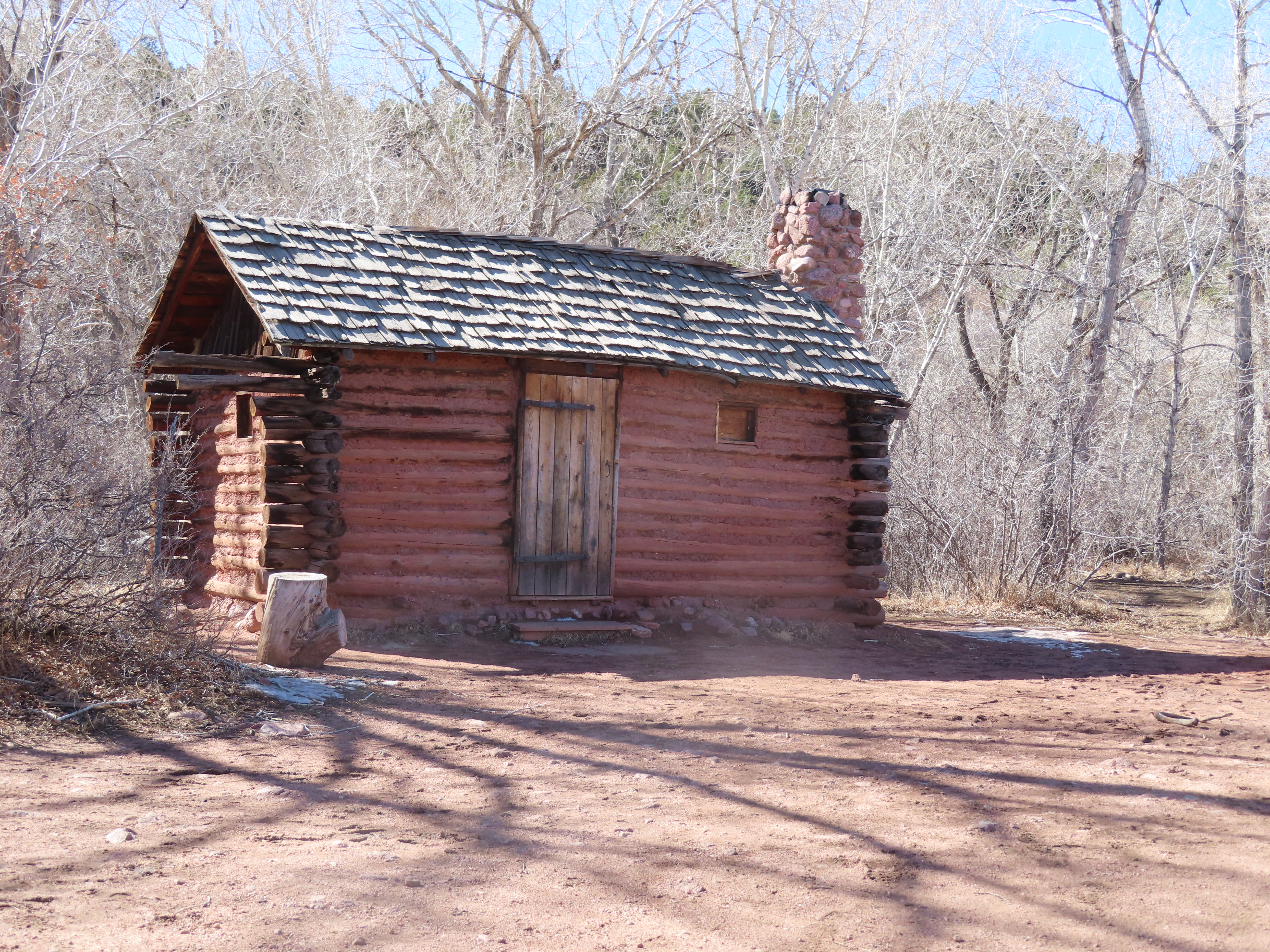
Garvin cabin - Rock Ledge Ranch Historic Site
Photo (c) and property of the Author

I have used and/or own a number of these books. Yes, I realize most have to do with Colorado, but all are about life and times in the early West. 

In addition to my non-fiction, such as "Under the Stone: Early Women Doctors in Evergreen Cemetery", most of my fiction, which takes place in Colorado is grounded in the history of the state and region I wrote about. To me, having those pieces of history adds realism to the story.

Until Next Time: Stay safe, Stay happy, and Stay healthy.

Doris


Wednesday, June 16, 2021

WHY & HOW?

 Post by Doris McCraw

writing as Angela Raines


Why do we blog? How do we get readers to visit our musings and research? These questions have been on my mind for some time. 


I think most of us blog to have our work recognized. We want people to know what we have been doing, what we've been working on, and what excites us. We enjoy the feedback we used to get when people would comment. But like everything else, we have to contend with those who would ruin it for so many others. I'm speaking of the hackers and spammers. 

Blog sites have reverted to previewing comments, and when the administrators are busy, those comments are overlooked.  If you do let comments appear without vetting them, you get some pretty ugly or useless pieces in those comments. Then the administrators have to go in and delete those inappropriate posts. I've wondered about solutions, for I don't like to highlight a problem without offering solutions, but this one has me stumped.

Additionally, with so many blogs out there, the competition is pretty fierce. Yet, those who love what we share and write deserve to hear from us. I confess it is for them that I continue to offer my research, my thoughts, and my writing. Even when readers of blogs drop off during holidays and summer, it is for the special people, the readers, that I write.

So may everyone enjoy what the year continues to offer and I look forward to what others have to share.

On a more exciting note, my bookversary for the first novella I had published is fast approaching. That story piece has led to a most enjoyable ride, that is still happening, just a bit slower than expected with life's interruptions.


 An excerpt:

      Clara hummed as she put the finishing touches on the venison roast. In the two years

since arriving in Agate Gulch she prepared an annual special meal for friends. The past year was

especially wonderful. Even the gingham curtains on the restaurant windows smiled with her

tune. She felt she could finally put Henrietta 'Ettie' Heath to rest. Clara Cross was her life now.

Oliver was in the past and would stay there.

     Sensing someone behind her, as she turned her friend Sally was standing in the door.

     “You know you should sing in the church choir,” said Sally.

     “Oh I couldn't sing in public. The idea of all those people looking at me and judging, I

couldn't stand it,” replied Clara with a shudder.

     Sally's millinery shop was next to the restaurant. They both lived in homes behind their

businesses. During the past winter, she and Sally developed a strong friendship. Still, how

could Sally, who was petite and pretty, understand Clara's fear of being laughed at. Music was

her special place and any criticism would destroy that. Something most people didn't understand.

     “Clara, they would love you. Just as they love your cooking and your kind heart.”


Until next time, happy reading, writing, and have a wonderful rest of the summer.


Doris Gardner-McCraw -

Author, Speaker, Historian-specializing in
Colorado and Women's History

Author of the "Agate Gulch" novellas and
the "Kiowa Wells" novels.

Angela Raines - author: Telling Stories Where Love & History Meet

Wednesday, November 18, 2020

TALKING WITH THE DEAD - CEMETERIES

 Post by Doris McCraw writing as Angela Raines

Photo property of the author

I recently came across the phrase 'talking with the dead'. Initially, I thought it sounded rather morbid until I thought about what it was really about. To me, it's connecting with the past in ways we might not think about. This also follows an earlier post about what inspires your stories. For those who would like to take a look at that post, here is the link: What Inspires Your Stories 

The second post on inspiring stories: Talking with the Dead- Photographs

This post will focus on Cemeteries.  I know you may be thinking I'm talking about seances and such, but it's more about reading the headstones, taking in the style, and sometimes researching to find out more. 

One headstone I saw drew me in. It is almost faded and I felt I needed to find out more before the name completely disappears. The name is Jahn Jankovitz. The dates listed are 1848-1915. You can see the stone had been broken at one time. So who was Jahn (John) Jankovitz? According to Ancestry, he was born in Austria. He owned property east of Colorado Springs near the town of Calhan. He was Catholic and died of blood poisoning. He had a wife, but she doesn't have a headstone in the cemetery that I can tell. That may be a story worth following up to find out what happened to her. 


Photo property of the author

Gerald de Coursey was born in 1833 in Pennsylvania. His father, Samuel, was a sea captain. He worked at an importing house in PA before moving to Colorado Springs in 1872 to work as the secretary/treasurer of the Colorado Springs Company and secretary of the National Land Improvement Company. He died at the age of forty-one. His obituary in the local paper sang his praises as a man who was good at details, modest, and generally liked my most. His life, when you start to put the puzzle pieces together, is fascinating. 

Another person who I've written about before, Helen (Hunt) Jackson, had this to say about de Coursey and his final resting place

"Below on the soft, pink planes is a grave. It lies in the shade of great pines on a low hill to the west of town. Surely, never did a little colony find ready to its hand, a lovelier burial place than this. Long ago there must have been watercourses among these low hills, else these pines could never have grown as high and strong. The watercourses are dried now and only Barron Sands lie around the roots of the great trees, but still they live and flourish as green in December as in June, and the wind in their branches chance endless chance above the graves. This grave that we love lies with four pines guarding it closely, on a westward slope which holds the very last rays of the setting sun. We look up into the glorious snow-topped peaks which pierce the sky, and the way seems very short over which our friend has gone."

Photo property of the author

Maybe the next time you look for inspiration or just information, you might spend some time among the stones of a cemetery. From there you can use Ancestry, Digital Newspapers to find even more about who is resting there. So much history and so many stories waiting to be told if we spend some time 'talking with the dead'. 

One of the stories I'm working on is about a runaway boy who is taken in by a spinster. Here is a short excerpt from the rough draft:

The snow kept falling and Harold was worried. Miss Geraldine was feeling poorly, and the wind had drifted the snow up past the windows. Now, while the wind had died down, the temperature was steadily dropping.

Moving away from the window, Harold walked back to the kitchen where he’d moved the daybed. It was the warmest room in the house, but the woodpile was getting low. He’d need to venture outside for more fairly soon.

Harold tried to be quiet, but Geraldine, her cheeks flushed, spoke, “Harold, it will be okay. We all have our time on the earth, but it isn’t forever.”

Kneeling, Harold took her hand in his large one, “Don’t talk like that. You will be fine before you know it.”

Geraldine patted his larger one with her free hand. “We never know when our time will come, we only can do the best we can while here.”

Harold started to say something but her eyes closed, her hand dropping away.

Damn snow!”


Doris Gardner-McCraw -


Author, Speaker, Historian-specializing in
Colorado and Women's History
Western Writers of America,
Colorado Author League,
Women Writing the West


Angela Raines - author: Telling Stories Where Love & History Meet

Wednesday, May 20, 2020

FATIGUE AND FRUSTRATION

Post by Doris McCraw
writing as Angela Raines

Photo property of the author
As we make our way through this interesting time of staying at home, I'm sure we deal with the fatigue of all the news and frustration of things going so slowly. I know I am, and I still get to work from home. However, being at home has not translated into more writing. On the plus side, I've been able to indulge my love of hiking while still being safe. (For those who follow my personal Facebook posts, you can see some of the places I have traversed)

I thought a look back at some of the challenges faced by our ancestors might be something to ponder. Of course, there were the outbreaks of cholera, malaria, smallpox, and measles. We've all heard of the 1918 Spanish flu pandemic and the dustbowl from the early 20th century.

But what about smaller areas that had many challenges that we may have forgotten about? I did some research on Vernon County Missouri during and after the Civil War. This was an area that faced many devastating events in a short time.

Photo property of the author
History tells us Vernon County was ravaged by many incidents prior to and during the Civil War. 
In December 1858 according to the book "Osages, Bushwhacker's, Etc.”, John Brown and his men came down from Kansas entering Vernon County, Missouri, and attacking three farms. The three farms were that of David Cruise, James Lawrence, and Isaac LaRue. The reason for the raid according to Brown was a slave of the late James Lawrence had sought him out in Kansas, telling Brown that slaves were about to be sold in Texas. Using this reason Brown entered Vernon County and attacked the Lawrence farm. Brown or his men also attacked the other farms during this raid. Although Brown and his associates were indicted for grand larceny and murder by the Vernon County Circuit Court, nothing ever came of that indictment.

From the book, " History of Vernon County Missouri": written and compiled from the most authentic official and private sources", by the end of the Civil War, Vernon County, was “fire-blackened, bloodstained and desolate”. The book also said the people of the county would welcome peace on almost any terms. At the time of the signing of the treaty at Appomattox, the whole county had no more than one hundred families living there. “There was neither town or village. At Nevada City, a dozen small, scattered houses, out of repair; at Balltown, or little Osage, a dozen; at Montevallo, none. Riding from Nevada to Balltown, one did not pass a house.”

What did remain in Vernon County was the rich fertile soil. Many of the returning soldiers took solace in that fact. The country also had timber, water, coal, and stone which could be used to rebuild homes, water their crops, and heat their homes.

Photo property of the author
Into this area families came from other parts of the country, the ex-federal soldiers, searching for a place to call home. A place to find work. This same book on the history of the county said, “Between them [the ex-Union soldier] and the ex-Confederates there was neither clash nor collusion. There was instead a mutual alliance for the rebuilding of the country, and a hearty rivalry as to which of the contracting parties should best discharge their duty.”

According to the county's history, 1875 was the year the county was infested with grasshoppers. To quote, 1875 was the "grasshopper year. In May vast swarms of grasshoppers known as Rocky Mountain Locust, made their appearance in western Missouri and eastern Kansas, devastating vast regions of the country, stripping the earth the vegetation and of almost every green thing. In this county, they were indeed such numbers that in many places the ground was covered with them. Entire fields of wheat and young corn and meadows “a burden," and it seemed as if the mentioned Ecclesiastes was at hand.” The locust swooped in and in just a few hours devoured everything in their path. Although the crops were replanted, and it was a good crop year, to someone who was trying to make a new start, it would be a devastating event. 

I confess I'm sure I would have felt like the world was against me. This small area to me is a microcosm of what life might have been like back in the time I write about. It gives me something to ponder as I research and write the stories my mind creates from these true events. I'm thankful I live at a time when even when I can't hug someone, I can 'converse' with them instantaneously via phone, internet, or facetime. 


In my very first novella, my hero served in the Civil War as a child soldier. Here is a brief excerpt:

Sam awoke from a nightmare shaking and covered with sweat. It was the same nightmare he had been having since the war had ended. He had gotten used to them, but this time it was different. Instead of the usual comrades and other drum and fife boys in his group being blown apart by bullets, cannon fire or bayonets, it was his friends, Clara, Paul, Sally. This one terrified him.

Sam buried the young man and started out, following the tracks of the horses that had been in camp. If Sam was correct the murderer had taken the horses and mules. From the looks of it, the man had made quite a haul.

Pushing ahead as quickly as he could, Sam hoped to find the killer before he had the chance to do anything else. At that thought, Sam went cold. He could see Clara's eyes, those gray/green eyes, telling him to hurry. 

Home For His Heart by [Angela Raines]
$.99 on Amazon
Doris Gardner-McCraw -
Author, Speaker, Historian-specializing in
Colorado and Women's History
Western Writers of America,
Colorado Author League,
Women Writing the West
Angela Raines - author: Where Love & History Meet
Angela Raines FaceBook: Click Here

Wednesday, November 21, 2018

EARLY WOMEN WRITERS & Finding the Time to Write


Many of us who post on this blog are writers. We are constantly researching, working to promote our work, keep up with our readers, work outside the home and try to find time to tell the stories that are in our hearts and minds. We work in a world of constant distraction. But what of the women who wrote books in the early years.?

Helen Hunt Jackson wrote not only poetry, but essays and romance novels. Sara Jane Lippencott aka Grace Greenwood not only wrote essays,poetry, worked as a correspondent and also booked speaking engagements. And who can forget Isabella Bird, who traveled the world and then combined letters to her sister to create the books "A Lady's Life in the Rocky Mountains" and "The Yangtze Valley and Beyond: An Account of Journeys in China" to name a few.

Image result for grace greenwood
Sara Jane Lipencott
from Wikepedia
But what of the 'professional' women? One doctor, Geneveive Tucker, wrote a book titled "Mother, Baby, and Nursery: A Manual for Mothers" which was published in 1896. I found the subject and information fascinating. Here from the preface is the gold of the author for the book.

 The object of the author in presenting this work is to furnish a practical summary of the infant's hygiene and physical development. The aim of the book is to be a guide to mothers, particularly young and inexperienced ones. It purposes to teach and help a mother to understand her babe, to feed it properly, to place it in healthful surroundings, and to watch its growth and development with intelligence, and thus relieve in a measure the undue anxiety and nervous uncertainty of a new mother. The book is not intended in any measure to take the place of a physician, but rather to aid the physician in teaching the mother to care properly for her babe when well, that she may better nurse it when sick.

Then of course there were the autobiographies.

Dr. Elizabeth Blackwell wrote: "Pioneer Work in Opening the Medical Profession to Women; Autobiographical Sketches"

Harriot Kesia Hunt wrote: "Glances and Glimpses: or, Fifty Years Social, including Twenty Years Professional Life"

Helena Modjeska wrote: Memories and Impressions of Helena Modjeska: An Autobiography"

Image result for helena modjeska
Helena Modjeska
from Wikepedia
So who were these 'profesional' women? Most have heard of Dr. Elizabeth Blackwell, the first woman in the United States to graduate from a medical school. But, Harriot Kesia Hunt was a doctor in Boston in the 1830s who  acquired her skills by studying with a male doctor. She had applied to Harvard medical school in 1847, the first female to apply, and was turned down. She was later granted an honorary degree from the Female Medical College in Philadelphia in 1853.

Helena Modjeska was an actress of some fame in the late 1800s who had been a star in Poland, but moved to the United States and began performing here. When she first arrived her performances were done somewhat phonetically, but she persevered and became one of the top Shakespearean actresses of her time.

Dr. Genevieve Tucker, who was appalled at infant mortality rate, stated “Decrease in infant mortality will be brought about more by strict hygiene and prevention of sickness then by any treatment of disease already begun, no matter how skillfully applied.” Dr. Tucker had a  practiced in Pueblo, Colorado, and in 1898 she was elected president of the Colorado Homeopathic Medical Society. 

Were the writings of these women best sellers? Who knows? But most of these works are still available either in print or in the public domain and give an insight into the world of the late 1800s and early 1900s. 

We can only hope our works, be they fiction or non-fiction, bring knowledge and joy to our readers. We truly love telling our stories for you. As we approach the Thanksgiving holiday, know we are thankful for all of you.

Speaking of babies and women doctors, here is an excerpt from my book "Josie's Dream", a story about a women who wanted to be a doctor more than almost anything.


Josie was exhausted and it showed in her walk and stance. The day had been one full of one emergency after another. The day started with Homer and his lessons, but quickly dissolved into a couple of broken bones, the Fresch boy, who had gotten his cast wet, and cuts and scrapes. Just when things looked like they would slow down, she’d had to go out to the Kruger homestead to assist Mrs. Kruger, who had gone into labor early and was having difficulty.
Josie was pleased that mother and baby were doing fine. Still, she’d had a bit of trouble convincing Mrs. Kruger and her husband that ‘laying in’ was not the best for mother and child. When she’d had Mr. Kruger, who was nervous about his first child, start to boil water, he’d no idea it was to wash the sheets. But wash them she had, after enlisting the poor father’s help. In the end, when she explained about cleanliness and the way it would help with Mrs. Kruger getting better more quickly, he fell right in. The love and pride the two had for each other and their son gave Josie hope for the future. She knew she would probably not get married for she knew most men wouldn’t want such an independent woman who had her own job. She also knew she’d never get a quilt that her grandmother made for the grand children who married. That thought made her sad. But she’d made her choice.
It was on days such as this, when she was tired but pleased with her day, that Josie wondered what the world would be like in another fifty years. Would doctors still be visiting patients, or would there be hospitals where those same patients could stay if there were complications. What would her life be like? The world continued on and, Josie knew, advances were being made in so many areas.

Thinking of Mrs. Packham, and her problems with the twins and their struggle to thrive after getting the poisoned food, Josie dreamed of a time when medicine would be able to help speed recovery or eradicate disease altogether. When the science had advanced enough, doctors would be able to tell if people like Mrs. Kruger were going to have complications. 

Click Here to Purchase on Amazon


Doris Gardner-McCraw -
Author, Speaker, Historian-specializing in
Colorado and Women's History
Member of National League of American Pen Women,
Women Writing the West,
Pikes Peak Posse of the Westerners
Western Fictioneers

Angela Raines - author: Where Love & History Meet
For a list of Angela Raines Books: Here 
Photo and Poem: Click Here 
Angela Raines FaceBook: Click Here

Wednesday, October 17, 2018

LYRICAL DESCRIPTION #WomenAuthors #SweetAmericanaSweethearts


For many writers description can be painful or enjoyable. For me, it's a bit of both. When I read a beautiful passage I think, will I ever paint a picture as beautiful as that?

As I continue to research women from the 1800s I find myself transported by the writing of those early women. Is is verbose? Sometimes it is, yet there is a beauty to those words I admire. This post is composed of examples that have stuck a chord in me. All were written in the early 1870s as these women traversed the area between the Mississippi River and the Pacific Ocean. I hope you  enjoy them as well.

From Isabella Bird in her book "A Lady's Life in the Rocky Mountains"

There was a most curious loneliness about the journey up to that time. Except for the huge barrier to the right, the boundless prairies were everywhere, and it was like being at sea without a compass. The wheels made neither sound nor indentation as we drove over the short, dry grass, and there was no cheerful clatter of horses hooves. The sky was cloudy and the air hot and still. In one place we passed the carcass of a mule, any number of vultures soared up from it, to descend again immediately. Skeletons and bones of animals were often seen. A range of low, grassy hills, called the Foot Hills, rose from the plain, featureless and monotonous, except for streams, fed by the snows of the higher regions, had cut their way through them. Confessedly bewildered, and more melancholy than ever, the driver turned up one of the wildest of these entrances, and in another hour the Foot Hills lay between us and the prairie sea, and a higher and broken range, with pitch pines of average size, was revealed behind them.

Grace Greenwood from her book "New Life in New Lands: Notes on Travel"

I suppose these lands of the Platte Valley can hardly be called "plains"; but though not arid and desolate, they are sufficiently lonely and somber. We learn that this was the very "Valley of the Shadow of Death" to thousands of poor immigrants in the early days of California emigration, and in the fearful cholera times. It may be that before the locomotive came to invade with irreverent noise and hurry this haunted ground, to mock at poor perturbed spirits, and whistle them down the wind, a seer might have beheld, any dreary, starlit night, ghostly trains, moving silently, slowly along by this low, dark river. Might have seen white, still faces looking out of ghostly wagons, drawn by ghostly horses and oxen, noiselessly treading over the old track — over the lonely graves.

Helen (Hunt) Jackson from her book "Bits of Travel at Home"

As I looked up the ford to the mouth of the canyon, I was reminded of some of the grand old altar-pieces of the early centuries, where, lest the pictures of saints and angels and divine beings should seem too remote, too solemn and overawning, the painters used to set at the base, rows of human children, gay and mirthful, leaping and laughing or playing viols. So lay this sunny belt of sparkling water, glistening sand, and joyous blue blossom, at the base of the picture made by the dark mouth of the canyon, where two great mountains had recoiled and fallen apart from each other, leaving a chasm, midway in which rows a smaller mountain of sharp rocks, like a giant sentry disputing the way. Forests of pines fill the rift on either side of this rock, and their dark line stretch high up, right and left, nearly to the top of each mountain. Higher and ruggeder peaks rise beyond, looking as if they must shut the canyon sharply, as a gate closes an alley; but they do not. Past them, among them, in spite of them, the creek took its right-of-way, the mountains and rocks yielded, and the canyon winds.

Each of these authors has a unique style, yet, you get the sense of being there with them. While most would find the excerpts too wordy, they each have a beauty of their own. For more about the amazing lives of these women, you can read about them here. Isabella Bird  Grace Greenwood  Helen (Hunt) Jackson


While perhaps not as lyrical, here is an excerpt from the novella "Angel of Salvation Valley", the story of a man who has made a deal to get out of prison, only to have second thoughts.


To purchase ebook from Amazon


Now here he was, looking at a piece of heaven. If he'd had something like this, he wouldn't have been riding around searching, in the wrong place at the wrong time, and ended up in prison. He'd do anything to have a place like this. Maybe someday, when all this was over he thought.

Moving back from the entrance, he headed for higher ground to get a better view of the whole valley. If he didn't strain too much, Drew knew he's make it to the top. A slow five days since leaving prison as they traveled over the mountains, avoiding towns and people. Drew puzzled over that, but figured Luke knew what he was doing. Fortunately the additional time gave Drew the chance get most of the poison Old Harold had given him out of his system. The intervening hours between the ingestion of the poison and his leaving prison, were one remaining mystery. Drew was not sure he'd ever know the truth. The pieces of memory didn't make sense. Luke, telling Harold that he's might have wrecked everything by his actions. The bump of his head against the walls. Harold screaming he was sorry as he burst into flame. None of these made any sense and only made the pain in Drew's head worse. Drew finally gave up trying to remember, and putting a damper on those thoughts when they surfaced.


Doris Gardner-McCraw -

Author, Speaker, Historian-specializing in
Colorado and Women's History
Member of National League of American Pen Women,
Women Writing the West,
Pikes Peak Posse of the Westerners and
Western Fictioneers

Angela Raines - author: Where Love & History Meet
For a list of Angela Raines Books: Here 
Photo and Poem: Click Here 
Angela Raines FaceBook: Click Here

Wednesday, August 15, 2018

CITY DIRECTORIES


How many of you, other than the old time salesperson, spend time in city directories?  I love reading them, especially the older ones.

Image result for colorado springs 1879 images
Colorado Springs, 1870 (/) photographer unknown
Our library starts with the 1879 issue. Not only does it contain the names of people living in the area, it also has information on the various organizations, businesses and a list of government officials. So invaluable when doing research.

Another wonderful aspect of the city directory: Businesses. What people did in the 1800s and how they labeled their work is such fun to see. I thought I would share some of the interesting ones, along with the people who were listed as the owners, etc.

In the 1879 directory:

Bill Poster:
Sullivan John W., Mountaineer office.

Carriage Trimmers:
Baumgarten, J., s side Huerfano, e of Cascade.
Marsh, H. A., s side Pike's Peak, e end.

Fish and Oysters:
Blake, John W.

Ice Cream: 
Robbins W. B., n side Huerfano, w of Nevada.
Rogers Bros., s side Huerfano, w of Tejon.

Ice Cream Dealer:
Johnson T. E., e end Huerfano, w of Tejon.

In 1882 the directory:

Artists:  Craig, Charles, 118 s Tejon st.

Carriage Painters:
Cant, G., & Co., 112 e Pike's Peak ave.
Gardner, J. H., 1'28 e Pike's Peak ave.
Lynch, James, 16 e Huerfano st.
Storer, A, H., I 16 s Cascade ave.

Fish and Oysters:
Brighain & Callaway, 32 s Tejon st.
Ericson 8z Neff, 25 s Tejon st, a!
Hopkins & Conger, xro e Pike's Peak ave,
Mook, Anson E., 32 n Tejon st.

Intellegence Office:
Buckingham, Mrs. R. H., 117 s Nevada ave.

The 1882 Directory also included information regarding what is now known as The Deaf and Blind School:

INSTITUTE
FOR THE
Education of the Mutes and Blind in Colorado
[ LOCATED AT COLORADO SPRINGS.]
-
Quarterly meetings of the Board held on the Second
Tuesday of August, November, February and May. Visitors
admitted daily from 8 o'clock A. M. to I o'clock P. M., except
Saturday and Sunday. Pupils Publish " Deaf Mute Index,''
weekly, Hugh M. Harbert, editor,
TRUSTEES.
President, R. G. Buckingham, Denver.
Treasurer, G. H. Stewart, Colorado Springs.
Secretary, Matt France, Colorado Springs
Superintendent, J. R. Kennedy.
Matron, Mrs. Mary E. Kennedy.
Principal, ----- ------.
Assistant, Hugh M. Harbert.

(For future reference: the school was started in 1874, the same year as Colorado College. For a brief overview: School Founder, and the current information: https://www.csdb.org/

So much information and a gold mine for me when I'm creating characters and their lives and business. In my novella, "Home for His Heart", Clara owns a restaurant. The city directory for Colorado Springs in 1879 showed a number of women restaurant owners, so I felt confident the fit would work. Here is a brief excerpt from that story:

Purchase on Amazon

 Clara hummed as she put the finishing touches on the venison roast. In the two years since
arriving in Agate Gulch she prepared an annual special meal for friends. The past year had been
especially wonderful. Even the gingham curtains on the restaurant windows smiled with her tune. She
felt she could finally put Henrietta ‘Ettie’ Heath to rest. Clara Cross was her life now.

Oliver was in the past, and would stay there.

Sensing someone behind her, she turned to see her friend, Sally, standing in the door.

“You know, you should sing in the church choir,” said Sally.

“Oh, I couldn’t sing in public. The idea of all those people looking at me and judging, I couldn’t
stand it,” replied Clara with a shudder.


Doris Gardner-McCraw -
Author, Speaker, Historian-specializing in
Colorado and Women's History
Member of National League of American Pen Women,
Women Writing the West,
Pikes Peak Posse of the Westerners

Angela Raines - author: Where Love & History Meet
For a list of Angela Raines Books: Here 
Photo and Poem: Click Here 
Angela Raines FaceBook: Click Here