Showing posts with label sweet romance. Show all posts

Thursday, June 24, 2021

Behind The Fight: Quilts of the Civil War by Jo-Ann Roberts

 Both Union and Confederate women rallied to the war effort when the Civil War broke out in 1861. Patriotic fervor abounded, with both sides certain the war would be short and decisive. Unfortunately, the war that was supposed to "only spill a thimble-full of blood" dragged on for four long and bloody years. Shortly after the siege of Fort Sumter, it became clear there was a desperate need for blankets, clothing, linens, and bandages.

Northern and southern women, forbidden by the cultural norms and decrees of the day were "forbidden" to enlist in their respective armies. Ever resourceful, these women "fought" the war and healed its wounds in their own way...from the home.


U.S. Sanitary Commission
Northern women, accustomed to gathering and sewing for a cause, changed their focus from abolitionist causes to helping soldiers. Established in 1861, the U.S. Sanitary Commission supported the sick and wounded soldiers of the Union Army. Soon the need for bedding became apparent and the commission added the collection of donated quilts to their activities.

At first, family quilts were donated but very quickly women began to sew quilts--seven feet by four feet--specifically for a military cot. Most quilts were made from available fabric, but sometimes were made by cutting up existing quilts then sewing them into three cot quilts.

Each quilt distributed by the Sanitary Commission had a patch, similar to the one below, sewn on the back of each quilt.


Soldiers' Relief Societies
In the South, where the population was smaller and more dispersed, and loyalties were more attached to individual states rather than the Confederacy, women's aid societies were scarce, and somewhat hindered in producing bedding for soldiers because they did not have a tradition of sewing for causes. In addition, wealthy women were accustomed to having slaves do the everyday sewing. Soon, these women, too, learned to sew. With the war being fought literally in their yards and fields, and their Confederate economy devastated by the Union blockade, the arrival of all goods was severely curtailed.

Although the South grew cotton, so entwined with the causes of the war, the North manufactured the cloth. Once pre-war textiles were depleted, fabric became scarce, with calico costing as much as $25 a yard by 1865. Many rural women and slaves turned to the art of spinning and weaving, as a popular song of the times proclaimed,
"Three cheers for the homespun dress the Southern ladies wear."

Homespun, once worn only by slaves and the very poor, was now worn proudly by Southern women.


Bazaars for the Northern Cause
Bazaars were held in the North where quilts were made with expensive fabric and donated to raise funds. These bazaars had already been established to raise money for churches and various causes. Now those funds went to the war effort. Although some publicly disapproved of women "working" in any commercial venture, patriotism won the day as a great deal of money was raised for Union supplies.


Southern Gunboat Quilts
   "The cause is a noble one, the effort is sublime, and the moral effect will reach far beyond the deadly projectiles which the contemplated gunboat can send. If the women take it up with a will, there is no word as fail."                        
The Mobile Register & Advertiser, 1862 

When the war shifted to the rivers, Southern women did what they could to buy desperately needed gunboats. Enthusiasm was high as communities vied to raise funds. Some of these more elaborate quilts used cuts from printed fabric in a medallion-style floral pattern. These motifs were appliqued to fabric in a method called broderie perse (Persian embroidery), requiring very fine sewing skills. Through the women's efforts, raffles, donations, and fairs, enough money was raised to pay for three gunboats.


By the spring of 1862, when Confederate defeats appeared likely that their seaports would fall to the Union, enthusiasm for this project waned. Instead, the women's efforts went to aiding their soldiers.


Everything and Anything Went into Making the Quilts
Quilts were generally made with basic fabrics and very simple block patterns. As the war progressed, time was an issue. The quicker the quilts could be made, the better.

Men's clothing, feed and fertilizer sacks, wool, twill flannel, old uniforms, sleeves, pocket-flaps, and pant legs were all used to make quilts. They were roughly put together with large "hen tracks" stitching. Practical and functional rather than beautiful, these quilts were made for warmth and comfort.

Old mattresses were torn apart for fiber to spin. Carpets, curtains. lengths of toweling were cut up and made into blankets.

Symbols of Allegiance
During the war, quilting became a necessary source of warmth for soldiers, as well as a significant source of revenue on both sides of the war effort. "Voting with her needle" was a common practice as some women would leave clues inside their quilt designs that might reveal their political opinions.

Confederate Silver, a basic patchwork design recalls the deprivations that started to appear in Louisiana. After a year and a half of war, even the basics were hard to come by.


Quilts of Gee's Bend
Boykin, an isolated, rural community in Alabama, is home to one of the most enduring examples of post-Civil War quilting. In 1816, Joseph Gee established a cotton plantation in the area. Gee left in 1845, and the property was sold but the name and slavery remained.

In recent times, Gee's Bend quilts have gained a worldwide following for their simplistic and improvisational style. Whether it was their isolated location or being forced to use whatever materials were on hand, their creations were a stark departure from classical quilts.


Unfortunately, very few original Civil War quilts made for soldiers have survived. As most of the quilts were hastily made and poorly constructed, many were used to the point of disintegration. These quilts got a great deal of wear, and more than likely not worth saving. Added to the fact that many soldiers were buried in their quilts, it is understandable why these quilts are quite rare.

By the war's end in 1865, more than 250,000 quilts and comforters were made for the Union soldiers. While the number of Confederate quilts made was far less due to the scarcity of material, Southern women rallied, continuing to raise funds for the sick and wounded any way they could.

Coming Early Fall 2021


"Come Home To Love...Where romance blossoms one story at a time."

Sign up for my newsletter 

Join my Facebook Group "Come Home to Love"


Friday, September 25, 2020

Why We Bless Those Who Sneeze

 As often happens when I’m writing a new story, I clicked to a search engine to look up ONE simple fact and then get intrigued and keep clicking.

In writing Between Two Beaus, my October release in the "Keepers of the Light" series, I wanted to know what someone of Swedish and of Finnish heritage would say when another person sneezed. So, here’s your brief lesson on why we bless sneezers.

from webcomics.net


In pre Christian population, people believed their souls lived in their breath and a violent sneeze could temporarily expel your soul from your body. If your soul is gone, then the devil can sneak in and you might need an exorcism to get it out. So the God Bless You was a protection for you during that perilous time.

Sneezes were thought to be an interference by evil spirits and so a blessing of some type of spoken to invoke good spirits. Another theory is that people thought your heart stopped momentarily with the sneeze and hearing someone wish you well would start it again. Yet another theory is that the practice originated during the time of the plague when people blessed those who sneezed as a way to keep the disease from infecting them. The idea being to wish those affected good health.

No matter the belief, here are a few ways to respond to a sneeze.

Most of us know Geshunheit, which is German for health.

People in Spanish countries say salud for health for the first sneeze then dinero (money) for the second and amor (love) for the third.

Dutch is gezondheid for health for the first sneeze only.

French is â tes souhaits for to your wishes.

Finnish is terveydeski or for health.

Say prosit  when someone sneezes in Sweden (the first time only) Added detail: Swedish folklore dictates that each time you say tack (thank you) in response to prosit, a gnome will die. The word is the same in Danish and Norwegian.

In Russia people say будьте здоровы for “be healthy”. 

In Yiddish the response is tsu gesunt.

After the first, the saying in Turkish is çok yaşa or“live long” and for the second sneeze, the response is sağlıklı yaşa meaning “live healthy”. But more than a simple “thank you”, the sneezer’s response to the first blessing is, “And I hope you will live to see it.”


Tagline for Between Two Beaus releasing October 13th.

When Gala’s decision to act as a fake fiancée threatens the balance among the trio of friends, she is torn between Hal, who has suddenly shown interest, and fulfilling her promise to Bork.

The "Keepers of the Light" authors are hosting a Summer Fun and Games Facebook party on September 25 & 26 from 8AM-5PM PDT to highlight the upcoming releases. My time slot is 11AM to 2PM on 9/26. A $50 Amazon gift card will be awarded at the completion of the party on the Amazon series readers page. The first 8 titles in the series are on sale 9/25-9/26 for only 99 cents. Find them on the series page.

Friday, July 26, 2019

Who Remembers Flashcards?


In my current work-in-progress, my heroine is a new teacher who travels from the east coast to Washington Territory in 1866. Not being a teacher myself, I brainstormed what she would bring to help her in the teaching of a classroom of different grade levels of students. Of course, she’d assume the school would have slates, chalk, and reading primers for the enrolled students. But most teachers prepared with more than the basics. I thought back to my grade-school years and remembered one of my favorite aids in early grades was a set of flash cards. I loved using them to test myself on anything from spelling words to mathematics.

Then I wondered how long teachers had been using flash cards. A quick Internet search informed me flash cards have been around for more than two hundred years. Until the late 1700s, paper was too expensive to create and using paper for a teaching aid wouldn’t have been practical. But I discovered that a British woman wrote teaching aid books authored Mrs. Lovechild’s Three Hundred and Thirty-six Cuts for Children. This volume, published in 1803, included what were called reading cards to supplement the experience in the classroom and was one of the first to be used in the United States.

Flash cards grew in popularity and in variety of subjects because poor people who couldn’t afford to attend school, due to of the need to be employed, could self-educate at home.


Years later, another expert emerged who reinforced the use of flash cards. Favell Lee Bevan was the third eldest of the co-founder of Barclays Bank, David Bevan, and was responsible for teaching the children on her father’s estates. She developed her own method of teaching that was contrary to the established hornbook method. Her middle grade children’s book about education titled Reading Disentangled (published 1834) included flashcards with a picture and the word plus the initial letter or sound (early phonetics). Miss Bevan became Mrs. Thomas Mortimer in 1841 and all her publications bear her married name. Her Peep of Day series of children’s religious books were wildly popular (500,000 copies sold and translated into 37 languages), and she was considered a literary sensation.


So, when you’re facing your young child or grandchild over a stack of vocabulary flash cards, think of the woman named Favell who embraced this teaching method.


My published title with a teacher heroine is titled Ione's Dilemma which is part of the Grandma's Wedding Quilt series.
Calling off her wedding made Ione Forrester the subject of Des Moines gossip so she accepted a teaching job in rural Texas. Carpenter Morgan Shipley is deluged with responses to a mail-order bride ad but the new schoolmarm catches his eye. Too bad she wants nothing to do with his courting. 
Amazon buy link

Friday, July 5, 2019

Marry for True Love or Riches? by Kristin Holt


Kristin Holt | Marry for True Love or Riches (1886), Sweet Americana Sweethearts
 
of Sweet Romance set in the Victorian American West


To Wed for Love or Money ~


Ha! Our Victorian-American forebears asked themselves the same question people still do today: Is it best to wed the one my heart loves, or shall I choose the millionaire? (insert snickers here) Okay, maybe more like this, “shall I wed my best man, Jim, even though we’ll live with Ma and Pa (far more standard in the Old West than modern romantic fiction portrays)”, or shall I choose the dashing railroad man with the two-carat diamond stickpin?”

Seriously, this precise question was dealt with in true-to-Victorian-American times, in great and flowery length. The following is a careful transcription, word for word, preserving punctuation and variations in spelling. Published in The Sunday Leader of Wilkes-Barre, Pennsylvania on May 30, 1886, this article addresses the question, and much more.


Marry for True Love or Riches ~

 
AT THE COURT OF CUPID.
---------------------------------
REMARKS ON MARRYING AND GIVING IN MARRIAGE.
---------------------------------
TRUE LOVE VERSUS RICHES.
---------------------------------
Talk that is Calculated to Frighten Young Men of To-day—Wealth Only Comparative, After all. Sensible Suggestions.
--------------------------------
A recent issue of a daily journal, says Christine Terhune Herrick in the Pittsburg Dispatch, contained a letter from a young man asking the advice of the editor on the question of marriage. The inquirer stated that he was the possessor of a yearly income of $2,000, and desired to know if a man were justified in beginning housekeeping on this sum. Would a woman be able to manage such an amount so that they might live comfortably without stinting or running into debt?
The editor took three-quarters of a column for his reply. Leading off with Punch’s hackneyed counsel on the same subject, “Don’t,” he informed the seeker after knowledge, that it would do him no harm to remain single, while he might fall into a much worse condition by entering the state of matrimony. Finally, with the originality that distinguishes most writers on the topic, he wound up by a dissertation upon the reckless and spendthrift habits of the young women of the present day and the trite observation that no man could afford to marry until he had amassed a fortune.
Articles of this sort might cause only a slight passing amusement and be suffered to relapse into forgetfulness without comment were it not for the significant facts in connection with them. Statistics go to show that the number of marriages is steadily decreasing, and that men wait until much later in life before marrying than was once customary. The American practice of fast living has a notable exception in this regard, but in the matter of desire for a more ambitious style of housekeeping it has undoubtedly left its mark. It is frequently said that young people are not willing to begin in the manner in which their parents started life. It has taken for granted that a girl must start her new  home with as rich carpets and furniture, as elaborate silver and glass, and a mansion in as fashionable a quarter of the town as are enjoyed by her mother after her long years of married life. For the care of all this large staff of servants is necessary, and a moderate income disappears rapidly when subjected to such drains.
All this sort of talk is well calculated to frighten the timid young man from the paths of matrimony. Large inherited fortunes are rare in this country, and it is an exceptional case when a young man does not have to work his own way into wealth. It is not strange that he shrinks from saddling himself with
AN INCUMBRANCE [sic]
that may doom him to life-long drudgery. While marriage should always have its rightful share of romance, there should also be a broad basis of common sense. While it may not invariably be true that
“love in a hut with water and a crust,
Is—love, forgive us, cinders, ashes, dust,”
Nor that when poverty comes in by the door love flies out at the window, it is not to be denied that no young man has a right to ask a girl to share with him what is for himself alone an insufficient support. Not that the girl is always the prudent one. Many young men look out for wealthy marriages because they dread privation quite as much as do the so-called mercenary young woman upon whom most of the blame for the diminishing number of marriages is laid.
“I was engaged for a year before my marriage,” said one woman, “and in all that time there were but three women who, in wishing me joy, coupled their kindly expressions with sincere congratulations upon the fact that I was to be married. Most of them shook their heads and sighed significantly as they hoped I might be happy. I shall never forget the gratitude which filled my heart toward one little lady who assured me that I could not do a better thing than marry, provided I had chosen the right man.” “You have twice as many joys,” she said, brightly, “and you gain someone who will help make your troubles and sorrows half what they would otherwise be.”
Many mothers train up their daughters with a keen eye to the main chance. Affection is all very well, but a good bank account is better. “I always tell young girls,” said a matron, “that it is easier to begin married life with respect and kindly feelings than with this tremendous devotion there is so much talk about. ‘Hot love soon cools,’ and a calm friendly sort of affection makes a firmer foundation for marriage than anything else.”
This theory may be excellent for people who are run into one mould [sic], but for those who have strong individualities [sic], quick tempers and sensitive dispositions, something more than friendly feeling is required to assist them in bearing the countless rubs and annoyances that arise even in the best regulated household. Money cannot do everything and one may venture to say that there are few, if any, women who make loveless marriages without afterwards suffering seasons of bitter regret. When a girl deliberately turns her back upon wealth and chooses the man she loves in spite of his limited income she may be selecting a life that will have its trials and privations, but at all events she is not stultifying a higher nature.
There is no intention of underrating the comfort that lies in possessing an easy competence. But wealth, like most things in the world, is only comparative, after all. What is luxury to one man would be poverty to another. And it would really appear a more equitable division of the favors of fortune if the girl who has been reared in affluence should have to practice economy when she is married, rather than this course should devolve upon the one who has had to pinch and save all her life.
In this day, too, there is small reason for grumbling over the limitations of a moderate salary. Two people can live well and prettily in most places upon $1,500 a year, providing the wife is a good manager and the husband not given to extravagance. Elaborate toilets, fine cigars, and unlimited theater tickets eat up money with astonishing rapidity, but the couple who love one another well enough to live without these and similar gratifications can find plenty of inexpensive pleasures that prove fully as satisfactory.
The cant talk to the contrary notwithstanding, there is a goodly number of girls who are willing to choose such a lot in life. It is not to be expected, however, that they will go about proclaiming the fact. False pride, too, is one of the drawbacks to more marriages of this kind. Often a young man is ashamed to ask a girl to live in a quiet way, and dreads the sufferings he imagines she would undergo in contrasting a hum-drum home life with the gay, care-free existence she led in her father’s house. The love and happiness that makes the change easy do not receive due consideration, and it is hard to say exactly how the needed reform in habits of thought is to be brought about. The stuff of which men and women are made has to be proved before it can be said confidently how they will wear in daily life. The only ground from which conclusions can be drawn are to be found in the examples of happy marriage between people in moderate circumstances. Even women who have led gay and fashionable lives during their single-hood sometimes make the best wives and mothers. The very buoyancy of spirit and power of having a “good time” in their unincumbered [sic] days are aids in rendering the home bright and cheery when they have settled down as married women.


~~~

Kristin Holt | Marry for True Love or Riches (1886), Invitation to leave a comment

Your Comments are Welcome!


Did you notice the structure of this anonymous (standard for the era) writer’s article? He seems to lay out the arguments against marriage, and then follows it up with debunking the arguments one by one. At least the message ends on a positive note.

What did you think of this vintage article? Thoughts? Please scroll down and reply. We all love the conversation and discussions.

~~~

Connection to my WiP ~


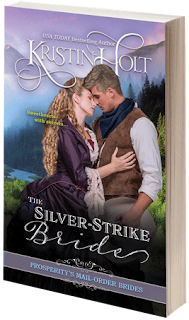
Some stories, I'm discovering, require a longer incubation period than others. I'm plugging away on my current WiP (work in progress): The Silver-Strike Bride, Book 2 in Prosperity's Mail-Order Brides Series. Other titles have come together much more quickly. This one is trying my patience and teaching me all kinds of new lessons. Why, on book ~20? Perhaps I'll have a better answer once it's done. In the meanwhile, I'm pleased to have come across this article from 1886, as the phrases are PERFECT for my poor, deeply worried newlywed Caroline... who's greatest fears are coming true. (e.g., Hot love soon cools. I do believe I'd like to see that phrase show up in the finished novel.) Poor Caroline gives a bit too much credence to the "priceless advice" given in newspaper columns such as this.

Kristin Holt | Book Cover Image: The Silver-Strike Bride, Book 2 of Prosperity's Mail-Order Brides Series by Kristin Holt. (Paperback representation)


 ~~~

About Kristin Holt:


I’m fascinated by all things Victorian-American, especially in the Old West. I’d love to share similar vintage articles or blog posts I’ve written compiling many original sources to bring a bit of nineteenth century life into focus in the minds and imaginations of readers. The more we know, the more our imaginations fill in the backdrops of our favorite Old West romances.

Kristin Holt | Sweet American Historical Romance (Victorian American West)

See my list of articles here on Sweet Americana Sweethearts with this link. Or, visit my ever-growing cache of articles on KristinHolt.com. Note the eyeglass (search) icon on both websites.  This feature makes it easy to search for an article or a category such as “courtship” or “baking” or clothing. You’re invited to continue on, exploring either or both sites, reading topics that interest you.

Copyright © 2019 Kristin Holt LC

Friday, August 10, 2018

New Release in the Oak Grove Series!


by Kathryn Albright


 I am happy to announce a new release in the Oak Grove Series!
 
   
    Here’s the back cover blurb ~

Can a Widow in the Wild West …find wedded bliss again?

When Cassandra Stewart fulfills her husband’s dying wish by visiting the ranch he loved, she plans to sell it. But then she meets his best friend. As aloof, ruggedly handsome Wolf shows Cassandra the value of life in the prairies, tenderness begins to grow from their shared pain into something more… Maybe there is a future for her at the Rocking S Ranch after all…

The hero in this story captured my heart. I have a soft spot for the competent, yet brooding type and Wolf is all that. What traits say “hero” to you?

 I also wanted to share a short book trailer…


And an excerpt from Chapter One ~

Oak Grove, Kansas, 1878

Raymond Wolf rammed the oil-soaked cloth down the rifle’s barrel for one last coating, making sure the path was smooth and slippery without any catches. It had to be perfect if it was to be his best friend’s wedding present.

The long swab pressed against the farthest end of the shaft, and at the same moment, something squeezed in Wolf’s chest. An invisible weight descended, as if the very air pressed down on him. Maybe he had been working too hard. He’d had that large order to finish for Dodge City last week, which demanded all of his time. This was the first chance he’d had to work on Doug’s rifle.

The sensation grew stronger. Doug’s face filled his mind. He set the rifle barrel on his workbench and clutched the turquoise stone at his neck. The small workshop, the snow falling outside the front window, all faded away into a gray mist. Then his friend’s face faded too. Something had happened.

“Wolf?” Jackson Miller spoke from the doorway, breaking into the strange fog. Miller stepped inside quickly, followed by another man—a stranger—and shut the door. “Got a man here looking for you.”

Wolf released his grip on the stone and struggled to shake off the premonition. He stood and backed away from his work area, staring at the hammer, trigger guard and bow drill that lay on the table. Absent only a moment ago, now the strong scent of oil and varnish filled the air once more.

Miller stepped farther into the room and removed his flat cap. “Are you all right?”

Wolf looked up, still slightly dazed. “Miller,” he said, acknowledging his neighbor.

Then his thoughts cleared, and he noticed the short, pudgy man in a gray suit peering around Miller’s shoulder. Wolf wiped the oil from his hands on an old rag and slowly removed his shop apron, hanging it from its neck loop on the peg beside the window. He turned back to the two men. “What can I do for you?”

“Raymond Wolf?” the stranger asked, his gaze dubious.

Outsiders always took a moment to adjust to his looks. Confusion happened first, quickly followed by suspicion, and then the lingering unspoken question: Why wasn’t he on a reservation with the rest of his tribe? And more than that—was he dangerous? Wolf counted it ironic that along with his appearance, the profession he had fallen into—gunsmithing—also made them nervous. It was ironic and, if he was truthful, satisfying.

“Excuse me. My name is Franklin Masters. I…uh…have some unfortunate news regarding an acquaintance of yours. A Mr. Douglas Stewart.”

Wolf blew out his breath and braced himself. He knew what would be said before the man continued. His friend—his blood brother—wouldn’t be coming home.

Wedding at Rocking S Ranch © by Harlequin Books & Kathryn Albright
Permission to reproduce text granted by Harlequin Books S.A.

   
    To purchase your own copy:

    HARLEQUINhttps://bit.ly/2LtXoap

    AMAZON:  http://a.co/2IhOtfv
 

Friday, August 25, 2017

Controversy in 1878 over Cheese-Making Process


When I conduct research for a story, I’m constantly amazed that events or “things” that I think of as being of happening in more recent times really aren’t. Wit Vanderveer, the hero of my latest story, Perfectly Unscripted, is a dairy farmer. The profession was one he’d grown up around, but I imagined him to be more “modern” and wanting to improve on the methods. So I sought out the logical professional organization--American Dairymen’s Association. Thankfully such a group had been in existence for more than a decade by the timeframe for my story, 1881. And I lucked onto the report from the annual meeting of this association from 1878--all 547 pages of it complete with paid ads for equipment and supplies. Love the internet.

Not only were presentations given about subjects presumed to be of interest to dairy menfeed ratios, soil types, equipment, quality of salt, breeds of dairy cattle, how to handle the dairy refuse—but quite a lively discussion was held over skimmed milk cheese. Almost as heated as the one about oleomargarine versus butter. On the cheese subject is where my feeling about modern topics was proven wrong. I considered the health issues of cheese made from a lower fat content and knew that phenomenon was one that gained popularity in the second half of the twentieth century.
In an open session held before the scheduled talks, the topic was introduced. Mr. C.W. Horr explained his success in achieving quality cheese after two to two and a half pounds of butter per 100 pounds of milk had been skimmed and how the freshness was maintained throughout the shipping process, thus allowing him wider distribution. (Horr exported to England where the average consumption was ten pounds per person compared to America were consumption varied between two-and-a-half to three pounds.) Questions flew about his methods and of what month of the year (I had no idea the fat content of milk varied by season) was he speaking. From the tone of the ensuing discussion (which reads like it became heated), the general members pressed Mr. Horr to reveal an exact recipe and method. He equivocated, stating he’d spent 4 years on experimentation and had found a process that worked for his northern Ohio farm. A statement that was not happily met.


Think about it, every business man wants to know how to improve his profit margin. But the most vocal of the questioners stated he’d traveled quite a distance and paid his fees ($1 for conference, 75 cents to receive written report) as if he had a right to receive this information. (To be noted, the meeting was held in Cleveland and the attendees all came from Ohio, Pennsylvania, New York, Illinois, and Wisconsin. The farthest west was Iowa.) Businessmen of today are considered astute to keep trade secrets to themselves, but that was not the general sentiment of this particular session. Often we think of the 1800s as bucolic and low-key, but this report shows how entrepreneurship was alive and controversial even in the butter and cheese industry.

Perfectly Unscripted is book #9 in the Sweethearts of Jubliee Springs series. Tagline: Is the shared danger the lure between these individuals, or did Rilleta and Wit discover they have much more to offer one another?

Friday, February 3, 2017

Victorian Lady Lawyers


I know several attorneys--and genuinely like them. Many are women. In fact, two women in my immediate neighborhood are attorneys. One taught law school in southern California and the other works for the District Attorney's Office. Nicest ladies you'd ever want to meet...but then I see them at home, not on the job.

I reviewed a nonfiction book written by a law professor at University of South Carolina, Dr. Marcia A. Yablon-Zug, author of Buying a Bride: An Engaging History of Mail-Order Matches, and because of the magic of social media, had a nice conversation about it. One more lady attorney (isn't it P.C. in 2017 to simply say attorney?) I know and admire. (See the whole review here.)

Today, bright women of all nationalities, all religions, all colors, all backgrounds apply for law school, enter, and earn degrees. They practice law in all fifty states. Young women of today never knew a time when women didn't have the vote, women couldn't enroll in certain schools, and women were forbidden (by society if not by the gatekeepers) to practice law.

My character, Sophia Amelia Sorensen, wouldn't take no for an answer. When Sophia chose to study law, she did what Abraham Lincoln had done before her--she "read the law" from a few specific books. This home-study method was common in America even while a few law schools opened, allowing (wealthy) white males entrance.

Abraham Lincoln gave good advice to others who wanted to "read law".

Sophia, like so many others, studied alone. When she'd learned all she could from texts, she sought a practical apprenticeship (step two of the home-study plan). When she could find no one  willing to apprentice her (why would a woman abandon her calling as a woman and want to be a man?), she made her way quickly to Wyoming Territory to hang out her shingle. She was "married to her work", and expected to never marry. Her love story is set in 1888-1889.

Strictly true-to-history, "Arabella Mansfield was the first woman admitted to the bar in 1869 in Iowa. She had not studied at a law school but rather had studied in her brother’s office for two years before taking the bar examination. Curiously enough, in the same year Ada H. Kepley became the first woman in the United States to graduate from law school." [source] The timing for Sophia's quest to be a respected attorney who could make a difference was right...but that didn't make it easy. People not only saw her as a nuisance, they figured any woman crazy enough to try and live like a man--and practice law--was unmarriageable.

Esther Hobart Morris
Wyoming Territory was more  forward-thinking than anywhere in the United States in the late 1880s. Wyoming Territory was first to have a female judge (Esther Hobart Morris, Justice of the Peace). "The Sweetwater County Board of County Commissioners appointed Morris as Justice of the peace after the previous justice, R.S. Barr, resigned in protest of Wyoming Territory's passage of the Women's suffrage amendment in December 1869." [Source]

Why was Wyoming Territory so forward-thinking and welcoming to women? Because they had a long way to go, population-wise in order to quality for statehood, and Wyoming knew the only way to do that was to bring women there. Many would eventually marry, bear children, and contribute to the population growth.

Just because Wyoming was welcoming to women and certainly had room for tradesmen and professionals of all kinds, didn't mean attorneys always had a good reputation. Like today, when "Lawyer Jokes" have a category all their own, people either have undying respect for attorneys or seek to joke and tease and discredit them at every turn.

Kiowa County Signal of Greensburg, Kansas on Oct 15, 1886
This newspaper clipping comes from Kiowa County Signal of Greensburg, Kansas on October 15, 1886. Pretty mild compared to the newspaper harassment my Sophia Sorensen endured. Newspaper harassment? Oh, yes. Amazing what was "printable" in the late 1880s. I had a great deal of fun writing the villain, dressed in a suit and wielding his weapons of pencils, tablets, and a typeset press churning out a weekly paper.

Sophia Amelia Sorensen is a specially-named character (after my ancestor), and you can read more about her and why I chose her name after February 12th when I post a blog about that content on my own site. Sophia stars in my up-and-coming new release Sophia's Leap-Year Courtship, release date: February 24, 2017. This title is currently available on pre-order through Amazon, iBooks (Apple), and Kobo. When the new title releases, it will also be available on Barnes & Noble (Nook) and Indigo.


About The Book:

Union Pacific Station Agent Chadwick Hughes has everything in a state of readiness to welcome his mail-order bride…everything but the bride. The woman he’s corresponded with for a year didn’t change her mind or miss her train in Omaha—she never existed. Chadwick’s mortified to discover he’s been swindled by a fraudulent matrimonial agency in Chicago. He needs a lawyer if he’ll ever recover a dime of the fortune he spent on worthless membership fees and the nonexistent bride’s transportation west.

Sophia Sorensen, Attorney at Law, is a spinster on the edge of propriety. The good people of Wyoming Territory are open to a lot of things, including Lady’s Privilege during Leap Years, but some aren’t fond of her day-to-day behavior. Why, the woman rides her bicycle hither and yon, showing her petticoat ruffle and ankles. She might be the least ladylike specimen beneath Wyoming skies, but it’s entertaining to watch her court the U.P. Station Agent, Chadwick Hughes, the most-eligible bachelor in the county.

Read much more about this title here.

http://amzn.to/2gP577a

http://amzn.eu/3tqw3fY
Hi! I'm Kristin Holt, USA Today Bestselling Author.
I write frequent articles (or view recent posts easily on my Home Page, scroll down) about the nineteenth century American West–every subject of possible interest to readers, amateur historians, authors…as all of these tidbits surfaced while researching for my books. I also blog monthly at Sweet Romance Reads, Sweet Americana Sweethearts, and Romancing the Genres.

I love to hear from readers! Please drop me a note. Or find me on Facebook.


Copyright © 2017 Kristin Holt LC