Showing posts with label 1886. Show all posts

Friday, July 5, 2019

Marry for True Love or Riches? by Kristin Holt


Kristin Holt | Marry for True Love or Riches (1886), Sweet Americana Sweethearts
 
of Sweet Romance set in the Victorian American West


To Wed for Love or Money ~


Ha! Our Victorian-American forebears asked themselves the same question people still do today: Is it best to wed the one my heart loves, or shall I choose the millionaire? (insert snickers here) Okay, maybe more like this, “shall I wed my best man, Jim, even though we’ll live with Ma and Pa (far more standard in the Old West than modern romantic fiction portrays)”, or shall I choose the dashing railroad man with the two-carat diamond stickpin?”

Seriously, this precise question was dealt with in true-to-Victorian-American times, in great and flowery length. The following is a careful transcription, word for word, preserving punctuation and variations in spelling. Published in The Sunday Leader of Wilkes-Barre, Pennsylvania on May 30, 1886, this article addresses the question, and much more.


Marry for True Love or Riches ~

 
AT THE COURT OF CUPID.
---------------------------------
REMARKS ON MARRYING AND GIVING IN MARRIAGE.
---------------------------------
TRUE LOVE VERSUS RICHES.
---------------------------------
Talk that is Calculated to Frighten Young Men of To-day—Wealth Only Comparative, After all. Sensible Suggestions.
--------------------------------
A recent issue of a daily journal, says Christine Terhune Herrick in the Pittsburg Dispatch, contained a letter from a young man asking the advice of the editor on the question of marriage. The inquirer stated that he was the possessor of a yearly income of $2,000, and desired to know if a man were justified in beginning housekeeping on this sum. Would a woman be able to manage such an amount so that they might live comfortably without stinting or running into debt?
The editor took three-quarters of a column for his reply. Leading off with Punch’s hackneyed counsel on the same subject, “Don’t,” he informed the seeker after knowledge, that it would do him no harm to remain single, while he might fall into a much worse condition by entering the state of matrimony. Finally, with the originality that distinguishes most writers on the topic, he wound up by a dissertation upon the reckless and spendthrift habits of the young women of the present day and the trite observation that no man could afford to marry until he had amassed a fortune.
Articles of this sort might cause only a slight passing amusement and be suffered to relapse into forgetfulness without comment were it not for the significant facts in connection with them. Statistics go to show that the number of marriages is steadily decreasing, and that men wait until much later in life before marrying than was once customary. The American practice of fast living has a notable exception in this regard, but in the matter of desire for a more ambitious style of housekeeping it has undoubtedly left its mark. It is frequently said that young people are not willing to begin in the manner in which their parents started life. It has taken for granted that a girl must start her new  home with as rich carpets and furniture, as elaborate silver and glass, and a mansion in as fashionable a quarter of the town as are enjoyed by her mother after her long years of married life. For the care of all this large staff of servants is necessary, and a moderate income disappears rapidly when subjected to such drains.
All this sort of talk is well calculated to frighten the timid young man from the paths of matrimony. Large inherited fortunes are rare in this country, and it is an exceptional case when a young man does not have to work his own way into wealth. It is not strange that he shrinks from saddling himself with
AN INCUMBRANCE [sic]
that may doom him to life-long drudgery. While marriage should always have its rightful share of romance, there should also be a broad basis of common sense. While it may not invariably be true that
“love in a hut with water and a crust,
Is—love, forgive us, cinders, ashes, dust,”
Nor that when poverty comes in by the door love flies out at the window, it is not to be denied that no young man has a right to ask a girl to share with him what is for himself alone an insufficient support. Not that the girl is always the prudent one. Many young men look out for wealthy marriages because they dread privation quite as much as do the so-called mercenary young woman upon whom most of the blame for the diminishing number of marriages is laid.
“I was engaged for a year before my marriage,” said one woman, “and in all that time there were but three women who, in wishing me joy, coupled their kindly expressions with sincere congratulations upon the fact that I was to be married. Most of them shook their heads and sighed significantly as they hoped I might be happy. I shall never forget the gratitude which filled my heart toward one little lady who assured me that I could not do a better thing than marry, provided I had chosen the right man.” “You have twice as many joys,” she said, brightly, “and you gain someone who will help make your troubles and sorrows half what they would otherwise be.”
Many mothers train up their daughters with a keen eye to the main chance. Affection is all very well, but a good bank account is better. “I always tell young girls,” said a matron, “that it is easier to begin married life with respect and kindly feelings than with this tremendous devotion there is so much talk about. ‘Hot love soon cools,’ and a calm friendly sort of affection makes a firmer foundation for marriage than anything else.”
This theory may be excellent for people who are run into one mould [sic], but for those who have strong individualities [sic], quick tempers and sensitive dispositions, something more than friendly feeling is required to assist them in bearing the countless rubs and annoyances that arise even in the best regulated household. Money cannot do everything and one may venture to say that there are few, if any, women who make loveless marriages without afterwards suffering seasons of bitter regret. When a girl deliberately turns her back upon wealth and chooses the man she loves in spite of his limited income she may be selecting a life that will have its trials and privations, but at all events she is not stultifying a higher nature.
There is no intention of underrating the comfort that lies in possessing an easy competence. But wealth, like most things in the world, is only comparative, after all. What is luxury to one man would be poverty to another. And it would really appear a more equitable division of the favors of fortune if the girl who has been reared in affluence should have to practice economy when she is married, rather than this course should devolve upon the one who has had to pinch and save all her life.
In this day, too, there is small reason for grumbling over the limitations of a moderate salary. Two people can live well and prettily in most places upon $1,500 a year, providing the wife is a good manager and the husband not given to extravagance. Elaborate toilets, fine cigars, and unlimited theater tickets eat up money with astonishing rapidity, but the couple who love one another well enough to live without these and similar gratifications can find plenty of inexpensive pleasures that prove fully as satisfactory.
The cant talk to the contrary notwithstanding, there is a goodly number of girls who are willing to choose such a lot in life. It is not to be expected, however, that they will go about proclaiming the fact. False pride, too, is one of the drawbacks to more marriages of this kind. Often a young man is ashamed to ask a girl to live in a quiet way, and dreads the sufferings he imagines she would undergo in contrasting a hum-drum home life with the gay, care-free existence she led in her father’s house. The love and happiness that makes the change easy do not receive due consideration, and it is hard to say exactly how the needed reform in habits of thought is to be brought about. The stuff of which men and women are made has to be proved before it can be said confidently how they will wear in daily life. The only ground from which conclusions can be drawn are to be found in the examples of happy marriage between people in moderate circumstances. Even women who have led gay and fashionable lives during their single-hood sometimes make the best wives and mothers. The very buoyancy of spirit and power of having a “good time” in their unincumbered [sic] days are aids in rendering the home bright and cheery when they have settled down as married women.


~~~

Kristin Holt | Marry for True Love or Riches (1886), Invitation to leave a comment

Your Comments are Welcome!


Did you notice the structure of this anonymous (standard for the era) writer’s article? He seems to lay out the arguments against marriage, and then follows it up with debunking the arguments one by one. At least the message ends on a positive note.

What did you think of this vintage article? Thoughts? Please scroll down and reply. We all love the conversation and discussions.

~~~

Connection to my WiP ~


Some stories, I'm discovering, require a longer incubation period than others. I'm plugging away on my current WiP (work in progress): The Silver-Strike Bride, Book 2 in Prosperity's Mail-Order Brides Series. Other titles have come together much more quickly. This one is trying my patience and teaching me all kinds of new lessons. Why, on book ~20? Perhaps I'll have a better answer once it's done. In the meanwhile, I'm pleased to have come across this article from 1886, as the phrases are PERFECT for my poor, deeply worried newlywed Caroline... who's greatest fears are coming true. (e.g., Hot love soon cools. I do believe I'd like to see that phrase show up in the finished novel.) Poor Caroline gives a bit too much credence to the "priceless advice" given in newspaper columns such as this.
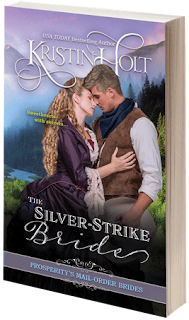
Kristin Holt | Book Cover Image: The Silver-Strike Bride, Book 2 of Prosperity's Mail-Order Brides Series by Kristin Holt. (Paperback representation)


 ~~~

About Kristin Holt:


I’m fascinated by all things Victorian-American, especially in the Old West. I’d love to share similar vintage articles or blog posts I’ve written compiling many original sources to bring a bit of nineteenth century life into focus in the minds and imaginations of readers. The more we know, the more our imaginations fill in the backdrops of our favorite Old West romances.

Kristin Holt | Sweet American Historical Romance (Victorian American West)

See my list of articles here on Sweet Americana Sweethearts with this link. Or, visit my ever-growing cache of articles on KristinHolt.com. Note the eyeglass (search) icon on both websites.  This feature makes it easy to search for an article or a category such as “courtship” or “baking” or clothing. You’re invited to continue on, exploring either or both sites, reading topics that interest you.

Copyright © 2019 Kristin Holt LC

Friday, February 1, 2019

Courtship After Marriage, 1886 (and my work in progress)


by USA Today Bestselling Author Kristin Holt


The following vintage newspaper article, titled Courtship after Marriage (from The American Rural Home), published on January 6, 1886 in The Millbrook Herald of Millbrook, Kansas. The title naturally caught my attention, and later discovered the 1886 attitude about how courtship can and should continue after marriage is an ideal basic premise in my WIP (work in progress), The Silver-Strike Bride (Prosperity’s Mail-Order Brides, book 2 (book 1- The Bride Lottery), is also set in 1881.

How 1886 this article sounds! The advice in this article resembles what today’s gurus about successful marriages would say—but only just. I find it interesting that Victorians were so appearance-focused, as clean and tidy equaled, apparently, respect and courtesy.

I must emphasize that while my heroine Caroline supposes that an ongoing courtship in the manner that this article, and she reads a bit too much into her new husband’s behavior, the more Tom comes in from his mine (or doesn’t) without cleaning up for her, the more she “borrows trouble”. The tagline for this WIP is Sweethearts with Secrets, it’s a safe bet that this after-marriage sweet romance will be troubled by the secrets both Tom and Caroline are keeping, no matter how prudent their reasons. Some things, it seems, can’t be hidden behind tidy, clean hair and the most orderly of appearances. (I’m loving this story! I can’t wait to share it with you.)

I’ve transcribed the article precisely as spelled, formatted, and punctuated (yes, even the typos where the type was misplaced: Instsad, envolving and similar accepted spellings like ‘overhalls’ and 'undoubtly'). I find the 1886-speak captivating. The tone and content of this article is SO late-nineteenth century.


Courtship after Marriage.

The American Rural Home.

          We wish to say a few words, in all gravity, to young farmers and their wives, who have entered into the nearest, sweetest, most sacred relation it is possible for individuals to assume towards one another, in this world. You have formed a life union to establish a family; to obtain a competency for your support and for the support and education of those human beings who may be the result of your union; to build up a rural home that shall be a pleasant, beautiful dwelling-place for you while you live, and for your children so long as they shall live with you, and a place that shall live in their memories, when they shall have gone forth from the parental home to establish, for themselves, homes in the world.

          For some time previous to marriage, possibly for years, you passed through a period of what is called courtship, in common parlance, in which essayed to win the favor, the affections of the other. During that time each sought to be agreeable to the other, in dress, in language and in actions. The young man, when about to visit the young lady, undoubtly tried to make herself as presentable as possible. He probably washed himself clean, so that he might not carry any of the dirt and filth of the farm and the domestic animals into the presence of the lady, he was wooing. He probably put on clean linen, brushed and donned his best apparel, blackened his boots, and presented himself to his lady at his very best. And the young lady, does any one doubt that she selected her most becoming dress, her most bewitching ribbons and collar, and that her hair was arranged in the most attractive style, when she expected a visit from her suitor?

          Each had succeeded in winning the love of the other, and both are satisfied that their nuptial happiness will be greatly enhanced by uniting their lives, traveling life’s mysterious pathway together. Doubtless, they individually create an ideal for their future married life, in which each shall find his or her highest enjoyment and happiness in ministering to the happiness of the other. This is all well; it is wisely ordained that the young shall indulge in bright, lovely visions of the future and that the most intense, most powerful passions and sentiments of human nature shall conspire to bring about the conjugal union.

          The marriage is consummated; the young couple move to their rural home; does courtship continue? “But,” says the reader, “they have won each other’s love, wherefore the necessity of further courtship?” Perhaps some of the means used to win love, may be necessary to retain it. Let us consider.

          In courtship they seek to win love by making themselves agreeable, by seeking to please; can they retain love, if disagreeable, if regardless of pleasing? There are numerous ways in which these holding the relation of husband and wife may render themselves agreeable or disagreeable to each other. In courtship we see how careful the man is to make himself as presentable as possible, when about to appear in the presence of her, he is wooing. Can he entirely neglect his personal appearance after marriage without injuring the feelings of his wife? Can he go into the presence of his wife, morning, noon and night, with soiled hands and face, with his garments plastered with the earth he cultivates and odorous with the scent of domestic animals and his boots smeared with their offal, without provoking in her the thought that he is a little lacking in that tender respect which he always showed her in his anti-nuptial courtship?

          “But how is he going to help it? You would not expect a farmer to change his clothes every time he goes into the house, would you?”

          No, that would hardly be practicable. But it is practicable for a farmer to so arrange his dress for labor and for the house that, with a very little delay, he can make himself quite presentable, when he comes in for his meals or to spend the evening at his fireside. Every farm-house should have a back lobby or entrance, as well as a front hall, and therein a farmer can hang his work clothes, or overhalls. There should always be a foot-scraper and mat at the back-door. The farmer, when he comes in to his meals, can scrape and clean his boots, slip off his overhalls and on his clean coat, wash, brush his hair and clothes, and appear at the table tolerably clean and free from offensive odors. If his boots are too filthy to properly clean, without consuming too much time, he can have a pair of slippers and boot-jack convenient, remove his boots and put on his slippers in a very short time. That is probably the better way when he goes into the sitting room in the evening, and a soft dressing gown is neat and comfortable, as an evening garment.

          The man feels more self respect, complacency, in clean garments in the house, and the woman is flattered by such an exhibition of regard to her feelings. Instsad of saying, by action, “I have secured you, you are mine and I shall now consult my ease, without regard to your feelings;’ he says, “I am just as anxious to make myself agreeable to you, to please you, as I was before I was assured that I had secured your affections.”

          On the other hand, the wife, who in the old courtship, had been so careful never to appear in the presence of her suitor until she had made herself as attractive and winsome as possible, often becomes quite careless of her personal appearance at home, with no one present but her husband, although she may still be very particular about her dress and appearance when she goes into society. Ah! young wife, it will pay you to strive to preserve the vision of loveliness that won your husband’s love as long as possible. See that he is not too rudely awakened from his enchantment, or you may never be able again to weave the spell around him.

          Not only in dress and personal appearance should husband and wife seek to continue their courtship after marriage, but also in language and conduct. They were accustomed before marriage, to address each other in respectful, tender language, to say nothing that would wound the feelings or make the other unhappy; let them be equally as careful, in these respects, after marriage. And, as the husband, before marriage, was solicitous to relieve her, who is now his wife, of every burden, and avert every avoidable infelicity, let him be equally solicitous now, that she has placed her life’s happiness in his keeping. On the other hand, if the wife truly loves her husband and desires his welfare and happiness, she will not be unnecessarily exacting of services, will not convert the power she possesses over his affections into a petty tyranny. It depends largely upon this second courtship, whether the affections elicited in the first courtship shall be enlarged, strengthened, made enduring, or gradually extinguished. Were there more of this post-nuptial courtship there would be much less employment for divorce courts.

          Husband and wife living together as we have faintly indicated, will do more towards envolving beautiful, attractive, happy rural homes, than unbounded wealth, supplemented by artistic tastes and capacities, can possibly create by means of landscape ornamentation, architectural construction of interior decoration, for the loves and virtues , must preside over true homes.


There it is. Voices from the grave, as it were, about how to ensure your rural home is encircled by unbounded wealth, and that husband and wife live in conjugal felicity. (I’m not sounding sassy. Not at all. I rather adore the American Victorian era, as all of my published fiction verifies.)

Kristin Holt's WIP (work in progress)

Interested in more about The Silver-Strike Bride? See the book’s page on my website for an ever-growing cache of blog articles about historical elements within the story. Stay tuned with news of this title’s release by following me on BookBub, friending my Facebook Profile, Liking my Facebook Page, or even subscribing to my once-a-month newsletter.


Related Blog Posts: (click on image)

http://www.kristinholt.com/archives/716

http://www.kristinholt.com/series-description-prosperitys-mail-order-brides


http://www.kristinholt.com/670-2

http://www.kristinholt.com/archives/11562

http://www.kristinholt.com/archives/6671

http://www.kristinholt.com/archives/13034


http://www.kristinholt.com/archives/1309


http://www.kristinholt.com/archives/15639

http://www.kristinholt.com/archives/4448

http://www.kristinholt.com/archives/11351

See all of my posts on Sweet Americana Sweethearts, HERE!

http://www.KristinHolt.com/


Kristin Holt, USA Today Bestselling Author, writes Sweet Victorian Romance set in the American West. She writes frequently about Old West history and contributes monthly to Sweet Americana Sweethearts.


Copyright © 2019 Kristin Holt LC