Showing posts with label Newspapers. Show all posts

Thursday, March 4, 2021

Surprising Victorian Multiple Births by Kristin Holt


Kristin Holt | Surprising Victorian Multiple Births
 

by Kristin Holt

USA Today Bestselling Author of Sweet Romance set in the Victorian American West


Twins! Triplets!... and Octuplets!

Today's curious are tantalized by the rarity of multiple births. We love stories of families doubling in size with surprise triplets on the heels of a long-awaited adoption. Multiples are thrilling, perhaps due to the novelty.

Victorians were just as enamored with multiple bundles of joy. This following tale from an 1888 newspaper uses words like "astonished," "pleased," and without a label, 'generous.' Note the astonished shopkeeper felt the need to make a generous gift to this highly surprising family.

Have you ever heard of twelve sets of twins, born to the same mother? (Sound like a tall tale?)


Kristin Holt | Surprising Victorian Multiple Births. From Clark County Republican of Ashland, Kansas, May 17, 1888: a report of a family with 24 sons born to them as 12 sets of twins.

I love this vintage cabinet card of a young mother holding her beautiful twins on her lap. By her costume and hairstyle, she's obviously a Victorian. Note the custom throughout the nineteenth century of dressing baby boys and girls alike in long white gowns. The twins might be fraternal (including one boy and one girl), yet they might well be identical--boys or girls.

Kristin Holt | Surprising Victorian Multiple Births. Cabinet card photograph of Victorian mother with twin babies.
Image Credit: Pinterest

Tall Tale?

The following snippet of news claims a woman named "Maddalena Granata, of Nocera, Italy, has had fifty-two children, including triplets fifteen times."

Kristin Holt | Surprising Victorain Multiple Births. From The Sunday Leader of Wilkes-Barre, Pennsylvania on January 3, 1886: "Maddalena Granata, of Nocera, Italy, has had fifty-two children, including triplets fifteen times."

Tall tale? Nope. Maddalena Granata (born 1839) is listed, with 52 children, as fifth-highest recorded birth count worldwide. Wikipedia lists people with the most children... at least 20 each. This page does clarify (thank goodness) that numbers in bold and italics (Maddalena has both) "are likely to be legendary or inexact, some of them having been recorded before the 19th century." Okay... but Maddalena's story was the nineteenth century. The above announcement was made when Maddalena was about forty-seven. Likely done with her childbearing years, but zero guarantees. Especially for the uber fruitful. Guinness World Records 2010 (p. 111) concurs, "... the record for the most triplets is 15 sets, by Maddalena Granata (Italy, 1839-1886).

The old labor-and-delivery nurse in me can't help but notice that this poor Mrs. Granata died at age 47--the same year this announcement showed up in the States. No mention of her passing, just her amazing count of fifty-two children, including fifteen sets of triplets. I'm just going to take a wild guess here at the cause of Maddalena Granata's death...

There you have it. Fascinating stuff, these surprising stories of multiple births in America's Victorian past.

Surprise! All Three Thrived!

I'm equally surprised to see triplets, born in 1856, all lived to adulthood. That's a doubly big surprise. First of all, a high percentage of infants died due to childhood infectious diseases, illness, and accidents. If a child lived past age five, they'd have a greater probability of living to adulthood. Even today, the neonatal mortality rate of multiples is saddening.
 
So this mid-nineteenth century success story is heartwarming!


Kristin Holt | Surprising Victorian Multiple Births. From The Semi-Weekly New Era of Lancaster, PA on January 28, 1882: A remarkable case of triplets living to twenty years of age (and beyond).


Today, most cases of quadruplets arise through fertility treatments and IVF. Yes, some women and their partners are simply very fertile. 

Kristin Holt | Surprising Victorian Multiple Births. Vintage phogoraph of late Victorian family with father, mother, and eleven children. Image: Pinterest.
Image Source: Pinterest


The following image shares the interesting Victorian story of an unnamed "female" delivered of four perfect and healthy children (two male, two female) by Mr. A. Borman, surgeon accoucheur. Congratulations, 1849, for giving the doctor all the credit.


Kristin Holt | Surprising Victorian Multiple Births. English Quadruplets announced on both sides of the Atlantic. From The Derby Mercury of Derby, Derbyshire, England on November 14, 1849 and The Baltimore Sun of Baltimore, Maryland on December 13, 1849.

Isn't it cool that the unnamed mother and her quadruplets made the news in the States? This sample from The Baltimore Sun wasn't the only instance of this joyful story voiced in the 1849 papers throughout the United States.

Father of Forty-One (and 200 grandchildren)

Another example comes from a Connecticut town, Killingly, where a man named Levi Bradshaw lived in the Sparks district.  This man, who'd been married three times (from age 13 on), had 41 children, 40 of whom were living in 1896.

Kristin Holt | Surprising Victorian Multiple Births. From The Coffeyville Daily Journal, September 5, 1896: "Two Hundred Grandchildren: Connecticut Man Who Has Nearly a Regiment of Decendants." Father of 41 children, 40 of whom are living, married three times, each wife giving him multiple children before her death.


Now that's some serious progeny. Congratulations, Mr. Bradshaw!


Kristin Holt | Surprising Victorian Multiple Births. Victorian photograph of family: father, mother, and 7 children. Image Credit: Pinterest.
Image: Pinterest

Father of 41 (with only five living)

In a comparable story, another father credited with forty-one offspring by a series of three wives, illustrates the devastating death rates in nineteenth century America. 

See the original digitized image, below. For ease in reading, I've provided a careful transcription:

--John Hepner, a German, now a resident of Reading, Pennsylvania, has lived to be called the father of more children than probably any other man in the country. He is sixty years old and has had three wives. He was first married in Germany in 1840, and his wife died in 1848. In that short time she bore him seventeen children--two pairs of twins, four sets of triplets, and one at a single birth.--Mr. Hepner married again in less than a year. He was married in the latter part of June, 1849, and in February another child was born to him, followed by a second on the following Christmas. After that his wife bore him twins five consecutive times, and three children at a single birth, making fifteen children in nine years, at the end of which time his second wife died. His two marriages covered a period of seventeen years, and yielded him thirty-two children. He had come to this country three years before the death of his second wife. He was married again shortly afterward, this time to a widow with one child. This wife is still living, and has borne Hepner nine children. Of the first set of children none are now living, and only two of the second and three of the third.

Kristin Holt | Surprising Victorian Multiple Births. A Tale of a German, John Hepner, now of Reading, PA whose series of wives bore him many multiples. The Middleburgh Post of Middleburgh, PA on May 13, 1875.
Original article, transcribed above.


OTHERS with Multiple Multiples!

Bradshaws and Hepners (their stories related, above), were far from alone in the Multiple Multiples hall of fame. This story, credited to Honesdale, Pennsylvania, tells of a Mrs. Cullen traveling by train with her eleven children to join her husband. So far, not remarkable. Until we see the punch line: this woman's eleven children range in age from three years of age to nine years of age.

What woman could travel alone with eleven little ones? Luckily, the railroad was so enamored of her brood (and substantiated story) that they gave her half-price fare for all twelve in her party.

Kristin Holt | Surprising Victorian Multiple Births. Eleven Children born in four births. Part 1 of 2. From The Millbrook Herald of Millbrook, Kansas, January 6, 1886.

Kristin Holt | Surprising Victorian Multiple Births. Eleven Children born in four births. Part 2 of 2. From The Millbrook Herald of Millbrook, Kansas, January 6, 1886.

See what I mean about Victorians as enamored with "multiples" (especially multiple multiples)?

An Extraordinary Family Line with Many Multiples

Let's add to the Cullens, the Bradshaws, and the Hepners. This next Victorian-American story is of "Mrs. Ellsworth Miller, who holds the world's record in the matter of multiple child bearing." The extraordinary woman had just presented her husband with triplets when the article was printed in 1893. 

It seems the "world record" owned by Mrs. Miller didn't take into account some of the more fecund parents noted herein.

The newborn triplets brought the count to three sets of triplets and a total of sixteen children. Tragically, the Cold Spring, NY Special (syndicated) report discloses only seven of her children are living, including the newborn triplets.


Kristin Holt | Surprising Victorian Multiple Births. Part 1 of 2. From The Kansas City Times of Kansas City, MO on March 26, 1893: The Extraordinary Record of a NY Family Line that contained many multiple births (many sets of twins and triplets).

Notice the family lineage and how every branch of Mrs. Miller's tree bore exceedingly well. Perhaps most heartbreaking of all, the report of the infants' names and staggering rate of mortality. Too many of those sweet babies "died in a year," "died in six weeks," "all three died in one month," "both died in 6 months," "died in eleven days," and occasionally, a "still living" report.


Kristin Holt | Surprising Victorian Multiple Births. Part 2 of 2. From The Kansas City Times of Kansas City, MO on March 26, 1893: The Extraordinary Record of a NY Family Line that contained many multiple births (many sets of twins and triplets).


Victorian Science Explains Multiple Births

I'm fascinated by the development of scientific understanding throughout the nineteenth century. Medicine gained vast understanding in so many areas, from the Germ Theory to genetics and everything between.

Note this 1874 scientific understanding: 

... it seems to be highly probable that multiple births were more common among those who married early and early in life bore children

AND

 ... a woman had been married upwards of 19 years before she had a child, and then she had triplets


But the statistics are pretty clear: with an increase in the mother's age, the rate of multiple births rises exponentially. Still true today.


Kristin Holt | Surprising Victorian Multiple Births. 1874: "Highly Probable Causes of Multiple Births," from The Courier and Argus of Dundee, Tayside, Scotland on July 11, 1874.

In 1895, the "famous Scandinavian scientist" Dr. Drejer reported his findings: "multiple births are highest among Slavonic people and lowest in the Latin races." (Noted: Dr. Drejer's statement is one of several bits of data steeped in nineteenth century racism.) Today we cringe when viewed through our 21st century lens; in the 1890s, a representation of the standard views of the times.

Kristin Holt | Surprising Victorian Multiple Births. The Times of Philadelphia, Penn on August 10, 1895, "The subject of twins has been investigated by the famous Scandinavian scientist, Dr. Drejer, and he finds that multiple births are highest among Slavonic people and lowest in the Latin races."...

Let's return to Victorian scientific explanation of multiple births--because this one is fascinating. Who knew that an 1896 statement would go farther than with Mrs. Miller's "the whole family has multiples" to state, unequivocally, "Twins Were Hereditary."


Kristin Holt | Surprising Victorian Multiple Births. "Twins Were Hereditary. Record of Eight Twins and One Set of Triplets in Five Generations." From The Boston Globe of Boston, Mass. on March 7, 1896.

The following snippet of "news," stating that multiple births were reported in 1.17 per cent of all cases appeared in dozens and dozens of newspapers across the country. A prime example of reprints--a very common practice of the times. 

Kristin Holt | Surprising Victorian Multiple Births. From The Independent-Record of Helena, Montana on September 7, 1895: "Multiple births are reported in 1.17 per cent of all cases, the percentage varying greatly in different races. The proportion of twin births is greater in country than in city, and very curiously seems to diminish as the size of the town increases."


Statistically Speaking 

 
 Kristin Holt | Surprising Victorian Multiple Births. From Newton Daily Republican of Newton, Kansas, July 13, 1893: "In England, France and Germany the ratio of multiple births is thirteen twins per 1,000 and 160 triplets and eight quadruplets per 1,000,000 births."
 

Interestingly enough, the National Center for Health Statistics says the twin birth rate is 32.1 per 1,000 live births. (Source: Centers for Disease Control and Prevention) Science says the frequency of multiples has increased 70% since 1980. Wow.

Invitation

What comes to mind as you read these Victorian-era newspaper clips about multiple births? Are you surprised?

Do you have family stories of twins or triplets born in the nineteenth century? What efforts did the parents make to help the children (often premature) survive?

Please scroll down and comment! Your thoughts are welcome.

By Kristin Holt

Kristin Holt | Sweet Americana Sweethearts Contributing Author

Kristin Holt | Historical Articles by USA Today Bestselling Author Kristin Holt

Copyright © 2021 Kristin Holt LC

Friday, July 5, 2019

Marry for True Love or Riches? by Kristin Holt


Kristin Holt | Marry for True Love or Riches (1886), Sweet Americana Sweethearts
 
of Sweet Romance set in the Victorian American West


To Wed for Love or Money ~


Ha! Our Victorian-American forebears asked themselves the same question people still do today: Is it best to wed the one my heart loves, or shall I choose the millionaire? (insert snickers here) Okay, maybe more like this, “shall I wed my best man, Jim, even though we’ll live with Ma and Pa (far more standard in the Old West than modern romantic fiction portrays)”, or shall I choose the dashing railroad man with the two-carat diamond stickpin?”

Seriously, this precise question was dealt with in true-to-Victorian-American times, in great and flowery length. The following is a careful transcription, word for word, preserving punctuation and variations in spelling. Published in The Sunday Leader of Wilkes-Barre, Pennsylvania on May 30, 1886, this article addresses the question, and much more.


Marry for True Love or Riches ~

 
AT THE COURT OF CUPID.
---------------------------------
REMARKS ON MARRYING AND GIVING IN MARRIAGE.
---------------------------------
TRUE LOVE VERSUS RICHES.
---------------------------------
Talk that is Calculated to Frighten Young Men of To-day—Wealth Only Comparative, After all. Sensible Suggestions.
--------------------------------
A recent issue of a daily journal, says Christine Terhune Herrick in the Pittsburg Dispatch, contained a letter from a young man asking the advice of the editor on the question of marriage. The inquirer stated that he was the possessor of a yearly income of $2,000, and desired to know if a man were justified in beginning housekeeping on this sum. Would a woman be able to manage such an amount so that they might live comfortably without stinting or running into debt?
The editor took three-quarters of a column for his reply. Leading off with Punch’s hackneyed counsel on the same subject, “Don’t,” he informed the seeker after knowledge, that it would do him no harm to remain single, while he might fall into a much worse condition by entering the state of matrimony. Finally, with the originality that distinguishes most writers on the topic, he wound up by a dissertation upon the reckless and spendthrift habits of the young women of the present day and the trite observation that no man could afford to marry until he had amassed a fortune.
Articles of this sort might cause only a slight passing amusement and be suffered to relapse into forgetfulness without comment were it not for the significant facts in connection with them. Statistics go to show that the number of marriages is steadily decreasing, and that men wait until much later in life before marrying than was once customary. The American practice of fast living has a notable exception in this regard, but in the matter of desire for a more ambitious style of housekeeping it has undoubtedly left its mark. It is frequently said that young people are not willing to begin in the manner in which their parents started life. It has taken for granted that a girl must start her new  home with as rich carpets and furniture, as elaborate silver and glass, and a mansion in as fashionable a quarter of the town as are enjoyed by her mother after her long years of married life. For the care of all this large staff of servants is necessary, and a moderate income disappears rapidly when subjected to such drains.
All this sort of talk is well calculated to frighten the timid young man from the paths of matrimony. Large inherited fortunes are rare in this country, and it is an exceptional case when a young man does not have to work his own way into wealth. It is not strange that he shrinks from saddling himself with
AN INCUMBRANCE [sic]
that may doom him to life-long drudgery. While marriage should always have its rightful share of romance, there should also be a broad basis of common sense. While it may not invariably be true that
“love in a hut with water and a crust,
Is—love, forgive us, cinders, ashes, dust,”
Nor that when poverty comes in by the door love flies out at the window, it is not to be denied that no young man has a right to ask a girl to share with him what is for himself alone an insufficient support. Not that the girl is always the prudent one. Many young men look out for wealthy marriages because they dread privation quite as much as do the so-called mercenary young woman upon whom most of the blame for the diminishing number of marriages is laid.
“I was engaged for a year before my marriage,” said one woman, “and in all that time there were but three women who, in wishing me joy, coupled their kindly expressions with sincere congratulations upon the fact that I was to be married. Most of them shook their heads and sighed significantly as they hoped I might be happy. I shall never forget the gratitude which filled my heart toward one little lady who assured me that I could not do a better thing than marry, provided I had chosen the right man.” “You have twice as many joys,” she said, brightly, “and you gain someone who will help make your troubles and sorrows half what they would otherwise be.”
Many mothers train up their daughters with a keen eye to the main chance. Affection is all very well, but a good bank account is better. “I always tell young girls,” said a matron, “that it is easier to begin married life with respect and kindly feelings than with this tremendous devotion there is so much talk about. ‘Hot love soon cools,’ and a calm friendly sort of affection makes a firmer foundation for marriage than anything else.”
This theory may be excellent for people who are run into one mould [sic], but for those who have strong individualities [sic], quick tempers and sensitive dispositions, something more than friendly feeling is required to assist them in bearing the countless rubs and annoyances that arise even in the best regulated household. Money cannot do everything and one may venture to say that there are few, if any, women who make loveless marriages without afterwards suffering seasons of bitter regret. When a girl deliberately turns her back upon wealth and chooses the man she loves in spite of his limited income she may be selecting a life that will have its trials and privations, but at all events she is not stultifying a higher nature.
There is no intention of underrating the comfort that lies in possessing an easy competence. But wealth, like most things in the world, is only comparative, after all. What is luxury to one man would be poverty to another. And it would really appear a more equitable division of the favors of fortune if the girl who has been reared in affluence should have to practice economy when she is married, rather than this course should devolve upon the one who has had to pinch and save all her life.
In this day, too, there is small reason for grumbling over the limitations of a moderate salary. Two people can live well and prettily in most places upon $1,500 a year, providing the wife is a good manager and the husband not given to extravagance. Elaborate toilets, fine cigars, and unlimited theater tickets eat up money with astonishing rapidity, but the couple who love one another well enough to live without these and similar gratifications can find plenty of inexpensive pleasures that prove fully as satisfactory.
The cant talk to the contrary notwithstanding, there is a goodly number of girls who are willing to choose such a lot in life. It is not to be expected, however, that they will go about proclaiming the fact. False pride, too, is one of the drawbacks to more marriages of this kind. Often a young man is ashamed to ask a girl to live in a quiet way, and dreads the sufferings he imagines she would undergo in contrasting a hum-drum home life with the gay, care-free existence she led in her father’s house. The love and happiness that makes the change easy do not receive due consideration, and it is hard to say exactly how the needed reform in habits of thought is to be brought about. The stuff of which men and women are made has to be proved before it can be said confidently how they will wear in daily life. The only ground from which conclusions can be drawn are to be found in the examples of happy marriage between people in moderate circumstances. Even women who have led gay and fashionable lives during their single-hood sometimes make the best wives and mothers. The very buoyancy of spirit and power of having a “good time” in their unincumbered [sic] days are aids in rendering the home bright and cheery when they have settled down as married women.


~~~

Kristin Holt | Marry for True Love or Riches (1886), Invitation to leave a comment

Your Comments are Welcome!


Did you notice the structure of this anonymous (standard for the era) writer’s article? He seems to lay out the arguments against marriage, and then follows it up with debunking the arguments one by one. At least the message ends on a positive note.

What did you think of this vintage article? Thoughts? Please scroll down and reply. We all love the conversation and discussions.

~~~

Connection to my WiP ~


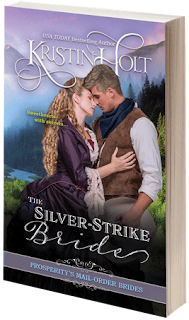
Some stories, I'm discovering, require a longer incubation period than others. I'm plugging away on my current WiP (work in progress): The Silver-Strike Bride, Book 2 in Prosperity's Mail-Order Brides Series. Other titles have come together much more quickly. This one is trying my patience and teaching me all kinds of new lessons. Why, on book ~20? Perhaps I'll have a better answer once it's done. In the meanwhile, I'm pleased to have come across this article from 1886, as the phrases are PERFECT for my poor, deeply worried newlywed Caroline... who's greatest fears are coming true. (e.g., Hot love soon cools. I do believe I'd like to see that phrase show up in the finished novel.) Poor Caroline gives a bit too much credence to the "priceless advice" given in newspaper columns such as this.

Kristin Holt | Book Cover Image: The Silver-Strike Bride, Book 2 of Prosperity's Mail-Order Brides Series by Kristin Holt. (Paperback representation)


 ~~~

About Kristin Holt:


I’m fascinated by all things Victorian-American, especially in the Old West. I’d love to share similar vintage articles or blog posts I’ve written compiling many original sources to bring a bit of nineteenth century life into focus in the minds and imaginations of readers. The more we know, the more our imaginations fill in the backdrops of our favorite Old West romances.

Kristin Holt | Sweet American Historical Romance (Victorian American West)

See my list of articles here on Sweet Americana Sweethearts with this link. Or, visit my ever-growing cache of articles on KristinHolt.com. Note the eyeglass (search) icon on both websites.  This feature makes it easy to search for an article or a category such as “courtship” or “baking” or clothing. You’re invited to continue on, exploring either or both sites, reading topics that interest you.

Copyright © 2019 Kristin Holt LC

Friday, January 4, 2019

Croquettes: Economic Victorian Dining ~ by Kristin Holt


by USA Today Bestselling Author Kristin Holt

Throughout the nineteenth century, American Victorians enjoyed a dish known as “croquettes”—a thrifty dish that routinely “dressed up previously unused or otherwise unwanted meat” (and fish, macaroni, rice, potato, etc.). [American Restaurants and Cuisine in the Mid-Nineteenth Century by Paul Freedman]

What is a croquette?


“Croquettes, small shaped masses of some savory (or occasionally sweet) substance deep-fried, typically in a coating of breadcrumbs, get their name from their crisp exterior: for croquette is a derivative of the French verb croquer, crunch. The range of potential ingredients is limitless—meat, rice, cheese, fish, pasta, vegetables have all been pressed into service—but undoubtedly the croquette’s commonest filling today is mashed potato. It is far from new to the English kitchen; it is mentioned in the 1706 edition of Edward Phillipps’s New World of English Words: On Cookery, ‘Croquets are a certain Compound made of delitious Stuff'd Meat, some of the bigness of an Egg, and others of a Walnut.’” [An A to Z of Food and Drink, John Ayto [Oxford University Press: Oxford] 2002 (p. 98), quoted on Foodtimeline.org]

Vintage sources such as newspapers, cook books (always two words rather than a compound in the era), and historian’s articles, list a wide range of croquettes including but not limited to:
salmon croquettes
chicken croquettes
turkey croquettes
beef croquettes
veal croquettes
cold meat croquettes
sweetbread croquettes (sweetbread is the culinary name for the thymus gland, or rarely, the pancreas, of an animal, especially as used for food)
“Philadelphia” croquettes (fowl, sweetbread, and calf’s brain)
potato croquettes
macaroni croquettes
rice croquettes (both savory and sweet)
hominy croquettes
apple croquettes

“Early instructions suggest this [chicken croquettes] “made dish” was a venerable culinary feat, not to be attempted by inexperienced cooks. Modern frozen products must be a far cry from the original offering. Careful notes on shape and presentation confirm croquettes were originally intended for elegant dinners.” [Foodtimeline.org]

The following sampling of recipes (with their original sources) illustrates the variety of croquettes known within American cuisine, as ‘receipts’ were included within cook books published in the United States and homemakers shared their best methods and ingredients via newspapers.

For sake of organization, I’ve listed recipes in order by date rather than by type. Notice that recipes (or receipts) in the nineteenth century required cooks to read through a paragraph-style accounting of ingredients, quantities, and methods, with vital instructions often listed as a near afterthought.

1824


“To Make Croquets. Take cold fowl or fesh meat of any kind, with slices of ham, fat and lean, chop them together very fine, add half as much stale bread grated, salt, pepper, grated nutmeg, a teaspoonful of made mustard, a tabel spoonful of catsup, and a lump of butter; knead all well together till it resembles sausage meat, make them in cakes, dip them in the yelk of an egg beaten, cover them thickly with grated bread, and fry them a light brown.” (historic spelling preserved) [Source: The Virginia Housewife, Mary Randolph, facsimile 1824 edition with Historical Notes and Commentaries by Karen Hess [University of South Carolina Press:Columbia SC] 1984 (p. 106), quoted by Foodtimeline.org.]

1877


To Make Chicken Croquettes, Parts 1 and 2: New England Farmer of Boston, Massachusetts on February 10, 1877.

1879

Rice Croquettes, The Osage City Free Press of Osage City, Kansas on May 2, 1879.

Rice Croquettes, Washington Republican of Washington, Kansas on August 29, 1879.

Hominy and Hominy Croquettes, Washington Republican of Washington, Kansas on August 29, 1879.

 "...croquettes as the attractive French substitute for American hash, and ... how to make them...", The Weekly Star of Plymouth, Pennsylvania on June 12, 1879.

1881


Potato Croquettes, parts 1 and 2, Western Home Journal of Lawrence, Kansas on December 29, 1881.

1885

Apple Croquettes, The Boston Globe of Boston, Massachusetts on December 31, 1885.

1886

Philadelphia Croquettes, parts 1 and 2. The Citizen of Topeka, Kansas on May 8, 1886.

1892

Cold Meat Croquettes, The Columbian Cook Book Containing Reliable Rules for Plain and Fancy Cooking, 1892.

1895

Croquettes of Odds and Ends, Three Hundred Tested Recipes, 2nd edition, 1895.

1905

Chicken Croquettes, Dr. Sloan’s Cook Book and Advice to Housekeepers, 1905.


So there you have it. Croquettes: A nineteenth century favorite dining pleasure—leftovers tucked away in a crispy, fried coating. Like tater tots, only with various bits of leftover “hash”, including calf brains. Yummy.

Interested in more details about nineteenth century baking, cooking methods, and holiday meals? See the following links (click on the title images):
Kristin Holt | Victorian-America's Crabapple Jelly and Preserves

 
Kristin Holt | Economical Victorian Housekeeping


Victorian Cooking: Receipt vs Recipe-- Which is Correct?


http://www.kristinholt.com/archives/13989


http://www.kristinholt.com/archives/7411


https://sweetamericanasweethearts.blogspot.com/2018/11/thanksgiving-dishes-in-victorian-america.html


http://www.kristinholt.com/archives/17113


http://www.kristinholt.com/archives/14662


http://www.kristinholt.com/archives/11693


http://www.kristinholt.com/archives/16738


http://www.kristinholt.com/archives/13631


http://www.kristinholt.com/archives/11640


Kristin Holt, USA Today Bestselling Author, writes Sweet Victorian Romance set in the American West. She writes frequently about Old West history and contributes monthly to Sweet Americana Sweethearts.


Copyright © 2019 Kristin Holt LC