Showing posts with label @lcarrollbradd. Show all posts

Friday, March 28, 2025

Spinning Wheel in the Corner

 My late mother-in-law, Elaine, was a weaver. A room in my in-laws’ four-bedroom house was set aside as her “loom room.” Inside were shelves to hold boxes and boxes of a wide variety of yarns and a large loom that was probably five feet wide and about as tall.

I never saw her working that big loom where she made area rugs, but my husband remembers falling asleep to the sound of the foot pedals and the clank of the heddle frames as she worked after the children were in bed. What she worked on when I joined the family was a table loom that was always set up for making placemats. A set of eight in brown, rust, and gold yarn was our wedding present.


Also involved with weaving was spinning the yarn. Elaine often said this process was her favorite part because she often bought raw wool (they lived in Anaheim, CA, so I’m not sure where she found it) and dyed it herself. She found the process of using a spinning wheel to stretch and twist the wool into yarn soothing. I remember seeing wall hangings she’d made where the yarn was the shape we all know but it also contained small sections where it puffed out. The picture below is her wheel that sits in a corner of our upstairs room. My sister-in-law has her tabletop loom.


Spinning and weaving wasn’t part of my childhood, but I remember my mom talking about a grandmother back in Missouri who spun wool. From the History Myths Debunked blog, the practice of spinning and weaving and these implements being in every household stopped being true after the early years in Colonial America. Importing fabric from England proved cheaper…unless you raised your own sheep or had access to raw wool and lived on the frontier, where shipping costs would make the yardage less of a bargain.

How many of you have memories of seeing a loom or spinning wheel in a grandparent’s house?


A story in my backlist featured a sheep rancher who also a weaver.

A Vow for Christmas, part of the Spinster Mail-Order Brides series

In the three years since his beloved wife died, rancher Chad Rutherford has done the best for his family. But with his sister leaving the family ranch to get married, he needs to find someone to keep house and tend his kids so he places an ad for a mail-order bride.

Left on her own by her brother’s murder, spinster Vika Carmichael must find a way to life. An ad for a mail-order bride from a widower with small children seems like the perfect fit. Until she arrives in Gunnison, Colorado Territory, and wonders if room for her exists in their hearts.

Will two proud individuals find a way to work together, or will their marriage vow be broken before Christmas?

Amazon link and in KU  

Friday, February 28, 2025

Have you ever wondered what your city looked like 120-140 years ago?


Authors have a lot of information they need to create when developing a new story, often with just their imagination. We name characters and give them physical features and a cultural heritage. Then we invent problems for them to overcome—both to achieve their original goal and to make the relationship they discovered along the way have a happy ending. For many stories, we need to do research to learn about a new profession or hobby so the characters are presented like living breathing people.

To avoid being confined by the physical restraints of a particular town or city, I often make up locations so I can put the mountains or beach where I want it without having a reader point out a possible error, because the place I chose happens to be that person’s hometown. So, what’s an author to do?

One method is embarking on personal research. Traveling to all the places I write about would cost more money than I earn in royalties. For one series, I was already flying from California to Texas to attend a writers’ retreat and do a drive-by visual check on the house we still own there. I tacked on an extra day and walked the streets of a nearby small town, taking notes about creeks, old buildings, a cemetery, businesses, etc. All that information was used in my Dorado, Texas and Sugar and Spice Bakery series.

BUT several years ago, I discovered Sanborn Insurance Maps that are saved in the Library of Congress. These maps came into existence when more and more businesses started insuring their properties. Not as detailed as a surveyor’s plot drawing say of the lot or acreage your house is on, these maps do depict all the physical structures apparent when the surveyor visited the site. Often a city map from the 1890s will have five or six pages. These are great because an author can learn the street names, see where underground pipes exist, and determine where the biggest concentration of businesses was. I’ve discovered water and electrical plants present earlier than I originally imagined.

Here are two maps of a town called Manitou Springs, Colorado. I renamed it Spur Springs and used it as the setting for three stories, the most recent being The Bride Who Tends Sheep. I learned the town was built on both sides of a creek that ran through it. I also am amazed that not all structures are squared off or perpendicular to the road they face. So different from how our neighborhoods look today. Here's a rundown of what the colors mean: pink represents a brick or tile building; yellow is for wood construction; blue for stone, concrete, or cinder block.


To find a map for your city, put Sanborn Insurance Maps into the search bar for your browser. Once on the site, enter the name and state for the desired location and then explore. I’d love to hear what you discover.

BLURB:

Fall 1876, Colorado

Arrosa Cristobal tends a flock of forty sheep on government land near the city of Cherry Creek. She stays as close to town as she can to check in with her laundress mother who she helps support until her death a month earlier. A ransacking of her caravan while she visited town makes Arrosa feel vulnerable. She sets out on the thirty-five mile trip to Spur Springs to join her estranged brother, Jakombe. Maybe they can combine their herds.

Cameron McPherson, a Scottish rancher, is the head of the Spur Springs cattleman group. He’s struggled to keep the members in check from attempting to push out the Cristobal sheep ranch on the outskirts of town. But when he sees a new unfamiliar flock drawing close, he has to confront this interloper and hopefully steer her and her flock away from town before another rancher sees her. But the minute he meets her and hears where she is headed, he hesitates, not wanting to be the one who informs her of Jakome’s death. His protective instincts rise toward this woman who appears to be all alone in the world.

Can these two strong individuals on the opposite sides of grazing rights find common ground?

https://www.amazon.com/dp/B0DW91K8L1

Connect with Linda on your favorite social media site

http://www.facebook.com/pages/Linda-Carroll-Bradd-author/440814942635289

http://www.goodreads.com/author/show/1806413.Linda_Carroll_Bradd

https://www.bookbub.com/authors/linda-carroll-bradd

I’m on Blue Sky at @LindaCarroll-Bradd.bsky.social

Newsletter signup http://eepurl.com/bjKueH


Friday, August 23, 2024

The Great Arrival


During the 1880s and continuing through the first two decades of the 20th Century, close to fifteen million people immigrated into the United States. Named The Great Arrival, the mass immigration recorded the highest numbers coming from countries in Europe. They came for different reasons—some to make a better life in a new home, some to escape a bad situation, politically or religiously, and some to work for a short time to send money to families with the intention to return to their home countries. This last group was labeled “birds of passage.”

Arriving at Ellis Island on SS Patricia-1906. Getty Images

The growing industrialization in America created a demand or workers to operate the machines in factories and mills. Foreigners struggling with depleted soil on farms or limited job potential in crowded cities saw the United States as a golden opportunity.  Many immigrated with the intention of returning but when they discovered the opportunities so promising, they, instead, worked hard and saved until they could pay for their families to join them.

The intake process at Ellis Island-Getty Images

Records at Ellis Island don’t indicate that intake workers asked if people intended to stay permanently. And the estimate for those who returned after a few years in America and remained in their original country ranges between thirty and fifty percent. People diving into their family’s ancestry have discovered ancestors who made multiple trips between America and their home countries.

About two million of these immigrants originated in Italy. Although the vast majority of these “birds of passage” were young men, women’s names appear on the ship manifest lists, too. Especially in situation where the woman traveling alone was joining relatives already in the US. Learning those facts sparked my idea for my heroine’s backstory for my story titled Gianna’s Wedding Dilemma.


Blurb

Tired of the limited chances to meet eligible men, governess Gianna Rafaello turns to a matchmaker for help. After reviewing the profiles of three men, Gianna starts a correspondence with a businessman, Blake Wymer, in Pueblo, Colorado. Within a few weeks, she recognizes their life goals are aligned and accepts his request to travel to meet in person. Gianna has always wanted to live in a small town, and everything seems rosy…until she meets his disapproving mother.

As the oldest Wymer sibling, Blake inherited the family’s furniture store upon his father’s death three years earlier. Thinking he was letting her work out her grief, he allowed his mother, Elfrida, to continue making the company decisions. But he and his brother, Axton, want to modernize, and Mother resists. She is also dead-set on Blake being married by year’s end and invites single women to supper. Without revealing his plans, Blake is smitten with a woman he’s been corresponding with and has invited her to town.

Gianna arrives, and the two feel destined to be together. As expected, Elfrida is livid. Can Blake stand up to his mother for the first time in his life to save this budding love?

Amazon buy link

Also in Kindle Unlimited

The best way to connect with me is by joining my occasional newsletter list

http://eepurl.com/bjKueH


Friday, June 28, 2024

Book Review--The History of Underclothes by C. Willett and Phillis Cunnington


This reference has proven invaluable over the years when I’m figuring out what people of the past wore under their street clothes. Some outerwear is also described, as in: first comes this undergarment followed by these other layers.


The book was published in England and covers undergarments for both sexes over the past six centuries—from medieval times to 1939. Not only is the construction described, but also information is given about what the garments were made of and which garment was worn next to the skin. From the medieval times, not much change happened. People of the working class wore shapeless garments that allowed them to complete the tasks of their profession. They didn’t concern themselves with the body’s outline or garments that changed its shape. The authors used both written sources (poems, novels, church writings) and paintings, etching, and sculptures to determine what was worn.

Through it, I’ve learned the difference between panniers and hooped petticoats or crinolines and crinolettes. Detailed are how some garments started out long in this era but became shorter in another. The approximate time period of when various fashion items like bustles or corsets (for both men and women) or types of shirt collars came into general usage are given. Sometimes, yardage amounts are given for styles of dresses or how big the circumference of the hem was. These facts help the reader picture the amount of space they took.

Writing a story set in the decades of hoop skirts means the whole skirt would move in the opposite direction if another person pressed close. Or having a woman travel in a stagecoach during the time when bustles were considered an essential wardrobe piece means the character must be uncomfortable without the ability to lean back all the way.


(all photos taken from the referenced book)

I’m an author who wants the reader to be immersed in the everyday details of life in whichever year I’m writing. When I know of a gem like this book, I like to share it.


Leave a comment for a chance to win a print copy of Present for a Cowboy, a multi-author anthology of western stories (US addresses only).

Stay in touch

Facebook

BookBub

Amazon

Goodreads

All Author

Friday, February 23, 2024

Setting as Character--Council Bluffs, Iowa

When I’m preparing the background for a new story, I dig into possible geographic locations. I’m always looking for something different—a place that I don’t know much about and want to share with readers. My mini-version of a history lesson.

For my work-in-progress, a wagon train story titled JANA, I looked at the well-known places where pioneers gathered before setting out for their destinations in the far west. I’d already written about St. Joseph and Independence, Missouri, so this time I settled on Council Bluffs, Iowa. The first named Council Bluff (on the west bank of the Missouri River in what would become Nebraska) was the site of a meeting between Lewis and Clark and Otoe tribe in August 1804. This location was known for years by many tribes of the plains Indians and became a reservation in the 1830s. A mission was established to minister to the tribes.

1868 bird's eye view of part of Council Bluffs

In 1844, the Stephens-Townsend-Murphy party (ten families) crossed the Missouri at the location on their way to California. They were the first white party to cross the Sierra Nevada Mountains. In 1846, a large group of Mormons traveled to the site that briefly was known as Miller’s Hollow, named for Henry Miller who was the construction foreman for the Kanesville Tabernacle. By 1848, the settlement was named Kanesville and became the primary place to gather before the Mormon exodus to Utah. By 1852, the name finalized on Council Bluffs and the town was an official spot on the Emigrant Trail, as well as outfitting  travelers for the Pikes Peak Gold Rush.

Model built by Bill Whittaker on Wikipedia-Bertrand sank in 1864

The key to my choice as a starting location was the existence of a steamboat trade. In the years before the establishment of the Transcontinental Railroad (complete 1869), steamboats were essential for ferrying people, animals, goods, and railroad cars (until Council Bluffs was connected to T.R. in 1872 with the completion of a river-spanning bridge) across the Missouri River to Omaha in the land known first as the Missouri Territory and then as Nebraska when it gained statehood in 1867. President Lincoln proclaimed Council Bluffs the east terminus of the Transcontinental Railroad, and a gold spike marking Mile 0 is located at the corner of 21st Street and 9th Avenue. The home of Grenville Dodge, the renowned surveyor for the railroad, is a historic site.

This city was a true crossroads for people of various ethic and religious groups. Reading about its development gives the city an appearance of transition and short-term visits. Council Bluffs was referred to as 'the end of the east" because for a long time, people couldn't go farther west. I absorbed that sense of a town on the edge of civilization for my setting and had great fun naming some of the businesses. 


Blurb: 

Jana Lukyan is intent on traveling with Marco, her 16-year-old brother, to her aunt and uncle’s CA ranch. But her brother’s reckless behavior adds two saloon robbers to her party, with the pair threatening to expose Marco’s involvement. bounty hunter Rik Sanderson turns in the robbers at the nearest fort and is forced into pledging to oversee Jana and Marco’s safe delivery. Will the journey’s challenges pull them apart or force the makeshift family to cleave to one another for survival?

Preorder for a April 26 release on Amazon 

I'd love to have you follow me on:

Bookbub

Goodreads

Amazon Author page

Friday, January 26, 2024

Council Bluffs, Iowa--a city at the crossroads

 While researching my latest wagon train story, Jana, part of the 2024 Prairie Roses Collection, I wanted to use a different starting point for the westward journey. Several towns served the purpose of being the gathering spot for lots of pioneers who wanted to head for California, New Mexico, or Oregon. Those families or individuals arrived at these known locations and bought their final supplies while waiting for leaders to step forward and announce the formation of a company.

The history of this city is rich. Lewis and Clark met with the Otoe tribe near a riverside bluff in August 1804. The explorers named it Council Bluff because the location was where they held a council. In the 1830s, the location became a reservation for Chippewa, Ottawa, and Potawatomi Indians who were displaced from the Chicago area. The Potawatomi leader, Sauganash meaning “one who speaks English”, was also known by his English name, Billy Caldwell, and the Indian village was called Caldwell’s Camp.

Missionary Pierre-Jean DeSmet founded St. Joseph’s Mission in 1838-39 to minister to the tribes. He did what he could to protect the tribes from the illegal liquor trade while also helping surveyor Joseph Nicollet to create a map of the upper Midwest.


The first emigrant wagon train west departed in 1841 with a Great Migration of 1843 involving between 700 and 1,000 people. Every spring, wagons gathered in varying numbers to travel west through the late 1860s. The town grew because business owners saw the opportunity of steady customers needing items to make the journey across the country for the California and Pikes Peak gold rushes. Across the Missouri River lay the mostly uninhabited wilderness of the Missouri Territory. By 1853, a steam-powered ship ferried people, animals, and wagons of the pioneers across the river to Omaha in what would become Nebraska Territory in 1854.

Mormons, seeking land where they could practice their religion, arrived in the region in 1846, with permission from Washington DC arranged by Thomas Kane to occupy a portion of the Indian land. They named their settlement Kanesville and used it to supply travelers headed west to Utah. This town became the official start of the Mormon Trail. Most of the Mormons had headed west by 1852. The town’s name changed officially to Council Bluffs in the same year.


Not only did Council Bluffs enjoy a robust steamboat trade, the city was directly opposite the starting point for the Transcontinental Railroad with construction starting in 1868. The town, its population expanded from 2,011 in 1860 to 10,220 a decade later, served an important purpose in the development of America, as well as benefited from being at the edge of the frontier.
Rail lines ending in Council Bluffs
My novella, Jana, will soon be up on preorder.

Other wagon train stories in my backlist:

Prairie Rose Collection multi-author series

Cadi, book 11

Amity, book 21

Tilda, book 31

Reluctant Wagon Train Bride multi-author series


To stay in touch with my latest releases, please consider joining my newsletter here


Friday, December 22, 2023

Christmas Carols From Germany We Enjoy

 While researching this year’s Christmas novella, Rose, in the Christmas Quilt multi-author series, I wanted one of the characters to teach the other about the holiday.

Rose is Scottish. Because of a proclamation made in the Reformation by Oliver Cromwell, celebrating Christ’s Mass was banned in England and Scotland starting in 1647. (The ban was lifted in the UK 15 years later, but remained in Scotland for another 300 years.) The day was spent like any other and most people worked the regular jobs. So all that Berrin shows her is new and exciting.

In this Beauty-and-the-Beast-themed story, I wanted the hero, Berrin, to expose Rose to new traditions as their friendship advanced. He is of German heritage and found a robust community of his folk when he bought the blacksmith shop in Butte City, Montana. He’s part of the Liederkrantz Society (a wreath of songs), formed in 1876, and the group performed at community events and visited the historical equivalent of rest homes in the city to bring holiday cheer. The tree, laden with miners’ candles and other decorations, was first decorated in 1876 in a hall where the German community met.

an illusion of what real candles look like on a tree

 Here’s a little background on two famous carols of German origin.

Stille Nacht (Silent Night), was first a poem written in 1816 by Father Joseph Mohr. His friend, Franz Gruber, set the poem to music and the pair performed it with a simple guitar accompaniment at a midnight Christmas Mass two years later in Austria. The song became instantly popular and was translated into many languages (300 at last count) but the name of the author was lost to history. Then, in 1995, Mohr’s original manuscript of the poem resurfaced, and the proper credit was given to the carol.


O Tannenbaum (O Christmas Tree), was written in 1824 by Ernst Anschütz, a schoolteacher in Liepzig, who based it on a 16th century folk song by Melchior Franck. By the middle of the 19th century, the song was tied to the Christmas tree and much loved in many other countries.

Spinster Rose MacEwen is the shy daughter in the large family of a prominent banker. All her life, her stutter has kept her from experiencing a normal social life like her sisters have. Although she’s the oldest daughter, Rose rarely talks with anyone outside her large family. Her mother believes no man will ever want her because a woman who can’t act serve as hostess won’t aid a husband’s career. Rather than argue, she keeps her thoughts bottled up inside. For years, she has sat at her grandmother’s side and learned the art of quilting. Rose pours her emotions into making quilts that she donates for charitable causes. But what she yearns for is the chance to converse with others in the community about what’s in her heart.

Blacksmith Berrin Harimann is most at ease in his world of heat and toil. No one bothers him while he’s wresting useful objects from blocks of metal. Those who come to his dark shop don’t linger after transacting their business. A disfiguring injury five years earlier robbed him of his fiancée. Rather than make excuses for a family who couldn’t look him in the eye, he moved west and set up shop in the Silver Bow Creek Valley. The pain from his burn scar now resides in his lonely heart and festers because of what’s missing from his life.

When the pulley on her quilt frame breaks, Rose ventures outside the family mansion in search of a blacksmith. Berrin looks up from his forge and sees an elegant lady in his shop doorway. Their gazes meet, and she steps into his world, bringing light. They connect instantly, and their fate seems set. But what chance does this pair have when everyone tells them they are not suited? Can their budding love withstand the expectations of her family and society’s standards?


Amazon  

and in KU

Best wishes to all for a happy holiday season

subscribe here to my newsletter 

OR

follow where you’re most active

https://www.twitter.com/lcarrollbradd

https://www.facebook.com/linda.carrollbradd

http://www.goodreads.com/author/show/1806413.Linda_Carroll_Bradd

https://www.bookbub.com/authors/linda-carroll-bradd

https://www.amazon.com/author/lindacarroll-bradd

Looking forward to a fantastic 2024


Friday, November 24, 2023

Rose, Christmas Quilt Brides releases today

Setting: Butte City, Montana Territory 1879 

Spinster Rose MacEwen is the shy daughter in the large family of a prominent banker. All her life, her stutter has kept her from experiencing a normal social life like her sisters have. Although she’s the oldest daughter, Rose rarely talks with anyone outside her large family. Her mother believes no man will ever want her because a woman who can’t act serve as hostess won’t aid a husband’s career. Rather than argue, she keeps her thoughts bottled up inside. For years, she has sat at her grandmother’s side and learned the art of quilting. Rose pours her emotions into making quilts that she donates for charitable causes. But what she yearns for is the chance to converse with others in the community about what’s in her heart. 

Blacksmith Berrin Harimann is most at ease in his world of heat and toil. No one bothers him while he’s wresting useful objects from blocks of metal. Those who come to his dark shop don’t linger after transacting their business. A disfiguring injury five years earlier robbed him of his fiancée. Rather than make excuses for a family who couldn’t look him in the eye, he moved west and set up shop in the Silver Bow Creek Valley. The pain from his burn scar now resides in his lonely heart and festers because of what’s missing from his life. 

When the pulley on her quilt frame breaks, Rose ventures outside the family mansion in search of a blacksmith. Berrin looks up from his forge and sees an elegant lady in his shop doorway. Their gazes meet, and she steps into his world, bringing light. They connect instantly, and their fate seems set. But what chance does this pair have when everyone tells them they are not suited? Can their budding love withstand the expectations of her family and society’s standards? 

Amazon link Also in Kindle Unlimited

I really liked using the same setting as last year's novella in this series, Holle. Butte City has a rich history in German culture, and I was glad to put my research to use again. Plus characters from the first story make cameo appearances, which I hope is as fun for readers as it was for me to write.

Follow Linda Carroll-Bradd

Or sign up for my newsletter http://eepurl.com/bjKueH

Monday, October 30, 2023

Halloween Customs of Old

What a timely chance to share research I conducted for a stories based at this time of the year. My story, Wandering Home, was set in the week before Halloween in 1876. In addition to the overall plot of the Texas Ranger who was drifting and looking for a place to settle in for the winter meeting a widowed rancher owner, I wanted to include details that would have come from one of their heritages. Hero was of Norse lineage and heroine was of Irish descent. Another of my stories also set in 1876, Ginger Cake by Glynna, includes some of these traditions. Imagine my glee when I discovered all sorts of traditions involved with Samhain (translated to “summer’s end” and in Celtic religion marks the start of the Darkhalf of the year) and All Saints’ Day. The first being that October 31st was acknowledged as the day all the crops should have been harvested. The Irish believed crops left in the fields after November 1st belonged to the fairies. The day also marked the day of slaughter for grazing animals that weren’t breeding.
At nightfall on October 31st, belief is the earthen mounds can open and release the Sidhe and the dead to walk among the living. This is the time of year when the veil between the living and the dead is the thinnest. To appease any dead and keep bad spirits from following them home, people dressed in white and blackened their faces. I also learned that scary masks were worn so the living would look the same as the dead.
Trick or treating was originally called ‘souling’ when children and the poor went from door to door and offered either songs or prayers for the souls of the dead. In return they were given flattened bread with fruit inside. The original vegetable used for carving was a turnip. An old Irish folk tale relates a deal a lazy blacksmith named Stingy Jack made. He trapped the Devil and would only release him when the Devil agreed not to take upon his death. Years later when Jack dies, he has lived a misspent life and refused admittance to Heaven. The Devil upholds his deal and won’t allow Jack into Hell so Jack is consigned to a life of wandering but he begs for a light to help see in the darkness. The Devil tosses him a flame that will not go out and Jack carves a turnip to hold it. And he became known as Jack Of The Lantern.
Traditional foods for the day were apple pies, toffee apples, colcannon (a dish of cabbage, potatoes, butter & milk), potato farls (potato bread), and barmbrack (bread or cakes with fruit baked inside). A bit of barmbrack would be left outside to appease any passing fairies. Coins would be placed in any of the dishes and the future was to be bright for the ones plucking out a “luck penny.” [Sounds a lot like a sixpence being hidden in a British Christmas pudding or a porcelain baby figurine hidden in a Three Kings Cake at Epiphany.] leave a comment by noon on 10/31 for a chance to win an ecopy of Wandering Home. *Note this post is updated from a 2015 post Upcoming release set in the fall
Butter Pound Cake by Berdina, Old-Timey Holiday Kitchen series Bakery manager Berdina Hulbard has big plans to expand the Riverside Bakery’s services to the growing Astoria community. She has visions of creating stylish wedding cakes and elegant petit fours, similar to what she produced at her previous job. During a marathon baking session, she’s interrupted by a blue-eyed brute of a man screaming “Fire” who douses the fire in the brick oven, sending ash over her inventory. Seeing black smoke billowing from a chimney, volunteer fireman Peder Stefansson bolts into the bakery to put out the fire. Peder is temporary squad captain and wants to prove he’s ready to take on the job permanently. When safety is restored, he discovers ruined baked goods, an irate baker, and an escaped canary. He likes the spirit of this spunky beauty with sparks in her brown eyes. What can he do to tame this chaos into cuddles? Releasing November 7 Preorder here Keep in touch with Linda Amazon BookBub Goodreads

Monday, September 25, 2023

Embrace the Spontaneous

Wikipedia Commons

One of the most memorable attractions we saw on our 2014 trip to Ireland was the result of a spontaneous decision. A conversation in passing at dinner one night pointed us in the direction of the Cliffs of Moher. (Although taking the word of a stranger who you’ve only conversed with for five minutes is an interesting basis for a day’s unplanned outing.) Located on a western coast of County Clare, these cliffs erupt from the Atlantic Ocean to a height of 702 feet and are within sight (on a clear day) of the Aran Islands. The day we visited was cold and foggy. Seabirds love the uneven surfaces of the rocks to roost, and visitors can spot puffins, guillemots, razorbills, kittiwakes, fulmars (all species I’d never seen before). An interpretive center contains displays that describe the geologic makeup of the site, as well as show a video that displays an exhilarating bird’s eye view of the cliffs from ocean wave to grassy top. After viewing everything in the center (in hopes the fog would lift), we trekked outside and walked a portion of the path that runs along the top of the cliffs.

Fulmar--Wikipedia
Kittiwake--Wikipedia

Puffins--Clare Birdwatching

An interesting fact we learned was the site was visited so often in the early 1800s that Cornelius O’Brien built a tower in 1835 for visitors to view the cliff’s natural beauty. The site has been featured in a wide variety of movies: Harry Potter & the Half-Blood Prince, Ryan’s Daughter, The Princess Bride, Mackintosh Man, Into the West, Hear My Song, Father Ted. Ireland’s biggest wave for surfing called “Aileens” happens at the base of O’Brien’s Tower and is featured in Sea Fever and Wave Riders. In addition to tourist visits, the cliffs are often the site for engagements, weddings, and renewal of vows ceremonies.

My husband loved the environmental practices inherent in the interpretive center which opened in 2007. The grass-roofed center is built into the hillside, uses geo-thermal energy, wastewater treatment, and sensor lighting. Artisan gift shops are also built into the hillside with only the front façade showing, which minimizes the impact so visitors can enjoy the natural beauty.

As a writer, what I took away from the visit was not to pass up experiences that might fall into your lap.

BIO: As a child, Linda was often found lying on her bed reading about characters having exciting adventures in places far away. In later years, she started writing romances and achieved her first publication--a confession story. Now Linda writes heartwarming contemporary and historical romance, often with humor and always with determined heroines and strong heroes.

Find Linda’s stories on her Amazon Author page.

Friday, March 24, 2023

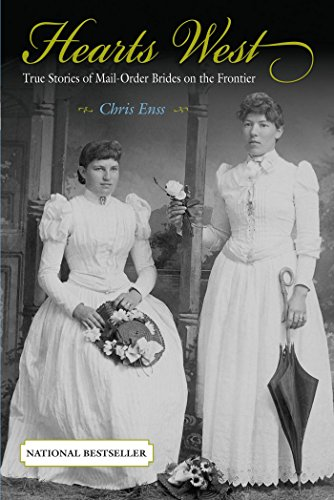
Book Review: Hearts West by Chris Enss


A source that I have found useful when writing mail-order bride stories is this slim volume subtitled True Stories of Mail-Order Brides on the Frontier. The premise of why the author wrote the book is sweet: she didn’t have a date for the Junior-Senior Prom and advertised that fact in the high school newspaper. The ad set out a meeting place and fourteen other girls in the same situation showed up. The one guy who showed up was looking for a different meeting.

The irony here is how the ratio was switched from the late 19th century when American frontier towns experienced a minimum of fifteen men (often as high as fifty) to one woman. An enterprising businessman, Leslie Fraser Duncan, started the Matrimonial News in England in 1870, then opened offices in San Francisco and Kansas City, Missouri, the following year. For a set fee, men could advertise for a wife with anonymity, and the newspaper would facilitate correspondence with women who responded. The goal of the newspaper was stated as: “To cultivate the noble aim of life and help men and women into a state of bliss is our aim.”

The weekly newspaper remained in print through the 1890s, although toward the end, some of the ads were merely pranks. But the newspaper was successful enough to spawn many other similar publications. Each operated in a slightly different way, with some covering regional areas.  

Some women had more time to prepare for the eventual match and would sit for photographs that could be included in a letter to a prospective mate. Others were in a hurry to leave a bad situation, so they responded to several ads and possibly matched with the first man who replied.

The book includes stories of individual women, why they responded to such ads, and the outcome. A few examples of the ads are included.  I value the book because I learned that a wide variety of individuals at various stages of success used these publications which were the early version of ads in the contemporary personals column.

In my forthcoming novella, Triese, part of the Rescue Me Mail-Order Brides multi-author series, she fits into the “in a hurry” category.

Triese O’Hara watches as her father’s newspaper office is vandalized, and he’s beaten and hauled away with the thugs stating they’ll bury him. She needs to disappear far away and with a different last name to escape detection. But she vows to make the man responsible pay.

Sheriff Paxon Waldemarr struggles to control the lawless element in Laramie, Wyoming Territory. After a tragedy, he becomes guardian to his young niece and needs a wife to make a home. When he marries his mail order bride, he has no concept of this woman’s determination to avenge her father’s death. If her actions reflect on his career, how will their marriage survive?

Preorder here

Do you think you would have ever sought out such an arrangement to find your wedded spouse?

Follow me


Friday, February 24, 2023

Under Blizzard Watch

This morning, I shoveled three inches of snow off my front porch and the ten stairs to the front yard so my dogs could go down and heed Nature’s call. My husband strapped on our portable snowplow to the front of his Subaru and plowed the six inches of snow off the driveway. A recent acquisition, this plow will save us lots of shoveling., especially since starting at four this afternoon, we’ll be under a blizzard warning for twenty-four hours. This activity got me wondering about how 19th century people handled snowfall.

Old dictionaries use the term “snow plough.” A 1792 mention of a wedge built of wooden planks in a triangular form was made in an article published in New Hampshire. Research indicates that a patent for a snowplow was issued in 1840s, but no indication is given if the machine was actually built. In 1862 in Milwaukee, a plow was dragged behind a team of horses, according to Citilab.com. But here the horses are what’re actually breaking through the snow.  A problem existed that the main streets were cleared but often side streets were blocked with the pushed-aside snow. One solution was to pile up the snow in a horse-drawn cart and dump the snow in the closest river.

Snowplow (snoplog) in Sweden, 1909

In many cities, a big roller was dragged through the streets by a team of horses, compacting the snow so buggies and sleighs, often with skis attached, could transport people. Patents were issued in 1869 and in 1884 for machines to remove snow from railroad rails, but those machines didn’t go into mass production. Many train engines contain a metal wedge on their fronts to push aside snow.

At the company’s inception in 1878, American Road Machinery utilized horse-drawn steel blades to level roads, and they used them to move aside snow in the winter. The company went through a name change to Good Roads Machinery and is credited in 1913 with developing the first snowplow to be attached to a motor vehicle. In 1919, Carl Frink of Frink Snowplows is credited with constructing a plow for a commercial bus. Another milestone came in 1920 when Chicago street crews introduced a snow loader that used a conveyor belt to remove snow from the street and offload it into a dump truck.

Many of our stories take place on farms and ranches. Shovels have been around for centuries, and I can imagine the hours those residents put their strength to the test with manual relocation and removal. Also put to use would be sledges, a heavy flat pallet of wood to pull behind a team to cut a path through the snow from the house to the barn.

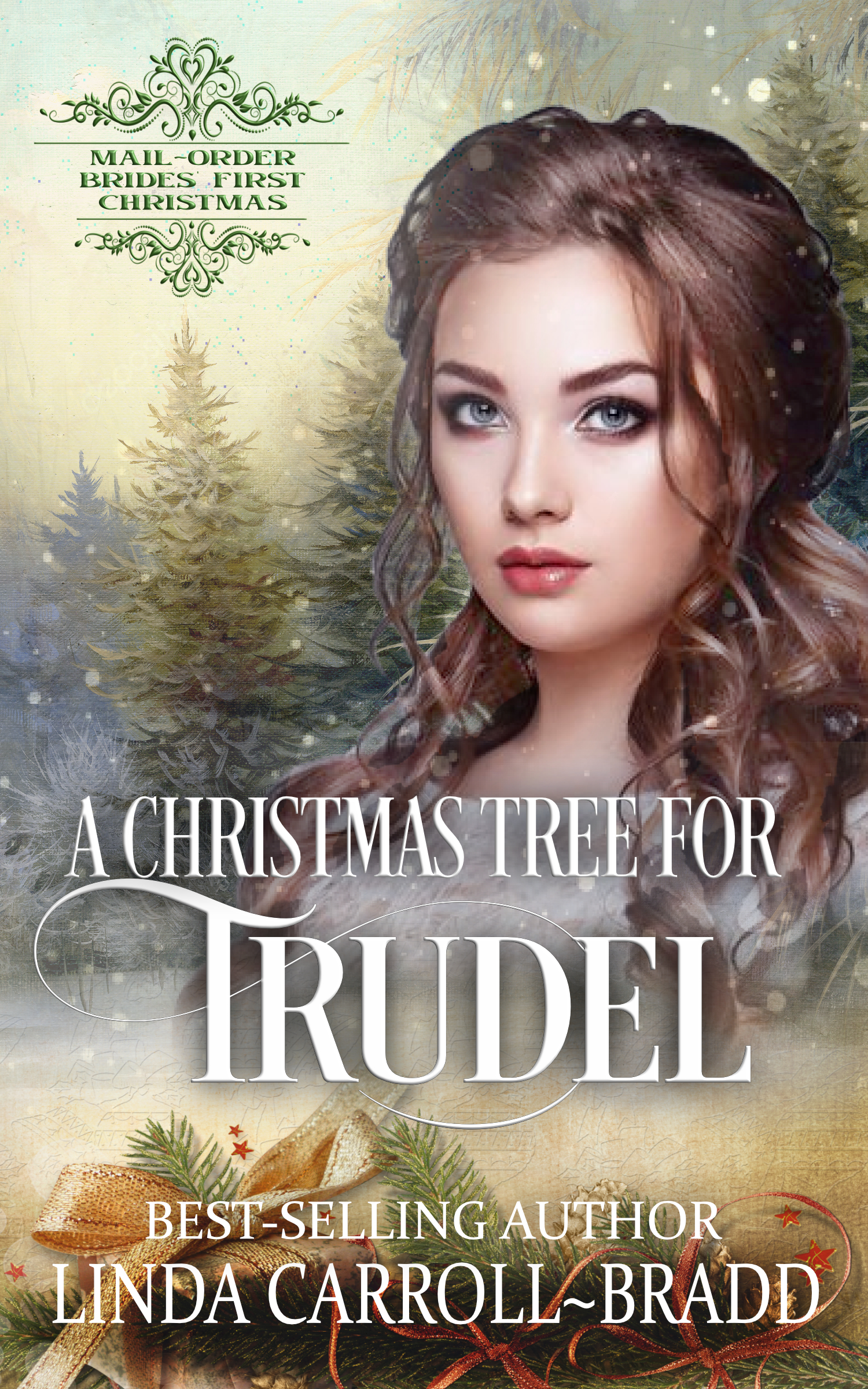
Blurb: A Christmas Tree for Trudel, book 12 in Mail Order Brides’ First Christmas

I’m sharing a backlist title with this post because I set the story in the Southern California mountains near where I live and can imagine Gibson and Trudel having to deal with snowfalls.

A high stakes poker game has effects even Gibson Bartleigh didn’t realize. He won back his brother’s gold mine deed but unknowingly wrecked a mail-order bride arrangement. Now faced with Trudel Arensen, the jilted fiancée, he agrees to drive her to a larger city where she can find a job. Propriety demands they marry, and both agree it’s only for the duration of the trip. But will forced proximity deepen the relationship into something more?

Amazon buy link

I'd be interested in hearing how many of you are being affected by this U.S. coast-to-coast winter storm.


Friday, October 28, 2022

San Antonio’s Famous Fort


In researching the story I’m currently writing, Cherishing Caitlyn, book 6 in the “Thanksgiving Brides” multi-author series, I needed a fort on the Texas frontier for the big meet between my protagonists. Because I was also including a plot element of the professional rodeo (which is acknowledged as premiering in May of 1888) I had a limited time frame. By the late 1880s, the majority of the 19th-century forts had served their purpose of either being supply posts for westward travelers or to guard settlers against the native population and were closed. With the capture of the last escapee from the reservation system, Geronimo, the native threat was considered over.

I settled on Fort Sam Houston in San Antonio as the fort for the opening of my story. The fort is named for the man who served as a US Senator and Governor of Texas, as well as a US Representative and Governor from Tennessee. The bid for construction of the fort was won in 1876, 33 years after Texas gained independence from Mexico. An interesting feature of the fort, and the first structure built, is the Quadrangle, a set of long buildings constructed around a central green space. The original use was as a supply depot. At one end of the Quadrangle, a brick clock tower and a large water storage tank were built.


By 1881, the fort consisted of 15 officers’ quarters, built near a parade ground, and the house for the fort’s commanding general, now named Pershing House.

In 1886, Geronimo was housed at Fort Sam for about six weeks following his capture in Skeleton Canyon, Arizona Territory, before his transfer to a Florida reservation while negotiations were conducted over how his surrender was to be classified--conditional or unconditional. Legend says that he refused to eat food he did not hunt himself so a herd of deer was imported to live in the Quadrangle.

Although I lived in San Antonio from 2000-2012, I never toured the ninety remaining historic buildings at the fort, which is now part of a huge military complex. But I can attest to a herd of deer that often grazed along a roadway I drove through undeveloped land in the northeastern part of the city on my way to work.

On a visit with an aunt and uncle at an army fort, Caitlyn O’Mara meets a man with exceptional horse riding skills and is intrigued. At a ball, she enjoys a flirtation with the cocky rider where they exchange only first names.  Anxious to return to her horse breeding program, she travels back to the family ranch, only to discover the charming stranger is on the same stagecoach. When a broken wheel rolls the coach, everyone is injured and alone on the Texas prairie.

Mateo Beltran is on his way to investigate specially trained horses. He’s on the lookout for cutting horses to give him the edge for the roping event in the newly established professional rodeo. An accident leaves him injured with his future career in jeopardy.

Determined they are the most fit, Caitlyn and Mateo lean on each other to reach the next stagecoach stop to summon help. Trust develops but will it last when they discover an unknown connection?

Amazon preorder lin
Connect with Linda

BookBub

Facebook

Goodreads

Newsletter signup

Thursday, September 29, 2022

Touting The Central Pacific Railroad website


My post this month is an announcement of my early September release that hasn’t had its day in the sun. With this story set in 1878, I wanted to play with several tropes: secret identity, opposites attract, mistaken identity, woman in jeopardy, across the tracks and figure out how to fit them all in one heartwarming story. Of course, including children in the plot always helps with the cuteness factor.

I always do the research to find the actual train schedules so I can figure out if my characters have lots of choices of departures or if they have to jump through hoops to get to the depot in time. In this instance, I needed the names of several stops before the train reached Denver, and I was lucky to find such a schedule. I have used the website for the Central Pacific Railroad Photographic History Museum so many times that I feel I must give it a shout out. http://cprr.org. Click on the History link and you’ll find pictures of what the inside of a car looked like, how the beds folded down, tons of stuff about the Transcontinental Railroad construction and completion, testimonies of people who rode on the first trains, recommendations on how to pack and what people would expect to see, the actual advertisements that enticed people to travel cross-country, including side trips to new attractions like Yellowstone and Yosemite Parks. In the mid-19th century, trips were either coast also included ship connections to other continents. If any of you have train enthusiasts in your family, I can’t say enough about this website. 


The title is Sabrina, and the novella is book 5 in the Runaway Brides of the West multi-author series. Sabrina Whitmore, daughter of a wealthy railroad investor, has finally found a man who accepts her suffragist work. On the night before her wedding, she overhears her fiancé bragging that if he can’t get her to toe the line after their marriage, he’ll just have her committed to an asylum and take charge of her inheritance. Sabrina escapes the family mansion with her maid and rushes to the Kansas City train station headed toward an aunt in Denver. When she awakens the morning before her arrival, she discovers her maid is nowhere to be found and has stolen her clothes and most of her money. While hunting for her maid, she sees Maeve spirited away by two burly men and is scared her fiancé is hunting her.

Derrick Burkhardt bumps into a woman matching the description of the governess he hired from a St. Louis agency. Needing to get her settled at the ranch before he leaves for the spring roundup, he does all the talking during the buggy ride. When he returns a week later, the ranch is in an uproar over the governess’s unorthodox teaching methods. All Derrick sees are his children at the happiest they’ve been in two years. Will he feel the same when he learns the governess is not who she claims to be? 

FREE in Kindle Unlimited

https://www.amazon.com/gp/product/B0B33ZYMY8

Best ways to contact Linda

https://www.facebook.com/linda.carrollbradd

http://www.goodreads.com/author/show/1806413.Linda_Carroll_Bradd

https://www.bookbub.com/authors/linda-carroll-bradd

https://www.amazon.com/author/lindacarroll-bradd