Showing posts with label Mended Hearts series. Show all posts

Thursday, February 23, 2023

Nappies - A Short History on Diapers by Jo-Ann Roberts


While plotting out my current work in progress, Winning the Widow's Heart - Book 2 set during the Civil War, I needed to uncover--forgive the pun--how our great-great-grandmothers diapered their children.

Weather permitting, native American babies might have gone without pants, and would potty train early. Absorbent materials like moss, grass or weeds might be stuffed around a baby's bottom before he was wrapped up tightly in a cradleboard. When soiled, the material would be discarded and decompose naturally. In colder climates, mothers might use covers made of animal skin.

Used as a diaper material since ancient times, rabbit skins were especially sought-after since they were soft and gentle on delicate baby skin. Additionally, they were incredibly absorbent, holding up to 30% of its own weight in moisture, making it an ideal material for keeping babies dry.  


In Colonial times until the late 1800s, diapers were made from cotton, muslin, flannel or linen.  While waiting for their little one to make an appearance, it was a good way for mothers to keep busy, and a useful way to re-purpose worn-out clothes.


Because they were handmade, the shape of diapers varied. They might be squares, rectangles, or triangles. Fasteners could be buttons, sewn-on ties or straight pins (Yikes!) The modern safety pin wasn't invented until 1849. Wool covers (soakers, pilchers) were sometimes used, but generally babies only wore diapers.

Burnt flour, witch hazel, bee pollen, and beeswax were often used for diaper rash.

Because the colonies were still tied closely to England, colonists referred to diapers as napkins, "nappies", or clouts (a piece of cloth or leather). Mothers could purchase yards of special diapering cloth made of linen or muslin.

As the westward movement progressed, pioneer women carried on the same practices of diapering. However, their choices of fabric were severely limited unless they brought a layette with them. 

How Diapers Were Laundered

Mothers usually set aside a day or two each week to tend to the family's laundry, since water was scarce (especially on the Plains), and the work backbreaking. Often, women just rinsed and wrung out the wet diapers and hung them to dry. Can you imagine the odor when diapers were dried by the fireplace in the winter... Ew! 
Soiled diapers would be scraped, rinsed and set aside for washing. 


New Century...New Innovations...Disposables & More

In the late 1880s, all-cotton cloth diapers were mass-produced. Mothers were encouraged to sanitize diapers by boiling them before re-using.

A welcomed boost arrived in the 1940s and 1950s when washing machines became more affordable.

Even with these advancements, many women still sewed diapers and covers at home. During and after World War II, there was a shift in the use of cloth diapers-- namely, a shortage of cotton, and the flood of women into the workforce. With less time for housework, mothers looked for innovation and convenience. As a result, diaper washing services delivered diapers daily alongside their milk and eggs. 


In 1942, a Swedish inventor created the first throwaway diaper made of paper; in 1947, Valerie Gordon created a disposable diaper made from parachutes, cotton wadding, and wool. A housewife, Marion Donovan, filed a patent for a reusable cover. She was a young mother struggling with a leaky cloth diaper. She took down her shower curtain, ripped it up, and stitched it into a waterproof diaper cover using a sewing machine. She called her invention, 'Boater', utilizing snaps instead of pins, allowing for a better fit. She later used nylon parachute material. 


But despite progress in the design of washable diapers, disposables had become the wave of the future. Convenience, absorbency, fit, and lower incidence of diaper rash were the major selling points. Pampers© produced its first disposable diaper in 1951, complete with flushable insert. What made Pampers© an instant success was that they used cellulose fibers instead of paper fibers. 

The Modern Cloth Diaper

The properties of cloth diapers have changed dramatically over the last 150 years. While many of properties are the same, including prefolds, flats, and diaper covers, parents can purchase all-in-one diapers, hybrids, and pocket diapers that replicate the ease of the disposable diaper.

In the 1990, when global warming was first being tossed around, and parents began to understand the environmental impact disposable diapers had on the planet, cloth diapers began their resurgence.

 
On a personal note, in my teens, I babysat for my younger cousins, and have very vivid memories of cloth diapers, diaper pails, rubber pants, and diaper pins.

Gratefully, we were fortunate enough to buy disposable diapers when our children were born...

...which brings me back to the reason for my research on diapers since they play a minor role in the romance between Sofie Bishop, a Georgia widow, and Yankee captain, Seth Ramsey.

Releases April 26th!


Thursday, October 28, 2021

Halloween...A Time for Romance?! - by Jo-Ann Roberts


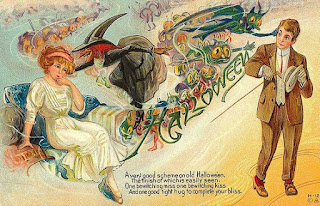
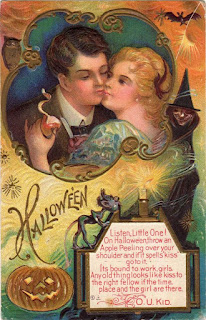
Up until I did research for a Halloween scene in an upcoming book, I never knew that the perennial holiday wasn't always so scary. In fact, it was once less about fright and more about flirtation and romance. Romance?!  How did I live all these years without knowing this?


More than one hundred fifty years ago, rituals and superstitions about Halloween celebrations emphasized love. Newspaper reports from states and territories in the mid-19th and early 20th century recommended parlor games and traditions that promised to reveal romantic fortunes, with many offering a peek at what the future held.

According to Daniel Gifford, a former Smithsonian National Museum History director,

 "Halloween in the early 20th century had far less emphasis on blood, gore, and scary monsters, and much more emphasis on courtship, romance, and the opportunity for love. In fact, the image of Cupid was often interspersed among the more familiar black cats, witches, and jack-o-lanterns."

Games of Love

As in modern times, apples played an important role in many Halloween romantic traditions. One game, Snap Apple, challenged guests to use only their teeth to bite an apple suspended from the ceiling by a string. The first to succeed would be the first to marry. But modern Americans may be more familiar with a similar activity...bobbing for apples!

Oddly, cabbages also figured in the world of Halloween romance. A news story from Ironton, Montana in 1888 noted, "just what occult power a cabbage possesses is not known. Yet, it is found that these innocuous cruciferous plants have a rough time of it at Halloween". The article went on to describe a Halloween pastime where a young woman would pull up a cabbage. If copious amounts of earth came up with the roots, she took it as a sign that she would be married to a wealthy man with a year!


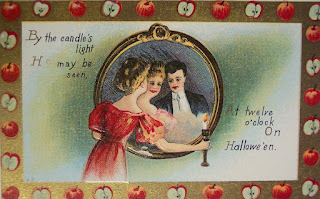
Accounts of a Halloween ball, gatherings with cards and dancing, or a "candy" pull in which party guests competed to grab apples or candy suspended from the ceiling with their teeth would show who would have a successful year. A Los Angeles newspaper printed an account of mirror gazing, burning of chestnuts, and carrying the candle. Most of these activities involved young women attempting to divine their future husbands or arranged marriages.


Another old custom called for cutting a long strip of apple skin and tossing it over one's shoulder. The shape of the peel was said to resemble the first initial of a suitor.

In 1905, at a party in New York's East Side Settlement House, young women blew out lines of candles, with the idea that the flames that remained lit signified the number of years she'd remain "unhitched".


Another party game involved a young woman throwing a ball of yarn out the window, watching it unroll while repeating the Lord's Prayer, at which she would then be rewarded by the sight of her future husband.

An article featured in a Philadelphia newspaper called for a participant to walk backward in bright moonlight while staring into a hand mirror and reciting a chant. If done correctly, the face of his or her future spouse would materialize in the mirror. 


Another game involved burying a ring, a dime, and a thimble in mashed potatoes. The food was then served to guests at a party. The guest who received the ring would marry in the near future; the one who received a thimble would remain a spinster or bachelor; and the guest who got the dime would reap riches and fame. 

Nut Crack Night

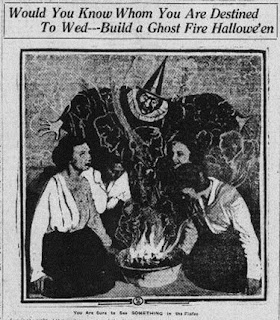
By far, the most common Halloween premonition involved nuts or chestnuts. In the Arizona Territory, young women were encouraged to build a "ghost fire" to find out who they were destined to wed. Chestnuts thrown into the fire would pop, and the girl's whose chestnut popped first would see her future husband's face rise up from the flames. A variation on this custom stated that a man and a woman would place two nuts in the stove. If the man's jumped or cracked, he would prove fickle, but if the two nuts "cuddled up to each and burned brightly", the couple would marry and live happily ever after.


Another superstition featured a walnut tree. According to a 1914 article in the Evening Public Ledger in Philadelphia, the rules were rather clear. On a moonlit Halloween night, circle the tree three times while chanting "Let him that is to be my true love bring me some walnuts."  Following the chant, the participant would see his or her future spouse picking walnuts in the tree.  

Though romantic, these Halloween customs began to fade and lose their appeal to the public by the 1920s.

Women, the traditional party hosts and targets of such games, were becoming more confident in their roles both in society, at work, and at home. About the same time, a figure emerged in popular lore: the powerful witch. And unlike commercial depictions, she was alluring.

As Mr. Gifford noted:

"The beautiful witch possessed power and beauty...she could use both to make her own decisions about...the future of her love life."

Like the strong heroines we create, and the women of today, the witch needed no fortune-telling skills; she would create her own destiny.


Marrying the Major


October 31st Release Date

The War Between the States has ended…but for Kit and Will their battle had just begun.

As the daughter of a prominent judge and well-bred mother whose roots could be traced back to before the War of Independence, Katherine Lambert had been the belle of Adams Mill. Her upbringing her schooling and her privileged world had revolved around the latest fashions, picnics, parties, and a host of beaus and friends.

She was expected to raise children; not her voice.

Until she defied her family and the Rebel cause by doing the unthinkable...falling in love with a Union cavalry officer.

The moment the very elegant very beautiful Katherine Lambert turned around to look at U.S. Major William Chandler was the moment she marched off with his heart. Though he always planned to carve out his own destiny, to marry and raise a family, he never expected love to find him in a small Southern town

Encountering opposition at every turn, he remains undaunted, determined to court and marry Kit and see who took serious objection.

They'd hoped their love would mend and heal the wounds of a splintered family, but someone else had other ideas.


Thursday, September 23, 2021

An Unlikely Romance by Jo-Ann Roberts


I readily admit I am an avid student of history. I've always been drawn to everyday people who lived, loved, and fought alongside notable characters from the past. In elementary school, you'd find me in the history section of the Berkshire Athenaeum reading stories of  the early years of Mary Mapes Dodge, Betsy Ross, and Clara Barton. During high school and college, I took as many history classes as my schedule would allow. As an adult I fell in love with all of John Jakes' series, thrilled when many of them came to life on television. Victoria Holt, Jude Deveraux, and Roseanne Bittner were-and still are-among my favorite authors. When I began writing, I naturally gravitated toward historical romance. 

So I wasn't surprised when inspiration for my new series, Mended Hearts, came from the real-life romance, Undaunted Heart: The True Story of  a Southern Belle and an Yankee General by Suzy Barile.


In February, 2019, our local NBC affiliate, WRAL, aired a weekly segment, "The Tar Heel Traveler" narrated by Scott Mason.  Just in time for Valentine's Day, he tells the love story of Miss Ella Swain, daughter of the President of UNC-Chapel Hill, and Union General Smith Atkins of the 92nd Illinois Volunteers, a mounted cavalry. (To view the segment  CLICK HERE)

Their meeting, courtship, and marriage gave North Carolinians a lot to talk about for generations. Their story even made its way into state history books. But over time, the facts of their love story gave way to legend.

When a brigade of General Sherman's victorious army marched into Chapel Hill the day after Easter, 1865, the War Between the States had just ended, and President Lincoln had been assassinated. Citizens of the picturesque North Carolina college town had endured years of hardship and sacrifice, and now the Union army was patrolling its streets. One of Sherman's young generals paid a visit to the stately home of David Swain, president of the University of North Carolina and a former governor of the state, to inform him that the town was now under Union occupation.

Against this unlikely backdrop began a passionate and controversial love story still vivid in town lore. When President Swain's daughter, Ella, met the Union general, life for these two young people who had spent the war on opposite sides was forever altered.


But, as a close friend of the Swains wrote, when Atkins met Ella, the two "changed eyes at first sight and a wooing followed".  The reaction of the Swains and fellow North Carolinians to the North-South love affair was swift and often unforgiving.

Ms. Barile, a great-great-granddaughter of Ella Swain and Smith Atkins, tells their story, separating facts from the elaborate embellishments that the famous courtship and marriage have taken over the generations. Interwoven throughout Undaunted Heart are excerpts from Ella's never-before-published letters to her parents that reveal a loving marriage that transcended differences and scandal.

Immediately after this segment aired, my active imagination went into over-drive...I couldn't get my thoughts down on paper fast enough! But I was nearing the end of Book Two in the Brides of New Hope series, and Book Three waited in the wings.

Still, this romance wouldn't quit teasing me.

The day I sent off Grace-Brides of New Hope Book Three, my research began on the Tar Heel state during the last days of the Civil War, Sherman's capture of Raleigh, the Union army's march to Durham Station (as it was called in those days), and the surrender of North Carolina.

During this time, my husband and I took a trip to Asheville. Stopping at the Southern Highland Craft Guild on the Blue Ridge Parkway, I picked up a piece of handcrafted wood fashioned into a heart. The attached card stated the Heart Mender "would lighten your heart...allowing your worries and stress to melt away". Bingo! I had the name of my new series, Mended Hearts, and the wooden heart became the connecting thread through all three books based on true events during the Civil War.

The War Between the States has ended...but for Kit and Will their battle had just begun.
   As the daughter of a prominent judge, and well-bred mother whose roots traced back to the War of Independence, Katherine Lambert had been the belle of Adams Mill. Her upbringing, her education, and her privileged world revolved around the latest fashions, picnics, parties, and a host of beaus and friends.
   She was expected to raise children; not her voice.
   Until she defied her family and the Rebel cause by doing the unthinkable...falling in love with a Union cavalry officer.
                                             ***
   When the very elegant, very beautiful Katherine Lambert looked at U.S. Major William Chandler was the moment she marched off with his heart. Though he always planned to carve out his own destiny, to marry and raise a family, he never expected love to find him in a small Southern town.
   Encountering opposition at every turn, he remained undaunted, determined to court and marry Kit, and see who took serious objection.
   They'd hoped their love would mend and heal the wounds of a splintered family, but someone else had other ideas.


Thursday, August 26, 2021

"The Singing War" Music and Serenades During the Civil War by Jo-Ann Roberts


 “All history proves that music is as indispensable to warfare as money, and money has been called the sinews of war. And music is its soul...”
                                                                                    The New York Herald,  1862                                                                            

The musical world around soldiers and civilians during the antebellum and war years provided support, guidance, and entertainment. As is true with today's music, people from that time period gravitated toward music that reflected their feelings at that moment. The soldiers took great solace in familiar antebellum music that evoked these fond memories. And by doing so, broke through the barriers of political, ideological, and regional divides brought on by the Civil War. 

With the country embroiled in war, music remained important to everyone, at home and on the front lines. The lyrics rekindled emotions reminded men why they enlisted and helped forge a common bond throughout the ranks.

"In camp and hospital they sang sentimental songs and ballads, comic songs and patriotic numbers...these songs were better than rations or medicine."                                                                                                                                                         Kenneth Bernard   

An image taken early in the war of the
33rd NY State Volunteer Infantry band,
also known as the Elmira Cornet Band.
                            Library of Congress


Singing, playing, and hearing music allowed troops to reminisce about peaceful times at home with family and loved ones, bond, and temporarily escape from the horrors of battle. Soldiers of both sides often engaged in recreation with musical instruments, and when the opposing armies were near each other, sometimes the bands from both sides of the conflict played against each other the night before a battle. 

At the start of the war, there were few military bands. As state and local militias were mustered into service, they brought along their bands and were useful in recruiting soldiers. In July of 1861, the War Department issued Order #48 entitling two field musicians (buglers or fifes and drummers) per company of soldiers and a band of 16-24 musicians for each regiment. These musicians were noncombatants, there solely to provide music for the Army and morale-boosting so badly needed.  

In the months when both armies, unable to campaign because of impassable roads, would go into winter camps where there was little to keep them occupied. During these times, amateur musicians, drawn from companies, regiments, and bridges put on plays, reviews, and even excerpts from famous operas.

John Billings of the 9th Massachusetts Battery and author of Hardtack and Coffee wrote:

"There was probably not a regiment in the service that did not boast of one violinist, one banjoist, and bones player in it's ranks...and one or all of them could be heard in operation... a most pleasant evening...The usual medley of comic songs and sentimental melodies composed the greater part of the entertainment."

2nd South Carolina String Band     Library of Congress


Their primary duty was on the battlefield. Long before radios and technological advances, music - drums, bugles, fifes, etc. - was a vital part of the command process used to marshal, move, and direct troops in camp or on the march, and especially in battle where the cacophony of the fighting drowned out all verbal commands beyond a few feet. 

Troops on the move and in camps used music in a variety of ways. The common man from both the North and the South did not have the cultural opportunities to hear live music found in larger cities. Thus the bands exposed these soldiers to popular tunes such as "Eatin' Goober Peas", "When Johnny Comes Marching Home", "The Battle Cry of Freedom", "Lorena", "Listen to the Mocking Bird", and  "Dixie" as well as many others.

Whether sentimental or high-spirited, the Confederate and Union soldier's music was an important part of the way of life and culture they fought to preserve.


Often, if either army was camped near a village or town, their singing could be heard throughout the countryside, giving the residents comfort and a respite from the horrendous battle being waged literally in their fields and back yards. However, if the opposing army had overtaken a town or a village, those same residents became easily annoyed by the singing of their enemies.

Such was the case in my upcoming release, Marrying the Major (Mended Hearts Series). Following the surrender at Appomattox, the Army of the Ohio descends upon Adams Mill, awaiting the surrender of North Carolina in nearby Durham Station. Hoping to court Judge Davis Lambert's older daughter, Kit, Union officer Major William Chandler assembles a group of musicians to serenade the beauty.

To read an excerpt click here.

Coming in October!


The War Between the States has ended…but for Kit and Will their battle had just begun.

    As the daughter of a prominent judge and well-bred mother whose roots could be traced back to before the War of Independence, Katherine Lambert had been the belle of Adams Mill. Her upbringing her schooling and her privileged world had revolved around the latest fashions, picnics, parties, and a host of beaus and friends.
    She was expected to raise children; not her voice.
    Until she defied her family and the Rebel cause by doing the unthinkable...falling in love with a Union cavalry officer.

    The moment the very elegant very beautiful Katherine Lambert turned around to look at U.S. Major William Chandler was the moment she marched off with his heart. Though he always planned to carve out his own destiny, to marry and raise a family, he never expected love to find him in a small Southern town.
Encountering opposition at every turn, he remains undaunted, determined to court and marry Kit and see who took serious objection.

They'd hoped their love would mend and heal the wounds of a splintered family, but someone else had other ideas.


Thursday, June 24, 2021

Behind The Fight: Quilts of the Civil War by Jo-Ann Roberts

 Both Union and Confederate women rallied to the war effort when the Civil War broke out in 1861. Patriotic fervor abounded, with both sides certain the war would be short and decisive. Unfortunately, the war that was supposed to "only spill a thimble-full of blood" dragged on for four long and bloody years. Shortly after the siege of Fort Sumter, it became clear there was a desperate need for blankets, clothing, linens, and bandages.

Northern and southern women, forbidden by the cultural norms and decrees of the day were "forbidden" to enlist in their respective armies. Ever resourceful, these women "fought" the war and healed its wounds in their own way...from the home.


U.S. Sanitary Commission
Northern women, accustomed to gathering and sewing for a cause, changed their focus from abolitionist causes to helping soldiers. Established in 1861, the U.S. Sanitary Commission supported the sick and wounded soldiers of the Union Army. Soon the need for bedding became apparent and the commission added the collection of donated quilts to their activities.

At first, family quilts were donated but very quickly women began to sew quilts--seven feet by four feet--specifically for a military cot. Most quilts were made from available fabric, but sometimes were made by cutting up existing quilts then sewing them into three cot quilts.

Each quilt distributed by the Sanitary Commission had a patch, similar to the one below, sewn on the back of each quilt.


Soldiers' Relief Societies
In the South, where the population was smaller and more dispersed, and loyalties were more attached to individual states rather than the Confederacy, women's aid societies were scarce, and somewhat hindered in producing bedding for soldiers because they did not have a tradition of sewing for causes. In addition, wealthy women were accustomed to having slaves do the everyday sewing. Soon, these women, too, learned to sew. With the war being fought literally in their yards and fields, and their Confederate economy devastated by the Union blockade, the arrival of all goods was severely curtailed.

Although the South grew cotton, so entwined with the causes of the war, the North manufactured the cloth. Once pre-war textiles were depleted, fabric became scarce, with calico costing as much as $25 a yard by 1865. Many rural women and slaves turned to the art of spinning and weaving, as a popular song of the times proclaimed,
"Three cheers for the homespun dress the Southern ladies wear."

Homespun, once worn only by slaves and the very poor, was now worn proudly by Southern women.


Bazaars for the Northern Cause
Bazaars were held in the North where quilts were made with expensive fabric and donated to raise funds. These bazaars had already been established to raise money for churches and various causes. Now those funds went to the war effort. Although some publicly disapproved of women "working" in any commercial venture, patriotism won the day as a great deal of money was raised for Union supplies.


Southern Gunboat Quilts
   "The cause is a noble one, the effort is sublime, and the moral effect will reach far beyond the deadly projectiles which the contemplated gunboat can send. If the women take it up with a will, there is no word as fail."                        
The Mobile Register & Advertiser, 1862 

When the war shifted to the rivers, Southern women did what they could to buy desperately needed gunboats. Enthusiasm was high as communities vied to raise funds. Some of these more elaborate quilts used cuts from printed fabric in a medallion-style floral pattern. These motifs were appliqued to fabric in a method called broderie perse (Persian embroidery), requiring very fine sewing skills. Through the women's efforts, raffles, donations, and fairs, enough money was raised to pay for three gunboats.


By the spring of 1862, when Confederate defeats appeared likely that their seaports would fall to the Union, enthusiasm for this project waned. Instead, the women's efforts went to aiding their soldiers.


Everything and Anything Went into Making the Quilts
Quilts were generally made with basic fabrics and very simple block patterns. As the war progressed, time was an issue. The quicker the quilts could be made, the better.

Men's clothing, feed and fertilizer sacks, wool, twill flannel, old uniforms, sleeves, pocket-flaps, and pant legs were all used to make quilts. They were roughly put together with large "hen tracks" stitching. Practical and functional rather than beautiful, these quilts were made for warmth and comfort.

Old mattresses were torn apart for fiber to spin. Carpets, curtains. lengths of toweling were cut up and made into blankets.

Symbols of Allegiance
During the war, quilting became a necessary source of warmth for soldiers, as well as a significant source of revenue on both sides of the war effort. "Voting with her needle" was a common practice as some women would leave clues inside their quilt designs that might reveal their political opinions.

Confederate Silver, a basic patchwork design recalls the deprivations that started to appear in Louisiana. After a year and a half of war, even the basics were hard to come by.


Quilts of Gee's Bend
Boykin, an isolated, rural community in Alabama, is home to one of the most enduring examples of post-Civil War quilting. In 1816, Joseph Gee established a cotton plantation in the area. Gee left in 1845, and the property was sold but the name and slavery remained.

In recent times, Gee's Bend quilts have gained a worldwide following for their simplistic and improvisational style. Whether it was their isolated location or being forced to use whatever materials were on hand, their creations were a stark departure from classical quilts.


Unfortunately, very few original Civil War quilts made for soldiers have survived. As most of the quilts were hastily made and poorly constructed, many were used to the point of disintegration. These quilts got a great deal of wear, and more than likely not worth saving. Added to the fact that many soldiers were buried in their quilts, it is understandable why these quilts are quite rare.

By the war's end in 1865, more than 250,000 quilts and comforters were made for the Union soldiers. While the number of Confederate quilts made was far less due to the scarcity of material, Southern women rallied, continuing to raise funds for the sick and wounded any way they could.

Coming Early Fall 2021


"Come Home To Love...Where romance blossoms one story at a time."

Sign up for my newsletter 

Join my Facebook Group "Come Home to Love"