Showing posts with label Victorian Era. Show all posts

Wednesday, July 20, 2022

Superstitions in the Victorian Era


Post by Doris McCraw aka Angela Raines


Photo property of the Author

As I am working to finish the book on women doctors buried in Evergreen Cemetery, Colorado Springs, I've come across some interesting superstitions surrounding death and burial. Although these women probably didn't believe in them, some of their patients might have. 

It struck me, that there might be some that other writers and readers might not know of, so I thought I would share, just in case someone might need the information.

So for your use or just because:

1. A dog howling three times- A death has occurred.

2. If a person buried lived a good life, flowers will grow on the grave. If the person was evil, weeds will grow.

3. If three people are photographed together, the one in the middle will die first.

4. Thunder following a funeral means that the dead person's soul has reached heaven.

5. All windows should be opened at the moment of death so that the soul can leave.

6. If you leave something that belongs to you to the deceased, that means the person will come back for you.

7. When you experience a chill up your spine, someone, somewhere has just walked across your future grave site.

8. Never speak ill of the dead because they will come back to haunt you or you will suffer misfortune.

9. When a loved one dies, pour bourbon around the room in little drops to prevent evil spirits from coming into the house.

10. Taking ashes out of a stove after sundown will bring a death in the family.

I found some quite interesting and can see how people might accept them as fact. 

In the meantime, I will continue with the stories of these pioneering women who were medical school graduates who followed their passion to help ease the pain of others. All in the book were practicing prior to 1900. Watch for "Under the Stone", coming soon.

Mock-up of the possible cover


Doris McCraw

Friday, August 7, 2020

Late Victorian-Era Beauty Secrets by Kristin Holt


Kristin Holt | Late Victorian-era Beauty Secrets

Late Victorian-Era Beauty Secrets
by USA-Today Bestselling Author
Kristin Holt

19th Century Woman's Toilette

I continue in fascination as I discover more and more history of real life among average, working Victorian-American women. The wealthy may have bought pots and tubes from the burgeoning beauty industry, but what advice or methods circulated among the average Mary?
(Note: I've shared numerous links to related articles, below.) 
Kristin Holt | Late Victorian-Era Beauty Secrets. Cover image: Dr. Sloan's Cook Book and Advice to Housekeepers
Cover image: Dr. Sloan's Cook Book and Advice to Housekeepers

The following image contains a snippet from Dr. Sloan's Cook Book and Advice to Housekeepers, published 1905.

Kristin Holt | Late Victorian-Era Beauty Secrets - How To Keep Your Beauty (1905), a one-page snippet from Dr. Sloan's Cook Book and Advice to Housekeepers.


Because reading from this image is difficult, I've carefully transcribed the content for you. Read on!

HOW TO KEEP YOUR BEAUTY.


The best way to keep the face free from wrinkles is to cultivate a serene disposition, take plenty of sleep, eat food that will digest easily, and when a wrinkle does appear erase it promptly by massaging well with a good skin food. Rub all the lines of the face upward as much as possible, as the face has a tendency to sag.

To have a good clear skin, the face must be kept free from dirt.

Cleanse the skin thoroughly with hot water, into which a little borax has been dissolved, and use a good pure soap.

Lather the face well with the soap and wash off with the hot water. Dry thoroughly and anoint with cold cream.

To whiten the complexion, take one-half pint new milk, one-quarter of an ounce lemon juice, and one-half an ounce of white brandy. Boil the whole, skin, and use night and morning.

If one's face is too red, be careful of the diet. Take no hot drinks, but cooling ones. Do not wash the face with cold water -- lukewarm water is better -- and try hot foot-baths before retiring at night.

To  keep your hands soft, rub them two or three times a day, after washing, with equal parts of glycerine and lemon juice. Let it stay on ten or fifteen minutes, then wash the hands quickly in lukewarm water, using a good soap, and dry thoroughly. If your hands are inclined to be moist, rub a very little lemon juice after drying.

For discolored or stained finger nails a teaspoon of lemon juice in a cup of warm water is invaluable. This is one of the best manicure aids. It will loosen the cuticle from the finger nails as well as remove discolorations.

Brittle nails may be cured by soaking them daily for a few minutes in blood-warm sweet oil. Polish the nails daily with the chamois-skin polisher to improve the circulation and make them clean and pink. No paste is needed.


Invitation

What do you think of Dr. Sloan's solutions and beauty regimen? Please scroll down and comment. The "conversation" part is extra valuable, especially now!

Related Articles

Kristin Holt | Freckles, Complexions, Cosmetics and Victorian Beauty Concoctions
Kristin Holt | Lady Victorian's Secret
Kristin Holt | Oatmeal in the Victorian Toilette
Kristin Holt | Old West Bath Tubs
Kristin Holt | Celebrities Endorse Pears' Soap in 1880's Magazines
Kristin Holt | Victorian Hair Receiver
Kristin Holt | Styling Ladies' Hair: American 19th Century
Kristin Holt | Beauty Penalized: Victorian United States
Kristin Holt | When are Women Most Lovely? Henry Ward Beecher, 1879.
Kristin Holt | False Beauty Spots
Kristin Holt | Victorian Curling Irons
Kristin Holt | Victorian Hair Augmentation
Kristin Holt | Victorian Era Feminine Hygiene
Kristin Holt | Curing Colds: 1881 to 1901
Kristin Holt | Vaseline: A Victorian Product?


By Kristin Holt

Kristin Holt - USA Today Bestselling Author of Sweet Romance set in the American Old West... and an abundance of fun, informative Articles about nineteenth century LIFE

Copyright © 2020 Kristin Holt LC

Friday, March 6, 2020

Victorian-American Wedding Anniversary Parties by Kristin Holt

Kristin Holt | Victorian-American Wedding Anniversary Parties
by USA Today Bestselling Author Kristin Holt


As readers of sweet romance set in the American Old West, we’re familiar with weddings in this favored setting. We know all about home weddings, preachers or justices of the peace, and recording important dates (like marriages) in the family Bible. Have you noticed that wedding anniversaries are seldom mentioned in historical romance fiction? (Or is this sense of something [accurate] missing bothering only me?)

Wedding anniversary to-do’s were HUGE in the nineteenth century United States. Couples everywhere celebrated their wedding anniversaries in a variety of ways and means, inviting friends and family to celebrate—and in some cases, when a party wasn’t held, the guests held the party for the guests of honor—Surprise! (Can you even imagine?)

Kristin Holt | Victorian-American Wedding Anniversary Parties: First Wedding Anniversary Surprise Party. Published in The San Francisco Examiner of San Francisco, California on September 2, 1886.
 

Do you recall something about a paper wedding, a tin wedding, and a golden wedding? Victorian-Americans took that stuff seriously. Though vintage sources disagree (and they knew it), they generally held to a generally held “ten years equals tin wedding” and “fifty years equals golden wedding.” To learn much more about these additional weddings, and all the to-do about them, don’t miss out on my post about Victorian-American Wedding Anniversaries in general... it’s also live today!

Kristin Holt | Victorian-American Wedding Anniversaries

Other than find themselves (un-)pleasantly surprised with a surprise party thrown in their own home, what did folks do to acknowledge the anniversary of their marriage?

Kristin Holt | Victorian-American Wedding Anniversary Parites: a 25th Silver Wedding Anniversary celebrated at home by Mr. and Mrs. Geo. Anderson. Published in The Topeka Daily Capital of Topeka, Kansas, on November 11, 1888.
The Topeka Daily Capital of Topeka, Kansas on November 11, 1888.


Kristin Holt | Victorian-American Wedding Anniversary Parties: Mr. and Mrs. Scott's Topeka, Kansas Tin Wedding Anniversary Party. Published in The Topeka State Journal of Topeka, Kansas on October 20, 1898.

Kristin Holt | Victorian-American Wedding Anniversaries: Mr. and Mrs. Shaw's Bonne Terre, Missouri Tin Wedding.

The couple often threw their own anniversary party, inviting friends, family, the husband’s business associates, neighbors and the like. Festivities were often held in their home, involving music and food. Newspaper notices about such social gatherings typically listed the number of years celebrated by the couple, the names of guests in attendance, and in many cases, gifts given by various friends enumerated.

Oh boy.


When not enjoying music (such as a musicale), dancing, or supping at the dining room table, wedding anniversary party guests were often treated to other performances (phrenology, for example), or in the case of Mr. and Mrs. C. S. Houghton, were treated to the new game Newcastle, and many winners took home lovely prizes.

Kristin Holt | Victorian-American Wedding Anniversary Parties: Wedding Anniversary Party plays "the new game Newcastle" for prizes. Announced in The Sacramento Bee of Sacramento, California on March 26, 1887.

The size of a man’s bank account (and perhaps the size of his circle of friends) dictated the extravagance and expense of a wedding anniversary party. New York City newspapers mention parties held at home by couples married from one to sixty years, with the same type of gatherings and celebrations as their western counterparts.

Some celebrations held in ritzy neighborhoods of San Francisco cost far more than a working man could earn in half his lifetime. Descriptions of opulence make me wonder how the happy groom could continue to afford his own party year after year after year. Maybe once one hit the teens (thirteen years of marital bliss, fourteen, fifteen) they needn’t host a get-together until the big numbers, say, like their Silver Wedding.

Kristin Holt | Victorian-American Wedding Anniversary Parties: Crystal Wedding Party in Lawrence, Kansas--Fifteen Years for Mr. and Mrs. Geo. R. Gould. Annouced in The Spirit of Kansas of Lawrence, Kansas, on November 30, 1881.

This next example of a humble Fiftieth Wedding Anniversary Party speaks of posterity gathering and marking the Golden Wedding of their parents and grandparents.

Kristin Holt | Victorian-American Wedding Anniversary Parties: Golden Wedding of Saybrook, Illinois-- A Family Celebration. From The Salem Monitor of Salem, Missouri on December 10, 1896.

Sometimes Wedding Anniversary Parties were more commemorative and delightful to the aging bride and groom than anything else. Can’t you see the smiles upon the faces of elderly Mr. and Mrs. Mather? Who said sleigh rides were entertainment for the young?

Kristin Holt | Victorian-American Wedding Anniversary Parties: A Commemorative Emporia, Pennsylvania Sixtieth Wedding Anniversary. From The Lebanon Argus of Lebanon, Kansas on February 22, 1901.


Golden Wedding Anniversaries were rare in Victorian America, as a normal  and expected lifespan of men and women were strikingly shorter then than now. Considering the Mather’s sleighing on their sixtieth wedding anniversary, in their early 80s, was something remarkable and special... and not only because they were still together. Folks were considered “old” if they reached fifty... and that was a BIG if.

Notice this next couple were doubly-blessed. Not only did they celebrate fifty years of marital bliss, but they outlived virtually all of their contemporaries.

Kristin Holt | Victorian-American Wedding Anniversary Parites: Golden Wedding Party (Part 1 of 3). From Kansas City Journal of Kansas City, Missouri on March 28, 1897.
Kristin Holt | Victorian-American Wedding Anniversary Parites: Golden Wedding Party (Part 2 of 3). From Kansas City Journal of Kansas City, Missouri on March 28, 1897.
Kristin Holt | Victorian-American Wedding Anniversary Parites: Golden Wedding Party (Part 3 of 3). From Kansas City Journal of Kansas City, Missouri on March 28, 1897.


This last Victorian-American Wedding Anniversary Party notice from an 1896 newspaper reminds us all that food and drink in the late Victorian era, despite Victorian refrigerators and plenty of ice, food poisoning still happened.

Kristin Holt | Victorian-American Wedding Anniversary Parites: Fashionable Wedding Anniversary Guests Poisoned. Reported in Kansas City Journal of Kansas City, Missouri on November 29, 1896.


NOTEWORTHY


Sometimes, people live a shockingly long time. And sometimes, marriage seems to agree with those old codgers. A newspaper syndicate shared the surprising story of Joaquin Marreiro (age 103) and his wife (97) (Cabaceiras City, Brazil), married eighty years. “Of the twenty-three children born to this aged pair fourteen still survive. One hundred and twenty-six grandchildren and ninety-seven great-grandchildren will attend the wedding anniversary.” [Source: The Bloomfield Vindicator of Bloomfield, Missouri on February 26, 1881.]


Related Articles
 Kristin Holt | Victorian-American Wedding Anniversaries

Kristin Holt | 19th Century Halloween Party

Kristin Holt | (Victorian) Courtship After Marriage

Kristin Holt | Courtship, Old West Style


Kristin Holt | How to Conduct a Sleigh Ride (Victorian America)


Kristin Holt | Nineteenth Century Ice Cutting: Part 1
 
Kristin Holt | Victorian Refrigerators, a.k.a. Icebox

 
Kristin Holt | Victorian-era Personals... no privacy!


Two Invitations:

You're invited to browse my many blog articles about life and love in the Victorian American West~

Kristin Holt | Contributing Author: Sweet Americana Sweethearts
and on my own website: KristinHolt.com/articles:
Kristin Holt | Historical Articles by USA Today Bestselling Author Kristin Holt

You're also invited to scroll down and reply!

What do you think of these vintage newspaper articles about Wedding Anniversary Parties held in the 19th century U.S.A.?

Did anything within this article surprise you?

Thanks so much for reading!

Warmest Regards,
Kristin Holt
Kristin Holt | USA Today Bestselling Author writes Sweet Romances Appropriate for All Audiences
 Copyright © 2020 Kristin Holt LC

Friday, November 1, 2019

Victorian Witches by Kristin Holt

Kristin Holt | Victorian Witches
by Kristin Holt, USA Today Bestselling Author
of American Historical Romance 


Halloween may have passed, but America's fascination with witches has not. Nor has our delight with "Fright." How many witches came to your door last night, trick-or-treating? A few, I hope, that were not also zombies. You know: zombie witches, zombie brides, zombie doctors...

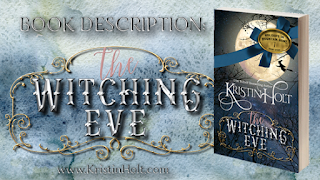
My grander reason for sharing a few tidbits about witches in American history is that we hear far more about the Salem Witch Trials than we hear about witch trouble in the Old West. Wow! Before finding these gems midst bazillion pages of newspaper archives, I'd gathered much about Halloween in the nineteenth century United States. Fascinating! That enjoyment of holiday parties, Halloween, and the late 1800s became The Witching Eve, a short story. (Just 99-cents. Better yet, it's included with your Kindle Unlimited subscription.)


Victorian Witches

Yes, Victorian America, melting-pot that it was, did indeed believe in witches. True, not many were caught up in the fervor surrounding earlier decades and centuries, but some did bring their superstitions from homelands.


Witchcraft: Irish Carpenter's Peculiar Affliction (1881)


Kristin Holt | Victorian Witchcraft. Newspaper heading from Lancaster Intelligencer, Saturday Evening, January 15, 1881. "Witchcraft!"
Lancaster Intelligencer of Lancaster, Pennsylvania. Saturday, Jan. 15, 1881. "Witchcraft!"
This delightful vintage newspaper article was published in Lancaster Intelligencer on Saturday Evening, January 15, 1881. As to not miss a single element of historical value, I've elected to transcribe the article word for word, with precise spelling (even when it's an error) and punctuation. Enjoy!

A Carpenter Bewitched.
New York Times.
The witches may or may not have all been burned in New England a century or two ago, but there are persons on Staten Island who are positive that one witch is still alive and that she has made them the victims of her dark powers. However this may be,  the idea of advertising in a New York daily newspaper for a person who can cure witchcraft is certainly a unique one ; and when the following advertisement appeared in a morning newspaper yesterday a reporter was immediately dispatched to Staten Island to learn something about the witch :
PORT RICHMOND. S. I.--IF THERE IS ANY person in New York that can cure witchcraft, man or woman, black or white, let them come and cure if they can, and no cure no pay. RICHARD MAY, Port Richmond, S.I.
It was hard work to find Mr. May in Port Richmond, but at length it was learned that he lived in one of the side streets (the Port Richmond streets are nearly all side streets), that he was an old man, that he had been a carpenter, and that he and his wive lived alone together. The house pointed out was a neat little story-and-a-half cottage, painted white, with an old fashioned well-curb in the front yard and a piazza across the front. A brisk knock at the door brought out a little old woman, wrinkled and gray, but withal plump, and bearing on her face the kindly look of a rural Irish woman. She wore the same cloth hood, in the shape of a sun-bonnet, and the same short skirts that such women always wear. She said that Mr. May lived there, that he was at home, and that he could be seen. And so saying she ushered her visitor into a room opening off the little hall, evidently the living room of the family. It was a very small room, but large enough for so small a family. Its furniture, though scant, was comfortable, and there was the air of comfort about the place that is always to be found in the home of an old Irish family. There was a table between the two windows, and a rocking chair, and a small stool, and a little cooking stove with red-hot lids and a tea kettle on it humming the same old tune that tea kettles hum to bairns and grannies year in and year out and never grow tired. An old-fashioned tin candlestick on the table held an inch or two of tallow candle, and two thick green paper shades shut out the world. In an arm chair by the stove, so close to the fire that it was a miracle he did not scorch, sat a broken old man, learning far over the stove, rubbing his hands together as if they were cold. This was Mr. Richard May, the advertiser, who was in search of some one to cure him of witchcraft.
"Yes," said he, in answer to the question. "I had the advertisement put in ; at least my wife did. She has to attend to everything, now. Can you drive out witches?"
The reporter was inclined to think that he might drive on out, if it was a small witch and he had a big club ; but he replied, with some caution, that he proposed to publish an account of this witchcraft in the Times, and that such publicity would certainly have a good effect upon the witch, and perhaps drive it out altogether.
"Yes," said the old man, "yes. I don't know but it might. I'm sure I wish it would. It's very hard to be bewitched this way, and kept away from work and left to starve. But I can't talk much--the witch won't let me talk much. My wife can talk."
On the subject of his wife's ability to talk, the old man's intellect was still sound. She straightened up some little things about the room, and went into an adjoining closet and brought out a fresh candle, drew a small and low four legged stool of home manufacture up by the side of the stove and sat down. It would have been evident to the least experienced observer that she had a story to tell, and that she was about to tell it.
"He hasn't done a stroke of work," said she, "for four years. There he sits all day, just as you see him now. And me, too.. I'm all wrong. I am bewitched, too, but not as bad as him. I'll tell you all about it, and you can write it down so as not to forget it. Think you can remember it? Well, some people have great heads. If we were only wise enough we could get over this, and there are plenty of people could cure us--people with great learning--if we could only find them. It was all along of that woman. She did it all."
"What woman?"
"The woman that lived in this house with us. There was only us two, and there are nine rooms in the house, so we had plenty room and to spare, and we rented her two rooms. That was eight years ago. She had a big room up stairs, and a little room for a kitchen, and then she had the back cellar, for we didn't use it, and nobody else went into it. She had a husband then, and he made plenty of money. He was a wheelwright and got $3 a day. She was all right then, and just like any other woman. But by and by her husband got took just like my old man was. She bewitched him. They were Scotch folks, and she sent him back to England and got rid of him. Then she began. The first I noticed wrong about her she began to have the black eye. Did you ever see a witch?"
The reporter's experience had been confined principally to witches of the ham sand kind, but he replied that he had frequently seen persons who looked as if they might be possessed, and this was strictly true.
"Well," the old woman continued, "you know they always have a black eye. No matter what color their eye is before, when they get to be witches one eye gets black. Well, my old man's began to turn black--the same eye. Then his hands began to draw up, and he couldn't do any work. I knew it in a minute what was the matter with him, so I began to watch this woman. Her room was right over ours, and we hard great rackets up there every night as if somebody was chasing her about the room. So one morning early I went up there and looked through a hole in the door. We never could get into her room, for she kept the door locked. What did I see? There was a great big white towel stretched over the rocking chair ; you'd thought there was a corpse there. And on the towel was laid an oval bit of wood. That was her circle ; witches always work with circles, you know. And by the side of that was a long slim stick of wood. That was too much for me. I always knew there was witches, but I never thought one of them would live in my house. So I went to her and told her what she done to my husband, and told her she must leave. She said to me, says she, 'Mrs. May," says she, 'I didn't do it. Get a Bible and I'll swear to it.' Then I says to her, says I. 'If you swore to it on a thousand Bibles I wouldn't believe you ;' for you know witches' oaths ain't of any account ; they'll swear to anything. She wouldn't go, so I went to a justice and had her put out."
"And where is she now?"
"She is still here in Port Richmond, and she's still got my husband bewitched. When she was gone one of the neighbors come to me and says : "Don't you go into that cellar, Mrs. May. That's where witches live, in cellars, and maybe she's put something on the floor to make you lame." I know witches can do that, but I thought maybe I might find something in the cellar that would bring my old man out all right. So I went in very careful. I walked around on tiptoe, and went clear to the bank of the cellar before I found anything. Then I leaned over and looked back of the chimney, and there it was--a bundle of black rags, done up in a--in a--a bunch like, so you might have thought it was a black cat a layin' there dead. And there was a big bundle, too ; and I opened that, and it was a pair of men's pantaloons, with buttons on. And they were all covered with a little fine white powder, like flour ; just like there is on the skin of a person that's bewitched. I've got it on me, and it makes spots like pin-heads on the skin, with little circles round them. And my old man's got them on him. But that ain't the only thing. He's got hair on his back, and that's a sure sign. Whenever you see a person with hair on their back you may know they're bewitched. You know that, don't you?
"It's a sure sign, and my old man's got it. See how he sits there and mopes. But that wasn't all I found. I looked very careful on the floor of the cellar, and I found a little bunch of black hair all wadded up and half buried. That was a good thing when I found that, for it saved my old man's life. It looked just like as if it was a piece cut off of a little girl's plait--you know how they plait little girls' hair. Well, I brought it up and laid it on the table, and it began to move around. It rose up, and that frightened me, and I threw it in the fire and burned it up. If it hadn't been for that my old man wouldn't be alive now. I've heard say that's the way witches work, with hair. When they bewitch a person they take a bunch of hair and bury it, and as soon as the hair rots the person dies. But I burned that hair, and it didn't rot, so the old man didn't die. But there he is ; just look at him. I think a witch is worse than a murderer ; don't you ? For a murderer only just kills you once, and it's over, but a witch kills you by inches. I think witches out to be killed. They used to kill them in this country, and they kill them now in Scotland. This woman is a Scotch woman, and I think she ought to be put out of the way, and not let to go about bewitching folks. There is wise men can cure bewitched people, and I only wish we could find one."
"Has anyone come yet in answer to the advertisement?"
"No, not yet ; but i hope they will. They could get plenty money, for witches always have more money than they know what to do with, and they ought to get the money from her ; she is the cause of all our trouble. Don't you know somebody in York that can drive out witches?"
The reporter was not acquainted with anybody who made that branch of science a specialty.
"Just look what she's done for us." the old woman went on. "Here's this house, with nine rooms in it ; we had it all clear, but my husband hasn't done a day's work for over four years, and we had to have some money ; so I went to work and I put a mortgage of $600 on it, and that's what we live on. It's all of the witch, and she ought to be made to pay for it."
"Have you anything to try and cure the old man?"
"Yes, we've done everything," she replied, "but it ain't any use. He's bewitched, and we've got to have some wise man that knows how to drive out witches. That's why I put the notice in the paper to try and find one."
The old man is apparently well on toward 70. His back is bent, his hands are drawn up, and his voice is feeble. It is more than probable that a wiser man even than he who would drive out witches can do nothing for him, and that his crooked body will be straightened no more this side of a grave.


Thoughts

Wow.

Shocking, isn't it?

From where I sit, in late 2019, the thought of such things as planting hair to kill someone (once that planting rots) or the supposition that "a witch" cannot tell the truth, even under oath. Imagine the woman who'd been evicted from the May residence under pall of witchcraft. With many townsfolk superstitious enough (or Irish enough, or Scottish enough) to believe the accusation.

Talk about #19thCenturyProblems

Modern Witchcraft: Witches in New Mexico (1888)


Kristin Holt | Victorian Witches: Modern Witchcraft in New Mexico. The Wichita Daily Eagle of Wichita, KS on June 7, 1888.
The Wichita Daily Eagle of Wichita, Kansas on June 7, 1888, "Modern Witchcraft: Marvelous Powers Attributed to Witches in New Mexico."
Allow me to share one more vintage newspaper article about witches in the late nineteenth century--this one squarely in the American Old West. From The Wichita Eagle of Wichita, Kansas on June 7, 1888, "marvelous powers (are) attributed to witches in New Mexico." This article was apparently of such interest at the time of publication that it was included in The Journal of American Folklore, Vol. 1.

Once more, to provide the best view of vintage newspapers, with the greatest ease in reading (and online searching), I've transcribed with care to retain original spelling, typesetting, and punctuation. (Be prepared for typesetting errors a full 131 years old.)

New Mexico, acquired by the United States in 1848, under the treaty of Guadalupe Hidalgo, has a present population of about 175,000, including about 30,000 Indians and 25,000 Americans (as we use the term in the east). The rest are Mexicans, with a few fine old Spanish families scattered here and there. Among the native population superstition is practically universal and has many strange manifestations  Despite the laudable efforts of our Pilgrim forefathers to exterminate the pestilent breed of witches, there are still witches and to spare in New Mexico, and the natives, almost to a man, believe in and fear them. [emphasis added] They are generally women, but sometimes men; usually of middle age, but occasionally very old, and rarely very young. It was my privilege the other day to photograph three live witches--the first, I venture to say, that ever faced a camera. They live in San Rafael.
Our witchology is full, detailed and graphic. Every paisano in New Mexico can tell you their strange habits, their marvelous powers and their baleful deeds. They never injure the dumb animals, but woe to the human being who incurs their displeasure! Few indeed are bold enough to brave their wrath. If a witch ask for food, wood, clothing or anything else, none dare say her nay   Nor dare any one eat what a witch proffers for if he do, some animal, alive and gnawing will form in his stomach. By day the witches wear their familiar human form, but at night, dressed in strange animal shapes they fly abroad to hold witch meetings in the mountains or to wreak their evil wills. In a dark night you may see them flying through the sky like so many balls of fire, and there are comparatively few Mexicans in the territory who have not seen this weird sight! For these nocturnal sallies the witches wear their own bodies, but take the legs and eyes of a coyote or other animal, leaving their own at home. Juan Perea, a male witch, who died here in San Mateo some months ago, met with a strange misfortune in this wise   He had gone of with the eyes of a cat, and during his absence a dog knocked over the table and ate up Juan's own eyes, so the unfortunate witch had to wear cat's eyes all the rest of his life.

RIDING WITH THE WITCHES. 

Before they can fly, witches are obliged to cry out "Sin Dios, sin Santa Maria!" (without God and without the Holy Virgin). Whereupon they mount up into the air without difficulty   If you are on good terms with a witch you may persuade her to carry you on her back from here to New York in a second   She blindfolds you and enjoins strict silence   If you utter a word you find yourself alone in some vast wilderness, and if you cry "God save me!" you fall from a fearful height to the ground--but are luckily never killed by the fall. There are several courageous people in the territory who have made journeys thus upon the backs of witches. At least they are ready to swear so and they find 10,000 believers to one skeptic. One striking peculiarity about new Mexico witches in that any one named Juan or Juana (John or Jane) can catch them, and that no one else can except a priest with holy water   To catch a witch, Juan draws a nine foot circle on the ground, turns his shirt inside out and cries "Veuga, bruja!" (come, witch), whereupon the witch has to fall inside the circle and Juan has her completely in his power   This ability to catch witches, however, is seldom exercised, for let Juan once catch a witch and all the other witches in the country join hands and whip him to death.
And now, having briefly outlined the nature of witches here, let me give you some veracious anecdotes of their exploits--religiously believed throughout this section. Lorenza Labadie, a man of prominence in New Mexico, once unknowingly hired a witch as a nurse for his baby   He lived in Las Vegas   Some months afterward there was a ball at Peurta de Luna, a couple of hundred miles south, and friends of the family were astonished to see the nurse and baby there.  "Where is Senor Labadie and his family?" they asked. The nurse replied that they were at a house a  few miles distant, but too tired to come to the ball. The friends went there next day and found the Labadies had not been there. Suspecting the nurse to be a witch, they wrote to Don Lorenzo, who only knew that the nurse and baby were in his house when he went to bed, and there also when he woke up. It being plain, therefore, to the most casual observer that the woman was a witch, he promptly discharged her.

 PECULIAR EXPERIENCES.

 A pretty girl at San Rafael, just married, had a quarrel with one of the witches there. That night a strange cat came into the room. Feeling sure it was a witch, she locked the door and window, and her husband came in with his six shooter, but the cat melted into thin air before he could shoot. A little later an owl suddenly appeared, flew against Margarita's cheek and cut it, and then disappeared as mysteriously as the cat had done. A horrible sore formed on the cheek, and could not be cured till Margarita appeased the witch with presents.
Jose Patricio Marino, one of the most respected men in San Mateo, had a most unfortunate experience not long ago. There was then in town a witch named Marcellina, a thin, withered old man of perhaps 50 years. Marino had the bad luck to offend her, and she retaliated by turning him into a woman! He was in this predicament for several months, as he is keen to swear, and recovered only by bribing the witch to restore him to masculinity  Marcellina found witchcraft an unhealthy profession, for last year two men whom she had bewitched caught her and beat her to death with clubs, right here in this pretty little village of San Mateo! Anything done to them? Well, hardly!--San Mateo (N.M.) Cor. Globe--

Invitation

I've heard of Skinwalkers (witches) in Navajo legend. Glimpsing the inherent argument between Californios' Catholic faith and folklore of Native Americans, Spaniards, and mestizos, I can better understand.

To me, it seems their ongoing stories of Good v. Evil, Right v. Wrong, With God v Without God (and the Holy Virgin) are a way of explaining day to day events. Spoiled milk. An illness or untimely death. Failed crops. Things that go bump in the night.

Hmmm.... What do you think? Please scroll down and comment. "Conversation" is the best part!

By Kristin Holt 


Kristin Holt | USA Today Bestselling Author Kristin Holt writes Sweet Romances set in the Victorian American West


Related Articles

 
Kristin Holt | Book Description: The Witching Eve


Kristin Holt | 19th Century Halloween Party

 
Kristin Holt | Victorian America Celebrates Halloween


Kristin Holt | A Victorian American Halloween

Kristin Holt | Scary Books, Scary Movies, Scary True History


Kristin Holt | Victorian America Observed Groundhog Day


Kristin Holt | Victorian America's Sense of Humor


Copyright Ⓒ 2019 Kristin Holt LC