Showing posts with label #pendleton. Show all posts

Thursday, May 14, 2026

Pendleton Petticoats Makeover


A while back, I concluded my P Pendleton Petticoats series (all 11 books) needed a makeover.

Putting new covers on that many books all at once felt like a daunting task, but it was definitely worth it!

I thought you might like to see the evolution of the first book, Aundy.


Back when I first published the book in 2013, I was working with zero budget for buying nice book covers. So I made my own despite my lack of experience with them.

The woman who appears to be running off the cover was me, wearing an outfit my mom had made for me years ago. I photoshopped in the background and the lamb.

That finished the book. And I wrote a few others in the series.

Then I decided Aundy and the other books REALLY needed an upgrade.

By then, I could afford to spend a little on book covers and used images I found on a stock photo website I subscribed to.


I’m not sure if this cover is better or worse!


The next cover was much, much better (my skills had improved and I had access to better images).

Yet, it was still time for an update.


I am so, so pleased with the way Aundy turned out. And I love that Garrett is now on the cover as well!

If you are unfamiliar with the series, Aundy is the first book.

A widowed mail-order bride.
A stubborn rancher.
An unexpected second chance.

Aundy Thorsen crossed the country to become a mail-order bride … only to find herself a widow days later. With nowhere to turn and no intention of going back to Chicago, Aundy sets out to build a life for herself in Eastern Oregon. But forging a future on a rustic homestead is harder than she imagined, especially when it means wrangling unruly chickens, tending sheep, and proving she can manage on her own. The last thing she wants is help from her infuriatingly handsome neighbor.

Garrett Nash has spent his life working the family ranch and understands just how unforgiving the frontier can be. When tragedy leaves Aundy alone, the steady, protective cowboy offers his help out of obligation. Admiration for the brave, determined woman soon turns into something far deeper and richer.

However, Aundy has already risked her heart once and paid the price. She refuses to make that mistake again. But Garrett isn’t offering to rescue her. He’s proposing a true partnership.

In this sweet and wholesome historical western romance, a slow-burn love story unfolds between a strong heroine and the rugged rancher next door. Filled with warmth, gentle humor, and hard-won hope, Aundy is a moving story of second chances, found family, and a love powerful enough to take root in the wild, untamed West.

Welcome to Pendleton, Oregon, where courageous women, steadfast cowboys, and a close-knit community build lives filled with hope, humor, and lasting love. Each story in the Pendleton Petticoats series delivers a heartfelt romance, rich western charm, and a deeply satisfying happily-ever-after.


Start the journey today—and discover the story that began it all.


Aren't they pretty!


USA Today Bestselling Author Shanna Hatfield is a farm girl who loves to write character-driven romances with relatable heroes and heroines. Her sweet historical and contemporary romances are filled with sarcasm, humor, hope, and hunky heroes.

When Shanna isn’t dreaming up unforgettable characters, twisting plots, or covertly seeking dark, decadent chocolate, she hangs out with her beloved husband, Captain Cavedweller.

Shanna is a member of Western Writers of America and Women Writing the West.

Connect with her at her website at shannahatfield.com

Thursday, September 12, 2024

Westward Ho! Parade


Tomorrow is the Westward Ho! Parade in Pendleton, Oregon.

One of the unique features of this parade that has been held annual since 1910, is that no motorized vehicles are allowed. The parade features wagons, Indians in full regalia, and marching bands. 


It pays tribute  to the early days of the West and to the pioneers whose descendants often participate in the parade and Pendleton Round-Up. 


There are always lots of Rodeo Royalty, including Pendleton's Queen and princesses.


I love seeing the teams pulling wagons and farm equipment.


These longhorns have become a parade staple in recent years. After the parade, they are in the park where people can have their photos taken with them.


And the sight of all these flags never fails to bring a great sense of patriotism to my heart. 

Many of the participants yell "Let 'er Buck" as they travel the parade route through town, the official slogan of the world famous Pendleton Round-Up that takes place this week, wrapping up Saturday with the finals and award presentations. 

Do you have a favorite parade in your community, or from our childhood?


USA Today Bestselling
Author Shanna Hatfield is a farm girl who loves to write character-driven romances with relatable heroes and heroines. Her sweet historical and contemporary romances are filled with sarcasm, humor, hope, and hunky heroes.

When Shanna isn’t dreaming up unforgettable characters, twisting plots, or covertly seeking dark, decadent chocolate, she hangs out with her beloved husband, Captain Cavedweller.

Shanna is a member of Western Writers of America and Women Writing the West. Find out more about her at shannahatfield.com

Thursday, July 11, 2024

Whitman's Samplers in World War I


I love researching history for details to add to my wholesome historical romances. 

One of the little gems I unearthed while I was digging in World War I was that the Whitman's Sampler (yes, the box of delicious assorted chocolates) once offered a Whitman's Sampler specifically for the troops in World War I.

The Whitman's Sampler story began in 1842 when Stephen F. Whitman opened a small confectionery shop in Philadelphia. His goal was to compete with the finer French candy makers of the time. 

His sweet were well received and grew in popularity. In 1912, Whitman's Sampler® is introduced to the public. The box includes a collection of the most popular pieces of candy sold in the confectionary shop. Whitman's becomes the first business in the industry to use cellophane to wrap their products. The cellophane was imported from France until 1924, when Dupont began producing it in the US. For many years, Whitman's is the largest single user of cellophane in America. 


In 1917, as American joined World War I, Whitman's modifies its Library Package (that included a book) and gives it the name Service Chocolates. Each pound box includes the trademark Whitman's Sampler candies as well a small "vest-pocket" size classic book by well-known authors, like Rudyard Kipling.  The books were easy for soldiers to carry in their pockets or packs, and the candy was a welcome treat. People could send the candy overseas to the troops, and soldiers could send them to their sweethearts. 

The lids of the boxes bore the insignia of service (Marines, Army). The assortment of books included was coordinated with a small New Jersey publishing company. 

In 1933, the Whitman's chocolate brand become part of the Russell Stover's family where they continue the tradition of making Whitman's Samplers, making it one of the oldest chocolate companies in America. 

In my book, Molly, which takes place in 1918-19, the hero of the story, Friday Fitzpatrick, receives a box of Whitman's Service Chocolates from his family and shares them with his friends. 


Molly releases today. If you enjoy clean, sweet romances full of history, humor, and hope, I hope you'll read the story!

Inspired by the Hello Girls, America’s first women soldiers who helped win World War I.

She longs to make a difference. He yearns to claim her heart.


After years of managing the Pendleton telephone office, Molly Thorsen answers the call for women to serve as telephone operators during World War I. Upon her arrival in France, she navigates the challenges of working near the front lines and battles the prejudices and skepticism of the men around her. Determined to prove her worth and skill, Molly faces adversity head-on while unexpectedly falling in love with a charming soldier.

Friday Fitzpatrick may not have been eager to engage in combat, but when he is drafted into the American Expeditionary Forces, he embraces the role of a soldier with unwavering determination. While fighting to survive the harrowing battlefield experiences, he clings to his sanity by dreaming about the captivating Hello Girl who has captured his heart. Though his opportunities to see her are limited, she serves as a beacon of hope in the midst of his darkest days.

Through their shared experiences and the trials they endure, Molly and Friday find comfort and encouragement in each other's company, forging a connection that defies the chaos of a world in conflict. As the war draws to a close and they return home, will civilian life bring them together or pull them apart?

Find out in this sweet and wholesome historical romance filled with hope, faith, courage, and love.


After spending her formative years on a farm in Eastern Oregon, hopeless romantic Shanna Hatfield turns her rural experiences into sweet historical and contemporary romances filled with hope, humor, and hunky heroes.

When this award-winning author isn’t writing or covertly seeking dark, decadent chocolate, Shanna hangs out with her beloved husband, Captain Cavedweller.

Shanna loves to hear from readers. Follow her online at: ShannaHatfield | Facebook | Newsletter


Thursday, June 13, 2024

Buffalo Bill and the Sells Floto Circus in 1914


When I was doing research for my new book coming July 2, I was looking into historical events in 1914 in the town of Pendleton, where the story takes place.


One of the happenings that fit in with the time frame of my story was the arrival of the Sells Floto Circus and Buffalo Bill's Wild West in June, 1914.

From the article that ran in the Pendleton newspaper, it seems the residents were a bit disappointed with Buffalo Bill, since all he did was ride around the ring, but otherwise loved the circus. 

I have my hero and heroine attending the circus together. Thanks to several photographs and articles I found, it was fun to incorporate many details into the scene. 


The Sells Floto Circus was the result of the Floto Dog and Pony show and the Sells Brother Circus that merged  together.


 The first two owners were Frederick Gilmer Bonfils and Harry Heye Tammen, owners of the Denver Post as well as the Kansas City Post. The circus was created in 1902 and originally titled "Floto Dog and Pony Show." It was four years later that Sells was added to the title, when Willie Sells joined the show. The newspapers gave publicity to the circus and it thrived when others struggled financially.


Los Angeles Record, April 14, 1914


During 1914 and 1915, the show was called Sells-Floto Circus and Buffalo Bill Wild West,  with Buffalo Bill performing in the show. 

The circus traveled all over the United States and received glowing accolades in many newspaper articles, such as the one above from their performance in Los Angeles. 

In 1921, the circus was incorporated into the American Circus Corporation. In September 1929, the corporation's circuses were acquired by John Ringling, and by 1933 Sells-Floto ceased to exist. There was a  brief revival in 1937-38 as part of the Al G. Barnes and Sells-Floto Combined Circus. 

You can read about the circus from a fictional viewpoint my my book Luna, releasing July 2. I incorporated details from old photographs and newspaper articles to make the experience feel as realistic as possible.


She’s searching for peace and grace


He’s ready to step into his next big adventure

Haunted by memories of the fateful day that changed her life, Luna Campanelli seeks a fresh start in Pendleton, Oregon. Life in the wild western town is nothing like she imagined, although the rugged beauty of the area soothes her troubled spirit. An unlikely friendship with one of the area ranch hands lifts her hopes, until she discovers the cowboy isn’t who he’s led her to believe.

Hunter Douglas didn’t intend to hide his identity from the woman he met on the train, but when she assumed he was his sister’s hired hand, he didn’t correct her. He never anticipated forming such a deep connection to her, especially when thoughts of her continue to infiltrate his carefully made plans. As a recent college graduate with an inheritance he intends to use to start his own ranch in Pendleton, Hunter must decide if he is willing to open his heart and include Luna in his future.

Will they embrace the unexpected love that has blossomed between them, or let fear tear them apart?

This sweet and wholesome romance is a story of love, healing, and the power of hope in a delightful western setting. Join Luna and Hunter on their journey as they discover what it truly means to love unconditionally.


USA Today bestselling author Shanna Hatfield is a farm girl who loves to write. Her sweet historical and contemporary romances are filled with heart, humor, hope, and hunky heroes. When Shanna isn’t dreaming up unforgettable characters, twisting plots, or covertly seeking dark, decadent chocolate, she hangs out with her beloved husband, Captain Cavedweller.
Shanna loves to hear from readers. 
Follow her online at: ShannaHatfield | Facebook | Newsletter

Thursday, October 12, 2023

Pendleton Petticoats


When I wrote the first book in the Pendleton Petticoats series, I never imagined one story would lead to so many more, a spin-off series, and even a children's book.

But that is exactly what happened after I wrote the book Aundy

Aundy ended up being one of my readers' favorite characters. She's a strong, resilient woman and I'd still like to be more like her when I grow up. 

One mail-order bride discovers

The courage to love

Desperate to better a hopeless situation, Aundy Thorsen leaves behind her life in Chicago to fulfill a farmer’s request for a mail-order bride in Pendleton, Oregon.  When a tragic accident leaves her a widow soon after becoming a wife, Aundy takes on the challenge of learning how to manage a farm, wrangle demented chickens, and raise sheep. Her stubborn determination to succeed upsets more than a few men, including her handsome next-door neighbor.

Born and raised on the family ranch, Garrett Nash loves life in the bustling community of Pendleton in 1899. When his neighbor passes away and leaves behind a plucky widow, Garrett steps into the role of Aundy’s protector and guardian. His admiration for her tenacious spirit soon turns to something more. He just needs to convince the strong-willed woman to give love another chance.

 Sprinkled with humor and filled with hope, this sweet romance illustrates that courage sometimes arrives in a petticoat and love has a mind of its own.


For a limited time, you can get the eBook of Aundy FREE !


Be sure you check out the other books in the series, all inspired by Aundy.


After spending her formative years on a farm in Eastern Oregon, hopeless romantic Shanna Hatfield turns her rural experiences into sweet historical and contemporary romances filled with hope, humor, and hunky heroes.

When this award-winning author isn’t writing or covertly seeking dark, decadent chocolate, Shanna hangs out with her beloved husband, Captain Cavedweller.

Find her online at http://shannahatfield.com


Wednesday, May 13, 2020

The Button Jar

by Shanna Hatfield


Buttons are such a simple thing. One we hardly give a thought to these days (until one pops off unexpectedly!). 

The history of buttons goes back centuries. At first, buttons were ornamental, used almost like jewelry is worn today - purely for decoration.

Dated at 5,000 years old, an ornamental button made from shell and found in Pakistan, is considered to be the oldest button in existence. Early buttons where made from shells, bone, horns, clay, bronze and wood.  Some of the buttons had holes, others shanks, but all were decorative.

Later, buttons were used for more practical duties. In ancient Rome, buttons were used to secure clothes, but they were a far cry from the functional buttons we're accustomed to seeing. 

 It wasn't until the 13th century that proper buttonholes were sewn into clothes. A nod is given to German's for developing the first button and button-hole closure system. Reportedly, returning soldiers brought the idea of buttons back to Europe when they returned from the Crusades.

 New possibilities in fashion arose, allowing for a more form-fitting shape. Buttons were still largely used by the wealthy during this period. In medieval times, buttons equated wealth, both for the maker and the wearer. It was even conceivable one who had gotten into debt could sell a precious button or two to generate funds.

Larger buttons were even used to hide keepsakes or stolen loot in secret chambers. 

Wikimedia Commons, Italy 1700s, buttons and buttonholes.
Those who didn't mingle with the wealthy had buttons, too. These tended to be crudely made, fashioned of materials found at home.

The Industrial Revolution ushered in mass production of buttons. The four-hole button we are all familiar with emerged. This period also saw popularity of brass buttons rise. Following the death of Prince Albert, Queen Victoria tended to wear black buttons so during the later years of the 19th century, black glass buttons were the most popular of all. 

Designers and fashionistas turned buttons into workhorse rather than a decorative accessory. Mass production and the invention of plastic, made them prevalent in clothing, despite the invention of the zipper. 

When I was a little girl, I used to love digging through the jar of buttons my mom kept near the sewing machine. She made many of my clothes, clothes for my dolls, and clothes for my nieces. 

The jar was filled with buttons she'd saved from clothes that had worn out, as well as odds and ends from various sewing projects. She'd learned to save buttons from my grandmother, who did the same thing - keeping every button because it might one day be useful again. 

I remember stringing buttons on a long piece of crochet thread and thinking I'd made a beautiful necklace. I also remember stringing matching buttons together on a piece of thin copper wire so they'd be easy to find when needed. There were buttons bursting with color. Buttons made of metal. And a few tiny delicate buttons that had once graced baby gowns. Mom would point out a few buttons that were special to her. 

Years went by. I moved out, got married, and started my own button jar. But the buttons in it never held the magical appeal of Mom's buttons. 


We recently lost my mother, but when I was visiting Dad over the weekend I happened upon a large tin filled with buttons. The tin used to belong to my grandmother and it was where she kept her buttons. It appeared Mom had added her buttons to the collection.


I can't tell you how much it means to me to have that tin of buttons. It's a sweet connection to my grandma and Mom, along with some wonderful memories of happy times spent playing with the buttons while listening to the whir of the sewing machine as Mom sewed something and hemmed it with love. 


In my sweet romance, Ilsa, she is a seamstress who defies the conventions of the day and runs her own business.  

One of the most talented seamstresses of her time, Ilsa Thorsen could sell her creations anywhere in the world, but she ends up on her sister’s ranch in the western town of Pendleton, Oregon. Disgusted with the dust, smells, and nearly every aspect of rural life, Ilsa wonders how she’ll survive, particularly with the arrogant Tony Campanelli constantly underfoot.
Enterprising and hardworking, Tony Campanelli embraces life in the small community of Pendleton with his sister and their friends, especially since Ilsa Thorsen moves to town. The uptight seamstress just needs to learn to have some fun and Tony’s convinced he’s the man for the job.
Get your FREE digital copy today!


USA Today bestselling author Shanna Hatfield is a farm girl who loves to write. Her sweet historical and contemporary romances are filled with sarcasm, humor, hope, and hunky heroes. When Shanna isn’t dreaming up unforgettable characters, twisting plots, or covertly seeking dark, decadent chocolate, she hangs out with her beloved husband, Captain Cavedweller.
Shanna loves to hear from readers. Follow her online at:


Thursday, October 11, 2018

Pendleton Woolen Mills by Shanna Hatfield

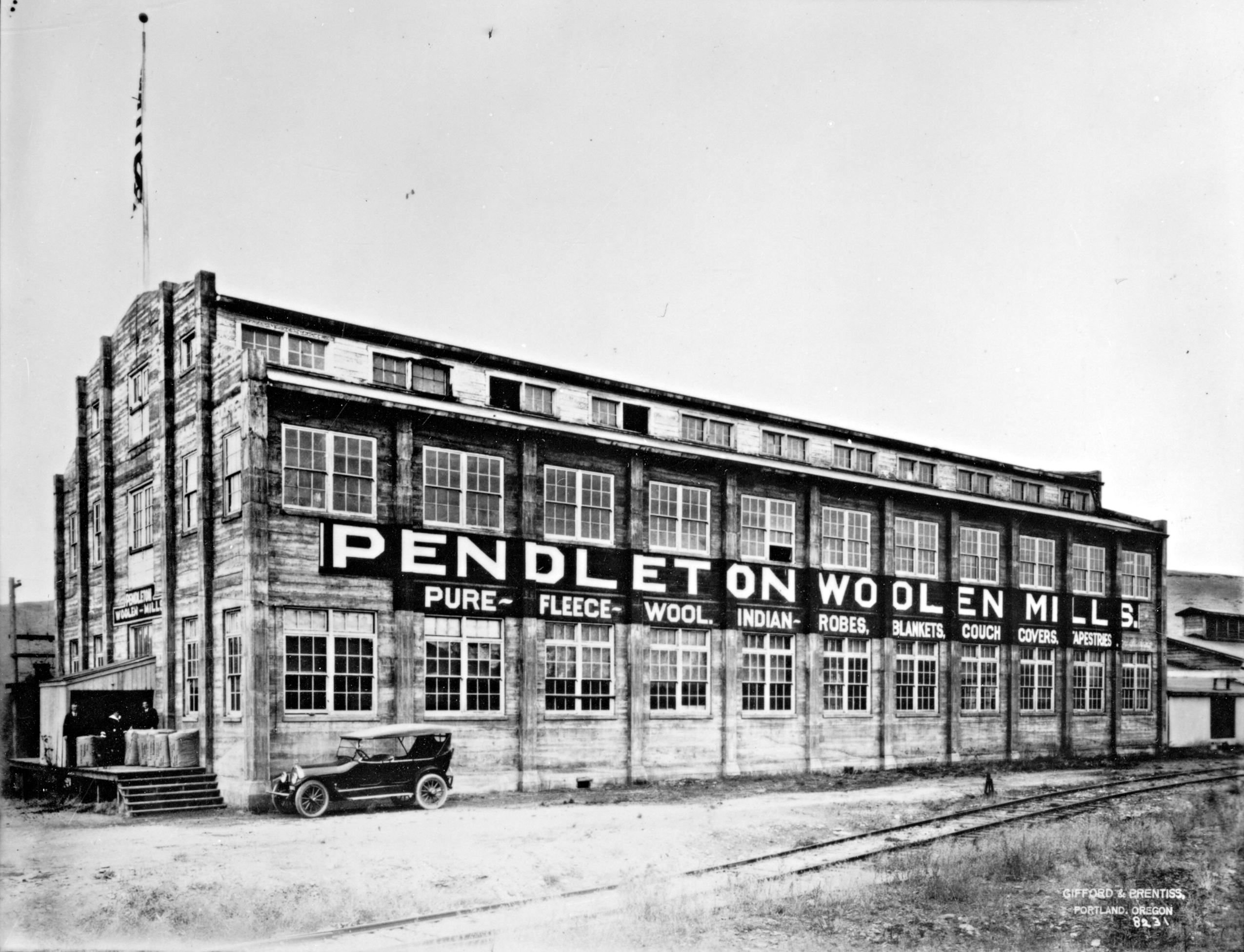
The Pendleton Woolen Mills trademark blankets and brand are synonymous with the American West and quality goods.

Their story began in 1863 when British weaver Thomas Kay traveled to Oregon and went to work in a mill in Salem. Before long, he opened his own mill in Salem, then a second in Brownsville. 

He brought is oldest daughter, Fannie, into the business. After learning the operation and management of the mill, she became her father's assistant. In 1876, she wed a merchant by the name of C.P. Bishop. The marriage proved to be a  boon to both Kay's mills and Bishop's enterprises by combining manufacturing and retail sales. 

The couple had three sons: Clarence, Roy, and Chauncey. 

In 1909, the family packed up and moved to Pendleton, located in northeastern Oregon, and took over a woolen mill that had operated briefly before shutting down. The original mill had been a wool scouring plant where raw wool was scrubbed and packed before being shipped out to textile mills. In 1895, the mill was enlarged and converted into a textile mill then soon began making Native American trade blankets. 

European contact with Native Americans meant the introduction of trade goods. A trade blanket replaced hide robes and handwoven blankets previously used for trade. These blankets were and are made of intricately woven patterns and bright colors. 

Trade blankets are used by Native Americans as gifts to commemorate important milestones or achievements, as giveaways to show honor and respect for important positions, and at powwows worn and used as part of the attire of dancers. 

When the Bishop family took over the defunct woolen mill in Pendleton, they began production of the Native American trade blankets, only their design featured square rather than rounded corners. 

The town of Pendleton welcomed the family and encouraged their business venture, particularly when the Bishop family took over the name of Pendleton Woolen Mills. Eastern Oregon was sheep country and having wool producers near the mills allowed the mill to significantly cut production costs. With Pendleton's location as a major railhead for the Columbia River Plateau, it allowed for convenient shipping for a growing business. 


Photo from Oregon Encyclopedia

The Bishop family built a new plant with the help of the town which issued bonds for the plant's construction. Before long, they were producing blankets that soon became coveted not only by Native Americans, but many others. They expanded their business from local tribes in the Columbia River region to include the Navajo, Hopi, and Zuni peoples of the American Southwest.

To do this, they hired designer Joe Rawnsley, who visited tribes to learn their customs and color preferences. Considered to be a talent with a jacquard loom, Rawnsley would interpret the ideas he gathered during his research with the tribes into blanket designs. Using the latest technology available, he could express pattern ideas in much greater detail and strikingly vivid colors than could ever be achieved by traditional weaving methods. 

The company opened a weaving mill in Washougal, Washington (near Portland, Oregon) for the production of woolen fabris used in suits and other clothing in 1912.  By 1918, Roy, the second oldest son, left the business to form his own company, the Oregon Worsted Company.

But the oldest son, Clarence Morton Bishop (known as C.M.), envisioned a clothing line for men. Up until then, most woolen shirts were considered work shirts and came in subdued colors, primarily gray. Wool shirts were warm, durable, and drab.

C.M. pictured a different kind of fabric for a man's woolen shirt, based on the sophisticated weaving technology used in the vibrant trade blankets. 

In 1924, the company began production of the Umatilla shirting fabric. The rich colors in their woolen plaid shirts were completely new to the market. The response was positive and immediate not to mention enduring. 

Chauncey, their third son, died in 1927, leaving C.M. with sole responsibility for management of the Pendleton Woolen Mills. 

During World War II, the company devoted most of its production to blankets, uniforms, and clothing for the U.S. military services. 

After the war, they added a wool clothing line for women, including the popular 49er jacket and a reversible pleated skirt. 


In the 1960s, a singing group called The Pendletones formed. The name was adopted in honor of the popular "surf uniform" of the day consisting of Pendleton shirts worn over T-shirts with khakis. Before long, the group's name was changed to The Beach Boys, but you can see them wearing their Pendleton shirts in publicity photos. 

In the 1970s, the company expanded gain, introducing non-wool garments for men and women. 


The story of the Pendleton Woolen Mills is one of innovation, exploration, and opportunity. They've become a hallmark of beauty and quality woolen goods for more than 100 years. Family-owned and operated for more than six generations, the original Pendleton Woolen Mills plants in Pendleton and Washougal are among the few woolen mills in operation in the United States today, and the only mill in the country still weaving Native American trade blankets. 


If you find yourself in Pendleton, stop by the woolen mills and take a tour. Explore the small museum set up there, and let the rich history of an amazing company warm your soul.

~*~


Convinced everyone deserves a happy ending, USA Today best-selling author Shanna Hatfield is out to make it happen, one story at a time. Her sweet historical and contemporary romances combine humor and heart-pumping moments with relatable characters.
When this hopeless romantic isn’t writing or indulging in rich, decadent chocolate, Shanna hangs out with her husband, lovingly known as Captain Cavedweller.
Find Shanna’s books at:


Shanna loves to hear from readers. Follow her online at:

Thursday, September 13, 2018

The Pendleton Round-Up


by Shanna Hatfield

This week marks the 118th Pendleton Round-Up


The world famous rodeo began in 1910 in the wild western town of Pendleton, Oregon. 

You might wonder what the fuss is about "another rodeo," but the Northwest Frontier Round-Up, or The Roundup as it was called in numerous newspaper articles, was such a huge event, they ran special trains from Portland just to bring attendees to see it.


From my understanding, the idea for The Roundup came into being that July and quickly gathered steam along with supporters. It was decided to hold an event which would "bring back the feel of the Old West" in conjunction with the Eastern Oregon District Fair taking place the last week of September.


Organizers wanted the first Round-Up to be a "frontier exhibition of picturesque pastimes, Indian and military spectacles, cowboy racing, and bronco busting for the championship of the Northwest.

For the initial performance all businesses in town were asked to close. People were asked to open their homes to out-of-town attendees since there weren't rooms enough at the area hotels to accommodate them.

The very first show went off with a bang, with a reported 7,000 people in attendance and hundreds left outside the gates, wanting in. Not about to miss out on an opportunity, organizers raced to build another 3,000 bleacher seats before the second performance began the following afternoon.

And the slogan heard throughout town that weekend was "Let 'er Buck" - a phrase still popular with attendees today. 


The rodeo arena’s grass floor is one-of-a-kind in the world of rodeo, adding a unique challenge for competitors. The Native American encampment is the largest in North America with more than 300 teepees annually joining in the event, just like they did during that first event so long ago. It was also the first rodeo to have rodeo royalty, starting with the very first Round-Up in 1910.


Souvenirs of all types were sold to the thousands crowding into the city and logo'd souvenirs continue to be popular with the modern crowds.


As the initial show drew to an end, one newspaper reporter wrote: "The words 'Pendleton' and 'Round-Up' are on the lips of thousands and will continue to be for months and years to come... The Round-Up is a whirlwind success."

Since 1910, the show has gone on every year except for two during World War II and continues to draw thousands of spectators the second full week of September.

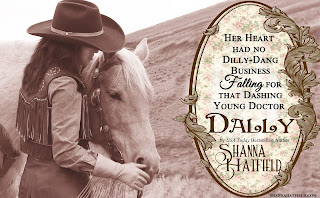
I had a ball incorporating details of  the Round-Up's history into Dally, Pendleton Petticoats Book 8.


She’s ready to spread her wing and fly…
            He’s scrambling to set down roots.

Unconventional, Dally Douglas is as likely to be found wearing her brother’s britches and riding a horse as she is dressed in lace-trimmed finery sipping tea in the parlor. With no plans to wed, she convinces her family to allow her to stay at their ranch in Oregon. Free and unfettered, she plans to remain that way, even when the town’s beloved young doctor returns home and captures both her interest and her heart.

Charismatic, handsome, and dedicated to his work, Doctor Nik Nash finally makes his way back to Pendleton. After years of studying and gaining hands-on experience, Nik is excited to bring his skills and knowledge to the place he calls home. Focused on his career, he has no time for a woman, especially not one as lively, fascinating, and enchanting as Dally Douglas.

When a freak accident brings the two of them together, their stubborn determination may cost them the chance to know true love.


     Dally clenched every muscle in her body and held her breath as her brother eased onto the back of the blindfolded horse in the middle of the arena. In theory, the blindfold would keep the horse calm until the rider gained his seat on the saddle.
     The way the bronc tensed and his ears twitched, Dally had an idea the animal was anything except calm.
     Cautious yet determined, Hunter slid onto the stock saddle and took the rein in his hand. He hunkered down and grinned, then yelled, “Let ’er Buck!” and the man holding the horse tugged off the blindfold.


     The horse bucked and pitched, kicked and reared, putting on quite a show, but so did Hunter.

*****


 USA Today Bestselling Author Shanna Hatfield writes character-driven romances with relatable heroes and heroines. Her historical westerns have been described as “reminiscent of the era captured by Bonanza and The Virginian” while her contemporary works have been called “laugh-out-loud funny, and a little heart-pumping sexy without being explicit in any way.”
Convinced everyone deserves a happy ending, this hopeless romantic is out to make it happen one story at a time. When she isn’t writing or indulging in chocolate (dark and decadent, please), Shanna hangs out with her husband, lovingly known as Captain Cavedweller.


Find Shanna’s books at:

Shanna loves to hear from readers. Follow her online at: