Showing posts with label #SweetAmericana. Show all posts

Thursday, July 10, 2025

Gene Stratton Porter


It just wouldn't be summer without reading a book or two by the incredible Gene Stratton-Porter.


Gene was an Indiana native who became a self-trained American author, nature photographer, and naturalist, and pioneer in the film industry.

Born August 17, 1863 near Lagro in Wabash County, Indiana, Geneva Grace Stratton was the twelfth and last child born to Mary and Mark Stratton at the family’s Hopewell Farm. Mart was a Methodist minister and farmer of English descent. Mary was a homemaker of German-Swiss ancestry.

In 1874, when Gene was 12, she moved with her parents and unmarried siblings to Wabash, Indiana. Initially, they resided with her married sister, Anastasia, and her husband, Alvah Taylor, a layer. Gene’s mother died just a few months after the move to Wabash. After that, Gene boarded with various relatives for the next twelve years.

Her early years had not been conducive to schooling, but she developed a strong interest in nature, especially birds. As a young girl, Gene’s father, and brother Leander (whom she called Laddie) taught her to appreciate nature as she roamed around the family farm, observing animals and caring for pets. After the move to Wabash, Gene regularly attended school and became an avid reader. She also began music lessons in banjo, violin, and piano from her sister, Florence, and receive private art lessons from a local instructor. Gene was failing her classes and quit school in her final term of her senior year, later claiming she’d left school to care for Anastasia, who was terminally ill with cancer.

During a trip to Sylvan Lake, Indiana, in 1884, Gene met Charles Porter, a druggist who was thirteen years older than her. After ten months of regularly exchanging letters, they met at another gathering at Sylvan Lake in 1885. They became engaged and wed in 1886. Gene kept her family surname and added her husband’s name after they wed.

Gene and Charles had one child, a daughter named Jeannette, born in 1887 when the Porters lived in Decatur, Indiana. In 1888, Gene persuaded her husband to move to Geneva, Indiana, where he would be closer to his businesses. He initially purchased a small home within walking distance of his drugstore, but when oil was discovered on his land, they built a larger home. At one time, more than sixty oil wells were drilled on their land. The Limberlost Cabin served as their home from 1895 to 1913. Charles traveled while Gene remained at home. Charles had numerous business interests and became a successful businessman. In addition to owning drugstores, he owned farms, a hotel, and a restaurant. Porter invested in the Bank of Geneva in 1895, and Trenton Oil Company.

Gene took pride in her family and home, but opposed the traditional roles of marriage of her era. She maintained her independence through pursuits of lifelong interests in nature. She began writing about these subjects to earn her own income and eventually became a wealthy novelist, nonfiction writer, and film producer. In the early 1900s, Gene was as popular then as J.K. Rowling is today. She wrote 26 books that included novels, nature studies, poetry collections and children’s books. During the years of 1895-1945, only 55 books sold more than a million copies each. Of those, five belonged to Gene. Nine of her novels were made into films, five by Gene Stratton-Porter Productions, one of the first movie and production companies owned by a woman. Gene also wrote for magazines like Good Housekeeping and McCall’s.

Her books were published during a pivotal time in America. The frontier was rapidly fading away. Small communities were turning into industrial centers connected by railroads. And the wilderness she’d loved during her childhood years was all but disappearing. Gene spent her life capturing the landscape before it was nothing more than a distant memory. In later years, her impact on conservation was later compared to the work down by President Theodore Roosevelt.

Her career really began in 1895 when she sent nature photographs she’d made to Recreation magazine. Her first published article, “A New Experience in Millinery,” appeared in the publication’s February 1900 issue. The article highlighted her concerns about harming birds in order to use feathers as hat trims. At the magazine’s request, Gene wrote a photography column called “Camera Notes.” She began doing similar work for natural history magazine Outing in 1901. Soon, she regularly submitted short stories and nature-related material to magazines. 

Her first story, “Laddie, the Princess, and the Pie,” was published in Metropolitan magazine in September 1901. To garner a wider audience, Gene decided to include fictional elements in her writing and began penning novels. Bobbs-Merrill published her first, full-length attributed novel, The Song of the Cardinal (1903), about a red bird living along the Wabash River. The story featured how birds lived in the wild and Gene’s photographs were included. Gene’s publisher believed nature stories would not become as popular as romance novels. Her second novel, Freckles (1904), combined nature and romance and become a bestseller.


In 1909, A Girl of the Limberlost, released and became her best-known work. In the story, Elnora Comstock, a lonely, poor girl living on a farm, goes to the Limberlost Swamp to escape from her troubles. She lands on the idea of collecting and selling moth specimens to pay for an education when her mother refuses to help her. Literary critics called the novel a “well written” and “wholesome story.” I call the story a brilliant combination of desperation, hope, struggle, truth, and the unstoppable power of love. This book was one I read when I was an impressionable teen and it made such an impact on my life. Not only was it so beautifully written with a setting that felt so real I could almost smell the loamy fragrance of the swamp or taste the disappointment on Elnora’s tongue. The vivid details not only brought the place to life, but also the characters. What I learned from Gene and this incredible story definitely influences my writing style, challenging me to write characters and settings that feel real and true, and aren’t easily forgotten.

After years of strenuous work outdoors, battling with the Indiana state government to protect the state’s wetlands, concerned over the events of World War I, Gene checked into a sanitarium in New York for a retreat. She recuperated there for a month before returning to her home at Wildflower Woods. In 1919, after recovering from influenza, she decided to move to Los Angeles. From her California home, Gene continued to write. She founded Gene Stratton-Porter Productions, Inc., one of the first female-owned studios, and worked with film director, James Leo Meehan (her son-in-law), to create films based on her novels.

In 1924, she passed away from injuries sustained in a traffic accident, leaving behind a rich legacy, full of beautiful written stories that continue to touch our hearts even today.

If you've never read her works, I encourage you to check out one of her books. Among my favorites not already mentioned are the Keeper of the Bees and The Magic Garden.


USA Today Bestselling Author Shanna Hatfield is a farm girl who loves to write character-driven romances with relatable heroes and heroines. Her sweet historical and contemporary romances are filled with sarcasm, humor, hope, and hunky heroes.

When Shanna isn’t dreaming up unforgettable characters, twisting plots, or covertly seeking dark, decadent chocolate, she hangs out with her beloved husband, Captain Cavedweller.

Shanna is a member of Western Writers of America and Women Writing the West.

Thursday, January 12, 2023

Just Hear Those Sleigh Bells Ringing


Have you ever thought about the history behind the jolly jingling of sleigh bells? 

I have, but then again, I tend to ponder odd topics!

Kidding aside, I thought it would be fun to do a little research into the history of sleigh bells.


What we commonly refer to as a sleigh bell (a pellet trapped within a hollow globe) is actually a crotal, and is technically a rattle not a bell.

Originally, the ball inside was made of stone and some of the earliest bells (or crotals) were produced thousands of years ago.

Bells were used as charms said to bring good luck or ward off evil, as well as for decoration. They became a way to show off wealth and status too. 

They were also a great warning system to others on the road or pedestrians in town that horses, or a horse-drawn vehicle was approaching. 

Bells were typically round or egg-shaped. Ornate bells might include an acorn or flower bud shape. Square bells are said to look impressive but make a terrible noise. 

The throat of the bell is the number of slits in the bottom that allow it to vibrate and ring. In the early days, most cast harness bells had a broad single throat, giving them a rich, deep tone. When bells were manufactured, a second and sometimes third throat was added, giving the bells a softer chime or jingle, much like what you hear today in many Christmas and winter tunes. 

There's nothing quite like the sound of sleigh bells ringing across a crisp winter day.  

In both Europe and the United States, sleighing was once a popular form of recreation in the winter. Horses and sleighs were adorned with bells, polished and presented as a way to emphasize wealth and standing. Soon, the sound of bells became linked with winter, especially around the holiday season. 

By the 18th century, bell manufacturers began to case makers' marks and ornate designs on individual bells.  Bells were cast until the end of the 1800s when an American manufacturer developed a process to stamp bells out of sheet metal. Designs of the bells ranged from a petal or horseshoe design to initials to fish scale or ornate floral patterns. At one time, all the rage was a plain bell left undecorated and polished to a high shine. 

Unfortunately, with the automobile coming on the scene, horse-drawn transportation and the need for bells faded. 

Only a handful of old manufacturers are still producing class bells and many of the strings used today are antiques left from days gone by. 

If you happen to see bells on a horse or sleigh, you might find the bells jingling from the body strap that buckles over the harness around the horse's middle, on the neck strap around the horse's neck or collar, a hip strap on the horse's lower back or hips, and shaft bells may be attached direction to the shaves of the wagon or sleigh. For those who are riding a horse, small collections of bells can be attached to a saddle. 

The next time you hear the jolly jingle of sleigh bells, think about how crotals came to be!


To connect with USA Today Bestselling Author Shanna Hatfield, visit her website, or discover more about her new sweet romance that features a sleigh bell serenade.

Thursday, July 14, 2022

Lewis & Clark at Cape Disappointment


A while back, Captain Cavedweller and I were able to visit the  Lewis and Clark Interpretive Center located at Cape Disappointment on edge of the Oregon/Washington coast.


 We parked and hiked up the hill to the center.


 The flowers and foliage were so pretty. I kept expecting little fairies to pop out of the woods at any moment. (Okay, maybe I didn't really expect to see fairies, but it would have been cool!) I couldn't help but wonder at what it might have looked like when Lewis and Clark arrived.


 Almost at the top of the hill, the first thing visitors see is the decommissioned military fortification that served as a military base during the Civil War and World War II. Following the trail to the very top of the hill offers a spectacular view of where the Columbia River meets the Pacific Ocean.

         In November of 1805, the U.S. Corps of Volunteers for Northwest Discovery, led by Meriwether Lewis and William Clark, reached the mouth of the  Columbia River and the Pacific Ocean. "Great joy in camp," Clark wrote in his journal, "we are in view of the ocean, this great Pacific Ocean which we been so long anxious to see." Cape Disappointment was already a notable landmark in the Pacific Northwest, named before the Lewis and Clark expedition arrived. The first known documentation of the area was in 1775 by Spanish explorer Bruno Heceta, who named it “Bahia de La Asuncion,” or Bay of the Assumption.  Then in 1788, British trader John Meares named it “Cape Disappointment” when he mistakenly believed that the mouth of the Columbia River was only a bay. The Lewis and Clark Interpretive Center stands high on the cliffs of the state park located at Cape Disappointment. A series of mural-sized timeline panels guide visitors through the journey of the expedition, using sketches, paintings, photographs, and snippets from journals written by the Corps members.  The center also has a nice short film presentation about the Corps, a glassed-in observation deck with incredible views, as well as various maritime and military displays. It took us almost two hours to go through the whole thing and look around outside, but it was time well spent.   

This early map of North America fascinated me. I can't even begin to imagine what the people who journeyed west into the unknown must have felt when they began their expedition.


 This journal entry from Meriweather Lewis made me smile. I think I would have also been heartily tired of the national hug.  


Also, thank goodness for modern medicine. It truly was so interesting to read the details shared and get a much better idea of what the people who made this trip experienced. There are also some wonderful artifacts on display too!


 Outside, the lighthouse is visible in the distance and there are walking paths, not to mention breathtaking views. If you ever find yourself in the northern-most tip of Oregon or the southern-most tip of Washington right on the coast, I recommend setting aside an hour or two to visit Cape Disappointment. You won't be disappointed!  


USA Today bestselling author Shanna Hatfield is a farm girl who loves to write. Her sweet historical and contemporary romances are filled with sarcasm, humor, hope, and hunky heroes. When Shanna isn’t dreaming up unforgettable characters, twisting plots, or covertly seeking dark, decadent chocolate, she hangs out with her beloved husband, Captain Cavedweller.

Shanna loves to hear from readers. Follow her online at:


Find Shanna’s books at:


Thursday, July 8, 2021

Romance at Rinehart's Crossing


Last year, I shared a blog post about the historic Vale Hotel in Vale, Oregon.

Vale is located on the Malheur River. Back when wagons rolled across the dusty Oregon Trail, it was here that they crossed the river and found a hot springs where many chose to rest a day or two before heading onward. 

A man named Jonathan Keeney (the one Keeney Pass is named after), built a house and barn near the hot springs. Lewis B. Rinehart bought his property in 1870 and built a house made of stone in 1872.  The Stone House (as it was and is still known), became the first post office, served as hotel of sorts, and a place of refuge during an Indian uprising. 

For a while, before it became known as Vale, the town was called Rinehart's Crossing. 

I've been fascinated with the house and the stories behind it for years. 

So, when I the opportunity arose to write another book in the Regional Romance series, I decided it would be the perfect time to use Rinehart's Crossing as a setting.


Romance at Rinehart's Crossing is now available for pre-order and will release September 17!


Life on the Oregon Trail will never be the same . . .

Tenner King is determined to make his own way in the world far from the overbearing presence of his father and the ranch where he was raised in Rinehart’s Crossing, Oregon. Reluctantly, he returns home after his father’s death to find the ranch on its way to ruin, his siblings antsy to leave, and the women in town completely infatuated with a mysterious poet. Prepared to do whatever is necessary to save the ranch, Tenner isn’t about to let a little thing like love get in his way.

Austen – After spending her entire life ruled by her father, Austen Rose King certainly isn’t going to allow her bossy older brother to take on the job. Desperate to leave the hard work and solitude of the Diamond K Ranch, she decides a husband would be the fastest means of escape. If only she could find a man she could tolerate for more than five minutes.

Claire – Two thousand miles of travel. Two thousand miles of listening to her parents bicker about the best place in Oregon to settle. Two thousand miles of dusty trails, bumpy wagons, and things that slither and creep into her bedding at night. Claire Clemons would happily set down roots that very minute if someone would let her. What she needs is her own Prince Charming to give her a place to call home. When a broken wagon wheel strands her family miles from civilization, she wonders if handsome Worth King, the freighter who rescues them, might just be the answer to her prayers.

Kendall – Anxious to escape her mother’s meddling interference, Kendall Arrington leaves her society life behind, intent on experiencing a Wild West adventure. Hired as the school teacher in a growing town on the Oregon Trail, Kendall hopes to bring a degree of civility and a joy of learning to the children of Rinehart’s Crossing. However, the last thing she expects to find is a cowboy with shaggy hair, dusty boots, and incredible green eyes among her eager students.

Will love find the three King siblings as Romance arrives in Rinehart’s Crossing?

Read all the books in the Regional Romance Series featuring historic locations, exciting drama, and sweet (yet swoony) romance!


If you haven't read any books from the series yet, what are you waiting for? 

Kari Trumbo's book Black Hill's Song is on sale for just 99 cents today, and you can get Grass Valley Brides for $2.99!

Happy reading and have a fabulous summer! 


Thursday, February 11, 2021

Washington Monument


It always amazes me the things I learn when I'm doing research for a book. Recently, I was virtually thumbing through an old newspaper from 1884 and happened upon an article about the Washington Monument finally nearing completion after fifty years.
 Fifty years! 
I had no idea it had taken that long, and decided, just for my own curiosity, to dig deeper into the details. 


The idea for a monument to honor George Washington was kicked around before he even became president. In 1783, the Continental Congress voted to build a statue of Washington. Once Washington became president, he discarded ideas for a monument since funds were tight and he thought there were better uses of federal funds. After he passed away, Congress again brought up the idea of a monument, but nothing came of it.

Finally, in the 1830s, a group of Washington residents banned together and formed the Washington National Monument Society to raise private funds for the project. The group, headed by Chief Justice John Marshall, held design competition. The winning architect was Robert Mills, whose credits include the U.S. Treasury Building and the U.S. Patent Office, currently home to the National Portrait Gallery and the Smithsonian American Art Museum.

Mills' design called for a temple-like building with thirty stone columns and statues of Revolutionary War heroes. The plan was for a statue of Washington driving a chariot to reside above the main entrance with a 600-foot-tall Egyptian obelisk rising from the center of the building.

The monument's cornerstone (embedded with a box that held items such as a portrait of George Washington, newspapers of the day. U.S. coins, and a copy of the Constitution) was placed in a ceremony attended by thousands of people. Construction began, but in 1854, with the structure only 150 feet high, funds ran low and work stopped. An activities group called the Know Nothings became angry Pope Pius IX had donated a block of stone from the ancient Roman Temple of Concord for the monument. They confiscated the stone, seized possession of the monument, and later disbanded, leaving the construction on hold. Then the Civil War began. 

In 1876, in celebration of America's 100th birthday, President Ulysses Grant authorized federal funding to finish the monument. Work resumed in 1879. By this time, the plans were outdated, and the obelisk was removed from the plans. An additional issue was after two decades of no work being completed on the monument, matching quarry stone couldn't be found. As a result, the bottom 150 feet of the monument is a different color than the top. 


Construction wrapped up in 1884. The capstone, which weighed more than 3,000 pounds, was set in place on December 6, 1884.  The projects was dedicated the following year, but didn't open to the public until 1888. 


The finished monument stood 555 feet and 5 1/8 inches high, had 50 flights of stairs, and weighed more than 81,000 tons. It was the world's tallest man-made structure until the Eiffel Tower was completed in 1889.

It's so fun to stumble across interesting historical details, especially when I can work them into a story. 

USA Today bestselling author Shanna Hatfield is a farm girl who loves to write. Her sweet historical and contemporary romances are filled with sarcasm, humor, hope, and hunky heroes. When Shanna isn’t dreaming up unforgettable characters, twisting plots, or covertly seeking dark, decadent chocolate, she hangs out with her beloved husband, Captain Cavedweller.

Shanna loves to hear from readers. Follow her online at:

ShannaHatfield | Facebook | Newsletter | BookBub | Pinterest | Goodreads | You Tube | Twitter


Monday, April 20, 2020

TODAY IS MY BIRTHDAY.... I'LL TAKE TOILET PAPER


TODAY IS MY BIRTHDAY....   I'LL TAKE TOILET PAPER

My name is Teresa Ives Lilly.  I am new to this blog, but look forward to sharing many fun things with the readers over time.  My slot is the third Monday of each month.  This month, that happens to have landed on my birthday.  April 20th.  
I was born on the same day as my brother... just 7 years apart. 

I joked in the title about taking toilet paper, because,
this birthday happens to fall in the middle of the world's COVID19 epidemic
 when many people are hoarding toilet paper.  
So my question is, when did toilet paper come into use in the United States?


Since the Chinese invented paper, it’s no surprise that the first documented use of toilet paper is from that country in A.D. 851, when a visitor noted of local customs, “They do not wash themselves with water after they have done their necessities, but they only wipe themselves with paper.” 

Paper took a backseat to cloth during the Ming Dynasty, when the emperor had special fabric sheets cut into squares expressly for the purpose of cleaning up one’s behind for the imperial court. 

The Greeks wiped themselves with the same materials they used as tablets: stone and clay. The Romans used communal sponges on sticks stored in brine. 

Europeans in the Middle Ages contented themselves with grass and straw -- definitely softer than rocks, but a bit scratchy nonetheless. This was the age of outhouses and privies, when whatever one used could be tossed into a literal black hole and forgotten.

Joseph Gayetty, a New York entrepreneur, In 1857, introduced hemp sheets infused with aloe which he claimed prevented hemorrhoids but they weren't a very big hit.


Finally; toilet paper as we know it was introduced by the Scott brothers, Clarence and Edward Irvin, in 1890. They created paper stored on a roll designed specifically for when nature called.

I can honestly say, I've never read a historical book in which toilet paper or toilets were even discussed and maybe that's a good thing.  
My brother and sister-in-law were missionaries in Russia for four years and told us many toilet stories, as the public restrooms were just holes in the ground to hover over.  When the toilets were added on trains the people did not understand that you sit on them.  They would climb up on top of the toilets and use them as they do the holes in the ground.  They  also told me that many people in Russia still used corn cobs as toilet paper... and that was in 1989. 
Paper seems to be a precious commodity there.  We gave presents to some of his missionary friends who visited the United States in 1990.  They carefully undid the packages, folded the paper and slipped it into their purses. They explained that they would use that paper several times over.


SO EVEN IF YOU DON'T HAVE 20 ROLLS STOCKED AWAY, 
LETS ALL BE THANKFUL THAT WE HAVE TOILET PAPER TODAY!!!!!


********************


TERESA IVES LILLY’s ninth grade teacher inspired her writing by allowing her to take a twelve-grade creative writing course during the summer. Since, then it has been her passion and dream to write, however until her Salvation in 1986 when she discovered the genre of Christian Romance, Teresa did not even try writing. Since then, she has gone on to write over twenty-five novellas and novels including two published by Barbour Books. Teresa lives in San Antonio, Texas where she and her husband are close to their three grown children and one grandson. Teresa believes God let her be born “at such a time as this” to be able to write and share her stories of faith.


Teresa has many historical fiction to choose from


To order An Unchained Love on Amazon click HERE   


AN UNCHAINED LOVE BY TERESA IVES LILLY

When Texas Hill Country Ranch owner, Dustin, stops at a farm house to get his horse shod, the last thing he expects to find is a young woman chained in the kitchen, forced to cook for her uncle. Dustin offers to hire her as a cook and takes her home with him, but doesn't realize that the woman will not only fill his stomach but will soon fill his heart as well.  


Thursday, March 14, 2019

Building Toward the Sky

by Shanna Hatfield

I've been digging into research for a new sweet romance novel and one historical fact that caught my interest was the opening of the world's tallest building in 1913.

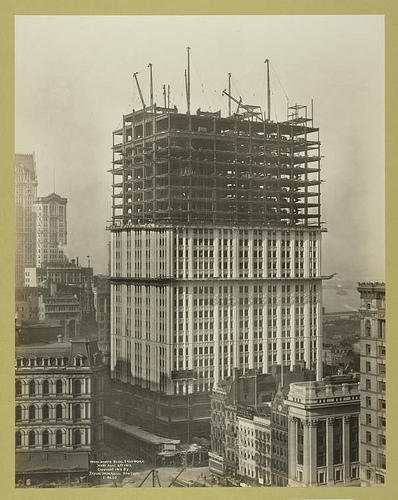
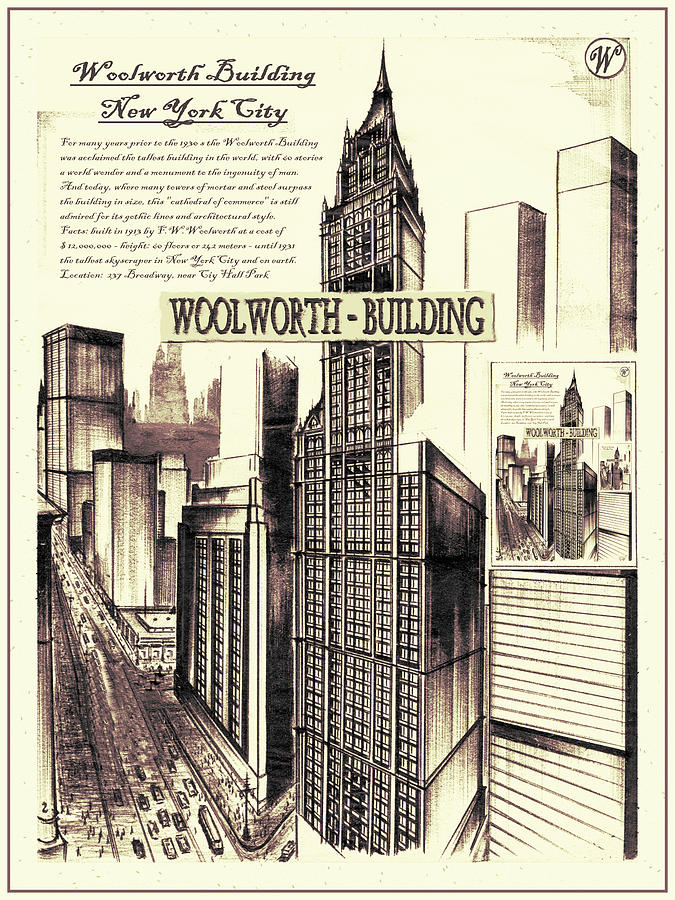
The Woolworth Building opened in April of that year in New York as not only the tallest building in the world but the second tallest structure (the Eiffel Tower was the tallest). At 60 stories high, the building soared 792 feet above Broadway between Park Place and Barclay Street in downtown Manhattan.


Although the building was no match in height for later skyscrapers, it was regarded as a model of construction for many years and even today remains a favorite sight on the New York City skyline.

Frank W. Woolworth, the chief executive of the F.W. Woolworth Company, owned 318 five- and ten-cent stores across the United States, Canada, and England. In April 1910, he set plans in motion to add to his empire through a new building that would make it's mark not just in New York, but the world.

He commissioned architect Cass Gilbert to design a masterpiece. The Singer Sewing Machine Company headquarters, completed in 1908, was the tallest building in the world until the Metropolitan Life Insurance Company completed the Metropolitan Life Tower in 1910, taking over the title.


Woolworth wanted his building to steal the thunder from Met Life and become the tallest building in the world. He worked closely with Gilbert to make sure his goal was achieved. The total cost of the building expanded from $5 million to around $13.5 million. Woolworth financed the project in cash, giving him an unheard of degree of freedom in the design and construction.

Trained at the Massachusetts Institute of Technology, Gilbert attracted national attention for his work designing the Minnesota state capitol in St. Paul.  When Woolworth engaged his talents for the new building, he created a Beaux-Arts design with ornate Gothic detail. It was said this style reflected Woolworth's vision of himself as a descendant of the great medieval merchants of the past.


Construction set a record for speed as the massive base of the building stretched over a full block and quickly took shape. A slender tower soon emerged over a steel frame, and garnered world-wide acclaim. The entire design soon became a model for skyscrapers that many copied for years.

The building won widespread acclaim for its steel-frame structure as well as interior and exterior appearances. The white terracotta facade featured subtle colored accents while the interior appeared luxurious.

A cathedral-like lobby with mosaics, sculptures, and a gold-decked ceiling added to the sumptuous atmosphere. It featured a water supply system, high-speed electric elevators, offices, a shopping arcade, health club, barber shop, restaurant, and social club.


On April 24, 1913, President Woodrow Wilson pressed a button in the White House that lit up the interior floors and exterior floodlights of the Woolworth Building, leaving the entire facade illuminated.  The Reverend C. Parkes Cadman dubbed the building the "Cathedral of Commerce."

The Woolworth headquarters occupied a mere floor and a half of the new building, leaving ample space for others to rent.

The building remained the tallest in the world for 17 years, until the Chrysler Building was completed in 1930. The Empire State Building opened in 1931, drawing both.  Made a National Historic Landmark in 1966, the Woolworth Building remains one of the tallest buildings in New York City.


After spending her formative years on a farm in eastern Oregon, hopeless romantic Shanna Hatfield turns her rural experiences into sweet historical and contemporary romances filled with sarcasm, humor, and hunky heroes.
When this USA Today bestselling author isn’t writing or covertly hiding decadent chocolate from the other occupants of her home, Shanna hangs out with her beloved husband, Captain Cavedweller.
Shanna loves to hear from readers. Follow her online at:
Find Shanna’s books at:


Wednesday, May 16, 2018

AN INTERVIEW WITH HELEN (HUNT) JACKSON #SweetAmericana #history


For this post I thought it might be fun to 'interview' Helen Hunt Jackson using her own words. Helen was born in 1830 and died in 1885. She began writing in earnest around 1865. Enjoy the interview. 

You traveled a great deal, as we know. What were your observations on your trips west?

Prairie, unfenced, undivided, unmeasured, unmarked, save by the different tints of different growths of grass or grain; great droves of cattle grazing here and there; acres of willow saplings, pale yellowish green; and solitary trees, which look like hermits in a wilderness. These, and now and then a shapeless village, which looks even lonelier than the empty loneliness by which it is surrounded, - these are all for hours and hours. We think, “now we are getting out into the great spaces.” “This is what the word ‘West’ has sounded like.”


You talk about the places you have traveled, the beauty and grandeur, but lower elevations seem special to you also. Why is that?

I think that true delight, true realization, of the gracious, tender, unutterable beauty of the earth and all created things are to be found in outlooks from lower points—vistas which shut more than they show, sweet and unexpected revealings in level places and valley, secrets of near woods, and glories of every-day paths.


You are quoted as saying there are nine places of worship in Colorado Springs. What are they?

There are nine “places of divine worship” in Colorado Springs, -- the Presbyterian, the Cumberland Presbyterian, the Methodist, the South Methodist, the Episcopal, the Congregationalist, the Baptist, the Unitarian, and Cheyenne Canyon.


Do you enjoy winters?

... winter..... memory and fancy will have their way; and, as we sit cowering over fires, and the snow piles up outside our window sills, we shall gaze dreamily into the glowing coals, and, living the summer over again, shall recall it in a minuteness of joy, for summer days were too short and summer light too strong. Then, when joy becomes reverie, and reverie takes shape, a truer record can be written....
Now, if you don’t mind, I would like to spend some time with questions about your work for the Indians in the late 1870's and early 1880's.


First, in your article 'Oldest House' you mention the fate of the people who lived in the area prior to the Spanish residence in Santa Fe.


When Coronado explored Mexico in 1540, he found many Indian pueblos on the Rio Grande River, and speaks of several which must have been near the present location of Santa Fe. The one which it is generally supposed was on its precise site at the time stretched along its river-banks for six miles. Colorado reported that he found here a beautiful and fertile valley, under high cultivation by the Indians. It is hard to realize...that a race which, over three hundred years ago, had reached comfort and success in agriculture and pastoral occupations, should be today an abject, supine, wretched race...is a melancholy comment on the injustices they have received.


Those are pretty harsh words. It is obvious you have strong feelings about the issue.


The book, Century of Dishonor, as its title indicates,..gives a sketch of the United States Government's dealings with some of the..tribes.

Right sentiment and purpose in a senator..representative here and there, are little more than straws which make momentary eddies, but do not obstruct the tide.

a..states representative argued in Congress that is is very hard if the government will not for..advantage, break a few treaties when it has broken so many for the advantage of other states....what a logic of infamy...because we have had one century of dishonor, must we have two?


What, if anything, do you think can be done?


The only thing that can stay this is a mighty outspoken sentiment and purpose of the great body of the people. ...for the American people, as a people, are not at heart unjust. If there be one thing which they believe in more than any other,...it is fair play. As soon as they understand....they will rise up and demand it...

Thank you Mrs. Jackson, for taking the time to share some of your thoughts and words with us.


I hope you enjoyed a bit of insight into this interesting, complex and fearless woman. Helen seemed to have no problem with stating her opinion, regardless of what others may have thought. She was a woman to be remembered.

(The 'interview' were from the writings of Mrs. Helen Jackson, also known as HH. The use of the name Helen Hunt Jackson was used primarily after her death in 1885.)


Helen’s words about the West help to influence why own writings. Both my haiku, novellas and the two novels "Chasing A Chance" and "Josie's Dream" came to fruition by her influence and determination to write and tell the story.
Enjoy this excerpt from “Chasing A Chance” and you may see Helen’s influence:


The closer Edwin came to his destination, the more nervous he felt. What if Mary weren't there,
or worse something had happened her? She hadn't deserved the hand that life dealt her. Edwin
felt guilty, for not being there to help her through. He cut his thoughts short. He'd enough of 
self-pity. He was doing what he could now, whatever that might be. But, what if she didn't want
help? The thoughts and questions fought each other as Edwin moved closer to his destiny.

           The two traveled in silence, each deep in their own thoughts about what was to come. The miles\
drifted by, heat waves rolling off the ground as they slowly made their way through the high
plains east of the mountains, barely visible off in the distance to the west.

           Taylor watched Edwin. He was wondering what it was that was pushing the man toward trouble 
instead of away.

Purchase Here


Doris Gardner-McCraw -
Author, Speaker, Historian-specializing in
Colorado and Women's History
Member of National League of American Pen Women,
Women Writing the West,
Pikes Peak Posse of the Westerners

Angela Raines - author: Where Love & History Meet
For a list of Angela Raines Books: Here
Photo and Poem: Click Here
Angela Raines FaceBook: Click Here