Showing posts with label #HelenHuntJackson. Show all posts

Wednesday, June 19, 2024

Author - Helen (Hunt) Jackson

Post (C) Doris McCraw

aka Angela Raines

A repost of an earlier article.


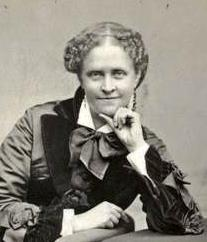
Helen (Hunt) Jackson. Since there is a great deal of information on this lady, this post will cover an 'interview' and information about the writing of the book "Ramona" near the end of her life.


Image result for images of Helen Hunt jackson
Helen (Hunt) Jackson from Wikipedia

First an 'interview':

As you were traveling to the west you made some unique observations. Would you share some of those thoughts?

Prairie, unfenced, undivided, unmeasured, unmarked, save by the different tints of different growths of grass or grain; great droves of cattle grazing here and there; acres of willow saplings, pale yellowish green; and solitary trees, which look like hermits in a wilderness. These, and now and then a shapeless village, which looks even lonelier than the empty loneliness by which it is surrounded, - these are all for hours and hours. We think, “now we are getting out into the great spaces.” “This is what the word ‘West’ has sounded like.”

You appear to prefer the lower elevations as opposed to the high peaks. Why do you think that?

I think that true delight, true realization, of the gracious, tender, unutterable beauty of the earth and all created things are to be found in outlooks from lower points—vistas which shut more than they show, sweet and unexpected revealings in level places and valley, secrets of near woods, and glories of every-day paths.

You are quoted as saying there are nine places of worship in Colorado Springs. What are the?

There are nine “places of divine worship” in Colorado Springs, -- the Presbyterian, the Cumberland Presbyterian, the Methodist, the South Methodist, the Episcopal, the Congregationalist, the Baptist, the Unitarian, and Cheyenne Canyon.

Helen Hunt Falls -North Cheyenne Canyon
Photo (c) by author 
What do you do when the snow covers the ground?

... winter..... memory and fancy will have their way; and, as we sit cowering over fires, and the snow piles up outside our window sills, we shall gaze dreamily into the glowing coals, and, living the summer over again, shall recall it in a minuteness of joy, for summer days were too short and summer light too strong. Then, when joy becomes reverie, and reverie takes shape, a truer record can be written....


Ruth Odell wrote one of the early biographies of Helen. It was published in 1939. Her book talks about the writing of "Ramona" and the end of Helen's life. I share some of that with you here:

According to Odell, Helen wrote Ramona in New York between December 1883 and April 1884.


1883-1884

Berkeley Hotel, New York

Wrote first words of Ramona on Dec. 1, 1883

Pg 210-211 of the book says:

"The novel which Helen hoped so ardently would “tell” in a manner in which A Century of Dishonor had not was written with lightening speed. She was frightened at the intensity of her own interest, which drove her to compose at the rate of from two to three thousand words in a day. It was as if she were haunted and obsessed. So loath was she to stop writing that her concentration resulted in two serious attacks of illness. …..From time to time she drove herself to write a short story, an article....but with the feeling always that she was suffering an actual deprivation in having to turn away from the thing she wished to be doing.....By late February she had finished twenty chapters."

Below is a timeline of the release of the book.

April 12 of 1884  the 'Critic' announced that Mrs. Helen Jackson would soon publish the first long novel under her own name.

May 1, 1884 'The Christian Union' noted that it would begin in a fortnight a serial presentation of the novel Ramona.

On a side note, "Ramona" has had at least 300 printings since that date.

Time line of Helen's last months

June 28, 1884 Helen broke her hip. The fall of 1884 she went to CA .

By Feb 1885 she became seriously ill of what she believed to be “malarial poisoning”.

From Page 212 of the Odell book:

When she could no longer postpone it, the doctor sent a telegram to her husband, who arrived Aug 2. Ten days later the end came. Subsequent dispatches gave the cause of her death as cancer. Fortunately, she had not known.

Evergreen Cemetery Colorado Springs
Photo (c) by the author
Helen made her home in Colorado Springs from 1873 to her death in 1885. She supported the growth of the new town, wrote glowing articles, and even supported reading and libraries. Her final resting place is in Evergreen Cemetery next to her second husband William S. Jackson.

Until Next Time: Stay safe, Stay happy, and Stay healthy. 

Doris



Wednesday, November 16, 2022

A PIECE OF COLORADO SPRINGS HISTORY

  Post by Doris McCraw aka Angela Raines

Photo property of the Author

In the early days of Colorado Springs William S. and Helen (Hunt) Jackson were quite the coupleWilliam, as the majority owner of the El Paso County Bank, treasurer of the Denver & Rio Grande Railroad, and later the receiver of the same company when it went into bankruptcy, was a major influence on the financial health and confidence in Colorado Springs. Helen (Hunt) was already an established author when she arrived in Colorado Springs. Her writings about the area were responsible for the view many Easterners and those from Europe had of the region.

How did these two come to achieve this status? Perhaps it will help to have a bit of background on the two individually.

William Sharpless Jackson

Born in Pennsylvania to Caleb S Jackson and Mary Ann Gause Jackson. His parents were involved in the Underground Railway, their home being a stop on that historical line, in Kennett Square, Chester County, Pennsylvania. His parents were also Quakers, the faith that William Jackson Palmer, one of the founders of Colorado Springs, also belonged to.

Helen was born Helen Marie Fiske on October 18, 1830, in Amherst Massachusetts. Her father Nathan Fiske was a teacher at Amherst College. Her mother Deborah Waterman Venal Fiske, taught Helen and her younger sister Anne at home whenever possible. There were two other children born to the Fiskes. Both were boys and died in infancy. Both of Helen's parents wrote. Her father wrote adult books and her mother wrote children's stories.

Helen came to Colorado in 1873 at the request of her doctor. She had been having fevers and sore throats. It was thought that the climate in Colorado would help Helen heal. She first arrived in Denver but did not like the town. It was suggested that she try Colorado Springs which was a few miles south of Denver.

Her doctor had said she needed to come to a warm, dry climate. When she arrived in Colorado Springs in the late fall it was snowing, overcast, and cold. She had thought that it might be best to go back to the east coast. To her Colorado Springs was raw, new, and not very welcoming. Helen felt the mountains were foreboding and the plains flat and ugly.

Helen H Jackson
from Wikipedia

Helen agreed to give Colorado one month. During that time, the sun came out again and Helen had a chance to see so many wonderful things. She soon fell in love with the area and over time traveled over a lot of Colorado. She wrote about what she saw and many of her essays were published in magazines back East. These essays described Colorado so well that people wanted to see what she wrote about.

While in Colorado Springs Helen met many people and one was William Sharpless Jackson. He worked for the Denver and Rio Grande Railroad and also was involved in banking. The two spent time traveling around the area and both loved the mountains and outdoors.

In October of 1875, Helen and William were married. This was Williams's first marriage and Helen's second. Helen was eight years older, but that did not seem to make any difference to William, or as Helen called him Will.

Williams's work kept him traveling a great deal; sometimes Helen would accompany him and sometimes she would stay in the home he had bought for them or travel on her own.

To Helen, Cheyenne mountain was the most beautiful mountain in the world. She and Will had spent much time around the mountain. Their favorite spot to 'camp' was an area in South Cheyenne canyon where it overlooked the city and the stream that flowed through the canyon.

Helen continued to write and travel. Sometimes she traveled without William and sometimes with him. Still, she kept writing her stories, essays, and poems. She would also return to the east coast where her sister Ann and family lived.

Up until Helen's death in 1885, this couple followed their own rules, and in the process did much that benefitted many. They both left a lasting legacy.


Doris McCraw

Wednesday, October 16, 2019

Rosita Colorado

Post by Doris McCraw
writing as Angela Raines

I've been doing research on the town of Rosita, Colorado for a current project. Located in the Wet Mountain Valley in south-central Colorado, it has a history that begs to be told.

Driving into the Wet Mountain Valley
photo property of the author
I knew of the town from the writing of Helen (Hunt) Jackson. She set her story, "Nellie's Silver Mine" in the region. The book was published in 1878. Many consider this children's book to be a wonderful description of what life was like in the 1800s. While the language is that of the time period, the book has such wonderful detail of the region and what was going on. You can find a free copy from The  Gutenberg Project online.

The town, now a ghost town, sits at 8,809 feet. It came into being when silver was located in the area. Founded in 1872 it grew from a tent town to a population of 1,000 by 1874 with stores, hotels, saloons, and a school. Unfortunately, the boom didn't last long. Soon Silver Cliff then Westcliff took over as the county seat of Custer County.

Headstone in Silver Cliff Cemetery
Below are some news clips about the town and region. Both are from the Sierra Journal (Rosita) from August 13, 1885.

Block image


Block image

For more information you can check the following article: Rosita Colorado Mining History

Drew Carson is released from prison on the condition he kill a woman who is living on land wanted by someone else. Will he follow through or will the Angels in the Valley change his mind. This story, with its paranormal elements, is a perfect read for this time of year.

Angel of Salvation Valley by [Raines, Angela]
Amazon Purchase

Doris Gardner-McCraw -
Author, Speaker, Historian-specializing in
Colorado and Women's History
Angela Raines - author: Where Love & History Meet

Wednesday, May 16, 2018

AN INTERVIEW WITH HELEN (HUNT) JACKSON #SweetAmericana #history


For this post I thought it might be fun to 'interview' Helen Hunt Jackson using her own words. Helen was born in 1830 and died in 1885. She began writing in earnest around 1865. Enjoy the interview. 

You traveled a great deal, as we know. What were your observations on your trips west?

Prairie, unfenced, undivided, unmeasured, unmarked, save by the different tints of different growths of grass or grain; great droves of cattle grazing here and there; acres of willow saplings, pale yellowish green; and solitary trees, which look like hermits in a wilderness. These, and now and then a shapeless village, which looks even lonelier than the empty loneliness by which it is surrounded, - these are all for hours and hours. We think, “now we are getting out into the great spaces.” “This is what the word ‘West’ has sounded like.”


You talk about the places you have traveled, the beauty and grandeur, but lower elevations seem special to you also. Why is that?

I think that true delight, true realization, of the gracious, tender, unutterable beauty of the earth and all created things are to be found in outlooks from lower points—vistas which shut more than they show, sweet and unexpected revealings in level places and valley, secrets of near woods, and glories of every-day paths.


You are quoted as saying there are nine places of worship in Colorado Springs. What are they?

There are nine “places of divine worship” in Colorado Springs, -- the Presbyterian, the Cumberland Presbyterian, the Methodist, the South Methodist, the Episcopal, the Congregationalist, the Baptist, the Unitarian, and Cheyenne Canyon.


Do you enjoy winters?

... winter..... memory and fancy will have their way; and, as we sit cowering over fires, and the snow piles up outside our window sills, we shall gaze dreamily into the glowing coals, and, living the summer over again, shall recall it in a minuteness of joy, for summer days were too short and summer light too strong. Then, when joy becomes reverie, and reverie takes shape, a truer record can be written....
Now, if you don’t mind, I would like to spend some time with questions about your work for the Indians in the late 1870's and early 1880's.


First, in your article 'Oldest House' you mention the fate of the people who lived in the area prior to the Spanish residence in Santa Fe.


When Coronado explored Mexico in 1540, he found many Indian pueblos on the Rio Grande River, and speaks of several which must have been near the present location of Santa Fe. The one which it is generally supposed was on its precise site at the time stretched along its river-banks for six miles. Colorado reported that he found here a beautiful and fertile valley, under high cultivation by the Indians. It is hard to realize...that a race which, over three hundred years ago, had reached comfort and success in agriculture and pastoral occupations, should be today an abject, supine, wretched race...is a melancholy comment on the injustices they have received.


Those are pretty harsh words. It is obvious you have strong feelings about the issue.


The book, Century of Dishonor, as its title indicates,..gives a sketch of the United States Government's dealings with some of the..tribes.

Right sentiment and purpose in a senator..representative here and there, are little more than straws which make momentary eddies, but do not obstruct the tide.

a..states representative argued in Congress that is is very hard if the government will not for..advantage, break a few treaties when it has broken so many for the advantage of other states....what a logic of infamy...because we have had one century of dishonor, must we have two?


What, if anything, do you think can be done?


The only thing that can stay this is a mighty outspoken sentiment and purpose of the great body of the people. ...for the American people, as a people, are not at heart unjust. If there be one thing which they believe in more than any other,...it is fair play. As soon as they understand....they will rise up and demand it...

Thank you Mrs. Jackson, for taking the time to share some of your thoughts and words with us.


I hope you enjoyed a bit of insight into this interesting, complex and fearless woman. Helen seemed to have no problem with stating her opinion, regardless of what others may have thought. She was a woman to be remembered.

(The 'interview' were from the writings of Mrs. Helen Jackson, also known as HH. The use of the name Helen Hunt Jackson was used primarily after her death in 1885.)


Helen’s words about the West help to influence why own writings. Both my haiku, novellas and the two novels "Chasing A Chance" and "Josie's Dream" came to fruition by her influence and determination to write and tell the story.
Enjoy this excerpt from “Chasing A Chance” and you may see Helen’s influence:


The closer Edwin came to his destination, the more nervous he felt. What if Mary weren't there,
or worse something had happened her? She hadn't deserved the hand that life dealt her. Edwin
felt guilty, for not being there to help her through. He cut his thoughts short. He'd enough of 
self-pity. He was doing what he could now, whatever that might be. But, what if she didn't want
help? The thoughts and questions fought each other as Edwin moved closer to his destiny.

           The two traveled in silence, each deep in their own thoughts about what was to come. The miles\
drifted by, heat waves rolling off the ground as they slowly made their way through the high
plains east of the mountains, barely visible off in the distance to the west.

           Taylor watched Edwin. He was wondering what it was that was pushing the man toward trouble 
instead of away.

Purchase Here


Doris Gardner-McCraw -
Author, Speaker, Historian-specializing in
Colorado and Women's History
Member of National League of American Pen Women,
Women Writing the West,
Pikes Peak Posse of the Westerners

Angela Raines - author: Where Love & History Meet
For a list of Angela Raines Books: Here
Photo and Poem: Click Here
Angela Raines FaceBook: Click Here