Showing posts with label @SophieDawson. Show all posts

Monday, November 18, 2019

Predictions From 1901

 By Sophie Dawson

Just as with the turn of the 21st century, predictions of what the world will be like in 100 years occurred at the beginning of the 20th century. These are from a 1901 issue of the Ladies Home Journal. I've chosen ones that struck a chord with me, either coming to pass or way off the mark. If you'd like to see the entire article, here's the link: https://www.popculturemadness.com/PCM/wp-content/uploads/1901/12/Predictions.jpg

You should be able to tell which have come true or not.

"These prophecies will seem strange, almost impossible. Yet they have come from the most learned and conservative minds in America. To the wisest and most careful men in our great institutions of science and learning I have gone, asking each in his turn to forecast for me what, in his opinion, will have been wrought in his own field of investigation before the dawn of 2001 -- a century from now."
( I could say his first mistake was only asking men, but I won't.)


Between 350,000,000 - 500,000,000 people in the US.

Mexico will seek admission to the United States as will other Central and South American countries.

Americans will be from one to two inches taller. (I checked this out and it's true. Men are 2.4" taller on average, women 2" taller.)

C, X and Q will have been abandoned in the alphabet because they are unnecessary.

English will be the dominate language spoken worldwide followed by Russian.

No mosquitoes, flies or roaches.


Ready-Cooked meals will be delivered to homes and the dishes returned to be washed. (Can you say pizza delivery, Home Chef,  Plated, etc?)

There will be no cars on the streets of large cities, they will be underground with broad subways and well-lit, well-ventilated tunnels. Therefore, cities will be free from all noise.

Photographs will be telegraphed from any distance and in total color.

Trains will run 150 miles per hour with cooled cars. Homes will be air-cooled also.


Automobiles will be cheaper than horses.

Fast electric ships will travel on a cushion of air and speed across the Atlantic to England in 2 days.

There will be Air Ships but they won't be able to compete with surface cars and water vessels for passenger and freight traffic.


Wireless telephones will make it possible for a husband in the middle of the Atlantic to speak with his wife in Chicago.

College education will be free. Etiquette and housekeeping will be important studies in all public schools.

Store purchases will be delivered by pneumatic tube to all homes or stations similar to post offices and delivered to homes by truck.


Vegetables will grow larger and faster by electricity which will also kill the weeds. (Not sure how it will kill weeds but not the plants wanted.)

Fast moving refrigerators will bring fruits and vegetable from South America, Africa, Australia, and the South Sea Island to the US in winter.

Strawberries, raspberries and blackberries will all be as large as apples.


Strawberries and cranberries will grown on bushes.

Melons, cherries, grapes, plums, peaches, apples, pears and all berries will be seedless.

Peas will be as large as beets.

Roses will be as large as cabbages and available in black, blue and green. Pansies will be the size of sunflowers.


Few drugs will be swallowed. They will be applied to the skin and carried to the organs by application of painless electricity.

The living body will be, essentially, transparent. It will be possible to see a living heart beat. Photographs of any part of the body will be taken and able to be magnified by rays of invisible light.


As you can see, some of the predictions have come about, maybe not in the way envisioned a century ago, but others not so much. Some I hope come in the future. No mosquitoes, flies or roaches, that's a yes. Same with strawberries the size of apples, yum.

So, what will be commonplace in 2119? Check out these links for predictions for the next century.
https://nypost.com/2011/03/20/the-world-in-2100/

https://futurism.com/2118-century-predictions

https://www.bbc.com/news/magazine-16536598

https://bestlifeonline.com/this-is-what-life-could-look-like-years-from-now/


Sophie Dawson writes mainly sweet historical and some contemporary romance. You can find her books at https://www.amazon.com/Sophie-Dawson/e/B0084POHB6

Monday, September 16, 2019

September Special for Some Lockets & Lace Books


Many of the authors who wrote for the series, 
Lockets & Lace 
in 2019 have joined together to provide you this reduced price special.

These books will be on sale from at least September 16th through September 20th, although a few may stay on sale longer. 

If you have not yet read all the 2019 Lockets & Lace books, now is an excellent time to purchase them at this special price. Already read and loved these Lockets & Lace books? 
Now is a great time to buy them as a gift for someone special to you who also loves to read American historical romance.

Click on the book titles below to be directed to the story description and
purchase link:

Sandra's Journey ~ Patricia PacJac Carroll

Joy, Unending ~ Abagail Eldan

Uniquely Common ~ Caryl McAdoo

Taming a Scandal ~ Linda Carroll-Bradd

The Outlaw's Letter ~ Angela Raines

A Promised Land ~ Kimberly Grist

Driving Lillian ~ Sophie Dawson

A Promise of Home - P. Creeden 

Virginia's Vocation ~ Zina Abbott

to find our Lockets & Lace page.
Sign up to be notified of when the Lockets & Lace books for 2020 will be available.


to join the 
group on Facebook. We post a lot of good stuff there, too. 


The Most Iconic Image of the Old West

By Sophie Dawson

When someone says the Old West or cowboy immediately an image jumps into our minds. It's the image of a man, either sitting on a horse or standing straight and tall. At least that's what pops into my mind. What is it that sets this person off from all the other images of men? It's his hat.

And what's the most famous, and the first true cowboy hat ever invented? The Stetson of course.
Boss of the Plains
John B. Stetson was the son of a hat maker in New Jersey. He invented the hat we know as a cowboy hat while panning for gold in Colorado in the mid 1860's. He couldn't enlist in the military because of his ill health. While there, Stetson made a hat from felted beaver fur with a wide 4" brim, an insulating airspace above the head, and was waterproof so it could be used to carry water. His companions laughed at the results, but Stetson wore it for the rest of their trip.

Stetson returned to the east in 1865 and with $100 worth of tools and felted fur began making the hats. Easterners weren't impressed with the hats of such a strange design. Stetson sent samples of the hats to every Western-wear merchant he could with a blank order form included with each hat.

Orders poured in even though the hats were expensive. Only two styles and two colors were available of the Boss of the Plains. Black and pearl-gray with different widths of the brim. Texans preferred black with a wide brim, and Montana cowboys opted for pearl-gray with a narrower brim that wouldn't blow off as easily.

The wide brim of both styles kept the rain from running down the cowboy's neck as well as shielding the face. Cowboys could, and did, personalize the hats using steam. They'd crease the center of the crown and dent in the sides making it their own. The felted fur, steamed and modified as desired, held it's shape for years.


 John B Stetson gave us the single symbol that epitomizes the Old West and cowboys to this day.

Monday, March 18, 2019

What will Silverpines do now?

If you've kept up with the Silverpines multi-author series, you know that March 19 is the release date for the next book. It's my Wanted:Developer.

Denver Hughes arrives in Silverpines just as the fire is being put out. His job was to help bring new services to town such as water, sewer, telephone, and other development that would bring growth to the town. All his plans went up in smoke, literally. Now that job is much bigger.

Isabelle Stewart, called Belle by everyone in town, needs to find a job to support her two children, her mother-in-law, as well as herself. With the business district destroyed there is no opportunity for employment. Or is there?

Here's a snippet.

Belle walked to the door. She straightened her jacket, patted an escaped curl back in place, took a deep breath, and knocked.
“Come in,” came from behind the door.
Belle pasted a smile on her face and entered.
Mr. Hughes looked up and stood. “Mrs. Stewart, it’s a pleasure to see you again.” He came around the desk and held out his hand to her. Belle made sure to shake it with a firm grip. She wasn’t going to be a limp-wristed female, quaking with fear. “Please, have a seat.”
When they were seated, Belle looked straight at the man she wanted to hire her. “I’ve thought of a way I can help you with the challenges of your job.”
“Oh?” Mr. Hughes leaned back in his chair and steepled his fingers under his chin.
“Yes.” She paused then continued. “Whatever plans you had developed for Silverpines went up with the smoke of the fire two days ago. Now, not only do you need to make the improvements to the town, but you need to negotiate with the business owners who will want their businesses rebuilt and opened as soon as possible. For that you need me.”
He raised his eyebrows. “I do?” There was a slight smile on his face that irked Belle. He wasn’t taking her seriously.
“Yes, I know the people. I know what personality quirks they have. I know what appeals to them. How you can overcome their objections to whatever you might suggest.
“Some will accept the changes being made in town. Others will want to rebuild just as it was before. We are at the start of a new century. The improvements the city council have envisioned will improve Silverpines, leading to growth and development some will embrace. I, for one, am looking forward to running water in my home. Others will fight any sort of change. You need someone who everyone knows who can be a buffer between the newcomer, you, and the new ideas you bring with you. That someone is me.”
“What you say has merit. Why should I hire you as my assistant?”
“I know everyone in town. Every business owner. I also know their wives. Many were my playmates as a child. I am also efficient, competent, and talented. I’ve taken a course in typewriting, so I can type your correspondence.” Belle didn’t mention that had been eight years ago, before she was married, and she hadn’t touched one of the machines since. It wouldn’t take long to become proficient again.
“Why is knowing the business owners wives a benefit?”
Belle nearly snorted. “You know of the disasters that happened a year ago. The women left behind ran those businesses after the men’s deaths. They survived and stayed here in Silverpines. They bravely advertised for husbands to help with their businesses. Don’t think that just because they have married they turned everything over to their husbands. Each lady is actively involved. They won’t be left out of the decisions being made about rebuilding. If you think you only have to convince the men, you will fail. The women won’t be shunted aside.”
He nodded, a thoughtful expression on his face. “You are a widow, aren’t you?”
“Yes.” Belle swallowed down her grief. Though Emery had been gone over a year now, it still felt like she’d kissed him goodbye as he headed for the mine that terrible morning.
“You didn’t have a business?”
“No, my husband was a miner.” She hoped she didn’t have to explain more.

Does Belle get the job? Read Wanted: Developer and find out. Kindle, KU, and print(soon if not the 19th.)


Monday, January 21, 2019

The Women's Weapon of Choice

By Sophie Dawson

Murder has been around since the beginning of man. One of the difference between the way men kill and women seems to be that women want to do it cleanly where men are okay will the more bloody methods. Of course, the men don’t worry about who has to clean up the mess.


Poison is the method of choice when women want to do away with someone. 90% of all poison murders are perpetrated by women. It’s clean, mostly, unless the poison causes vomiting or diarrhea. Physical strength or weapons prowess aren’t needed. Poisons can easily be baked into a food or put in a drink without the victim being aware they are being poisoned. Poisons can either be ingested, inhaled, or absorbed through the skin.


In the 18 and early 19th centuries, arsenic was the most popular poison. It was called the Inheritance Powder, used to speed the demise of the older generation allowing the heirs to gain their fortune, or title, before nature took its course. 


Arsenic was commonly used in Chinese, as well as western medicine. Elizabethan women used a mixture of arsenic, vinegar, and chalk as makeup to whiten their faces. In Victorian times, Arsenic Complexion Wafers were used to clear up acne. It was also used to cure syphilis, making it a very popular drug. 


A brilliant green pigment was made with arsenic. The fabric dyed with this Emerald Green was beautiful but deadly when made into clothing. The arsenic would be absorbed through the skin resulting in many accidental deaths. 

FRC2014.07.406 A+B+C Arsenic Green Dress Photo by Suzanne Petersen, Bata Shoe Museum


Through the Middle Ages and the Renaissance arsenic was the poison of choice since it was undetectable. The Borgias, Pope Alexander VI, and his son, Cesare were all accused of using arsenic as a poison. Many other famous cases of arsenic poisoning are documented. In 1836, James Marsh, an English chemist created an accurate method to test for arsenic poisoning, leading to the end of the commonly used method of murder. Arsenic is now a controlled substance in most countries, not available without a special license.


Sophie Dawson has been researching poisons for her upcoming book, An Agent for Delaney, The Pinkerton Matchmaker Series, releasing February 8 on Amazon in Kindle, Print, and KU.

Monday, December 17, 2018

His Protective Wings

By Sophie Dawson

Tomorrow, Dec. 18 brings the release of a book many of my readers have been clamoring for.

If you don't know of this series, it's a spinoff of my Stones Creek series. Eight ladies come from Sanctuary Place Mission for Women in Iowa and move into Sanctuary House in Stones Creek, Colorado. They bring their children with them. Many of the women have dubious backgrounds.

Several of the Ladies are married in the introductory book Chloe's Sanctuary (Stones Creek #3). Others have to wait until their stories are written. So far, there have been two books in the series: Laundry Lady's Love and Music of Her Heart.

His Protective Wings is Ruth and Massot's story and deals with a sensitive subject. Ruth was stalked and raped as a teenager and has a daughter, Kathryn. Understandably, she's reluctant to become involved with a man. Massot is the town's carpenter and somewhat of a growly recluse.

Ruth's story deals with previous assault and stalking. If you are sensitive to these issues, know that they are not demonstrated in a detailed manner.

Stones Creek, Colorado
1868

Ruth Naylor is always sure someone is watching her. Is it true or just her imagination? Fearful of another assault that left her expecting and homeless years ago, Ruth struggles to simply make ends meet and raise her daughter.

Arty Massot is Stones Creek’s curmudgeon carpenter. His growly nature keeps most people away. There’s something in the woods not far from Stones Creek no one but he knows about, and he likes it that way.

There’s something about the shy, pretty lady that brings out the protectiveness in Massot.

Can God bring these two lonely people together? Is someone watching Ruth as she fears? Or will specters from their pasts keep them apart?

There will be at least two more books in the series. At least, that's what stories are in my head right now.

Monday, October 15, 2018

The Pinkerton Matchmaker

By Sophie Dawson

My almost eight-year-old granddaughter has decided she wants to be a spy when she grows up. For her upcoming birthday I’ve gotten her a trench coat, Sherlock Holmes hat, and a magnifying glass. She has spies and detectives a little bit mixed up in her head. What does this have to to with 19th US century history? 


Allan Pinkerton, a Scottish immigrant, began the Pinkerton National Detective Agency in Chicago in 1855 as a security guard and detective agency. They were bodyguards, hired by companies and individuals as well as detectives. Their reputation for honesty, for the most part, along with their toughness was augmented with ruthlessness when needed.

Since they were a private ‘police’ force, they weren’t encumbered with restrictions of state and local jurisdiction. They could cross county lines as well as state lines in order to catch their quarry.
Were they perfect? No. They were heavily involved in attempting to squash the labor movement of the late 19th century. They were also one of the first companies to hire women. And thus comes the basis for a new Multi-Author Project.


https://www.facebook.com/groups/PinkertonMatchmakerReaders/

The Pinkerton Matchmaker Series follows the exploits of the couples in marriages arranged by Archibald Gordon. He’s the head of the Pinkerton Agency in Denver. (This is all fiction, of course.) He’s been ordered to hire women detectives. Not believing these women should go on cases by themselves he orders his agents to marry and train the women to be agents. If they want an annulment at the end of the case, and it’s still an option, it will be arranged. These are romances, so you can guess how each story ends. There are bumps and stumbles along the way, however. That’s what makes the reading fun.


https://www.facebook.com/events/1204319066374621/

 The Pinkerton Matchmaker Series Launch Party is being held on Tuesday, October 16 from 6-9 PM EDT. The thirteen authors will be there telling about themselves, their upcoming books, giving away prizes.


Join us for the fun. The books will be released once a week, so you won’t have to wait long between. They will all be sweet reads with HEA endings. Each book is a stand alone complete story, though some characters will cross over.

The first book The Pinkerton Matchmaker by Christine Sterling and Marianne Spitzer tells how the idea of these marriages of convenience between a seasoned agent and the newly hired female come to be. The Pinkerton Matchmaker is available on Amazon, for .99 and KU.

Sophie Dawson is an award winning author of sweet romance. http://amazon.com/author/sophiedawson

Monday, September 17, 2018

Wanted: Bookkeeper Silverpines #14

By Sophie Dawson

Wanted: Bookkeeper 
 
Tilde Lasek wanted to advertise for a husband when the ladies of Silverpines first sent them after the earthquakes devastated the town leaving it without men. Her mother discouraged her. Now there's been an attempted robbery at the Silvepines Bank Tilde runs since the deaths of her father and brother. It was the last straw. She posted an advertisement without her mother's knowledge. Now her groom is here.

How does Mabel, Tilde's mother react to a surprise husband for her only daughter? How do Tilde and Joel Richards work together as well as work out their marriage by beginning as strangers? 

The fourteenth book in the acclaimed Silverpines series brings people you've read about in previous books back together as the town continues to rebound from tragedy. 

Wanted: Bookkeeper becomes available Tuesday, September 18 for Kindle, KU, and print. Pre-order also available.

I enjoyed Tilde coming into her own as she defies her mother doing what she knows she must. Joel Richards comes from Cottonwood, Iowa for a fresh start. You may remember Joel from Giving Love, Book 3 in my Cottonwood series. He's all grown up now and ready to find the love of his life.

P.S. Yes, I know the cover on Amazon has Bookkeeper misspelled. It will be fixed on the 18th. I can't do it until it's released.😉)

~~~~~~~~~~~~~~~~~~~~~~~~~~~~~~~~~~~~~~~~~~~~~~~~
Sophie Dawson writes sweet and clean romances in both historic and contemporary genres. Her novels have won awards as well as critical acclaim.

Monday, May 21, 2018

The Case of the Disappearing Mother

by Sophie Dawson

I’m sure we all who have children have had difficulty getting them to pose for a formal photo shoot. Our kids are used to being photographed. The speed of camera shutters helps with this. Imagine you are having a photo of your child or children and the shutter speed is slow, making the subject have to sit still for several seconds. With some children that’s pretty difficult.

The children of the 19th century weren’t familiar with cameras. They’d been dressed in their Sunday-Go-To-Meeting clothes on a day which wasn’t Sunday. They had to stay clean while the traveled or walked to the photograph studio. Then they had to stand or sit still. This was serious business that the children most likely didn’t understand.


 Hand tinted photo.

 Not real happy here.
 This little girl wasn't very happy her photo was being taken.


This is my favorite. His mother is really keeping him corralled.

Why the mother's are hidden is debated. Some say it's because the focus was to be on the child. Other say that the mother wasn't important enough to be in the photo. This seems a bit off to me since there are many photos of mothers and children and families.


A sad version of a child’s photo was one taken after death. It seems quite morbid to us but it may have been the only photo ever taken of the child so would have been a treasured memorial. The child mortality rate was quite high and what we would consider a mild illness was often life threatening at the time. In these photos someone is behind the blanket supporting the child.


Ever since photography began people have taken pictures of their children. I'm glad we normally don't have to take images of those who have passed away. I'm also glad I didn't have to hide in photos with my boys.

Tuesday, April 24, 2018

Wanted: Shopkeeper

By Sophie Dawson

Millie Messer has four young children and the mercantile to run. She posts an advertisement wanting a shopkeeper to marry. Clay Cutler is her choice. The trouble is he has two secrets. One is revealed when he steps off the train with his 5 children. Now she has 9.

That’s what happens to Millie in the fourth book of the Multi-Author Silverpines Series newly released on Amazon. This series is a twist on the Mail Order Bride concept.

Wanted: Shopkeeper


Silverpines has had twin disasters happen which leads to most of the fathers, young husbands and eligible bachelors dying.  The women are left with businesses to run and though strong women, they aren’t equipped for the task. Then there’s the BAD GUYS who come to town.

What would you do? Here's how Millie reacted.

The noise of the train slowing to a stop drowned out all thought. Abe covered his ears and frowned at her. He didn’t like loud noises. Millie bounced him slightly watching the conductor place the step on the platform. She held her breath as the man from the newspaper clipping stepped from the train.

Clay Cutler glanced at her then turned back. He helped a cute little girl off. She had strawberry blonde hair tumbling in messy waves and a broad smile. She looked around with wide curious eyes that took in everything around her. She focused on Millie and her children and the smile widened.
Two boys jumped down and pushed at each other before Mr. Cutler said a sharp word to them. One looked to be about Reuben’s age, the other slightly older. They each carried satchels.

Reaching up, the man took a small girl from the arms of a young teenage boy and turned from the train. He looked at Millie and began to slowly cross the platform holding the toddler followed by the other four children.

Millie gritted her teeth trying to keep the neutral expression on her face. He hadn’t said anything about about having children. And there were five. She nearly collapsed as the weight of the added members to her family crashed onto her shoulders. 

https://www.amazon.com/dp/B07BWZ4ZF3.  Available on Kindle, KU, and print.

Grab your copy today and see if the children can bring the family together or tear the new couple apart. Will evil intentions bring danger to any one in the family.

The previously published books are all great reads. Be sure to get those too and find out how the disaster occurs. Silverpines Series.
Mail Order Marshall - George McVey
Wanted: Horse Breeder - Barb Goss
Wanted: Gunsmith - Lynn Donovan
 

Monday, April 16, 2018

Old West Slang by Sophie Dawson

Every era, culture, area, and any other sub-group of a population has its own slang words. Being from the rural Mid-West, our slang tends to be less trendy than those from more metropolitan areas.
Wanting to give characters more personality I’ve researched Cowboy and Western slang. Some are quite familiar and still in use today. Others… Well, let’s just say they are colorful and left to be read and amused about.

A Lick and a Promise - To do a haphazard job. "She just gave it a lick and a promise.
Airtights - Canned goods, such as canned beans, milk, or fruit.


At Sea - At a loss, not comprehending. "When it comes to understanding women, I’m at sea.
Bamboozle - To deceive, impose upon, confound. "After Nick had bamboozled about the money, he was arrested.”
Barkin' at a Knot - Doing something useless; wasting your time, trying something impossible.
Barking Irons - Pistols.’
Biggest Toad in the Puddle - The most important person in a group.
Calf Slobbers - Meringue on the top of pie.

Canned Cow - Canned milk.
Conniption Fit - A fit of hysteria.
Come a Cropper - Come to ruin, fail, or fall heavily. "He had big plans to get rich, but it all became a cropper, when the railroad didn't come through."
Disremember - Forget or choose to forget.
Driving the Nail -  A sport consisting of attempts to drive a nail into a post with rifle or pistol fire.
Dumpish - Sad, melancholy
Fetch - Bring, give. "Fetch me that hammer." "He fetched him a punch in the nose."
Fixin' - Intending. "I'm fixin' to get supper started."
Fixings or Fixins' - Cooked food, also called "Doings." Arrangements, embellishments, trimmings, garnishings. The term was also used for the tobacco and paper needed to roll cigarettes.
Get a Wiggle On - Hurry.
Grassed - To be thrown from a horse.
Hitched - Got married.
Hitch in the Giddy-up - Not feeling well, as in: "I've had a hitch in my giddy-up the last couple days."
Keep That Dry - Keep it secret.
Knee-high to a... - Humorous description of short stature or youth. "He ain’t knee-high to a grasshopper.”

Knobs - Spurs
Lands Sakes! -  A more socially acceptable alternative for "Lord's sake."
Lead Poisoning - Shot. "He died of lead poisoning."
Mountain Oysters - Fried or roasted calves' testicles. Also called Prairie Oysters.
Muddy end of the Stick - Short end of the stick.
Mud Fence, Ugly as a - Used to describe someone who was very ugly.
Necessary - Outhouse, water closet; bathroom.
Night Hawk - While the rest of the cowboys slept under the stars on a cattle drive, one unlucky soul who drew the short straw, the "night hawk", had to stay up all night standing guard.
Peskily - Very, extremely, confoundedly. "I'm peskily sorry to hear of your loss.”
Pop Your Corn - Say what you have to say, speak out.
Prairie Coal - Cowchips.

Raft - A large quantity.
Salt Horse - Corned beef.
Simon Pure - The real thing, a genuine fact. "This is the Simon pure."
Skunk Eggs - Onions.
Slap-Jacks - Pancakes.
Talk a donkey's hind leg off - To talk with no purpose.
War Bag - Cowboys traveled light, and stored their meager worldly possessions in his "war bag". Inside was generally everything he owned, typically an extra set of clothes, extra ammunition, spare parts for equipment, playing cards, bill of sale for his horse, and maybe a harmonica or a few precious letters. Also called a "war sack" and a "yannigan bag."
Whistle Berries - Beans.

Found on https://www.legendsofamerica.com/

Sophie Dawson writes sweet, clean romances both historical and contemporary. Her next release is Wanted: Shopkeeper available for pre-order at https://www.amazon.com/Wanted-Shopkeeper-Silverpines-Book-4-ebook/dp/B07BWZ4ZF3

Monday, March 19, 2018

And You Thought This Was A Modern Food

By Sophie Dawson

Food. We eat it and love it and are sure the products we know today are products of the modern world. Modern being defined here as post World War I. Well, you’ll be surprised with the foods we know today have there origins in earlier times.

I’ve been researching foods to be sure when I mention them in my books that they are accurate to the time. I’m continually surprised at the products that were invented or common in the 19th century.

Most of us know that Coca Cola was created in 1886. It wasn’t the first soft drink, however. Dr. Pepper beat it by a year. Earlier than that, in 1862, James Vernon invented Ginger Ale. The Civil War delayed it’s release but it soon became very popular in soda fountains around Detroit, Vernon’s hometown.

Soda water. It’s the carbonated water that makes soda pop pop. It’s found naturally but creating it is what made all the future soft drinks possible. That happened in 1767. I never realized manmade carbonated water was 250 years old. Lemon was the first flavored soda water.

Marshmallows came into being in 1850. I doubt they were jet puffed back then. Toffee or taffy as well as butterscotch became popular with lower cost sugar around 1800. What would Valentine’s day be without Conversation Hearts (1866)?

If you’ve read my book Pearl’s Will you’ll know that by 1910 Cracker Jack (1893) and Tootsie Rolls (1896) were favorites for Americans all over the country. Jello was first available in 1897.

I sure didn’t know that Saccharin was invented in 1879. Seems people wanted low calorie sweets back then too.

So what about non-candy foods?

As in much of Western culture, the Christian influence on society dealt with food also. One of these is Welch’s Grape Juice invented in 1869 by Dr. Thomas B Welch, a dentist. (Hence the brand name.) Being a devout Methodist, Dr. Welch didn’t approve of wine being served in Communion. He began bottling unfermented grape juice and soon the company was producing and selling quantities of the beverage.


One canned food was credited in reducing infant mortality in North America: Borden’s Sweetened Condensed Milk. Invented in 1856 to fight food poisoning and other illnesses related to lack of refrigeration, the Civil War helped make the product a household name. The military needed milk that wouldn’t spoil.

Can you imaging not having potato chips, that staple of the snack industry? They were the invention of George Crum, a chef at Moon Lake Lodge resort in Sarasota Springs, NY. When a customer sent back an order of French Fries (18th Century) which were sliced potatoes rather than the rectangles  we know today, saying they were too thick, he sliced them very thin, fried them brown and served them. They were a hit and the potato chip was born.


Angels and Singing Raisins

Television advertising wasn’t even dreamed of when Philadelphia Cream Cheese was invented in 1872. I doubt the creator was thinking of angels since the legend is that William A Lawrence eavesdropped a conversation about the recipe and ‘promptly went home and made cream cheese.’ This wasn’t the Brand name known today. It was named that because Mr. Lawrence sent the cheese to be packaged and shipped out in Philadelphia, PA.

The Dancing California Raisin came about 100 years after the product. Legend has it that in 1873 there was a severe drought in California and the grapes dried on the vine before they could be picked.


These products have seen a lot of change over the years, yet their popularity has lasted upwards of two centuries. Other products have gone by the wayside. I must say, I'm glad Celery Jello isn't one of the flavors that lasted into the 21st. century.

Sophie Dawson writes sweet romance, both historical and contemporary.

Monday, February 19, 2018

What Time Is It?

By Sophie Dawson

It's a question we ask or think about often, sometimes several times a day. Today we have access to consistent time wherever we are. My phone automatically changes to the local time when I take it off airplane mode. It also updates when Daylight Savings Time begins or ends. I still have to change all the clocks in my house but I can match those to my phone easily enough.

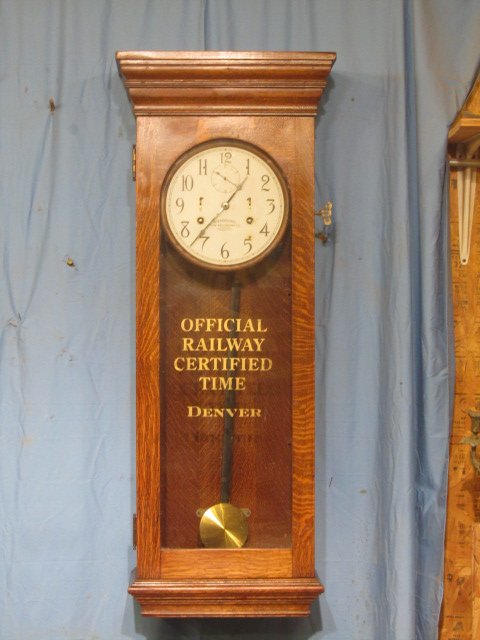
It's only been relatively recently in history that consistent time around the world was created. Until the railroad was invented time for each town or city was figured on when the sun was at it's highest point in the sky. This was declared noon. It was based on immediate locality. So, when it was noon in Washington, D.C., the local time in New York City was already minutes ahead. Not a huge issue since travel by horse took so much longer that the exact time didn't really matter.
The advent of the railroad changed that. In the 1800s it was now possible to travel significant distances faster than ever before, a multitude of local times, particularly in large countries such as the US made things confusing when it came to train schedules. Knowing when the train was supposed to arrive and leave town to the minute was important. No one wants to be late or have to sit around at the depot like we do at airports today.


In Britain the standardization of time began in 1847 when Greenwich Mean Time was first created for use by the British railways, the British navy, and the British shipping industry based on the solar mean at the city's observatory. It took about 40 more years for it to come to the US. On November 18, 1883, America’s railroads began using a standard time system involving four time zones, Eastern, Central, Mountain and Pacific. The stations clocks were all synchronized enabling schedules to be set in a consistent manner.

With the railways leading the way, a year later 41 countries came together in Washington DC an agreed to set the time at the Royal Observatory in Greenwich, England to define the "universal day", counted from 0 hours at Greenwich mean midnight.  The railroad industry’s plan was adopted by much of the country, although the time-zone system didn’t become official across the United States until the passage of the 1918 Standard Time Act, which also established daylight saving time.

So, the next time you wonder what time it is you’ll know the invention of the railroad train brought about standardized time around the world. Technology leads the way again.

Thursday, February 1, 2018

~~~New Release~~~

Pearl's Will

by Sophie Dawson
Lockets & Lace #9


Will Miller doesn’t know what to think when the lovely young woman faints in his jewelry and watch repair shop--except he wants to help her any way he can.

Widow Pearl Ward, struggling to survive, needs to sell the watch-locket given to her on her eighteenth birthday. When she learns she’s expecting, he proposes.

Will Pearl’s feelings for her late husband stand between them? Can they build a life together with his mother dead set against them?


Here's an excerpt:
Will Miller opened the back of the locket and sighed. The engraving lessened the value. The piece was high quality. The cover over the watch was decorated with a five lobed clover design surrounded by scrolling. In the clover was a thin-pointed star with a small diamond in the center. The back cover repeated the design without the stone. Inside the back cover where a photograph could be placed was an engraving. ‘To Pearl Henry, From Papa and Mama, Sept. 9, 1906.” 

Will glanced at the woman who was looking intently into the lace display. She was quite thin, honey blonde hair peeked out from under her wide-brimmed hat. She was wearing the simple clothing of a working woman. Navy skirt with a matching double-breasted long jacket, white blouse with a crocheted lace collar that spread beautifully over the blue. What he could see of her face showed a slim nose, unlike his fairly broad one. He’d have to see what color her eyes were. She lifted her hand and touched the glass of the case. A lace glove encased her slim fingers. 


Will looked back at the watch-locket. It was suspended from a gold bow-shaped pin. It would look lovely on the bodice of her jacket. He wondered why she was wanting to sell it. The quality of her clothing wasn’t high-society, but it was well tailored and didn’t look worn. 


Standing, Will moved back to the counter. She came over, waiting with a hopeful expression on her face. Her eyes were a deep green, nearly the color of pine needles. Framed with long lashes, they spoke of sadness, despair, loneliness, and desperation. 


Even though Will knew what the true value of the watch-locket was, something told him to offer more. He wouldn’t tell his father he paid more for it. He’d pay for it up with his own money.


“Miss? Are you sure you want to sell this? It must have great sentimental value to you.”
She looked down a moment, then lifted her eyes again. They glittered with moisture. “Yes, but, if it’s possible, and I’ll understand if you can’t do it, would there be any chance I could purchase it back in the future?”


She must have fallen on extremely hard times. It firmed his intention to help her. It wasn’t because she was lovely, Will assured himself. Well, maybe it was a little. He hoped that wasn’t his main motivation. His Christian ethic called for being a Good Samaritan for others.


Will set the watch on the counter and named the amount he would pay her for the locket. She lifted a trembling hand to her lips. “I’ll hold it back from display so you can redeem it. At least, I can for several months. Would that work for you?”


“Thank you. You’re most generous. I’ll try to redeem it as soon as I can.”


Will picked up the locket and placed it on the workbench. Rather than pay her from the cash register, he opened his personal cash drawer and counted out the bills. He put the locket into the drawer, near the back. 


As he turned around to go back to the counter, he saw the woman lay one hand on the counter. The other she raised to her forehead. Then, she collapsed to the floor. 


~o0o~
Pearl's Will Kindle $2.99 & Print $12.99 
Also on Kindle Unlimited
International link: myBook.to/pearlswill


Join the Lockets & Lace authors on Facebook for our 
There you find information on how you may have a chance to win one of three great prices: a special book locket, a lace handkerchief, or a $40 Amazon gift card. Please visit each day to learn more about each book as it is released.

Friday, December 29, 2017

So Much Lace So Little Time

By Sophie Dawson

Lockets and Lace is an upcoming multi-author series centered around the Bavarian Jewelry and Watch Shop established in St. Joseph, Missouri in the 1850’s. Each book will have a locket and some lace figure into the story as well as the characters visiting the shop at some time. Other authors participating in the series will post about aspects of their books, but since the main character in my book, Pearl’s Will, makes lace to sell I thought I’d give a little background on lace. 

Lacemaking dates back to pre-Christian times, but developed greatly during the Renaissance period. Making lace was something women could do in their homes to provide extra income. Machine-made lace was developed in the 19th century and took over most of the lace making industry.


Tape lace collar

There are many different types of lace, the names of which often reflect the town or province they were developed in. Men wore more lace than women during some eras. 

I didn’t realize how many types of lace there are. They fall into some main categories. Needle lace, tape lace, bobbin lace, cutwork, knitted, knotted, as well as the type that my character Pearl makes which is Irish crochet lace. Each lace has its own distinctive look. Lace has been worn as clothing decoration as well as used for home decorating.
 
Cutwork & Lace tablecloth circa 1900
I remember my grandmother having lace pinned to the arms and back of upholstered chairs in her home. I didn’t know what they were called but thought they were pretty. I messed with them all the time. They are antimacassars and were used to prevent soiling of the upholstery.


Pearl’s Will takes place in St. Joseph, Missouri in 1910, a time when lace was extremely popular not simply as an embellishment but for entire garments. Pearl makes Irish lace and supplements her income selling lace in Will’s shop. It’s one of the things that brings them together. Sorry, no more clues that that. Well, she does make an Irish lace wedding gown in the book.

IRISH CROCHET TEA GOWN, c. 1910

 Various types of lace were often combined in the same item, either garments or household items. This gown combines Battenberg tape lace with Valenciennes Lace insets.

Lace coats were also popular in the early 20th century. This one combines cutwork embroidery with Irish Crochet lace. 

 Lace was also used as decorative borders on tablecloths and handkerchiefs. 


Somewhere in the depths of my basement is a box with my grandmother's handkerchiefs. Maybe someday I'll find it and post some photos of her lace-edged handkerchiefs. 

Pearl's Will is available for pre-order starting Jan. 4 and will release Feb. 1 on Kindle and in print on Amazon.

Sophie Dawson is an award-winning author. You can find her books on Amazon at  https://www.amazon.com/Sophie-Dawson/e/B0084POHB6/

Wednesday, November 29, 2017

Of Jell-O, Straws, and Cracker Jack

By Sophie Dawson

I’ve been researching the early 1900’s for a book I’m writing. It is set in 1910, an era I’ve never written about before and not done much reading or study of. It’s been fun. Stuck between the Victorian era and, basically, World War I, the Edwardian era, also called the Belle Epoch it was a time of changing from the Industrial Revolution into the modern times that spanned the 20th Century.

Technological development research is always needed for historical writing. You can’t include barbed wire in the 1850’s or removable rifle magazines in the 1880’s. Neither were invented until a later time. Thus my research into what was available and in use by the general public in 1910. Here are some of the fun things I have found out that you’ll find in the book I’m working on. Sorry. I can’t tell the title because it’s part of a Multi-author series I’m involved in, and it’s still secret. BEG (Big Evil Grin)

I have to say, I had no clue Jell-O was invented in 1897. The flavors were strawberry, raspberry, orange and lemon. It wasn’t the first gelatin. The French used gelatin as a source of protein for their troops in the Napoleonic wars in the early 1800’s. In 1902, a major advertising campaign was undertaken and soon Jell-O was a household word.

We know that carbonated soft drinks were invented in the 1880’s. At least I knew that. Ice cream was a sweet treat enjoyed often. BUT, did you know that paper plates were invented in 1904 with cups coming shortly after? I didn’t. Dixie cups were the first in 1906.

Paper straws came about when Marvin C. Stone was drinking a mint julep through a rye grass straw. He didn’t like the grassy taste it gave his bourbon. Taking a pencil, he wound a thin paper strip around it and glued it together. That was in 1888. It wasn’t long before the resourceful man invented a machine to coat the straw in wax so the bourbon wouldn’t dissolve the glue. The bendy straw was invented in 1937 by a devoted father so his young daughter could sip her milkshake from a tall glass. He stuck a screw in the straw, wound dental floss around the grooves, removed both, and the bendy straw was born.

Baseball wouldn’t be the same without the seventh inning stretch singing of Take Me Out To The Ballgame with the iconic line 'Buy me some peanuts and Cracker Jack,' at least in Wriggly Field in Chicago. The sweetened popcorn has been around since 1896. It must have become very popular very fast because the song came out in 1908. The “toy surprise” in every box wasn’t added until 1912. They went through various adaptations until they were replaced by codes to be used to play games on Android devices in 2013.

I’ve included each of these within my book. I think it’s fun to include today’s common items that date back over one hundred years. My favorite was finding out that the first individually wrapped candy was created in 1907 and marketed in 1908. They took the country by storm. My characters find it at the amusement park they went to on the Fourth of July. Tootsie Roll.

A newspaper advertisement from 1918 during World War I