By Sophie Dawson
It's a question we ask or think about often, sometimes several times a day. Today we have access to consistent time wherever we are. My phone automatically changes to the local time when I take it off airplane mode. It also updates when Daylight Savings Time begins or ends. I still have to change all the clocks in my house but I can match those to my phone easily enough.
It's only been relatively recently in history that consistent time around the world was created. Until the railroad was invented time for each town or city was figured on when the sun was at it's highest point in the sky. This was declared noon. It was based on immediate locality. So, when it was noon in Washington, D.C., the local time in New York City was already minutes ahead. Not a huge issue since travel by horse took so much longer that the exact time didn't really matter.
The advent of the railroad changed that. In the 1800s it was now possible to travel significant distances faster than ever before, a multitude of local times, particularly in large countries such as the US made things confusing when it came to train schedules. Knowing when the train was supposed to arrive and leave town to the minute was important. No one wants to be late or have to sit around at the depot like we do at airports today.
In Britain the standardization of time began in 1847 when Greenwich Mean Time was first created for use by the British railways, the British navy, and the British shipping industry based on the solar mean at the city's observatory. It took about 40 more years for it to come to the US. On November 18, 1883, America’s railroads began using a standard time system involving four time zones, Eastern, Central, Mountain and Pacific. The stations clocks were all synchronized enabling schedules to be set in a consistent manner.
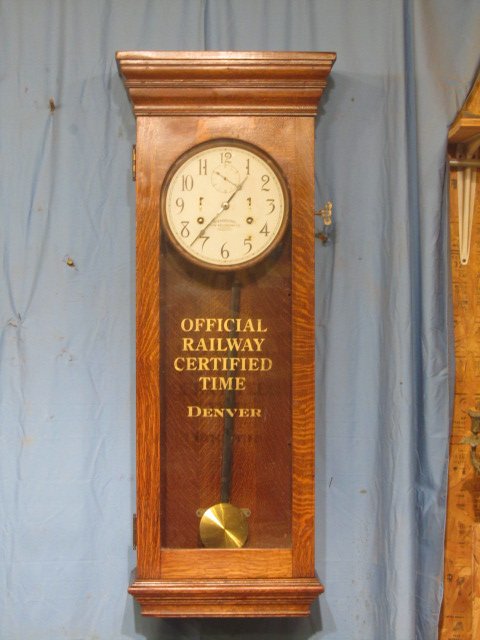
With the railways leading the way, a year later 41 countries came together in Washington DC an agreed to set the time at the Royal Observatory in Greenwich, England to define the "universal day", counted from 0 hours at Greenwich mean midnight. The railroad industry’s plan was adopted by much of the country, although the time-zone system didn’t become official across the United States until the passage of the 1918 Standard Time Act, which also established daylight saving time.
So, the next time you wonder what time it is you’ll know the invention of the railroad train brought about standardized time around the world. Technology leads the way again.
Showing posts with label railroad. Show all posts
Monday, February 19, 2018
Monday, October 26, 2015
Chinese Railroad Workers in the 1800s
One of my favorite parts of being a historical fiction writer is learning new things. It seems that whenever I hit the Internet to find a piece of information, I end up clicking on this link and that link and learning amazing things that will never actually be used in a book, but will expand my experience and make me a more well-rounded person.
Such was the case this last week when I was researching for my newest novel, A Careless Wind. My male character, Nicholas, went off to work on the railroad, and I was curious to see if any of the Chinese railway workers of the time would be likely characters to place there as well. Sure enough, they were, and I had the chance to learn more about them.
The United States had made a deal with China a few years previous to the date of my novel, which is 1875, which allowed Chinese workers to come to the States and seek employment freely. The other railroad workers didn't like this one bit - the Chinese were willing to accept wages of half what the other men were getting, and there was concern that the Chinese workers would take over all the jobs. Consequently, in many railroad camps, the Chinese (most often called "Chinamen") were treated as outcasts. They slept separately and ate separately from everyone else and weren't included in the camp goings-on. The Americans of the time referred to the Chinese "threat" as "the yellow peril," believing that soon the whole country would be overrun.
The Burlingame Treaty of 1868 was put in place to ensure proper treatment of Chinese immigrants, but the racist persecution became so bad that in 1882, Congress finally banned additional immigration, which was a huge blow to the Chinese community as it separated families. You can learn more about all of this by following this link. It's fascinating history, although at times heartbreaking.
It's ironic that the railroad was a huge force in helping us settle this continent and make it what it is today, and much of the work to enable that progress was done by men who would never be blessed because of it. We have a great deal to thank the Chinese railway workers for.
Nicholas wanted a life of adventure with the girl of his dreams by his side, but the death of his brother cast a pall on everything he'd hoped for. When he sees Rachel again, he thinks life has given him a second chance, but then an injury threatens to take everything away from him again.
Two souls looking for a place to call home . . . and wondering if just by chance, they can find that home together.
![]() |
| Photo courtesy of PBS.org |
The United States had made a deal with China a few years previous to the date of my novel, which is 1875, which allowed Chinese workers to come to the States and seek employment freely. The other railroad workers didn't like this one bit - the Chinese were willing to accept wages of half what the other men were getting, and there was concern that the Chinese workers would take over all the jobs. Consequently, in many railroad camps, the Chinese (most often called "Chinamen") were treated as outcasts. They slept separately and ate separately from everyone else and weren't included in the camp goings-on. The Americans of the time referred to the Chinese "threat" as "the yellow peril," believing that soon the whole country would be overrun.
The Burlingame Treaty of 1868 was put in place to ensure proper treatment of Chinese immigrants, but the racist persecution became so bad that in 1882, Congress finally banned additional immigration, which was a huge blow to the Chinese community as it separated families. You can learn more about all of this by following this link. It's fascinating history, although at times heartbreaking.
It's ironic that the railroad was a huge force in helping us settle this continent and make it what it is today, and much of the work to enable that progress was done by men who would never be blessed because of it. We have a great deal to thank the Chinese railway workers for.
***
A Careless Wind, book seven of the Kansas Crossroads series, is now available.
When Rachel's fiance was killed in a railroad accident, leaving her with
nowhere to go, she came to the Brody Hotel as a last resort. With the
help of her new friends, she found comfort and healing, and now she
believes herself as content as she can be. But when Nicholas Hardy, her
fiance's brother, walks into her dining room, her world falls out from
under her. Everything she thought she believed about herself, and him,
is called into question.
Nicholas wanted a life of adventure with the girl of his dreams by his side, but the death of his brother cast a pall on everything he'd hoped for. When he sees Rachel again, he thinks life has given him a second chance, but then an injury threatens to take everything away from him again.
Two souls looking for a place to call home . . . and wondering if just by chance, they can find that home together.
You can visit Amelia Adams at her website and sign up for her newsletter to receive fun updates about new releases.
Subscribe to:
Posts (Atom)


