Monday, February 27, 2023

Cowboy Sayings - Barking Up the Wrong Tree


“My biscuit is missing. Did you eat it?”

“No I didn’t. You’re barking up the wrong tree.”

In early 1800’s America, fox hunting with a pack of dogs was a popular past time. The dogs would chase the prey and corner it or force it up a tree where it would get stuck. Then the hunters could come along and well… finish the job. Oftentimes, though, the dogs would get tricked by a wily fox, and head in the wrong direction, or even start following the wrong prey. Distracted dogs would start barking, and signifying to the hunter that they’ve trapped the fox, only for the hunter to arrive and find the dogs barking at a raccoon in a tree instead of a fox, or even a tree that was empty all together. Disappointed, the hunter would say the dog was barking up the wrong tree.

Over time, the saying became commonplace way of saying that a person has made a wrong choice, was asking the wrong person about their problem, or going the wrong direction. 

Have you ever heard this saying before? Used it yourself? Could you see yourself using it now? Let me know in a comment!


On average, P. Creeden releases a story every other month. Interested in learning more? 
Join her reader group on Facebook:

Friday, February 24, 2023

Under Blizzard Watch

This morning, I shoveled three inches of snow off my front porch and the ten stairs to the front yard so my dogs could go down and heed Nature’s call. My husband strapped on our portable snowplow to the front of his Subaru and plowed the six inches of snow off the driveway. A recent acquisition, this plow will save us lots of shoveling., especially since starting at four this afternoon, we’ll be under a blizzard warning for twenty-four hours. This activity got me wondering about how 19th century people handled snowfall.

Old dictionaries use the term “snow plough.” A 1792 mention of a wedge built of wooden planks in a triangular form was made in an article published in New Hampshire. Research indicates that a patent for a snowplow was issued in 1840s, but no indication is given if the machine was actually built. In 1862 in Milwaukee, a plow was dragged behind a team of horses, according to Citilab.com. But here the horses are what’re actually breaking through the snow.  A problem existed that the main streets were cleared but often side streets were blocked with the pushed-aside snow. One solution was to pile up the snow in a horse-drawn cart and dump the snow in the closest river.

Snowplow (snoplog) in Sweden, 1909

In many cities, a big roller was dragged through the streets by a team of horses, compacting the snow so buggies and sleighs, often with skis attached, could transport people. Patents were issued in 1869 and in 1884 for machines to remove snow from railroad rails, but those machines didn’t go into mass production. Many train engines contain a metal wedge on their fronts to push aside snow.

At the company’s inception in 1878, American Road Machinery utilized horse-drawn steel blades to level roads, and they used them to move aside snow in the winter. The company went through a name change to Good Roads Machinery and is credited in 1913 with developing the first snowplow to be attached to a motor vehicle. In 1919, Carl Frink of Frink Snowplows is credited with constructing a plow for a commercial bus. Another milestone came in 1920 when Chicago street crews introduced a snow loader that used a conveyor belt to remove snow from the street and offload it into a dump truck.

Many of our stories take place on farms and ranches. Shovels have been around for centuries, and I can imagine the hours those residents put their strength to the test with manual relocation and removal. Also put to use would be sledges, a heavy flat pallet of wood to pull behind a team to cut a path through the snow from the house to the barn.

Blurb: A Christmas Tree for Trudel, book 12 in Mail Order Brides’ First Christmas

I’m sharing a backlist title with this post because I set the story in the Southern California mountains near where I live and can imagine Gibson and Trudel having to deal with snowfalls.

A high stakes poker game has effects even Gibson Bartleigh didn’t realize. He won back his brother’s gold mine deed but unknowingly wrecked a mail-order bride arrangement. Now faced with Trudel Arensen, the jilted fiancĂ©e, he agrees to drive her to a larger city where she can find a job. Propriety demands they marry, and both agree it’s only for the duration of the trip. But will forced proximity deepen the relationship into something more?

Amazon buy link

I'd be interested in hearing how many of you are being affected by this U.S. coast-to-coast winter storm.


Thursday, February 23, 2023

Nappies - A Short History on Diapers by Jo-Ann Roberts


While plotting out my current work in progress, Winning the Widow's Heart - Book 2 set during the Civil War, I needed to uncover--forgive the pun--how our great-great-grandmothers diapered their children.

Weather permitting, native American babies might have gone without pants, and would potty train early. Absorbent materials like moss, grass or weeds might be stuffed around a baby's bottom before he was wrapped up tightly in a cradleboard. When soiled, the material would be discarded and decompose naturally. In colder climates, mothers might use covers made of animal skin.

Used as a diaper material since ancient times, rabbit skins were especially sought-after since they were soft and gentle on delicate baby skin. Additionally, they were incredibly absorbent, holding up to 30% of its own weight in moisture, making it an ideal material for keeping babies dry.  


In Colonial times until the late 1800s, diapers were made from cotton, muslin, flannel or linen.  While waiting for their little one to make an appearance, it was a good way for mothers to keep busy, and a useful way to re-purpose worn-out clothes.


Because they were handmade, the shape of diapers varied. They might be squares, rectangles, or triangles. Fasteners could be buttons, sewn-on ties or straight pins (Yikes!) The modern safety pin wasn't invented until 1849. Wool covers (soakers, pilchers) were sometimes used, but generally babies only wore diapers.

Burnt flour, witch hazel, bee pollen, and beeswax were often used for diaper rash.

Because the colonies were still tied closely to England, colonists referred to diapers as napkins, "nappies", or clouts (a piece of cloth or leather). Mothers could purchase yards of special diapering cloth made of linen or muslin.

As the westward movement progressed, pioneer women carried on the same practices of diapering. However, their choices of fabric were severely limited unless they brought a layette with them. 

How Diapers Were Laundered

Mothers usually set aside a day or two each week to tend to the family's laundry, since water was scarce (especially on the Plains), and the work backbreaking. Often, women just rinsed and wrung out the wet diapers and hung them to dry. Can you imagine the odor when diapers were dried by the fireplace in the winter... Ew! 
Soiled diapers would be scraped, rinsed and set aside for washing. 


New Century...New Innovations...Disposables & More

In the late 1880s, all-cotton cloth diapers were mass-produced. Mothers were encouraged to sanitize diapers by boiling them before re-using.

A welcomed boost arrived in the 1940s and 1950s when washing machines became more affordable.

Even with these advancements, many women still sewed diapers and covers at home. During and after World War II, there was a shift in the use of cloth diapers-- namely, a shortage of cotton, and the flood of women into the workforce. With less time for housework, mothers looked for innovation and convenience. As a result, diaper washing services delivered diapers daily alongside their milk and eggs. 


In 1942, a Swedish inventor created the first throwaway diaper made of paper; in 1947, Valerie Gordon created a disposable diaper made from parachutes, cotton wadding, and wool. A housewife, Marion Donovan, filed a patent for a reusable cover. She was a young mother struggling with a leaky cloth diaper. She took down her shower curtain, ripped it up, and stitched it into a waterproof diaper cover using a sewing machine. She called her invention, 'Boater', utilizing snaps instead of pins, allowing for a better fit. She later used nylon parachute material. 


But despite progress in the design of washable diapers, disposables had become the wave of the future. Convenience, absorbency, fit, and lower incidence of diaper rash were the major selling points. Pampers© produced its first disposable diaper in 1951, complete with flushable insert. What made Pampers© an instant success was that they used cellulose fibers instead of paper fibers. 

The Modern Cloth Diaper

The properties of cloth diapers have changed dramatically over the last 150 years. While many of properties are the same, including prefolds, flats, and diaper covers, parents can purchase all-in-one diapers, hybrids, and pocket diapers that replicate the ease of the disposable diaper.

In the 1990, when global warming was first being tossed around, and parents began to understand the environmental impact disposable diapers had on the planet, cloth diapers began their resurgence.

 
On a personal note, in my teens, I babysat for my younger cousins, and have very vivid memories of cloth diapers, diaper pails, rubber pants, and diaper pins.

Gratefully, we were fortunate enough to buy disposable diapers when our children were born...

...which brings me back to the reason for my research on diapers since they play a minor role in the romance between Sofie Bishop, a Georgia widow, and Yankee captain, Seth Ramsey.

Releases April 26th!


Wednesday, February 15, 2023

Two Early Colorado Towns

 Post by Doris McCraw aka Angela Raines

Photo property of the author

This post is a look at a couple of towns in Colorado that I'm fascinated with. As you can imagine, they have a history that drew me to them. 

In the case of Rico, Colorado, it was the town where Joe and Harriett Ward's daughter ran away to, lived, and died there. While the Ward story I've told in other posts and in a symposium paper, I didn't talk about their daughter. The accepted story is that she couldn't take the lifestyle her parents were living so ran away and then committed suicide. I feel there is more to this story, and hope to pursue a closer version of what really happened. 

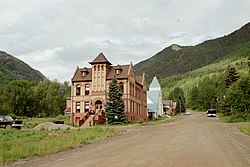
Rico town hall - from Wikipedia

Rico was a mountain town a mining town located in the San Juan mountain range about 27 miles from Telluride, Colorado, and 30 miles from Durango, Colorado. Below are a couple of articles from the newspaper that was published in the early days of the town. I find it fascinating what they were interested in.


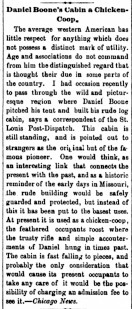
Rico Sun News


Rico Record Oct 18, 1883


Spar City is another town that has a boom/bust story and has lived on as a private reserve. It came into being during the heyday of silver mining but folded after silver was demonetized in 1893. It was located close to the town of Creede, Colorado. Around 1905 a group from Kansas bought the town and all that was in it as a place of their own to come to. 

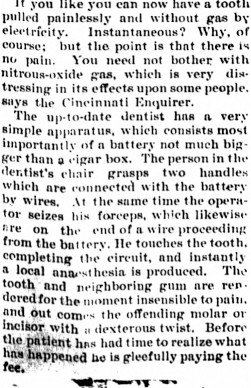
Below is a short piece from their short-lived newspaper. It seems electricity was a source of interest back then.


Spar City Spark March 20, 1893

Until next time: stay safe, stay happy, and stay creative.

Doris


Tuesday, February 14, 2023

Bedbugs, Boarding and School Boards- The Struggles of a 19th Century Teacher by Kimberly Grist


 When I write, one of my goals is to combine my love of history with an inspirational theme, romance, and believable characters. For example, as I was researching the life of a teacher during the late 19th century, I was astounded by the rules that a female teacher had to adhere to. Which do you find the most outrageous?

Fast forward twenty years later, and although society was in a phase of rapid industrialization with the introduction of electrical power and telephones, very little changed the rules for female teachers. The idea that married women didn't need income remained the most common rationale for banning marriage for female teachers.

Boarding was both common and practical for teachers and allowed them to live within walking distance of the schoolhouse and to live as well as their students.


New, inexperienced teachers hired by the lowest-paying districts often boarded with their students' families, enduring poor living conditions that were crowded, and lacked privacy with added nuisances such as bedbugs and poor sanitary conditions.
 
In my upcoming release, Carrie Dixon survived her struggle with discipline in the classroom, boarding with various families and bedbugs, only to lose the battle with the board of education, who find her impulsive nature, teaching methods, and the idea of extending the school calendar offputting. Destitute, she engages the assistance of a matchmaker and heads west.

Coming Soon and Available for Pre-Order!
https://www.amazon.com/dp/B0BNGNL7C5

Carrie Ann Dixon’s impulsive nature has cost her a teaching position. Destitute, she agrees to seek the help of a matchmaker. She believes there’s a happily ever after within reach for everyone, and she’ll work hard to make her dream come true. Casting her past failures aside, she’s thrilled with the idea of moving west and requests a match with someone who embraces adventure and will be enthusiastic about building a romantic relationship.

Gabe Russell, former solider and regimented rancher, isn’t looking for love. Instead, he needs a cook, housekeeper, and babysitter for his four younger siblings. Hence, his request to the matchmaker includes, “My desired match should be a no-nonsense, hard-working woman who knows the importance of following a schedule.

Monday, February 13, 2023

Author's Notes- Separating Fact from Fiction by Zina Abbott


These author's notes go with my latest published book, Lauren, from the Rescue Me (Mail-order Brides) series. A few explanations before I get started:

This book involved a lot of research. When began planning the plot for my 2021 book, Mail Order Blythe, I decided upon a railroad detective for my hero, and set the story in Wyoming Territory. I then looked for a year when interesting events took place. I settled upon summer of 1878 because two events caught my interest. First, the total solar eclipse on July 29, 1878, and second, the attempted train derailment on August 15, 1878. (Different sources indicate it could have been the 14th or 16th.) By the time I finished the scenes with the eclipse, that book had passed the word count allowance for that series. I pulled out my railroad detective hero and all references to the train derailment--plus one of the eclipse scenes. I added a different hero and focused on the eclipse as it took place in Rawlins, Wyoming Territory.


1868 Locomotive built for UPRR

Almost two years later, I published my railroad detective hero story with the scenes involving the attempted train derailment. As with the first book, I drew heavily on real events for my plot and real historical people for my characters.

This book also had a word count limit. I had to cut my finished manuscript to keep it under the absolute maximum allowed. There was no room left to add Author's Notes at the end. This is an abbreviated summary of my research notes. To include everything I learned would require I write a full non-fiction book. I have shared some of my research in other blog posts, some on other multi-author blogs for which I write. In case some readers wish to delve in the subjects more fully, I will include hyperlinked titles.

My heroine, Lauren Brower (aka Alice Bowers) and my hero Jeb Carter (with the alias Jeb Johnson) are strictly fictional.

UPRR Special Agents

There were, and still are, Union Pacific Railroad special agents who investigate railroad crime. To learn more, please read my earlier post, 19th Century UPRR Special Agents, which also tells about two real people who are included in my book. 

Rattlesnake Canyon

One was Henry C. "Tip" Vincents, a UPRR Special Agent who was stationed at Carbon City, Wyoming Territory. After the attempted train derailment, he was one of two men who made the initial search for the gang. He, along with Carbon Count Deputy Sheriff, Robert Widdowfield, was killed when they found the gang's hideout in Rattlesnake Canyon on the northwest side of Elk Mountain. They were the first two lawmen killed in the line of duty in Wyoming Territory.


 The second man featured in that post who played a role in my book was Edward Dickinson who, at the time of the attempted train robbery, was a UPRR dispatcher and superintendent stationed in Laramie, Wyoming Territory. The day after the attempted derailment, he and Albany County Sheriff Nottage did ride the train to where it happened and interviewed Eric Brown, the section foreman who discovered the disturbed rails. Brown flagged down the westbound train to prevent a derailment until his crew could repair the tracks. 

Eric Brown was a real person, and I found his story in several sources. In Lauren, I devoted an entire chapter told from his point of view. His personality and attitude is my own invention. You may learn more about section crews, also known as gandy dancers, in my post, I've Been Working on a Section Crew. 

Once Sheriff Nottage realized the crime took place in Carbon County, not Albany County, he bowed out and insisted Ed Dickinson contact Ike Lawry, the sheriff there.

1872 map showing original tracks and station locations.

Note: The above map was drawn prior to the survey party that came through in 1878, which you can read about in Billy Owen, Surveyor and Eclipse Observer. The detail about the location of Medicine Bow Mountains, Elk Mountain, and Medicine Bow River are not correct. Also, the county line is farther east than shown.

Contemporary map of region showing Medicine Bow River and Rock Creek

Note: At the time of my story, Hanna, seen on the above contemporary map, did not exist. Carbon City was south of Hanna, as were the UPRR tracks. When Carbon City ran out of coal, coal mining operations and the tracks were moved to Hanna. 

Also, Rock River on Rock Creek did not exist. When the Lincoln Highway was built in about the 1920s, since Como Bluff and all the excitement about dinosaur bone finds had passed, it was constructed in more of a direct line between Medicine Bow and Laramie. Both Como Station and Rock Station, which was about twelve miles east of current Rock River, became defunct. Also, on the above map, note the location of vertical orange line, which shows the county line between Albany and Carbon counties. Also, the angled black line is the outside limit for seeing the 1878 eclipse in totality. The Medicine Bow mountains, where I place my hero seeing the eclipse with Billy Owen, is well within the path of totality. Rock Creek Station is outside, which is why I did not say much about my heroine, Lauren, viewing the eclipse.


The above map shows three planned and actual routes for the UPRR tracks in this region. One was the original, shorter route which would have bypassed Medicine Bow, the Rock Creek Stagecoach Station, and Como Bluff (favored by Grenville Dodge, construction manager for the Union Pacific), one shows the current route to which the tracks were moved after the construction of the Lincoln Highway in the 1920s, and one shows the route of the original tracks, which connected with Rock Creek Station and Como Station, just south of Como Bluff.

As for the attempted train derailment itself, it took place between Como Station and the ridge by the Medicine Bow River. There were reports of someone working on the tracks on the west side of the bridge the day before Eric Brown found the loosened rails on the east side. Those on the Eastbound train assumed it was a section crew doing repair work. The engine nearly knocked one man standing on the bridge off into the river.


It turns out the man who was caught on the bridge and  almost knocked off was robber and all-around outlaw, George "Big Nose" Parrott. Those who recorded many of the details of Parrott's involvement probably got this information from his confession after he was captured about two years after this incident took place.

The accounts of the attempts to derail the train, the reason why the section crew was not fired upon as they repaired the tracks, but the two lawmen who found the hideout in Rattlesnake Canyon were killed (including what took place in the canyon) came from members of the gang after they were captured. Many of those confessions came from Big Nose George, who claimed he and another man were opposed to killing the section crew, which put them at odds with the rest of the gang. Also, the information about George being the one nearly knocked off the bridge probably came from him. This dispute over the murders and attempted murders led to the gang splitting up and each going their own ways. In coming months, some were caught.

Halleck Ridge and Rattlesnake Creek leading to Elk Mountain

Why were the men working on the west side of the bridge the day before the disturbed rails were found? It was their intent to derail and rob the eastbound train. Unfortunately, that train came through earlier than expected and before the gang had caused enough damage to the rails to derail it. My theory, which might be fiction, is they already planned to use Rattlesnake Canyon as their temporary hideout after the robbery until they either planned their next move or went their separate ways. The initial investigation into the missing lawmen showed tracks leading along the southern edge of Halleck Ridge, which then turned southeast along Rattlesnake Creek. 

It was at the point where the trail led into the canyon that Dickinson went to Carbon City to inform Carbon County Sheriff Lawry of the crime. Widdowfield and Vincents were sent out to gather information. They were to pose as cattlemen looking for grazing land. If they found something promising, they were to return so a larger posse could be formed to pursue the gang. Unfortunately, they stumbled upon the hideout. It was nine days after their murders before their bodies were found.

Dutch Charley, one of the original gang members, formed a new gang in September of 1878. Only a few of the original gang members joined him.

Ruins of Rock Creek

I set part of my story in Rock Creek Station, which was located between Laramie and Medicine Bow. (see above) To learn more about that station, please read last month's post, Rock Creek Station. I chose to have Lauren sent there because I knew about the hotel and restaurant owned and operated by John Thayer were targeted the December following the attempted August train derailment. Dutch Charlie planned to rob the train as it crossed Rock Creek north of Elk Mountain. He also decided to go after the payroll for Fort Fetterman he believed John Thayer held in his safe until it could be transported by freighters.

 Fortunately for Thayer, Dutch Charley sent gang member, John Howard, to investigate. Howard got cold feet and confessed all. John Thayer responded by hiring former Albany County sheriff, N.K. Boswell, to track down and arrest the gang. Boswell hired a private posse, promising to pay $250 for the capture of the gang. The gang was captured on Christmas Day in 1878 in--guess where? Rattlesnake Canyon.

Thayer's hotel and restaurant at Rock Creek


Most references say the restaurant and hotel were owned by Governor John Thayer. However, I discovered that John Thayer was governor of Wyoming Territory from 1875 until May of 1878. By December, he was again living in Nebraska, where he had been before his appointment. It might have been the governor's decision to have the business built. He might have provided the funding. However, it was run by his son, also named John Thayer. I developed the fictional personality of my character, the son named John Thayer, based on the assertive manner in which he went about ridding Rock Creek and environs of Dutch Charley's gang.

Another town to which my hero and heroine travel is Rawlins. It is a real city. The Railroad Hotel and U.P. Restaurant did exist, as did Allen and Mary Hayes. I have written about this couple and their hotel in earlier books, as well as about the Rankin family. James Rankin was a deputy sheriff and assistant U.S. Marshal in 1878. He was later elected sheriff of Carbon County. One brother, Robert, was the jailer, and his other brother living in Wyoming Territory, Joseph, worked at the family livery. You can read about the Rankin family in my post, The Rankins of Rawlins.


I thoroughly enjoyed writing Lauren, Book 2 in the Rescue Me (Mail-order Brides) series.

To find the book description and purchase options, please CLICK HERE.


Sources:

https://www.findagrave.com/memorial/14059595/henry-h-vincents

https://www.findagrave.com/memorial/147220794/robert-widdowfield

https://www.findagrave.com/memorial/113556618/charlie-burris

http://www.prairierosepublications.blogspot.com/2014/10/big-nose-georgewhat-nice-pair-of-shoes.html

https://buckrail.com/how-a-notorious-wyoming-outlaw-became-a-pair-of-shoes/

http://www.wyomingtalesandtrails.com/rawlinsa.html

http://www.wyomingtalesandtrails.com/lincRKcreek.html

http://www.wyomingtalesandtrails.com/medbow2.html

http://www.wyomingtalesandtrails.com/photos10b.html

https://truewestmagazine.com/article/history-haunts-and-hotels/