Showing posts with label sweet historical romance. Show all posts

Friday, February 24, 2023

Under Blizzard Watch

This morning, I shoveled three inches of snow off my front porch and the ten stairs to the front yard so my dogs could go down and heed Nature’s call. My husband strapped on our portable snowplow to the front of his Subaru and plowed the six inches of snow off the driveway. A recent acquisition, this plow will save us lots of shoveling., especially since starting at four this afternoon, we’ll be under a blizzard warning for twenty-four hours. This activity got me wondering about how 19th century people handled snowfall.

Old dictionaries use the term “snow plough.” A 1792 mention of a wedge built of wooden planks in a triangular form was made in an article published in New Hampshire. Research indicates that a patent for a snowplow was issued in 1840s, but no indication is given if the machine was actually built. In 1862 in Milwaukee, a plow was dragged behind a team of horses, according to Citilab.com. But here the horses are what’re actually breaking through the snow.  A problem existed that the main streets were cleared but often side streets were blocked with the pushed-aside snow. One solution was to pile up the snow in a horse-drawn cart and dump the snow in the closest river.

Snowplow (snoplog) in Sweden, 1909

In many cities, a big roller was dragged through the streets by a team of horses, compacting the snow so buggies and sleighs, often with skis attached, could transport people. Patents were issued in 1869 and in 1884 for machines to remove snow from railroad rails, but those machines didn’t go into mass production. Many train engines contain a metal wedge on their fronts to push aside snow.

At the company’s inception in 1878, American Road Machinery utilized horse-drawn steel blades to level roads, and they used them to move aside snow in the winter. The company went through a name change to Good Roads Machinery and is credited in 1913 with developing the first snowplow to be attached to a motor vehicle. In 1919, Carl Frink of Frink Snowplows is credited with constructing a plow for a commercial bus. Another milestone came in 1920 when Chicago street crews introduced a snow loader that used a conveyor belt to remove snow from the street and offload it into a dump truck.

Many of our stories take place on farms and ranches. Shovels have been around for centuries, and I can imagine the hours those residents put their strength to the test with manual relocation and removal. Also put to use would be sledges, a heavy flat pallet of wood to pull behind a team to cut a path through the snow from the house to the barn.
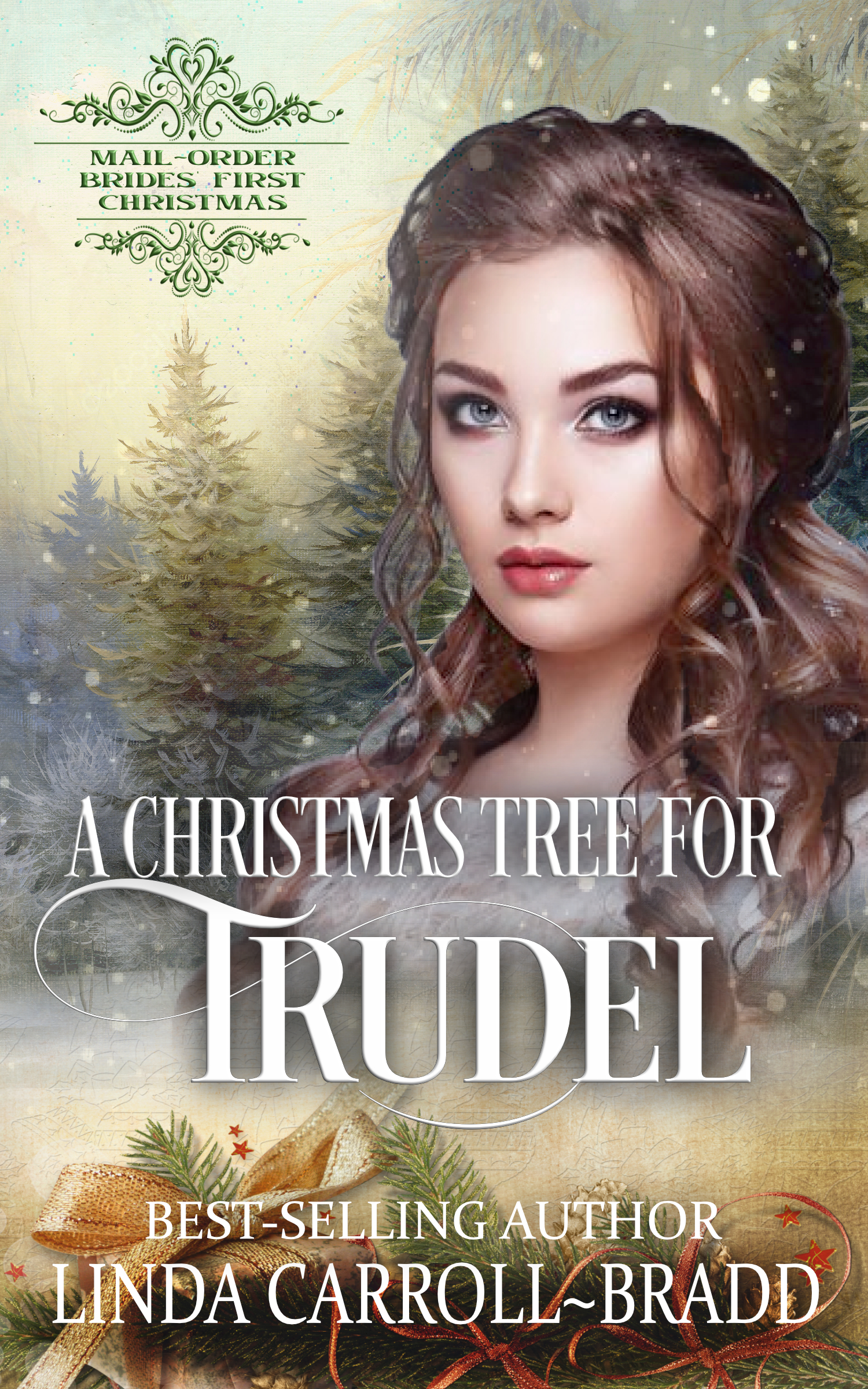
Blurb: A Christmas Tree for Trudel, book 12 in Mail Order Brides’ First Christmas

I’m sharing a backlist title with this post because I set the story in the Southern California mountains near where I live and can imagine Gibson and Trudel having to deal with snowfalls.

A high stakes poker game has effects even Gibson Bartleigh didn’t realize. He won back his brother’s gold mine deed but unknowingly wrecked a mail-order bride arrangement. Now faced with Trudel Arensen, the jilted fiancée, he agrees to drive her to a larger city where she can find a job. Propriety demands they marry, and both agree it’s only for the duration of the trip. But will forced proximity deepen the relationship into something more?

Amazon buy link

I'd be interested in hearing how many of you are being affected by this U.S. coast-to-coast winter storm.


Thursday, September 29, 2022

Touting The Central Pacific Railroad website


My post this month is an announcement of my early September release that hasn’t had its day in the sun. With this story set in 1878, I wanted to play with several tropes: secret identity, opposites attract, mistaken identity, woman in jeopardy, across the tracks and figure out how to fit them all in one heartwarming story. Of course, including children in the plot always helps with the cuteness factor.

I always do the research to find the actual train schedules so I can figure out if my characters have lots of choices of departures or if they have to jump through hoops to get to the depot in time. In this instance, I needed the names of several stops before the train reached Denver, and I was lucky to find such a schedule. I have used the website for the Central Pacific Railroad Photographic History Museum so many times that I feel I must give it a shout out. http://cprr.org. Click on the History link and you’ll find pictures of what the inside of a car looked like, how the beds folded down, tons of stuff about the Transcontinental Railroad construction and completion, testimonies of people who rode on the first trains, recommendations on how to pack and what people would expect to see, the actual advertisements that enticed people to travel cross-country, including side trips to new attractions like Yellowstone and Yosemite Parks. In the mid-19th century, trips were either coast also included ship connections to other continents. If any of you have train enthusiasts in your family, I can’t say enough about this website. 


The title is Sabrina, and the novella is book 5 in the Runaway Brides of the West multi-author series. Sabrina Whitmore, daughter of a wealthy railroad investor, has finally found a man who accepts her suffragist work. On the night before her wedding, she overhears her fiancé bragging that if he can’t get her to toe the line after their marriage, he’ll just have her committed to an asylum and take charge of her inheritance. Sabrina escapes the family mansion with her maid and rushes to the Kansas City train station headed toward an aunt in Denver. When she awakens the morning before her arrival, she discovers her maid is nowhere to be found and has stolen her clothes and most of her money. While hunting for her maid, she sees Maeve spirited away by two burly men and is scared her fiancé is hunting her.

Derrick Burkhardt bumps into a woman matching the description of the governess he hired from a St. Louis agency. Needing to get her settled at the ranch before he leaves for the spring roundup, he does all the talking during the buggy ride. When he returns a week later, the ranch is in an uproar over the governess’s unorthodox teaching methods. All Derrick sees are his children at the happiest they’ve been in two years. Will he feel the same when he learns the governess is not who she claims to be? 

FREE in Kindle Unlimited

https://www.amazon.com/gp/product/B0B33ZYMY8

Best ways to contact Linda

https://www.facebook.com/linda.carrollbradd

http://www.goodreads.com/author/show/1806413.Linda_Carroll_Bradd

https://www.bookbub.com/authors/linda-carroll-bradd

https://www.amazon.com/author/lindacarroll-bradd

Thursday, July 22, 2021

What's For Dessert? - Old West Cuisine in the 1800s by Jo-Ann Roberts


In my new release, Grace-Brides of New Hope, Grace Donegan is the town baker who creates delectable dried cherry tarts, pies, cakes. and cookies for the cafe and the Prairie Queen Hotel in New Hope, Kansas.

While doing research, I read dozens of articles about pioneer women who had to decide what few precious things to carry across the plains. One choice they all had in common was their collection of "receipts", as recipes were then called. For them, these were reminders of a security left behind and a hope for the abundance of the future. In the interim, they simply did what they had to do to keep their families alive.


For the most part, meals were informal and the food hearty. Nothing was wasted. Dried bread was made into bread pudding; a bone was turned into soup and extra milk was made into pudding or cheese.

Early trappers, explorers, miners, and homesteaders all had to be creative when it came to cooking on the frontier. Substitutions of all kinds were made so that the food would not only taste good but that it would taste familiar. It was certainly worth the effort since we're still using some of these recipes even today.

Here are a few examples of dishes these resourceful, hardy people created with limited or unusual ingredients.

Sourdough Starter

Sourdough biscuits were a-little-bit-of-heaven-on-earth delicacy whether on the trail, on a homestead, or in a prairie town cafe. Once a cook got a good sourdough starter he or she cherished it like a prized possession. 

The starter was made by cutting up 2 medium-sized potatoes into cubes and boiling them in water until tender. The cook would remove the potatoes and measure out two cups of the liquid. (The potatoes would be used for the evening meal). The cook would then mix the potato water, flour, and sugar into a smooth paste and set the mixture in a warm place until it doubled in size.

Vinegar Pie

This custard-like pie would have been made when there was no fresh fruit or dairy to be had. Settlers had to make do with ingredients that didn't spoil.


The acidity in the vinegar actually gives the pie a flavor that is reminiscent of lemon. This dessert is one variety of pie Grace Donegan makes to sell at the cafe for Thanksgiving. It doesn't taste like vinegar at all. It's sweet and tasty and brings to mind citrus more than vinegar. Plus, like a chess pie, it gets a little bit of a crust on top when baked.
 
Sheep Sorrel Pie

Since citrus fruit was hard to come by on the prairie and lemon pie was an extremely popular dessert, sheep sorrel leaves had a lemony, tang/tart flavor making it a perfect substitution. The pioneers used the herb to flavor their pies and is supposedly very close in taste to lemon pie. But homesteaders state that it does take a fair bit of sheep sorrel to get the flavor.

Johnnycakes

Like corn pancakes, Johnnycakes or hoecakes were a staple for anyone who needed to fill some bellies but had no wheat flour. Corn, being a new world food, made its way in all kinds of dishes. Topped with maple syrup or molasses, this makes a fine meal for breakfast, dinner, or supper.

Cobblers

Missing the traditional puddings from England but lacking the ingredients to make them, settlers created cobblers. A simple dish that combined fruit and bread or biscuit dough, cobblers have since become an American staple.  This dessert would have been cooked over a fire in a cast-iron Dutch oven and lard would have been used in place of butter.

Juneberry Pie (a.k.a. "Saskatoon berry")

Native to North America, particularly the upper Midwest, North and South Dakota, and the northern prairie region of Canada, juneberries had a flavor reminiscent of dark cherries or raisins, and a milder taste than blueberries. The ripe juneberry fruit is dark purple, with several tiny soft seeds, and very closely resembles a highbush blueberry.


Cookies

When the Europeans arrived in the United States, they brought their cookie recipes with them. Soon, they adapted the old recipes to fit their new country. American butter cookies are a close relative to the English tea cake and the Scottish shortbread.

In the Southern colonies, every housewife knew how to bake tea cakes that had no extra flavoring except butter and sometimes a couple of drops of rose water.

The first American cookies that showed up in a cookbook had creative names like Jumbles, Plunkets, and Cry Babies which gave no clue as to what was inside that cookie. As the expansion of the country grew, new ingredients started showing up in cookie recipes. The arrival of the railroad meant fruits and nuts like coconuts and oranges became available to homesteaders. Even cereal became a popular ingredient in cookie recipes after the Kellogg brothers invented cornflakes in the late 1800s.

In the Brides of New Hope series, cookies are a favorite treat for Eli MacKenzie, Grayson Barrett, and Tripp Walker.

As a native New Englander, Eli enjoyed Joe Froggers, a molasses cookie, while Grayson was partial to sugar biscuits, a treat his English-born mother often baked, and Tripp was fond of lebkuchen, a spice cookie reminding him of his German roots back home in New Braunfels, Texas.

Joe Froggers
Sugar Biscuits
Lebkuchen


From the treats we still make to this day to the obscure recipes that have fallen by the wayside, the ingenuity of the pioneers to make tasty food is nothing less than astounding. With so many foods unavailable, it is no wonder that a good cook was so often longer for on the trail or in a small prairie town.


 Lessie Brides of New Hope Book One
https://www.amazon.com/gp/product/B07Y8WH9CJ

Posey Brides of New Hope Book Two

Grace Brides of New Hope Book Three


Sources:


Saturday, October 24, 2020

A Brief History of Lighthouses


Structures have been needed along coastlines to warn sailors for as long as people have put vessels into oceans, seas, and bays. The first lighthouse is thought to be The Lighthouse at Alexandria (Egypt) built in 256 BCE was believed to be about 330 feet tall, making it one of the seven wonders of the world at the time. Multiple earthquakes between 950 and 1323 CE tumbled the structure to ruins.

In the Unites States, lighthouses were first governed by the Lighthouse Establishment created in 1791 as part of the Treasury Department. Complaints from owners in the shipping industry prompted the 1852 creation of The US Lighthouse Board, a quasi-military organization that focused on modernizing the structures and equipment. Construction of many of the coastal lighthouse was completed by the U.S. Corps of Engineers. Their expertise was needed to determine which type of structure worked best for the designated location. After 1865, all lighthouses had Fresnel lenses (named after the developer French physicist Augustin-Jean Fresnel). The special design of the lens (flatter and with more angles) captures and beams more of the light from a single source. 

1-Fresnel lens; 2-convex lens from Wikipedia

Men recruited into the lighthouse service had to meet specific physical requirements and were responsible for detailed recordkeeping and maintenance to keep the equipment functional. Most lighthouses sit on bluffs or beaches overlooking an ocean where the light at the top of a tower shining at night marks the coastline to prevent ships from running aground. Some towers are built from a ground base (with attached house), and other rise from the second floor of a base structure where the lightkeeper lives. Because the structures also serve as daymarks for ships to chart their progression along a route, neighboring lighthouses have different overall designs or different patterns are painted on the towers. Due to remote lighthouse locations, lightkeepers often had to be self-sufficient by maintaining a vegetable garden and raising chickens and a cow. Supplies and mail were delivered by a light tender (person on a small boat) on a regular basis.

I’ve always found lighthouses fascinating, and I just released my second novella in the “Keepers of the Light” series titled Between Two Beaus.


When Gala’s decision to act as a fake fiancée threatens the balance among the trio of friends, she is torn between Hal, who has suddenly shown interest, and fulfilling her promise to Bork.

Amazon or free in Kindle Unlimited

If you want to learn more lighthouse facts, join the series Facebook page here.


Friday, August 2, 2019

Keep Her From Crying Off (1880) by Kristin Holt

Kristin Holt | Keep Her From Crying Off (1880)
USA Today Bestselling Author


Why are my posts so frequently focused on Victorian Courtship? 

(I’m chuckling.) Perhaps I have nineteenth century courting on the brain because all of my titles are Victorian Courtships. I’d wager the vast majority of American Historical Romances (and Victorian Romances, too) are, in the barest of terms, about a Victorian courtship of one kind or another.

I can’t wait to share with you this splendid example of Victorian advice regarding courtship, love, and marriage. With beautiful humor, this nineteenth century newspaperman dispenses winning advice ("Keep Her From Crying Off") in a typical late-nineteenth century manner: storytelling


Original source: The Richmond Democrat of Richmond, Missouri, January 29, 1880.

Without further ado:

Kristin Holt | Keep Her From Crying Off (1880), Part 1 of 3
Kristin Holt | Keep Her From Crying Off (1880), Part 2 of 3
 Kristin Holt | Keep Her From Crying Off (1880), Part 3 of 3


This vintage example is too overblown to be an accurate recipe for success, yet it is a valuable “slice of life” image. Much truth lies beneath this fictionalized storytelling-styled advice.

Frankly, today's women would never put up with this "Chicago Man" and his "I'm in love with Cora" nonsense. I imagine no woman in Victorian America was quite so ignorant either. After all, girls were bombarded on every side about the critical nature of choosing a life partner.

I’ve explored and shared true-to-history about elements mentioned in this article:
 
Kristin Holt | The (Victorian) Moral of the Story...
Victorian Storytelling Convey Values


Thank you for reading and exploring how to “Keep Her From Crying Off” 1880-style with me. Your thoughts are welcome! Please leave a comment.

Are you interested in much more about the Victorian-era United States, particularly the Old West? You’re invited to explore my ever-growing cache of articles for fiction readers who find the historical settings and backgrounds to be fascinating.
 

Photograph of USA Today Bestselling Author Kristin Holt
Copyright © 2019 Kristin Holt LC