Wednesday, March 18, 2020

Release Day for Transforming Emma, Book 20 of Lockets & Lace series


Raised a tomboy on a central Texas ranch, Emmaleigh Wallache returns from a year’s visit during which her Bostonian aunt introduced her to a life of culture—fulfilling her late mother’s wish. Her father’s secret goal is to marry her off to the son of a meat packer to guarantee his ranch’s success. Although happy for her time spent in society, Emmaleigh struggles to discover where she truly belongs.

Foreman Brett Haynes, who has waited until Emma turned eighteen so he can reveal his caring feelings, can’t believe the changes a year made. Gone is the spunky girl who raced him through fields or swung from ropes over the swimming hole. He has nothing in common with this sophisticated young woman and despairs she is unreachable. Can he remind her of life’s simpler moments and win over the heart he has always thought of as belonging to him?

I had such fun writing these characters who rediscovered each other after being apart and maturing from their youthful infatuation.

Excerpt:


The faint, but steady, rhythm of galloping horses grew louder in the early afternoon air. A flash of color showed in a copse of mesquite trees and then disappeared into a small gully. Seconds later, six horses emerged, followed by a red coach painted with yellow accents of the Bain and Company line. Near Spengler’s blacksmith shop at the edge of town, the team slowed to a trot then eased to a walk.


He sucked in a deep breath. Brett brushed a hand over his shirt and dusted the top of his boots against the backs of his pantlegs. So many months had passed—eighteen in total. The image of a teary-eyed Emma, seated at her father’s side, waving goodbye from the buggy passed through Brett’s mind. He’d ridden as far as the wooden arch marking the southern entrance to the ranch and watched with stinging eyes as Kurt Wallache drove his only daughter into town…and out of his life. The boss’s explanation of satisfying his late wife’s wish for Emma to receive special cultural training had never made much sense. What in blue blazes did a Texas ranch wife need to know about big city culture?


Water splashed as the wheels rolled through puddles of snowmelt. “Whoa there.” The stocky driver pulled back on the reins a couple of rods down the street. The chains on the whippletree clanked.


The horses stopped parallel to the square loading platform that jutted four feet into the street. Steam puffed from their nostrils like from a boiling tea kettle, making an erratic huffing melody.


More excited than he wanted to admit, Brett tugged on the front of his long coat just to keep his hands busy. What he wished he could do was storm the stagecoach and yank open the door so he didn’t have to wait another moment to see Emma’s beautiful face. But he didn’t want to scare her with his brashness. Instead, he leaned a shoulder against the stage office wall and watched as the driver hopped down and took his time checking the harness and double-trees before moving to the coach door.


The lean shotgun rider alighted and moved to the back to unbuckle the straps holding the luggage.


On this cool day, all the leather window flaps were lowered to keep the inside as warm as possible.


First to climb out were a couple of familiar ranchers, Misters Pallaton and Fremont, with whom he had a nodding acquaintance. An action he made in deference to his position as foreman of a prominent nearby ranch. The next two passengers were chatty women with upswept hairdos and hats with doo-dads and gee-gaws that looked like they were ready for a fancy-dress ball.


The driver held the elbow of an elderly woman who set down a cane into the wooden step before disembarking.


Then no one else emerged.


Where was Emma? He pushed off from the wall, strode to the coach, and stuck his head inside. Empty. He eased to a stand, disappointment slumping his shoulders. Had she missed this morning’s stage in San Antonio?


~o0o~


Aunt Nadine often commented how Emmaleigh matured during her time spent in Boston—a three-month visit that kept being extended until a year and a half passed since she left her hometown. So, maybe Emmaleigh understood how Brett overlooked her. After walking right by the man who’d taught her to ride and rope and seeing him not give as much as a double take, Emmaleigh positioned herself near the stagecoach office door. Waiting for Brett to recognize her, she resisted glancing at her reflection in the office window.


For years, they’d been best friends and spent hours together daily. True, though, she’d left Texas dressing and acting like a tomboy. But upon arriving at Aunt Nadine’s, she’d been admonished about the inappropriateness of her split skirts, chambray blouses, and square-toed boots. Aunt Nadine went into a tizzy about the inadequateness of her brother’s handling of his only daughter.


Even before tea was served, the maid provided warm water to refresh herself then helped Emmaleigh into an acceptable dress and touched up her hairdo. She whisked away the offensive clothes, stating the mistress ordered them be saved for the church’s poor box.


Although she’d fought the new clothing styles at first, Emmaleigh gradually came around to her aunt’s way of thinking. Young women of good breeding and means needed to dress the part. Emmaleigh had grown used to fabrics of finer weaves and intricate dress styles designed to accent her recently acquired curves. Granted, her wardrobe was more sophisticated, but had she really changed that much?


As he passed, she’d noted he now wore his thick hair longer and his skin glowed tan from spending time outdoors. Growing older broadened his shoulders and sharpened his features, but Brett Haynes was still the most handsome man she’d ever met. His ever-present red kerchief hung around his neck.


Seeing Brett inspecting the empty coach prompted her to give up on being recognized. She gave her braided bun a pat before smoothing a hand over her burgundy velveteen knee-length coat with mother-of-pearl buttons. The modiste Aunt Nadine hired assured Emmaleigh the color complimented her fair complexion. Squaring her shoulders, she glided to the center of the platform and tucked her hands into a rabbit fur muff.


Brett turned and scanned the platform and boardwalk, his gaze finally settling on the lone waiting person. First, his brown eyes popped wide and then, his jaw dropped an inch or so.


His surprise looked as comical as Lord Dundreary in “Our American Cousin” which she’d seen at the Globe Theater last month.


“Emma?” After thumbing back the brim of a broad-brimmed, ranch hat, he tromped closer and leaned down to squint at her face. “What in tarnation have you done to yourself? Is that rouge painted on your cheeks?” He crossed his arms and shook his head. “If your father sees that, he will turn you over his knee.”
FREE in Kindle Unlimited

Amazon buy link

Tuesday, March 17, 2020

Cowboy Sayings - Not Worth a Hill of Beans


In the west, beans were never worth much in the garden. They were a staple, but not as valuable as wheat or corn. People ate them, but rarely were they a favorite food. So, to most, beans just weren't very valuable.

Now the common misconception is that a "hill of beans" is a bunch of beans stacked as big as a hill -- this is how we'd interpret the saying today, making beans a bit more valuable. For example, today, a ton of beans is worth between $600-1800 depending on which type of bean. However, that's not what a "hill of beans" refers to.

In an 1858 book by JJ Thomas, he describes making a trellis for beans and making sure the hills of beans are 3 feet apart in a row. To understand what a hill of beans means to a cowboy, you have to look at farming life back in their time. For them, a hill of beans refers to the rows or section of land that is used to farm beans. Some might think that growing a better crop, like corn or wheat, would be a better use of the land. However, most farmers rotated crops, and because beans are a legume, they use the soil differently, leaving more nitrogen behind for the next year's crops, making the soil better for the following year.

However, most farmers would feel as if the year that they put beans on a plot of land is somewhat useless for sale purposes compared to others. It's considered a useless or less valuable year.

Therefore, when something is "not worth a hill of beans" it is declared as useless, or more useless, than the year they have to make their plot of land into a hill of beans to grow better crops the following year.

How about today? Do you often see this expression used in daily life? Did you know the meaning of it before? Leave a comment and let me know!


On average, P. Creeden releases 2-3 stories each month. Interested in learning more? 
Join her reader group on Facebook:

Monday, March 16, 2020

Meet the Lockets & Lace Authors-Week 3


We've shared the covers for the third year of our Lockets and Lace series. We now wish to tell you a bit about our seven authors. 
The first five were highlighted the past two Mondays.
 Last, but not least, here are the Week Three authors:


About Marisa Masterson:


Marisa Masterson and her husband of thirty years reside in Saginaw, Michigan. They have two grown children, one son-in-law, a beautiful granddaughter, and an old and crazy dog.

She is a retired high school English teacher and oversaw a high school writing center in partnership with the local university. In addition, she is a National Writing Project fellow.

Focusing on her home state of Wisconsin, she writes sweet historical romance. Growing up, she loved hearing stories about her family pioneering in that state. Those stories, in part, are what inspired her to begin writing.

Connect with Marisa:

Marisa Masterson will be publishing Ginger Snap for readers on Monday, March 30th. To find the book description and preorder purchase link, please CLICK HERE.


About Kimberly Grist:


Kimberly Grist is married to her high school sweetheart, Nelson, who is a pastor in Griffin, Georgia. She and her husband have three adult sons, one with Down syndrome, and they have a passion for encouraging others with family members with special needs

Kim has enjoyed writing since she was a young girl. However, she began writing her first novel in 2017, "
I wear so many hats working inside and outside the home. I work hard, try harder and then begin again the next day. Despite my best efforts, sometimes life just stinks. Bad things happen. I need and want an outlet, an opportunity to relax and escape to a place where obstacles are met and overcome." 

Fans of historical romance set in the late 19th -century will enjoy stories combining, History, Humor, and Romance with an emphasis on Faith, Friends and Good Clean Fun. 

Connect with Kimberly:

Kimberly Grist will be publishing Willow’s Worth for readers on Wednesday, April 1st. To find the book description and preorder purchase link, please CLICK HERE.


Thursday, March 12, 2020

Malted Milk

by Shanna Hatfield

Most soda fountain treats began as health foods, such a malteds. My dad has always been a big fan of malted milk and still enjoys them about once a week. So it made me curious about the history of the drink. 

Malted milk is a powdery mixture of malted barley, wheat flour, and evaporated whole milk. The powder is used to add a distinctive flavor to beverages and foods, and may also be used in baking to help dough cook properly. 

The driving force behind the invention of malted milk stemmed from a desire to find a soluble shelf-stable powdered milk. Early forms had to be cooked before it was consumed. Other forms proved unstable for an extended shelf-life.

Finally, in the late 1800s, one man figured out how to make it work. 


James Horlick, a London pharmacists, developed ideas for an improved wheat and malt based nutritional supplement for infants. Uncertain about his opportunities in the United Kingdom, he joined his brother William in Racine, Wisconsin, to work at a relative's quarry. 

In 1873, the two brothers formed J&W Horlicks to manufacture their rand of infant food in Chicago. Ten years later, they earned a patent for a new formula for infants, enhanced with their supplemental dried milk. 

The name "malted milk" was trademarked by the company in 1887. 

Despite the origins as a healthy supplement for infants and then invalids, malted milk found additional markets. Because of its lightweight, non-perishable, nourishing qualities, explorers took malted milk on adventures across the globe. William Horlick became a patron of Antarctic exploration. Admiral Richard E. Byrd reported named a mountain range in Antarctica after him. 


People began drinking Horlick's malted milk for enjoyment. James returned to England to import his American-made product. The Horlick's product was marketing as a "complete food for all ages." 

Since soda fountains were located in the drug stores that sold malted milk for health purposes, they began experimenting with adding malted milk in milkshakes. Malted milk syrup was added to beverages for flavoring and to milkshakes to make them more robust in flavor. It also boosted the fat content, making the drinks more filling. 

Malts became so popular, many drug stores that served them became known as Malt Shops. 


Horlick's patent ran until 1900. By this time, other companies had started producing versions of malted milk. Two companies that took advantage of a court ruling that said anyone could make a product and call it malted milk were Borden and Carnation.  Malted milk wars ensued and continued for many years.

The heyday for malted milk was in the 1920s, but you can still buy malted milk powder today. 

~*~


   After spending her formative years on a farm in eastern Oregon, hopeless romantic Shanna Hatfield turns her rural experiences into sweet historical and contemporary romances filled with sarcasm, humor, and hunky heroes.
   When this USA Today bestselling author isn’t writing or covertly seeking dark, decadent chocolate, Shanna hangs out with her beloved husband, Captain Cavedweller.
   Shanna loves to hear from readers. Follow her online at:
Find Shanna’s books at:

Wednesday, March 11, 2020

I mustache you what makes a "Dapper Gentleman"


While the full beard lost popularity, mustaches became widely adopted by civilian men in the 1880s and 90s. Young men took to wearing the style to look older, fashionable and inspire confidence and to add a "dashing" air.

The mustache had its attraction for the ladies. They were pampered, brushed combed and trained to curl up at the ends.


What we might call styling products included gobs of wax melted and applied to the mustache to keep the curls in place to mustache curlers and modified mugs.


Rudyard Kipling, author of The Jungle Book, Kim and "The Man Who Would Be King" wrote of a woman who complained of being kissed by a man who did not wax his mustache.


While researching men's fashions for my new release, A Bride For David, I found myself fascinated by the many photos of men with a mustache. Love 'em or hate 'em, they were considered fashionable in the late 19th century. I was inspired by this photo to be the groom of our heroine.

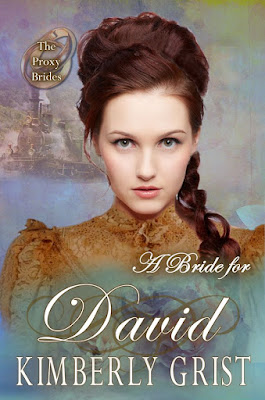
New Release: A Bride for David 

A Bride for David

Mathematics teacher, Daisy Murphy agrees to participate in a new matchmaking service organized by her pastor and the matron of the orphanage where she spent the last fifteen years.

Romantic, yet practical, she's systematically eliminated all candidates but one and anticipates getting to know him better through months of correspondence.

Time is not on the side of David Taylor. He has a nephew and niece to think about, and his attorney has warned him he will lose custody of both to their rich grandfather if he doesn't have a wife.

A teacher longing for security, a businessman about to lose the only family he has; and a proxy marriage that can give them both exactly what they need.


Kimberly Grist is married to her high school sweetheart, Nelson, who is a pastor in Griffin, Georgia. She and her husband have three adult sons, one with Down syndrome, and they have a passion for encouraging others with family members with special needs. 

"Kim has enjoyed writing since she was a young girl. However, she began writing her first novel in 2017, "I wear so many hats working inside and outside the home. I work hard, try harder and then begin again the next day. Despite my best efforts, sometimes life just stinks. Bad things happen. I need and want an outlet, an opportunity to relax and escape to a place where obstacles are met and overcome." 
Fans of historical romance set in the late 19th -century will enjoy stories combining, History, Humor, and Romance with an emphasis on Faith, Friends, and Good Clean Fun. 

Connect with Kimberly:


Monday, March 9, 2020

Meet the Lockets & Lace Authors-Week 2


After sharing the covers for the third year of our Lockets and Lace series, we wish to share a bit about our authors who will be bringing you the next seven books in the series. Here are the Week Two authors:


About Caryl McAdoo:

Award-winning Christian author Caryl McAdoo is all about loving the Lord! She prays her story gives God glory which is what she lives to do, and her best-selling novels enjoy a lion’s share of 5-Star ratings from readers around the world.

A dear, but gruff Navy-sergeant-mentor once told her, "Caryl, pick a genre," but she never could and enjoys writing many genres with her husband Ron---yes, though only her name is on the covers, that's how Simon & Schuster wanted it, and it works well for the McAdoos.

Caryl reaches a memorable milestone with her Lockets and Lace book this year. Bitter Honey is Caryl's 50th published books.

She and high school sweetheart Ron, married fifty-plus years, share four children and eighteen grandsugars. The McAdoos live in the woods south of Clarksville, the seat of Red River County in far Northeast Texas. 


Sign up to follow Caryl on Amazon and BookBub, also her Newsletter.
To read more about Caryl and to find her other author links, please CLICK HERE.

Caryl McAdoo will be publishing Bitter Honey for readers on Monday, March 23rd. To find the book description and preorder purchase link, please CLICK HERE.


About Abagail Eldan:

My father was a career soldier and consequently, I have lived many places including Germany and France. My life changed at the age of eleven when we moved into a house in Toul, France. In the three-story house, rumored to have been occupied by the Nazis during World War II, was a treasure trove of books. From classics to pulp fiction, these books created in me a desire to be an author. Today I live that dream with my husband of forty years on a small farm in south Alabama. In the peaceful surroundings of rural life with cats, dogs, and a horse, I incorporate lessons and stories I learned at my mother’s knee into my books.

I consider myself to be a defender, a servant, a peacemaker, and a writer.


Check out my Amazon Author Page to find more of my books, also BookBub and my Newsletter/blog

Abagail Eldan will be publishing Grace, Unimagined for readers on Wednesday, March 25th. To find the book description and preorder purchase link, please CLICK HERE


About Zina Abbott:

My name is Robyn Echols. Zina Abbott is the pen name I use for my American historical romance novels. I’m a member of Women Writing the West, Western Writers of America, and American Night Writers Association. I currently live with my husband in California’s central valley near the “Gateway to Yosemite.”

I love to read, quilt, work with digital images on my photo editing program, and work on my own family history.

I would love it if you follow me on Amazon and BookBub. Also, please sign up for my NEWSLETTER and my Zina Abbott Books blog

Zina Abbott will be publishing Hannah's Handkerchief for readers on Friday, March 27th. To find the book description and preorder purchase link, please CLICK HERE.