Showing posts with label #Historicalfiction. Show all posts

Tuesday, February 4, 2020

February...A Time to Garden?

Awww... it's February, and spring is in the air, as cold as that air might be. Here in the Deep South where I live, I have seen the first bluebirds and a robin or two. And that means time to pull out seed catalogs and begin planning the garden.

Gardening is one of my favorite hobbies, and by gardening, I mean the growing of vegetables and fruits. We have fig trees, apple trees, peach trees, pecan trees, and a few other fruit trees. We grow turnips, collards, tomatoes, okra, peas, butterbeans, peppers, and my favorite, squash. It's too early for many of those, although around the middle of the month, we will be planting our turnip seeds. My collard plants look as if they have survived the winter, and I don't anticipate having to buy more.

Another activity my husband and I will engage in this month, if the Lord and we are willing, is to prune our fruit trees, and perhaps invest in a few more. What does this have to do with historical life? Not so long ago, most families had their own kitchen garden. We forget that fruits and vegetables were not always so abundant in the stores, even if you were lucky enough to live near one that sold perishable goods. Most goods in the general stores were staples, such as flour, and cornmeal, perhaps meat that had been cured, salt, and perhaps a few more common spices.

And thus the need for a kitchen garden and the need to take the month of February to prepare the soil and prune the trees.

Most planted fruit trees near their cabin for convenience.
In my last Lockets & Lace book, Joy, Unending Joy finds a job as an apple picker in Lonely Grove, Texas. She goes on to learn to can apple jams and jellies and is the best apple pie maker in Lonely Grove. So good is she that the local restaurant asks her to supply them with desserts, mostly made with those delicious apples from the Lonely Grove Orchard.
Apple pie is my favorite!
So, in February, what would the Lonely Grove Orchard workers be doing? Pruning the apple trees, of course. Pruning opens up the canopy to sunlight and proper air circulation. The very first rule of pruning is to remove any dead or damaged branches. The second rule is to prune so that branches are not crossing. If the branches rub against each other because of the crossing, it can lead to damaged branches and may introduce diseases into the tree. The apple tree should only have one leader branch, otherwise the tree will become weak. Any competing leader branches should also be pruned. And that's a few basics of pruning.
An apple tree, ready to be pruned.
The apple tree was and still is the most popular fruit tree grown in gardens.  Much of the popularity of the apple tree is due to John Chapman (September 26, 1774 – March 18, 1845) who traveled to several states and helped farmers establish nurseries for the propagation of apple trees, contrary to the image we usually have of him of throwing seeds wherever he went. Yes, his nickname was Johnny Appleseed.

Perhaps due to Johnny Appleseed's influence, apple orchards became common across America, such as Lonely Grove Orchard. I am in the process of creating a new series set near that very orchard.  In Joy, Unending, the story ends with Tristan planning to build a school. Joy will continue creating her jellies and jams and her apple desserts for the school children. I can't wait to share some upcoming news with you about that soon. Stay tuned!

If you garden, please tell us about it in the comments. In the meantime, happy reading!


Tuesday, January 7, 2020

Settling in Texas by Abagail Eldan

The first true German immigrants in Texas were Johann Friedrich Ernst, the "Father of German Immigration to Texas," and Charles Fordtran. A few years later, in 1842, the Adelsverein was formed for the purpose of promoting German immigration into Texas. Some came to escape religious persecutions, others because of political problems in Germany, and still others came looking for better opportunities. (see Lonestar Genealogy)

My Brokken books are populated with German immigrants. The series is set in Brokken, Texas, the small Texas town founded by Franklin Brokken, a descendant of Wilhelm Brecheisen whose surname means “breaker of iron” in German. Not long after Wilhelm arrived in America, he became involved in a fistfight with a fellow German, a man named Frederick Eisen, whose name means "iron." When Eisen landed a blow and Wilhelm fell, breaking his hip in the process, one of the onlookers said, “The iron has broken the iron breaker.” And just like that, Brokken became Wilhelm’s last name. He cheerfully accepted the Americanization of his name but added the K, right in the middle. The K, he told his family, stood for kein, which means“not” in German. He declared to all who would listen that he was not broken. And he set out to prove it, soon becoming one of the richest men in Pennsylvania.

His grandson Franklin Brokken traveled to Texas to found the town that bears his name. With his first wife, Franklin had three sons, Fritz, Curt, and Karl. After the death of his first wife, Franklin remarried, and his wife bore him a daughter, Deborah. 

Beginning in This Brokken Road, we learn a little about the three sons. Many of the businesses in the town are owned by the Brokkens, and one of their businesses, the Brokken bank, is robbed by the owners themselves. In Brokken Brother we discover why. 

In Brokken Redeemed, the tale of the Brokkens continues with Deborah's story. When the town is attacked by a group of outlaws, Fritz bears the brunt of the blame for the destruction that ensues. 

Disillusioned, outcast by his own family, and his engagement broken, Fritz is given a mission--find the mother of Sally Jane whose grandmother was killed in the fiasco. 

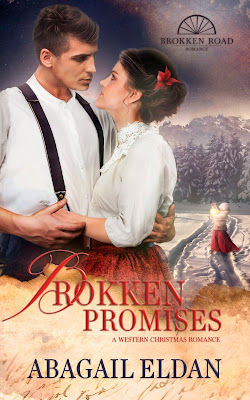
In Brokken Promises, Fritz sets out on his journey, unaware of the repercussions from his lies and the broken promises he has left in his wake. 

His search leads him to Camellia Jenkins who harbors deep secrets. She is barely able to keep body and soul together and returns to Brokken, Texas with Fritz who promises to help her. 

When her secrets are revealed, will Fritz stand by his word? Will keeping promises break him further... or make him stronger? 

Brokken Promises is the latest in the Brokken Road Romances

Wishing you a Happy New Year!


Friday, January 26, 2018

New Release ~~ TODAY ~~Locket Full of Love, book 5 in the Lockets & Lace Collection

Was her husband a sinner or a saint? A spy or a traitor?

For years Juliet Watts has believed her husband died saving nothing more than a cheap trinket--but the locket he risked his life for turns out to hold a mysterious key. Together, Juliet and military intelligence officer Robert Hall go on a journey of riddles and revelations. But Juliet is convinced Robert is hiding something, too. Maybe it’s just his heart…

I have to tell y'all, I had such a good time writing Locket Full of Love! It's a romance, but the Lord led me to some wonderful twists and turns, making it the best mystery (I think) I have written so far. It's a roller coast ride that moves from St. Joe to Nashville to Denver. You'll stroll the streets of Defiance, ride horses in the San Juan Mountains, and haunt the halls of Washington politicians. I hope you'll order you copy today!

Here's a little snippet!


“How stupid do you think I am?”
The small-boned fist roared out of the dawn’s gloom and hit Robert’s jaw with the force of a shovel swung by a much larger man. Vision blurring, his brain fogging, he staggered back away from Juliet, holding his face. His hat tumbled to the ground behind him.
She stepped toward him, one hand clutching her suitcase, the other flexing over and over as if the punch had hurt her as well. Her pinched lips and burning eyes said she was ready to throw another, regardless of the passengers on the platform eying her with mouths agape.
“You try to rob me and then show up here to ride the train with me?”
Robert couldn’t fathom what was causing this outburst. “I don’t think you’re stupid at all,” he said, working his jaw back and forth. “And maybe if you tell me what’s got you so riled, I can explain. Who tried to rob you?”
“Like you don’t know.”
“I don’t know.”
She narrowed her eyes at him, slivers of cold fire shooting from them. “Someone was in my room last night rifling through my jewelry. Jewelry. Clearly, he was after the locket. I haven’t told anyone about it.” She raised her eyebrows in accusation at him. 
“I didn’t tell anyone.” But he had. He’d sent a telegram. Making sure the revelation didn’t show on his face, he said, “Perhaps Mr. Mueller told someone. Innocently enough. He told the wrong person or the wrong person overheard?”

Her gaze narrowed down to slits of jade. Robert raised his hands in surrender. “If I had tried to rob you, Juliet, would I be here now?”

Thursday, January 25, 2018

Melly, Unyielding by Abagail Eldan


New Release!
by Abagail Eldan
Book 4 in the Lockets & Lace series


Melly, Unyielding is the fourth book in the Lockets & Lace series, sponsored by authors of this blog. Here is the description:

Melly is a woman with secrets. Thatcher is the man with enough patience to unlock them. 

For fifteen years, Carmella Harperson’s life has been confined to a couple of acres in the middle of a large forest. She’s alive but hopeless, each day a struggle. 

William Thatcher Rainer’s past haunts him as he hunts down the man who destroyed his life. His days are filled with memories of the carnage of war; his nights with nightmares of the death of his wife. 

On the road, to find the man responsible for the misery of so many, they must work together and learn to trust. 

Neither is prepared for what they find at the end of their journey. 


And here's an excerpt:

The temperature had dropped, and Melly shivered. Mr. Rainer had retreated to his blanket and was not moving, asleep, she presumed.

When sleep darted like a rattlesnake, she dozed, but it curled and struck her. The poisonous venom of a nightmare awoke her with a strangled cry.

She rolled over and sat up. After a moment to gain her bearings, she rose quietly and sought the fire.

The top log had grayed, and she poked it with a stick until it glowed red again. The ashes fell, curling beneath the logs. She lifted the top log to let air flow through, and then gently let it down, to keep the flame alive.

In the depths of the fire, her sisters terrified faces appeared before her. She turned her face away, to watch a spark climb into the darkness until it vanished. Beneath where the spark disappeared, a movement caught her eye. 

She blinked, thinking it was but an illusion. When she looked closer, a man’s face came into view. She put a fist to her mouth to stifle a scream, and was on her feet, running, shaking Thatcher.

He immediately sat and drew his gun from the holster beside him. He searched her eyes. “What? What’s wrong?”

“A man,” she choked out. “His face was wrinkled, his hair white and long, in two braids.”

Thatcher had already gained his feet, moving in the direction she pointed.

~o0o~

Melly, Unyielding is available on Amazon. Through the evening of January 25th, it is still offered at its pre-order sale price of $.99.
Starting tomorrow, January 26th, it will be offered at its regular price of $2.99.
Melly, Unyielding is also available on Kindle Unlimited.
Please click here for the international Amazon purchase link. 

~o0o~

Join the Lockets & Lace authors on Facebook for our 
There you find information on how you may have a chance to win one of three great prices: a special book locket, a lace handkerchief, or a $40 Amazon gift card. Please visit each day to learn more about each book as it is released.


 Launch Party

Friday, January 19, 2018

The Battle of Fairview and Melly, Unyielding

Authors of western historical fiction spend a great deal of time on research. The ton of research mainly lies beneath the surface, much as an iceberg. Readers see the tip, but perhaps enough to bring a sense of time and place. While researching for Melly, Unyielding, part of the Lockets and Lace book series from Sweetheart Americana blog, I came across an interesting historical event that occurred at Elba, Alabama in Coffee County, the place I now live.

During the height of the Civil War, outlaw raiders and local citizens of Elba clashed. The leader of the raiders was Jim Ward, a deserter from the Confederate army. Ward had established a base on Boynton Island near Ebro, Florida. He and his gangs made excursions into south Alabama, terrorizing the citizens whose able-bodied men were fighting in the Civil War.

The raiders attacked farms, homes, communities, and towns, particularly the town of Elba located on Pea River.


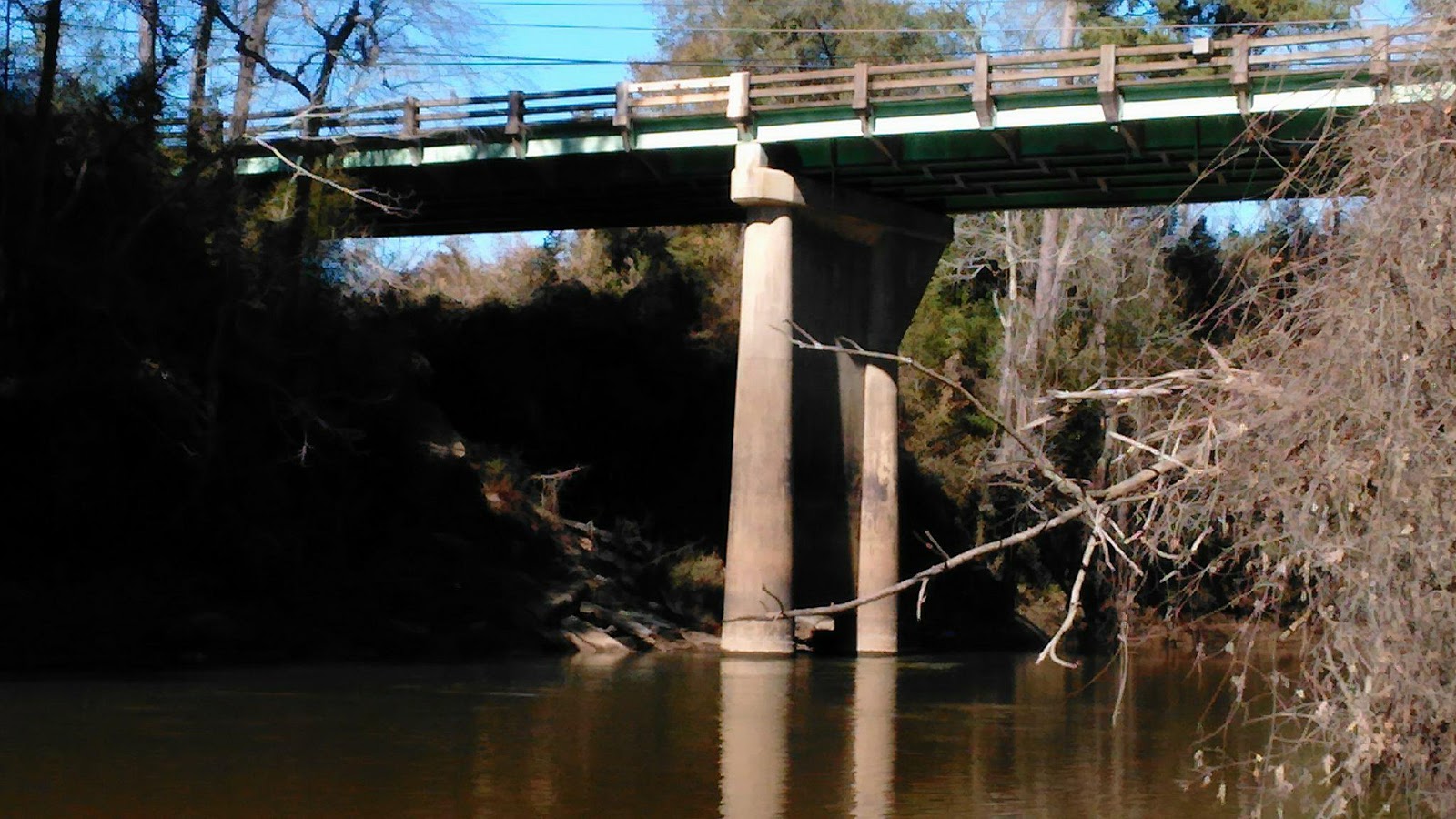
Bridge today over Pea River

In the spring of 1864, Ward’s Raiders burned the courthouse at Elba. Most of the courthouse records were rescued. It’s speculated that the deserters were attempting to destroy the conscription or draft records.

Elba's Courthouse today, on the square
The citizens of Elba had enough when these men returned in September of 1864. The Raiders set fire to several buildings where the records had been stored. Local men extinguished the fires, including the one set to the Pea River Bridge. 

And then several men and boys grabbed their guns and pursued Ward’s Raiders. The group from Elba confronted the Raiders at Fairview, fourteen miles south of their town. Ward’s men attempted to elude their pursuers by retreating into a thick, swampy area. However, the Elba group plunged in after them. They fought along the head of a small stream, today known as Battle Branch.

The men and boys of Elba managed to kill one of the men and captured two. But most of the Raiders that day escaped into Covington County and then slipped back into Florida.

Tragically, three of the Elba men were killed and two wounded.

One of the captured Raiders was hanged by the Pea River Bridge, and the other killed while trying to escape. Ward’s Raiders never targeted Elba again.

On September 4, 2010, the United Daughters of the Confederacy placed a marker at the site. The Battle of Fairview reminds us that the home front was not a haven of safety for its inhabitants.


In Melly, Unyielding, William Thatcher Rainer’s wife was killed by one such raider while Thatcher fought in the Civil War. Several years later, after the war, Thatcher tracks him across the country. A series of events brings him to Carmella Harperson, another of the raider’s victims. Her plight drives Thatcher to attempt to bring the man to justice.

I hope you’ll grab a copy of Melly, Unyielding, partially based on the true event of the Battle of Fairview.


Only 99 cents until 1-25-18


Friday, January 5, 2018

Old West Employment: Well Beyond Sheriff, Livery Owner, Saloon Keeper, Cowboy and Rancher, by Kristin Holt

by Kristin Holt, USA Today Bestselling Author


Have you noticed the list of "favorites" in Western Historical  Romances? The Top Fifteen Jobs held by men (and women) in the Old West? Based upon wholly unscientific research, it seems to me the majority of Heroes (and Heroines) bring home the bacon as one of the following:

  1. Lawman: Sheriff, Deputy Sheriff, City Marshal
  2. Pinkerton, Lady Pinkerton
  3. Livery Owner
  4. Saloon Keeper
  5. Saloon Girl
  6. Cowboy, Rancher
  7. Banker
  8. Bounty Hunter
  9. Outlaw
  10. Miner
  11. Teacher
  12. Boardinghouse / Hotel Owner
  13. Pastor
  14. Shopkeeper
  15. Fancy Lady / Soiled Dove / Fallen Woman
This list of "usual options" barely scratches the surface of true-to-history sources of income. Just like today, when men and women work at unique, different, interesting careers and vocations, people in the nineteenth century did so, too.


After all, somebody had to paint those signs merchants hung up on Main Street.
Signs might not be a surprise... but have you thought about upholsterers? Furniture Repair?

And builders of various kinds:


Women were often sought for "women's work" such as nursing the ill, seamstresses, cooks, housekeepers (private families and hotels).
 As evidenced by this coach shop interior finishing job reference, women were employed in the 19th century west in far more ways than one might expect:
Did you know many growing Old West cities had "Paper Binderies"? With plenty of business, they must have taken on jobs from a local printer, or from a businessman who wanted specialty ledgers. What else do you suppose they bound? Court records? (I've seen the bound volumes covering historical court cases.)

We're far from through! This "Business Cards" Section is precisely what it sounds like... business cards. The kind your dentist or doctor might have on their receptionist's counter. They served to advertise their business and location, along with specialties, in a section of the local newspaper. The following five images come from the Cortland Register of Cortland, Kansas on July 8, 1892.


Photographer! Plasterer! Post Master! Lumber Co.! Confectionery And Eating House! Bank Manager, General Merchandise, Pharmacist, and Hardware:
Two more General Merchandise establishments, a livery, a Meat Market (important!), a "Tonsorial Artist" (hairdresser), Physician & Surgeon, Grain sales, Shoemaker, Exchange Bank, Well Borer (can you imagine living without one of those?), and Paper Hanger.


Island Rock Elevator (Grain Company), Butler House (hotel or lodging), Millinery & Dress Making, Blacksmith (Horse-shoeing a Specialty), Racket Store, Stock Buyer (that beef must come from somewhere), and Well Boring and Rock Drilling:


Nursery (trees, plants), another Blacksmith, Stock & Grain, Lumber Yard (referenced location), Restaurant & Bakery (with a fine line of confectionery), Blacksmith, Notary Public (naturally!), Insurance Agent (surprised?), Grist Mill (no surprise there), Stock and Grain (again), and City Millinery (and Dress Making).


"Job Office" (neatness & dispatch; Printer), and a little more about Mrs. Wm. Campbell's City Millinery (at the bottom of the previous snipped image).

I'll add a few more I've seen in such "Business Cards" and advertisements in 19th century newspapers in the Western States and Territories:


1. Soda Fountains (usually in a pharmacy, or in rare situations, in a bakery or sweet shop), soda jerk
2. Land Office
 
3.  Assayer Office
4.  Professional painters
5.  Midwives
6.  Confectioners
7. Engravers (to make the pictures reproduced in newspapers)

8.  Jewelers & Watchmakers (and repair)

9. Bicycle Shops, repair
10. Beekeepers
11. Cement Companies (concrete)

12. Moving and Storage Companies (such as personal household moves)

13. Freight Companies (to move products for sale)

14. Dentist

15. Firemen, firefighters (if only volunteer)
16. Tailors (for men)
17. Musicians (whether for band or orchestra concerts, traveling musical shows, or paid performers at weddings, dances, etc.). These musicians often tuned pianos, sold musical instruments, and/or gave music lessons for hire.


18. Female Authors (for eastern magazines and presses)

19. Green Grocer (vegetables from local farmers or refrigerated rail cars)
20. Roller Skating Rink Proprietors

21. Theaters (proprietors, management, ushers, ticket sales)
22. Bath House
23. Wood Delivery


24. Coal delivery

25. Barber (Men's, including shaving services)
26. Hat Shop (men's--haberdashery, women's--millinery)
27. Brickyard


28. City Impound Lot (for wandering animals)
29. Dance Instructors
30. Undertaker (and furniture builder, who often built caskets)


 31. Judge, Lawyer / Attorney

32. Cooper (barrel maker)
33. Wagon shop (repair, new construction), Wheelwright
34. Handyman
35. Shingle Manufacturer

36. Laundry
37. Sawmill


38. Planing Mill

39. Farrier (craftsman who trims and shoes horses' hooves)
40. Newspaperman and Newspaper Printer
41. Museum and Menagerie


42. Water Delivery
43. Iceman (delivery)
44. Tobacco Shop
45. Surveyor / Civil Engineer


46. Stone Masons and Quarriers

47. Bone Collectors (buffalo bones on prairie)
48. Railroad workers of many varieties (station master, engineer, track layers, switchmen, firemen (kept the steam engine fires going), etc.)
49. Bridge Builders


50. Telegraph Operator
51. Hello Girls
52. Typewriter Girls
53. Brewers


54. Whisky Distillery

55. Harness Shop, Saddle Maker

56. Stage Driver
57. Wet Nurse


58. Stationery Shop
59. Gunsmith

60. Plumber

61. Phrenologist
62. Lecturer


63. Patent Medicine Salesman
64. Drummer (traveling salesman)
65. Public Library
66. Bookkeeper
67.
Construction Laborer
 

68. Exterminator
69. Architect and Builder
70. Marble works (gravestones)
71. Veterinarian
72. Waitress in first class hotel restaurant
73. Grain Mill (someone must make flour)
Whew! That's quite a list! Maybe only authors of Western Historical Romance care about such things... but I imagine fans of the genre do, too.


What additions would you make to my "Usual Culprits" list?


What additions would you make to my True-to-History, Different Employment list?


Have you read a recommendable title with a hero or heroine working in an atypical Old West job?


Please share this article with others who might find it informative or helpful.


Interested in more about the Old West? Visit my cache of articles about everything Old West-- especially as it relates to Sweet Western Historical Romance:
 http://www.kristinholt.com/archives/category/articles.

Hi! I'm Kristin Holt, USA Today Bestselling Author.
I write frequent articles (or view recent posts easily on my Home Page) about the nineteenth century American West–every subject of possible interest to readers, amateur historians, authors…as all of these tidbits surfaced while researching for my books. I blog monthly at Sweet Romance Reads and Sweet Americana Sweethearts. I love to hear from readers! Please drop me a note. Or find me on Facebook.


Copyright © 2018 Kristin Holt LC