Showing posts with label #Christianfiction. Show all posts

Wednesday, June 3, 2020

Importance of Supplies in War


Since men began fighting, it’s known that armies must have provisions, the basic three-Ms  are meals, munitions, and medicines. The definition of “supplies” is the stock of resources from which a person can be provided with the necessary amount of that resource.

Generals do spend a great deal of time planning battles, but they also carefully plot where to obtain the needed supplies to keep their military units marching and how to move those supplies to their positions. Napoleon Bonaparte, who lost more men to spoiled food that to the enemy, is known for saying, “An army marches on its stomach.”

The very next day after George Washington accepted command of the Continental Army in 1775, he created a special position for a man whose responsibilities were the finances and logistics of all the army’s needs—the Quartermaster General. He acquired the supplies and got them distributed to the army.

We’ve all just lived through disruption to our own ‘supply lines’ and know firsthand how devastating it can be. For a general, a vital proponent of winning the war is keeping his own supply lines open while doing his best to destroy the enemy’s. Starvation has meant the surrender of one side since wars began.

The industrial North had so much advantage over the South with their manufacturing abilities. The Southern plantation owners farmed, growing cotton and tobacco crops to sell to the European markets where they ordered goods they could no longer procure from the North. Slave labor was the foundation for a prosperous economic system in the South.

The higher quality of supplies of clothing and gear issued to the Union soldiers made those in gray envious.

Plus the North had the superior infrastructure in their railroads to move both me and goods. They had twenty thousand miles of track compared to nine thousand in the South and their own locomotive factory whereas the South converted theirs into an armament factory. For this reason, both rail centers and railroad tracks became targets for attack.   

In the beginning of America’s Civil War, patriotic citizens of both sides were fully willing to provide for their men going off to fight for the right, to share what they had. This is when my new story takes place, in December of 1861, and in Kentucky which had declared itself neutral, but that didn’t stop the Confederates from making Bowling Green their regional headquarters for their army.

But three years in, that was no longer so. Commandeering food from civilians became rampant. Both the Union and Confederates' military regulations allowed for ‘foraging food and livestock.’ To plunder and pillage though was explicitly banned—except no one paid attention to that part and almost everyone ignored it.

To devastate Lee’s food supply in 1864, Lieutenant General Ulysses S. Grant ordered Major General Phillip Sheridan to destroy all the farms, crops, and businesses in the Shenandoah Valley. He told him to render it so barren that a crow flying over would have to pack its own lunch.

The one hundred thousand men who made up Grant’s Army of the Potomac required forty thousand pounds of meat and vegetables a day. Lee with half that number in his Army of Northern Virginia were existing on half rations, basically starving because the supply lines had been interrupted.

In KENTUCKY BRIDE, book eight of the North & South: Civil War Brides Collection, my heroine, Gardenia Gladiola Garland—who goes by GiGi—is accompanying her grandfather to deliver supplies to the Confederate troops. It is scheduled to debut on June 9th, so is available now for pre-order.

Here’s where to pre-order your copy! <+> https://www.amazon.com/Kentucky-Bride-North-South-Brides-ebook/dp/B085BFF244

And here’s the jacket copy:
In this world, you will have tribulation.
In 1861, a tragic war fell upon America’s United States, dividing them North against South. Some might say a young woman can't be too fussy when almost every unattached young man is off fighting, but that shouldn't mean the daughter of a Union man has any excuse for canoodling with a Rebel.

Still, eighteen-year-old Gigi longed for true love, and the dashing Texas Ranger turned Kentucky Confederate vies for her heart. How will they overcome the odds and a war to be together? A Civil War indeed, such an oxymoron!

Bio: Award-winning Author Caryl McAdoo prays her story brings God glory! And her best-selling novels are blessed with a lion’s share of 5-Star ratings! With fifty-and-counting titles, she loves writing as well as singing the new songs the Lord gives her—listen to a few at YouTube. She and husband Ron share four children and nineteen grandsugars. The McAdoos live in the woods south of Clarksville, the seat of Red River County, in far Northeast Texas, waiting expectantly for God to open the next door. 

Links: 
     Amazon  BookBub  Website   NewsletteReaders’ Group  Facebook
YouTube (Hear Caryl sing her New Songs!)

Wednesday, November 7, 2018

Early Texas Towns and Cities—Farmers Branch, Dallas County

A community located fourteen miles north of present-day Downtown Dallas is known as Farmers Branch, Texas, but that wasn’t always so. The area was first settled in 1842 by three families—Thomas Keenan and his wife Sarah, Isaac B. Webb, and William Cochran--who received the original land grants. Remember, single men were awarded a headright of three hundred forty acres, and married men received six hundred forty.

Originally, the settlement included all the land between the Dallas County Line on the north, Cedar Springs to the south, on the east, White Rock Creek, and the Elm Fork of the Trinity River on the west.

In my new Christian historical Cross Timbers Family Saga series, book one GONE TO TEXAS, the four main families came from Tennessee and settled in what’s today the Irving area.

Just after these families arrive and stake the boundaries of their property (around seven thousand acres) in 1840, they met a new neighbor loosely fashioned after history’s Thomas Keen—Thomas Baldwin, a single man whose two sisters, their husbands and children arrived and staked their acreage off just north and east of our original characters in TEXAS MY TEXAS 1841—later Farmers Branch.
By 1842 the area was first called Mustang for the wild grapes that grew along Mustang Creek, so named for the wild horses present in the area. It was a part of Peters’ Colony—the name of four empresario land grant contracts issued by the Republic of Texas’ president Sam Houston, and later the State of Texas, to several groups of both English and American investors all headed by William Smalling Peters.

On August 30, 1841, it was Peters’ son-in-law Samuel Browning who actually signed the first contract. The fourth contract added ten million acres of land to the west, including all or portions of twenty-six additional counties. A county in Texas typically encompasses an area of nine hundred square miles.

Because the soil was so rich, and the crops plated flourished so, William Cochran changed the settlement’s name to Farmers Branch, and the little community became the best-known of all the Texas settlements from 1845 to 1850 as the Texan Land and Emigration Company advertised in the east and Europe for pioneers for immigrants to come and settle there.

The first church in Dallas County was organized by Farmer’s Branch founder Isaac Webb, with its first meeting held in Webb’s log cabin in March 1844. On May 5th, 1845, missionary Reverend Shook preached to five members at the cabin.

Webb donated the land for the church building and an eighteen-foot square log building was erected in 1846 called Webb’s Chapel. It also served as the areas first school house. Some forty years later, a frame building was built to house the Methodist congregation that still existed into the 1990s.
   
A Baptist minister, William Bowles started the area’s first blacksmith—his slave Jordan was the smithy—and a gristmill in 1845. Farmers Branch got a post office in 1848 with Isaac Webb serving as post master. It functioned until 1866, was closed, then re-opened in 1875. The first local cotton gin was built in 1849 by James A. Smith.

In 1874, early settler Samuel Gilbert and others sold right-of-way through their property to ensure the railroad would come through their little town. A few years later, the Dallas and Wichita Railway finished a track from Dallas to Lewisville—with a stop in Farmers Branch (depot built in 1877)—that was later taken over by the Missouri-Kansas-Texas Railroad Company in 1881.

By 1890, one hundred souls called Farmers Branch home.


BIO: Caryl McAdoo prays her story brings God glory which is what she lives to do. Her award-winning, best-selling novels enjoy a lion’s share of 5-Star ratings from Christian readers around the world. With thirty-eight titles, it’s obvious she loves writing almost as much as singing the new songs the Lord gives her—listen to a few at YouTube. She and high school sweetheart Ron celebrated fifty years of marriage in June 2018; they share four children and eighteen grandsugars. The McAdoos live in the woods south of Clarksville, seat of Red River County in far Northeast Texas, waiting expectantly for God to open the next door. 


WebsiteNewsletter / Influencers’ Group / YouTube (Hear Caryl sing her New Songs!) / Facebook /
Blogs: The Word & the Music - HeartWings (Devotional) / GoodReads / Google+ / LinkedIn /  


Wednesday, April 11, 2018

Spring has Sprung, Maybe


On March 20 spring came. Or did it?

I’ve seen posts from friends who live in the northeast US telling about the latest snowfall. Snow is still on the ground in some areas in the northwestern states. In Atlanta it’s wet and chilly and the temperatures have seemed below normal since spring started. I’ve seen memes all over Facebook about Spring being late or crazy or still sleeping. So, it seems that most of us are dealing with uncertainties about when we’ll finally see the lovely warm weather and flowers of spring.

 
I’d been wondering when it would be safe for me to put out my herb garden and plant the new annuals in my front yard. I did it the first weekend of spring, but I’ve been nervous a few nights when the forecast said the temperatures would drop into the thirties. I live in the South, for goodness sakes. Shouldn’t we be having milder temperatures by now? At least I have a weatherman to give me some guidance. How did the pioneer people know it was safe to plant?

When I think about my herbs and flowers, in reality, if they’re killed by frost or cold temperatures, I can just replace them when I’m sure the weather will be warm enough for them to survive. The early settlers didn’t have that luxury. They often only had enough seed or money to buy seed for one shot. What they planted would have to feed their family and probably bring in a little bit of money when they sold the excess. They couldn’t afford to get the timing wrong like I can.

 
I found some interesting guidelines from Benjamin Franklin’s Poor Richard’s  Almanack. I’d imagine most of the pioneer people didn’t own a copy of the book, they simply went about managing their farms from experience and teaching from their ancestors.

“When cottonwood starts to fly, it’s time to plant corn.”

“For every thunderstorm in February, there will be a cold spell in May. “

“When oak trees bend with snow in January, good crops may be expected.”

“If the ash leafs out before the oak, expect a wet season.”

“Frogs singing at dusk indicate fair weather to come.”

“Mist in May and heat in June makes the harvest right soon.”

My grandmother always said that the frost was over when the dogwoods bloomed. She was an avid gardener and was president of her local garden club for most of my childhood—or at least that’s how I remember it.

My research found that much of the folklore hasn’t been proven to be true scientifically. But that didn’t matter to the early citizens of the west territories. They gathered knowledge as they went and improved on every bit of historical advice they could.

Their interest in the true arrival of Spring was intense and their futures depended on getting as much right as possible. While it was also likely they got sick and tired of chilly, wet, unpredictable days just like we do, they're stake was much more about survival. I admire their determination and fortitude.


~~~~~


Annie Boone writes sweet western historical romance with a happy ending guaranteed in every single story. Inspiration comes in many forms and Annie finds more than one way to make her stories entertain and inspire.


Annie's latest book is the fifth book in the Colorado Matchmaker Series, Selina and Wyatt. Find it on Amazon, along with the complete series.


To connect with Annie, find her on Facebook, Twitter, or her website.

Follow Annie on Amazon, Bookbub and get email updates.


Wednesday, March 7, 2018

The Starving Time

Most historians credit iron and the built-in immunities the Europeans brought with them across the Atlantic as being the primary factors that gave them the means to conquer the five hundred nations that occupied North America.

For the Western Plain tribes, an additional mitigating factor helped----what the natives called "The Starving Time". Right now, this time of the year during the tail end of winter, but before spring has arrived to warm the earth and spawn its new growth.

It usually refers back to the winter of 1609-1610 for the new colonist at James Fort with terrible food shortages and many attacks. But the natives suffered 'The Starving Time' once every year during the cold, bleak winter.

Of those tribes, the Comanche earned the reputation of being the most adept at war. If they'd been a true nation, instead of a conglomeration of chieftains and clans, they might have never been defeated in spite of their primitive weapons and lack of stockpiles. As it was, it took the military into the 1880s to finally pacify the last of the renegades.


Unlike the Europeans, American natives gathered no hay or grain for their horses. They had no smokehouses, root cellars, or means of preserving fall's excess. This left them at a tremendous disadvantage with the military men with full bellies who mounted their campaigns against the Indians.

In my book two of the Texas Romance Family Saga, HEARTS STOLEN, my hero, Levi Buckmeyer, a young Texas Ranger witnesses the Treaty of Tehuacana Creek between Sam Houston and Buffalo Hump, among other Comanche chieftains. His orders that resulted from the agreement were to travel to Comanche camps and pick up the white women and children the clans had stolen and bring them to Austin.

One he rescues, he’d known as a child who’d actually been his sister’s good friend. The red-head Sassy have been living five years as Bold Eagle’s third wife, and in his camp, birthed her first son, blonde-haired, blue-eyed son Charley of her husband. She had no idea of the pregnancy when she’d been captured. But then the Indian regrets letting her go and appears in book three and even later volume as worthy of a news report.

Bio : Caryl McAdoo prays her story brings God glory, and a quick scroll through her novels’ rankings by Christian readers attests to the Father’s faithfulness. She loves writing almost as much as singing the new songs He gives her—look her up on YouTube to hear a few. Her high school sweetheart husband won her heart fifty-one years ago, and now they share four children and seventeen grandsugars. Ron and Caryl live in the woods south of Clarksville, seat of Red River County in far Northeast Texas, waiting expectantly for God to open the next door.  

Contact Links : Links :  
YouTube  /  Facebook   /  Blogs:  The Word & the Music    HeartWings (Devotional) 
Sweet Americana Sweethearts (Historical)   /  GoodReads  /  Google+  /  LinkedIn  /
Twitter  /  Pinterest  /  


Friday, January 19, 2018

The Battle of Fairview and Melly, Unyielding

Authors of western historical fiction spend a great deal of time on research. The ton of research mainly lies beneath the surface, much as an iceberg. Readers see the tip, but perhaps enough to bring a sense of time and place. While researching for Melly, Unyielding, part of the Lockets and Lace book series from Sweetheart Americana blog, I came across an interesting historical event that occurred at Elba, Alabama in Coffee County, the place I now live.

During the height of the Civil War, outlaw raiders and local citizens of Elba clashed. The leader of the raiders was Jim Ward, a deserter from the Confederate army. Ward had established a base on Boynton Island near Ebro, Florida. He and his gangs made excursions into south Alabama, terrorizing the citizens whose able-bodied men were fighting in the Civil War.

The raiders attacked farms, homes, communities, and towns, particularly the town of Elba located on Pea River.


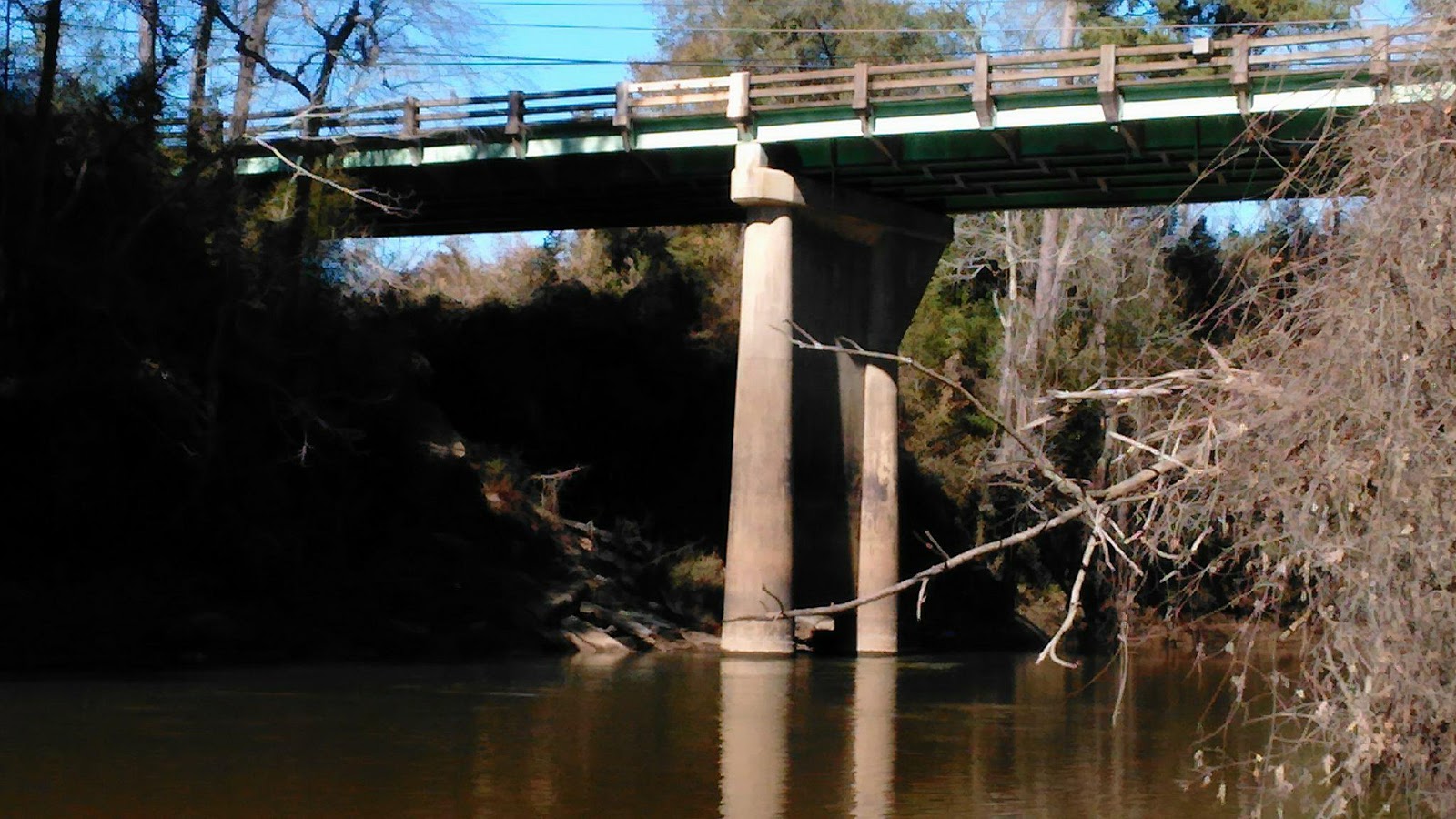
Bridge today over Pea River

In the spring of 1864, Ward’s Raiders burned the courthouse at Elba. Most of the courthouse records were rescued. It’s speculated that the deserters were attempting to destroy the conscription or draft records.

Elba's Courthouse today, on the square
The citizens of Elba had enough when these men returned in September of 1864. The Raiders set fire to several buildings where the records had been stored. Local men extinguished the fires, including the one set to the Pea River Bridge. 

And then several men and boys grabbed their guns and pursued Ward’s Raiders. The group from Elba confronted the Raiders at Fairview, fourteen miles south of their town. Ward’s men attempted to elude their pursuers by retreating into a thick, swampy area. However, the Elba group plunged in after them. They fought along the head of a small stream, today known as Battle Branch.

The men and boys of Elba managed to kill one of the men and captured two. But most of the Raiders that day escaped into Covington County and then slipped back into Florida.

Tragically, three of the Elba men were killed and two wounded.

One of the captured Raiders was hanged by the Pea River Bridge, and the other killed while trying to escape. Ward’s Raiders never targeted Elba again.

On September 4, 2010, the United Daughters of the Confederacy placed a marker at the site. The Battle of Fairview reminds us that the home front was not a haven of safety for its inhabitants.


In Melly, Unyielding, William Thatcher Rainer’s wife was killed by one such raider while Thatcher fought in the Civil War. Several years later, after the war, Thatcher tracks him across the country. A series of events brings him to Carmella Harperson, another of the raider’s victims. Her plight drives Thatcher to attempt to bring the man to justice.

I hope you’ll grab a copy of Melly, Unyielding, partially based on the true event of the Battle of Fairview.


Only 99 cents until 1-25-18


Thursday, September 21, 2017

Prosthetics Have Come a Long Way Since the Civil War...Thank God.

by Heather Blanton

In my new book, To Love and to Honor, available exclusively through the It's Beginning to Look a Lot Like Christmas collection, I wrote about a hero who is an amputee. And I will tell you, the research on 19th-century prosthetics was hard to look at. On the bright side, we've come a long way, baby.


Though doctors have tried for centuries to design prosthetics for amputees that were natural and mobile, the industry truly took flight because of the Civil War. During the conflict between the states, an estimated 70,000 men lost appendages.

Most people aren’t aware that the Minnie ball was invented in the 1840’s and elevated to deadly perfection a few years before the Civil War. The bullet, made of soft lead, expanded upon impact, creating wildly jagged, deep, slow-healing wounds never before seen by physicians. Hence, amputation became the treatment of choice because bleeding-out and infection were the other options. The war created arguably an army of amputees.


This looks more like a device of torture than a prosthetic, but I modeled the one my hero wears on this one.

Again, it looks more like torture than true function.


“Recognizing the alarming number of amputations resulting from combat, the U.S. government unveiled the "Great Civil War Benefaction," a commitment to provide prosthetics to all disabled veterans.” (THE AMERICAN SOCIETY OF MECHANICAL ENGINEERS)


Of course, with the in-flow of money, entrepreneurs jumped on the prosthetic band wagon and started designing limbs en masse. Desperate for some semblance of normalcy, every veteran longed for a device that was comfortable and functional. Sadly, though, most prosthetics fell far short of their shimmering promises. The new designs were often no better than strapped-on peg legs. 


But from tragedy, God can certainly bring about good as well. Confederate soldier James Hanger lost a leg to a cannon ball and suffered from bad prosthetic after bad prosthetic. Disgusted, he went to work designing a leg that would work for him. He not only created an artificial limb that he found to be comfortable, rather natural looking, and quite functional, he built a successful prosthetics company. Hanger, Inc. is still in business today and employs nearly 5,000 employees!
Mr. Hanger himself.

Once a limb is gone, that’s it. Science still doesn’t have the capability to regrow fingers and toes, much less arms and legs. We do stand, however, on the edge of amazing progress. From ergonomically designed prosthetics capable of supporting athletic feats to bionic technology, science is moving forward. Perhaps it won’t be long until we can make someone better than he was. Better, stronger, faster, either with prosthetics or eventually with the real thing.