Friday, March 28, 2025

Spinning Wheel in the Corner

 My late mother-in-law, Elaine, was a weaver. A room in my in-laws’ four-bedroom house was set aside as her “loom room.” Inside were shelves to hold boxes and boxes of a wide variety of yarns and a large loom that was probably five feet wide and about as tall.

I never saw her working that big loom where she made area rugs, but my husband remembers falling asleep to the sound of the foot pedals and the clank of the heddle frames as she worked after the children were in bed. What she worked on when I joined the family was a table loom that was always set up for making placemats. A set of eight in brown, rust, and gold yarn was our wedding present.


Also involved with weaving was spinning the yarn. Elaine often said this process was her favorite part because she often bought raw wool (they lived in Anaheim, CA, so I’m not sure where she found it) and dyed it herself. She found the process of using a spinning wheel to stretch and twist the wool into yarn soothing. I remember seeing wall hangings she’d made where the yarn was the shape we all know but it also contained small sections where it puffed out. The picture below is her wheel that sits in a corner of our upstairs room. My sister-in-law has her tabletop loom.


Spinning and weaving wasn’t part of my childhood, but I remember my mom talking about a grandmother back in Missouri who spun wool. From the History Myths Debunked blog, the practice of spinning and weaving and these implements being in every household stopped being true after the early years in Colonial America. Importing fabric from England proved cheaper…unless you raised your own sheep or had access to raw wool and lived on the frontier, where shipping costs would make the yardage less of a bargain.

How many of you have memories of seeing a loom or spinning wheel in a grandparent’s house?


A story in my backlist featured a sheep rancher who also a weaver.

A Vow for Christmas, part of the Spinster Mail-Order Brides series

In the three years since his beloved wife died, rancher Chad Rutherford has done the best for his family. But with his sister leaving the family ranch to get married, he needs to find someone to keep house and tend his kids so he places an ad for a mail-order bride.

Left on her own by her brother’s murder, spinster Vika Carmichael must find a way to life. An ad for a mail-order bride from a widower with small children seems like the perfect fit. Until she arrives in Gunnison, Colorado Territory, and wonders if room for her exists in their hearts.

Will two proud individuals find a way to work together, or will their marriage vow be broken before Christmas?

Amazon link and in KU  

Wednesday, March 26, 2025

Girl Scout Cookies - A Delicious American Icon


It's March! In addition to Groundhog Day, St. Patrick's Day, and the First Day of Spring, March is also the month of Girl Scout Cookies!!! 

If you are a woman of a certain age and a former Brownie or Girl Scout or a parent, grandparent, sibling, aunt, uncle, or neighbor of a scout, then surely you have memories of selling, purchasing, and devouring these iconic cookies.

But how did it all begin?


The sale of cookies to finance troop activities began as early as 1917, five years after Juliette Gordon Low started the Girl Scouts in the U.S. The Mistletoe Troop in Muskogee, Oklahoma, baked cookies and sold them in its high school cafeteria as a service project.


In the 1920s, armed with a recipe from The American Girl magazine, scout baked their own simple sugar cookies with their mothers and help from the community. These cookies were packaged in wax paper bags, sealed with a sticker, and sold door-to-door for 25 to 35 cents per dozen.

In 1933, scouts in Philadelphia baked cookies and sold them to the city's gas and electric company for 23 cents per box of 44 cookies, or six boxes for $1.24. 


By the mid-1930s, the Scouts of Greater New York bought its own die in the shape of a trefoil and used the words "Girl Scout Cookies" on the box. A year later, the national council began licensing the first commercial bakers to produce the cookies.

During World War II, when sugar, flour, and butter were rationed, the scouts sold calendars to raise money activities. After the war, cookie sales increased, and by late 1945, twenty-nine bakers were licensed to bake cookies.

In 1951, the cookies came in three varieties: Sandwich, Shortbread, and Chocolate Mints (now known as Thin Mints). With the rise of the suburbs in postwar America, the scouts began selling cookies at tables in shopping malls.


In the 1960s, as Baby Boomers expanded Girl Scout membership, cookie sales increased. Fourteen licensed bakers were mixing batter for thousands of cookies. They also began wrapping the cookies in foil or cellophane to protect them and preserve freshness. At the end of the decade, all cookie boxes--no matter the baker--featured the same design and depicted scenes of the scouts in motion, including hiking and canoeing.


To keep up with the trend of healthy eating in the 1990s, low-fat and sugar-free varieties were added. And with the coming of the 21st century, a gluten-free cookie was added to the list.

Girl Scout Cookies have always been about more than just raising funds for the Girl Scouts. The cookie program is also a way to support local communities and give back to those in need.

Girl Scout troops use a portion of their cookie sale proceeds to support community service projects, such as food banks, animal shelters, and disaster relief efforts. Additionally, many troops participate in "Cookies for a Cause" programs, where they donate cookies to local organizations or charities. Buy buying Girl Scout Cookies, you're not only getting a tasty treat--you're also supporting a good cause.


Coming Soon!!


An outlaw looking for a fresh start.
A schoolteacher who might hold the key to the entire town’s salvation.
Ash “Shotgun” McCrae can never make up for all the wrong he’s done. After leaving a notorious outlaw gang, he thought he’d discovered the peaceful existence he’d been looking for when he found work laying tracks for the railroad in Rivers Bend. Yet, when trouble shows up in town, he fears he may never free himself from the burden of his past.

Schoolteacher Kate Cummings stands as the one bright light in contrast to the curious looks and behind-the-glove whispers blowing through the town. The arrival of Padraic “Patch” Rooney and his gang challenges the small-town serenity she holds dear. Still, her steadfast trust in Ash awakens the strength of courage within them all, giving rise to the collective defiance against the approaching danger.

In a deadly game of dangerous outlaws and secret schemes, Kate and Ash must decide whether they are willing to risk everything for their love, including their lives.

Pre-Order Link


Wednesday, March 19, 2025

National Women's History Month - Colorado Women

 Post by Doris McCraw

aka Angela Raines

Buffalo Peaks in Colorado
from Wikipedia

March is National Women's History Month. As most of you know, I am fascinated by and have researched a lot about the early women in this county, especially those who were part of the westward expansion west of the Mississippi River. This is in no way a discount to those women who came to this country in the 1600s and 1700s. All women and men who had the courage to make something of their lives and create what we now have deserve to be remembered.

Here is a brief look at some of those early women in Colorado.

1. Martha Maxwell - Naturalist: Martha Ann Maxwell was born in Pennsylvania in 1831. She married widower James Maxwell, who had four children, in 1853. The couple moved to Colorado following the gold rush of 1859. It was while here that Martha began killing and stuffing her own animals. Her work was so lifelike, and her practice of posing them in their natural habitat was unique. Prior to her death in 1881, she wrote the book: "On the Plains and Among the Peaks or How Mrs. Maxwell Made Her Natural History Collection."

Martha Maxwell
Wikipedia


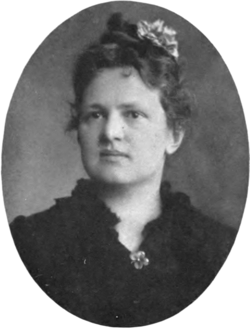
2. Mary Florence Lathrop - Newspaper Reporter, Lawyer: Born in Pennsylvania in 1865, she began her first career as a reporter in Philadelphia. She traveled the world as a reported, and after contracting tuberculous, she moved to Denver, Colorado. There, she attended the University of Denver, where she studied law and graduated in 1896. Her scores for the bar exam remained the highest for the Colorado Bar until 1941. She argued cases in front of the Colorado and US Supreme Courts. She was one of the first two women to be admitted to the American Bar Association in 1917.

Florence Mary Lathrop
Wikipedia

3. Dr. Rose Kidd Beere - Physician: Dr. Beere was born in Indiana in 1859. Her father was a military man stationed in the West after the War Between the States. She married Edmund Burke Beere, an attorney in Las Cruces, NM, in 1883 and had three sons. After the death of her husband, Dr. Beere moved to Chicago, where she studied medicine at Women's Medical College at Northwestern University in Chicago. She graduated in 1892 and moved to Durango, CO., where she practiced prior to moving to Denver. During the Spanish-American War, she went to Manilla with the Red Cross as a nurse since they wouldn't let her go as a doctor. She had told her father since he had no sons to serve in the military, she would go as the family representative in that conflict.

Dr. Rose Kidd Beere
from Find a Grave

4. Marie Guiraud - Rancher: Born in France in 1830, she moved to Colorado via Louisanna, Ohio, and Kansas in 1862. She and her husband homesteaded in Park County, Colorado, in addition to Adolphe running a store in a nearby town. After Adolphe's death in 1875, Marie grew the 640 acres into one of the earliest ranches in Park County. In her obituary in the Fairplay Flume, on June 11, 1909, they wrote the following: "After her husband's death, with a large family of little children and heavy financial reverses, she struggled on and not only kept their property together but prospered well, added to their possessions and accumulated and estate very nearly as great, if not equal, of the largest estate ever built up in Park County."

Image from Find A Grave

For those who would like to know  more, see the links below:

Extra information on Martha Maxwell

Additional information on Mary Florence Lathrop

Obituary of Rose Kidd Beere & Dr. Rose Kidd Beere

Guiraud Fairplay Obituary & Historic Significance of the Ranch & Buffalo Peaks Ranch


Until Next Time

Doris McCraw

Angela Raines - Amazon

Doris A. McCraw - Amazon


Thursday, March 13, 2025

Henley on Sale Today!


For a limited time, my book Henley is on sale for just 99 cents!


Love is a gamble, and heartbreak is a risk she’s willing to take.

Despite her dreams to set down roots, Henley Jones has never had a place to call home. She’s spent her life on riverboats and railroad cars, tagging along with her gambling father. A shoot-out during a card game results in his death, leaving Henley alone and nearly penniless. Out of luck and options, Henley agrees to travel across the country to the newly established town of Holiday, Oregon, to marry a stranger.

A demanding practice in a town clawing its way to respectability keeps Doctor Evan Holt rushing at a hectic pace. He’s far too busy to see to pressing matters like hiring competent help or finding a wife. When one of his patients orders a mail-order bride, Evan can’t decide if the man is crazy or brilliant. From the moment he meets her, Evan battles an unreasonable attraction to the beautiful, charming woman who seems to be hiding something from her past.

In a town flush with possibilities, will taking a chance on love end with heartache or a winning hand? Find out in this sweet western romance full of humor, hope, and love.

~*~

I thought it might be fun to share some quotes from the book.


The West was overflowing with gamblers.

They gambled on their dreams, and hopes, and families.

They gambled on opportunities to create better lives, or become better versions of themselves.

Most importantly, they gambled in the high-stakes game of love,

putting their hearts on the line, with no idea if they’d win or lose.


~*~

The child was as cooperative as a drunken donkey in a dynamite shack.

~*~

I’m starting to think there are rocks and tree stumps

smarter than Evan Holt.

~*~


Love might be the toughest gamble you’ll make, but it’s worth the risk.


Order your copy of Henley today!

It’s available on Amazon in digital and paperback formats, and you can read it in Kindle Unlimited!


USA Today Bestselling Author Shanna Hatfield grew up on a farm where her childhood brimmed with sunshine, hay fever, and an ongoing supply of learning experiences.

Shanna creates character-driven romances with realistic heroes and heroines. Her historical westerns have been described as “reminiscent of the era captured by Bonanza and The Virginian” while her contemporary works have been called “laugh-out-loud funny, and a little heart-pumping sexy without being explicit in any way.”

When this award-winning author isn’t writing or testing out new recipes (she loves to bake!), Shanna hangs out at home in the Pacific Northwest with her beloved husband, better known as Captain Cavedweller.


Tuesday, March 11, 2025

The Circus Mule that inspired a beloved recipe

 By Kimberly Grist

Pioneers learned to alter food recipes according to their available resources. During the Civil War, people were introduced to the idea that they could eat their horse's oats. When pecans were in short supply, oatmeal pie was a good substitute for Southern pecan pie. Shoo-Fly Pie was another recipe created using readily available everyday food staples.

Origination


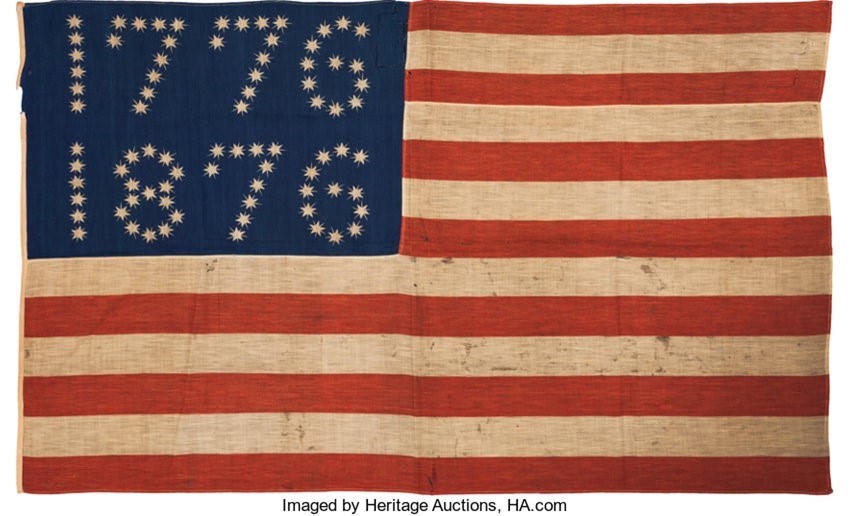
The origin of the recipe began in 1876 as Centennial Cake to celebrate the 100th anniversary of the signing of the Declaration of Independence.

Two Versions

The very nature of the main ingredient, sticky-sweet molasses, is enough to imagine why it might attract a fly or two that one would need to shoo. The recipe has two versions. The dry-bottom pie, similar to a coffee cake, is guessed to be the original version. The wet-bottom pie is baked in a pastry crust with a gooey cake-like bottom and a crumb-streusel-like topping. 

Shoofly the Boxing Mule

A Lancaster trading card depicting Shoofly the Boxing Mule. Courtesy of William Woys Weaver

The most widely accepted explanation for the name "Shoofly pie" is that it originated from a popular brand of molasses in the 19th century. Shoofly molasses, along with Shoofly flour and Shoofly horse powder, was named after a mule named Shoofly, who was part of a boxing circus that toured southeastern Pennsylvania in that era. The mule's name was inspired by the well-known song "Shoo-Fly, Don't Bother Me." Consequently, the mule's name became associated with various ingredients used in making Shoofly pie.
https://library.duke.edu/rubenstein/scriptorium/sheetmusic/b/b04/b0409/b0409-1-72dpi.html

Shoofly the  Folk Song

"Shoo Fly, Don't Bother Me," also known as "Shew Fly," is a folk song that originated in the 1860s and has remained popular ever since. During the Spanish-American War of 1898, soldiers sang this song to cope with the many flies and mosquitoes that spread diseases, such as Yellow Fever. Today, it is most commonly sung by children.

What Else is Cooking? It Must Be Romance.


https://www.amazon.com/dp/B0C7JC1LBC

Travel back in time as six brave young women, bound by their experience after surviving a Yellow Fever epidemic, leave the hills of Tennessee and travel West as mail-order brides. Fans of Western historical romance set in the late 19th century will root for each potential bride as she starts her adventure, seeking refuge and a chance for a new life. Will their quest lead them to love and happiness underneath the Texas sky?

Connect with Kimberly:


Thursday, March 6, 2025

The Rich Man Takes a Bride

 Hello! Kit Morgan here, and today I want to talk about a brand new series that contains stories not only set in the old west, but all over the United States. 

If you're not familiar with what's known as a multi-author project, then read and learn. Occasionally, someone comes up with a brilliant idea for a series, but there are too many great stories to write for one author. So they invite other authors to write in their newly invented story world. These are a ton of fun to participate in. One learns the vision of the story world, what sort of lead characters it contains, and then comes up with a story for it. The books all have the same general theme, and each author crafts a story near and dear to their heart for the series. Characters in each book might know some of the character in other books in the series, or they might not. 

My current work in progress is in such a series. It's called The Rich Man Takes a Bride, and all of the heroes are not only rich, but they also have issues that the heroine is able to help with. Love is powerful, and in the case of the heroes in this series, it has to be!

My book doesn't involve cowboys, though the hero comes from a town out west, and grew up on a small ranch. So he's done his share of cowboying when he was a lad. Now he's in Boston, running the biggest shipping company on the eastern seaboard. And has his hands in a few other things, all to protect the company's assets. He's had to pose as a smuggler, a pirate, and even did some privateering for the government. All a far cry from his days in his hometown of Clear Creek in Oregon. 

Here's a little more about the book:

Captain Asher Stone left his little town of Clear Creek, Oregon years ago to manage the Van Cleet Shipping Company. He's always been detail oriented and good with numbers, so when Cyrus Van Cleet offered him the job, he took it. Over the next eight years Ashton discovered he was good at other things too. Like spying and privateering. But what's a little extra work? After all, between his three jobs, he's managed to procure his own ship. But now he'd like to settle down, find a wife, start a family. Unfortunately for him, he's got a few slight obstacles in the way. For one, someone is spreading viscous rumors that he's a smuggler. And two, the one woman that really catches his eye, accuses him of ruining her family during his privateering days. But she's got it all wrong, and he aims to set the record straight with the pretty spitfire.

Elodie Carlson finally has the name of the man that ruined her family. Captain Asher Stone. And she's determined to bring him to justice! But when she finally gets the chance to confront him, he of course denies any involvement and barely remembers the name of her father's ship! In fact, he's just as determined to prove his innocence as she is to prove he's guilty. And blast it! Wouldn't you know his explanation as to what might have really happened makes sense? But to prove it they'll have to work together to bring the real culprits to light, and see them arrested. Can she bear working with a man she's not sure she can trust? Worse, can she work with a cowboy turned sea captain without losing her heart?
Find out in this sweet historical that's full of pure fun and romance!

So if you're up for some adventure, check out The Rich Man Takes a Bride Series. You can find the books on Amazon.

Tuesday, March 4, 2025

A HOMETOWN BOY IN DEADWOOD by Marisa Masterson

 Research drives what I write. Setting a book in Old Deadwood means I had to research. Of course!


What I learned surprised me! John Manning, the sheriff who set out to clean up Deadwood, came from my area of Wisconsin. He grew up in my grandmother's hometown, Highland. Why, that made him something like a neighbor.

Manning is a character in my next novel, releasing this Thursday. Character is a good way to describe him. He co-owned the Senate Saloon where Jack McCall shot Wild Bill Hickok. 

But don't lump him in with other saloon owners like Al Swearengen. He was a man who wanted stability brought to Deadwood. His efforts made him an excellent lawman to include in my story. Just the man I needed to help with the secret Ross Kirwan, my hero, is living.

From The Bride Who Mines Gold:

Men in chains! Althea saw them as the stagecoach rolled to a stop. The sight did not fit
with her idea of a mining town.

Those men all held shovels. Some moved mud, filling in ruts. Others laid loose stone on top of the filled holes. They tapped down the rocks.

“Manning, what do you have those men doing?”

At Luke’s call, a short man with hair slicked back around a balding head turned. He grinned above his shaggy goatee. “Must be spring. Voorhees and his stage are back.”

“Yeah, and I’m wondering if you have a set of manacles or maybe another set of those chains.”

Manning glanced to his right. He tipped his head toward the men as his gaze met that of another man with a star on his vest. He also held a shotgun. Althea guessed he was Manning’s deputy.

After the deputy nodded, Sheriff Manning stepped toward the coach. “Had trouble?”

“Yep, and I have one of the gang members with me.”

Butch had approached. At Luke’s words, he backed up a step and then two. When he turned to run, Joey stuck out a booted boot. The escaping man landed face first in the mud. Both Bill and Joey put a foot on the man’s back to keep him there.

“Your driver? How do you know he’s in Heally’s gang?”

At the mention of the name, Butch twitched and pushed upward. Bill threw himself onto the man’s back. He grabbed an arm and twisted it behind Butch’s back.

“How about those handcuffs, Sheriff?”

At Bill’s gruff question, one that was more command than query, Manning stepped forward to hand the manacles to Joey. “You boys are already dirty. My Frankie doesn’t like me bringing home muddy clothing.”

Althea spoke before she thought. “Is Frankie your son?”

Manning’s laugh made even the chain gang stop. A shout had them once more using their shovels. The people crowding near resumed walking up and down the street.

She was relieved not to have the attention focused on them. The sheriff’s lips twitched with humor as he explained, “Frankie’s my wife.”


The Gem Theater, Circa 1878

Later in the book, Manning comes up against Al Swearengen. The famous brothel owner ran The Gem, a wild and wildly popular, uh, place in Deadwood. 

It's said that in its heyday, Swearengen earned ten thousand dollars each night from The Gem. Even Calamity Jane danced as part of the entertainment in that place. 


Again, from The Bride Who Mines Gold:

The door burst open, bouncing off the wall. “Sheriff!” a man shouted.

“Lou, what do you mean coming in here like that?”

“You’d best come. Mrs. Doc and Al Swearengen are goin’ at it. She’s aiming that little gun of hers at him.”

Manning paused and looked toward Ross. “You don’t suppose Al—”

Ross knocked over the chair as he broke into a run.

In the street, he immediately sized up the situation. Three women wedged themselves into the mouth of a blind alley. Not only did Mrs. Doc have her pocket gun but also Mrs. Manning was there, pointing a large navy revolver at a well-dressed man with golden hair. Blondie stood behind both women.


They formed a human fence. The sheriff’s wife curled her lips back as if she were a dog who bared its fangs. Mrs. Doc glared at the bunch.

“I don’t doctor anyone I shoot, boys. Remember that.”

If the situation had not been tense, Ross might have laughed at Dr. Elsie’s promise. Dr. Elsie Marsh, or Mrs. Doc, was a whirlwind of determination. Being healthy, he only knew her by rumor. What men said about her told him she would not back down from a challenge or a cause.

The woman’s belly slightly protruded, forming another barrier between the blond man and Althea. At her side, the sheriff’s wife had a baby swaddled to her chest.

“This is a good woman. You leave her alone.”

Hoots of laughter erupted at how Frankie Manning described Althea. “Good, huh? Why’s she dressed like a man?”

Ross recognized Ernie Schmidt’s voice. He had been at the mine with Heally and Arnie. Here he was, causing more trouble.

Another man yelled. “Why’s she livin’ with a man? Let Swearengen have her.”

It is wild doings in Deadwood. One would think life up on the mountain, in the woods, would be quieter. One would be wrong. 

But you will have to read my book to find out more...

Available March 6 on Amazon. Free in KU.

About the Book:

More than gold lies hidden in Deadwood. A woman discovers danger and romance in The Black Hills.

Althea Mills receives a terse note informing her of her father’s death. His partner adds no words of sympathy or mentions Mr. Mills’ share of their claim. She knows the men have been successful. Her father had been sending money each month to support her and her mother, so there must be gold in Deadwood.

Desperate not to lose the money needed to support Ma, she decides on a plan. Althea will head west to mine her share of the claim. Selling everything they own, she and her mother board a train for Cheyenne, Wyoming.

Winter keeps them in Cheyenne. While there, her mother marries. Althea must continue alone.

Once the mountain passes thaw, Althea takes the Cheyenne & Deadwood Stage to head for her mine. As she travels, her confidence grows. What could go wrong?

Close to Deadwood, bandits stop the stage and steal from the passengers. One man meets her gaze. Althea is sure she has never seen greener eyes, eyes she will remember.

Ross Kirwan has a problem. His employee’s daughter arrives, claiming her father was his partner. She expects to mine the gold on his claim. Her appearance forces him to do something he did not plan to do—he must truly mine his claim.

The situation grows worse when a man tries to sell Althea to a Deadwood brothel owner. Only quick action and Ross’ claim to be her fiancé stops it. A forced marriage follows, with the bride vowing to make it temporary. Is that what they want, an annulment?

Will his secret bring an end to their convenient marriage, or will she see him as the man she would have chosen?

Click to reserve your copy!