Showing posts with label the role of women. Show all posts

Thursday, April 1, 2021

Economical Victorian Housekeeping by Kristin Holt


Kristin Holt | Economical Victorian Housekeeping
 

by Kristin Holt, USA Today Bestselling Author

of Sweet Romance set in the Victorian-era American West


Victorian Woman's Sphere

During the nineteenth century, the United States held specific ideas about what constituted a "Woman's Sphere." Home was her domain, her responsibility, and her realm of influence. Because society held these home-centered ideals, girls were trained from an early age to fulfill this role. Not only did girls work alongside their mothers to learn every housekeeping nuance, but Victorian media (newspapers, cook books, books of housekeeping wisdom) emphasized a wide spectrum of housekeeping knowledge and importance. Book publishers and institutions (such as the Boston Cooking School) capitalized on filling the gap between home-instruction and this most highly valued profession: wife and mother.


Kristin Holt | Economical Victorian Housekeeping. Illustrated Image at the head of a column: "Women's Sphere"; Grand Junction News of Grand Junction, Colorado. December 1, 1894.

Housekeeping: More than Housework

Housekeeping included far more than scrubbing floors, cleaning the wallpaper, and laundering clothes and linens. Women were charged with creating the best possible living from allotted household funds. Household spending covered everything from heating and cooking fuel to groceries to clothing.


There are women to whom small economies, little improved ways of caring for things, never occur, but who gladly avail themselves of any knowledge they might gain. Such a woman will rejoice to know that her carpet sweeper will last much longer and will work more satisfactorily if the wheels are oiled occasionally ; that her wringer, if the screws are loosened when it is put away, will also take on a new lease of life ; that in the course of a year she may save several dollars if she drives a nail on which the stove hook may hang, and see that it is hung there, and is not left on the stove, where the handle is sure to burn and drop off.

~ The Burlington Free Press of Burlington, Vermont. September 12, 1881.


Economy in Victorian Housekeeping

Women's work was nothing if not repetitious and sometimes backbreaking.  Note that the following article, "Young Housekeepers Should Always Follow These Rules," includes a "regular day for washing and one for ironing." Last among this list of Rules: "Allow no waste of any sort."

Kristin Holt | Economical Victorian Housekeeping. Young Housekeepers Should Always Follow These Rules. From Buffalo Enquirer of Buffalo, New York, December 21, 1900.

Economy in the Victorian Kitchen

In an era of rampant dyspepsia, housekeepers were indoctrinated in the importance of sanitary and healthful cookery. Women learned kitchen science from their mothers, schools, and cookbooks. They also learned the essential Victorian value: waste not, want not. "If you do not waste anything, you will always have enough. ~source"

Note the high attitude in the following 1879 article. If a wasteful American housekeeper didn't realize her follies before, this set-down would bring all sorts of crimes to her attention.


WASTE IN HOUSE KEEPING.

Americans are an industrious, money making people, but they are not economical. Our housekeeping is proverbially wasteful, allowing leakage at every point, sufficient in the aggregate, in many households, to support a European family. Some writer (we know not to whom to give credit,) has made the following extensive, but by no means complete enumeration :

Much waste is allowed in cooking meats. Unless watched, thee cook will throw out water in which meat has been boiled, without letting it cool to take off the fat; or she will empty the dripping-pan into the swill-pail. The grease is useful in many ways.

Again, bits of meat are thrown out, which a French cook would convert into excellent hash.

Flour is sifted in a wasteful manner, or the bread-pan is left with the dough sticking to it.

Pie-crust is left over, and laid by to sour, instead of making a few tarts for tea.

Vegetables are thrown away which would be nice if warmed over for breakfast.

Cream is allowed to mould [sic] and spoil, mustard to dry in the pot, and vinegar to corrode the castor.

Good knives are used for cooking in the kitchen, silver spoons are used to scrape kettles, and forks for toasting bread.

Tea, roasted coffee, pepper and spices, are allowed to stand open and lose their strength.

Dried fruits not cared for in season become wormy, and sweet meats are opened and forgotten.

Vinegar is drawn in a basin, and permitted to stand until both strength and basin are spoiled.

Soap is left in water to dissolve, or more used than is necessary, and the scrub-brush is left in the water.

Barrels and tubs are left in the sun to dry and fall apart ; tins put away without being properly dried are rusted.

Molasses stands open and flies take possession.

Pork spoils for want of salt, and beef because the brine wants scalding.

Ashes are thrown out carelessly, endangering the premises, and being wasted.

Clothes are being whipped to pieces by the wind on the lines ; fine cambrics [sic] are rubbed on the wash-board ; and laces are torn in starching.

Table linen is thrown carelessly down and nibbled by mice ; is put away damp and mildews ; or the fruit stains are forgotten and the stains washed in or "set."

Table napkins are used to wipe dishes, and tea-pots are melted on the stove.

Lard is not well dried out, and becomes tainted, and rats destroy the "soap grease."

Bones are burned that might be broken and thrown into the compost heap.

Old shoes, woollen [sic] rags, and such accumulations are permitted to lie round loose instead of being composted for your favorite grape vines.

Sugar is spilled around the barrel, coffee from the sack, and tea from the chest.

Wooden boxes are used to take up ashes, then the box is pushed aside and forgotten. Many a family has been houseless [sic] and homeless in a night by such an inadvertance [sic].

Each of the above items is a trifle in itself--and yet the house where all these trifles are "happening"--just imagine what a place it would be! In these and many other ways a careless and inexperienced housekeeper will waste without heeding--nay, even without even knowing that she wastes. On the contrary, because she entertains but little company, buys no fine clothes, makes her own dresses, and cooks plainly, she may imagine that she is an exceedingly economical woman and a very excellent housekeeper.

~ Yorkville Enquirer of York, South Carolina, May 1, 1879


Despite the criticisms herein heaped upon the heads of wasteful housekeepers, many vintage sources support the idea that many women were excellent housekeepers--with surprising economy.


Kristin Holt | Economical Victorian Housekeeping. Save the Scraps--and what to do with them. Port Royal Standard and Commercial of Beaufort, South Carolina. January 20, 1876.

The next article (1891) focuses on economy in cooking, sharing not only affordable recipes for "plain cooking" but also the strategy of "saving every scrap (of food) and utilizing it." In the Victorian-era United States, "cheap" meant affordable and economical.

As a frame of reference, note that the "a man's food can be obtained at the cost of twelve cents a day" approximation, adjusted for inflation, is $4 (in 2020). Sumptuous living at 45 cents (1891) is about $13 (in 2020). 

Wow... do you eat sumptuously on thirteen dollars a day?


Kristin Holt | Economical Victorian Housekeeping. Economy in Cooking: The Art of Saving Every Scrap and Utilizing It is Known. Part 1 from Pittsburgh Dispatch of Pittsburgh, Pennsylvania. February 8, 1891.
Kristin Holt | Economical Victorian Housekeeping. Economy in Cooking: The Art of Saving Every Scrap and Utilizing It is Known. Part 2 from Pittsburgh Dispatch of Pittsburgh, Pennsylvania. February 8, 1891.
Kristin Holt | Economical Victorian Housekeeping. Economy in Cooking: The Art of Saving Every Scrap and Utilizing It is Known. Part 3 from Pittsburgh Dispatch of Pittsburgh, Pennsylvania. February 8, 1891.

Kristin Holt | Economical Victorian Housekeeping. Economy in Cooking: The Art of Saving Every Scrap and Utilizing It is Known. Part 4 from Pittsburgh Dispatch of Pittsburgh, Pennsylvania. February 8, 1891.

Quality advice, isn't it? Even for modern times?


Invitation

What do you think?

Is it possible to eat sumptuously on $13 daily, in today's world?

Did you garner useful concepts to put to work in today's kitchen?

Please scroll down and comment. Discussion is the best part!


Related Articles

Kristin Holt | Victorian-America's Crabapple Jelly and Preserves

Kristin Holt | Victorian America's Oleomargarine

Kristin Holt | Housekeeping: Women's Work

Kristin Holt |  Who Makes the Best Victorian Wives?

Kristin Holt | Butter-making in the Old West

Kristin Holt | Victorian America: Women Responsible for Domestic Happiness (1860)

Kristin Holt | Victorian Calico Fabric- More Than Little Flowery Patterns

Kristin Holt | Victorian Rice Pudding Recipes

Kristin Holt | Victorian America's Brown Betty

Kristin Holt | Cool Desserts for a Victorian Summer Evening

Kristin Holt | BOOK REVIEW: Life in a Victorian Household by Paula Horn

Kristin Holt | Soap Making on the Old West Homestead

Kristin Holt | Victorian Era: The American West

Copyright © 2021 Kristin Holt LC

Friday, October 4, 2019

Housekeeping: Women's Work by Kristin Holt

by
Kristin Holt, USA Today Bestselling Author


Washing on Monday.
Ironing on Tuesday.
Mending (and churning) on Wednesday.
... or is it Market on Wednesday?

No matter how the old rhyme goes, every fan of nineteenth century fiction knows that the household was the woman's domain. Women, protected by husbands, fathers, brothers (men) from the coarseness of the world, "thrived" as they strove for "middle-class" comfort and ease. Middle-class wives might be able to hire one or two part-time servants to assist with the worst of the housekeeping chores, but the bulk of housekeeping's daily chores remained Mother's.

Kristin Holt | Quote from Mrs. Livingstone's System for Housekeeping. "Mrs. Livingstone had a system; she ate, drank, slept and nearly died by it.

Note that this article, published in The Waterloo Courier of Waterloo, Iowa on January 21, 1880 not only clarifies the fictional "Mrs. Livingstone" but warns other homemakers (all wives, essentially) to not work too hard.

Whoa.

Since when did Victorian Americans and their ideals of home and family allow room for not working diligently? After all, keeping the home comfortable for husband and children (with everything that entailed) was a woman's lifetime work. The division of labor between men and women was strict: men earned a living and women kept the home (and spent her husband's income wisely and lived within his means) and raised the children.

Kristin Holt | Housekeeping: Women's Work. Mrs. Livingstone's System for Housekeeping. Part 1 of 3.

Kristin Holt | Housekeeping: Women's Work. 2nd quote from within this 1880 newspaper article: "The System must not be inteerfered with."

Kristin Holt | Housekeeping: Women's Work. Mrs. Livingstone's System for Housekeeping. Part 2 of 3.
  

A Good Husband


I get a real kick out of exploring Victorian-era United States attitudes about Who Makes the Best Wives? How does a wife buy the right gift for her husband at Christmastime? How should a man properly court his chosen bride (long before he pops the question)?

This one-line quote from within this 1880 newspaper article says a great deal about Victorian attitudes about what makes a good husband. (I happen to like this one. A lot.) Granted, a woman named Anabel C. Andrews made this statement when she penned this article for publication (first) in Country Gentlemen. Her persuasive article was then reprinted in The Waterloo Courier.

Kristin Holt | Housekeeping: Women's Work. Quote 3 from this 1880 newspaper article: "He was a good, faithful husband--one who did all he could to lighten his wife's labors... "

I also know what it is to have my (declining) health impact my ability to work. Yuck.

Kristin Holt | Housekeeping: Women's Work. Quote 3 from this 1880 newspaper article. "...Months of weary convalesence... slightest jar enough to draw tears from her eyes..."

Kristin Holt | Housekeeping: Women's Work. Mrs. Livingstone's System for Housekeeping. Part 3 of 3.

Best Advice of the Lot


"A dirty floor is better than a back-ache..."

Kristin Holt | Housekeeping: Women's Work. Quote from 1880 article: "Look out for these systems, sisters; they areking invalids and old women of many of us... A dirty floor is better than a back-ache;...The family loses all pleasure if the home mother is tired and depressed."

RELATED ARTICLES

I hope you've enjoyed this glimpse into nineteenth century homemaking / housekeeping (1880). Here are a handful of related articles. Click on the images, below. Thanks for reading!


Kristin Holt | Victorian-America's Crabapple Jelly and Preserves

Kristin Holt | Economical Victorian Housekeeping

Kristin Holt | Victorian America: Women Responsible for Domestic Happiness (1860)

Kristin Holt | Victorian America: Women Control Happiness at Home (1876)

Kristin Holt | Wives Must Buy Correct Christmas Gifts for Husbands (1896)

Kristin Holt | Victorian American Headaches, an 11-part series of articles 

Kristin Holt | Warsh: Grandma's Receet (Washing/Laundry, Granny's Recipe)

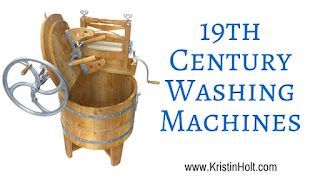
Kristin Holt | 19th Century Washing Machines

P.S.: Old Laundry Implements... On Vacation 

Kristin Holt | Soap Making on the Old West Homestead

Kristin Holt | Butter-making in the Old West

Kristin Holt | Victorian Yeast Bread: Easier After the Centennial

Kristin Holt | Victorian Fare: Corn Cake, Corn Bread, & Johnny Cake

Kristin Holt | Spring Cleaning Victorian Style... the wallpaper?

You'll find many more blog articles about all things nineteenth century American West on my website:

Kristin Holt | Historical Articles by USA Today Bestselling Author Kristin Holt


THANK YOU! 

Thanks for visiting with me today. May you appreciate your role as a twenty-first century woman (19th century history has a way of providing that appreciation in contrast), and find keeping house to be simple.

Warmest thanks,
Kristin Holt 

Kristin Holt - USA Today Bestselling Author of American Historical Romance set in the Victorian American West.

Copyright Ⓒ Kristin Holt LC

Tuesday, August 6, 2019

The Cult of True Womanhood by Abagail Eldan

In the "Cult of True Womanhood," the woman was seen as the giver of children and their moral guide (as of course, she is). The home was her sphere of influence and was off-limits to a man's dictates. (We see this even today although, thankfully, less frequently and less zealously. Still today, some view men as incapable of caring for children in the "correct" way, although that is not the scope of this post.)

Most women did not clamor to be free of the constraints of "True Womanhood" although it had its disadvantages. In the 1700s through the 1800s, and in some places even later, the wife generally had little to no say in the use of assets, even if she was the one who brought them into the marriage. A perfect example of this is seen in "Downton Abbey." The wife's assets cannot even be used to provide an income for the daughters--all money is bound up in the estate. 

Another problem with the concept of "True Womanhood" was that women did not have the right to vote. Remember that their sphere of influence resided in the home? Some women found the raising of children, male children specifically, was satisfactory and gave them a great purpose in life.

Two quotes come to mind: 


And, certainly, the mother's influence can scarcely be overemphasized. But again, how much did the "Cult of True Womanhood" hurt the father's role in the raising of children? Unfortunately, some men readily embraced their diminished responsibility. Ernest Hemingway, for example, said, "To be a successful father... there's one absolute rule: when you have a kid, don't look at it for the first two years."

Not only did "The Cult of True Womanhood" hurt women, but it also hurt men in their roles as father, and the children by missing out on the godly influence of two parents. Some men, it is true, went beyond societal norms and became the fathers they needed to be, but it was the exception, not the norm. 

The third result of "The Cult" was that of making women economically, socially, and culturally dependent upon their husbands. Because of this, education for women lagged behind that of men. Men as providers of the family were the ones to be educated, regardless of the intellectual powers of the daughters. 

An illustration of this is another television show, Victoria on BBC. Victoria's eldest child was a daughter of keen intellect; their second child, a son who failed to excel at his studies. And, yet, who became monarch? King Edward, a renowned playboy.

The idea of the "New Woman" arose in opposition to "The Cult of True Womanhood," and over time, the laws have changed. Women gained the right to vote and are allowed to own property and given equal opportunity to education. 


In my books, I often explore this theme and its resultant conflicts. After all, the West was the arena where many of these advances were birthed!


Short bio:
I am a nerd, a scholar at heart, and would be a full-time student if only someone would pay me a salary! After receiving a B.S. in Education, with a major in biology and a minor in psychology, I continued my studies at Auburn University, pursuing a master's in biology. I also became certified to teach the physical sciences, mathematics, and English. (Yes, I lived my early life in the universities!) 

I am retired from teaching and live with my husband, as well as too many dogs, not enough cats, and one (outside) horse. My goal is to add to the menagerie one day!