Showing posts with label #backwhen. Show all posts

Tuesday, February 19, 2019

Cowboys and the Long Trail

In the American West, large tracts of land were ideal for raising cattle, and southern temperatures, like in Texas made winter raising easier. But with the spring, the ranchers would drive their cattle north to stockyards and railyards in Kansas, where the train cars waited to take the cattle to different portions of the country.

Cowboys had to take weather into account, to avoid rapid moving waters that happen with snow melt. Though the spring grasses helped keep the cattle at a good weight while they moved at 12-15 miles per day. A heard of around a thousand cattle would take between 4-6 drivers as well as a Trail Boss and Chuckwagon/cook. 

Overnight, they often took turns watching the cattle and the horses. To keep the horses nearby when not mounted, they often kept grazing hobbles on the horses--tying their front legs together--to restrict the horses' movements.

Raising and driving cattle was part of the yearly life for the rancher. They spent all year breeding, raising, and keeping the cattle for the once-a-year payoff that culminated in the cattle drive. During the drive, the cattle, horses, and men are most vulnerable to the elements, and timing is everything. To mitigate losses, the Trail Boss needed to be a smart strategist as well as able to command a number of men with respect. 


P. Creeden is the Sweet Romance and mystery pen name for USA Today Bestselling author, Pauline Creeden. Animals are the supporting characters of many of her stories, because they occupy her daily life on the farm, too. From dogs, cats, and goldfish to horses, chickens, and geckos -- she believes life around pets is so much better, even if they are fictional. 

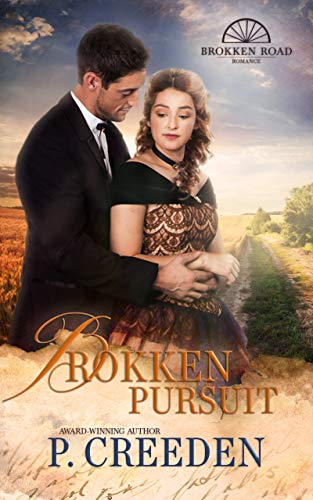
Get her latest historical romance set in 1868 Texas:


Tuesday, January 15, 2019

A Short History of Horseshoes

In the 1897, a set of bronze horseshoes with nail holes was discovered in an Etruscan tomb which was dated to have been used around 400 BC. These were the oldest set of horse shoes discovered, when it was thought before that the Romans invented horseshoes around 100 BC--but those were a sandal-like boot made of leather with a metal reinforced bottom.

Although there are a few references in history of nail-on metal shoes being used by war horses in the 900's, they weren't commonly used by Europeans until around the time of the Crusades, a hundred years later. Over the next two hundred years, the horse shoe went from being made of bronze to being made of iron, undergoing the same evolution as metals used for swords, and by the 1600s, blacksmiths could buy ready-shaped horse shoes that they could heat up and finish to the exact size and shape of the horse's foot.

It wasn't until the Industrial Revolution, that a machine capable of making up to 60 steel shoes per hour was patented. Because of the use of these manufactured shoes, the North was given an advantage over the South in the Civil War.

Surprisingly to some, the shape and manufacture of horse shoes hasn't changed much since the 19th Century. The blacksmith still adjusts the shape and fit of the shoe to the horse, even when he uses a factory "keg" shoe. Shoes come in several different sizes to start with, but no two horses have the exact same shape to their hoof, so the farrier must adjust the shoe and change its factory shape to one that fits the horse most comfortably.

Because the shape of each horse's hoof is different, it truly was easy for trained scouts to track horses and know the horse's size and how much weight they carried. Many blacksmiths put a mark on the shoes they made as a signature on their work. This also could have been used by trackers to know which town the horse came from as well.

I've always had an affinity and great respect for the work of trained farriers and blacksmiths. When I was in college, it was one of the careers I considered for a while, but put the side because of the great amount of strength and stamina these metal workers need to be able to do their job. However, it turned out that I married a farrier, instead.


P. Creeden is the Sweet Romance and mystery pen name for USA Today Bestselling author, Pauline Creeden. Animals are the supporting characters of many of her stories, because they occupy her daily life on the farm, too. From dogs, cats, and goldfish to horses, chickens, and geckos -- she believes life around pets is so much better, even if they are fictional. 

Get her latest historical romance set in 1867 North Texas:


Tuesday, December 18, 2018

Caring for Horses in the 1800's Winter

Besides writing full-time, my husband and I also run a horse riding stable in the middle of a suburban/city area. We are surrounded by concrete and businesses and most people don't know about our seven acres nestled right off a major highway in Virginia. Right now, in modern times, taking care of the animals on a farm is a full time job, and they are our livelihood, not just a hobby, like they might be for others.

According to the American Horse Council, there are currently about 9 million horses in the US, but in 1869 the number was closer to 13 million. Horses were much more common, used for transportation and work. So their daily care was of great importance to farmers and ranchers.

In the winter time, the most important precaution that horse owners needed to take during the harsh winter months was to make sure that horses had fresh water available. This often meant heating buckets on their wood stoves and then carrying them out to pour into troughs that were iced over, unless they had a running stream on the property.

Most horsemen and farmers fed their horses oats and barley, as those two feeds were higher in nutrient value and safer for the horses than straight corn or bran. In the summer months, they had to collect and bale hay to store for the winter months, because in order to maintain their weight, horses need to eat 1.5-2% of their body weight daily (depending on their level of work). And horses are grazers, which means that they eat little amounts all day long. So when the grasses they normally ate were unavailable, ranchers would need to drop bales of hay out for the horses to eat

When it snows, things get a bit trickier for horse owners. Many owners, during the harshest parts of the winter, would pull their horses' shoes off, so that the horses didn't collect ice and snow balls in their shoes which would make it difficult for the horses to move about without possibly pulling a tendon or ligament.

Even when horses were not able to fulfill their duties for traveling or working the farm, their caretakers still had to provide food, water, and care for them daily. (Reference for this article: The Horse: Its Keep and Management by William Cook 1891)

P. Creeden is the Sweet Romance and mystery pen name for USA Today Bestselling author, Pauline Creeden. Animals are the supporting characters of many of her stories, because they occupy her daily life on the farm, too. From dogs, cats, and goldfish to horses, chickens, and geckos -- she believes life around pets is so much better, even if they are fictional. 

Get her latest historical romance set in 1880 Wyoming:


Thursday, July 12, 2018

In The Good Old Summertime

by Shanna Hatfield


This time of year, I seem to wax a bit nostalgic as I think of the summers of my youth.

My childhood years, spent on a farm, meant in between helping irrigate, haying, harvesting wheat, babysitting and employing evasive tactics to avoid the domestic skills my mother was determined I learn, we had a lot of fun.

Twice a month, the Schawn's delivery truck would roll down the road, stirring a sea of dust in his wake. My mom would purchase two big tins of ice cream that we would invariably run out of before his next arrival. The tins held approximately two and a half gallons of delicious, creamy frozen confection that my family consumed on a daily basis. Lest you think we were ice cream gluttons (which we admittedly were), my brothers often invited friends or cousins to join us. We could have ten to twelve people at our house to help gobble up the ice cream on any given day.


Once the work was done for the day and the cool evening shadows greeted us, we'd get a bowl of ice cream and sit on the back porch where a breeze blew up from the pond and we could watch the moon rise over the water. 

Another favorite sweet of summer was Idaho Spud Bars. The little drug store in town always had a huge barrel full of them near the cash register and they were often four for a dollar. We'd take them home and stick them in the freezer where they'd become another cool treat we enjoyed to beat the heat of July and August. Manufactured by the Owyhee Candy Company, in business since 1901 in Boise, Idaho, you can still find Idaho Spud Bars and other goodies made by them today.

The 4th of July Parade was a huge event in our little hometown. My oldest brother and his friends would generally ride horses while my other brother would drive his Model T in the parade. One year, Mom helped me make an early 1900s costume so I could ride along in the car.

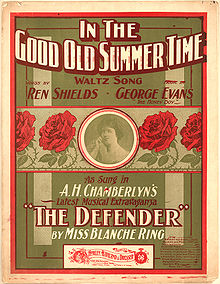
I played the song In the Good Old Summertime on the piano about fifty times in a row, recording it on our tape player, then blasted the song from a boom box in the car as we drove down the street. (Yes, that was before we could download a song and play it on a loop on smart phones!)


Anytime I hear that song, it brings back sweet memories of my childhood and golden, glorious moments from summers long past. 

If you've never heard it, you can listen to a little of here. And if you haven't seen the movie, it's an oldie but a goodie!


After spending her formative years on a farm in eastern Oregon, hopeless romantic Shanna Hatfield turns her rural experiences into sweet historical and contemporary romances filled with sarcasm, humor, and hunky heroes.
When this USA Today bestselling author isn’t writing or covertly hiding decadent chocolate from the other occupants of her home, Shanna hangs out with her beloved husband, Captain Cavedweller.
Shanna loves to hear from readers. Follow her online at:
Find Shanna’s books at: