Showing posts with label #KathrynAlbright. Show all posts

Friday, August 11, 2017

Homesteading on the Prairie

By Kathryn Albright
Tales of Courage & Hope
 * * * * * * * * * * 
In writing my next book in the Oak Grove Series, The Prairie Doctor’s Bride, I had to do some research into homesteading on the prairie.

The early inhabitants of Oak Grove, a fictional town set along the Smoky Hill River, lived in tents made from the canvas of their prairie schooners, but with the Kansas-Pacific Railroad now established all the way to Denver (1878), the small town was growing and wooden structures were springing up as the train brought supplies from the east and wood from the Rocky Mountains. The town prospered with the nearby stockyards that shipped cattle (up from the drives in Texas) to the miners in Colorado and to Chicago.

However, some who lived out of town on 160 acres of their own, were farmers who’d come west with nothing but a dream to take advantage of the government’s Homestead Act of 1862. Requirements to own a plot of land by this means included:
1.       Must be at least 21 years of age.
2.       Must be a citizen or an immigrant with the intention of becoming a citizen.
3.       Must pay a filing fee (usually at the Land Office in the nearest town where it was also determined that no one else had claimed that particular parcel of land.)
4.       Must farm the land and live on it for five years before gaining the official deed to the property.
5.       Must build a home within six months. (Requirements in some states included the minimum dimensions of the home, one glass window, and also building a well.)


On the open prairie, it seemed that all weather was extreme. On arriving, many of the “sod busters” began by building a small dugout into the side of hill, just to escape the relentless wind, sun, snow and rain. Since there were no trees or large stones for construction material, the settlers would use their mules, oxen, or horses, and a special plow to cut rectangles of sod, 18” x 24” (weight = 50 pounds) to use as “bricks” for their home. These would be set so that the roots could grow and intermingle into the next row of sod, creating a very strong wall.

The base of a soddie was wide and the walls would then taper inward slightly to allow for settling. Most had a dirt floor, but later a puncheon or plank flooring might be used. On the inside, the walls would be plastered with mud to create a smooth appearance. Open windows were covered with oil cloth. A fireplace for cooking would take up one wall of the house.

The roof caused the most concern in the building process. Wooden poles, laid across the rim of the sod house, were then overlaid with bundles of brush. On top of the brush, more sod blocks were placed. Dirt clods dropping form the roof was a problem as well as other insects and an occasional snake. If the sod became too wet after a hard rain it could cave in. Every few years, depending on the severity of the weather, the roof would have to be replaced. Structures had one to three rooms and were surprisingly very snug and warm in the winter and cool in the summer.

With all the difficulties they had to face, the years of too much or too little rain for their crops, less than 50 percent of homesteaders achieved the five-year requirement and acquired the deed to their land. Those who did not, went back home or traveled further west. Although most homesteaders consisted of a husband and wife and often children, a single woman or widow could also homestead and work to own the land. Once source reported that women made up to 12 percent of the homesteaders in the Rocky Mountain area.

From 1862 to 1900 over 600,000 claims to homestead were filed. The Homestead Act ended in 1976 for the contiguous 48 states and in 1986 for Alaska.

 * * * * * * * * * *
Learning these facts helped me form the basis of my fictional character’s life on the prairie. I was worried that the land would not be hers after her husband died, but was gratified to know she could hold on to it and it would be there for her son, and her son’s son if he chose that same life. That is why she fights for it so fiercely. The Prairie Doctor’s Bride, a sweet western historical, won’t be available for a few more months, but it is available for pre-order here ~ 


[  Amazon  ]


Friday, July 14, 2017

On the Trail

By Kathryn Albright

Oak Grove, Kansas, the fictional town and setting of the Oak Grove Series that I am writing with Laurie Robinson, grows and prospers with the cattle industry in the 1880s much like Dodge City, Ellsworth, and Abilene. With its stockyards and a train depot, I knew some of the inhabitants would have to have jobs that involved the cattle business. 


The era of cattle drives in American history began at the end of the Civil War and lasted into the 1890s. The demand for beef in the big cities in the east as well as an abundance of cattle in Texas (five million!) created an opportunity for hard-working men. In Texas, a steer was worth about $3, whereas in Chicago, that same steer would fetch an average of $20, although demand would sometimes push its value to $40. Other reasons for moving the cattle north were to feed the miners in Colorado and California, or to stock ranches as far as Montana, the Dakotas and Wyoming.

Some herds were as large as 3,000 cattle. Along with the cattle, extra horses were also included on the drive so that when one horse tired and needed to rest, another could be saddled and used. Cattle could stretch out for a mile on the trail and to manage the herd, cowboys had certain positions.


    Point – Rode out in front and helped guide the herd.
    Swing – Rode along the flanks of the herd to keep them gathered in.
    Flank – Rode behind the Swing and performed the same job.
    Drag – Rode behind the herd and kept stragglers from being lost or falling behind. A dusty job.
    Wrangler – Took care of the remuda of extra horses. Lowest paid position.
    Cook – Drove the chuck-wagon, cooked the meals. Next to the boss, he was the highest paid man on the drive.

These were not gentle milking cows! Longhorns were cantankerous and bad-tempered. The horns on a steer spread an average of five feet from tip to tip. Rounding up cattle, branding them to establish ownership, and getting them to head in one direction as a group was not without mishaps and sometimes dire consequences. Then there were the dangers along the trail.


Range cattle were not smart. They got lost in gullies. They headed out into snowstorms rather than seeking shelter. They were easily spooked and alarmed. A flash of lightning, the boom of thunder, or even an odd odor could initiate a stampede where the herd would run for miles. The only way to stop a stampede was for the cowboys to get out in front of the herd and fire their pistols, wave their hats and yell in a effort to confuse and frighten the cattle into slowing and circling until they calmed down.  One wrong decision and in an instant a rider could be impaled on a horn or trampled to death under hooves. Stampedes were the chief threat and worry for a cowboy on a trail drive.

Another danger could occur at river crossings. Should a cow or steer panic, they could drown and take a cowboy down with them.

Then there were the predators. Rustlers—men who would steal the cattle and, although much less common, Indians on the reservations who attacked the drive. Animals such as the American Timber wolf, cougars, brown bears, and farther north…grizzly bears where also a threat. Rattlers and scorpions bothered the men. Although their bite or sting was not usually fatal to a healthy young man, it could still cause horrible pain. A smart cowboy checked their bedroll before bedding down at night, and in the morning, checked their shoes or boots before putting them on.
    
http://69.69.245.68/GALLERY/CHINOOK2.HTM

Weather was also a danger. Freezing temperatures and blazing heat were both enemies to the herd and to the cowboys. Finding water along the trail was a matter of life and death. Traveling this way, a drive from San Antonio to Kansas would take about two months. No matter how careful the cowboys were, there was always a percentage of cattle that did not make it to the stockyards.

~ * ~ * ~ * ~ * ~ * ~

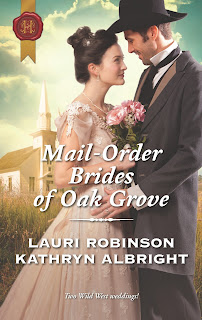
In the book that I just finished and sent in to my editor—titled The Prairie Doctor’s Bride – a character has an accident along the trail, leaving behind some unfinished business in Oak Grove. More on this in a future post…For now, Mail-Order Brides of Oak Grove, the first book in the Oak Grove Series, is available.


Kathryn Albright writes sweet historical Americana Romance. 
Come visit !   

Author Website | Newsletter | Amazon Author Page


Friday, June 9, 2017

The Smoky Hill River


 By Kathryn Albright

Oak Grove is a fictional town in western Kansas along the Smoky Hill River. Laurie Robinson and I are writing a new book series set there and the first one has just been released.
Laurie has the fortunate circumstance of having lived for several years in the area she is writing about. Having never been to Kansas, I had some research to do. I found these beautiful pictures that started all sorts of ideas going in my head.


The river plays an integral part in the three stories that I am setting in the Smoky Hill region of northwestern Kansas. It originates in eastern Colorado and its waters flow east all the way to the Mississippi River. The area was a rich hunting grounds for the Plains Indians before they were forced onto reservations. A big grove of cottonwoods along the river on the Kansas/Colorado border was the impetus for the river’s name. From across the plains, the grove looked like a billow of smoke.

Along the river are several towns, the largest being Salina. There are also several forts that the Army established along the river to protect travelers. Oak Grove is situated nearest to and east of Fort Wallace, but it is still an hour or so to ride there on horseback.


At the time of the Pike’s Peak Gold Rush in Colorado (1858), an Indian trail along the river known as the Smoky Hill Trail, was the fastest route across Kansas. Then in 1865, the Butterfield Overland Despatch, a stage coach route ran for a short time. Then in 1870, the Kansas-Pacific Railway took over as the best way to travel across Kansas.

The river at my fictional town of Oak Grove is three feet deep and two hundred feet wide, except during the spring rainy season when flooding over the low banks occurs and extends out over the plains. The weather I learned, is sunny most of the time and arid. And much of what I read about was about the unrelenting, and constant wind.


There is more research I did—types of crops, types of fish, buffalo wallows and cattle drives… Research always gives me lots of ideas for plotting for my stories and all these facts that I have presented about the Smoky Hill River come up in my books. As much as Oak Grove and the characters are fictional, everything else in my books are factual – at least as much as I can make it so through research.

You can find more pictures of inspiration for all my stories at http://www.pinterest.com/kathrynalbright

I hope that you will join Laurie and me as we tell you all about Oak Grove and its wonderful inhabitants!  Our first book, kicking off the new series is Mail-Order Brides of Oak Grove. Laurie wrote Mary's story and I wrote Maggie's and intertwined them throughout the book which was challenging and fun.


Author Website | Newsletter | Amazon Author Page

Facebook | Twitter | Pinterest | Goodreads


Tuesday, May 23, 2017

BLOG TOUR TUESDAY & A NEW RELEASE!

By Kathryn Albright


I am excited to share the release of my newest book with you!

(First - a little introduction. By the way, this isn't the cover...)
MAIL-ORDER BRIDES OF OAK GROVE

When twins, Mary and Maggie McCary are caught selling
their family tonic without a permit,
they're forced to agree to become mail-order brides to stay out of jail.
Taking the train to Oak Grove, the pair are separated--
For Mary, falling off the Oak Grove train
into Steve Putnam's lap changes everything.
Could he be the cowboy to tempt her down the aisle?
And running from trouble, Maggie doesn't intend to actually marry...
until she shares one sensational kiss with Jackson Miller!

When the mayor discovers the twins' side business and their plans
to avoid the bride contract, things begin to fall apart for the sisters.
They both have a lot to learn about the men of Oak Grove...and likewise,
the men have a lot to learn about these two McCarys!


Twin sisters say "I do" in the Wild West!

Sweet and sassy and double the trouble, when twins Mary and Maggie sign contracts to become mail-order brides with every intention of escaping before the actual wedding!

Mail-Order Brides of Oak Grove kicks off a new series by Laurie Robinson and me.
I loved collaborating while she wrote Mary's story and I wrote Maggie's.
These are two young women with a penchant for fun and trouble.
Mary and Maggie's youth and unconventional upbringing make their view of life slightly skewed from other "normal folk. Rules don't apply in the regular sense. They turn Steve and Jackson's lives into two big knots with their shenanigans!

Today is the release day for paperback and on June 1st, it will be available in eBook format. Here is the link to Order!


I hope that you enjoy this short excerpt ~
"Taming the Runaway Bride" from Mail-Order Brides of Oak Grove

~  * ~ * ~ * ~ * ~

The worst of the screeching subsided as the engine shuddered and then slowed to a turtle’s crawl.

Her three companions created a fair wall with their noses pressed to the glass. Maggie could only see bits and pieces of the town moving by through the spaces between the three—Miss Know-it-all Rebecca, Miss Quiet-and Quaint Sadie, and Miss Gullible Anna. She couldn’t understand why they were excited about a new beginning and gaining a husband along with it. She certainly wasn’t. That’s all her life had been for as long as she could remember—always a new city, a new town, a new horizon. A seed didn’t have time to flower, nor dust to settle, the way her family lived. And she sure didn’t plan to get yoked to a man. A man would only complicate things between her and her sister. 

He might even separate them.

But while she was here, she would like to see a real cowboy. One with boots…and a Stetson. Or one of those ten gallon hats that the other girls had been giggling about. Did cowboys always wear spurs? These were things a girl should know.

She stored the deck of cards in her satchel. It wouldn’t do to lose them. She might have need of a little spending money or even a little “get out of town” money.

She stepped behind Anna to peer over her shoulder. From this position all she saw was a small sea of dusty and dirty cowboy hats and bowlers. A few men waved faded flags—bleached by the sun and whipped by the prairie wind.

She swallowed. Men. All men. At least thirty of them. She rose to her tip-toes in order to see better.
Some were really young, but most looked middlin’ to old. A few appeared…weathered. One thing was obvious—no two of the men staring back from the station platform were the same. They were all shapes and sizes. And whether they wore big grins or not as they vied for the front row, they all looked curious to see who would be stepping off the train. Some, she noticed uncomfortably, appeared eager—a bit too eager.

With that thought she shrank back and looked in the seat behind her for her sister. Where had she disappeared to so fast? This bride contract had been her idea from the start. She should be here.

“Oh! I see the one I want!” Anna squealed, her voice blending with the last screech of the brakes.

The train shuddered horrendously to a complete stop. With it, a band started up. A band? A trumpet played Oh! Susanna! and was joined by the beat of a drum and the trill of a fife.

Panic seized Maggie. She wasn’t ready for this! “I have to find Mary,” she croaked out. Swaying slightly, she headed toward the back end of the rail-car. She wanted to be with her sister when she faced the men gathered outside—not with these women she’d known only a handful of days.
The door before her swung open.

“Well now, Miss McCary,” the conductor said, raising his bushy brows. “A bit anxious I’d say.”

She glared at him. He was in league with the sheriff back in Bridgeport—that scoundrel.

Behind him, a man from the platform climbed the steps, pausing when he arrived at the top as if the exertion winded him. He was dressed in his Sunday best, right down to the gold watch fob and chain dangling from his black satin vest. The suit appeared a bit small at the neck…and other places. 

Probably cutting off his breath judging by the redness of his face. He peered first at her and then at the other women behind her as he blotted a trace of sweat on his forehead.  

“Welcome to Cedar Grove, ladies. I’m Mayor Melbourne.” He paused, looking over the four of them. The welcoming mien dissolved and he turned to the conductor. “Where are the rest?”

The man fumbled in his pocket, withdrew a sealed envelope and handed it to the mayor.

Mayor Melbourne pressed his lips together. He slipped his wire glasses from his vest pocket and settled them on the bridge of his nose, bending the ear wires over his ears. Then he broke the wax seal on the envelope and quickly read the contents. If possible his face reddened further.

“Not coming!” he sputtered. “Not coming! I asked for twelve and all that answered the call are these four?”

“Actually, Mayor, that would be five,” Rebecca said from over Maggie’s left shoulder. “Mary McCary is also with us…somewhere.”

“Five, you say? The committee sent enough money for twelve. My brother has some answering to do.” He read the letter again, the perturbed look on his face slowly settling into resignation as he folded the paper and stuffed it in his pocket. “Very well. Ladies? Welcome. Please come meet your town.”

She sensed Anna, Sadie and Rebecca gathering in force behind her. “What about our things?” she asked quickly, hoping to stall a few minutes longer.

“Plenty of men here to see to them,” the mayor said. “Please follow me. As you can see, they are anxious to have a look at …I mean…meet you.”

Behind her, the others pressed forward, prodding her out the door and onto the steps. A blast of warm Kansas wind swirled around her and picked up her skirt.

“Whoo-wee!” a man in front called out. “Got a looker right off!”

Her cheeks heated as she struggled to subdue the billowing purple cotton and then she focused on the gawker, raising her chin defiantly and fixing him with a bold glare. She would make sure never to find herself alone with him.

He grinned. “Got spirit too! She’s mine. Might as well just check her off your list, men. She’s mine! Whoo-ee!”

“Not unless you take a bath and wash off that cow smell, Rader,” someone yelled back. A round of chuckles from a few of the others followed.

Behind her, Sadie, Rebecca and Anna must have crowded into view for a cheer went up from the men. “Hip-hip-hooray!” Several even threw their hats into the air and the small band played louder at a furious pace.

Four strong-looking men stepped forward and with a great deal more enthusiasm than the situation called for, took hold of her upper-arms and whisked her—her body floating through the air—down the last two steps to the platform.

She wasn’t ready for this! Where in heaven’s name was Mary?

~ * ~ * ~ * ~ * ~ * ~
Mail-Order Brides of Oak Grove
Copyright by Harlequin Books & Kathryn Albright

Permission to reproduce text granted by Harlequin Books S.A.

Visit Kathryn to find out more about her books!

Friday, May 12, 2017

RESEARCHING KANSAS & A MOTHER'S DAY SPECIAL!

by Kathryn Albright


The new series that I am working on has required a lot of new research in the state of Kansas. One thing that I needed to know was the Native American Situation and whether it was realistic to have any Indian/Settler skirmishes at the time that my stories take place which is 1878-1880. By this time, Kansas was already a state in the Union. Statehood happened in 1861 and the story of how it came to be is a post in itself!

Here is short timeline of a few things going on in 1870's Kansas that I wanted to make sure I was aware of before writing my first story set there. I strive for historical accuracy and often information like this inspires my plotting. This list is not exhaustive by any means, but it was pertinent to my new series.


1870  -  The Kansas Pacific Railroad extends from Kansas City to Denver.
1871  -  April 15 -- 'Wild Bill' Hickok became the marshal of Abilene.
1872  -  June 17  --  Hoover's Bar established in a tent shop five miles west of Fort Dodge.
                  It was the founding business of Dodge City. Up to then the town had been dry.
             "Home on the Range" song words written by Dr. Brewster Higley, M.D. (Smith Cty)
             Ellsworth became the northern shipping point of the Texas cattle trail. (Succeeding
             Abiliene.)
             The Sante Fe Railroad was completed to the Colorado border and succeeded the Santa Fe
                  Trail as the main transportation route to the southwest.
1873  -  The Kaw Indians were removed from their reservation in Morris County to Oklahoma
                 Territory.
              Grasshopper plague from the Rocky Mountain Locust devastated the corn crop.
              Four Kansas railroads shipped 122,914 head of Texas cattle in eight months.
1874  -  Mennonites from Russia introduce Turkey Red wheat to Kansas.
1875  -  Most of the buffalo in the state have been destroyed.
1876  -  Wyatt Earp moved to Dodge City.
1878  -  Cheyenne raid in Northwestern, Kansas. In Oklahoma Indian Territory, the Northern
             Cheyenne left their reservation and headed north to their lands in Yellowstone. They were
             stopped in Northwestern Kansas at Ladder Creek (known as Beaver Creek today.)
             The last Indian raid in Kansas occurred in this year.
1879  -  Prohibition at the forefront of the Kansas legistlature.
1880  -  Kansas became the first state to pass an amendment prohibiting all alcoholic beverages.

The decade of the 1870's went a long way in changing Kansas from a windswept open prairie to America's agricultural heartland. Until I started delving into its history, I knew little about this amazing state and the people that lived there. I am excited to set my next series there ~ The Oak Grove Series. Find out more on May 23rd here at Sweet Americana Sweethearts!


* * * * * * * * * * * * *

Inquiring minds want to know...

HOW MANY HAVE YOU READ?

The authors of the

GRANDMA'S WEDDING QUILTS SERIES

are having a collective sale at Amazon over the Mother's Day Weekend! 


 NOW is the opportune time to get your copies!

ALL THE BOOKS IN THE SERIES ARE DISCOUNTED TO

~ $0.99! ~

Books #2 - #7:  May 10th through May 14th

      #8 - #12:  May  12th through May 16th

The Prequel is always 99 cents!


This means that starting today and over Mother's Day Weekend 
ALL TWELVE BOOKS plus the PREQUEL will be discounted at the same time. 

This is one series that gets better and better with each new read. Each story ties a family and quilt together to make it a wonderful outstanding clean series you do no want to miss. I can't wait for the next one!     PAGE BY PAGE REVIEWS

My story, Gloria's Song, is the one book in the series (besides the prequel!) that is not a historical western. Gloria's Song takes place on the Potomac River in Virginia where my mother's family comes from.
I love to hear my mother talk about the years growing up there and visiting her grandmother who lived in a four-story brick building that was built in the 1870s. Cobblestone streets and gas lamps...For fun they went ice skating, crabbing, and jumping off the dock. And my mother played the piano...A LOT! How could I not set a story there.
It seems appropriate to have Gloria's Song available on special for this special Mother's Day weekend.
Me and my mother -- Gloria
Kathryn Albright writes sweet historical romance. Her stories celebrate courage and hope with a dash of adventure. Kathryn's stories have been finalists in the RWA Golden Heart and the HOLT Medallion as well as several other industry contests. She enjoys hiking and road trips with her husband (when he drives) and being caught up in a good story. She lives with her family in the rural Midwest.

Sign up for Kathryn's newsletter at www.KathrynAlbright.com to be the first to hear of her books, contests, and more.

Facebook | Twitter | Pinterest | Amazon Author Page | Goodreads

Friday, April 14, 2017

Behind the Book ~ Gloria's Song

by Kathryn Albright


What do the famous songwriters Irving Berlin, Ira Gershwin, Oscar Hammerstein II, George M. Cohen, Cole Port, Jerome Kern, and Scott Joplin all have in common with my latest story, Gloria's Song?

They all found their way to Tin Pan Alley during their musical careers.

Tin Pan Alley, NYC (Wikimedia CC)
Now days, music popularity is determined by how many times a song is streamed from the internet. Back before CDs and vinyl records, a songs popularity was determined by how many sheet music copies it sold.  From 1880 until 1953, Tin Pan Alley was the absolute center of the sheet music publishing industry in New York City. It was located on West 28th Street between Broadway and Sixth Avenue in Manhattan.

When vaudeville singers would perform in NYC, they would often stop by Tin Pan Alley to find new songs for their acts. Musicians, Broadway singers, songwriters, and song pluggers found their way to Tin Pan Alley. Song pluggers were pianists and singers who were hired by the publishing company to familiarize the public with new songs and hopefully make the song a hit. George Gershwin got his start as a song plugger.

Gloria's Song is set in 1889. At that time, the popular songs coming out of Tin Pan Alley were ballads or comic novelty songs. These are the types of songs Colin McDougal, my character was trying to write. "Where Did You Get That Hat?" was a popular song of the day and one that I mention in my story.


Colin McDougal helps manage a tavern in a small town along the Potomac River. He has a knack for playing the piano and can play a tune easily after only hearing it once. He brings in a lot of business to his family-owned tavern, but secretly he hopes that one day, one of the songs he composes, will make it big on Tin Pan Alley.

At the same time, the growing piano-making industry likely gave song publishers a boost in sales. Several large furniture factories moved into the piano-making business and suddenly upright grand pianos became affordable for the middle class. It became the epitome of "class" to have a piano in your home and if you had a daughter, for her to learn to play.

Gloria, in my story, is such a daughter from the upper class. Outside of Tin Pan Alley, the popularity of classics and romantic music continued strong. Romantic composers wrote between 1815 and 1910. I envisioned some fun scenes between Gloria and Colin that incorporated their clash of music types.

One last thing that sparked my interest in writing Gloria's Song...  As some of you may know, I dedicated this book to my mother and I set the story on the Potamac River where my mother's family originates. My mother took years and  years of piano lessons and is a marvelous pianist, yet she has often remarked how her sister can sit right down and play anything at all simply by sight-reading it. To be able to "sight-read" something means that you can play it quite well without any practice. That was the seed of the idea for my story, Gloria's Song.

And now you know!

You can find Gloria's Song in ebook and paperback HERE and all the other wonderful stories of Grandmother's Wedding Quilts HERE.


Gloria Palmer has always done the proper thing expected of her as the daughter of a shipping tycoon. The approval of her family and friends mean everything. And yet, when the perfect suitor offers for her… she hesitates.

Colin McDougal has little use for those living on the fancy side of the trolley tracks. He’s too busy managing the family pub and, in his spare time, writing down the lively tunes in his head. So, when Miss Palmer asks for his help to prepare for a music audition, he is flummoxed. What does he know of highbrow music?

But with each practice session, their feelings for each other grow. When it comes time for Gloria to make a choice between what is proper and what she desires, will she realize that if music can cross class lines—and the trolley tracks in town—perhaps it can also harmonize two hearts.

Friday, March 10, 2017

HOW DID I END UP HERE?


My most recent story, Gloria's Song, has a lot to do with music--a subject that is near and dear to my heart. I grew up playing the piano and also the flute.

Thanks to my parents, I grew up on musicals. I'm talking about the "love at first sight, happy (sometimes sappy) ending, burst into song at the drop of a hat" kind. (Oh, how my sons roll their eyes at that!) Most of the musicals were set in the past, so I am thinking this probably also fueled my interest in history to a degree.

Between Rogers and Hammerstein and Lerner and Walt Disney I was happy as a bee in field of Texas bluebonnets. The music, the lyrics, the dancing, and the touch of humor in just the right places, swept me away to a magical realm and kept me enthralled. It didn't hurt that the heroes were easy on the eyes and the heroines beautiful. And they always fell in love and lived happily every.

Mary Poppins, The Sound of Music, The Music Man, South Pacific, Camelot and a host of others--the music was so ingrained in me that I couldn't believe it when I'd meet someone who had never seen a musical. It was incomprehensible to me. (Don't ask me how I ever ended up marrying a "sports jock!" At least my husband tolerates my singing around the house!)

The musicals set in the 1800s reflect the time and place of the stories that I write.

https://en.wikipedia.org/w/
index.php?curid=4183937

OKLAHOMA! is probably my favorite of those about the "old West." This story is pretty much a pure romance, but it does have a bit of conflict with a triangle love story. I must admit that every time I see a beautiful, sunny morning, the song Oh, What a Beautiful Morning pops into my head. (I try to restrain myself from singing out loud when I am around other people.)


https://en.wikipedia.org/
w/index.php?curid=4104909

SEVEN BRIDES FOR SEVEN BROTHERS takes place in the Oregon wilderness and is about a manly man who is a bit of a rascal and the feisty woman (half his size) who tames him. I was captivated by the gorgeous scenery and then later learned much of it had been filmed onstage and the backgrounds were painted pictures. It won an award for it as a matter of fact.

https://en.wikipedia.org/
w/index.php?curid=18907930


THE UNSINKABLE MOLLY BROWN takes place in Leadville, Colorado territory and is based loosely on the life of Molly Brown. It was set at the time of the silver discovery in the Rocky Mountains. I've read several books that use this time period and setting as a backdrop for the characters--both contemporary and historical.

w/index.php?curid=10359012

PAINT YOUR WAGON -- Now, I admit that it was a shock to see Clint Eastwood singing, but I did enjoy the show and the music. They Call the Wind Maria is a favorite from this musical. It's a bit wilder and sassier than the others.

With all of this ingrained in me from an early age, it is no wonder that I grew up believing in happy endings and the kind of love that lasts a lifetime. Perhaps I'm looking through rose-colored lenses, but it is a lovely view from here.

Are there any musical lovers out there? And if so, which is your favorite? I would love to discover a new one!


Kathryn's latest book is titled Gloria's Song from the Grandma's Wedding Quilt Series. It is all about music.


Friday, February 10, 2017

The Basket Quilt


Although as an author, I have participated in “duets” and “threesomes” in an anthology, I never have been part of a large novella collection before. Being one among the eleven authors in Grandma’s Wedding Quilts has been an exciting journey for me. 

The feedback from readers has been wonderful and I am truly thrilled to have been part of the endeavor. One reader did mention that she wished I had put more about quilting in my story. I had a few lines—but definitely not enough to satisfy an avid quilter! 

In researching the quilting pattern used in Gloria’s Song, I learned that the motif of the basket is found throughout history in various places. I wrote in the introduction to the book: “The basket is a symbol of hearth and home and it was an item that pioneer women used constantly in their daily lives. The motif found its way onto all sorts of things – stoves, ceramics, china, and, of course, quilts.”


One very old German (Bavarian) tradition with the basket, is for a young man to give an empty basket to the woman he is interested in (or to leave it just outside her door.) If she fills the basket with goodies and returns it to him, he then knows that she is interested in him. If she returns the basket empty—well—then he knows she does not want to be pursued.

I looked for a picture of a basket quilt to use with very little luck. I only found modern basket quilts, or ones that were beyond my budget due to copyright. I voiced my despair to a friend who is heavy into quilting and she tried to help me. What a surprise to learn that she actually had a basket quilt in her own family, that dated back to the early 1900s! It was such a case of serendipity that I was astounded. Here is my friend's wall hanging! It is the center and best part of an old quilt that she salvaged from her grandmother's things.


I know very little of quilting, other than to admire them and the creativity and precision of the women that make them. I would love to make one…someday…but for now, writing stories seems to take up all my waking hours. (I probably need to find a better balance in my life!)

What about you? If you could do ANYTHING as a creative outlet (other than what you might be doing now) what would you like to do?

 *****
Kathryn Albright's newest book is part of the Grandma's Wedding Quilt Series.
It is now available in print! 


Gloria always does the proper thing, the expected thing,
as the daughter of a shipping tycoon. 

To have Colin, a tavern pianist,
tutor her for her audition sounds crazy. 

But if music can cross class lines…
can it also harmonize two hearts?  
*****
What readers are saying ~

"Lovely story, written with so much feeling. Touched something deeply inside of me. Completely got lost in this beautifully written book. Thanks for the joy I found reading this 11th book of Grandma’s Wedding Quilts." M. Gauvin

"I enjoyed this book very much! It touched my heart in many ways! Highly rcommend."  Linda/Amazon Reviews
*****