Tuesday, February 23, 2021

AND YOU THOUGHT A ROLEX WAS GREAT...by Marisa Masterson

 Patek Phillipe. Have you ever heard of the company? I hadn't but it was exactly the watch I was looking to include in my next novel.


I wanted a watch that royalty would covet and a wealthy lady of distinction might proudly display on the lapel of the jacket covering her walking dress. Research turned up this brand name. An old brand, actually, that is still in business today.

This company gained acclaim soon after it started in the 1830s because of the owner's design for a keyless watch. Yes, keyless. Watches and clocks required keys to wind them. This company premiered the design to wind using the fob. By 1851, Queen Victoria purchased one and proudly wore it.

In my novel, Sookie's Silence, the wealthy matchmaker wears a Patek Phillippe watch pinned to her mauve walking dress.

The elegantly dressed woman who rose from the room’s single chair stepped around the ripped sofa and held out an inviting hand, palm up. Her clothing and manners brought a longing to Sookie. The woman somehow reminded her of the mother she lost only months before.

The stranger’s clothing fit the elegant air of the woman. A mauve jacket trimmed with gray covered a walking dress of the same color and material. She had a lovely piece of blue jewelry pinned to the lapel. A Patek Phillippe keyless watch, if Sookie was any judge of it.


Sookie's Silence releases in April and readers are able to pre-order now so you won't miss out on the release...


Mildred Crenshaw's latest match in the Westward Home and Hearts Mail-Order Brides series--

The accident that kills her parents leaves Sookie Donaldson mute. She grasps at the chance to be a mail-order bride. The only catch is that she must also be able to teach school.
Since Sookie taught school for a number of years that is no problem. Hopefully in Nebraska, people will welcome any trained teacher--even one who cannot speak. She fits all the requirements outlined by Milly Crenshaw, the matchmaker. The man in Nebraska is a perfect match. She hopes.
Will her surly groom send her back on the first train east when he realizes Sookie is silent? And who is the man who shadows her every movement in her new hometown?
Suddenly, Sookie's silence stands in her way of both happiness and safety.

https://www.amazon.com/dp/B08T6N9TJF


Wednesday, February 17, 2021

AH - FEBRUARY

 Post by Doris McCraw writing as Angela Raines

Photo property of the author

Ah, February! A month of love, President's Day, and variable weather. For this post, I thought I'd take a look at how they talked about blizzards and cold weather in the late 1800s. The focus is primarily from Colorado newspapers and what a fun read they can be. Each publication has its own style. I hope you enjoy the read as much as I do.

The Avalanche-Echo, from January 13, 1893 (Glenwood Springs) had the following article.

A Dakota Blizzard.

The worst thing that a traveler can possibly encounter in the West.

"The worst thing that a traveler can encounter is a Dakota blizzard" said W. C. Beaver, who was entertaining some friends in the corridors of the hotel. "A Dakota blizzard is something like a Sahara sandstorm, but with powdered ice instead of sand and the thermometer ranging 30° below instead of 100° above. A traveler may outlive a sandstorm, the only danger is that he will be smothered. But woe to the unlucky pilgrim who was caught by a blizzard.

The fine frozen snow, as fine as iron filings, is driven into his face with terrible force; it becomes impossible to distinguish objects at a distance of a dozen yards and he may flounder about four hours within a stone's throw of his own house without being able to find it. Great drifts are piled up around him, then whisk away, leaving the ground perfectly bear; the wind seems to read involve itself into thousand swirling cyclones and every open stretch of snow into a maelstrom. In North Dakota, many of the farmers stretch ropes from their houses to their barns so that they venture out to feed their stock during the blizzards which frequently last two or three days — without danger of getting lost in the icy storm.

In February 1884 I drove out in the sleigh a few miles from Fargo to close up a land trade. This sky was as clear as a bell, the air just cold enough to be exhilarating and I enjoyed my ride out immensely. I did not enjoy the return trip, however. A cold bitter wind came out of the Northeast that constantly increased in violence until the air became filled with fine snow, which glittered like myriads of diamonds in the sun. Then the sky became overcast the wind began to hurl great banks of snow across the road and I was soon unable to see my horse's head. I urged him onward, allowing him to pick his own course, for I was hopelessly at sea.

I had heard that a horse would find his way home through the darkest night and I hoped that instinct would serve him as well in a blizzard, but it didn't. After a little while, he stopped and when I urged him forward he turned squarely about and began to retrace his steps. He was is lost as well as I. To sit still meant to freeze. I got out threw the reins over my arm and started forward, calling at the top of my voice and firing off my revolver. In a minute or two, there was an answering shout. I was within fifty yards of a farmhouse where I obtained shelter until the blizzard had subsided two days later."

Photo property of the author

Out of Grand Junction in the Grand Valley Star-Times from February 9, 1895, reported on a blizzard in Kansas.

The blizzard raged all night.

Kansas City, February, seventh, — the blizzard raged with unabated vigor all night. This morning the thermometer registered 10 1/2° below zero. A gale is blowing. Signal officer O'Connor does not promise a respite until Friday evening. The railroads have not as yet been inconvenienced much from the drifts.

Lastly, on February 12, 1891, the Fort Collins Courier reported on a blizzard in that town. It reads like a sailor wrote it, at least to me.

A section of an Alaska blizzard, that had strayed away from home, struck Fort Collins amidship on Sunday, shriveling the people like a leaf in a hot furnace. A bitterly, cold northwest wind swept over the town nearly all day and those whose duty called them out suffered intensely with the cold.

It is always fascinating to see how people wrote and passed on the news in the past. In my novel, "Josie's Dream" I wonder how they would report the following incident?

 “I caught these two sneaking toward your door,” Amos said. “The blonde one is Everett, and this redhead is Mason, they claim they were just…”

We didn’t do nothing,” the Everett declared, tying for all the world to not show how uncomfortable he must be with his shirt bunched around his neck and shoulder in a strong grip.

It was Jack what put us up to it,” the Mason said, glancing over to his cohort.

Josie watched as the two glared at each other. That someone had used them as pawns to try to frighten her she didn’t doubt. “And who is Jack?” Josie asked the boys.

If anything they looked even more stubborn than before. “We ain’t telling you nothin.” Everett declared, while Mason said, “The cowboy by the saloon. He gave us two bits.”

Everett tried to kick Mason and it was all Amos could do to keep the two from getting away or doing harm to one another.

Amos, perhaps these two would be willing to help with a slight problem I have.” Josie suggested. She would question Amos later about the mysterious Jack.

The two continued their glares as Amos ushered them into the room, the kitten hissing as they went by.

It seems there is a snake that has hidden under the bed. How about you help get it out before Cassie here gets out of my arms and we end up with a mess?” Josie suggested to the boys.

Carefully, the two set about chasing after the snake. As uncomfortable as Josie was with a snake nearby, she was more concerned for Cassie, the kitten. Cassie watched as the two moved around, and squirmed under the bed. Finally, Mason gave a shout of triumph and came out with the snake in his hand.

Be careful, it’s more frightened of you,” Josie warned, holding Cassie even tighter as the kitten renewed its efforts to get at the snake.

Okay, out with you two,” Amos said, ushering the two out the door, a wink at Josie as he shut the door.

I wonder what Amos is going to do with those two?” Josie asked the kitten in her arms finally turning her loose. In response, the kitten immediately went to the door, meows of frustration echoing in Josie’s ears.

Smiling she set about cleaning up the pricks of blood the kitten had drawn in it struggles to get loose.

You are a beautiful brat young lady,” Josie said. “But you’re not going out.”

In response Cassie darted to and fro in the room. She finally bounced from the chair to the windowsill, sitting silently watching the action below, tail whipping back and forth.

With a final glance at the kitten, Josie laid down on the bed hoping for a short rest before returning to work the office for her afternoon hours.

Soon the sound of the bed creaking then purring reached her ears as the ball of fur curled up against her side. Placing a hand on Cassie’s head, Josie drew her hand down the soft fur, a relaxed sigh escaping her lips.

Amazon

Doris Gardner-McCraw -
Author, Speaker, Historian-specializing in
Colorado and Women's History
Angela Raines - author: Telling Stories Where Love & History Meet

Sunday, February 14, 2021

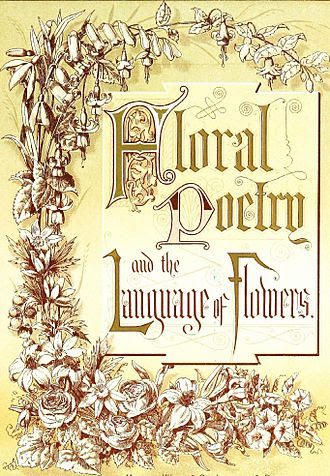
The Language of Flowers By Annee Jones


The Language of Flowers

By Annee Jones

I hope everyone had a safe and happy Valentine’s Day!  I was researching the historical origins of this holiday and came across some fascinating facts!  Did you know the tradition of giving flowers to loved ones on Valentine's Day originated in the 17th century when King Charles II of Sweden popularized "the language of flowers", or attaching conversationalist meanings to different types of flowers?   The language of flowers  - such a beautiful idea!!  As a romance author, I had to delve into this topic further!

According to my sources, “floriography” (language of flowers) is a means of cryptological communication through the use or arrangement of flowers.  Meaning has been attributed to flowers for thousands of years, and some form of floriography has been practiced in traditional cultures throughout the world.

For example, plants and flowers are used as symbols in the Hebrew Bible, particularly of love and lovers in the Song of Songs, as an emblem for the Israelite people, and for the coming Messiah.  In Western culture, William Shakespeare used flower symbolism in his plays, such as in Hamlet with the character of Ophelia.  In Henry VI, Shakespeare had English noblemen pick either red or white roses to symbolize their choice of allegiance either to the House of Lancaster or the House of York.   

Interest in floriography soared in Victorian England and in the United States particularly during the 19th century.   Learning the special symbolism of flowers became a popular pastime during the 1800s.  Gifts of blooms, plants, and specific floral arrangements were used to send a coded message to the recipient, allowing the sender to express feelings which could not be spoken aloud in Victorian society. 

For example, flowers could be used to answer “yes” or “no” questions. A “yes” answer came in the form of flowers handed over with the right hand; if the left hand was used, the answer was “no.”

The color of the flowers and how they were presented contained meanings, as well. 

If the flowers were given upside down, then the idea being conveyed was the opposite of what was traditionally meant.  How the ribbon was tied said something, too: Tied to the left, the flowers’ symbolism applied to the giver, whereas tied to the right, the sentiment was in reference to the recipient.

Here is a list of common symbolic meanings of herbs, flowers, and plants:


Abatina        Fickleness

Acanthus      The fine art, artifice

Amaryllis     Pride

Anemone     Forsaken, sickness

Angelica      Inspiration

Apple blossom       Preference

Aster  Symbol of Love, Daintiness

Bachelor’s button  Single blessedness

Sweet Basil  Good wishes

Bay tree       Glory

Begonia       Beware, dark thoughts

Belledonna  Silence

Bittersweet  Truth

Black-eyed Susan  Justice

Bluebell       Humility, constancy

Butterfly weed       Let me go

Camellia, pink       Longing For You

Camellia, red         You’re a Flame in My Heart

Camellia, white      You’re Adorable

Candytuft     Indifference

Carnation     Women, Love

– Red carnation      Alas for my poor heart, my heart aches

– White carnation  Innocence, pure love, women’s good luck gift

– Pink carnation     I’ll never forget you

– Striped      Refusal

– Yellow carnation Disdain, disappointment, rejection

Chamomile  Patience in adversity

Chives         Usefulness

Chrysanthemum, red        I love you

Chrysanthemum, yellow  Slighted love

Chrysanthemum, white    Truth

Clematis, evergreen         Poverty

Clover, white         Think of me

Columbine   Foolishness, folly

Columbine, purple Resolution

Columbine, red      Anxious, trembling

Coriander     Hidden worth/merit

Crab blossom         Ill nature

Crocus, spring        Youthful gladness

Daffodil       Regard, Unequalled Love

Dahlia, single         Good taste

Daisy Innocence, hope

Dill    Powerful against evil

Edelweiss    Courage, devotion

Fennel          Flattery

Fern   Sincerity, humility; also, magic and bonds of love

Forget-me-not        True love memories, do not forget me

Gardenia      Secret love

Gladiolus     Remembrance

Goldenrod    Encouragement, good fortune

Heliotrope    Eternal love, devotion

Hibiscus       Delicate beauty

Holly Foresight

Hollyhock    Ambition

Honeysuckle          Bonds of love

Hyacinth      Sport, game, play

– Blue Hyacinth     Constancy

– Purple Hyacinth  Sorrow

– Yellow Hyacinth Jealousy

– White Hyacinth   Loveliness, prayers for someone

Hydrangea   Gratitude for being understood; frigidity and heartlessness

Hyssop         Sacrifice, cleanliness

Iris     A message

Ivy     Friendship, fidelity, marriage

Jasmine, white       Sweet love, amiability

Jasmine, yellow     Grace and elegance

Lady’s Slipper       Capricious beauty

Larkspur      Lightness, levity

Lavender      Distrust

Lemon balm Sympathy

Lilac  Joy of youth

Lily, calla    Beauty

Lily, day      Chinese emblem for mother

Lily-of-the-valley  Sweetness, purity, pure love

Lotus Flower         Purity, enlightenment, self-regeneration, and rebirth

Magnolia     Love of nature

Marigold      Despair, grief, jealousy

Marjoram     Joy and happiness

Mint  Virtue

Morning glory       Affection

Myrtle          Good luck and love in a marriage

Nasturtium   Patriotism

Oak    Strength

Parsley         Festivity

Peony           Bashful, happy life

Pine   Humility

Poppy, red   Consolation

Rhododendron       Danger, beware

Rose, red      Love, I love you

Rose, dark crimson          Mourning

Rose, pink   Happiness

Rose, white  I’m worthy of you

Rose, yellow          Jealousy, decrease of love, infidelity

Rosemary    Remembrance

Rue    Grace, clear vision

Sage   Wisdom, immortality

Salvia, blue  I think of you

Salvia, red    Forever mine

Savory         Spice, interest

Snapdragon  Deception, graciousness

Sorrel A ffection

Speedwell    Feminine fidelity

Sunflower, dwarf   Adoration

Sunflower, tall       Haughtiness

Sweet pea    Delicate pleasures

Sweet William       Gallantry

Sweet woodruff     Humility

Tansy     Hostile thoughts, declaring war

Tarragon      Lasting interest

Thyme         Courage, strength

Tulip, red     Passion, declaration of love

Tulip, yellow         Sunshine in your smile

Valerian       Readiness

Violet           Loyalty, devotion, faithfulness, modesty

Wallflower   Faithfulness in adversity

Willow         Sadness

Yarrow         Everlasting love

Zinnia          Thoughts of absent friends


I can't wait to use floriography as a means of symbolic communication in my upcoming books!  Will you be able to spot these references?  Be sure to contact me when you do!  :-) 

About Me:


Annee Jones is an inspirational romance novelist who enjoys sharing her heart and imagination with others.  She is passionate about writing stories that offer hope and encouragement and likes to think of her books as “romance filled with faith and a sprinkle of fairy dust!”

Annee is also a professional book reviewer for Publishers Weekly in the genre of faith-based fiction (fun tidbit: she writes many of the editorial reviews you see on Amazon).

Professionally, Annee works as a disability counselor where she helps her clients navigate through complex medical and legal systems while rediscovering their wholeness in Spirit.


Connect with Annee here:

www.anneejones.com

https://www.facebook.com/AuthorAnneeJones


Available For Pre-Order Now:


Sources:

https://en.wikipedia.org/wiki/Language_of_flowers

https://www.almanac.com/flower-meanings-language-flowers


Thursday, February 11, 2021

Washington Monument


It always amazes me the things I learn when I'm doing research for a book. Recently, I was virtually thumbing through an old newspaper from 1884 and happened upon an article about the Washington Monument finally nearing completion after fifty years.
 Fifty years! 
I had no idea it had taken that long, and decided, just for my own curiosity, to dig deeper into the details. 


The idea for a monument to honor George Washington was kicked around before he even became president. In 1783, the Continental Congress voted to build a statue of Washington. Once Washington became president, he discarded ideas for a monument since funds were tight and he thought there were better uses of federal funds. After he passed away, Congress again brought up the idea of a monument, but nothing came of it.

Finally, in the 1830s, a group of Washington residents banned together and formed the Washington National Monument Society to raise private funds for the project. The group, headed by Chief Justice John Marshall, held design competition. The winning architect was Robert Mills, whose credits include the U.S. Treasury Building and the U.S. Patent Office, currently home to the National Portrait Gallery and the Smithsonian American Art Museum.

Mills' design called for a temple-like building with thirty stone columns and statues of Revolutionary War heroes. The plan was for a statue of Washington driving a chariot to reside above the main entrance with a 600-foot-tall Egyptian obelisk rising from the center of the building.

The monument's cornerstone (embedded with a box that held items such as a portrait of George Washington, newspapers of the day. U.S. coins, and a copy of the Constitution) was placed in a ceremony attended by thousands of people. Construction began, but in 1854, with the structure only 150 feet high, funds ran low and work stopped. An activities group called the Know Nothings became angry Pope Pius IX had donated a block of stone from the ancient Roman Temple of Concord for the monument. They confiscated the stone, seized possession of the monument, and later disbanded, leaving the construction on hold. Then the Civil War began. 

In 1876, in celebration of America's 100th birthday, President Ulysses Grant authorized federal funding to finish the monument. Work resumed in 1879. By this time, the plans were outdated, and the obelisk was removed from the plans. An additional issue was after two decades of no work being completed on the monument, matching quarry stone couldn't be found. As a result, the bottom 150 feet of the monument is a different color than the top. 


Construction wrapped up in 1884. The capstone, which weighed more than 3,000 pounds, was set in place on December 6, 1884.  The projects was dedicated the following year, but didn't open to the public until 1888. 


The finished monument stood 555 feet and 5 1/8 inches high, had 50 flights of stairs, and weighed more than 81,000 tons. It was the world's tallest man-made structure until the Eiffel Tower was completed in 1889.

It's so fun to stumble across interesting historical details, especially when I can work them into a story. 

USA Today bestselling author Shanna Hatfield is a farm girl who loves to write. Her sweet historical and contemporary romances are filled with sarcasm, humor, hope, and hunky heroes. When Shanna isn’t dreaming up unforgettable characters, twisting plots, or covertly seeking dark, decadent chocolate, she hangs out with her beloved husband, Captain Cavedweller.

Shanna loves to hear from readers. Follow her online at:

ShannaHatfield | Facebook | Newsletter | BookBub | Pinterest | Goodreads | You Tube | Twitter


Tuesday, February 9, 2021

In the Hands of a Potter by Kimberly Grist

While researching the 19th century, I became fascinated with the vocation of a potter and its importance to the local community. These talented craftsmen created vessels that were functional and practical, typically serving the needs of the people within 30 to 50 miles. 


The techniques reflected local traditions and regional styles passed down through generations. The industry thrived on manufacturing pieces like dishes, jugs, bowls, pitchers, mugs, storage jars, candlesticks, and cream pots.

Everything needed for the production of pottery was present in America- clay was abundant. Clay was dug locally either by hand or sometimes with simple machinery such as a mule-powered pugmill.


Although designed for everyday use, some chose to decorate their pottery with designs that would appeal to their customers. The below photo is a five-gallon stoneware crock, circa 1880. The folk art design shows a man with a mustache and bowler hat, wearing a buttoned coat and nickers sitting on a tree stump. 

Who Made it?

As the United States expanded in the nineteenth century, potters from the north-east took their techniques to Pennsylvania, Virginia, and North Carolina. Generations later, the same families migrated further south and west. 


The lives of many of the individual potters are lost to us. While the stories of women potters are often unrecorded, it is likely that many vessels were created by females. This fact spurred my imagination to create the character of Elly, a talented craftsman who creates American Stoneware.

American stoneware is a type of pottery as popular in the 19th century as Tupperware products of today. The predominant housewares of the era were usually covered in a salt glaze and often decorated using cobalt oxide to produce bright blue decoration.

New Release

A Potter in need of a home, a businessman thirsty for the inheritance his marriage will bring; and a proxy marriage that will reshape them both. 

Since her parents' death; Elly Emerson handles the household and the pottery business to help support the family farm. Left out of the will Elly is faced with homelessness when her new sister-in-law makes it difficult to remain in the family home. 

Alston Pike, an engineer, and millwright believes hard work is the cure to mend a broken heart. Enticed by his grandmother's offer to fund his new project, he agrees to marry within three months. 

Is Elly trading one lion's den for another?

Will Alston's business-minded approach to marriage leave him wanting more?

About Kimberly Grist:

Kim has enjoyed writing since she was a young girl. However, she began writing her first novel in 2017, "
I wear so many hats working inside and outside the home. I work hard, try harder, and then begin again the next day. Despite my best efforts, sometimes life just stinks. Bad things happen. I need and want an outlet, an opportunity to relax and escape to a place where obstacles are met and overcome." 
Fans of historical romance set in the late 19th -century will enjoy stories combining, History, Humor, and Romance, emphasizing Faith, Friends, and Good Clean Fun. 

Connect with Kimberly:

Bookbub: https://www.bookbub.com/profile/kimberly-grist
Facebook:  https://www.facebook.com/FaithFunandFriends/
Twitter: https://twitter.com/GristKimberly
Amazon Author Page: https://www.amazon.com/Kimberly-Grist/e/B07H2NTJ71


Monday, February 8, 2021

Early Years of the Denver and Rio Grande Railroad by Zina Abbott


The Denver & Rio Grande Railway (D&RG) was founded in 1870 by General


William Jackson Palmer, a Civil War veteran, and a board of four directors. They intended for it to link Denver with the Mexican border by following its namesake, the Rio Grande River, for much of the way. He planned for it to reach to reach the San Juan mining district as well as going west to Salt Lake City. It was his decision to use the narrow gauge which would hold down costs and allow it to travel to the high Rocky Mountain communities. Its motto of Through the Rockies, not around them was intended to show that it was main carrier for the Rocky Mountain region in the United States. The first trip on the line occurred Oct. 26, 1871, and took passengers (primarily local newspapermen) from Denver to Colorado Springs.

1871 Baldwin 2-4-0, Montezuma, first locomotive built for D&RG

The D&RG operated the highest mainline rail service in the United States. Later, it adopted the motto, Main line through the Rockies. At its height in the mid-1880s, the company had the largest narrow-gauge railroad network in North America with 2,783 miles of track. It was a major carrier of coal and mineral cargo.


At its height in the mid-1880s, the D&RG had the largest narrow gauge railroad network in North America with 2,783 miles of track that joined the states of Colorado, New Mexico, and Utah. Until 1983, the D&RGW operated the last private intercity passenger train in the United States, the Rio Grande Zephyr.

Closely assisted by his friend and new business partner Dr. William Bell, Palmer laid the first rails out of Denver on July 28, 1871 and reached the location of the

new town of Colorado Springs (then the Fountain Colony) by October 21. Because of stiff competition, such as with the Atchison, Topeka & Santa Fe Railroad that involved hiring gunslingers and buying off politicians before it ended up in the courts, the line did not reach Mexico. It barely reached the northern part of New Mexico by a line that extended from Pueblo south over Raton Pass. However, it did retain the right of building the line through the Arkansas River valley.

Much of the Denver & Rio Grande Railway built toward Utah. From Pueblo, one line built west connecting Canon City (1874), Salida by way of Royal Gorge (1880), Gunnison (1881) to Montrose (1882). From there, a line went north to Grand Junction, Colorado. It was there that the line joined with the Rio Grande Western Railway.

1881 Denver & Rio Grande Passenger Coach

To facilitate the D&RG’s westward push, by late 1880. William Bell, Palmer’s business partner, began railway construction in Utah. By mid-1881, it became the Palmer controlled Denver & Rio Grande Western Railway (the “Western”). The intention of the D&RGW (Western) was to work eastward from Provo to eventually link with westward-bound D&RG in Colorado. This physical connection was realized near Green River, Utah on March 30, 1883. By May of that year, as previously planned, the D&RG formally leased its Utah subsidiary.


Unfortunately, by mid-1883, due to aggressive growth, financial difficulties and expenditures led to a shake up among the D&RG board of directors. Palmer resigned as president of the D&RG in August 1883, while retaining that position with the Western. He continue as president of the Utah line until retirement in 1901 which took place due to a company re-organization.


Frederick Lovejoy was appointed to fill Palmer's vacated seat on the Denver &Rio Grande. He and those that followed him attempted to direct the railroad through future struggles and successes. However, the later history of this railroad is full of financial and legal difficulties. Following bitter conflict with the Rio Grande Western during lease disagreements and continued financial struggles, the D&RG went into receivership in July 1884 with court appointed receiver William S. Jackson in control.

Salida, Colorado Rail Yard
 

Eventual foreclosure and sale of the original Denver & Rio Grande Railway resulted within two years and the new Denver & Rio Grande Railroad took formal control of the property and holdings on July 14, 1886 with Jackson appointed as president.

Although I am not covering the later history of this rail line which lasted until, in 1988, the parent company, Rio Grande Industries, purchased Southern Pacific and retained the more prominent railroad's name. However, I always get a kick out of researching a topic and then running across a connection in my family history. One of my grandfathers who lived in the Salt Lake Valley in Utah all his life retired in the 1950s as a railroad engineer. Guess what railroad? 


The Denver & Rio Grande Railway is the rail line of my recently published book Kate’s Railroad Chef, which is the third book in my Train Wreck in Jubilee Springs trilogy.  Please CLICK HERE for the book description and purchase link.


Sources:

“History of the Denver & Rio Grande Western Railroad”, An Inventory of the Records of the Denver & Rio Grand Western Railroad. Collection Number 513; Denver, Colorado: 1996, pp 1-2.

https://www.american-rails.com/drgw.html

https://www.legendsofamerica.com/denver-rio-grande-western-railroad/

Wikipedia