Showing posts with label lemonade. Show all posts

Tuesday, August 2, 2022

LEMONADE AND TEMPERANCE by Marisa Masterson


Ahh! That familiar smell of a lemon. I don't even need to describe it. I'm betting it comes to your mind at my mention.

Lemonade is remembered as a very popular drink in the 1800s. Even now, it is a summer standard. Why?

Only a little research was needed to answer that question. It goes back to the fight against alcohol and drunkenness. 


The Women’s Christian Temperance Union heavily promoted lemonade in the last part of the 1800s. They urged it as a refreshing alternative to alcohol. And healthy, too, since lemons had been used for years to avoid scurvy.


Along with their campaign, President Rutherford B. Hayes’ wife also gave the drink a boost. First Lady Lucy Hayes refused to serve any alcohol to in the White House (1877-1881). While she didn’t serve lemonade exclusively, she did serve nonalcoholic drinks that included lemons. In later years, she became known as Lemonade Lucy.


The Ladies’ Home Journal responded to the popularity of the drink at that time. Concern about the nation’s love for the drink is expressed. This quote was selected from the magazine and preserved by Red Cross Founder Clara Barton.


A word should, perhaps, be said as to the unwholesomeness of the extremely cold water, tea, lemonade, and other liquids, which are so extensively used throughout the United States. These cold drinks reduce the temperature of the stomach, thereby checking digestion, and for this reason should be avoided during or immediately after meals.” 


No matter the advice, lemonade continued to be enjoyed as a cool summer drink by young and old—before, during, or after a meal.


You can read more about the history of lemonade at https://blogs.loc.gov/families/2021/07/cooking-up-history-lemonade/. This is a great, short article about the drink.


Enjoy the August heat with a cool glass of lemonade and A Bride for Boss--a little Christmas in the summer. On sale at a special low price NOW!
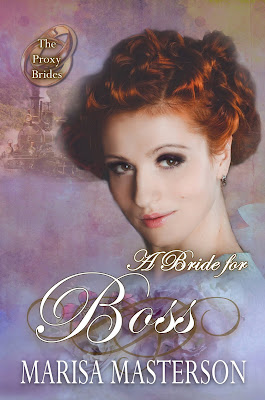

A determined mayor and an outspoken teacher—a match made in heaven? A marriage arranged by the Lord above. Sometimes people don’t see the blessings sent their way.

Scrub Brush, Wyoming needs a teacher. A mail-order teacher is the answer to their problem. To afford one, the town’s mayor—Boswick “Boss” Carter--will need to marry her. That way the town won’t need to house or pay her. He advertises for a proxy bride instead, wanting to be sure she’ll come if he sends money for a ticket.

Frances “Frankie” Elder loses her job after being to frank with the school board. At her friend’s urging, she answers a letter for a combination teacher and bride who can cook. It’s the perfect solution to her need for a home and employment. After all, the groom must not want a real marriage if he advertises for a teacher. He didn’t even include a description of himself in the ad.

What should have been an ordinary marriage of convenience takes a sudden, dangerous turn when Frankie leaves the train in Chicago? By the time she reaches Wyoming, murder dogs her heals and forces her to cling tightly to the protection Boss Carter offers.

But, protection isn’t love…


Thursday, July 28, 2022

Let's Go Picnicking - A Look at Picnics in Victorian America by Jo-Ann Roberts


"I don't know why, but the meals we have on picnics taste so much 
better than the ones we have indoors."  -- Enid Blyton

The season of picnics is upon us in full force! From spring to late autumn, Americans take to the outdoors, enjoying a variety of foods, fruits, and vegetables while flocking to the shore, a mountain lake, or a neighbor's pool. We celebrate the unofficial start of summer by picnicking on Memorial Day, Father's Day, graduations, Fourth of July, vacations, and Labor Day. Autumn finds us tailgating at football games, soccer matches, harvest festivals, and impromptu evening gatherings around a firepit. 

There's something about eating outdoors that brings out the child in all of us!

In the 19th-- and early 20th century the word picnic was define as "an assembly of young people of both genders, at a tavern where everyone pays his club."


In Victorian America, and especially on the prairie and Western territories, these community picnics were major social events, involving informal sport, games, and people dressed in their Sunday finery. Schools, churches societies temperance groups, and businesses all held annual picnics. The food for the picnic was usually prepared at home and taken to the community grove down by the river, to a neighbor's farm, or a town park.  


There were many families, in both city and country, who could not leave their homes, farms, or ranches for an extended period of time, but could afford to lose a day's work now and then for an excursion.

Picnic Proprieties

As you might expect, picnic etiquette was expected at these gatherings. The following came from the San Francisco Chronicle of San Francisco, California in 1869...

"...We do not allow children just learning to walk to wander unguarded at the edge of precipices, and we ought not to allow young people just acquiring a knowledge of the world to be exposed to perils of the nature which they are ignorant.

...Picnics where the party is largely made up of young girls, should be properly "matronized" and governed by a code of proprieties calculated to prevent even the appearance of evil. There should be no straying in couples from the main body of the party especially when champagne or other vinous beverages have been consumed.

...There is a certain class of fast, young men who make a practice of attending all picnics that are not of a strictly private character for sinister purposes."

The Picnic Basket

The success or failure of a picnic depended mainly upon an ample supply of the right kinds of food and drink. When several families participated in picnic, each family offered to bring a dish, practicing the old adage "many hands make light work".


A sturdy square or rectangular basket, or a wood crate was preferable. A length of toweling or a fancy napkin was nestled on the bottom and up the sides of the basket or crate. Food was then wrapped in paraffin paper and placed inside.

In addition to good manners, each family brought their own plates (paper plates were not invented until 1903!), and flatware along with a sharp knife and a 

drinking cup for each person. A colorful tablecloth often brought a bit of elegance to the meal and showcased the family's wealth. 


Picnic Foods

Cold fried or roasted chicken, ham biscuits, boiled eggs, and pickled vegetables were all welcomed foods at a prairie picnic. Some picnics had "made dishes" which were as good when cold as when warm. Croquettes, fish balls, Saratoga Potatoes (potato chips!), baked beans, and meat pies were favorites. Seasonal vegetables like cucumbers, tomatoes, and fruits like strawberries, blueberries, huckleberries (a Montana favorite) containing a large proportion of water were very much appreciated on a hot, dry afternoon.


Homemade desserts were the highlight of every picnic. Doughnuts dusted with cinnamon and sugar, hand pies, turnovers, cookies and cakes were all well-adapted
to outdoor eating.


As important as food was for a successful picnic, the availability and preparation of something to drink in the hot weather months on the dry prairie was paramount. Where water was abundant, folks brought lemons and sugar to make lemonade. No matter the temperature, coffee was a necessity.  Someone always thought to bring a pot and coffee and built a campfire to serve the brew.


Today, picnics in America are a celebration of human spirit, culinary diversity, and adventures. They are personal. We choose the foods we serve, the guests we invite, and the venue. Planned or impromptu, they are not so very different from picnics of picnics on the prairie. We still enjoy eating outside on a summer's night or sampling regional foods at a community feast (New England clambakes, Texas barbecues, or New Orleans shrimp boils), or at trendy al-fresco bistros, central city cafes, and food fairs.

Let's Go on a Picnic!


Last September, author Pam Crooks extended sent me an invitation to be part of a MAPs project. Enthusiastically, I said "YES!" On July 15th, "Ainsley" Book 8 in the Love Train series released. Thanks to all who read and reviewed Ainsley and Lucas's romance.