In my latest novel, Chasing
Adventure, book 8 of the Entertainers of the West series, the heroine,
Thora Alviss, is a published author with The Oceanside Library, a New York
City-based publisher of dime novels. She writes female-centric stories and learns
of an opportunity that sends her west to interview a famous U.S. marshal so she
can create more believable heroes. Trouble is, said U.S. Marshal Harte Renwyck
wants nothing to do with his previous life after a tragedy related to his last
arrest. The two butt heads and their interactions were so much fun to write.
Several earlier books in the Entertainers series had
mentioned dime novels in passing. For this novel, I did in-depth research and
was fascinated with what I read. The earliest rendition of this printed
entertainment was called story papers with the first edition titled The Young Gentleman’s Magazine in
England published in 1777. The stories
were printed on eight pages of cheap paper, with sizes varying from tabloid
style to regular newspaper format. The writing wasn’t expected to be great,
because the issues sold for a penny, thus coining the term “penny dreadful.” The
first story papers started in American in the 1850s and had series that ran on
a weekly basis for fifty years. Lots of companies printed the stories in
England under such titles as Boys of
England, The Boys’ Herald, Boys’ Best Story Paper, The Modern Boy, and Boys’ Champion. Fewer titles were aimed
at females--Peg’s Papers, The Schoolgirl, Schoolgirls’ Weekly. The Boys’ and Girls’ Penny Magazine (1832)
was the first story paper to gain popularity.

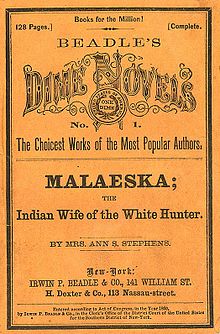
In America, most historians agree the first acknowledged dime
novel was published by Beadle & Adams Company and titled Maleaska, The Indian Wife of the White
Hunter written by Ann S. Stephens. The date of the publication is July 9,
1860, but the story first appeared in three parts in Ladies’ Companion magazine during January through March, 1839. Thus
started the habit of reprinting already published material, because at that
time, the copyright laws didn’t protect the author. Beadle’s Dime Novels were
6.5 by 4.25 inches (a little shorter and a little wider than current regular-sized
novels) and 100 pages each. The first issues were printed with a plain
salmon-colored cover. Issue 29 featured a wood-block cut illustration. This
series ran for 321 issues and is credited with establishing the standards for
the genre: outlandish plots, lurid action, and the melodramatic title and
subtitle to entice the readers.
The vast majority of the early stories were set on the
frontier (a geographic line that kept moving west) and included encounters with
vagabond travelers, scary wildlife, and Indians. As the American West became
settled, these stories evolved into westerns. Due to an increase in literacy
around the Civil War, the volumes became very popular among young, working
class people. Following a story line or character from week to week was similar
to the scripted television shows we currently watch. The first dime novel detective,
Old Sleuth, appeared in 1872 in the Fireside
Companion. Some characters became so popular that issues were published
with only stories featuring that character. By the 1880s, with other publishers
like George Munro and Robert DeWitt starting publication, stories set in cities
appeared, as well as medieval-set romances and soap opera-ish titles.

Publishers were eager to find stories of all types. The publication
that had a set format needed to fill 50 or 100 pages every week, 52 weeks a
year. Original stories were sought and many women found a place for their
creations. When a character grew popular, publishers gathered 4-5 stories
featuring the main character and printed a separate issue under a new title. A
practice that became confusing to reads but proved popular with those who
collected the issues.
Next part: In depth with Penny Dreadfuls
Look for Chasing
Adventure here (don’t buy until October 2 to ensure you received the
correct copy. A glitch occurred with the pre-order copy) An e-copy will be gifted to one lucky person chosen from those who comment on this blog post by Sunday, September 30.