Showing posts with label #Civil War. Show all posts

Wednesday, April 22, 2026

Gum Blankets in the Civil War - by Jo-Ann Roberts


I am not a fan of camping...I'll admit it. My idea of "roughing it" on vacation is a hotel room with Netflix and a hot shower! 

The one and only time we did go was in 1980-something when our children were small and at the invitation from friends. It was the hottest weekend of the summer, and my husband and I shared the top bunkbed in the camper, our noses about eight inches from the ceiling.

We've never gone again.

So, when I was plotting out my newest work in progress set during the Civil War, I had a scene where the MMC offers the FMC protection from a rainstorm. Knowing a blanket or a quilt would get soaked, offering no protection, I did some digging.

Today, we would think of these blankets as a type of tarpaulin, made of plastic to keep moisture from wicking through. In the mid-19th century, plastic was many decades away, and rubber, the top-of-line material for these blankets, was just coming into fashion. Developers in various parts of the world worked on developing rubber so that it would not become brittle at below freezing temperatures or begin to melt and get sticky at higher temperatures.

Civil War soldiers left their homes for camping trips which went on for four long years. Plastic tarps didn't yet exist, but most Union soldiers had a rubber blanket, sometimes called a gum blanket, or poncho with a slit to allow it to be worn over the body in wet weather. Soldiers could use the rubber blankets as ground cloths, or several soldiers to turn rubber blankets into a tent or just put one over the entrance to the tent.
 
The waterproof blankets issued during the Civil War generally had a cloth foundation layer, often cotton duck or muslin, which was then coated on one side with a waterproofing base. While some of these blankets may have been made with varnish, most were rubberized. Manufacturers of rubber blankets began by rubberizing both sides but soon switched to rubberizing only one side of the blanket. This This change kept costs of the blankets down and reduced the weight of items carried by soldiers as they marched from camp to camp or battle to battle, a factor that sometimes meant life or death. There were two variations on the rubber blanket--ponchos, which had a reinforced slit, so they could be put over the head, and simpler blanket, measuring 71 x 44 inches without the slit.


Soldiers were quick to recognize the value of rubber blankets. They would frequently abandon their heavy knapsacks, shedding unnecessary weight, and carrying only a bed roll around what few personal and valuable items they could not bear to be parted from.

The issuance of a rubber blanket to a Union soldier was even used as a recruiting inducement. One regiment in Philadelphia was particularly aggressive in using gum blankets as an inducement to voluntary enlistment by placing a classified advertisement in October 1862.

AVOID THE DRAFT --Join the 157 Regiment, Colonel WM. A.Gray

 Complete outfit, one month's pay in advance, all the bounties and a gum blanket

 Call at No. 627 Chestnut Street

Civil War ground cloths were more than just protective coverings--they were vital tools for soldiers in the field. Whether used for sleeping, sitting, or as part of a shelter, these rubberized blankets provided essential comfort and protection against the elements.


Thursday, April 27, 2023

The Mother's Friend by Jo-Ann Roberts


If you've been reading my past blogs about products or inventions in the 19th and early 20th century, you know I'm a history nerd and how easy it is for me to go down the rabbit hole when I'm researching a new book. Such was the case when I needed to know about teething medicines for my upcoming release, Winning the Widow's Heart. While it mentions Mrs. Winslow's Soothing Syrup only once, I wanted to make sure the information was accurate.

Imagine, if you will, that you are a first-time mother with a teething baby in the middle of the 19th century. Her cries keep everyone in the household awake for nights on end.

What's a mother to do?

Enter Mrs. Winslow's Soothing Syrup, one of the most successful, famous or infamous medicines from the past and was called the "baby killer" by some.


Charlotte Winslow was a midwife and studied infant teething and other related pains. Sometime prior to 1844, she prepared this highly successful potion for children teething. Soon after, she gave the recipe to her son-in-law, Jeremiah Curtis and his partner Benjamin Perkins, druggists in Bangor, Maine. They manufactured and sold it under the name Mrs. Winslow's Soothing Syrup.

The syrup claimed "to sooth any human or animal", and it quieted restless infants
and small children. Widely marketed in the U.K. and the U.S., the company promoted their product in recipe books, calendars, and trade cards. 


The syrup was sold in bottles about five inches tall by one and one-quarter inches in diameter.

The primary ingredients were morphine, alcohol, water softener, and aqua ammonia. 

Eww! I can't even begin to imagine what this may have tasted like! 

A teaspoon of the syrup had the morphine content of twenty drops of laudanum. It's inconceivable that the dosage suggested was that a month-old baby receive no more than two to three drops, and children six months old and up were to be given a half teaspoonful three or four times a day is alarming! The recommended dosage for children with dysentery was similar to the amounts already given but was to be repeated every two hours until improvement was noticed.

So, it isn't hard to understand why so many babies who were given this concoction went to sleep only to never wake up gain, coining the syrup's nickname, "the baby killer". However, many parents swore by the syrup as evidenced by the following letter written by a Massachusetts father...

Dear Sir: I am happy to be able to certify to the efficiency of Mrs. Winslow's Soothing Syrup, and to the truth of what it is represented to accomplish. Having a little boy suffering greatly from teething, who could not rest and at night by his cries would not permit any of the family to do so, I purchased a bottle of the Soothing Syrup, in order to test the remedy, and, when given to the boy according to the directions, its effect upon him was like magic; he soon went to sleep, and all pain...disappeared....Every mother who regards the health and life of her children should possess it.                     Mr. H.A.Alger, Lowell, Mass.

Once the Pure Food and Drug Act passed in the U.S., Mrs. Winslow's Soothing Syrup was forced to remove morphine from their syrup and remove "soothing" from the brand name. Even so, the syrup was sold until the 1930s.

So, the question begs to be asked: Why would a parent give their child such lethal medication?

Ingredients in 19th and early 20th century medicines weren't stated as they are today nor did people understand the full effects of these ingredients. So, without this information, people living in the era of Mrs. Winslow's Soothing Syrup put their trust in druggists and doctors about the medicines they were prescribing. Yet even those who had medical training may not have known the full effects of certain drugs.

It's easy to understand how a product like this syrup would have appealed to weary parents looking for a cure-all for fussy babies and infants. 

Thankfully, advances in today's modern medicine ensure that such a loss of so many children as a result of this syrup, and other drugs like it, does not happen again.

Disclaimer: Before you think that I had my heroine give the baby several doses of the syrup, please let me assure you, no babies were harmed in the telling of this story.  

New Release!

She was branded as a traitor to the Union.
He was her sworn enemy.
A marriage of convenience would be perilous...wouldn't it?

In the summer of 1864 in Roswell, Georgia, widow Sofie Bishop struggles to manage the small family vineyard on her own. Now with her home in ruins her only option was working at the Ivy Woolen Mill. Her woes go from bad to worse when the Yankees arrive on Roswell's doorstep.

Courteous and kind, Captain Seth Ramsey is not what Sofie expects from a Union officer. However charming he might be, she's determined to keep her distance. Even when she finds herself branded as a traitor, arrested, and transported north to an uncertain destiny, she didn't think she could lose much more to the Yankees.

But she was wrong.

Will his vow of love mend her wounded heart? Or would a marriage of convenience be the best she can offer?

 FB Page: https://www.facebook.com/jrobertsauthor/


Thursday, December 23, 2021

The Man Who Invented Santa Claus - by Jo-Ann Roberts

I have been in full-on Christmas mode since my trip to London in mid-November. Everywhere we visited, from Kensington Palace to the Cotswolds to Covent Garden to the many Christmas markets, the streets and store-front windows were decked out in Christmas finery.  

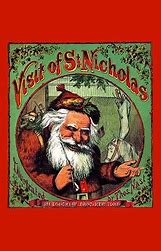
So as soon as the last slice of Thanksgiving turkey was devoured, Papa Bob and I went up to crawlspace (it's what they call an attic in North Carolina--not tall enough to be a room or wide enough to be a shed) to bring down the decorations.  When I opened the tote containing the many boxes of Christmas cards, an image of a vintage St. Nicholas stared back at me. 

This got me to wondering how that vintage image morphed into today's Santa Claus.


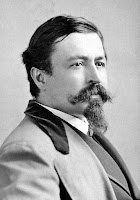
Thomas Nast, America's most famous 19th century political cartoonist and the creator of the image of Santa Claus as we recognize him today, was born in 1840 in a military barracks where his father was a musician in the Regimental Bavarian Band. The elder Nast, while not an agitator, was a man of liberal ideas. In view of the political turmoil prevalent in Germany, his commandant suggested America might be a better place for a man so fond of free speech.

When Thomas was six years old, his mother brought him and his sister to the United States and settled in New York. Serving out his enlistment, his father followed four years later.

While not a good student, Nast showed an interest in drawing, preferring doodling over doing his schoolwork. At 13 he dropped out of regular school, enrolling in the National Academy of Art. But when his family could no longer afford his tuition, he went to work, creating illustrations for Frank Leslie's Illustrated Newspaper.

In 1862, he joined the staff of Harper's Weekly as an artist. Anxious to join the Union Army, his request was denied after President Lincoln described him as the "best recruiting sergeant" for the Union cause because his sketches encouraged others to join the fight.


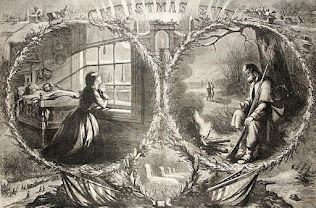
One of the most inspiring pictures was "Christmas Eve", a double-circle picture that shows a soldier's wife praying for his safety and in the next circle shows the soldier seated by a campfire, looking at photographs of his family. In the right corner of the drawing Santa Claus is shown riding a sleigh pulled by reindeer. And in the left corner, he is shown climbing down a chimney.


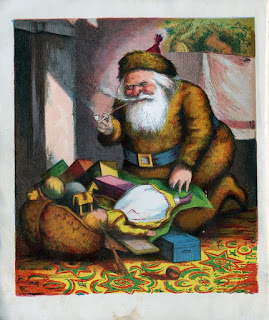
In the past Santa Claus--or St. Nicholas, as some continued to call him--was presented in various ways, but Nast conceived and introduced our modern image of Santa Claus.  His illustration, along with Clement C. Moore's very popular poem, "A Visit from St. Nicholas", helped create the modern image of Santa Claus.

For the next thirty years, he continued to draw Santa changing the color of his coat from tan to the red he's known for today.


His image of Santa Claus was the inspiration for the Coca Cola' company's Santa Claus. 

In 1885, this advertisement of Santa Clause delivers Ivory Soap for Christmas. 

Courtesy of Proctor & Gamble


As the years passed, Nast added details of the story of Santa's life through his illustrations. It is believed that the story about Santa Claus living at the North Pole may also have been a Nast creation.

Whether you call him St. Nicholas, Father Christmas, or Santa Claus, the modern image of Santa as a jolly, benevolent, plump man in a red suit is a combination of creative of creative influences of authors and illustrators, and it is an image that is loved and recognized by children and adults alike around the world.


Here's a Christmas Eve excerpt from Grace-Brides of New Hope Book Three for your reading pleasure.