Thursday, November 15, 2018

Nursing Careers in the 1800's

 by Cyndi Raye


Most women in the 1800's found it hard to establish themselves in certain careers. Especially in one such as nursing. It wasn't because they didn't want to, but the obstacles in the way were huge.

 It was a common practice for doctors in the 19th century to treat their nurses as if they were mere maids without their own minds. Nurses were not allowed to suggest  a way to treat the patient, but were to only administer aid when the doctor gave the go ahead. Many times a nurse would try to calm a sick or dying patient, to the doctor's dismay. Many doctors during that time period did not have a very sweet bedside manner, and when the nurse tried to help, she was usually reprimanded.

Much of the nursing in hospitals were done without proper schooling until later in the century. If a woman wanted to become a nurse, she would shadow an experienced senior nurse as an apprentice to learn the trade.

Florence Nightingale was a pioneer in London and had established a nursing school in 1860 at St. Thomas Hospital. Then, in 1873, Bellevue Hospital followed her lead and opened their first nursing school using her mode of training in New York. Students learned bedside manner, how to observe a patient's needs and the skills to do so.  The following job description shows how it was in 1887 in some areas.


Even then, doctors didn't allow their nurses to speak up or treat the patient. In one of my mail order bride books, Ellie of the Mail Order Brides of Wichita Falls, Nurse Ellie was a young lady who wanted to establish herself in the nursing field and make a difference. She had studied hard and wanted to contribute, but at every turn, the barriers were too high.

 However, every single time she spoke up it usually got her fired. Here's an excerpt from her book. Imagine you were a free thinking woman during this period. Nurse Ellie had spunk and liked to speak her mind:

“I’m terribly sorry, Miss Jacobs, there is no longer a position for you at this hospital.”

He wasn’t sorry one bit, that Ellie could see from where she stood. She clutched her hands so tight she may have winced if she hadn’t been trying hard not to let him see how upsetting his words were. She raised her chin a notch. No tears would be shed in front of this man. 


Dr. Tate was incorrigible. He was so miserable he hated everyone and everything, always finding fault with the nurses under his charge. What Ellie didn’t understand was why he was in the business of caring for people in the first place. It was obvious to everyone at the hospital he hated both nurses and patients alike, yet no one took it upon themselves to stop this madman from ruining people’s lives. 


Like he had just ruined hers.


Dr.Tate grunted before sitting back down at his desk. “Please gather your belongings and leave the premises. Upon termination, you will no longer be permitted to step foot in this hospital. Carry on.”


Ellie stood frozen to the spot for a moment. Should she do as the others had who lost their nursing position and nod politely, thanking him for the opportunity and experience to work here all these months?


No, not Ellie. 

Her biggest downfall was speaking the honest truth in any matter.

Dr. Tate looked up from the paperwork on his desk. “Well, Miss Jacobs, go on now.”


She pressed her knees together, pursed her mouth in a tiny pucker and squared round shoulders. “Dr. Tate, while I appreciate all this hospital has taught me-”


Her words were quickly interrupted. “No need to go on and on. We can’t afford to have nurses thinking for themselves. Your job was to stand behind the doctors and follow their direction, not go about taking matters in to your own hands, defying orders and diagnosing patients, for crying out loud.”


“Is there any chance this hospital will pen me a positive reference?”


He pushed the frames of his glasses in place. “I’m afraid not, Miss Jacobs. I’m afraid you’ve done yourself in on this one.”


“That’s what I presumed, Dr. Tate. Therefore, I want you to know my true feelings.”


He put up his hand. “It’s not necessary, Miss Jacobs. I understand your frustration at losing a position here. Perhaps you are not meant to be a nurse after all.”


“Poppycock!” She took a step forward, placing the knuckles of her fists on the desktop and leaned forward in an unladylike manner. “You, sir, are indeed one of the worst doctors in Charleston! Your patients are left wondering what is happening to them as you treat people as though they are pigs in a den and not of much consequence.”


“That will be enough!” Dr. Tate rose. He tore off his glasses and flung them to land on the untidy desk. “I’ll repeat the request for you to leave these premises, Miss Jacobs, before I have someone remove you.”


Ellie flung her head back to look up at the six foot doctor. “I am leaving, sir, of my own accord.”


He pressed his fingertips to the top of the desk and leaned forward as she had done. “It’s a shame you threw away a nursing career. No one will hire you now. I’ll make sure of this.”


“I don’t doubt you will but I’ve had my say. I am a nurse and will continue to practice. Maybe not here in Charleston, but somewhere. Good day.” 


Ellie marched from the doctor’s office, her head held high. She was glad she had told him what she thought even if it wasn’t ladylike. Several employees who heard the conversation tried not to stare as she grabbed her reticule from where it sat on the corner of the window pane and left the Roper Hospital behind.


Nurse Ellie was quite bold. She had spoken up in a time when women usually kept their mouths shut because they were afraid of being ridiculed or even fired. Many nurses were fired at the drop of a hat, especially if a doctor didn't care for them. In Charleston, where Ellie starts out, if a nurse was fired she usually wound up at the Charleston Orphan House, a far cry from a nursing career. There, in the dark, depressing atmosphere, a nurse would be no more than a maid for the children, ironing and washing clothes, cooking and taking care of orphans. Many women didn't dare to speak up like Ellie had.

If you'd like to learn more about what happens to Nurse Ellie, be sure to pick up your own copy at Amazon.


Wednesday, November 14, 2018

What Did the Children Do?

Childhood in pioneer days out west was different than what we know today. What an understatement! Almost everything in life was different then than it is now.

Pioneer children were expected to help their parents. Their workload was easier, of course, but they still had a full slate of chores that had to be done. Boys would help in the fields when they got a little older and stronger. In the meantime, they'd help weed the garden, take care of the cows, feed the chickens, and bring in fire wood. Girls also worked in the fields when they got older when they weren't needed in the house. Some of the common house chores for girls were laying and stoking the fire, boiling water, helping with the laundry, and milking the cows.


Girls working in the fields was a far cry from the experiences of girls back east. Pioneer girls had more freedom than the girls in the east. They were exposed to more and learned a wider scope of skills than girls who were meant only to marry and raise a family.


While the children did a fair amount of work, they also had time to play and enjoy being kids. Most of the time, they had to use their imagination to come up with games to play. Toys weren't plentiful unless they were home-made. In the late 1800s manufactured toys did make their way west. One of the most popular toys was a Noah's Ark set. I think I had one, too! My neighbor's little boy has one. This is one toy that has stood the test of time.


Imagination truly was the best way for a child to have fun in the west. Building forts, playing chase, riding on each other's backs. All these were ways children had fun together. There was so much adventure in the life of a child on the western frontier. With so much to explore, they could stay occupied and happy for hours and hours if they had the time away from their chores.


Kids today play video games instead of getting outside and enjoying the great outdoors. Times have certainly changed. Instead of an electronic game of Frogger, kids in the 1800s would probably hunt for real live frogs. I remember doing just that when I was a child. How exciting it was when we found a big fat one! Admittedly, I'd not even consider touching one today, but as a child finding a big frog made for a near perfect day.


In my book, The Sheriff and the Nanny, Sheriff Shelton's kids pull a joke on their new nanny. It's a wonder she decided to stay. But the girl was just as persistent as the children. Here's an excerpt I hope you'll enjoy.


“Miss Kent!” Bobby’s childish voice rang out as he started toward her, “I found you a present.” Before he could even get the words out of his mouth, Cissie ran up behind him and gave him a push that sent the toad shooting out of his hands and right into Cynthia’s lap. 

Regardless of how prepared she was, Cynthia had not expected that the toad would make a surprise flight to her lap. As she squealed in surprise, Cynthia could hear the children laughing at her fear.
Swallowing hard, Cynthia forced herself to reach into her lap and grab the nasty creature. Standing up straight, she smiled when she looked down at the children’s shocked faces. They seemed more surprised to see her holding the slimy thing than she had been when it jumped into her lap.

“Bobby,” Cynthia scolded lightly, “You need to be more careful. You hold them firmly around the middle. Like this. Oh dear.” The toad managed to wriggle free of her grasp and took off hopping across the ground.

Deciding that this was her opportunity to bond with the little boy, Cynthia pointed toward the escape animal and said, “Hurry, get it!” 

Giggling uproariously, Bobby followed her instructions, trying to grab the toad before it could get away.

Looking down, the happy moment was cut short when Cynthia noticed Cissie’s disgusted scowl.
“You’re supposed to be a lady,” Cissie announced, her voice sounding scornful, “You shouldn’t be touching that toad. I’m telling Papa. Once he hears that, he probably won’t want you to keep us anymore. He doesn’t want women like that around us. He wants a grown up to stay with us. Not a big girl who still plays with toads."

Cynthia felt her heart drop. While she knew that the little girl was trying to upset her, she worried that there might be some truth to the child’s words. Cissie certainly knew how to make her feel insignificant and bad about herself. She tried to shake off the unkind words of the child, but the sting lingered. She knew the girl was using harsh words as a shield and she knew she’d have to find a way to break through her hard shell.

Rubbing her hands together, Cynthia watched as the little girl took off after her brother, swinging her arms at her sides like a soldier. 

That little girl was certain to be a challenge. 


~~~~~


Annie Boone writes sweet western historical romance with a happy ending guaranteed in every single story. Inspiration comes in many forms and Annie finds more than one way to make her stories entertain and inspire.
 
To connect with Annie, find her on Facebook, Twitter, or her website.

Follow Annie on Amazon, Bookbub and get email updates.

Tuesday, November 13, 2018

Sarah Josepha Hale Mother of Thanksgiving


Sarah Josepha Hale
1788- 1879

I was recently asked an interesting question. What inspires you? Without thinking I answered jokingly, coffee and chocolate. My husband can attest that I am not a morning person, so it is true the thought of a good cup of joe motivates me when the annoying sound of the alarm clock doesn't. I probably don't even need to explain the magnetic force of chocolate.

But what really motivates me is everyday people who overcome obstacles with grace and dignity. Which brings me to the mention an unlikely heroine born more than two hundred years ago, but we feel her contributions still today. Her name is Sarah Josepha Hale.


Though women of the time could not attend college, Sarah was fortunate to have a mother who encouraged her to read and learn. She also had a brother who did attend and taught her as much as he could. 

In 1822, when she was expecting her fifth child, her husband died of pneumonia. To support herself she first took a job making hats, and at night while her children slept, she wrote. 


She also wrote for magazines and was eventually offered a job for Ladies Magazine and later for another influential magazine, Godey's Lady's Book. She wanted to expand women's minds beyond fashion, so she published articles on history, science, household advice, and advocated for female education.

Her collection of Poems for Our Children was published
 in 1930 and included,  "Mary Had a Little Lamb."


Even though George Washington proclaimed a national day of Thanksgiving in 1789 to recognize the success and conclusion of the War of Independence, for the most part, the recognition of an official holiday was a state or local affair. Typically the governors would select a date in late November or early December. 
Thanksgiving was a New England tradition, not embraced by the Southern States. It was the New Englanders who spread the holiday to the western territories. 
By the 1840s, the traditional New England menu of turkey, cranberries, potatoes, and pumpkin (and other) pies was in place, but recognition of the holiday still varied. 
Writer and editor Sarah Josepha Hale tried for many years to establish a national Thanksgiving holiday, similar to Independence Day. In 1827, as an editor of Boston's Ladies Magazine, she began writing essays calling for a national holiday of Thanksgiving. 


In 1846 as editor of Godey's Lady Book, she launched a letter writing campaign to enlist support for her cause. She wrote directly to President Zachary Taylor in 1849, asking him to reinstate a National Day of Thanksgiving.

Sarah knew that America was growing fast and believed a national celebration could help bring the country together. In her 1860 editorial, she wrote, "The New National Holiday would awaken in American hearts the love of home and country, of thankfulness to God, and peace between brethren."

But the idea of a celebration after the harvest was certainly nothing new. The cattle drives ended by the end of November and farmers would have completed their harvest, both would be a cause for a celebration. 
Unsuccessful, she continued her quest and wrote letters to five Presidents, Finally in 1863, Abraham Lincoln proclaimed a national day of "Thanksgiving and Praise to our beneficent Father who dwelleth in the Heavens," to be celebrated on the last Thursday in November.


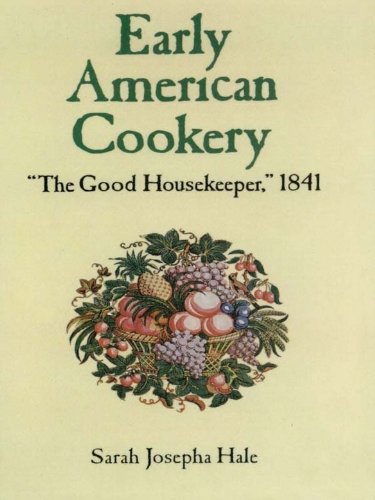
Early American Cookery: "The Good Housekeeper," 1841 by [Hale, Sarah Josepha]


Over the years Sarah published articles and recipes for roast turkey with sage dressing, mashed potatoes and pies that to this day are associated with the celebration. By the time Thanksgiving became an official national holiday, her magazine had already inspired women to want to participate.

So what about you? What inspires you?

In my debut novel, Rebecca's Hope, I introduce several inspiring young women who face everyday obstacles typical of the 19th century with grace and dignity. 


Rebecca's Hope, combines History, Humor, and Romance with an emphasis on Faith, Friends, and  Good Clean Fun. Rebecca's Hope is a work of fiction that reminds us how God can use adversity to strengthen us and draw us closer to Him and give us the desires of our heart in ways we may never expect.               

Fans of western historical romance will enjoy this beautiful story set in the late 19th-century of love and forgiveness. As the unfortunate circumstances of Rebecca's childhood unfold, we discover a heroine who is both resilient and kind. Rebecca and Sam's love story will have readers rooting for their happy ending. 


Connect with Kimberly:

Amazon Author Page: amazon.com/authorkimberlygrist
Website: https://kimberlygrist.com/


.


Monday, November 12, 2018

A Day to Honor Veterans


World War I, which was known at the time as “The Great War”, officially ended when the Treaty of Versailles was signed on June 28, 1919, in the Palace of Versailles outside the town of Versailles, France. However, fighting ceased seven months earlier when an armistice, or temporary cessation of hostilities, between the Allied nations and Germany went into effect on the eleventh hour of the eleventh day of the eleventh month.


Veterans Day originated as “Armistice Day” on Nov. 11, 1919, the first anniversary of the end of World War I. It is still known by that name in many nations.

To read President Woodrow Wilson’s speech concerning this recognition, you may find it on Wikipedia by CLICKING HERE. Congress passed a resolution in 1926 for an annual observance, and Nov. 11 became a national holiday beginning in 1938. Unlike Memorial Day, Veterans Day pays tribute to all American veterans—living or dead—but especially gives thanks to living veterans who served their country honorably during war or peacetime.

The Uniform Holiday Bill was signed on June 28, 1968, and was intended to ensure three-day weekends for Federal employees by celebrating four national holidays on Mondays: Washington's Birthday, Memorial Day, Veterans Day, and Columbus Day. Including Veterans Day as a Monday holiday became unpopular, so it was changed to the actual day. Only, this year, with November 11th falling on Sunday, as a holiday, it is observed today, Monday the twelfth.

While the holiday is commonly printed as Veteran's Day or Veterans' Day in calendars and advertisements (spellings that are grammatically acceptable), the United States Department of Veterans Affairs website states that the attributive (no apostrophe) rather than the possessive case is the official spelling "because it is not a day that 'belongs' to veterans, it is a day for honoring all veterans."

Veterans Today 

The military men and women who serve and protect the U.S. come from all walks of life; they are parents, children, grandparents, friends, neighbors and coworkers, and are an important part of their communities. Here are some facts about the veteran population of the United States:

  • 16.1 million living veterans served during at least one war.

  • 5.2 million veterans served in peacetime.

  • 2 million veterans are women.


  • Of the 16 million Americans who served during World War II, about 558,000 are still alive. (2014)

  • 2 million veterans served during the Korean War.

  • 6 million veterans served in peacetime.

  • As of 2014, 2.9 million veterans received compensation for service-connected disabilities.

  • As of 2014, 3 states have more than 1 million veterans among their population: California (1.8 million), Florida (1.6 million) and Texas (1.7 million).

Sources:
Wikipedia

In addition to my grandfather who served during The Great War, my father and my uncle who served during World War II, I also wish to honor my own sweetheart who served in Viet Nam.


My Millwright’s Daughter as a single has gone live today. It is part of the anthology, Undera Mulberry Moon which is still available for a short time. If you read it as part of the anthology and would like to leave a review for it as a single, I would greatly appreciate it. You may view the book page on Amazon including the place to add your review by CLICKING HERE.

Here is the book description:

After the death of her mother in 1882, Eliza Wells goes to live with her grandmother, Caroline Arnold, whom her parents named as her guardian. Not long after her grandmother has a stroke, her uncle, Joseph Wells from Kerr’s Ferry, California, whom she has never met in person, arrives in Ohio and whisks her away for a visit with family while her grandmother recovers.

At first Eliza enjoyed visiting her cousins in California. Now she grows concerned at her uncle’s repeated refusals to arrange for her transportation home. Her grandmother has not replied to her letters, so Eliza can no longer look to her for help.

Since Caroline, slowly recovering from her stroke, has heard nothing from her granddaughter in months, she hires Kit Halsey, a former railroad detective, to find her granddaughter and bring her home. He agrees, for what he will receive in pay for the job will put him through law school.

Joseph urges Eliza to spend time with his business associate, Daniel Irwin, almost fifteen years her senior. Unlike her cousin, Eliza does not care for Daniel. The only man for whom she feels an attraction is the new freight driver, Kit Halsey.

Startling details from the past come to light, and the only person Eliza can turn to for help is Kit—if he is willing to risk his future to save her.